Editor's Choice

--------------------------------------------------------------------------------------------------------------------------
Featured Post
--------------------------------------------------------------------------------------------------------------------------

"Let us build Pakistan" has moved.
30 November 2009

All archives and posts have been transferred to the new location, which is: http://criticalppp.com

We encourage you to visit our new site. Please don't leave your comments here because this site is obsolete. You may also like to update your RSS feeds or Google Friend Connect (Follow the Blog) to the new location. Thank you.


--------------------------------------------------------------------------------------------------------------------------
Showing posts with label MQM. Show all posts

Sunday, 29 November 2009

A CJ greeted in Karachi and the events of 12 May 2007


A CJ greeted in Karachi
Guest post by Aal e Hashmat Malik


Just recently, in the last week of November 2009, the Provincial Home Minister of Sindh, Mr Zulfiqar Mirza, announced in a press meeting that his PPP government would launch an inquiry into the events of 12th May 2007 and would like to unveil the real faces behind that utter cruelty.

Let us turn to another page of our forgotten history ……when chaos had gripped the streets ofKarachi on that day. The day when Justice Iftikhar Chaudhry, the then suspended Chief Justice, had landed at Karachi Jinnah International Airport for onward move to Sindh High Court premises to address the Karachi Bar Council. Karachi had witnessed ‘orchestrated mayhem’ wherein about 46 lives were lost, and about 150 were injured, threatening a complete breakdown of law and order in Pakistan's largest and most volatile city.

Referring to UK’s daily The Telegraph’s ‘Pakistan on brink of disaster as Karachi burns’ appearing on 13th May 2007:

‘Karachi With plumes of black smoke billowing over the city of 12 million people, there were extraordinary scenes as gunmen on motorbikes pumped bullets into crowds demonstrating against …………., while police stood by and watched. Bloodstained corpses lay where they had fallen in the streets and bodies piled up in hospital morgues. As the sense of crisis deepened, the military general resolved to send in Pakistan rangers (paramilitary troops) to restore order, and to place the army on standby.

Yesterday's violence erupted as 15,000 police and security forces deployed in the city stood idly by as armed activists from Karachi's ruling party, Muttahida Qaumi Movement (MQM), a coalition ally of Gen Musharraf, blocked Mr Chaudhry's exit from the airport and took control of the city's central district.’,

It was a factual belief that Gen Musharraf had hoped to create a compliant judiciary ahead of elections which he had promised to hold later that year. But what started as a political confrontation then brought up on surface the Karachi's tinderbox of ethnic rivalry.

Referring again to the above quoted article of ‘The Telegraph’;

‘Inside Mr(Justice)Chaudhry's intended destination, Sind's high court, hundreds of lawyers, some of them bloodied after being beaten up by MQM supporters, milled about chanting slogans and receiving news on their mobile phones about the trouble engulfing them. Outside, MQM activists with pistols tucked into their jeans, blocked the entrance.’

The intelligentsia kept a view that Gen Musharraf had purposefully allowed conflicting rallies to go ahead to create the requisite level of disorder to justify the declaration of an emergency or Martial law. The prelude to violence was familiar to Karachi, where hundreds of people were killed in ethnic violence in the 1990s but first time in Pakistan live television cameras captured the situation for viewers to see government tankers used to block off routes to the airport, police and rangers conspicuous by their absence or standing idle as armed men ran amok on the streets of Karachi, corpses and wounded bodies lying by the wayside in pools of blood.

The security plans chalked out for that day were abandoned overnight. The Sindh home department withdrew the weapons of most law enforcement personnel in Karachi. Armed only with batons, the 15,000 policemen deployed in the city avoided the violent areas. Rangers who were to hold key positions on the ‘flyovers’ on the main airport road were nowhere in sight. Instead, armed men in civilian clothes held those posts, and fired into the crowds trying to reach the airport to receive the Chief Justice stranded inside.

Over at the Sindh High Court, as a lawyer Ayesha Tammy Haq witnessed, at about 5 PM the things were getting worse. Judges were not leaving the premises as there would be a rampage. City courts were being attacked. The lawyers were expecting to have army rule in Karachi. Later it transpired that:

‘…. it was a part of “the political activity” of a political party attempting to show its strength to its constituency and of course a loyalty show to see and feel by Gen Musharraf too.’

‘Not only was the Sindh High Court under virtual siege by armed activists, but lawyers attempting enter the Court were repeatedly beaten and roughed up. The armed activists did not even spare the Judges of the High Court. One judge was held at gun point and his car damaged. “While holding me at gun point, the youth called someone and stated ‘Yeh bolta hai kay High Court ka judge hai...kya karun is ka?...achaa theek hai, phir janay daita houn.’ (He says he’s a judge of the High Court. What should I do with him? Ok then, will let him go).” Many judges, unable to drive to the Sindh High Court, had to leave their official ’flag’ cars and make their way through menacing crowds and climb over the court’s back wall in order to reach their chambers.’
(Ref: an interview with Talat Hussain, Aaj TV, 18th May 2007)

[Munir A. Malik and his fellow 24 lawyers accompanying Justice Choudhry from Islamabad to Karachi were forced to remain inside the airport. The Sindh government representatives offered to transport the Chief Justice by helicopter but this offer was for him alone. Since the lawyers with him had already foiled the attempts of ‘two uniformed officers’ to ‘snatch the CJP and take him from the other side,’ he refused.]
(‘Story at the airport’, The News,20th May, 2007)

Armed men attacked lawyers at Malir District Bar, Justice Choudhry’s scheduled first stop in Karachi, killing a lawyer and injuring several others, including female lawyers. Justice Choudhry and his team, of course, were ‘externed’ to Islamabad after arguing and struggling for several hours at the airport. Late that night, residents in the low-income Ranchore Lines mohalla were awakened by loud banging on their doors. One resident narrated that it was two young boys distributing freshly cooked biryani and suji in plastic bags: “Yeh chief justice ki wapsi ki khushi mein hai” (This is to celebrate the Chief Justice’s return [to Islamabad]).

Another account can be seen here:

On the Karachi streets, Uzi’s press card had saved her again at around 05:00 p.m. as she and a colleague tried to reach the Rangers Headquarters in Dawood College. “A car chockfull of ammunition passed in front of us, stopped, backed up and stopped in front of us, Kalashnikovs pointing at the two of us from the windows. We showed our press cards and the car moved on. NEVER in my LIFE have I felt more grateful to my press card than I did yesterday.”

At around 06:00 p.m., she and her colleague were trapped by gunshots all around. “Short of climbing the walls and entering one of the houses around, there really was no other place for us to go.” They stopped a police mobile and asked which way would be safe to go. The answer, accompanied by laughter: “You can be killed wherever you go. Choose your place.”

(Ref: Eyewitness: Karachi 12th May 2007 by Beena Sarwar published in www.Chowk.comdated 30th May 2007)
In published reports, journalists prudently avoided naming the parties involved.
‘Young men toting flags and banners had set up camp outside the airport departure lounge. They hid, however, when policemen came by. Reporters in the vicinity were asked whether they had seen any political activists around. Munawar Pirzada (from Daily Times) said that he had seen some nearby. After the policemen had left, the activists came up to the reporter, dragged him by the hair and took him aside. They then proceeded to threaten him with dire consequences if he said anything the next time the policemen came around.’
(by Urooj Zia in Daily Times, 14th May 2007).

But the affiliation of these gangs was visible in the live coverage provided by several private television channels, which showed plainclothes men brandishing weapons on the deserted roads, using government tankers as cover, exchanging gunfire with unseen opponents, the tri-colour MQM flag visible on their motorcycles.

After Aaj TV’s continuous live coverage of such scenes, armed men attacked the television station, firing at it for several hours. Instead of stopping the coverage, Aaj showed live footage of reporters ducking behind a desk, shots being fired at their office, as anchor Talat Hussain provided an account of the situation on phone. Reporters in the area asked the Rangers posted nearby to help the Aaj workers trapped inside their building. The answer: ‘We’re helpless. We can’t do anything unless we have orders from above.’

Another eye-opening narration:
‘The local media received a call from a hospital, apparently sent by a doctor who had been at work for several hours attending to multiple gunshot wounded victims in his hospital lobby, where a makeshift emergency room had been set up. Nothing but he told: ‘struck down my soul more than what nine fully armed workers of a ‘local political party’ along with 2 sector office bearers did. They tried to drag out a wounded and dying body of a ‘poor politico-religeous worker’ (whose identity they later learnt) for presumably finishing him off.’ The protesting doctors were slapped around and dragged by their legs to the back of the gurney alley. With shotguns, pistols and ak-47’s in hand, the men ran back to the lobby presumably to find their target again.

The doctor ran out to the rangers and police near the hospital front gate. Their answer to his appeal: ‘Jaante ho inn logon ko phir bhi kyon larte ho…hamain upar se order hai ke inn ko char baje tak karne do jo karna hai. Char baje ke baad kuch dekhainge’ (When you know who these people are why do you still fight them … we have orders from above to let them do whatever they want until 4pm. After 4pm we will see).

As a previous party supporter, the doctor had recognized some of the assailants and called a friend related to their deputy leader Farooq Sattar. Five minutes later the men received a phone call and left, threatening the doctors (and stealing one of their cell phones, “Chikna set hai” -- it’s a cool set). “The guy they had come looking for had been shot one more time in the head. The o.t dress we had dressed him in 10 mins earlier was freshly bloody.’
(Ref: www.karachi.metblogs.com/archives/2007)

There was a story behind each of those who were killed, some belonging to one or other political party, and others just because they were there. Masked men stopped ambulances and sprayed them with bullets, killing an Edhi Ambulance driver, Faizur Rahman Khan, 65, when he refused to throw out a wounded person he was transporting to hospital from near the airport; the wounded man was also shot again. Armed gangs herded passers-by into an alley and shot dead a young overlock machine operator along with another man, in front of two colleagues who were also shot but survived to tell the television source.

As per written facts in ‘They shot us one by one...’ by Munawar Pirzada in dailytimes.com.pk, there have been reports about an SHO who guided a procession into an ambush and a pregnant woman who had to deliver her baby in the car when armed men refused to let her proceed to the hospital with her husband. The Pakistan Press Foundation (PPF) reported that several journalists were manhandled and nine wounded. Some TV cameramen were beaten and their cameras snatched or damaged.

Zaffar Abbas was correct when he wrote that Karachi was only at peace for the past many years because it suited its militants; and ‘Finger pointing’ is necessary, because throughout our history, instead of a catharsis, we simply go through a ‘jo ho gaya ab bhool jaao, aagay daikho’ (forget what has happened) attitude. Already, with the President’s pat on the back at the emergency meeting of the ruling party in Islamabad (on Monday) the MQM is back on the front foot…

Although it is unlikely that the perpetrators of Saturday’s violence will ever be brought to justice, at least they should continue to be exposed before the entire country. More importantly, they should face the consequence of such exposure. Public image is very important to the MQM and the national outrage at their conduct may be the best prospect of compelling them to change their ways’.

(Ref: ’Back to the future?’ Published in Daily Dawn of 14th May 2007)

Later Gen Musharraf was in the Chief Minister House Karachi to review the law and order situation following 12th May carnage. At this occasion a Provincial Minister Irfanullah Marwat (from Pakhtun Community) asked Gen Musharraf to order an inquiry into who had opened fire, arrest the culprits and take action against the elements responsible. The minister stressed the people would not be satisfied till the arrest of the elements responsible and strong action against them. The Pakhtun Action Committee Chief Shahi Syed stated on the occasion that all it was due to Adviser to the CM on Home Affairs Waseem Akhtar.

Gen Musharraf heard it and that’s all; military people find it hard to say sorry.

Coming back to our original, Mr Z Mirza, the Sindh Home Minister, was probably pointing out towards this core issue on the basis of his personal knowledge being a staunch political worker of the PPP and may be depending upon the reports of western press as quoted above. Being a Home Minister he had definitely got access to the secret ‘Special Branch’ reports of the Sindh police and floated his wish of conducting this enquiry at such belated stage so vigorously and in a robust manner.

Whether MQM was involved in that whole scenario or not because still it is a subject of detailed enquiry based on solid evidence but one thing is clear that the master mind behind that episode was Gen Musharraf himself, who had claimed those killings as ‘his success and show of power’ in an open jalsa held, organized and patronized by ML(Q) at
Islamabad on the same evening of 12th May 2007.

Would somebody from judiciary or executive dare to hold Gen Musharraf accountable on this issue, too.

(Aal e Hashmat)
Aalehashmat@Hotmail.com

Read more...

Friday, 27 November 2009

Zardari directs not to issue statements against MQM. Altaf appreciates President’s statement.

Agents of the anti-democracy establishment, i.e., Shaheen Sehbai and Shahid Masood, must be really unhappy on this development. Long live democracy. Down with yellow journalism!


Friday, November 27, 2009 (Geo TV)

Zardari directs not to issue statements against MQM

ISLAMABAD: President Asif Ali Zardari has directed his party leaders not to issue statements against Muttahida Qaumi Movement (MQM) amid the rising tension between MQM and Pakistan Peoples’ Party (PPP).

According to sources, President Zardari telephoned Chief Minister (CM) Sindh Qaim Ali Shah and Provincial Interior Minister Zulfiqar Mirza directing them not to issue statements against MQM.

Altaf appreciates President’s statement
Friday, November 27, 2009

LONDON: Muttahida Qaumi Movement (MQM) Quaid Altaf Hussain has highly appreciated the statement of the President, Asif Ali Zardari directing the leaders of the People’s Party not to issue statement against MQM.

In a statement issued here, Altaf Hussain said President’s statement augured well. He also advised MQM leaders that they should also be highly cautious in this context, while issuing statements and act wisely for a turnaround from the present acerbic environment.

MQM information office in a statement said that Quaid-e-Tahrik Altaf Hussain has expressed his displeasure over the latest poem of a member of Rabita Committee, Mustafa Azizabadi, which was based on his personal views and his own act. Rabita Committee has directed Syed Mustafa Azizabadi that he should refrain from publishing any of his poems based on political themes without consulting the Rabita Committee.
Read more...

Thursday, 26 November 2009

Shame on PPP and MQM. Sort out your differences before Taliban terrorists take over Karachi


Guest blog by Aamir Mughal

Both PPP AND MQM seem to have no shame because since the day this NRO debate started, both parties have been screaming loudly, levelling allegations against each other of loot, plunder and killing etc. Both have no worries and they are least bothered about the miseries of creeping Talibanisation, back breaking poverty, lawlessness, joblessness, unemployment, 45% living below poverty line and what not and now in 2009 they are back to the DIRTY, FILTHY AND TREACHEROUS POLITICS OF the 1990s. Shame on both of these parties.

It seems that secret hands of establishment are once again successful in creating a conflict between the two largest political parties in Sindh. It seems that the secret protectors and promoters of Taliban and extremism in the establishment and the media want these two secular parties to fight each other so that the ground is levelled for fascists of Jamaat-e-Islami, Taliban and Dr Shahid Masood mafia.

پاکستان کے صوبہ سندھ کے صوبائی وزیر برائے داخلہ ڈاکٹر ذوالفقار مرزا نے کہا ہے کہ متحدہ قومی موومنٹ کے کارکنوں اور رہنماؤں پر دائر ساڑھے تین ہزار مقدمات فراڈ کے ذریعےختم کیے گئے ہیں اور چیف جسٹس افتخار محمد چودھری اس کا از خود نوٹس لیں۔

’متحدہ کے مقدمات فراڈ سے ختم کیے گئے‘

ریاض سہیل
بی بی سی اردو ڈاٹ کام، کراچ


Nominations filed for president
August 27, 2008

Scrutiny of the nomination papers would be conducted on Thursday August 28 at the election commission secretariat by the returning officer Justice (eetd) Qazi Muhammad Farooq. Talking to the media outside the election commission office, MQM deputy convener Farooq Sattar said his party has supported PPP Co-chairman Asif Ali Zardari’s candidature for office of the president unconditionally.

Farooq Sattar said the MQM has supported Zardari just for the cause of democracy and wanted same backing from its former government ally the PML-Q. “A decision on our participation in the ruling coalition is up to the discretion of the allies,” he added. The MQM leader said the political and economic stability should be major priority of all democratic forces as the country was passing through defining circumstances. “MQM chief Altaf Hussain has also appealed to our old ally Mian Nawaz Sharif to review his decision,” Farooq Sattar said.

Source: http://elections.com.pk/newsdetails.php?id=657

MQM to support Zardari for presidential slot: Altaf

Monday, August 25, 2008
By our correspondent

Karachi

http://thenews.jang.com.pk/print1.asp?id=131868

The coordination committee of the Muttahida Qaumi Movement (MQM) Rabita Committee will support Pakistan People’s Party (PPP) Co-Chairman Asif Ali Zardari for the presidential slot, MQM Founder and Chief Altaf Hussain said Sunday. Addressing a general workers’ meeting at the office of the Khidmat-e-Khalq Foundation (KKF), Altaf asked workers whether they approved the decision of the Rabita Committee. The huge gathering endorsed the decision. He also appealed to the Haq Parast people of Punjab to support Zardari and urged Pakistan Muslim League – Nawaz (PML-N) President Nawaz Sharif to support Zardari for his presidential election and avoid confrontation.

Hussain said that the Jamiat Ulema-e-Islam – Fazlur Rehman (JUI-F) and the Awami National Party (ANP) had also announced to support Zardari, who was at the moment the most suitable candidate as his wife had given her life for the restoration of democracy. Benazir Bhutto’s father and brother also sacrificed their lives for democracy, Hussain said. He asked Sharif to avoid any kind of crisis as the need of the hour at the moment was to remain united. Hussain said that after he had extended support to Zardari it was being given an ethnic colour and the PML-N had started opposing the idea.

Referring to sectarian clashes in D.I. Khan and Parachinar, Hussain said that the MQM could play the role of mediator and bring closer various religious scholars for creating harmony among different sects. He paid tribute to the law-enforcement agencies who are trying to control the highly tense situation in D.I. Khan and Parachinar. He lauded the role of the Adviser to the Prime Minister for Interior Rehman Malik for arranging food and shelter for those people who had migrated. Hussain referred to his past speeches and said they were given a wrong impression and said the MQM was neither against the Pakhtoons nor the ANP. The MQM is against Talibanisation, Hussain said. He stressed that the party would never allow Talibanisation in Sindh, including Karachi as Sindh was the land of Sufis and citizens of this province were peace-loving. He said the people of Karachi were against extremism and any kind of terrorism. He asked the Pakhtoons and the ANP to not get provoked as the MQM was not against them.He also appealed to the well-to-do people to donate generously zakat, fitra and other donations in Ramazan to Khidmat-e-Khalq Foundation (KKF) as this organisation was helping the needy. Hussain’s address from London was simultaneously telecast in 19 cities of Pakistan. A KKF board of trustees was also formed and Dr Farooq Sattar was named its Secretary
General.


Read more...

Sunday, 15 November 2009

PPP hints at coalition govt in Gilgit-Baltistan

Sunday, 15 Nov, 2009 (Dawn)

'(MQM and JUI-F) are already in coalition with PPP in centre, so we look forward to join hands with them’: PPP leader. Above: Syed Mehdi Shah, President PPP Gilgit-Baltistan, greets PM Gilani during campaigning ahead of the November 12 elections. —Photo by APP

ISLAMABAD: After emerging as the largest party in the Gilgit-Baltistan legislative polls, the Pakistan Peoples Party (PPP) has hinted at the formation of government in coalition with MQM and JUI-F in the Hindukush region.

'Mutahida Qaumi Movement (MQM) and Jamiat Ulema Islam (JUI-F) are already in coalition with PPP in centre, so we look forward to join hands with them in Gilgit-Baltistan too,' Syed Mehdi Shah, President Pakistan Peoples Party Gilgit-Baltistan, told APP here on Sunday.

He said that both JUI-F and MQM have won two seats each while the PPP now has 12 elected members after Abdul Hamid Khan, an independent candidate declared winner at LA-13, Astore-1, announced he was joining PPP yesterday (Saturday).

Besides, two other independent candidates are also in contact with us and hopefully they will announce their support for the PPP soon, Shah maintained.

He said the final decision for the formation of coalition or the nomination of the first-ever chief minister of GB would be taken by the central PPP leadership during the Central Executive Committee (CEC) meeting scheduled on Monday.

Meanwhile, responding to a query, the PPP leader denounced allegations of rigging in the November 12 elections, saying that neither any influence nor the state machinery was used by PPP during the polls.

‘If we had done this then we had all 24 seats of the assembly in our hands. You see there is distributed outcome, which proves transparency of the election process,’ said Shah.

He said that PPP has won seven of total nine Legislative Assembly (LA) seats in Baltistan region while others came from Gilgit areas. —APP Source

ECP announces official results of GB polls
Updated at: 1930 PST, Sunday, November 15, 2009

GILGIT: The Election Commission of Pakistan Sunday announced the official results of elections on 19 slots in Gilgit-Baltistan for the Legislative Assembly on Thursday.

According to the result announced, Pakistan Peoples Party has bagged 12 seats; Pakistan Muslim League-N 2 seats; Pakistan Muslim League-Q 2; Jamiat Ulema-e-Islam and Muttahida Qaumi Movement 1 each and; 4 seats have gone to independent candidates.

The ECP announced results of 5 out of 6 constituencies of Gilgit; all 4 constituencies of Skardu; 3 out of 4 constituencies of Diamir; 2 of Astore; 2 out of 3 of Ghazar and; all the 3 constituencies of Ganche district.

According to the results, the winners are: Razi-ud-Din LA-1 Gilgit 1; Deedar Ali LA-2 Gilgit 2; Muhammad Ali Akhtar on LA-4 Gilgit 4; Mirza Hussain on LA-5 Gilgit 5; Wazir Baig on LA-6 Gilgit 6; Syed Mehdi Shah on LA-7 Skardu 1; Nisar Hussain LA-8 Skardu 2; Wazir Shakil LA-9 Skardu 3; Wazir Hussain LA-10 Skardu 4; Syed Muhammad Ali Shah LA11 Skardu 5; Raja Aazam Khan LA 12 Skardu 6; Abdul Hameed LA-13 Astore 1; Muhammad Naseer Khan LA-14 Astore 2; Bashir Ahmed LA-15 Diamir 1; Janbaz Khan LA-16 Ghazar 2; Gulbar Khan LA-18 Diamir 4; Dr. Ali Madad Sher LA-20 Ghazar 2; Muhammad Ayub Shah LA-21 Ghazar 3; Muhammad Jafar LA-22 Ganche 1; Mufti Muhammad Abdullah LA-23 Ganche 2 and; Muhammad Ismail LA24 Ganche 3.

Result of LA-3 Gilgit 3 will be announced after holding re-election through 4 polling stations on November 18. Similarly, re-election and result for LA-17 Diamir will be announced later. (The News)

Read more...

Tuesday, 10 November 2009

2nd Instalment Of Truth - NRO Actually!

Selection by: Jarri Mirza

Article written by: Marvi Sirmed

This is in continuation of my earlier post on NRO, posted on November 7, 2009, which can be seen at http://marvisirmed.com/?p=193. We were trying to learn about this Ordinance clause by clause. So far we have examined Section II and saw that a major amendment in Criminal Procedures Code could well be used to control the damage (if any), if the federal and provincial governments want. We’ll now move on to next sections.

Section III of the Ordinance adds up a new subsection to section 39 of the Representation of People Act (RPA) of 1976. The RPA has been amended many times after its promulgation in 1976. The latest amendment came in 2008. The said Section 39 of the RPA deals with the consolidation of election results. It previously had six subsections. The seventh subsection thus added involved immediate providence of the election results by the returning officer, to the contesting candidates and their election agents who are present during the consolidation process. It is provided that the returning officer will provide them the copy of the result of the count sent to the Election Commission. It must be noted here that all political parties agree that this amendment to the RPA 1976 is beneficial for the electoral process and its free, fair and transparent holding.

Sections IV and V of NRO can be read clubbed together for better comprehension. Both of these sections provide that no member of the Parliament or of Provincial Assemblies could be arrested in a NAB related case unless recommended by Special Parliamentary Committee on Ethics. These sections also provide that such Committees on Ethics will be constituted in Senate and in National / Provincial Assemblies, having equal representation of opposition and ruling party members. The members of these Ethic Committees will be appointed by the Speaker(s) National / Provincial Assemblies / Chairman Senate as recommended by the Leader(s) of House(s) and Leader(s) of the Opposition. There will be 8 members in each of these committees and a chairperson.

Moreover, both of these sections actually make amendment to already existing National Accountability Ordinance of 1999. Under Section 31-C of the NAO, the officers of banks and financial institutions who might be charged for appropriation and right off/ waiver of loans etc, under NAB, were given protection. These two sections of NRO (Section 4 and 5) actually extend this protection to the elected representatives of people.
The protection given to the bank officers under NAO 1999 provides for the NAB to not arrest any such accused unless a formal approval is given by the Governor State Bank of Pakistan. Similarly, if some officers / other persons associated with NAB investigations are accused of hampering such proceedings, s/he will not be charged with out the sanction of a Committee headed by NAB Chairperson.

In the presence of such a protection for the bank / government officers that already existed in the form of NAO 1999, the temporary protection given to the elected representatives of people doesn’t seem a big deal. Further, this protection seems to be given to curtail political victimization of the opposition members by any sitting government. This provision, negotiated by PPP with the then military ruler, seems to be in accordance with Charter of Democracy agreed between PPP and PML-N according to which, no political victimization will be done against each other. It seems that CoD was being formally institutionalized when this very clause was being negotiated.

It must be mentioned here, that a special meeting of Parliamentary Committee on law and Justice was convened on October 31, 2009 under the Chairpersonship of Begum Nasim Akhtar Chaudhry who is member of National Assembly from ruling PPP. The said Committee comprises 16 members including the Chairperson, 4 members from PML-N, one from MQM, 3 from PML-Q. That makes one chairperson, 7 members from PPP while total 8 members from other parties. This Committee discussed the Ordinance clause be clause and approved with simple majority.
Strangely enough, all major parties i.e., PPP, PML-N and PML-Q unanimously agreed to scrap these two sections of NRO. Should we think that all the parties agree to carry on with political victimization of each other?

Section VI of NRO provides for a new sub-section in Section 31 (A) of National Accountability Ordinance 1999. This new section says that any judgement of the court passed in the absence of the accused, would be void and should not be complied with. This Section was specifically added for the benefit of Mian Nawaz Sharif and Mohtarma Benazir Bhutto – two main leaders of major political parties who were thrown out of the political arena in Pakistan. This clause also seems to be an outcome of Charter of Democracy. In the absence of PML-N from the entire discussions of NRO with the General, PPP and MQM negotiated this clause, to the clear benefit of Mian Nawaz Sharif and Mohtarma. This is the section which made it possible for Mian Nawaz Sharif to stage a comeback.

Section VII , the last of NRO, provides for the withdrawal of all the cases against the holders of public offices, which were initiated by the Federal Government prior to October 12, 1999. These cases will only include the pending cases, and not the cases in which decisions have been finalized, or plea bargain has been settled by NAB. This also does not include cases related to cooperative societies and financial & investment companies, no matter if they are initiated prior to October 12, 1999.

Under this Section, protection is also provided to the NAB members & functionaries, federal, provincial and local governments and their functionaries against persecutions, on account of withdrawal of such cases.

It is very clear that all parties including PML-Q (including its Patriot members e.g., its Parliamentary Leader Faisal Saleh Hayat among many others), MQM, some members of PML-N and PPP are the beneficiaries of this section. It is also ironic that PML-N who is the biggest critic of this Ordinance, took active part in the Law & Justice Committee deliberations on NRO until Section 6. As soon as discussion started on Section 7, they staged a walk out. It may probably be due to the reason that the said section benefits only the mid level leaders of PML-N, and not the main leadership.

We’ll continue our discussion on NRO in the next instalment of truth, let’s assimilate this much first!

SOURCE:http://marvisirmed.com/?p=197..

Read more...

NRO Actually! (1st Instalment Of Truth)


Selection by: Jarri Mirza

Article written by: Marvi Sirmed

Before I write something about my own personal take on NRO and its legitimacy, I would like to analyze what it actually is and what it is about. While we hear a lot about in the media (generally biased against one party or the other), it is all the more necessary to look into what this word NRO means, what document it is and what it means to the politics in Pakistan. Since the writing could take many pages, and I’m doing it in detail clause by clause, I think we should make it easier for the reader to grasp the information in easiest possible way.

I would apologize from my lawyer friends for not writing this piece in a way they are used to read legislations in. And it is mainly because this piece is intended to serve lay people instead of technical professionals in the field of law. I would try my best to refrain from the legal jargon as far as it is possible. Even then, if there’s something beyond the understanding of a common person (me included), I would request the reader to kindly bring it in the comments so that we could collectively try to understand it. For the purpose of making the continuity easy, I’m calling these pieces “Instalments of Truth”, and this is the first instalment!

I often hear and read comments by lay-persons, saying that NRO was “signed” by Mohtarma Benazir Bhutto. Now, here’s where the folly lies! NRO is an abbreviated form of National Reconciliation Ordinance 2007, which is a piece of legislation. Legislation, as we all know, is a forte of the parliament in a parliamentary democracy like Pakistan. Pakistan, like many other nation satates, follows West Minster style of parliamentary system (UK, India, Australia, Canada to name few of the parliaments that follow West Minster). There is a corresponding system of government, commonly called Jeffersonian Parliaments, commonly called Presidential form of government (mainly USA). In a West Minster style parliamentary system like the one followed by Pakistan, President is the ceremonial head of the state, who has limited role in legislation.

According to the powers conferred upon the president, by the Constitution of Pakistan 1973, the President can issue an Ordinance as a piece of legislation when the Parliament is not sitting. Exercising the same power, General (now retired) Pervaiz Musharraf issued an ordinance called National Reconciliation Ordinance 2007, commonly known as NRO. Since it was an Ordinance, it was signed by the President of Pakistan, not by any political party sitting outside the government at that point in time. It is however, debatable, how this ordinance came into being. Without getting into the details of its origin for the time being, we’d go to what it says. The readers can refer to the original text of the NRO wherever s/he deems necessary, which I’ve already put on one of my blogs under the link: http://marvi-sirmed.blogspot.com/2009/10/national-reconciliation-ordinance-2007.html

The Ordinance has seven distinct Sections. Section I deals with the title of the Ordinance as is the usual practice of drafting a legislation.

Section II deals with an amendment in the Criminal Procedures Code (CrPC), which has been there since 1898. This Section of NRO amends section 494 of the CrPC, which empowered only the Prosecutor Generals to withdraw pending Criminal cases. After the amendment introduced by NRO, the Boards at Federal and Provincial Levels could be constituted to review the cases pending from 1st January 1986 to 12 October 1999. These Boards will see if the accused persons in these cases have been falsely involved in these cases on politically motivated reasons. In this case, the Review Boards thus created, can recommend withdrawal of cases to the respected governments.

These Review Boards would be of two types: Provincial and Federal. The Provincial Boards will be chaired by respectable retired Judges of High Courts and will comprise Advocate General / Prosecutor General and the Provincial Law Secretaries. The Federal Board will be chaired by a retired judge of the Supreme Court and will have Attorney General and Federal Law Secretary as its member, while both of these Boards would be appointed by federal and provincial governments as the case may be.

It is noteworthy here that NRO does not bind the federal and provincial governments to act upon the recommendations of the Review Boards. So, if any of the government doesn’t want to withdraw any of the cases, there’s no binding on them to comply with the Boards’ recommendations. In other words, the status of the Boards is recommendatory, not obligatory. It should also be noted here that this particular clause was included on the insistence of MQM, who was part of discussions made on such legislation. The dates mentioned in this section provide cover to the criminal cases made on MQM during the period from 1986 to 1999.


Source: http://marvisirmed.com/?p=193

Read more...

We won't let you bury NRO; you can bury democracy instead.

Here is a selection of three op-eds on this topic:

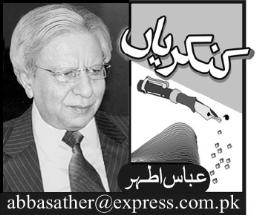
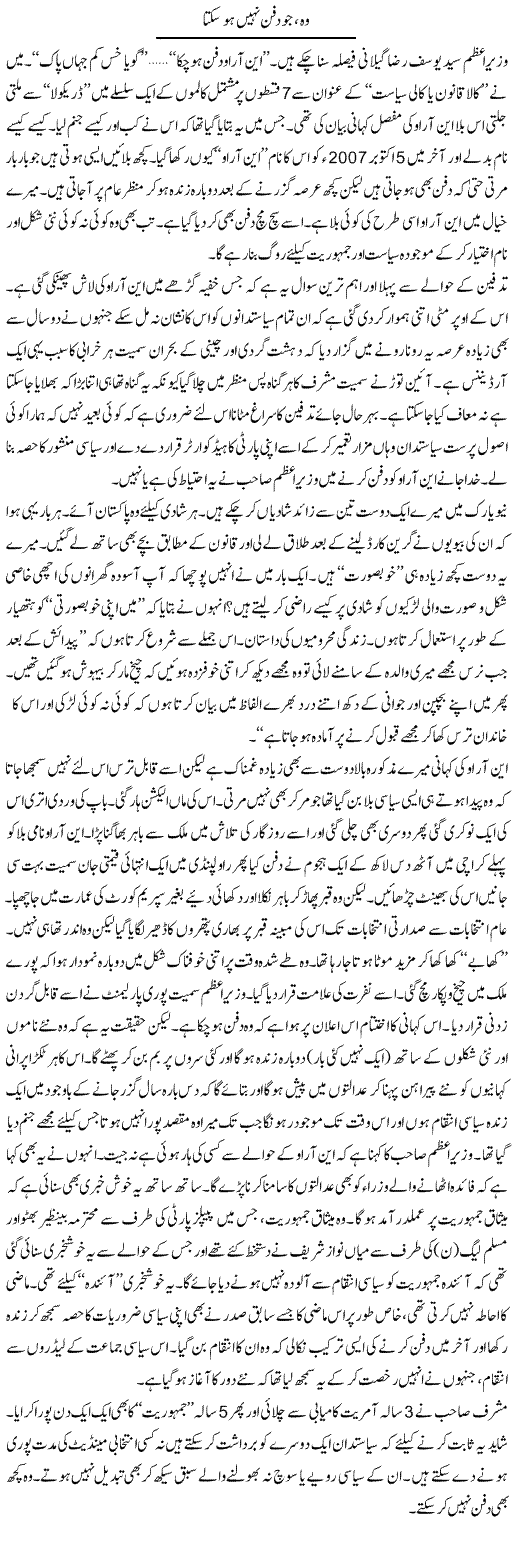
Abbas Ather notes that the right-wing (pro-Taliban) anchors and propagandists don't want to bury NRO; instead they wan't to bury democracy in Pakistan.

Munno Bhai wonders if the abusers of the freedom of media in Pakistan might need a "Saif-ur-Rehman" in the future?

Ayaz Khan advises anchors and journalists with a particular (pro-Taliban, anti-Zardari or anti-democracy) agenda to have a bit of objectivity in their reporting and analysis.

(Abbas Ather)

(Munno Bhai)

(Ayaz Khan)

Read more...

Wednesday, 4 November 2009

How did MQM foil PML-N's anti-democratic plans on NRO - An analysis

MQM denies ever pressing for Zardari’s resignation


November 3rd, 2009 - 2:30 pm ICT by ANI
Islamabad, Nov.3 (ANI): The Muttahida Quami Movement (MQM) has denied issuing any statement which asked for President Asif Ali Zardari’s resignation.

According to reports, a delegation of MQM leaders led by the leader of the party in parliament Dr. Farooq Sattar met Prime Minister Yousuf Raza Gilani to clarify its stance over the issue.

The delegation, which included Parliamentary Affairs Minister Dr Babar Awan, Petroleum Minister Syed Naveed Qamar and other senior party leaders, rejected media reports that the MQM president Altaf Hussain has asked Zardari to step down, The Nation reports. Earlier, it was reported that Hussain while asking his party leaders to oppose the National Reconciliation Ordinance (NRO) in parliament had advised Zardari to tender his resignation. Hussain, during an interview with a private television channel, said that he has directed his party members to oppose the NRO in parliament, and that he had also told the President that the ordinance was a ‘black law’.

Hussain said the government should not table the ordinance in the House as the people of the country have already rejected it. He, however, later clarified that he never asked for Zardari’s resignation. “I did not talk about Zardari’s resignation in the entire interview. We are not against the Pakistan People’s Party or Zardari. The MQM is not responsible if our advice is misunderstood. Neither can the MQM become a party to legalising corruption through the assembly,” Hussain said. (ANI)

....


By Latif Chaudhry


A day of reconciliation in NA
Wednesday, November 04, 2009
By By our correspondent

ISLAMABAD: It was a day of reconciliation in the National assembly after the government’s decision not to present the controversial National Reconciliation Ordinance (NRO) in parliament and the treasury benches received accolades from the opposition for bowing to the parliament’s demand.

Tuesday’s proceedings coincided with the second anniversary of the emergency and the PCO imposed by Musharraf and the House echoed with demand of his trial under the Article 6 of the Constitution. Interestingly, the PML-Q members, who were part of Musharraf’s dispensation, were also critical of the Nov 3 acts, but some of them, including Marvi Memon and Akram Gill, had a word of praise for him.

Kicking off the debate on a point of order, Leader of the Opposition Chaudhry Nisar Ali lauded the government for its decision not to table the NRO in the National Assembly. He asked the government to try Musharraf under the Article 6. “It is time to take concrete measures to make parliament a truly sovereign institution and the centre of power,” he added.

He announced that the PML-N would hold a rally outside the Parliament House today to condemn the November 3 action and to express solidarity with the judiciary. He appealed to all the political forces to join them.

Ahsan Iqbal said that after the Supreme Court’s verdict, the government was bound to proceed against Musharraf. Interior Minister Rehman Malik described the decision of not tabling the NRO in the House as ‘political wisdom’. Responding to a point of order, he agreed to give an in-camera briefing to parliamentarians about national security issues. Responding to Ahsan’s comment that US Secretary of State Hillary Clinton had said Pakistan provided no evidence on Indian interference in the country, Malik said foreign dignitaries gave such statements and “we are not supposed to respond.” Meanwhile, Speaker National Assembly Dr Fehmida Mirza clarified that neither she nor her husband ever took benefit under the NRO. (The News)

Also read: The Project IJI - Second Edition

Read more...

Wednesday, 9 September 2009

Shame on you, Hamid Mir, for fanning anti-Qadiani sectarianism!


Qadianis should be allowed to preach: Altaf

LAHORE: Qadianis should be allowed to preach their ideology in Pakistan, Muttahida Qaumi Movement (MQM) chief Altaf Hussain told a private TV channel on Tuesday. During an interview, he said politics and religion should be kept separate. He said he would establish a mosque, a church, a Hindu temple and a ‘Qadiani mosque’ if the MQM came into power. He also said the country’s name should be ‘Peoples’ Pakistan’ and people should choose whether it should be an Islamic Republic or a Peoples’ Republic. daily times monitor

http://dailytimes.com.pk/default.asp?page=2009\09\09\story_9-9-2009_pg1_5

Now compare Altaf Hussain's bold stance in support of religious tolerance, with the anti-Qadiani prejudice evident in Hamid Mir's column yesterday, in which Mir suggests (quoting an anonymous Wahhabi General) that in fact an Ahmedi low-rank officer of Pakistan Army (Major Nadeem Dar) was responsible for the anti-MQM operation in Sindh. What a joke!

Shame on you, Hamid Mir, for fanning sectarianism in the country. Indeed, you will never dare claim that Musharraf acted against the interests of Pakistan because he is a Sunni or that General Zia-ul-Haq conspired against the people of Pakistan because he was a Deobandi cum Wahhabi.

Shame on you, for spreading disinformation and hatred against minorities in Pakistan. And shame on those who believe you!

http://jang.com.pk/jang/sep2009-daily/07-09-2009/col3.htm


Read more...

Tuesday, 8 September 2009

Welcome MQM - Saleem Safi


Read more...

Sunday, 6 September 2009

Froma Kharadar to Khajji Ground: A report by BBC Urdu's Hasan Mujtaba


کھارادر سے کھجی گراؤنڈ تک

کراچی میں پولیس(فائل فوٹو)

سنہ بانوے میں کراچی میں امن و امان کی صورتحال ناگفتہ بہ تھی۔

مئی انیس سو بانوے میں حیدرآباد کے قریب گائوں ٹنڈو بہاول میں فوجی آپریشن میں قتل ہونیوالے نو کسانوں اور کھیت مزدوروں کے قتل کی تحقیقات کے لیے جب سندھ کے اس وقت کے کور کمانڈر جنرل نصیر اختر ٹنڈو بہاول گاؤں آئے تھے تو وہاں انہوں نے واقعے کے ایک چشم دید گواہ چھوٹے بچے سے پوچھا تھا کہ اس کے گھر پر چڑھائي کر کے اس کے ابا کو گرفتار کرنے والے لوگوں نے بھلا کپڑے کس طرح کے پہنے ہوئے تھے؟ بچے نے کور کمانڈر کی وردی کی طرف اپنی انگلی سے اشارہ کرتے ہوئے کہا تھا کہ ’ایسے کپڑے جیسے تم نے پہنے ہوئے ہیں‘۔ ٹنڈو بہاول آج کسے یاد ہے؟

ہونا تو یہ چاہیے تھا کہ انیس سو نوے سے لیکر چھیانوے تک کراچی اور سندہ کے شہری دیہی علاقوں میں جتنے ایم کیو ایم اور غیر ایم کیو ایم لوگ مارے گئے، جتنے سندھی، پنجابی، پختون، بلوچ اور اردو بولنے والے لوگ مارے گئے، جتنے پولیس، فوج اور رینجرز کے لوگ مارے گۓ ، کھاردار سے لیکر کھجی گراؤنڈ تک، لانڈھی سے لیکر لالو کھیت یا لیاقت آباد تک، منگھو پیر سے لیکر ملیر تک ان تمام لوگوں کے خون کا سراغ کسی کی گردن یا ہاتھوں پر ڈھونڈ لیا جاتا لیکن یہاں حساب بے باک ہو چکا ہے یعنی کہ ’یہ خون خاک نشیناں تھا رزق خاک ہوا‘۔

بریگیڈئیر امتیاز اور جنرل نصیر اختر یا حمید گل جیسے پاکستانی اسٹیبلشمینٹ کے ’ولی اللہ‘ اور ’بزرگان دین‘ نے مقدس اعترافات کر لیے جس کی کوئي سزا نہیں۔

’اور یہ وہ سورما ہیں جو آئی ایس پی آر کی ٹینکوں پر چڑھے سچ کی وادی کی سیر کو نکلے ہوئے ہیں‘۔ یہ الفاظ تھے جریدے ’نیوز لائن‘ کی ایڈیٹر رضیہ بھٹی کے جو انہوں نے انیس سو بانوے میں سندھ میں فوجی آپریشن پر نکلنے والے شمارے میں اپنےادرایے میں اس وقت لکھے تھے جب پاکستان کا تقریباً تمام پرنٹ و الیکٹرانک میڈیا فقط فوج کے شعبۂ تعلقات عامہ یا آئی ایس پی آر کی پریس ریلیز ہی چھاپ رہا تھا۔

فوج کی ایجنسی ملٹری انٹیلیجنس (ایم آئی) اور دوسری طرف انٹیلیجنس بیورو جس کے ڈائریکٹر جنرل تب بریگیڈئير امتیاز تھے اور آئی ایس آئی کے مابین بھی زبردست شورش نما چپقلش تھی۔ ان ایجنسیوں نے ہر اس شخص ادارے، افسر ، تنظیم اور لیڈر پر دست شفقت رکھا ہوا تھا جو یا سندھ کی صورتحال کی خرابی میں ایندھن پھونک سکتا تھا یا پھر سویلین حکومت کی چولیں ہلا سکتا تھا۔

مجھے یاد ہے کہ نیوز لائن کا وہ پرچہ جس کے سرورق پر فوجی کو لانگ بوٹ تلے ایم کیو ایم کا جھنڈا روندتے ہوئے دکھایا گیا تھا۔ ان دنوں ایم کیو ایم کا جھنڈا یا اس کے سربراہ الطاف حسین کی تصویر کا کسی سے برآمد ہونا ٹارچر اور شاید کچھ حالات میں موت کو دعوت دینا تھا۔ قطع نظر اس کے کہ اسی رضیہ بھٹی اور ان کے جریدے نیوز لائن کے عملے کو ایم کیو ایم میں دھڑے بندی یا اندرونی لڑائي کے متعلق رپورٹیں چھاپنے پر دہلی کالونی کے جلسے میں ایم کیو ایم کے سربراہ نے اپنی تقریر میں سنگین نتائج کی دھمکیاں دی تھیں۔

وہ فقط ایم کیو ایم کے اندر دو دھڑوں کے بیچ دنگا تھا بلکہ فوج کی ایجنسی ملٹری انٹیلیجنس (ایم آئی) اور دوسری طرف انٹیلیجنس بیورو جس کے ڈائریکٹر جنرل تب بریگیڈئير امتیاز تھے اور آئی ایس آئی کے مابین بھی زبردست شورش نما چپقلش تھی۔ ان ایجنسیوں نے ہر اس شخص ادارے، افسر ، تنظیم اور لیڈر پر دست شفقت رکھا ہوا تھا جو یا سندھ کی صورتحال کی خرابی میں ایندھن پھونک سکتا تھا یا پھر سویلین حکومت کی چولیں ہلا سکتا تھا۔

ایم کیو ایم کے دونوں متحارب گروپوں کے پاس ایک دوسرے کے کارکنوں کی ہٹ لسٹیں تھیں جن کے مطابق وہ ایک ایسے’سپرے‘ میں مصروف تھے کہ انیس سو بانوے سے انیس سو چھیانوے تک صرف کراچی میں دو ہزار لوگ قتل ہو چکے تھے۔ سرِ شام تھانوں کے دروازوں پر تالے پڑ جاتے مگر پھر بھی تقریباً وہ سب پولیس افسر قتل کر دیے گئے جنہوں نے کراچي آپریشن میں حصہ لیا تھا۔

’امبیڈیڈ جرنلسٹ‘ کا نام تو بہت بعد میں عراق کی جنگ میں سننے میں آیا لیکن کراچي اور پاکستان کا میڈیا تو بہت پہلے سے ہی امبیڈیڈ یا فوج کے ہمرکاب ہو چکا تھا۔

یہ وہ وقت تھا کہ جب کوئي بھی جوان اور مرد جس کی عمر تیرہ سے چالیس سال ہوتی اپنے گھر میں شاذ ونادر ہی رات کو سوتا تھا۔ چھاپے، محاصرے، ٹارچر، گمشدگیاں، بوری میں بند لاشیں عام تھیں۔ مجھے شاہ فیصل کالونی کے رہائشی ایک بزرگ نے اپنے ننھے منھے پوتے کی موت پر بتایا تھا کہ کئي ماہ میں یہ علاقے میں پہلی موت ہے جو غیر فطری نہیں تھی۔ کراچی کی ایمپریس مارکیٹ جیسا علاقہ بھی سرشام بند ہو جاتا تھا اور وہاں صرف برف اور پھولوں کی دکانیں کھلی رہتی تھیں۔ جہاں اکثرگاہک یہ ان دو چیزوں کی خریداری لاشوں کو تازہ رکھنے اور ان کی تدفین کے لیے کرتے تھے۔ ہٹ لسٹوں پر اہم شہری، سرکاری و غیر سرکاری شخصیات تھیں جن میں عبد الستار ایدھی بھی شامل تھے تو سندھ کے تب کے آئی جی پولیس افضل شگری بھی۔

انیس سو بانوے میں آپریشن شروع ہوا۔ کراچی سمیت سندھ ایک فوجی محاصرے تلے یا مفتوح علاقہ لگتا تھا۔ یہ سب کچھ خبروں میں نہیں آتا تھا کیونکہ تب آئی ایس پی آر کے کرنل صولت، میجر چشتی اور بریگیڈئير آصف ہارون کا کراچی میں طوطی بولتا تھا۔ ’امبیڈیڈ جرنلسٹ‘ کا نام تو بہت بعد میں عراق کی جنگ میں سننے میں آیا لیکن کراچي اور پاکستان کا میڈیا تو بہت پہلے سے ہی امبیڈیڈ یا فوج کے ہمرکاب ہو چکا تھا۔

کراچي میں آئي ایس پی آر کے میجر چشتی کا چند ’سرکاری وجوہات‘ کی بنا پر افریقہ تبادلہ کر دیا گیا تھا۔ ایف آئی ٹی یا فٹ (فیڈرل انویسٹیگشن ٹیم) کرنل آفریدی کے ماتحت لوگوں کی باندھ چھوڑ میں ملوث تھی۔ افغانستان اور سندھ ایسے دو علاقے تھے جن پر سویلین حکومتوں کی دسترس نہ ہونے کے برابر تھی۔

خیرپور میرس میں گلو سیال تھانے کی حد میں ایک ایسے شخص کی کیٹی پر ڈاکوؤں کی سرپرستی کرنے کے الزام میں چھاپے مارے نے والے ایس پی پولیس کو فوجی ایجنسی نے ڈاکوؤں کا ہمدرد بتا کر کھڈے لائن لگادیا تھا اور سندھی وڈیرے کو سندھ کا وزیر داخلہ بنا دیا گیا۔ بعد میں یہی ایس پی میجر امتیاز بینظیر بھٹو کے سکیورٹی انچارج بنے جو ان کے قتل کے وقت بھی ان کی سکیورٹی سنبھالے ہوئے تھے۔ یعنی کہ یہ تمام لوگ بینظیر بھٹو کے کتنے قریب تھے! (جاری ہے)

.....


Read more...

Saturday, 5 September 2009

General Aslam Beg's Message to Supreme Court


In his letter to Nazir Njai, General Beg admits his implict threat in his message to the Supreme Court of Pakistan.

MQM was established to counter Sindhi nationalists: Beg

Daily Times Monitor

LAHORE: Former army chief Mirza Aslam Beg said on Friday the Muttahida Qaumi Movement (MQM) was established as a political measure to counter the Sindhi nationalist movement following the hanging of PPP founder Zulfikar Ali Bhutto.

Talking to a private TV channel, Beg said the MQM did not exist before 1978 and was established on the directions of General Ziaul Haq, then military ruler, only to counter Sindhi nationalists who had lost Bhutto after Zia’s military coup.

He said the caretaker government under Ghulam Ishaq Khan had decided to support the Islami Jamhoori Ittehad (IJI) to counter the PPP in order to balance the political atmosphere. “I think the formation of the IJI was a right decision at the time,” he said.

Beg said the IJI were the only means that could create a strong opposition at the time.

He said former president Pervez Musharraf had created and supported the Muttahida Majlis-e-Amal (MMA) and the PML-Q to prolong his term in office, but no one had pointed that out.

Beg said he believed the Bahawalpur plane crash that killed Gen Ziaul Haq was “sabotage”.

‘Breaking’ news —Shaukat Qadir

We have been sliding downhill for too long, the slide must stop somewhere. Now is as good a time as any, and better than most, given a COAS who is bending over backwards to establish the principle of civilian supremacy

When I first read in the papers that the intelligence ‘Wonder Boy’ Brigadier Imtiaz Ahmed (retd) alias ‘Billa’ had decided to open his mouth and that he had been running from pillar to post asking people to interview him, I decided he was best ignored. However, I did wonder what treatment succeeded in ridding him of the constipation of years and why. That the disease (or should it be treatment?) was bound to be contagious was a foregone conclusion; and even when asked, I refrained from comment except to ask, “what was unknown that he has now disclosed?”

I have been prompted to write on the subject by PMLN leader Ahsan Iqbal’s ultimatum to the President and the response it has evoked.

What is there about our history that is unknown? Did we not know that the erstwhile IJI was a creation of the Zia-ul-Haq era, to counterbalance the PPP? Did we not know that a number of politicians were bribed to turn-coat and join the IJI? Lt Gen Asad Durrani submitted his affidavit to the Supreme Court naming individuals and sums disbursed by him while he was DG ISI, on the instructions of General Mirza Aslam Beg, then COAS, many years ago. The judgement is still withheld. That one of them has publicly acknowledged it redounds to her credit, but this is not the first time our politicians have been bought or sold, nor is it likely to be the last.

As the DG ISI, Lt Gen Hameed Gul in his first briefing to Benazir Bhutto as prime minister, acknowledged that he and the ISI played a role in creating the IJI.


We all know how the PMLQ took birth with Pervez Musharraf as midwife. We have witnessed the party deserting him and the formation of a ‘Forward Bloc’. We are all aware of how the religious political parties were nurtured by Zia and later by Musharraf. We have witnessed them being bought and sold so many times that it is not possible to predict who they will support tomorrow.

Did we not know that the MQM was another creation of Zia to counterbalance the PPP in the major urban centres of Sindh, Karachi and Hyderabad? Did we not know that when Zia lost control of the MQM and this organisation began to terrorise the two urban centres under its total control, Zia tried to counter it by creating the MQM (Haqiqi)? Did we not know about the MQM’s methods; were we unaware of the Musharraf-MQM nexus? Any doubts as to the latter were put to rest in May 2007.


Did we not know about an announced intention to create a homeland for the ‘mohajirs’? What is the fresh disclosure in the ‘maps of Jinnahpur’? Whether there were any or not, the intent was known publicly.

Who was unaware that Gen Beg made every effort to subvert Benazir Bhutto’s first tenure as PM? Or that he was suitably rewarded by Nawaz Sharif, when he retired, by providing him the funds to set up the organisation called FRIENDS? Who was unaware that, at a time when Benazir Bhutto was seeking reconciliation with India and had ordered the army not to interfere in Indian-held Kashmir, Gen Beg was fighting his private war there, funnelling millions to support it?

However, there is an upside to this public washing of our dirty linen. Whoever had any illusions left about our politicians’ or our military leadership’s role in playing havoc with the country at every given opportunity in our history is likely to lose them. What is more, it throws into stark contrast our current apolitical army leadership.

Other retired friends tell me they feel bad about the damage all this is doing to the army’s reputation. In my view, that is the best part of it all. No institution should be considered to be, or be, above the law. It is time, and more, that senior military officers again become accountable to the people and to the representatives of the people — however contemptible or reprehensible the elected representatives might be. It is also high time that the people begin to hold their representatives accountable.

We have been sliding downhill for too long, the slide must stop somewhere. Now is as good a time as any, and better than most, given a COAS who is bending over backwards to establish the principle of civilian supremacy. I am sure he will pass this test with flying colours, as he has done every one in the past. (Daily Times)

.....

Democracy deficit? —Abbas Rashid

Meanwhile, a former spook with the most unsavoury of reputations has been a feature on the airwaves, making revelations that are clearly politically motivated. What Brigadier Imtiaz Ahmad (retd) has to say about the 1992 operation against the MQM and the absence of any Jinnahpur maps as well as other matters is largely geared to embarrass Nawaz Sharif. The Nawaz camp thinks this is a manoeuvre by the PPP to get them to back off on the issue of the NRO or the minus-one option (PPP minus Zardari). Hopefully, they are wrong.

Again on the issue of General Musharraf’s trial, the PPP regards this primarily as a move to put them in a difficult spot by pitting them against the army. So, there is a pragmatic consideration here on the part of the PPP not going forward on this. At the same time, while Musharraf may have illusions of leading at least a faction of the PML back in Pakistan, it is more likely that given the serious charges against him, he will come to prefer exile to his day in court.

There are also calls to proceed with another case that impinges crucially on the area of civil-military relations, and has been before the Supreme Court for around thirteen years, since 1997. The petitioner, a well-respected former military officer, Air Marshal Asghar Khan (retd) had brought the case against former Army Chief General Aslam Beg (retd), ex-ISI chief Lt Gen Asad Durrani (retd) and ex-chief of Mehran Bank Younis Habib. Essentially, Beg is accused of instructing Durrani to disburse money provided by Habib to the newly formed IJI by way of ‘logistic’ support.

The interesting thing about this case is that in an affidavit before the court, Durrani has admitted to disbursing the money and named the politicians as well as the sums handed over. And, as Justice Saeeduzzaman Siddiqui reminded us in a recent appearance on TV, none among the recipients had denied getting the money. More recently, though, some have.

Regardless, it is Durrani’s claim that he was only obeying a superior officer’s orders and Beg would have us believe that the orders had actually come from the chief executive at the time, President Ghulam Ishaq Khan. And was anyone trying to determine the legality or otherwise of such orders, before carrying them out? How disposed the Supreme Court is to take up this case again remains to be seen.


PM doesn’t mind!

Prime Minister Yousaf Raza Gilani has taken the tension out of the political atmosphere in the country by telling journalists in Karachi on Thursday that he took opposition criticism in his stride. His view was that governments did not fall by “disclosures” of the sort being made on TV channels these days.

Mr Gilani said something more meaningful after coming out of a meeting of the Sindh cabinet. When his attention was drawn to remarks made by PMLN leader Mr Nawaz Sharif that “failure of the PPP-led coalition was becoming failure of democracy”, he said: “I don’t mind what Nawaz Sharif Sahib says”.

He was right in conceding that the party in power has to be long in patience and that the opposition is always more strident in its criticism. Also he can ignore a lot of the criticism being bandied about these days about his government being “inactive”. Being rash in action simply to satisfy a few politicians and some partisan TV anchors might land him in trouble.

Most of the problems facing him are issues of either long gestation or of slow resolution. That the economy is in trouble and terrorism forces the state to lean on international support is also not his fault. There are signs of slow improvement in the economy; and the military operations against the terrorists are not going badly at all. As for Mr Sharif, he is a “friend in opposition” as he himself likes to admit.

The Raza Rabbani committee in parliament is shortly going to present the constitutional amendment that will get us rid of the universally abominated 17th Amendment. After that, the only issue left would be the trial of General (Retd) Musharraf. We hope that the PMLN will not insist upon it to the exclusion of everything else in the longer term interest of political stability in the country, as Saudi King Abdullah is wisely advising. (Daily Times)


Read more...

Monday, 31 August 2009

PTI demands treason case against Nawaz


Monday, August 31, 2009
By By our correspondent
Karachi

The Pakistan Tehreek-e-Insaf Sindh (PTI) has demanded that a treason case be registered against former Prime Minister Nawaz Sharif for killing 15,000 people in Karachi in a military operation launched in 1992 in Sindh, especially in Karachi.

The demand was made by the provincial PTI leader Ashraf Qureshi, who stated that the disclosure of Brig Imtiaz, ex-Intelligence Bureau (IB) chief, regarding the military operation in Sindh in Nawaz Sharif’s government exposed the actual plan of the Pakistan Muslim League-Nawaz (PML-N) leader, which he started in 1990 when he was chief minister Punjab.

Qureshi said that a treason case should be registered not only against Brig (retd) Imtiaz but also against Sharif who approved the military operation in Sindh.

Qureshi said that the aim of the military operation in Sindh particularly in Karachi was to destroy Sindh and its economy and the PML-N government attempted to pressurise the investors into shifting their capital to Mian Channo and other areas in Punjab for investment.

The PTI leader also urged the party chief Imran Khan to distance himself from Sharif because the aim of his politics is to damage democracy and unity among the four federating units of the country.

Source

Read more...

Saturday, 29 August 2009

There is far more to be lost than gained by any action against Gen Musharraf, says Ayesha Siddiqa.


Capital games
By Ayesha Siddiqa
Friday, 28 Aug, 2009

The present PPP leadership understands the cost of exposing Musharraf who will certainly be protected by his own institution, a facility that others in this polity do not have. –File Photo

People wonder why the present government is not trying Gen Musharraf. Is it just due to its goodness of heart or is there something else that might be the cause of this apparently cautious behaviour?

Actually, there are two issues at hand here. First is the evasiveness of the prime minister. While not making any move to bring a case in court against the former general, Mr Gilani appears to be raising hopes by giving the impression to the people and various political parties that the former dictator may actually be tried in a court of law.

Second, perhaps the prime minister is not pursuing the case because he understands that there is far more to be lost than gained by any action against Gen Musharraf. We always tend to forget that there were actually three parties to the deal that allowed Benazir Bhutto and her spouse to return to Pakistan: (a) the Bhutto family and party, (b) the US and British negotiators and (c) the Pakistan Army which was ruling the country through its chief.

The former general left the seat of power with great reluctance and later the country as a free man — surely there must have been some guarantees allowing him to do that. The role played by his organisation in providing him an easy passage cannot be ruled out. Unfortunately, whenever democracy passes through a transition period we tend to forget, at least in Pakistan, that the army is a powerful force and negotiating power in the long term is not an easy task.

The organisation would certainly not want one of its own maligned and castigated publicly. After all, a public trial of one of its members is an embarrassment that no general who might consider taking over the state in the future would want. An institution which believes that it alone knows how to rule and has the best interest of the state at heart will never give up the option to return to power directly.

For all of us, who are constantly unhappy with the president, perhaps he is far more intelligent in understanding the power of the army and the wrath that the mention of Musharraf’s trial might invoke. One has to behave sensibly especially when there are skeletons in the cupboard that could be discovered. It takes only a few disclosures or controversies to malign a politician.

Just take the example of matters that are being brought up on the media in the past couple of weeks. First there was the controversy relating to the 1992 army operation. Why worry about Kargil when stakeholders are also accusing Nawaz Sharif of his involvement in the 1992 cleanup operation in Karachi? Has the MQM leadership brought this up so that the May 12, 2007 killings in the metropolis are disregarded, even though at this point there weren’t too many people questioning the MQM?

Perhaps, the idea was not so much about obfuscating its alleged wrongdoings as highlighting what could be questioned about Nawaz Sharif’s political behaviour.
The PML-N leader has the option of going public with what exactly happened in Karachi and disclosing the extent of the army’s involvement. However, he could also get bogged down in further controversy. In any case, the Karachi story is not the only one. There are others which involve financial scandals as the list of politicians, some of them very high-profile, who allegedly received funds from the ISI indicates.

Although this list has been published a number of times before, the issue here is why it has been brought up at this point. Interestingly, a revelation made more than a year ago by the US-based Pakistani author Shuja Nawaz in his book Crossed Swords that included names like Hafeez Pirzada did not get much publicity.

This is not to argue that politicians are not corrupt. In fact, the problem is that politicians in this country, like the military leadership, have engaged in questionable and compromising behaviour. However, the point being raised here is that it is only the stories of unfriendly politicians that are leaked or brought up again from time to time and then built upon in the media. So, the present PPP leadership understands the cost of exposing Musharraf who will certainly be protected by his own institution, a facility that others in this polity do not have.

A better option would be to get all politicians to clean up their act. For instance, the MMA government in the Frontier province used religion as a ploy against the federal government every time it had to bail itself out of a tough corner.

Clearly, there is always a list of favourite versus not-so-favourite politicians. The list, which is pulled out for the public eye, depends on who is not in favour with the establishment at a given time. This is a sad state of affairs where neither the establishment nor the politicians can be said to be above board. All that is left is for the stakeholders to play the game of survival.

The writer is an independent strategic and political analyst.
ayesha.ibd@gmail.com (Dawn)


Two trucks and a jeep
Saturday, August 29, 2009
Taj M Khattak

In the aftermath of last month's Supreme Court decision invalidating Musharraf's actions of Nov 3, 2007, the debate has warmed up once again as to whether doors for martial laws have been shut for ever. While the judgment has been hailed by some as landmark and historic, one experienced politicians observed that all it takes to show the door to the present civilian regime is two trucks and a jeep.

The country is on a crossroads and it would be useful to rewind our collective memory and review where we made a hash of opportunities in the past.

After the 1971 fiasco the military was totally demoralised, with over 93,000 PoWs were languishing in India. It was time for some delicate and deft handling in Pakistan to resurrect its bruised armed forces into a credible fighting machine once again. It was the need of the hour to give it both a sense of ownership and a stern stewardship to confine it to barracks under the civilian authority.

One would have thought that Zulfikar Ali Bhutto had, emphatically and authoritatively, stamped civilian authority over the military when, in one sweep, he retired nearly two dozens general-rank officers of the three services on Dec 18, 1971.

Had Bhutto paused there and initiated the now much talked about "truth and reconciliation" exercise, he might have been hugely successful in removing the civilian-military distrust. Quite to the contrary, when he assumed the title of civilian chief martial law administrator, he unwittingly dignified the concept of military rule over the civilians.

His sacking of the Army and Air Force chiefs caused a minor stir, but he could still have had the confidence of the country's soldiers to look up to him for redemption of their lost honour and dignity.

But when he decided to show the Pakistani Army's surrender ceremony at Dhaka on the TV, he went too far. The soldiers, already smarting under the ignominy of the surrender at Paltan Maidan in Dhaka, were immensely disillusioned.

Bhutto, the political master of the country that he was at the time, could have emulated the circus ring master, who after getting the tame lion perform its entertaining act for the audience, "walks back" the lion to its cage, and once inside, slams the door shut on the animal.

As Zia appeared for his "My dear countrymen" speech in 1977, the nation hardly remembered that only six years ago, Bhutto had pronounced an end to all military takeovers.

The next opportunity for the political leaders to regain what was theirs came in 1985. Zia, after a lot of dithering, had handpicked Muhammad Khan Junejo as his prime minister, and he surprised his mentor, in his very first speech from the floor of the Parliament, when he bravely, and to the applause of all members, announced that democracy and martial could not go together.

He had thrown the gauntlet to Zia and in retrospect that should have been enough. Zia was at the end of his rope from God, Junejo could just have bided his time and the history of this country might have been different. But he also probably wanted to make history when he announced that he will put the generals in a Suzuki car.

The Suzuki was quite a comfortable vehicle to begin with, and most people saw no issue getting into it. But when the tone and tenure of Junejo's statement of "putting the generals in Suzuki" (like Zardari rolled the word Musharraaf in his press conference before forcing him to resign), echoed from the cantonments across the country, the Suzuki, suddenly looked an alien vehicle.

Junejo's obsession with the Ojri Camp disaster's investigations, as we all know, was the last straw on the camel's back, and thus another opportunity was squandered. In the immortal words of Munir Niazi, kuj shehr de log ve zaalim san, kuj sanu maran da shouq ve see. ( Niazi's poetry defies translation, but a bad and a loose one might go like this: They, at the township were no angles, but in no small measure did I too contribute to my own undoing.)

Come Benazir Bhutto and she put up quiet gracefully with her COAS, a disciplined soldier otherwise, who would just never appear with headgear in her vicinity, which said it all, as to where the civil-military relations rested.

She yet tested the waters futilely, after the Zarb-e-Momin exercise, in trying to place the then Corps Commander 4 Corps (largely seen as a dove) as deputy chief of the Army

Staff at the GHQ after granting him an extension, which was seen as a sinister plan. His retirement put an end to any strategy she might have had in mind about civilian supremacy over the military, till the country entered Nawaz Sharif's era.

Nawaz began with sacking the then CNS, but soon stumbled on something quite unnecessary when he overreacted to a statement on national security from Gen Jahangir Karamat. Gen Karamat was as level-headed a general as they come, and an odd statement need not have alarmed Nawaz to an extent which ended up in such a severe reaction.

Having seen the back of Gen Karamat, Nawaz could not resist the idea of putting his own man in the GHQ, without realising that the ground under his feet was slipping very fast. Just as Bhutto had reached the edge with a series of actions seen by the military as hostile, and Junejo after him, Nawaz had reached the danger zone with the sacking of Gen Karamat, and the rest, as they say is history, when the military, to the misfortune of the nation, once again moved to centre-stage.

An idea being floated these days about "one more term to the army" is patently naïve, to say the least. What did not work for Zulfikar Ali Bhutto, Benazir Bhutto and Nawaz is unlikely to work for President Zardari.

The July judgment is an important one, no doubt, but that in itself is unlikely to shut the doors permanently on martial laws. The rulers could do with a little more surplus of credibility, rather than the present deficit of trust.

In August 1991, Boris Yelsten climbed atop a Soviet Army tank on the roll in a coup attempt against Gorbachev. Yelsten had no love for Gorbachev, nor was he such a popular democrat, but his climb on the tank signified a big "No" to the Soviet military, and that alone which made a huge difference.

Invest in the people of Pakistan. Give them good governance, give them their hopes in the future of their land for which their forefathers sacrificed so much and they too will stop the two trucks and the jeep dead in their tracks the next time they venture out of 111 Brigade headquarters.

If not, and with utmost deference to their Lordships, the landmark and historic judgments and Musharraf's trial proceedings, if any, will, sooner than later, form part of the archives in bar rooms for the well heeled lawyers for hair splitting arguments in the future.


The write is a retired vice admiral and former vice-chief of the naval staff. Email: tajkhattak@ymail.com (The News)


Read more...

A comprehensive review of the ISI money, Nawaz Sharif, IJI and MQM Pandora Box

PML-N’s losing grace

Behaviour of the party's gung-ho may tarnish PML-N image as moderate. — File Photo

ISI money case to reopen old wounds, hurt many
Situationer

Saturday, August 29, 2009
By Amir Mir

LAHORE: Former chief justice of Pakistan Saeeduzzaman Siddiqui’s statement that the Inter Services Intelligence dished out millions of rupees to different politicians during President Ghulam Ishaq Khan’s regime to manipulate the 1990 elections, followed by Asghar Khan’s demand that the present chief justice should re-open the said case which he had filed in 1996 to take it to its logical end, has dusted off an old controversy, which is set to blemish the democratic credentials of many leading politicians of the country.

Chief justice (retd) Siddiqui told a private TV channel that the ISI was an intelligence agency and it should not interfere in national politics, or be used against politicians. Seasoned politician Air Marshal (retd) Asghar Khan had gone one step ahead in asking Chief Justice Iftikhar Chaudhry to reopen the case he had filed with the apex court almost 13 years ago with a view to take the culprits to task. His case is pending with the Supreme Court of Pakistan following the November 1997 unceremonious exit of former chief justice Sajjad Ali Shah from his office at the hands of the then prime minister Nawaz Sharif. The case had originated on June 16, 1996 from a letter by Asghar Khan to the then chief justice Sajjad Ali Shah, asking him to take appropriate action on then interior minister Naseerullah Babar’s statement in the National Assembly. Babar had stated on the floor of the house: “The ISI collected some Rs 140 million from the Habib Bank Ltd and distributed among a number of politicians prior to the 1990 elections with a view to manipulate the results in favour of the Islami Jamhoori Ittehad.” Asghar Khan’s letter was subsequently converted into a constitutional petition (19 of 1996) by the chief justice under Article 184(3), envisaging the human rights jurisdiction of the apex court. According to the petitioner, Asghar Khan, he had sent the first letter with the sole purpose of exposing the role of the ISI in manoeuvring the election results and supporting its favourite politicians to fulfil political ends of the establishment. “You never know how many elections have been rigged and manoeuvred by the ISI in the past,” Asghar had stated in his letter to the CJ, adding the ISI moves since 1988 were actually aimed at defeating the PPP and, therefore, the matter be adjudged and action be taken against those found guilty.

The respondents in the said case were former Army chief Mirza Aslam Beg, Lt-Gen (retd) Asad Durrani, ex-director-general of the ISI Directorate, and Younis Habib, ex-chief of ex-Mehran Bank Ltd, then confined to Central Jail, Karachi. However, the case could not be decided because of the premature dismissal of chief justice Sajjad Ali Shah. He was followed by CJPs Ajmal Mian, Saeeduzzaman Siddiqui, Irshad Hasan Khan, Bashir Jehangiri, Shaikh Riaz Ahmed, Nazim Hussain Siddiqui and now Justice Iftikhar Mohammad Chaudhry. Yet, even after a lapse of 13 years, the Human Rights Petition No 19/96 remains shelved as none of the chief justices after Sajjad Shah had dared to invite the wrath of the mighty military and intelligence establishment by reopening the controversial case. In his written reply to the apex court and subsequently reported by the media, Aslam Beg had stated: “More serious damage has been caused to the reputation and the goodwill of the armed forces by Air Marshal (retd) Asghar Khan in bringing the petition before this Honourable Court and raising an issue before the apex court which of course would receive great publicity and would cause greater damage by scandalisation in the media... That dragging the ex-service chief to the courts on a letter may be detrimental to the prestige, honour and dignity of the institution he has once represented. That Asghar Khan has approached this august court with ulterior motives and his representation is based on mala fides.”

Beg had stated in his written reply to the apex court: “That in early September [1990], Mr Younis Habib, then serving in the Habib Bank Ltd as Zonal Chief, had called on the answering respondent [Beg] and informed him that he was under instructions from the President’s [Ghulam Ishaq] Election Cell to make available a sum of Rs 140 million for supporting the elections of 1990.

“That in 1990 the National Assembly of Pakistan was dissolved and the government of Ms Benazir Bhutto was dismissed. A caretaker government was formed to hold elections within 90 days. The then president, Ghulam Ishaq Khan, had formed an Election Cell directly under him managed by Roedad Khan/Ijlal Haider Zaidi. That later on, the answering respondent was informed by Director-General, ISI, that various accounts were opened and the amount of Rs 140 million was deposited in those accounts directly by Younis Habib. Director-General, Inter Services Intelligence, made arrangements to distribute these amounts amongst the politicians belonging to various political parties and persons as instructed by the Election Cell.”

The petition further stated: “That in 1975, Zulfikar Ali Bhutto, the then prime minister, had created a Political Cell within the ISI organisation. As a result, the ISI was made responsible to the chief executive, i.e. the prime minister/president for all matters of national and political intelligence. The receipt of this amount by ISI from Younis Habib in 1990 was also under the directions of the Chief Executive. DG ISI also informed the answering respondent that funds so received were properly handled and the accounts were maintained and that Ghulam Ishaq was briefed by him on this matter.

“That during this period, in his meeting with President Ghulam Ishaq Khan, the answering respondent had informed him about the donations made by Younis Habib and its utilisation by DG ISI under the instructions of the Presidentís Political Cell. That the petitioner has made the following allegations : (a) actions of Gen Mirza Aslam Beg and Lt-Gen Asad Durrani amounted to gross misconduct; (b) both have brought the armed forces of Pakistan into disrepute; (c) both have been guilty of undermining the discipline of the armed forces. That these allegations are false, based on mala fide, and unfounded. That DG had ISI acted within the limits of the ‘lawful command’ received from the President’s Election Cell. Definition of lawful command as interpreted by Pakistan Army Act Section 33 Note b(3) is: ‘A superior can give a command for the purpose of maintaining good order or suppressing a disturbance or for the execution of a military duty or regulation’, and Pakistan Army Act Section 33 Note b(11): ‘A civilian cannot give a ‘lawful command’ under this sub-section to a soldier employed under him; but it may well be the soldier’s duty as such to do the act indicated. That the actions of the respondent and Lt-Gen Asad Durrani did not amount to gross misconduct and the orders were carried out under a lawful command.”

Afterwards, a former ISI DG, Lt Gen (retd) Asad Durrani, had conceded in an affidavit submitted to the FIA that his political cell received Rs 140m from Younis Habib for distribution among the anti-PPP politicians at the behest of Aslam Beg. (The News)

PML-N warns of long march if Musharraf ‘not fixed’

Saturday, August 29, 2009
Says ISI money matters can’t undermine Nawaz’s popularity; threatens protest if vilification against its leader doesn’t stop
ISLAMABAD: The Pakistan Muslim League-Nawaz said on Friday it could go for a Long March to ensure former president Pervez Musharraf was punished.

Addressing a news conference, PML-N Secretary Information Ahsan Iqbal on Friday said that character assassination of the party chief Nawaz Sharif could in no way deter the PML-N’s struggle for the supremacy of the Constitution, parliament and Musharraf’s trial under Article 6.

He said: “We succeeded to get the deposed judges reinstated despite the fact that democracy had not yet strengthened its root in the country at that time. This time too, we would make firm efforts to get our constitutional demands fulfilled,” said the information secretary.

He said the issue of Karachi operation was being trumpeted by those who afraid of Nawaz’s increasing popularity, adding that if such malicious campaign was not stopped, the N-League reserved the right to protest in as well as outside the Parliament.

The party leader said the November 3, 2007 steps were not protected under the Constitution, so it was essential that the person who took such steps must be tried. Ahsan Iqbal said the matter of giving money to political leaders by the secret agency could not undermine Nawaz’s popularity and people elected him despite such maligning drive. He told the media that the military operation in Swat got appraisal from all circles and if this operation had been carried out by dictator, it could have never won such praise. (The News)


In the ring
Thursday, August 27, 2009
The hand of the so-called 'establishment', that shadowy entity comprising the army, the bureaucracy and the agencies among other forces, has long been a part of politics in Pakistan. The coming and going of governments, the downfall of individuals and all kinds of other events are attributed to it. But today, we apparently find this powerful entity locked in what appears to be an internal dilemma. According to a report in this newspaper and rumours that drift across Islamabad's leafy avenues, elements within the establishment are engaged in an all-out effort to discredit Nawaz Sharif, a man whose political career is said to have begun with the support of the same lobby. The purpose appears to be to save former president Musharraf from trial – and possibly by exposing or threatening to expose misdeeds from the past – pressurising Sharif to abandon the strident position he has taken on the issue. It has been alleged that key figures have attempted to use the media to advance their stance and that a Karachi-based political party is also being used for the same purpose.

The tussle is a fascinating one in many ways. The PML-N, which insists it will not back down, has for the first time come up directly against those with whom it is said, in the past, to have worked with hand in glove. The accounts also suggest that as many suspect, the army is indeed keen to save a former chief and by doing so keep intact the notion that the men who wear khaki cannot be touched and ride above the law of the land. There have been some suggestions that Nawaz Sharif may still have supporters in powerful places who are willing to back him against Musharraf – thus opening up a distinct divide.

As has happened before, such events also act to throw light on some of the more murky deeds in our history. Sadly these are many. The continued lack of access to information means that truths about corruption rackets or other equally dark deeds rarely surface unless somebody wants to throw back the dust covers and expose such goings-on, to serve their own purposes. As such, there is a possibility, as the power struggle hinged around Musharraf continues, that more facts may emerge from the past. These could help satisfy curiosity and give the public more information about leaders. The risk though of course is that accuracy will be lost amidst the effort to score points. It is impossible for the present to predict who the winner will be in the ongoing tussle. But what it does underscore is the powerful role the establishment still plays in our set-up and how difficult it indeed is to distance the military from events in the political sphere. (The News)

60 MQM men buried in Margalla hills in 1997: Shujaat

Thursday, August 27, 2009
ISLAMABAD: PML-Q chief Chaudhry Shujaat Husain has disclosed that at least 60 activists of the MQM were buried in the Margalla Hills of the Federal Capital in 1997.

Talking to a TV channel on Wednesday, he said the said activists, apprehended from Karachi, were shifted to Islamabad, where they were tortured to death and later buried in the Margalla Hills. No investigations of any sort were held regarding the killing of the detainees.”

Chaudhry Shujaat further disclosed: “I was Federal Interior Minister at that time, but Chairman Accountability Bureau Saif-ur-Rahman was more influential than me. The map, which the law-enforcement agencies exposed, has no reality.

Responding to a query, he elucidated that trial for the former dictator Pervez Musharraf would not be held. Shujaat said he was personally not in favour of presenting the resolution in the House. The incumbents, as at this juncture of time, should focus their attention to relieve the masses from prevailing energy and commodity crisis, instead of indulging in dead issues.

The PML chief said the political leadership of the country was taken into confidence in connection with the 1992 military operation in Karachi. The federal cabinet was also not briefed before the military operation in Karachi, he said.

The PML-Q leader expressed his anger that the issues of 1992 military operation and ‘Jinnahpur’ were being aired at this particular time to divert the attention of the masses from prevailing crisis.

Meanwhile, the spokesman for the PML-N, Siddiq-ul-Farooq, while refuting the allegations levelled by Chaudhry Shujaat, emphasised that the PML-N chief had nothing to do with any sort of genocide during his both the tenures.

Farooq said Chaudhry Shujaat Husain was federal interior minister in 1997 and should have resigned from his office, if he had any moral courage, over the ëkilling of 60 activists of the MQM in the Federal Capital. (The News)

Chief politicians embezzle donation money in Ishaq era


KARACHI: According to the sworn undertaking of ISI’s former chief Lieutenant General (rtd) Asad Durrani, which he took before Supreme Court (SC) on July 24, 1994, that he was instructed in September 1990 by the then Chief of Army Staff (COAS), the former General Mirza Aslam Baig for provision of Logistic Support to embezzle money donated for election preparations from some Karachi traders and use the same donation money for Islami Jamhuri Ittehad (IJI) party.
Asad Durrani was told that the instructions to misappropriate donation money were backed by the then government of Pakistan, according to his affidavit statement before SC.

Subsequently, in pursuit of the instructions he received, he was forced to open some fake bank accounts in Karachi, Quetta and Rawalpindi while one donator from Karachi, by the name Younis Habib, deposited as much as 140 million rupees and the money from all accounts were transferred to other places according to the need for extension of logistic support to IJI party while the remaining money was transferred to a special fund, his sworn statement added.

His statement further added, Rs10 million were given to Mir Afzal in NWFP province, Rs3.5 million to Mian Muhammad Nawaz Sharif in Punjab, Rs5.6 million to Lieutenant General (rtd) Rafaqat for advertisement on media, Rs5 million to Jamat-e-Islami, Rs1 million to Begum Abida Hussain, Rs0.5 million to Altaf Hussain Qureshi and Mustafa Sadiq, Rs3.3 million to small groups, Rs5 million to Ghulam Mustafa Jatoi in Sindh, Rs5 million to Jam Sadiq, Rs2.5 million to Muhammad Khan Junejo, Rs2 million to Pir Pagara, Rs0.3 million to Molana Salahuddin, Rs5.4 million to small parties, Rs1.5 million to Humayun Muree, the son-in-law of Bugti, Rs4 million to Jamali, Rs1 million to Kakar, Rs0.7 million to Jam Yousuf, Rs0.5 million Bazinjo and Rs1 million were given to Nadir Mengal. (The News)

It is pertinent to mention that the value in rupees of 12 grams of gold was Rs33 at the time when money was misappropriated while it stands at Rs29,000 today. (The News)


Nawaz Kush Campaign and Fauji Chooran - By Rashid Murad:


Some relevant comments:
Source: pkpolitics

runaway said:

Now NS claiming that 92 operation was done without his permission. What the hell? He was the Prime Minister of PAKISTAN not PUNJAB.

Kargil done without his knowledege..92 operation done without his permission.
Was Qarz Utaro Mulk Sanwar and Dollar Freeze also done without his knowledge…bhola !!

Gul said:

I totally disagree the ‘quaidabad’ issue is of headline importance. This was clarified way back in 92 soon after the accusation was made.

Brig. Imtiaz’s bringing it up yet again, at this time, is nothing but a typical red herring to distract from the genuine issue of MQM’s terrorism, and the inquiries it now faces. It is also being used to somehow weaken Nawaz Sharif, who appears unstoppable in gaining popularity. It suits, and has always suited, the establishment not let any one political party or leader become very strong. Keep them all weak, thereby keeping own hold on country.

There can be NO other purpose in bringing up such a non issue at this time, and sending all the talking heads spinning into this rat hole.

Amir Hameed said:

@Gul,
Re: your post above, I tend to disagree with you. We need to highlight the role of intelligence agencies in weakening the political structure of this country. Hamid Gul has also issued a statement recently where he has indicated how the agencies were involved in forming IJI. The bottom line is that agencies need to stay out of the political structure, period.

Gul said:

@Amir Hameed

I agree with you a 100% on the need to struggle against agencies’ role in preventing Pakistan from ever acquiring a strong democratic dispensation.

Where I don’t agree is that this dead issue, a red herring, will do that. As I said, the fact that there never was such a map was very much contradicted and clarified very shortly after the claim was made. Beating this idiotic and long failed, long disproven claim, NOW, is meant to serve purposes entirely different form highlighting agencies’ role in the past or the present.

Amir Hameed said:

@sacheebat,
…unless politicians or parties are involved in anti-Pakistan or other illegal activities…

That is fine but it is related to treason and not the political structure. Agencies’ role should be to protect the country, both from inside and outside threats, BUT not to interject their influence in the political structure.

@Gul,
Re: this being a dead issue; Altaf Hussain’s speech in India should also be a dead issue because we all know that it DID happen but we beat this dead horse every single chance we get. In the context of Jinahpur, I do not see any reason why we should not discus a) who orchestrated it, meaning where did the orders come from? b) why was it done? c) What was the role of the-then government?

These are all legitimate questions and should not be put under the cover. People have the right to ask and to know the truth.


Read more...