Editor's Choice

--------------------------------------------------------------------------------------------------------------------------
Featured Post
--------------------------------------------------------------------------------------------------------------------------

"Let us build Pakistan" has moved.
30 November 2009

All archives and posts have been transferred to the new location, which is: http://criticalppp.com

We encourage you to visit our new site. Please don't leave your comments here because this site is obsolete. You may also like to update your RSS feeds or Google Friend Connect (Follow the Blog) to the new location. Thank you.


--------------------------------------------------------------------------------------------------------------------------
Showing posts with label Mullah Military Alliance. Show all posts

Saturday, 28 November 2009

Above the law: Can anyone hold this child of Islamofascism accountable?

Jailed militant’s hoax calls drove India, Pakistan to brink of war
By Azaz Syed
Thursday, 26 Nov, 2009

ISLAMABAD: Omar Saeed Sheikh, a detained Pakistani militant, had made hoax calls to President Asif Ali Zardari and the Chief of Army Staff, Gen Ashfaq Parvez Kayani, in a bid to heighten Pakistan-India tensions after last year’s terrorist attacks on Mumbai, investigators have told Dawn.

‘Omar Saeed Sheikh was the hoax caller. It was he who threatened the civilian and military leaderships of Pakistan over telephone. And he did so from inside Hyderabad jail,’ investigators said.

The controversy came to light after Dawn broke the story, exactly one year ago, that a hoax caller claiming to be then Indian foreign minister Pranab Mukherjee was making threatening calls to President Zardari.

It was on the night of Nov 26 last year that Saadia Omar, Omar Sheikh’s wife, informed him about the carnage in Mumbai. The sources said that the information was passed on to Omar in Hyderabad jail through his mobile phone, which he was secretly using without the knowledge of the administration.

All but one of the attackers who India alleged were Lashkar-i-Taiba terrorists were shot dead by security personnel.

Saadia kept updating Omar about the massacre through the night and small hours of the morning. On the night of Nov 28, when the authorities had regained control over the better part of the city, Omar Saeed, using a UK-registered mobile SIM, made a phone call to Indian External Affairs Minister Pranab Mukherjee.

He told an operator handling Mr Mukherjee’s calls that he was the President of Pakistan.

Indian officials started verification as part of security precautions and, after some time, the operator informed Omar Saeed (who was posing to be Pakistan’s president) that the foreign minister would get in touch with him soon. Omar now made a call to President Asif Ali Zardari and then the Chief of Army Staff.

He also made an attempt to talk to the US secretary of state, but security checks barred his way.

The presidency swung into action soon after Mr Zardari’s conversation with the adventurous militant.

President Zardari first spoke to Prime Minister Gilani and informed him about the happenings. He also took Interior Minister Rehman Malik into the loop.

In Rawalpindi, Gen Kayani immediately spoke to the chief of the Inter Services Intelligence, Lt- Gen Ahmed Shuja Pasha.

According to sources, not only President Asif Zardari was taken in by Omar’s audacity but the COAS was also baffled by his cheekiness.

Gen Kayani, sharing his thoughts with close associates, said he had been bewildered by the caller’s threatening tone.

But Maj Gen Athar Abbas, the military spokesman, finds the report unbelievable. ‘I am not his (Army chief’s) operator. I don’t know who puts calls through to him, but I think this can’t be true,’ said an incredulous Athar Abbas.

Interestingly, when Omar Saeed Sheikh was making these hoax calls, the Lashkar-i-Taiba (LET) chief was also in Karachi, but it is not known whether Omar Saeed was acting under the guidance of Zakiur Rehman Lakhvi or on his own.

INVESTIGATIONS: On the other hand, investigators got into the act without wasting time, coming up with their findings within hours.

Their conclusion was that the phone call which came from the Indian external affairs ministry was actually their (Indians’) check.

They said the calls to President Zardari and the army chief were made from a Britain-registered SIM.

Gen (retired) Pervez Musharraf, in his autobiography, had alleged that Omar Saeed was an agent of MI6, the British intelligence agency.

The very next morning, Nov 29, Hyderabad jail was raided by intelligence agencies and over a dozen SIMs were recovered along with two mobile sets. Majid Siddiqui, the jail superintendent, was suspended.

‘I don’t know much but it is true that some mobile SIMs and mobile sets were recovered from Omar Saeed Sheikh when he was in Hyderabad jail.

I got him transferred to Karachi jail because that is a far better place for such high-profile terrorists,’ Allauddin Abbasi, DIG Prisons, Hyderabad, told Dawn over phone.

The authorities had a word with Saadia Omar too. She was advised to ‘control’ herself. The matter was then placed in the files of secret agencies marked as ‘secret’.

The Federal Investigation Agency never interrogated Omar Saeed about the Mumbai attacks. Dawn’s efforts for getting the viewpoint of Tariq Khosa , the FIA chief, drew a blank.

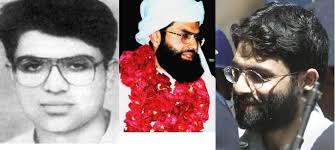
HIGH PROFILE: Omar, currently confined in a high security cell of Karachi Jail, has a long record of militancy, from kidnapping foreigners in Mumbai in 1994 to kidnapping Daniel Pearl in Jan 2002.

Omar Saeed Sheikh was freed by India in Dec 1999 as part of a deal that saw New Delhi agreeing to release a number of militant leaders in exchange for the freedom of hostages on board an India plane hijacked to Kabul.

Soon after his release from Indian captivity, Omar Saeed developed close relations with the LET leadership, including Zakiur Rehman Lakhwi.

He was invited to a training camp in Muzaffarabad, the capital of Azad Kashmir, where he spent a couple of days delivering lectures to recruits.

Sources said Lakhwi wanted Omar to join LET and give the organisation an international face. In Feb 2002, Omar was arrested for the murder of US journalist Daniel Pearl.


Read more...

Sunday, 22 November 2009

PPP and PML-N must stick together to foil the establishment's designs against democracy

There is reconciliation in the air -- and not of the NRO sort. Nawaz has heroically thrown himself between the conspirators and the president. The prime minister announced that the president is ready and willing to give up Article 58(2)(b). The Q League is meeting the MQM; Shahbaz is meeting the MQM. The chief ministers are all visiting the Quaid's Mazar together; the provinces are on the same page regarding the contentious distribution of finances. Even the PPP's CEC is considering reviving Aitzaz's membership. Has the political leadership matured from the politics of vendetta and opportunity? And pigs can fly. It is surprising what self-concern can make politicians do. You see, the threat is not only to the PPP and its chief; the threat is to the system.


Stopping the inevitable

Sunday, November 22, 2009 (The News)
Gibran Peshimam

There is reconciliation in the air -- and not of the NRO sort. Nawaz has heroically thrown himself between the conspirators and the president. The prime minister announced that the president is ready and willing to give up Article 58(2)(b). The Q League is meeting the MQM; Shahbaz is meeting the MQM. The chief ministers are all visiting the Quaid's Mazar together; the provinces are on the same page regarding the contentious distribution of finances. Even the PPP's CEC is considering reviving Aitzaz's membership.

Has the political leadership matured from the politics of vendetta and opportunity? And pigs can fly. It is surprising what self-concern can make politicians do. You see, the threat is not only to the PPP and its chief; the threat is to the system.

That is not to say that the "Zardari-goes, democracy-goes" paradigm is tenable ideologically, but it certainly is practically.

Consider the rumours of the apparently pressing desire to remove Zardari, who is himself digging his heels in, figuratively, as in his "there is nothing wrong" statements, as well as literally, as in literally not leaving his presidential bunker. He's not leaving voluntarily anytime soon.

The PPP is in no mood to remove him -- and even if they are, they certainly do not have the spine or the will to do it. So if we accept the premise that the president is unacceptable, and must go for the perennial powers to be happy, how will he be removed?

The answer is simple: a coup d'état. Sound implausible? It is. But not out of the question.

There are some misconceptions that involve the possibility of such a drastic step. There will be no bloodletting and rioting by the masses demanding a return of the PPP or the system itself. The inefficacy of the government, its near-comical lack of authority and the resurfacing of corruption-related horror stories (these are not just made up, they have also been mentioned in international bodies' reports) mean that democracy, or at least the current set up, has managed to blow its lot at an incredibly fast rate.

Juxtapose this with the flourishing image of the military, that steadfast torch-bearer of the subz hilal parcham, thanks to operations in Swat and South Waziristan, and you no longer have a situation wherein the "Army is too vilified" or "it is too soon for them." You see, this is not the 90s. This is an age where the armed forces are fighting a war that is winning them many laurels -- enough for them to be welcomed back.

It will not take them another decade to win back their credibility, or for the politicians to lose theirs. That is apparent. That murmurs of how things were better under Musharraf is not just a whimsical comment anymore. It is the product of heavy disillusionment with the performance of the PPP-led government.

The banter of increasing foreign interference, where fanciful stories of Blackwater and the United States' plans to secure our nukes are winning a disconcertingly large audience; the reality of increasing violence across the country, where attacks are daily and the lives lost are many. Schools had been closed, and we are living in a state of emergency.

All of this has created a siege-like mindset in Pakistan -- which is ideal for those unhappy with the president to step in and not have as much as a whimper from the masses. All that has to be done is to co-opt the usual unscrupulous lot of politicians and smaller regional parties to ensure that everyone is satisfied. The nationalist parties in Sindh will take care of any expected Sindh-backlash -- whatever that may be.

Taking it from there, if there is a coup, it certainly cannot be a long one. While they may be welcomed, the military really does have its hands full with the current security situation. A swift strike then?

Here's the kicker. When we say that this is "not the 90s" we also do not have the luxury of having a bunch of elections one after another like we did from 1988 to 1997. The current security situation will not allow elections in a vast majority of the country.

No President Kayani; no elections: what does that leave us with? A caretaker government. One that will be in place for an extended period of time, a la Bangladesh, until elections can be held in a secure environment. Don't see such an environment in the near future?

That's the point.

So when Nawaz has heads turning by saying he will "not allow" the minus-one formula, he is not saying it because he respects that the president was elected democratically, or because he wants to defend democracy. It does not mean that he and his party have become more mature and patient when they meet the MQM. When the president says he is willing to give up 58(2)(b), it does not mean that he has grown a conscience overnight.

It is a sign. It means that they see it coming; they see the machinations unfolding. And they know that in a caretaker set up, they will have no future. More time in political oblivion -- this time perhaps without an escape, complete with furniture and cooks, to the holy land.

When Shahbaz Sharif says that the derailment of democracy will have serious repercussions, he is right. However, the repercussions will not exactly be for the public.

The N would only be too happy to see the back of Zardari -- legally or otherwise -- if it meant that they would come to the fore again. But they're resisting. And that is a telling sign of the times.

Upheaval is upon us. And the very people that are coming to the "rescue" now are the ones who brought it to this.

However, if it is self-concern that does the trick, then so be it. The political parties must stick together, as they are trying to do now, to survive. How long they can keep it up, that is the question.

Or is it too late?

The writer is city editor, The News, Karachi. Email: gibran. peshimam@gmail.com

Read more...

Thursday, 19 November 2009

People's Republic of Pakistan?

vs

By Abdul Nishapuri

According to the vision of the founder of Pakistan, Quaid-e-Azam Muhammad Ali Jinnah, Pakistan was to be country in which everyone including Muslims and non-Muslims would be free to exercise their beliefs and practices and where the state had nothing to do with any one's religious beliefs.

In his presidential address to the first constituent assembly of Pakistan on 11 August 1947, Jinnah said:

"I cannot emphasize it too much. We should begin to work in that spirit and in course of time all these angularities of the majority and minority communities, the Hindu community and the Muslim community, because even as regards Muslims you have Pathans, Punjabis, Shias, Sunnis and so on, and among the Hindus you have Brahmins, Vashnavas, Khatris, also Bengalis, Madrasis and so on, will vanish. Indeed if you ask me, this has been the biggest hindrance in the way of India to attain the freedom and independence and but for this we would have been free people long long ago. No power can hold another nation, and specially a nation of 400 million souls in subjection; nobody could have conquered you, and even if it had happened, nobody could have continued its hold on you for any length of time, but for this. Therefore, we must learn a lesson from this. You are free; you are free to go to your temples, you are free to go to your mosques or to any other place or worship in this State of Pakistan. You may belong to any religion or caste or creed that has nothing to do with the business of the State." Source

The founder of Pakistan, Jinnah and later his successor, Liaqat Ali Khan, were sincere to the cause of a progressive Pakistan free of religious theocratic elements. Thus, they did not resort to exploiting the name of Islam for short-termed political expediency. From 1947 until 1956, the official title of the country was "Pakistan".

It was only in the era of civil and military dictatorship in Pakistan, when a dictator Major General Iskandar Mirza, helped by General Ayub Khan, proclaimed Pakistan as an Islamic Republic in the 1956 constitution. That was the official proclamation and institutionalization of the Mullah-Military Alliance in Pakistan.

vs

While it is a fact that Pakistan is a Muslim majority country, it is not an Islamic country because it is not governed by Islamic sharia. The reason is quite obvious; there are numerous schools of thought and sects in Islam. In Pakistan, Muslims are divided into Barelvi, Deobandi, Shia, Ahl-e-Hadith and other numerous groups. All of these groups and sub-groups have different interpretations in terms of principles and practices of Islamic sharia. Also, many Pakistanis do not want to be governed by theocracy or Mullahs.

Therefore, it will be well advised that Pakistan should dissociate itself from the Talibanic legacy of the first military dictatorship in Pakistan, and instead of its official title "Islamic Republic of Pakistan", it must adopt "Pakistan" as its name. This step will be consistent with the vision and the legacy of Jinnah and Liaqat Ali Khan.

From Islamic to Peoples Republic of Pakistan?

ISLAMABAD (The Nation) – Awami National Party (ANP) during the deliberations of Parliamentary Reforms Committee had proposed to change the name of Islamic Republic of Pakistan as Peoples Republic of Pakistan, while Muttahida Qaumi Movement (MQM) and Pakistan People’s Party (PPP) supported the move, the sources close to these political parties disclosed to The Nation.

The idea was, however, dropped due to strong opposition from the rest of the members of the committee, the sources added.

MQM Deputy Convener and Federal Minister Dr. Farooq Sattar confirmed it to the media in an informal chat on Wednesday and said that MQM along with PPP members of the committee supported the idea of renaming Islamic Republic of Pakistan as Peoples Republic of Pakistan.

On the other hand, ANP member of the committee Haji Adeel denied having proposed the name of Peoples Republic of Pakistan to replace Islamic Republic of Pakistan. However, some members of the committee on condition of anonymity confirmed it to TheNation that ANP had proposed the said change in the name of the country and MQM and PPP members had supported it.

During chat with media, Dr. Farooq Sattar also proposed making Gilgit-Baltistan as the fifth province of the country and its chief minister should also be included in the National Finance Commission (NFC). The government should take appropriate steps in this regard to remove the constitutional and international hurdles, he added. He said if the Parliamentary Committee on Constitutional Reforms would finish with its deliberation on provincial autonomy by mid of December, they would be in a position to give the nation a new year’s gift in the shape of constitutional reforms package.

Read more...

Wednesday, 11 November 2009

Zahir Ebrahim's analysis of Hamid Mir' attack on 'Let us build Pakistan'


By Zahir Ebrahim
Project Humanbeingsfirst.org

November 10, 2009

To: letusbuildpakistan

Ref: http://letusbuildpakistan.blogspot.com/2009/11/capital-talk-and-let-us-build-pakistan.html

Let me first state up front that I have no affiliation with any political party of Pakistan, its military, its intelligence apparatus, or any intelligence apparatus in the world for that matter, its newsmedia, or their collectively providing the essential proxy services to the hectoring hegemons for the orchestrated dismemberment of Pakistan. As far as I am concerned, as a Pakistani citizen, they all leave much to be desired. And I hope that many genuinely concerned and honest Pakistanis who are directly affiliated with any of these institutions also feel the same way. All that which these institutions and their leaders as well as their foot-soldiers can improve upon, begins by loudly proclaiming the correct solution for 2 + 2. All else will follow1. That is spelled out in the new book from Project Humanbeingsfirst.org : The Pakistan Decapitation Papers.

The sudden one-sided attack on letusbuildpakistan blog by Mr. Hamid Mir of GEO TV in their Capital Talk show of November 05, 2009 is intriguing. I have seldom read that little known website, and I have even less interest in their political perspective which appears to echo the same sacred-cow axioms of their erstwhile leader Benazir Bhutto. Indeed, the blog shares the primal axiom of 'militant Islam' being the first-enemy undermining Pakistan with the entire political-military ruling establishment of Pakistan and the United States. This is immediately apparent from their dialectical ode to Pakistan military on their website: “A tribute to Pakistani soliders fighting the terrorists of Taliban, Al-Qaeda and Sipah-e-Sahaba”. Perhaps the website authors, too incestuously engrossed in their own perspectives, haven't yet had the time to read Alice's reflections when she isn't sliding down the rabbit hole in The Decapitation of Pakistan by its own Military!.

So, the public squabble among thieves is interesting, and perhaps carries some useful signal of what's to come down the pipe.

First, let's ponder upon the blatant facts of the matter before diving into deconstructing the politics behind the 'katputli tamasha' (puppetshow) on the Grand Chessboard. Despite the candid declaration by the tiny blog of its political affiliation with the Pakistan Peoples Party on its own contact page: “Abdul Nishapuri, the founding co-editor of the 'Let us build Pakistan' blog, and a member of the 'Critical Supporters of Pakistan People's Party'.”, and which largely appears to be a shoestring budget operation of ordinary individuals unable to even afford a paid hosted website, Mr. Hamid Mir could only think of picking on a tiny blog which openly advertises its affiliation to the ruling political party, to uncover all the ills which plague Pakistan?

Has GEO TV run out of more heinous criminals in Pakistan to target among those who incessantly wage war upon their own people by way of deception and are openly destroying the country on behalf of their foreign paymasters?

What's the real agenda behind the 'katputli tamasha' of attacking a tiny unknown website by none other than the mighty Mr. Hamid Mir – the “champion of democracy” and free speech – who himself shamelessly shills for the hectoring hegemons?

In order to understand that, one has to acutely comprehend the politics of Hamid Mir.

Below I reproduce a letter I wrote the distinguished 'democrat' journalist after witnessing his own brazen performance given at the Commonwealth Club of California in April earlier this year. That performance video is linked to in the following tutorial which unravels Hegelian Dialectics, how fourth-generation warfare is waged upon the public by way of deception to weaken the victim from within.

Mr. Hamid Mir's endearing performance before the largely pro-establishment American audience (and that description transcends the traditional left-right dialectics of American politics), finally convinced me that this highly regarded journalist from Pakistan made famous by his interviews of Osama Bin Laden, subsequently by being the people's street champion of free-speech and democracy under military dictatorship, and now being heralded as the hero of Pakistan's democracy in the United States by its own instruments of propaganda, is an outright intelligence asset.

Because, alternately, Mr. Hamid Mir being a mere dolt and a simpleton appears to be a rather bizarre proposition. For how can a journalist of his stature and experiences be so un-informed? Intelligence agents and assets permeate the newsmedia worldwide and are merely tunes to be played by the Mighty Wurlitzer. The fine art of the Mighty Wurlitzer is explained in the tutorial.

Therefore, anything which Mr. Hamid Mir sings is suspect, at least for the forensic mind already attuned to the hectoring hegemons' genocidal plays for “full spectrum dominance” on the Grand Chessboard. Consequently, Hamid Mir's tunes and diatribes must minimally be scrutinized from that perspective before taking them on face value. Such Machiavellian orchestration after all, is only according to the Pentagon's own recipe for fourth-generation warfare as examined in this recent editorial.

Since hearing that remarkable performance in California – whose delivery was undoubtedly most natural and very well done – I don't waste time on the melodies hummed by Hamid Mir except to extract any un-apparent signals, as the maestro directly rehearses the Mighty Wurlitzer's compositions. Which is of course most unfortunate for me because Mr. Hamid Mir used to be among my few favorite Pakistani journalists to watch in diaspora on the rare occasion that I did tune into youtube (don't watch or own a television), as the one who showed any chutzpah and boldness in questioning the ruling establishment. I thought he had wonderfully taken a page from I. F. Stone. Under forensic scrutiny however, it only turned out to be a dialectical noora-kushti among mercenaries with mindless commentaries rehearsed from the galleries, and all of it to keep the public glued to the edge of their seat distracted from the real show in town. While such diabolical narratives, both for manufacturing consent and manufacturing dissent, are highly prized by the hectoring hegemons, and of course duly rewarded by them, they are a treacherous deception played upon the wretched of the earth in the audience who always bear the full brunt of its import.

I have always known Machiavelli it seems, but certainly since I became a student of Noam Chomsky at MIT and learnt more political theory than I wanted to. But my mind was initially un-attuned to accept the role of famous people like Hamid Mir in manufacturing consent. They seemed to play the courageous dissenter's role so expertly – until I figured out the political theory of Manufacturing Dissent.

Mr. Hamid Mir in that highly regarded conversation at the Commonwealth Club retained all the core-axioms of the hectoring hegemons while echoing all their mantras – a matter that is fully fleshed out in the aforementioned book. In that conversation, Hamid Mir didn't even bother to play dissent, as he sometimes does in his musings in Urdu. He actually changed his role to manufacturing consent before the American audience. A very versatile asset. He may yet win his Nobel Peace Prize – President Obama unfortunately stole a march on the poor guy this year as already deconstructed.

Mr. Hamid Mir too will surely earn his own knighthood as the man of peace someday, the savior illustrious of Pakistan who helped save the world from the Pak-Nukes which were about to fall into the inglorious hands of the barbaric hordesmen of Osama Bin Laden: “[It's] Not a Clash of Civilizations, It's a Clash between the Civilized World and Barbarians”. Watch that myth-making under refined construction in the bizarre glorification of Hamid Mir at the Commonwealth Club of California by the 'whiteman' duly flattering the 'negro'.

Knowing all of that context, let's return to the question of Mr. Hamid Mir attacking the lame-duck Presidency of Mr. Zardari through the tiny blog 'Let us build Pakistan'.

GEO is really not that stupid to not know the difference between an entity trying to Machiavellianly create diabolical intrigues – which if GEO News really wanted to unravel, they could have within 5 minutes uncovered at least 20 websites, or a hundred prominent Pakistanis, who are clearly intelligence-ops and/or mouth-pieces working to directly undermine Pakistan by simply judging them for their crucial omissions and/or direct support of empire's own sacred-cow axioms – and the largely unknown ordinary individuals running the shoestring budget operation of 'Let us build Pakistan' who are even being quite candid about their political affiliation.

This is clearly indicative, at least to my mind, of some marching orders having been received by GEO TV. Hamid Mir is only executing them. It appears that a take down of the Zardari government is imminent, to be replaced by a different 'errand boy'.

They all work for the same puppetmasters. It's merely playing musical chairs to the same tune that is slowly removing one chair at a time every time the music stops. Everyone in this game parrots empire by keeping the core-axioms intact while offering variations of “Betweens”.

Therefore, it follows that they are all playing together by the same set of rules constructed by empire. Hence, they are all traitors to the state of Pakistan. If Pakistanis wish to become slaves by choice to the hectoring hegemons with a boot stamped upon their face in perpetuity, hold a referendum and ask them. Don't stab the people in the back.

Whether or not the gallows will ever welcome Pakistan's long list of traitors, stripping them naked of their thin robe to at least convict them in the court of public opinion, must suffice for an honest plebeian un-afraid to proclaim 2 + 2 = 4.


The above is an abridged version of the article. Full article is available here.

Read more...

Sunday, 8 November 2009

Establishment versus Democracy in Pakistan: A critical analysis

vs

There are currently four parties in Pakistan:
  1. Pakistan People's Party (PPP)
  2. Pakistan Muslim League (PML-N)
  3. Pakistan Army Party (Liberal - Musharraf-Kayani model)
  4. Pakistan Army Party (Islamist - Zia-ul-Haq model)

Qais Anwar
offers a critical analysis of certain hypotheses which (civil and military) establishment in Pakistan has successfully promoted and implemented in Pakistani politics.


ہماری ایسٹبلشمنٹ کے چند بنیادی مفروضے یہ ہیں:
۔ ہمارا بنیادی دشمن ہندوستان ہے
۔طالبان ہندوستان کے خلاف ہمارے ساتھی ہیں
۔طالبان میں کچھ غلط عناصرگھس آءے ہیں جو پاکستان کے مفاد کا تحفظ نہیں کرتے
۔طالبان کے خلاف کوءی ایسی کارواءی نہیں ہونی چا ہیے جس میں ان لمبےعرصے کے ساتھیوں کا
ہندوستان کے خلاف ساتھ کھو دیا جاءے
۔طالبان کے خلاف کارواءی عمومی کی بجاءے منتخبہ ہونی چاہیے
۔سیاسی قیادت کو قومی سلامتی کے معاملات تک رساءی نہیں دی جا سکتی کیونکہ یہ ناقابل اعتبار ہیں
۔ سیاسی قیادت کے اند ر غدار موجود ہیں
۔قومی سلامتی پر دوسرے ملکوں سے معاملات فوجی قیادت کو طے کرنے چاہییں

پہلے پاکستان میں صرف دو سیاسی پارٹیاں ہوتی تھیں پاکستان پیپلز پارٹی اور پاکستان آرمی پارٹی
اب پاکستان میں چار سیاسی پارٹیاں ہیں ۔ پاکستان پیپلز پارٹی؛ پاکستان مسلم لیگ ن ؛ پاکستان آرمی
پارٹی لبرل اور پاکستان آرمی پارٹی ضیاء الحق

ایسٹبلشمنٹ نے مختلف اوقات میں ذولفقارعلی بھٹو؛ بے نظیر اور نواز شریف کو سیکیورٹی رسک قرار
دے کر راستے سے ہٹایا ۔ مختلف تجربات کے بعد بے نظیر اور نواز شریف نے سبق سیکھا کہ
بین الاقوامی ایسٹبلشمنٹ سے راہ و رسم بڑھاءی جاءے۔اس بار اسی حکمت عملی کے تحت بے نظیر
اور نواز شریف واپس آءے اور ابھی تک ان تعلقات کو قاءم رکھے ہو ءے ہیں

بے نظیر کو پاکستان آرمی پارٹی ضیاءالحق نے قتل کرایا

بے نظیر کے قتل کے بعد زرداری نے پاکستان آرمی پارٹی لبرل کے ساتھ مل کر حکومت کرنے
کی بجاءے نواز شریف کے ساتھ مل کر حکومت کا فیصلہ کیا اور پاکستان آرمی پارٹی لبرل کے
نماءندوں میں سے ایم کیو ایم کا حصہ بنایا ۔

زرداری نے پاکستان آرمی پارٹی کی حکمت عملی کہ طالبان کے منتخب لوگوں کو مارو کی بجاءے
عالمی ایسٹبلشمنٹ کے ساتھ اتحاد بنا کر فوجی قیادت کو مجبور کیا کہ سنجیدہ اپریشن کیا جاءے
اس پر پاکستان آرمی پارٹی لبرل نے اس چیز کو جواز بنا کر کہ غلط طالبان ہندوستان کے کارندے ہیں
اپریشن شروع کیا ۔ تا ہم اپنا قومی تحفظ کا نظریہ تبدیل نہیں کیا۔

زرداری کابڑادشمن پاکستان آرمی پارٹی ضیاءالحق ہے جو اسے مکمل طور پر راستے سے ہٹانا
چاہتی ہے۔ دوسری پارٹی پاکستان آرمی پارٹی لبرل ہے جو زرداری کو کمزور کرنا چاہتی ہے تاکہ
وہ عالمی ایسٹبلشمنٹ کے ساتھ معاملات طے کرنے سےمحروم ہو جاءے۔ اس طرح طالبان کے
متعلق فیصلے ایسٹبلشمنٹ کے قومی سلامتی کے نظرییے پر ہی کیے جاءیں

پاکستان آرمی پارٹی کے دونوں گروپ اب نواز شریف پر بھی اعتبار نہیں کرتے ۔ پاکستان آرمی پارٹی
کا لبرل گروپ زرداری کو بھیجنے سے زیادہ اسے بے دست و پا کرنے میں دلچسپی رکھتا ہے۔ اس
طرح نواز شریف سے جان چھوٹی رہے گی اور یوسف رضا کو کنٹرول کرنا آسان ہو گا

زرداری کو وہاں پسپا ہونا پڑتا ہے جہاں اوپر بیان کی گء ی دیگر تین پارٹیاں اکٹھی ہو جاتی ہیں ۔ جیسے
ججوں کی بحالی؛ این آر او؛ سترویں ترمیم پر بھی زرداری کو پیچھے ہٹنا ہوگا کہ پاکستان آرمی پارٹی
لبرل؛ پاکستان آرمی پارٹی ضیاء الحق اور نواز شریف کا مفاد مشترکہ ہے۔دو اور معاملات ہیں جن کی
وجہ سے کچھ پارٹیوں کو زرداری کو کمزور کرنے میں جلدی ہے۔ پاکستان آرمی پارٹی کے دونوں گروپ
بے نظیر تحقیقاتی مشن کی رپورٹ کو روکنا چاہتے ہیں اور آءینی مسودے کی منظوری روکنا چاہتے ہیں
نواز شریف آءینی مسودے کے بعض حصوں کو روکنا چاہتے ہیں ۔ اب ان تمام پارٹیوں کا مشترکہ مسءلہ
ہو گا کہ آءینی مسودے سے پہلے ستر ویں ترمیم کا خاتمہ ہو

شاہد مسعود کے پاکستان آرمی پارٹی ضیاءالحق کے ساتھ زیادہ اچھے تعلقات ہیں (حمید گل؛ ہارون
(رشید؛ عرفان صدیقی وغیرہ


Dara said:

When we write about parties and raise questions about dynesties, we forget the fact our politics has a permenent charactor known as establishment. We always have pro establishment and anti establishment politicians.

Take the example of Bhuttos, Benazir would have been nothing if she has not challenged establishment in Zia’s brutal Marshallaw. That was a time when leaders like Jatoi, Khar Kausar Niazi and several other senior leader didn’t have courege to face jails and torture. They decided to make under the table deals with generals. This was a time when there was no free media to show what had happened to those who opposed.

People who vote for Bhuttos know what Bhuttos have done not because they are stupid or ” jahils” though they may be poor and don’t have money to purchase degrees from universities to show they were educated.

There are not many in this country who have struggled against the permenant / constand factor that is The Establishment through out their lives. Nawaz Sharief tried but has to made a deal after one year and there he went to Saroor Palace KSA.

Imran Khan , Jamat i Islami and MQM have one thing common they work to promote agenda of that part of establishment who wants no or very limited democracy in Pakistan. If Imran Khan for instance become anti establishment , will see the real face of politics in Pakistan. MQM has seen it some what as one group in establishment went crazy against their own creation. Jamat works just according to Zaiest group and are always find it self in harmony no matter if its associates were found helping those animals who behading Pak Army’s Jawans in Swat and other places.

Pakistan said:

The Problem with Pakistan is not that it has too many politicians rather the continuity of elections.

Any corrupt leaders will be eliminated once the we have 3-4 elections with full 5 years term.

We never let any democratic gov. to go more than 2-3 years except Bhutto’s. We need to figure out the force hindering the democracy.

We start believing in propaganda against an elected Gov right after the first year. We cannot tolerate democratic Gov. more that two yearsa and on the other hand we give military to go more than 10 years with ease.

It was wrongly understood that PPP is gone When Bhotto was hanged. Then it was thought that PPP is gone when Leghari dismissed PPP Gov. Then it was thought that PPP has been finished because of NRO.

PPP will not disappear and will stay against the wishes of certain forces working against it since the birth of PPP.

This will remain their wish………… (Source: pkpolitics)

Read more...

Friday, 6 November 2009

Pampering the mullah

Friday, November 06, 2009

Talat Farooq

After the government crackdown on certain madrassas in Islamabad recently, the representatives of the Wafaq-ul-Madaris aired their indignation on TV channels. They criticised the action on the grounds that madrassas have always been weapon/terror-free -- including, if you please, the Lal Masjid -- and, as such, cannot be held responsible for any anti-state activities The went on to add thatif the government officials wish to visit any of the premises, they must do so with the permission of Wafaq-ul-Madaris. In answer to such defiant outbursts, the interior minister meekly assured the Wafaq that the government never meant to violate the sanctity of these great places of learning and knowledge, and is only looking for some foreign Imams residing in some madressahs illegally. One fails to understand why the government has to be apologetic in carrying out such actions against any institution in Pakistan if it has reports of illegal activity there, especially when we are in a state of war. Madressahs, even if registered, are not sacrosanct or above the law. Unfortunately, it is this obsequiousness of our rulers toward the mullah since the creation of Pakistan that has emboldened the extremists over the last six decades.


The Muslim struggle for Pakistan did not include the Deoband or the Jamiat-e-Ulema-e-Hind who opposed the idea of Pakistan tooth and nail. Nonetheless, once Pakistan became a reality the Wahabi-Deobandi groups made gradual inroads as our leaders acquiesced to their demands within a few years of independence. Since then their influence has remained unchecked by the state as it focused on short-term political goals, it is therefore not surprising that they have eventually assumed the mantle of our self-proclaimed saviours and architects of the national identity of Pakistan.

Be it the Objectives Resolution or the timing of the Anti-Ahmadiyya movement in the 50s that facilitated the first martial law; the ban on alcohol and declaration of Friday as a weekly holiday by Zulfikar Ali Bhutto, Naseerullah Babar's Taliban idea during Benazir's government, or Nawaz Sharif's Shariah Bill of the 90s, staying on the right side of Maulana Fazl ur Rahman by successive governments or the on-going pampering of Wafaq-ul-Madaris by the incumbent administration, the political players of Pakistan have always put their own narrow interests before the interests of the nation.

The military dictatorships on the other hand have used the mullah to further their own specific interests. From Ayub Khan to Musharraf, all military regimes have sought the cooperation of one religious sect or the other. Zia in particular played the mullah card to promote American interests and Arab culture simultaneously, destroying national institutions in the process while Musharraf's post-9/11 two-faced strategy ensured the continuity of extremism. Jointly, the politicians and the military dictators, with help from America and Saudi Arabia, have managed to create a monster that feeds on violence and bloodshed.

The religious clerics, whether Muslim or non Muslim, derive their political power from exploiting the insecurities of the masses by focusing on differences in religious and socio-cultural beliefs, thus leading to social divisions. In a multi-ethnic Pakistani society with a sizeable non-Muslim population, this has spelled disaster. Over the last three decades, the Deobandi/Wahabi mindset has transmuted ideological divisions into militant sectarianism that has been duly exploited by the Taliban and their domestic sympathisers that include mainstream religious-political parties.

Muslim states like Turkey, in keeping with the Ottoman tradition, have managed to keep their clerics under state control to ensure social order. In Pakistan, they have been given a free hand; what we are witnessing today in the shape of violence is the dark side of religiosity infused by religious extremists into the psyche of both the uneducated masses and the unsuspecting educated elite. This has transpired due to the manipulation of religious sentiments by vested interests and festering socio-economic and governance issues all rolled into one. But above all, this is due to the deliberate omission of critical thinking skills and philosophical knowledge from the national curricula, thus rendering a large majority of Pakistani population incapable of objective assessment. This omission is largely attributable to the direct or indirect influence of the mullah especially during and after the Zia era.

Today the same extremist elements continue to spread their hatred of one another as well as propagate against Pakistan's national interests by promoting conspiracy theories and blind anti-Americanism from the pulpit. And while doing so, they fail to mention the negative influence of certain policies of the Saudi government toward Pakistan. The anti-American and anti-government slogans after the Islamic University bombing would have sounded more genuine had they been accompanied with anti-Taliban slogans. Pakistan will never become a self-respecting nation unless it disengages itself from not only American shackles but also the ones imported from Saudi Arabia. This requires a mature political leadership that believes in impartial analyses and practical strategies, not to mention courage and wisdom.

The Waziristan operation is in full swing and if the religious parties cannot support it for fear of life, they can at least remain quiet. By stoking the fire of anti-Americanism to garner support for the Taliban through ill-timed rallies and referendums, they are doing no service to Pakistan. The nation is being driven into a frenzy that can only spread more intolerance and spawn fear and anxiety. Furthermore, it serves as a diversion because it deflects people's attention from the real issue of good governance and allows religious and secular leaders, whether in the government or opposition or outside the parliament, to play their petty games without having to shoulder the required responsibilities to steer the country out of the present quagmire.

Religion is a strong social phenomenon and has been employed by many in human history to serve political ends. Muslim history is no exception. The mullahs of Pakistan have employed the same dispensation since 1947 to gain political power. This has eventually led to the rise of a ferocious militant element never known in Muslim history. Not even the Hashashins of Hassan Sabah killed with such merry abandon. It is high time for the state to check the spread of unbridled hatred. It is time to stop pampering the mullah.

The writer is executive editor of Criterion, Islamabad.
Email: talatfarooq11@gmail.com (The News)

Read more...

Wednesday, 4 November 2009

The Project IJI - Second Edition

Compiled by: Abdul Nishapuri
Title:
The Project IJI (Islami Jamhoori Ittehad - Second Edition)
Alias: Mullah Military Alliance
Aim: To destabilize the democratic government of Pakistan
Key sponsor: ISI, GHQ
Key constituent parties: PML(N), PML(Q), Jamaat-e-Islami, MQM, Farooq Leghari, Mumtaz Bhutto
Key media agents of the ISI: Ansar Abbasi, Shahid Masood, Shaheen Sehbai, Hamid Mir, Javed Chaudhry, Haroon-ur-Rashid, Talat Hussain, Irfan Siddiqi
The hidden agenda: All of the above (except MQM and Haroon-ur-Rashid) are staunch supporters of Taliban. MQM has been blackmailed into this alliance because they have been offered an "NRO" by Nawaz Sharif and Imran Khan on the 12 May 2007 massacre in Karachi. Haroon-ur-Rashid is known for his qasida khwani (praise) of General Zia-ul-Haq, General Hameed Gul, Major Amir, and other criminals of the ISI (mullah-military alliance). He has also written an 'official history' book titled Fateh in appreciation of the criminal General Akhtar Abdur-Rehman.
....

PPP MPs annoyed with NRO spat

ISLAMABAD: Some Pakistan People’s Party (PPP) MNAs on Tuesday severely criticised opposition parties for blocking the NRO in parliament and the role played by a section of the media in the affair. While the government decided to withdraw the ordinance, the controversial document appears to continue to haunt those in power. National Assembly Speaker Dr Fehmida Mirza clarified a news item, saying her husband and she never benefited from the NRO, while the PPP’s Nawab Yousaf Talpur also had to give a similar clarification. PPP member Akunzada Chattan said the move to block the NRO in parliament was worse than former president Pervez Musharraf’s imposition of emergency rule, as “political forces, the civil society and a section of the media acted against the PPP at the behest of the GHQ”. The PPP’s Chaudhry Nadeem Afzal Chan said politicians were being defamed under a conspiracy. He also criticised some private TV anchorpersons and journalists who had become “propaganda tools”. irfan ghauri (Daily Times)

....

Kerry-Lugar law critics are Taliban backers: Holbrooke

Daily Times Monitor

LAHORE: US special envoy Richard Holbrooke has said those criticising the Kerry-Lugar law are either opposed to the current Pakistani government or are supporting the Taliban, reported a private TV channel on Tuesday.

Holbrooke told the channel that Pakistan’s current political situation would not become similar to the crisis on March 16 – when top US officials had to make phone calls to the Pakistani leadership to sort out issues related to the restoration of the judiciary. He said the US only supported the leadership of constitutionally elected governments. Holbrooke said although the NRO did not come under much discussion during Hillary Clinton’s recent visit to Pakistan, US officials were fully aware of the situation.

About Pakistan’s claim that India is supporting militancy in the Tribal Areas and an insurgency in Balochistan, the envoy said the US fully understood these concerns.

....

(Nazir Naji)

....

EDITORIAL: Retreat over NRO

After a high level meeting of the ruling alliance at the Presidency on Monday, the PPP government has decided not to bring the controversial National Reconciliation Ordinance (NRO) to parliament for a vote. This is clearly a reversal but one which could have been avoided had the ruling party consulted its allies beforehand. It is quite apparent that the NRO as a bill was brought to the relevant committee of the National Assembly without making sure that all the numbers needed were in hand.

The withdrawal will not put an end to the “dangers” that the NRO represented to the map of power brought about by the 2008 general elections. After the debacle caused by an aggressive withdrawal of the MQM from the pro-NRO consensus, the next crisis in the offing is the march of the opposition to a no-confidence vote. The PML-N, whose chief is determined to start a Long March on the ordinance, is no longer averse to the thought of a mid-term change, whether through a new general election or through the ‘minus-one’ formula under a ‘national government’, possibly with Prime Minister Yousaf Raza Gilani in the driving seat.

Monday night, the MQM seemed overly righteous about the NRO, which betrayed some other long-brewing disagreement between the PPP and Mr Altaf Hussain. The disagreement was definitely not on the NRO. Had that been the case, the MQM would have taken a position on it long ago. It says the MQM members supposed to be let off the hook by the NRO were never really affected by it. It insists that all the cases were criminal and were reviewed by the courts and struck from the record. Mr Altaf Hussain, who spoke in some detail to the TV channels, kept emphasising that his party was not targeted for corruption, hinting that the PPP government was in the dock for corruption, not only under the NRO, but also because of its current performance.

The depth of the MQM alienation from the PPP could be grasped from the way the MQM chief kept using the “sacrifice” innuendo for President Asif Zardari, which the media took to mean that he was actually asking the PPP chief to resign as president. This can only mean that the two allied parties had engaged in some kind of polemic over the sharing of power — most probably in Sindh — and had failed to resolve it despite the several meetings the MQM top leaders had with President Zardari over matters in Karachi. Mr Hussain was angry but was at pains to hide his anger behind the justifications he offered for not supporting the government on the NRO.

Had someone in the PPP looked deeper into the NRO imbroglio he would have examined the options of a power-denied MQM. It was a question of whether the PPP should give the MQM what it wants in Karachi or face the NRO alone. It is obvious that the PPP took it for granted that the MQM will not be able to go against the NRO because of the extent to which it had benefited from it. It forgot that the MQM was disciplined enough to take the fallout from going against the NRO to pressure the government in Islamabad. It is because of the cadre discipline of the MQM that it has been able to take the bitter pill of opposing the NRO in order to challenge the PPP’s decisions in regard to the governance of Karachi. The intensity of the PPP-MQM clash is reflected in the latter’s decision to vote against the passage of the NRO.

Pakistan will be further destabilised from now on. The PML-N will muster the forces intent on overthrowing the government and will move to ask the government to take a confidence vote. Its pious assertions to the contrary, it will push the country towards another general election while the Taliban have passed to the phase of targeting innocent citizens wherever they find them in large gatherings. Taking the PPP government as ‘pro-America’, they will most likely spare the Long March agitation of the grand opposition, if it comes. Faced with this, the remaining allies will rethink their political strategy and make the paucity of numbers in parliament more glaring for the PPP. Meanwhile there is always the “peaceful” alternative of going to the Supreme Court, which is likely to strike the NRO down as being violative of the spirit of the constitution. * (Daily Times)
(Muhammad Amir Khakwani)
...

(Tahir Sarwar Mir)

Also read:

Read more...

Sunday, 1 November 2009

Amirul Momineen Mian Nawaz Sharif, a model 'moderate Muslm' of today's Pakistan

See full size image
Smokers’ Corner: The peril of being moderate
By Nadeem F. Paracha
Sunday, 01 Nov, 2009 (Dawn)
Some five years ago when rising cases of religious extremism and suicide bombings started to spell a serious problem for the state and society, the easiest position taken by those condemning such barbarism was to point to the need to promote ‘moderate Islam.’


It seemed the logical thing to do in a country that took its religion very seriously; but exactly how has the promoting of ‘moderate Islam’ by the state and the electronic media in the last few years helped contain the nuisance of faith-driven terrorism? It hasn’t.


This is because we forgot that ‘moderate Islam’ comes attached with a pragmatism that, during a crisis of religious identity, can be as harmful as the uncouth babbling of an extremist or the sheepish convolutions of his ever-willing apologists.


The biggest problem thus with so-called ‘moderate Muslims’ is that they fail to hold any solid convictions, and would largely remain quiet, even in the face of their more extremist counterparts’ irrational take on faith, and their reliance on coercion and violence. Why on earth did it take the moderate majority of Pakistan so long to realise that the Taliban always had the potential to unleash a blood-splattered havoc?


If being ‘moderate’ in matters of faith really means banking more on one’s commonsense and the faculties of logic, then exactly what logic determined the moderates’ silence in the midst of widespread bloodshed and the loud spiels unloaded by so many crackpots who are still in search of ‘hidden hands’ when the enemy breathes and breeds right underneath their Pinocchio noses? In the kind of unprecedented turmoil we are in today, the whole idea about the silent moderate majority needs to be confronted and shaken out of its comfort zones of navel-gazing.


I say this because the so-called moderate Muslims are now perhaps the only ones who could allow themselves the advantage of being persuaded by a rational debate against extremism; because no amount of reason, commonsense and appeal to humanity can ever dent the stone-cold wickedness of the blood-thirsty extremists, or the shameful epileptic populist rhetoric of their apologists who appear in front of us in the guise of ‘journalists,’ ‘experts’ ‘leaders’ and whatnot.


They also include some conventional political-religious parties. They have done all they could to keep upsetting the government’s and the army’s attempts to build a wider consensus for the state’s war against terrorism. We would actually be doing democracy a great service by taking away from these drawing room and TV-friendly fitnas the privilege of spouting nonsense and naked hatred in the name of freedom of speech.


One should not even bother trying to have a rational debate with the many apologists of the barbarians who are found across TV screens and in internet forums; as far as commonsense, intellectual decency and even the Quranic concept of aqal are concerned, they’re a spent force, gasping loudly like a fish out of water.


But what about the so-called moderates? As more and more Pakistanis are finally coming around to nodding in approval beyond the matters of sect, political party and ethnicity to continue consolidating an all-round consensus against religious extremism, many ‘moderate Muslims’ can still be caught navel-gazing.


Politically speaking, the attitude of the PML(N) and its leader, Mian Nawaz Sharif, in this context is a vivid example. The party can be described as what political scientists call a ‘Muslim Democracy’ party, or a centre-right political entity which, like the European Christian Democrats, are moderate, faith-based parties minus any theocratic or fundamentalist pretensions, and which have a healthy relationship with modern democratic notions and a liking for market economics.


So, never mind the many delusions Mian Saheb held in the past, wanting to be crowned as the Amirul Momineen, today he is a ‘moderate Muslim.’ But in spite of making all the right noises about democracy, constitutionalism and a free judiciary, the man has only rarely been heard castigating extremism. This is ironic from a man whose party’s bastion of support is Punjab, a province that has recently experienced some of the most harrowing acts of terrorism perpetrated by the Taliban, and yet, Mian Sahib remains mum about them.

What is he waiting for? Is he still expecting some large sections of his mostly petty-bourgeois constituency in Punjab to hold sympathy for extremists? Does he still believe that if he openly talks against the Taliban, he will lose his votes? It is true that in the past religious extremists of all shades did find sympathy with certain sections of Punjab’s petty-bourgeoisie, but one doubts such is the case anymore.


Read more...

‘Bring back Jinnah’s Pakistan’ - By Ardeshir Cowasjee and Munno Bhai


By Ardeshir Cowasjee
Sunday, 01 Nov, 2009 (Dawn)
Had the Mideast and S.Asia heeded Jinnah’s advice on religion and state the world may have been in better shape today. —Photo by AFP


Of late, amidst the murder and mayhem accompanied by an absence of government or any signs of governance, a group of citizens has been circulating an email message exhorting whoever to ‘bring back Jinnah’s Pakistan’.

Now, to bring back something that existed for a mere moment in the life of this nation is more than difficult at a time when the national mindset is what it is.

Mohammad Ali Jinnah’s Pakistan was denounced six months after his death when the Objectives Resolution was passed, negating the words he had so eloquently spoken to his constituent assembly on Aug 11 1947: ‘... You may belong to any religion or caste or creed — that has nothing to do with the business of the state.’ Thus, willy-nilly, the state was made the custodian of religion.

In the early 1950s, the British writer Hector Bolitho was commissioned by the government to write an official biography of Jinnah. It was published in 1954. Such was the moral dishonesty and hypocrisy that had taken a firm hold and rooted itself in the country’s psyche that the ruling clique of the day perverted Jinnah’s words, and printed in the book was this version of the quoted sentence: ‘You may belong to any religion or caste or creed — that has nothing to do with the fundamental principle that we are all citizens and equal citizens of one state.’

In April 1962, the days of President Gen Ayub Khan, came a lessening of the prevailing hypocrisy and the government press department published a collection of Jinnah’s speeches as governor general of Pakistan. The Aug 11, 1947 speech was printed in full in its original version. (These speeches were reprinted by the government of Benazir Bhutto and released for sale in 1989.)

In 1984, when wily Ziaul Haq ruled, came the finest biography of Jinnah so far written. Prof Stanley Wolpert’s well-researched book, Jinnah of Pakistan, was published in the US by Oxford University Press and 500 copies were sent to Pakistan to be released for sale.

Prior to its release, two copies were sent by OUP to the information ministry seeking permission to reprint locally. The minions of this pernicious ministry, which should not exist, took exception to certain passages in the book in which our founder-maker’s personal tastes and habits were mentioned.

The 498 copies of the book lying with OUP were removed from their storeroom and reprinting of course denied. To top this crass idiocy, Wolpert was approached and asked to delete the offending passages so that it could be reprinted and sold. Naturally, Wolpert’s response was that as a scholar he was unable to compromise on basic principles and any deletion/amendment was out of the question.

Thus the book effectively remained banned in Pakistan until in 1989, when, to give full credit to Benazir and her government, permission was given to OUP to reprint and the book was released for sale. Zia’s was an exercise in pure futility.

Our large neighbour also has blinkered intolerant elements in its midst. There is a long list of books that are banned in India, amongst them Stanley Wolpert’s ‘factional’ novel on the assassination of Gandhi, Nine Hours to Rama, which was banned by the government in 1962. And now, this August, two days after its release the government of the Indian state of Gujarat saw fit to issue a notification ‘forfeiting’ and ‘prohibiting’ Jaswant Singh’s Jinnah: India-Partition-Independence (Mr Singh was also expelled by his party, the BJP).

The book was banned with immediate effect and in the wider public interest because it was alleged that its contents are highly objectionable, against the national interest, misleading, distort historical fact and that it is defamatory in regard to Sardar Vallabhbhai Patel, who is largely regarded as the architect of modern India.

Mr Singh swiftly approached the Indian Supreme Court challenging the ban on the grounds of the violation of fundamental rights. The court issued a notice to the Gujrat government. In the meantime, an appeal was submitted to the Gujrat High Court which struck down the ban. With the Gujrat government prevaricating, the matter remains before the supreme court.

Now, to the bringing back in totality of Jinnah’s Pakistan — that we can never do as half of his Pakistan was shorn by the collusion of our politicians and army generals, the deadly mixture of Zulfikar Ali Bhutto and Gen Yahya Khan who threw away East Pakistan through a lust for power coupled by incompetence and insensitivity. What can be saved, if we had the leadership to do so, is the spirit of Jinnah’s Pakistan as expressed by him on that distant August day.

Had a large part of the Middle Eastern region and parts of South Asia been able to heed Jinnah’s words that religion, caste and creed ‘has nothing to do with the business of the state’ the world may well have been in better shape today. It is possible that the extremism that has galloped away in these areas would not have taken root had various states not been allowed to force upon the world their dangerously distorted version of a religion.

As for Pakistan, the Objectives Resolution forms the preamble to ZAB’s constitution and was additionally inserted as an annex by Ziaul Haq. Then we have ZAB’s second amendment to his constitution which reinforces bigotry and intolerance. No government has been strong enough to take on the mullah fraternity whose grip has strengthened with the years. To bring us back to Jinnah’s Pakistan, we must have a revolution — a revolution of the national mindset and a latter-day Ataturk to ensure that it is successful.

arfc@cyber.net.pk


Part II (Cowasjee)

There has to be something seriously wrong with a country in which many of its citizens are still arguing as to whether it should or should not have been made, or debating as to whether it came into being by accident, intent, design or even intrigue. All possible accusations have been levied against the logic of Pakistan’s making.

The fact is that Pakistan exists and has existed for 62 years — in what shape is quite another matter. Arguments on that score will never cease, and they should not as it failed initially to take off in the right direction.

A valid argument has been made by a few of the many who responded to last week’s column against the exhortation ‘bring back Jinnah’s Pakistan’ — that we should be looking and moving forwards rather than retreating.

A counter argument to this is that from shortly after its birth the nation retreated 300 years placing itself in mindset and religious-political intent back in the age of the Emperor Aurangzeb. (Had it chosen to retreat 400 years to the age of Akbar the Great it would have been on the correct and proper path.)

With the relatively recent advent of the Taliban we have retreated even further in time, back to the 11th century and the Hashishi who considered murder a religious duty and who dreamed up ecstatic visions of paradise before setting out to face martyrdom.

Having retreated and firmly embedded itself, if the country is put at the take-off point of Jinnah’s Pakistan we will have in fact advanced. There is no latter day Mohammad Ali Jinnah to lead us but we do have his words and his example to look to. The fact is that, for whatever reasons and through whatever circumstances, Mr Jinnah managed to do what few men have done — he created a country and in doing so changed the course of history. Professor Stanley Wolpert’s opens the preface to his book Jinnah of Pakistan with this reminder.

All great men are controversial, so Jinnah, is highly controversial both in his own land and particularly in the country out of which Pakistan was carved (some 940,000 sq.km.). He learnt his politics from Dadabhoy Naoroji, Phirozshaw Mehta, Motilal Nehru, Gopal Gokhale and other men of substance. His alleged motives for having done what he did vary from the simple accusation of a grab for power to the suggestion that he was caught in a vice of his own making and against his inner will the creation of Pakistan was forced upon him. My belief and that shared by many is, knowing what we all know, that the Muslims of undivided India were a subjugated minority, Jinnah’s feeling was that in an independent India they would become even more downtrodden and face even more discrimination and thus have difficulty as a community in making much of themselves.

Jinnah’s intent was to create a homeland turning the minority into a majority, not subject to discrimination and challenges. He expected the Muslims of his country to rise above themselves, to join the modern world, work and prosper, in a land free from bigotry, imbued with tolerance for their fellow human beings of no matter what creed or race. Such was his intent, of this I have no doubt. What he subsequently had to work with after the birth of Pakistan caused him grief. His motive and intent being honourable, no blame can attach to him for where Pakistan find’s itself today.

He may have failed, as all others did, to anticipate the horrors of partition, and the mass migration and slaying that took place, but three days prior to the birth of his country he was still optimistic, he still had hopes that he could sway the hearts and minds of the men who would be the future law makers.

Apart from that most famous of quotations from his Aug 11, 1947 speech to the constituent assembly, when he made it abundantly clear that religion, caste or creed have nothing to do with the business of the state, a passage that most fortuitously is quoted with frequency in our press and media and in all books written about Jinnah, we must also remember the words he spoke back in February 1935 to the Central Legislative Assembly when he told the members that “religion should not be allowed to come into politics … religion is merely a matter between man and God”.

A year later, he announced at a Muslim League session that the question of constitutional safeguards for Muslims “was not a religious question, but purely a political problem”. All this was put paid to in March 1949 by the men who followed him.

What else did he tell these men to whom he was bequeathing a country? He told them that the first duty of a government is to impose and maintain law and order to protect the lives, properties and religious beliefs of the citizens. Not an impossible task, but one which successive governments have failed to achieve. We are today paying heavily for their corruption and incompetence.

Jinnah came down hard on bribery and corruption — he called them “a poison”. Again he was thwarted. In his very lifetime the men who would lead the country were scheming and stealing, falsely declaring properties owned in India so that they could grab what was left abandoned by the Hindus who had fled. Dishonesty, graft and robbery were part of Pakistan’s birth pangs and with the years they have blossomed exponentially.

The rot and ruin can only be retrieved if we have the will and ability to heed the words of the man who made us.

arfc@cyber.com
Read more...

Wednesday, 28 October 2009

Frankenstein’s Monster and General Zia-ul-Haq's jihadis


This site has moved to http://criticalppp.com/archives/1562, click this link if you are not redirected
Read more...

A useless meeting between Zardari and Nawaz?

[naji+meeting.gif]
(Nazir Naji)

......

Negative expectations from ‘Z-N’ meeting

The general impression in the media about Monday’s meeting between President Asif Ali Zardari and the PMLN leader Mr Nawaz Sharif was that it broke no new ground. One TV channel was so upset that it called the meeting a “zero”. It is true that nothing radically different was visible — after the meeting — in the past tenor of the PPP-PMLN relationship. It would be interesting to find out what the media wanted the meeting to achieve.

Some anchors could not hide the fact that they had nursed negative expectations from it. They wanted Mr Sharif to challenge Mr Zardari and put conditions before him that would end the latter’s alleged dominance in the country’s governance and possibly get from him a credible pledge about sacking a number of ministers. The anti-PPP media did not spell out what it wanted from the meeting of the two party bosses, but they kept talking about the “unconstitutionality” of the NRO, corruption in the government and a sell-out of national honour to the US while accepting the Kerry-Lugar law.

For them the meeting was a damp squib. They, and the “guests” they brought to the talk-shows, kept “advising” Mr Sharif to stand firm and say no to Mr Zardari on all the three above-mentioned “national issues”. The more passionate of the critics relied on the “suffering of the people” at the hands of a government that could not resolve the power crisis, failed to carry out the Supreme Court orders to provide cheap sugar to the common man, and was impervious to people committing suicide. They wanted Mr Sharif not to cooperate with Mr Zardari but to deliver a Darwinist coup de grace to a government they thought was too weak to last.

The meeting delivered nothing of this. What it did deliver clearly was an assertion by the PMLN that it will not participate in the collapse of the political order created by the 2008 elections. It did not discuss the NRO which is sub judice and in the cognisance of the parliament. Mr Sharif did not ask Mr Zardari to get rid of the governor in Punjab or to say no the grant-in-aid coming in from the US, because of which, together with the IMF assistance, Pakistan’s economy still enjoys a measure of international trust. There was however a discussion of the removal of the 17th Amendment disabilities through the 18th Amendment which the parliament is already seized of.

All kinds of “conspiracy” theories flew around. Politicians who specialise in reading the tea-leaves of Pakistan’s meta-history said that both the big parties had once again decided to take dictation from America and line up together to welcome the US Secretary of State Ms Hilary Clinton whose forthcoming visit will hand over the next bit of the American agenda in Pakistan. The absence from the meeting of Mr Shehbaz Sharif and Chaudhry Nisar Ali Khan was interpreted in the same context: they were punished through a blackball for having gone and met the army chief who was opposed to American aid.

The biggest item that has infused the paranoid aspects of the Pakistani state and has surfaced once again — the expected American attack on Pakistan’s nuclear facilities — was also not discussed. After all the hype created by the media and those who influence it, Mr Sharif thought it was not necessary for him to put Mr Zardari on notice on the subject. The Americans are supposed to be beefing up their diplomatic facilities with mercenary soldiers to make a dash for Kahuta to steal the bomb.

What Mr Zardari has achieved by inviting Mr Sharif to Islamabad is a reiteration from the latter of his resolve not to topple the government before its term. What Mr Sharif has achieved is no major shift from the political stance that has made him the most popular politician in the country. Those who think that he should do what most ordinary politicians do after becoming popular — rock the democratic boat and unleash all sorts of undemocratic forces — have been disappointed. (Daily Times)


A positive sign
Dawn Editorial

Wednesday, 28 Oct, 2009

No breakthrough in Zardari-Nawaz talks No breakthrough in Zardari-Nawaz talks That the meeting between President Zardari and Nawaz Sharif did not yield any breakthrough is being seen as a sign of failure in some quarters. We have a different view. Held in a congenial atmosphere where hawks such as Chaudhry Nisar of the PML-N were excluded and where controversial subjects such as the National Reconciliation Ordinance were avoided, the meeting demonstrated a much-needed maturity among our political leaders that has not been in evidence lately.
By now, the primary political disagreements between the PML-N and the PPP are well known: the PML-N wants the anti-parliamentary presidential powers enshrined in the 17th Amendment revoked and the bar on a third-term prime minister removed, while the PPP argues that partners such as the ANP and MQM need to be won over by the PML-N for a constitutional amendment package. Add to that the reluctance, as some believe, of President Zardari to give up powers he currently enjoys and it is easy to see why there has been an impasse for several months now.

But concentrating on the differences between the two parties can lead to the mistaken conclusion that they are inevitably on a collision course. There is at least one important point of agreement between President Zardari and Mr Sharif specifically and their two parties generally: the need to protect democracy against extra-constitutional forces. In this regard, it is significant that in the wake of the army’s public objections to the Kerry-Lugar bill, Mr Sharif has elected to meet President Zardari. That it was not just the two leaders but high-powered delegations from both sides that met on Monday has sent an unmistakable signal: the politicians want the space to sort out their disagreements for themselves. This is how it should be; keep the channels of communication between the largest political parties open at all times and present a united front in the face of unwanted interference from the non-parliamentary forces.

Nevertheless, we also feel that the PPP and the PML-N need to strike a deal on the constitutional amendment package sooner rather than later. Political instability is an unfortunate fact of life here, and the longer the matter is drawn out, the more it will encourage mischievous elements outside the PPP and PML-N and hawks within to goad the leadership of the two parties onto a dangerous path of confrontation. While meetings and summits are good, they also need to yield results. There is agreement on the broad parameters of constitutional changes; President Zardari and Mr Sharif need to compromise on the peripheral issues for the sake of the bigger picture.
(Ayaz Khan)
(Hamid Akhtar)

Read more...

Tuesday, 27 October 2009

Beware of the unholy nexus of civil and military establishment in Pakistan.


A fine mess what, gentlemen
By Kamran Shafi
Tuesday, 27 Oct, 2009
Interior Minister Rehman Malik, left, talks to his Iranian counterpart Mostafa Mohammad Najjar during their meeting in Islamabad. Najjar is in Pakistan for talks on efforts to battle a Sunni militant group blamed for a recent suicide bombing that killed top Revolutionary Guard commanders and dozens of others. –AP Photo

What gives? I mean, really! As if our problems with India and Afghanistan; and in our own provinces of the Frontier and Balochistan and possibly soon in southern Punjab were not enough! As if the security situation in our country was not already as dire as to dictate the closure of all schools and universities for a week and as if we were not in the throes of violence never seen before, we have now riled the Iranians enough for them to send their interior minister to Pakistan for a whole week to present evidence that Jundallah cadres regularly cross the Pakistan-Iran border to wreak havoc in Iran.

The latest incident was the bombing of a meeting of senior Revolutionary Guard commanders in which several generals and other senior officers were killed.
Then for days on end news circulates in all of the media that the army has made pacts with certain anti-US but not necessarily anti-Pakistan extremist fanatics in Waziristan such as Maulvi Nazir and Hafiz Gul Bahadur to get safe passage through their areas as it advances towards Hakimullah Mehsud.

On the seventh day of this news doing the rounds with no clarification, and possibly after American displeasure, this news suddenly changes to suggest that the pacts were made by the civilian government! What is going on?

This is not all. There are persistent reports, specially in this paper, that the Ghazi Force named after Maulana Ghazi Abdul Rashid of the Red Mosque, Islamabad the Beautiful, is still very much active and could well be involved in terror activities not only in Islamabad and Rawalpindi but across the length and breadth of this poor country, marrying up with the yahoos in Waziristan and Swat too.

We must recall immediately, if only to expose the double-facedness of the establishment, that after his death in a completely stupidly planned (and delayed) action against the Lal Masjid, Ghazi’s remains were sent by a government helicopter to his native village in Dera Ghazi Khan for a burial attended by thousands of people.
We must immediately juxtapose this with the treatment given to the hanged Zulfikar Ali Bhutto, an elected and popular leader, at whose funeral not more than 10 people were allowed. Whose wife and daughter were not allowed to attend the last rites of their loved one.

This is not all. Compare this with the way in which two-time elected prime minister Nawaz Sharif, elected chief minister Shahbaz Sharif, and their families were not allowed to come back to the country to attend their dear father’s funeral. Compare it too with the way in which former governor and former elected chief minister Nawab Akbar Khan Bugti was consigned to his grave in a rudely padlocked wooden box with six or seven government lackeys attending.

Amidst all of this, the security establishment persists in leaking stories to the press about the unacceptability of the language used in the Kerry-Lugar bill in what can only be called trying to stare the government down. What purpose this will achieve, apart from destabilising the ‘bloody civilians’ a little bit more, only our Rommels and Guderians can tell us.

What we already know, however, is that the US Congress has put more conditions on military aid to Pakistan, due not only to the ill-thought out ramblings of the Commando while giving lectures in places such as Sioux Falls, SD but also due to the mindless press release issued so arrogantly by GHQ.

As is usual with us, we proceed headlong in our blind quest for making ever bigger fools of ourselves: on Oct 20 the following was quoted in the press, and extensively on the Internet: ‘During a meeting with US Central Command (Centcom chief Gen David Petraeus, he [Gen Kayani] discussed the US providing state-of-the-art weapons to Pakistani forces to help them combat terrorists in the Tribal Areas. The two generals also exchanged views on increasing cooperation in the war on terror and sharing intelligence to combat terrorists of [sic] the region.’

Yet, 12 days before this meeting, the by now infamous ISPR press release had been issued. Does nobody think things through?

When will the establishment stop trying to box above its weight, for heaven’s sake; when will it release its deathly grip on this poor and hapless country’s jugular by forsaking forever its power projection strategy, a ‘strategy’ that has repeatedly brought us (and it) grief? When will it realise that there are no good Maulvi Nazirs and Hafiz Gul Bahadurs?

When will it give up its self-arrogated position of arbiter of what is good and what is not good for Pakistan? When will it understand, if not for the country’s sake then for its own, that there is very little currency in destabilising democracy? And when will it understand that instead of blaming others we must put our own house in order? Case in point: hacks sympathetic to them say that India was behind the attack on GHQ! Where’s the proof then?

By the time you read this, President Asif Zardari and Mr Nawaz Sharif will already have met. Today’s newspapers will be full of what happened last night: did they or did they not achieve a breakthrough?

I am no soothsayer, but I do know this: if these two largest political parties do not rein in their hawks; if the PPP does not fulfill its promises such as implementing the Charter of Democracy, and removing the dictatorial aspects of the 17th Amendment; if the parties do not come to an accommodation, the establishment and its ‘agencies’ will first kill one, then the other.

kshafi1@yahoo.co.uk


Read more...

Sunday, 25 October 2009

Lal Masjid is still training militants in the heart of Islamabad?


By Azaz Syed
Sunday, 25 Oct, 2009 (Dawn)
The capital police and law enforcement agencies are looking into GF involvement in different acts of terror, for example the killing of a brigadier i
ISLAMABAD, Oct 24: It seems that the Lal Masjid saga is not over yet as investigators probing the recent terrorist attacks in Islamabad suspect the involvement of Ghazi Force (GF), a small but lethal militant group named after Ghazi Abdul Rashid, the deputy imam of the Lal Masjid who died in the July 2007 crackdown, Dawn News learnt reliably here on Saturday.

The sources said that Niaz Raheem alias Bilal, the amir of GF, is said to be a prime suspect in terror activities in Islamabad and Rawalpindi.

The sources said that the name of Niaz Raheem first crept up in May 2009, when law enforcement agencies arrested Fidaullah, the founder of the GF, after getting some leads from Khairullah and Khurram Shahzad, who were arrested in the case of Frontier Constabulary and Special Branch suicide attacks in Islamabad early this year.

The sources said that though Fidaullah was the founder amir of the GF, it is Niaz Raheem who is leading the force.

They said that Muhammad Hanif of Kacha Malana, District Dera Ismail Khan, Muhammad Kamran of Gali Bagh Ibrahim Khel resident of Saeedabad Pujgi, GPO Road, Peshawar, Dildar Khan a resident of Reggy Shenu , district Kohat , Bashir Ahmed a resident of village Nari Baja Bughdada, Mardan, Arslan Irshad, a resident of Defense Sector Karachi Shargi-D, Farhan Saqib Abbasi of sector G-6/2 are said to be some active members of the GF.

The sources add that besides these important members of the GF, 43 others are at large and they all are wanted in different terror cases.

The sources said that Fidaullah had established his network in Guljo area of Hangu and he had also been accused of taking youngsters from Islamabad to turn them into suicide bombers. But the arrest of Fidaullah and a successful military operation in Swat forced the group to lie low for some time. However, the group has now re-emerged under the guidance of a new amir.

Sources said that the group also has its links with militants in Swat and FATA and there is a strong possibility that they have developed a nexus for executing terror attacks in Islamabad and Rawalpindi.

“All these terrorist networks, including the Ghazi Force, operating here in Pakistan somehow have links with the Tehreek-i- Taliban Pakistan (TTP),” said Amir Rana, a prominent expert on militancy.

The sources said that the capital police and law enforcement agencies were looking into GF involvement in other acts of terror, for example the killing of a brigadieur in Islamabad two days ago.
...
Long live Mullah-Military Alliance


Terrorist of the Lal Masjid (Punjabi Taliban) have roots in South Punjab


Sunday, 25 Oct, 2009 | 01:26 AM PST

AT a meeting chaired by Prime Minister Gilani on Friday, the security situation in the country was reviewed and it is believed that particular attention was paid to the emerging threat of militancy in south Punjab. The government believes that there is a ‘triangular syndicate’ of militancy at work in the country involving the TTP, Al Qaeda and proscribed organisations such as the Jaish-i-Mohammad and Lashkar-i-Taiba and that with the current military operation under way in South Waziristan, the allies of the TTP in south Punjab have ramped up their attacks in the country. So, to try and stem the violence in the cities in the near term, the government wants a crackdown in south Punjab against the proscribed organisations and for this the intelligence and other operational requirements were reviewed on Friday.

Does this mean the state is finally getting serious about shutting down the jihadi pipeline in south Punjab? That isn’t clear yet. What the federal government appears to want is a rapid crackdown while the military operation in South Waziristan is under way. But such crackdowns have not proved a real turning point in the fight against militancy in the past. Moreover, while there is a consensus that the problem in south Punjab needs to be tackled by civilian security and law-enforcement agencies, there are several problems. Intelligence resources are already stretched thin given the threat of violence across Pakistan. The political will of the Punjab government, which controls the main law-enforcement agencies in the province, to crush militancy is not known. Then there is the elephant in the room, the Pakistan Army. Privately, army officials concede that there is a problem of militancy in south Punjab, but in the same breath the officials also talk of ‘Indian designs’ to conflate Al Qaeda with the Lashkar-i-Taiba to try and bring more international pressure to bear on Pakistan. It is difficult to tell if the army is simply clinging to its prioritisation approach, whereby it first targets those groups attacking the state, or if there is institutional denial that the army’s old charges, the Kashmir-centric jihadis, have morphed into something far more dangerous.

South Punjab, which stretches downwards from Jhang to Bahawalpur and Rahimyar Khan, is a big area covering over a dozen districts. One of those districts, Dera Ghazi Khan, abuts Dera Ismail Khan in the NWFP which in turn abuts South Waziristan. For those talking down the threat and claiming south Punjab is no Swat or South Waziristan, a question: in the not-too-distant past, was it conceivable that the Malakand division could fall to the militants as quickly as it did? (Dawn Editorial)

Islamabad: terror epicentre?

Examining the spoor of terrorists closely, security agencies are increasingly worried about Islamabad being the epicentre of terrorism. Acting on the basis of this pointer, there was a dragnet taken across the numerous madrassas in the capital city, only to find that all was fine with them. It is not known if the mosques — where sermons laced with politics are routinely given — were also under observation. But an outfit named Ghazi Force is being mentioned, named after the deceased leader of Islamabad’s Lal Masjid.

The nation is aware that terrorism in the country touched its first peak after the military operation against Islamabad’s Lal Masjid in 2007. Even Al Qaeda in its message on Al Jazeera TV condemned the operation and swore vengeance. No sociological study has been carried out in Islamabad. The intelligence agencies lack the scientific know-how and the students in the various high-profile educational institutions are ideologically too indoctrinated to undertake a dispassionate project like that.

It would be wrong to designate certain cities or regions as “homes of terrorism”. After the GHQ attack, we have discovered that the masterminds had come from Faisalabad, a city not too often mentioned in connection with terrorism. It would not be surprising if in the coming days female suicide-bombers come on the scene and are discovered to have emerged from a mushroom growth of female madrassas in Rawalpindi. What is needed is sound intelligence.

If intelligence is not forthcoming then anti-terrorism campaigns will seem like wild goose chases, now suspecting one city now another. And Islamabad, traditionally “in focus” more than other cities, should be the most scrutinised place in Pakistan, down to secret recordings of Friday sermons in the city’s myriad mosques. (Daily Times)

....

Haroon-ur-Rasheed's analysis:
....

More terror threats

Monday, 26 Oct, 2009
THE words Lal Masjid evoke revulsion among many here, shocking evidence of the growth of militancy and the state’s complicity in nurturing that threat in recent decades. But Lal Masjid also evokes a fierce anger against the state among a small group of people who believe that a ‘house of God’ was attacked in Operation Silence in July 2007 and that many ‘innocent’ people were killed by the armed forces. Born of that rage is a small but deadly militant group known as the Ghazi Force, named after the dead Abdul Rashid Ghazi, the infamous deputy imam of the Lal Masjid, which is bent on seeking vengeance against the state. Led by one Fidaullah until his arrest in May, the group was blamed for a series of attacks against security targets in Islamabad and Rawalpindi.

The group fell off the terror radar after that, but, according to a report in this newspaper yesterday, is believed to be involved in the recent surge in violence in Islamabad and Rawalpindi under the tutelage of a new commander, Niaz Raheem. Not much is known about the Ghazi Force, but at least two things are worth bearing in mind. One, as a relatively new outfit, it has an incentive to ‘establish’ itself with a series of audacious and deadly attacks. Two, Lal Masjid’s sectarian, anti-Shia leanings are well known, which means that the Ghazi Force could easily forge an alliance with a range of groups operating inside Pakistan which share a similar outlook, groups that include Al Qaeda, Jaish-i-Mohammad and the Ilyas Kashmiri network.

What can the state do to fight groups such as the Ghazi Force, which may consist of no more than a few dozen highly trained and indoctrinated members bent on killing and maiming? Better intelligence, more surveillance and improved policing. That’s what got Fidaullah, the under-arrest leader of the Ghazi Force, in the first place — leads provided by other detained suspects that eventually led to his capture by law-enforcement personnel in Islamabad. But there is also a role for the ordinary citizen, too: stay alert, watch the goings-on in your neighbourhood, report any suspicious activity. By no means are we suggesting neighbour turn against neighbour or converting the country into one big web of spies, but these are extraordinary days and the state’s capacity to deal with the terrorism threat is still well below adequate. So the citizenry should help, responsibly, where it can. (Dawn)

Read more...