All archives and posts have been transferred to the new location, which is: http://criticalppp.com
We encourage you to visit our new site. Please don't leave your comments here because this site is obsolete. You may also like to update your RSS feeds or Google Friend Connect (Follow the Blog) to the new location. Thank you.
Perils of policing By Ayesha Siddiqa Friday, 20 Nov, 2009 (Dawn)
IT doesn’t take a genius to notice the mounting pressure on the PPP government and President Zardari, especially after former partner PML-N decided to adopt an aggressive policy towards the ruling party. This approach includes criticism of everything that happens under the PPP watch.
Recently, even the Islamabad police seem to have been dragged into the fray when the PML-N leadership in parliament reacted sharply to the story of the killing of a potential suicide attacker by the police at a security picket in the capital earlier this month. It is claimed that it was actually a fake encounter staged to improve the IG’s reputation.
A hue and cry continues to be raised despite the fact that the police was exonerated by an inquiry conducted by the Islamabad Capital Territory Administration. The police also say that no one came forward to claim the body before it was finally buried after two days of waiting.
However, the PML-N leadership in parliament continues to raise the issue. Perhaps the government needs to take them seriously since the party leadership is quite familiar with extrajudicial killings, which have always been common in Punjab. They would probably know better how judicial inquiries are managed in such cases. Given a chance to hold an inquiry themselves the said parliamentarians might have revealed more as some might have greater knowledge of extrajudicial killings. After all, it was about six months ago that Nanu Goraya lost his life in a fake encounter in Gujranwala.
The Punjab government had kept violent militant outfits like Sipah-i-Sahaba-i-Pakistan (SSP) and Lashkar-i-Jhangvi in check during the late 1990s reportedly through extrajudicial killings with the objective of controlling crime and violence in the largest province. It was the use of this methodology which resulted in the SSP’s retaliation in the form of an assassination attempt on then prime minister Nawaz Sharif.
Policing in our peculiar socio-cultural environment — particularly the capital city — is not easy. Islamabad is a mini-Pakistan where one can find a concentration of power, cliques, opposing forces, and all those socio-cultural vices that put additional burden on the law-enforcers. The IG police and his staff have to cater to approximately 1.5 million people. Given our VIP culture it is probably easier to take care of ordinary people than cater to hundreds of parliamentarians who constantly go in and out of the city and would be least forgiving if there was any letup in their personal security.
Besides, there are about 81 embassies, 76 ambassadors’ residences, 22 UN offices, 14 hospitals, 20 universities, 1,044 schools and colleges, 77 markets and 305 madressahs which have to be guarded with a police force of 10,332. The police also have to run around protecting the head of state and government and other dignitaries that visit the capital.
The presence of diplomats and foreigners does not make things any easier. What adds to the burden is the government’s indecision on other related issues such as the placement and management of 305 madressahs located within different sectors. The Lal Masjid incident indicated the dangers that could emanate from these seminaries. There is no system or policy to monitor people who come and stay in these madressahs from outside the city. While it is the government and parliament’s responsibility to decide on this critical issue, it is the police which face the consequences due to being placed on the front line.
The police force, which generally has a bad reputation and represents the authoritarian and barbaric face of the state, is also the force which has played a vital role in the past couple of years in the war against terror. While people eulogise the hard work and commitment of soldiers who have laid down their lives in the fight against terror, it is unfair not to remember the unsung heroes from the police who are often the first ones to lose their lives during a terrorist attack. Approximately 22 police officials have lost their lives in terrorist attacks in Islamabad. There have been five attacks in 2009 alone.
It is heartening to see lower-ranking police officials in Islamabad doing their duty in such tough times without the necessary wherewithal for their personal protection. These men don’t have bullet-proof jackets, sniffer-dogs, or explosive detection equipment. The police do not have equipment for communication intercepts, which is critical for tracking both criminals and terrorists and homing in on a potential suicide attacker. The ability to track mobile phone calls alone helps tremendously in tracking down criminal and terror networks.
Given the level of communication and competition amongst various government agencies, the police remain uncertain of the cooperation provided by various intelligence agencies. The fact that terrorists manage to attack the capital, move around with large amounts of explosive material and even sneak inside GHQ and the adjoining areas indicates a breakdown of intelligence. Parliament would benefit by probing the issue of the dearth of actionable intelligence. The police and ordinary citizens face the consequences of the failure of actionable intelligence. Better intelligence would also help sort out the problem of multiple pickets in Islamabad or other cities which are meant mainly to impede the movement of a potential terrorist towards a high-value target. But the cost is borne by ordinary people who are frustrated due to long queues.
The judicial system does not help either in cleaning up the current mess. The fact that there are today 13,000 criminal cases pending in the lower courts in Islamabad speaks volumes about the slackness of the judicial system. This is not just the case in the capital but throughout the country. It is a major burden on law-enforcement if criminals and terrorists continue to walk free due to the slackness of the judicial system. The case of Lashkar-i-Jhangvi’s Malik Ishaq getting acquitted by the courts from cases in which he was accused of committing over 80 murders is a prime example of the sorry state of affairs.
Not to mention the fact that the top brass of the police — unlike that of the intelligence agencies or other official outfits — also has to deal with the consequences of proactive higher courts and present themselves before the various parliamentary committees almost on a daily basis. While it is good to hold the police accountable, it also raises the issue of cutting into time which could be spent on improving security.
We know that we do not have the ideal police force. But due encouragement and appreciation of what the law-enforcers face could add to better security.
The writer is an independent strategic and political analyst.
ayesha.ibd@gmail.com .. Muhammad Amir Khakwani Read more...
Key media agents of the ISI: Ansar Abbasi, Shahid Masood, Shaheen Sehbai, Hamid Mir, Javed Chaudhry, Haroon-ur-Rashid, Talat Hussain, Irfan Siddiqi
The hidden agenda: All of the above (except MQM and Haroon-ur-Rashid) are staunch supporters of Taliban. MQM has been blackmailed into this alliance because they have been offered an "NRO" by Nawaz Sharif and Imran Khan on the 12 May 2007 massacre in Karachi. Haroon-ur-Rashid is known for his qasida khwani (praise) of General Zia-ul-Haq, General Hameed Gul, Major Amir, and other criminals of the ISI (mullah-military alliance). He has also written an 'official history' book titled Fateh in appreciation of the criminal General Akhtar Abdur-Rehman.
....
PPP MPs annoyed with NRO spat
ISLAMABAD: Some Pakistan People’s Party (PPP) MNAs on Tuesday severely criticised opposition parties for blocking the NRO in parliament and the role played by a section of the media in the affair. While the government decided to withdraw the ordinance, the controversial document appears to continue to haunt those in power. National Assembly Speaker Dr Fehmida Mirza clarified a news item, saying her husband and she never benefited from the NRO, while the PPP’s Nawab Yousaf Talpur also had to give a similar clarification. PPP member Akunzada Chattan said the move to block the NRO in parliament was worse than former president Pervez Musharraf’s imposition of emergency rule, as “political forces, the civil society and a section of the media acted against the PPP at the behest of the GHQ”. The PPP’s Chaudhry Nadeem Afzal Chan said politicians were being defamed under a conspiracy. He also criticised some private TV anchorpersons and journalists who had become “propaganda tools”. irfan ghauri (Daily Times)
....
Kerry-Lugar law critics are Taliban backers: Holbrooke
Daily Times Monitor
LAHORE: US special envoy Richard Holbrooke has said those criticising the Kerry-Lugar law are either opposed to the current Pakistani government or are supporting the Taliban, reported a private TV channel on Tuesday.
Holbrooke told the channel that Pakistan’s current political situation would not become similar to the crisis on March 16 – when top US officials had to make phone calls to the Pakistani leadership to sort out issues related to the restoration of the judiciary. He said the US only supported the leadership of constitutionally elected governments. Holbrooke said although the NRO did not come under much discussion during Hillary Clinton’s recent visit to Pakistan, US officials were fully aware of the situation.
About Pakistan’s claim that India is supporting militancy in the Tribal Areas and an insurgency in Balochistan, the envoy said the US fully understood these concerns.
....
(Nazir Naji)
....
EDITORIAL: Retreat over NRO
After a high level meeting of the ruling alliance at the Presidency on Monday, the PPP government has decided not to bring the controversial National Reconciliation Ordinance (NRO) to parliament for a vote. This is clearly a reversal but one which could have been avoided had the ruling party consulted its allies beforehand. It is quite apparent that the NRO as a bill was brought to the relevant committee of the National Assembly without making sure that all the numbers needed were in hand.
The withdrawal will not put an end to the “dangers” that the NRO represented to the map of power brought about by the 2008 general elections. After the debacle caused by an aggressive withdrawal of the MQM from the pro-NRO consensus, the next crisis in the offing is the march of the opposition to a no-confidence vote. The PML-N, whose chief is determined to start a Long March on the ordinance, is no longer averse to the thought of a mid-term change, whether through a new general election or through the ‘minus-one’ formula under a ‘national government’, possibly with Prime Minister Yousaf Raza Gilani in the driving seat.
Monday night, the MQM seemed overly righteous about the NRO, which betrayed some other long-brewing disagreement between the PPP and Mr Altaf Hussain. The disagreement was definitely not on the NRO. Had that been the case, the MQM would have taken a position on it long ago. It says the MQM members supposed to be let off the hook by the NRO were never really affected by it. It insists that all the cases were criminal and were reviewed by the courts and struck from the record. Mr Altaf Hussain, who spoke in some detail to the TV channels, kept emphasising that his party was not targeted for corruption, hinting that the PPP government was in the dock for corruption, not only under the NRO, but also because of its current performance.
The depth of the MQM alienation from the PPP could be grasped from the way the MQM chief kept using the “sacrifice” innuendo for President Asif Zardari, which the media took to mean that he was actually asking the PPP chief to resign as president. This can only mean that the two allied parties had engaged in some kind of polemic over the sharing of power — most probably in Sindh — and had failed to resolve it despite the several meetings the MQM top leaders had with President Zardari over matters in Karachi. Mr Hussain was angry but was at pains to hide his anger behind the justifications he offered for not supporting the government on the NRO.
Had someone in the PPP looked deeper into the NRO imbroglio he would have examined the options of a power-denied MQM. It was a question of whether the PPP should give the MQM what it wants in Karachi or face the NRO alone. It is obvious that the PPP took it for granted that the MQM will not be able to go against the NRO because of the extent to which it had benefited from it. It forgot that the MQM was disciplined enough to take the fallout from going against the NRO to pressure the government in Islamabad. It is because of the cadre discipline of the MQM that it has been able to take the bitter pill of opposing the NRO in order to challenge the PPP’s decisions in regard to the governance of Karachi. The intensity of the PPP-MQM clash is reflected in the latter’s decision to vote against the passage of the NRO.
Pakistan will be further destabilised from now on. The PML-N will muster the forces intent on overthrowing the government and will move to ask the government to take a confidence vote. Its pious assertions to the contrary, it will push the country towards another general election while the Taliban have passed to the phase of targeting innocent citizens wherever they find them in large gatherings. Taking the PPP government as ‘pro-America’, they will most likely spare the Long March agitation of the grand opposition, if it comes. Faced with this, the remaining allies will rethink their political strategy and make the paucity of numbers in parliament more glaring for the PPP. Meanwhile there is always the “peaceful” alternative of going to the Supreme Court, which is likely to strike the NRO down as being violative of the spirit of the constitution. * (Daily Times)
LAHORE, Oct 16: A day after the triple-strike in Lahore, officials, counter-crime experts and academics in the province grappled with the question of how to deal with the upsurge in violence and the discourse was dominated by analysis of who the Punjabi Taliban were and what background they came from.
The province’s security agencies admitted the presence of “individual” militants branded as Punjabi Taliban in southern Punjab as well as elsewhere. “The government and its security agencies are fully alive to the threat and are taking requisite action. But it would be wrong to say that militants have consolidated their position to a level where they can operate under the banner of Punjabi Taliban,” argued a senior Punjab police official who has worked with different intelligence agencies.
This was consistent with a provincial intelligence report prepared some time ago on activities of militant groups operating out of southern Punjab. Although the report dismissed what it termed the much-hyped theory that the Taliban have “set in” in the districts (of Bahawalpur, Multan and D.G. Khan divisions), it acknowledged the potential threat of Talibanisation in some areas if “timely action by law enforcement agencies, coupled with concrete development activity, was not taken”.
The report concluded: “Poverty-stricken, feudalistic, extremely religious and illiterate south Punjab could possibly provide shelter to the Taliban and other jihadi outfits. It has potential to become a nursery or a major centre of recruitment for sectarian organisations. Talibanisation appears to be in its infancy stage. Timely action by law enforcement agencies, coupled with concrete development activity, could avert this danger.”
In a talk with Dawn on Friday, a senior police official listed a number of arrests made in different parts of the province, including southern Punjab, and recovery of arms cache in the recent past and claimed that in doing so, police had averted a number of possible suicide raids and sectarian attacks.
He maintained that militant organisations like Lashkar-i-Jhangvi, Harkat-ul-Jihad-i-Islami and Jaish-i-Mohammad operating out of southern Punjab had a long history of linkages with the Taliban in Afghanistan and tribal areas of the NWFP who provide them sanctuary and support.“Nobody denies that the militants belonging to these organisations have strong links with the Tehrik-i-Taliban Pakistan and facilitate their operations in Punjab. But this is also true for the militants operating from many other parts of Punjab and the rest of the country,” he added.
Another senior police official surmised the term Punjabi Taliban was just a myth coined and being propagated to destabilise Punjab by the so-called friends and foes (read America and India) of Pakistan. “It’s a stable Punjab which is blocking their designs to harm Pakistan,” he said.
A senior police officer from Bahawalpur wondered: “If the so-called Punjabi Taliban from south Punjab are so big in number why none of the thousands of those arrested or killed during the recent military operation in Swat was found to be from this area.”
The Punjab police say that only one militant, Abid alias Hanzala, out of 11 who had blown themselves up or were killed in as many acts of terrorism during 2007 and 2008 was from a southern Punjab district, Rahimyar Khan.
The rest of them were Mehsuds from South Waziristan. Similarly, all the eight suspected suicide attackers who were either arrested or those who were able to escape arrest during 2007 and 2008 came from South and North Waziristan, Mansehra and DI Khan. Five of them belonged to the Mehsud tribe, according to police.
But there have surely been some signs of change this year. Analysts argue that the active involvement of militants operating out of southern districts of Punjab in a series of terror attacks during this year has brought the ‘Punjabi Taliban’ into sharp focus.
“Earlier, the Punjab-based sectarian and jihadi groups, which were either involved in Kashmir or in sectarian killings within the country, used to only facilitate militants coming from tribal areas of the NWFP by providing them logistical support for carrying out terrorist operations. Now they have become entwined with militants operating under the banner of Tehrik-i-Taliban Pakistan and changed their strategy.
“They are pursuing a different agenda, which is to challenge the state (of Pakistan) and pull it down, and are actively involved in the terrorist acts as indicated by their involvement in terror raids on Sri Lanka team and Manawan police training centre earlier this year (and multiple attacks on security installations this week),” Lahore-based defence and political analyst Dr Hasan Askari Rizvi said.
The official from Bahawalpur acknowledged that southern Punjab had proportionately produced greater number of militants because of the presence there of groups fighting in occupied Kashmir in the past. Also, he conceded, a number of top jihadi and sectarian leaders belonged to southern Punjab. But he insisted that there were no sanctuaries or training camps anywhere in the region.
On the basis of how much the official concede, shall we then say that the militants have an operational network in place in southern Punjab to build on?“That network is intact in spite of the arrests and killings of a number of militants in recent years. The area was never cleared and militant organisations and groups continue to recruit in southern districts of the province, which are also used as sanctuaries by militants after carrying out their operations elsewhere in the country,” an analyst said.
“How can you get rid of militancy without demolishing the ideological infrastructure that helps to create this mindset?” he wondered. But he acknowledged that it was a difficult task and required political consensus.
Amir Rana, an Islamabad-based analyst, said the term Punjabi Taliban was coined by Afghan Taliban groups to distinguish militants from Punjab and it became popular after the militant attack on the Danish embassy in Islamabad last year.
He said the Punjabi Taliban was not a homogenous group and also included Kashmiri and Urdu-speaking people. “You would also find some Burmese and Bengali immigrants living in Karachi in the ranks of the so-called Punjabi Taliban,” he elaborated.
Dr Hasan Rizvi said that linkages between the militants from Punjab and the Taliban in the NWFP had deepened (in recent years) as the militants shifted their training camps in the tribal areas to avoid action by the government.
He said religious extremism was not confined to southern Punjab alone. “You will find a similar situation in central Punjab as well. Religious extremism is very sharply visible in Gujranwala, Faisalabad, etc. But the problem with southern Punjab is that some of its areas are not under effective state control. There are areas in DG Khan where the government’s authority is weak, which helps the militants to find sanctuary there. Further, the close proximity of these areas to Balochistan and tribal areas of the NWFP also provides the militants an easy escape route.”
Dr Rizvi, however, dismissed calls for a military operation in the region. “It (operation) is not needed because these areas, in spite of weak government authority, are not out of the state’s control. The better option would be to gather credible intelligence on the activities of militants in these areas and then take action.” (Dawn)
A soldier, policeman and hospital staff move a man, who was injured in a bomb attack in Shangla district, to the Lady Reading hospital in Peshawar October 12, 2009.
Just weeks after trumpeting the results of a military offensive in the Swat Valley, the Pakistan army suddenly finds itself under attack on multiple fronts. A day after an elite unit of army commandos secured the release of 39 hostages, bringing to an end a 22-hour siege of its military headquarters that left 25 people dead over the weekend, the Taliban struck again. In the fourth major attack in eight days, a suicide bomber killed 41 people in a marketplace near Swat on Monday, underscoring the militants' enduring ability to strike across the country.
As the army revealed in a briefing on Monday, the Taliban threat has now spread well beyond its northwestern borderlands and grown tentacles that reach deep into the country's heartlands. Five of the 10 attackers who laid siege to Pakistan's equivalent of the Pentagon in Rawalpindi came from Punjab, Pakistan's largest and wealthiest province. It is also home to the bulk of the army. The Punjabi militants involved in the audacious assault were linked to groups that once enjoyed the military's patronage, and until five years ago, the ringleader had been among its very own ranks.
"Aqeel," also known as "Dr. Usman," was already wanted for earlier terrorist attacks. He acquired his medical nom de guerre due to his 16 years as a nurse in the army's medical corps. In 2004, he abandoned the army to join Lashkar-e-Jhangvi (LeJ), a vicious sectarian terror group from Punjab. "He knew how the army functions," says Shaukat Qadir, a retired brigadier turned analyst. "That's why he organized this attack better than others could have done." The embarrassing breach of the heavily fortified headquarters was made possible through artful disguise, military officials said. The vehicle bore army license plates and the emblem of the General Headquarters (GHQ) on its windscreen. The attackers regaled themselves in army fatigues.
All of the attackers had at some point been trained in South Waziristan, a tribal area along the Afghan border that has long been a training ground for insurgents, Maj. Gen. Athar Abbas told reporters at military headquarters in Rawalpindi on Monday. A telephone intercept, "which was recorded between Taliban commander Wali-ur-Rehman talking with some other terrorist revealed that this attack was planned in South Waziristan," he added. "Wali-ur-Rehman was asking for him to pray for the 'fedayeen' attack on the GHQ."
The terrorists were "well-equipped with automatic weapons, IEDs, mines, grenades, and suicide jackets," said Maj. Gen. Abbas. After a 45 minute-long firefight at a checkpoint, Aqeel and his six surviving cohorts took 45 hostages, including several civilians. Taking sanctuary in a security office near the main gate, Aqeel issued a lengthy list of demands. The hostages would only be safe, he threatened, when some 100 terrorists currently in Pakistani custody were released. Other demands included an end to "American bases" inside Pakistan and that former military ruler and president, Gen. Pervez Musharraf, be placed on trial.
It was during Musharraf's rule, analysts say, that militants from southern Punjab once favored as proxies by the army turned on their masters. Some of the weekend attackers, said Maj. Gen. Abbas, belonged to "splinter groups" from Jaish-e-Mohammad (JeM) — another banned terrorist organization that emerged in 2000 as anti-Indian insurgents staging attacks across Kashmir's line of control. As that front simmered down, and U.S. troops arrived in Afghanistan, they discovered a new cause. "There was pressure on the group from inside," says Amir Rana, an expert on Pakistani militancy. "They thought that this was the time to fight alongside the Taliban, not confront them."
Since then, eight breakaway factions of JeM have been involved in fighting the Pakistan army, says Rana. South Waziristan has served as one base and training ground. The Punjabi groups have also appeared in the Bajaur tribal area, where after claiming victory months ago, the Pakistan air force dispatched fighter jets on Monday to strike against a creeping return of the Taliban. Two of the splinter groups were also recently involved in fighting in the Swat Valley; after being scattered in that offensive, says Rana, they are now regrouping in southern Punjab.
Maj. Gen. Abbas was at pains to insist that JeM itself — which was implicated in the 2001 attack on the Indian parliament and the grisly slaying of American journalist Daniel Pearl — was not directly involved. But other observers are not convinced, and say that its fugitive leader, Masood Azhar, is believed to be somewhere in Waziristan. Nor is it clear if the Pakistan army has severed its links entirely with the outlawed terrorist group, as its presence in and around the southern Punjabi city of Bahawalpur grows undisturbed. A heavy concentration of madrassas in the area has become a breeding ground for recruits who are then taken to South Waziristan and trained as suicide bombers.
During the tense, overnight standoff at the military's headquarters over the weekend, Aqeel tried to appeal to his former army comrades. "They were trying to profess their own cause," said Maj. Gen. Abbas. "They were trying to justify their own actions." In reply, hostage army officers tried to convince him that he was "on the wrong side." As dawn rose over the 100-year-old British-built army garrison, an elite unit of commandos surrounded the small room where the hostages were being held. At 6am, they launched a 45-minute operation that saw fierce crossfire. Three of the hostages died, but thirty were freed. Two commandos were killed, and three others sustained critical injuries to which they later succumbed.
Aqeel had managed to shift to another part of the building, carrying a bag of explosives. The commandos followed. At 9am, in an apparent attempt to commit suicide, he set off the explosives, injuring himself and five commandos. The injuries he sustained were severe, but captured alive, the man who was earlier suspected of being behind a March attack on the visiting Sri Lankan cricket team in the heart of Lahore may prove crucial in unearthing the elaborate network of terror cells that are suspected to be seeded throughout Punjab.
Before the Sri Lankan team attack, Aqeel's group had already won a fearsome reputation as al-Qaeda's footsoldiers in Pakistan and pioneered the terrorist attacks that have now become depressingly common. An offshoot of the Pakistani anti-Shiite Sipah-e-Sahaba militant group, LeJ gained notoriety in 1998 after attempting to assassinate then Prime Minister Nawaz Sharif. After al-Qaeda leadership arrived along the Afghan border, LeJ underwent a transformation, says militancy expert Rana. "They developed a nexus with foreign militants there. In many major attacks, LeJ was involved, including the killing of 11 French engineers in Karachi and the bombing of a church in Islamabad in 2002. Sectarianism remains their priority, but they also have a global jihadist agenda." Last year, the group and its al-Qaeda handlers blew up the Islamabad Marriott, killing over 53 people.
Pakistan's latest wave of terror has gruesomely underscored the need for the government to take on the Pakistani Taliban and their al-Qaeda allies in the wilds of South Waziristan. But that alone will not put a halt to the renewed campaign of violence. As long as militant groups in southern Punjab also remain undisturbed, the risk to its heartlands is likely to grow.
.....
Sohail Qalandar:
Nazir Naji:
EDITORIAL: Blocking South Waziristan offensive?
The suicide-bombing on Monday of Shangla, a district of Malakand Division, has killed 41, including six soldiers, sending multiple messages to the people and the state of Pakistan. The deed was done by the Tehreek-e-Taliban Pakistan (TTP) branch of Al Qaeda after the appointment of Hakimullah as the TTP’s new leader. It is clearly a part of the “revival” of the Pakistan Taliban offensive following an eclipse suffered after the death of the earlier leader, Baitullah Mehsud.
There are two or three other ways of interpreting the spike that includes the massacre in Peshawar earlier, the attack on a UN office in Islamabad and the storming of the security barrier at the GHQ. First, the spike is an act by the Taliban signalling an end to the shock of the Pakistan army’s success in the Malakand-Swat region. This is two-pronged. It is a message to the foot-soldiers of the TTP clearly disheartened by the large-scale casualties suffered by them and the arrests made of TTP’s mid-level leaders; and to the stricken population of the area that the war is far from over.
This version is backed by the fact that the Amjad Farooqi Group that attacked the GHQ had a list of demands that included the setting free of a hundred TTP terrorists now in the custody of the army. A very difficult operation was mounted against the GHQ only for the “psychological recovery” of the Taliban movement. Secondly, the killing of the common citizen tells the “army-liberated” communities that the Taliban aim to return and that their “Taliban order” is not yet at an end. The spike also seeks to bring the opinion in the rest of the country under pressure.
A first reaction came on the morning show of a TV channel on Tuesday where an ex-army and ex-intelligence officer stated that South Waziristan offensive should not be undertaken. His reasons were: (1) that he had always opposed the operation; (2) that the army was overstretched in Malakand and Bajaur where the TTP seemed to revive itself; (3) that the act of going to South Waziristan entailed long supply-lines that would be vulnerable to the TTP suicide-attackers; (4) that Pakistan needed to consolidate the areas it has won back from the TTP instead of over stretching itself and suffering.
Therefore we can be sure that the “revival” of the TTP action is also aimed at deterring Pakistan from going into South Waziristan. The region is where the TTP and Al Qaeda elements have congregated and established their stronghold. This area is not only the headquarters from where all Pakistan from Peshawar to Karachi is targeted through careful planning. It is also the place from where Al Qaeda’s operations around the world are orchestrated. If the Pakistan army attacks it, the entire terror enterprise may be jeopardised.
Inside Pakistan, the view over the offensive is developing fissures. The ANP in the NWFP and the Pakhtunkhwa Milli Awami Party (PKMAP) of Balochistan, don’t defend the Kerry-Lugar Bill but advocate the attack on South Waziristan. They also support a move against the terrorist strongholds in Punjab, including, significantly, Muridke in Lahore. Peshawar thinks that without striking at the terrorists in South Waziristan the activities of the TTP elsewhere cannot be stopped effectively. The PPP government says the GHQ operation by the terrorists was planned and rehearsed in South Waziristan.
The army for its own part has made it clear that it intends to cleanse South Waziristan. It had already blockaded the Agency and begun softening up operations as a precursor to the ground offensive. In fact, even as the Pakistan army has shown its concerns over the Kerry-Lugar Bill, calling it intrusive, it has not backed off from its plans to go into SW. But it has to be careful about the timing because the winter could make a ground offensive more difficult to undertake.
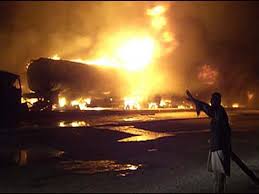
Winter is the time when terrorist activity becomes easy in the plains. If Al Qaeda and its terrorists are spared in South Waziristan they will try their best to regain the territory they have lost. It is our experience that the terrorist outreach away from South Waziristan is not effectively countered by the country’s security agencies even when the army has not mobilised itself to attack South Waziristan. A NATO supply convoy was destroyed this week again despite the fact that the army is not “stretched thin”. (Daily Times)
Muhammad Amir Khakwani alerts the civil society in Pakistan against the anti-democracy forces, namely the ISI and their agents in Pakistani media. Some of such persons include Brigadier Imtiaz, Dr Shahid Masood, Kamran Khan, General Hameed Gul
comment: Taking stock —Munir Attaullah
Time is the only sure-footed taskmaster, albeit an unpredictable one. In a few short years its magic has permanently altered certain important dimensions of our national life
Let me start by asking you a question: what is that inescapable reality which every human being — from the loftiest intellectual to the most clueless ignoramus — deals with effortlessly in practice, thinks about it from time to time, but has not even a half-decent answer as to what ‘it’ is? And, to boot, is utterly helpless to exercise any influence over it. No smart aleck answers now. The ISI is not the answer I am looking for. Is it ‘Love’ then? No. Exclude that because everyone is an expert on that subject. Could it then be that little matter of life-after-death? Negative, again. After all, there are millions (including suicide bombers) who are pretty sure they know exactly where they are headed. I will tell you. There is no one who, from time to time, has not thought about that mystifying thing called ‘Time’. We all use the concept seamlessly to anchor our daily thoughts and acts. But does anyone — from mystics to physicists — have any real idea, or understand, what ‘Time’ actually ‘is’ or how it can be influenced?
Is this the prelude to a scientific column about Time? No. That column will be written, but on another day. My thoughts for today are far less highbrow, and little more than some mundane reflections on the dynamics of our politics and our media: of how, even in the scant few years I have been writing (and thus forced to give order to my random thoughts), some things have rapidly changed irrevocably, others are in a transitional phase, while still others continue to appear as depressingly static features of our political and media landscape.
And what is the link between such thoughts and the digression I began the column with? As I follow the lively media discussions on the latest sensational disclosures, charges and counter-charges (even though they mostly confirm what sane people have known all along), as well as the continuingly tedious comments on the current political scene, I am reminded of what that erudite physicist and expert on Relativity Theory, John Wheeler, once said: “Time is that which ensures all change does not happen at once”.
Given that our politics and media are as inextricably intertwined as Space and Time are according to Einstein, is that not analogical support for my oft argued position in these columns to prefer evolutionary rather than radical change?
“Seize the moment,” we are often told. Doing so may well produce some temporary results. But all real and permanent change takes time. And this is largely true of human affairs as much as it is a characteristic feature of the physical world. ‘Seizing the moment’ is mostly about initiating, or giving impetus to, a process that needs to run a particular course. Neither Mother Nature, nor human nature, will be bullied or stampeded. Repeated coaxing is altogether more likely to produce a satisfactory outcome.
As I said, all these hand-wringing confessions and disclosures by some senior officers that have the media and the public in thrall presently are nothing new: As Muslims we are familiar with the concept of tauba; as Pakistanis, we understand the benefits of shameless hypocrisy. Put the two together and it is no surprise that those whose conscience was on holiday in their heyday seek — and find — easy rehabilitation in this manner once their glory days are over.
Is this then an argument for a policy of zero tolerance — and, therefore, a trial of the previous president for treason — when it comes to the blatant flouting of the laws of the land by the high and mighty?
In principle, the answer is a ‘yes’. But the cynicism with which the likes of Generals Aslam Beg and Hameed Gul, and Brigadier Imtiaz (not to mention a host of politicians and ex-bureaucrats) deserve to be treated should be tempered with a heavy dose of hard-nosed realism. The time, regrettably, is still not quite ripe for an all-encompassing sort of rigorous accountability, though I have little doubt that it is not far off in the distant future now. For the present there is more to be lost than gained by such precipitous action, particularly in the case of our ex-president.
That said, I do however believe the time is judicious for the Supreme Court to seize the moment, ride the tide of public interest in these disclosures and confessions, and give a sizeable impetus to this process of change by a quick hearing on Asghar Khan’s famous petition. Here is a golden opportunity to set many a precedent, not the least being that of driving an important nail in that coffin where ‘military overlordship’ currently lies pretending to be in its death throes. Do you think Generals Beg and Gul dare refuse now, in the current climate, to appear before a re-vitalised SC, as they once imperiously could? See what I mean by the power of time?
Time is the only sure-footed taskmaster, albeit an unpredictable one. In a few short years its magic has permanently altered certain important dimensions of our national life. And other crucial distortions of the rules of the power game, now caught in the vise-like grip of a dynamic flux that augers well for the future, are in the process of slow rectification. Nevertheless, even though the Khadim-e-aala Punjab has reluctantly decided to forego his grandiose title, in certain other respects it is business as usual in the motherland. Time can sometimes appear to be depressingly static. The ‘Istikhara’ programme on a particular TV channel is still going strong. The anchor of another popular religious programme is still using the prefix ‘Dr’ despite being publicly exposed (why does the management of his channel, so high on principle, not take notice?). Meanwhile, the genuine ‘Dr’, the one with the etched frown and furrowed brow, unerringly continues to explain in morose tones to our ‘badkismet aur bay-bas awam’ how they are the innocent victims of a ruthless and exploitive establishment that itself is a slave to American interests. Incidentally, this particular double-faceted explanation for all our woes remains a sure-fire hit with our ba-sha’oor public.
But the good doctor should beware. His thunder is in danger of being stolen in broad daylight by the man who ‘knows’ everything, the presenter of the ‘Brasstacks’ programme on another channel (incidentally, I am wondering who finances the airing of this particular programme). Forget the US. Even Americans are unaware victims of a bigger and more powerful International Jewish Conspiracy, aimed at thwarting an Islamic resurgence by controlling the world’s monetary system.
Yawn!
The writer is a businessman. A selection of his columns is now available in book form. Visit munirattaullah.com (Daily Times)
Come back from the brink, please!
After meeting his leader Nawaz Sharif at Raiwind on Monday, the PMLN Information Secretary, Mr Ahsan Iqbal, has issued a 48-hour “ultimatum” for the PPP government to stop “maligning” Mr Nawaz Sharif or face “hundreds of corruption stories involving PPP leaders”. He was referring to the daily “revelations” being made by Brigadier Imtiaz Ahmad Billa (retd) courtesy an overexcited media.
This was predictable even though reaction to Brigadier Ahmad’s revelations was clearly becoming negative. Not only had more spooks crawled out of the woodwork to contest his “secrets”, he was himself undergoing a gradual “death by media”. Why has the PMLN acted in anger? Had there been a cool headed discussion before letting Mr Ahsan off the leash, the decision would have been to “stay cool”.
The other side has been silent so far but reacted to Mr Ahsan’s statement in much the same language. Fortunately, however, Prime Minister Yousaf Raza Gilani was moderate in his reaction when he said that politicians should show maturity while in the crosshairs of certain elements out to defame them. Since the Presidency was accused of orchestrating the vilification campaign, the retort from there could be interpreted as: Go ahead! We don’t care!
The bitterness of the PPP was clearly a leftover from the “minus one” campaign unleashed earlier by some TV channels and newspapers. The target was President Zardari and some anchors and chief reporters were allowed to cross the line of decency and fair play. That campaign was tacitly attributed to the PMLN simply because the PMLN Leader of the Opposition in the National Assembly, Chaudhry Nisar Ali Khan, was crossing his own limits of anti-government diatribe. He had accused the MQM of being the henchman of the PPP in its attacks against the PMLN.
Brigadier Ahmad continues to swear loyalty to Mr Nawaz Sharif but shows lack of pragmatic wisdom by absolving the MQM of Jinnahpur. Somehow, the pending Mehrangate Case at the Supreme Court too got exhumed by the media and more dirt began to fly against all the anti-PPP forces of the past, led, of course, by Mr Sharif’s PML. Given the kind of wits demonstrated by the bean-spilling brigadier in question, one cannot say that the PPP could have masterminded the campaign even though it has benefited from it
The question is why did Brigadier “Billa” do it? We can give the following possible reasons which are in any case more cogent than the conclusions drawn by the PMLN. (1) Like all spooks, Billa knows about hundreds of unimportant but sensational past events and lacks the maturity to contain himself, indeed seeks to return to the limelight after years in the wilderness; (2) He is deluded into thinking that he will be admired for his “moral courage” and not be discovered as a self-important simpleton; (3) He wants recognition for his personalised vision of “national security” now that he is free to put it before the nation. (4) He is bitter because Mr Sharif didn’t help him while he was in prison during the Musharraf years and then didn’t allow him to regain his confidence and come close to him in the PMLN after Brigadier Billa came out of prison.
There can be reasons too relating to his personal “disappointments”. For instance, (1) He was ill-compensated for his services to his bosses in the ISI and the army, who left him in the lurch when the heat came upon him after Operation Midnight Jackals; (2) He is trying to pay back some fellow professionals who disliked him and were responsible for making the cases of corruption stick against him.
Some of the bitterness has oozed out of him on TV. He thinks he had gone out on a limb for Mr Sharif but was not appreciated while he was PMLN’s IB chief. He thinks Mr Sharif in power was surrounded by a wrong set of people who would not allow his “advice” to prevail with Mr Sharif. He simply can’t fathom that Mr Sharif may have ignored him “on merit” and that Mr Sharif could have stayed away from him after 1999 because of a change of political style. More lethally, he may still not realise that his revelations may be interpreted by Mr Sharif as “character-assassination”.
If it is maturity that compelled Mr Sharif to stay clear of Imtiaz Billa, it should also recommend to him abstinence from issuing ultimatums of war. What will happen now, for instance, when the Presidency and the PPP have counter-challenged him to do whatever he can? Equally, however, the PPP should show maturity by not escalating the war of words through counter-challenges. It has bigger challenges confronting it in the shape of the economy and the war against terror. (Daily Times)
LAHORE: Former chief justice of Pakistan Saeeduzzaman Siddiqui’s statement that the Inter Services Intelligence dished out millions of rupees to different politicians during President Ghulam Ishaq Khan’s regime to manipulate the 1990 elections, followed by Asghar Khan’s demand that the present chief justice should re-open the said case which he had filed in 1996 to take it to its logical end, has dusted off an old controversy, which is set to blemish the democratic credentials of many leading politicians of the country.
Chief justice (retd) Siddiqui told a private TV channel that the ISI was an intelligence agency and it should not interfere in national politics, or be used against politicians. Seasoned politician Air Marshal (retd) Asghar Khan had gone one step ahead in asking Chief Justice Iftikhar Chaudhry to reopen the case he had filed with the apex court almost 13 years ago with a view to take the culprits to task. His case is pending with the Supreme Court of Pakistan following the November 1997 unceremonious exit of former chief justice Sajjad Ali Shah from his office at the hands of the then prime minister Nawaz Sharif. The case had originated on June 16, 1996 from a letter by Asghar Khan to the then chief justice Sajjad Ali Shah, asking him to take appropriate action on then interior minister Naseerullah Babar’s statement in the National Assembly. Babar had stated on the floor of the house: “The ISI collected some Rs 140 million from the Habib Bank Ltd and distributed among a number of politicians prior to the 1990 elections with a view to manipulate the results in favour of the Islami Jamhoori Ittehad.” Asghar Khan’s letter was subsequently converted into a constitutional petition (19 of 1996) by the chief justice under Article 184(3), envisaging the human rights jurisdiction of the apex court. According to the petitioner, Asghar Khan, he had sent the first letter with the sole purpose of exposing the role of the ISI in manoeuvring the election results and supporting its favourite politicians to fulfil political ends of the establishment. “You never know how many elections have been rigged and manoeuvred by the ISI in the past,” Asghar had stated in his letter to the CJ, adding the ISI moves since 1988 were actually aimed at defeating the PPP and, therefore, the matter be adjudged and action be taken against those found guilty.
The respondents in the said case were former Army chief Mirza Aslam Beg, Lt-Gen (retd) Asad Durrani, ex-director-general of the ISI Directorate, and Younis Habib, ex-chief of ex-Mehran Bank Ltd, then confined to Central Jail, Karachi. However, the case could not be decided because of the premature dismissal of chief justice Sajjad Ali Shah. He was followed by CJPs Ajmal Mian, Saeeduzzaman Siddiqui, Irshad Hasan Khan, Bashir Jehangiri, Shaikh Riaz Ahmed, Nazim Hussain Siddiqui and now Justice Iftikhar Mohammad Chaudhry. Yet, even after a lapse of 13 years, the Human Rights Petition No 19/96 remains shelved as none of the chief justices after Sajjad Shah had dared to invite the wrath of the mighty military and intelligence establishment by reopening the controversial case. In his written reply to the apex court and subsequently reported by the media, Aslam Beg had stated: “More serious damage has been caused to the reputation and the goodwill of the armed forces by Air Marshal (retd) Asghar Khan in bringing the petition before this Honourable Court and raising an issue before the apex court which of course would receive great publicity and would cause greater damage by scandalisation in the media... That dragging the ex-service chief to the courts on a letter may be detrimental to the prestige, honour and dignity of the institution he has once represented. That Asghar Khan has approached this august court with ulterior motives and his representation is based on mala fides.”
Beg had stated in his written reply to the apex court: “That in early September [1990], Mr Younis Habib, then serving in the Habib Bank Ltd as Zonal Chief, had called on the answering respondent [Beg] and informed him that he was under instructions from the President’s [Ghulam Ishaq] Election Cell to make available a sum of Rs 140 million for supporting the elections of 1990.
“That in 1990 the National Assembly of Pakistan was dissolved and the government of Ms Benazir Bhutto was dismissed. A caretaker government was formed to hold elections within 90 days. The then president, Ghulam Ishaq Khan, had formed an Election Cell directly under him managed by Roedad Khan/Ijlal Haider Zaidi. That later on, the answering respondent was informed by Director-General, ISI, that various accounts were opened and the amount of Rs 140 million was deposited in those accounts directly by Younis Habib. Director-General, Inter Services Intelligence, made arrangements to distribute these amounts amongst the politicians belonging to various political parties and persons as instructed by the Election Cell.”
The petition further stated: “That in 1975, Zulfikar Ali Bhutto, the then prime minister, had created a Political Cell within the ISI organisation. As a result, the ISI was made responsible to the chief executive, i.e. the prime minister/president for all matters of national and political intelligence. The receipt of this amount by ISI from Younis Habib in 1990 was also under the directions of the Chief Executive. DG ISI also informed the answering respondent that funds so received were properly handled and the accounts were maintained and that Ghulam Ishaq was briefed by him on this matter.
“That during this period, in his meeting with President Ghulam Ishaq Khan, the answering respondent had informed him about the donations made by Younis Habib and its utilisation by DG ISI under the instructions of the Presidentís Political Cell. That the petitioner has made the following allegations : (a) actions of Gen Mirza Aslam Beg and Lt-Gen Asad Durrani amounted to gross misconduct; (b) both have brought the armed forces of Pakistan into disrepute; (c) both have been guilty of undermining the discipline of the armed forces. That these allegations are false, based on mala fide, and unfounded. That DG had ISI acted within the limits of the ‘lawful command’ received from the President’s Election Cell. Definition of lawful command as interpreted by Pakistan Army Act Section 33 Note b(3) is: ‘A superior can give a command for the purpose of maintaining good order or suppressing a disturbance or for the execution of a military duty or regulation’, and Pakistan Army Act Section 33 Note b(11): ‘A civilian cannot give a ‘lawful command’ under this sub-section to a soldier employed under him; but it may well be the soldier’s duty as such to do the act indicated. That the actions of the respondent and Lt-Gen Asad Durrani did not amount to gross misconduct and the orders were carried out under a lawful command.”
Afterwards, a former ISI DG, Lt Gen (retd) Asad Durrani, had conceded in an affidavit submitted to the FIA that his political cell received Rs 140m from Younis Habib for distribution among the anti-PPP politicians at the behest of Aslam Beg. (The News)
PML-N warns of long march if Musharraf ‘not fixed’
Saturday, August 29, 2009 Says ISI money matters can’t undermine Nawaz’s popularity; threatens protest if vilification against its leader doesn’t stop ISLAMABAD: The Pakistan Muslim League-Nawaz said on Friday it could go for a Long March to ensure former president Pervez Musharraf was punished.
Addressing a news conference, PML-N Secretary Information Ahsan Iqbal on Friday said that character assassination of the party chief Nawaz Sharif could in no way deter the PML-N’s struggle for the supremacy of the Constitution, parliament and Musharraf’s trial under Article 6.
He said: “We succeeded to get the deposed judges reinstated despite the fact that democracy had not yet strengthened its root in the country at that time. This time too, we would make firm efforts to get our constitutional demands fulfilled,” said the information secretary.
He said the issue of Karachi operation was being trumpeted by those who afraid of Nawaz’s increasing popularity, adding that if such malicious campaign was not stopped, the N-League reserved the right to protest in as well as outside the Parliament.
The party leader said the November 3, 2007 steps were not protected under the Constitution, so it was essential that the person who took such steps must be tried. Ahsan Iqbal said the matter of giving money to political leaders by the secret agency could not undermine Nawaz’s popularity and people elected him despite such maligning drive. He told the media that the military operation in Swat got appraisal from all circles and if this operation had been carried out by dictator, it could have never won such praise. (The News)
In the ring
Thursday, August 27, 2009 The hand of the so-called 'establishment', that shadowy entity comprising the army, the bureaucracy and the agencies among other forces, has long been a part of politics in Pakistan. The coming and going of governments, the downfall of individuals and all kinds of other events are attributed to it. But today, we apparently find this powerful entity locked in what appears to be an internal dilemma. According to a report in this newspaper and rumours that drift across Islamabad's leafy avenues, elements within the establishment are engaged in an all-out effort to discredit Nawaz Sharif, a man whose political career is said to have begun with the support of the same lobby. The purpose appears to be to save former president Musharraf from trial – and possibly by exposing or threatening to expose misdeeds from the past – pressurising Sharif to abandon the strident position he has taken on the issue. It has been alleged that key figures have attempted to use the media to advance their stance and that a Karachi-based political party is also being used for the same purpose.
The tussle is a fascinating one in many ways. The PML-N, which insists it will not back down, has for the first time come up directly against those with whom it is said, in the past, to have worked with hand in glove. The accounts also suggest that as many suspect, the army is indeed keen to save a former chief and by doing so keep intact the notion that the men who wear khaki cannot be touched and ride above the law of the land. There have been some suggestions that Nawaz Sharif may still have supporters in powerful places who are willing to back him against Musharraf – thus opening up a distinct divide.
As has happened before, such events also act to throw light on some of the more murky deeds in our history. Sadly these are many. The continued lack of access to information means that truths about corruption rackets or other equally dark deeds rarely surface unless somebody wants to throw back the dust covers and expose such goings-on, to serve their own purposes. As such, there is a possibility, as the power struggle hinged around Musharraf continues, that more facts may emerge from the past. These could help satisfy curiosity and give the public more information about leaders. The risk though of course is that accuracy will be lost amidst the effort to score points. It is impossible for the present to predict who the winner will be in the ongoing tussle. But what it does underscore is the powerful role the establishment still plays in our set-up and how difficult it indeed is to distance the military from events in the political sphere. (The News)
60 MQM men buried in Margalla hills in 1997: Shujaat
Thursday, August 27, 2009 ISLAMABAD: PML-Q chief Chaudhry Shujaat Husain has disclosed that at least 60 activists of the MQM were buried in the Margalla Hills of the Federal Capital in 1997.
Talking to a TV channel on Wednesday, he said the said activists, apprehended from Karachi, were shifted to Islamabad, where they were tortured to death and later buried in the Margalla Hills. No investigations of any sort were held regarding the killing of the detainees.”
Chaudhry Shujaat further disclosed: “I was Federal Interior Minister at that time, but Chairman Accountability Bureau Saif-ur-Rahman was more influential than me. The map, which the law-enforcement agencies exposed, has no reality.
Responding to a query, he elucidated that trial for the former dictator Pervez Musharraf would not be held. Shujaat said he was personally not in favour of presenting the resolution in the House. The incumbents, as at this juncture of time, should focus their attention to relieve the masses from prevailing energy and commodity crisis, instead of indulging in dead issues.
The PML chief said the political leadership of the country was taken into confidence in connection with the 1992 military operation in Karachi. The federal cabinet was also not briefed before the military operation in Karachi, he said.
The PML-Q leader expressed his anger that the issues of 1992 military operation and ‘Jinnahpur’ were being aired at this particular time to divert the attention of the masses from prevailing crisis.
Meanwhile, the spokesman for the PML-N, Siddiq-ul-Farooq, while refuting the allegations levelled by Chaudhry Shujaat, emphasised that the PML-N chief had nothing to do with any sort of genocide during his both the tenures.
Farooq said Chaudhry Shujaat Husain was federal interior minister in 1997 and should have resigned from his office, if he had any moral courage, over the ëkilling of 60 activists of the MQM in the Federal Capital. (The News)
Chief politicians embezzle donation money in Ishaq era
KARACHI: According to the sworn undertaking of ISI’s former chief Lieutenant General (rtd) Asad Durrani, which he took before Supreme Court (SC) on July 24, 1994, that he was instructed in September 1990 by the then Chief of Army Staff (COAS), the former General Mirza Aslam Baig for provision of Logistic Support to embezzle money donated for election preparations from some Karachi traders and use the same donation money for Islami Jamhuri Ittehad (IJI) party.
Asad Durrani was told that the instructions to misappropriate donation money were backed by the then government of Pakistan, according to his affidavit statement before SC.
Subsequently, in pursuit of the instructions he received, he was forced to open some fake bank accounts in Karachi, Quetta and Rawalpindi while one donator from Karachi, by the name Younis Habib, deposited as much as 140 million rupees and the money from all accounts were transferred to other places according to the need for extension of logistic support to IJI party while the remaining money was transferred to a special fund, his sworn statement added.
His statement further added, Rs10 million were given to Mir Afzal in NWFP province, Rs3.5 million to Mian Muhammad Nawaz Sharif in Punjab, Rs5.6 million to Lieutenant General (rtd) Rafaqat for advertisement on media, Rs5 million to Jamat-e-Islami, Rs1 million to Begum Abida Hussain, Rs0.5 million to Altaf Hussain Qureshi and Mustafa Sadiq, Rs3.3 million to small groups, Rs5 million to Ghulam Mustafa Jatoi in Sindh, Rs5 million to Jam Sadiq, Rs2.5 million to Muhammad Khan Junejo, Rs2 million to Pir Pagara, Rs0.3 million to Molana Salahuddin, Rs5.4 million to small parties, Rs1.5 million to Humayun Muree, the son-in-law of Bugti, Rs4 million to Jamali, Rs1 million to Kakar, Rs0.7 million to Jam Yousuf, Rs0.5 million Bazinjo and Rs1 million were given to Nadir Mengal. (The News)
It is pertinent to mention that the value in rupees of 12 grams of gold was Rs33 at the time when money was misappropriated while it stands at Rs29,000 today. (The News)
Nawaz Kush Campaign and Fauji Chooran - By Rashid Murad:
Some relevant comments: Source: pkpolitics
runaway said:
Now NS claiming that 92 operation was done without his permission. What the hell? He was the Prime Minister of PAKISTAN not PUNJAB.
Kargil done without his knowledege..92 operation done without his permission. Was Qarz Utaro Mulk Sanwar and Dollar Freeze also done without his knowledge…bhola !!
Gul said:
I totally disagree the ‘quaidabad’ issue is of headline importance. This was clarified way back in 92 soon after the accusation was made.
Brig. Imtiaz’s bringing it up yet again, at this time, is nothing but a typical red herring to distract from the genuine issue of MQM’s terrorism, and the inquiries it now faces. It is also being used to somehow weaken Nawaz Sharif, who appears unstoppable in gaining popularity. It suits, and has always suited, the establishment not let any one political party or leader become very strong. Keep them all weak, thereby keeping own hold on country.
There can be NO other purpose in bringing up such a non issue at this time, and sending all the talking heads spinning into this rat hole.
Amir Hameed said:
@Gul, Re: your post above, I tend to disagree with you. We need to highlight the role of intelligence agencies in weakening the political structure of this country. Hamid Gul has also issued a statement recently where he has indicated how the agencies were involved in forming IJI. The bottom line is that agencies need to stay out of the political structure, period.
Gul said:
@Amir Hameed
I agree with you a 100% on the need to struggle against agencies’ role in preventing Pakistan from ever acquiring a strong democratic dispensation.
Where I don’t agree is that this dead issue, a red herring, will do that. As I said, the fact that there never was such a map was very much contradicted and clarified very shortly after the claim was made. Beating this idiotic and long failed, long disproven claim, NOW, is meant to serve purposes entirely different form highlighting agencies’ role in the past or the present.
Amir Hameed said:
@sacheebat, …unless politicians or parties are involved in anti-Pakistan or other illegal activities…
That is fine but it is related to treason and not the political structure. Agencies’ role should be to protect the country, both from inside and outside threats, BUT not to interject their influence in the political structure.
@Gul, Re: this being a dead issue; Altaf Hussain’s speech in India should also be a dead issue because we all know that it DID happen but we beat this dead horse every single chance we get. In the context of Jinahpur, I do not see any reason why we should not discus a) who orchestrated it, meaning where did the orders come from? b) why was it done? c) What was the role of the-then government?
These are all legitimate questions and should not be put under the cover. People have the right to ask and to know the truth.
A tribute to Pakistani soliders fighting the terrorists of Taliban, Al-Qaeda and Sipah-e-Sahaba
Shaheed Mohtarma Benazir Bhutto 1953-2007
Ghalib
The rose, with its redolent petals The water lily, with its robe of virgin white These have surely come to us in transmigration Of but a few of those Endowed with sublime beauty and grace. Some embrace death to sprout again But most, forever, in dust remain.
Links to Free Talkshows / Videos on Pakistan Politics
(Only) When love teaches the etiquette of self-knowledge, Are the Imperial Mysteries revealed to the slaves! Whether it be Attar or Rumi, Razi or Ghazali, Nothing comes to hand without supplication in the early dawn Do not lose hope in them, 0' wise guide! Even though the wayfarers are slow-moving, They are not without zeal (to reach the goal)! (Iqbal)


 Muhammad Amir Khakwani


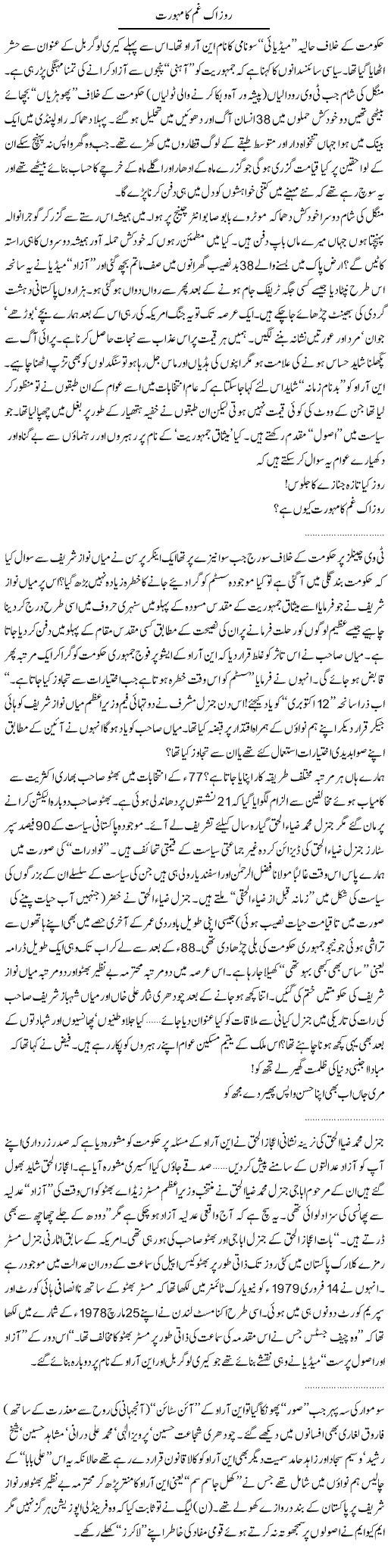


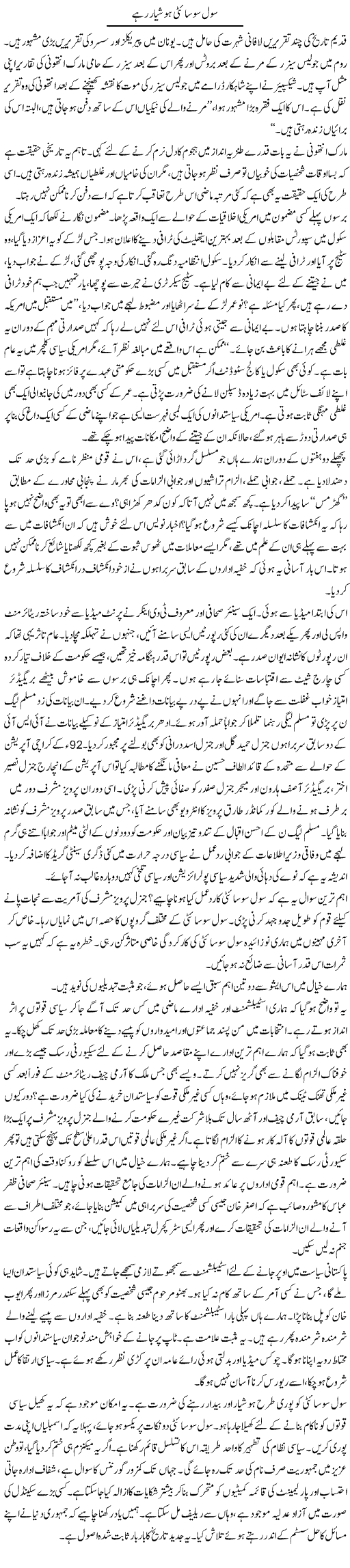
 Time is the only sure-footed taskmaster, albeit an unpredictable one. In a few short years its magic has permanently altered certain important dimensions of our national life


 KARACHI: According to the sworn undertaking of ISI’s former chief Lieutenant General (rtd) Asad Durrani, which he took before Supreme Court (SC) on July 24, 1994, that he was instructed in September 1990 by the then Chief of Army Staff (COAS), the former General Mirza Aslam Baig for provision of Logistic Support to embezzle money donated for election preparations from some Karachi traders and use the same donation money for Islami Jamhuri Ittehad (IJI) party.