Editor's Choice

--------------------------------------------------------------------------------------------------------------------------
Featured Post
--------------------------------------------------------------------------------------------------------------------------

"Let us build Pakistan" has moved.
30 November 2009

All archives and posts have been transferred to the new location, which is: http://criticalppp.com

We encourage you to visit our new site. Please don't leave your comments here because this site is obsolete. You may also like to update your RSS feeds or Google Friend Connect (Follow the Blog) to the new location. Thank you.


--------------------------------------------------------------------------------------------------------------------------
Showing posts with label General Hamid Gul. Show all posts

Thursday, 12 November 2009

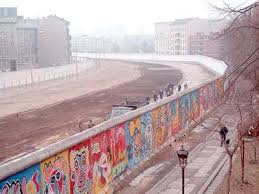
Pakistani heroes of the Berlin Wall - Rauf Klasra


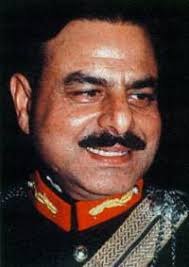
"I met General Gul, who is now retired, in his house in a military district of Rawalpindi, near Islamabad, where he lives in spacious comfort. I was shown into a reception room, and I sat on a sofa waiting for the General to appear. Beside me, on a low table, a piece of the Berlin Wall was on display—a gift, it seemed, from the West German foreign-intelligence service. The engraving read, “With deepest respect to Lt. General Hamid Gul who helped deliver the first blow.” "

For a background reading, please read the following post on Sherry's blog: http://sherryx.wordpress.com/2009/03/01/letter-from-pakistan-pashtun-code/

Here is Rauf Klasra's artcile:


Read more...

Friday, 23 October 2009

The future government of Pakistan - by Nazir Naji


Nazir Naji identifies some possible names for a future idealistic government of Pakistan comprising some of the 'most capable' persons as identified in various TV talk-shows.

President: General Hamid Gul

Prime Minister: Munawar Hasan

Minister for Religious Affairs: Imran Khan

Roedad Khan: Interior Minister

Dr Shahid Masood: Minister for 'Dependent Care'

Qazi Hussain Ahmed: Ambassador to India

Shaheen Sehbai: Ambassador to Canada

Shirin Mazari: Ambassador to the USA

Abdul Aziz: Ambassador to the United Nations

Osama Bin Laden: Ambassador at large

General Mahmud Durrani: Governor of the NWFP

Geneal Aslam Beg: Governor of Balochistan

Hanif Abbasi: Governor of Punjab - part 1

Fazlur-Rehman: Governor of Punjab - part 2


Regime of ‘hostile’ TV anchors
Daily Times - Saturday, June 21, 2008

Two particular encounters on two TV channels Thursday night revealed the mind of the “misplaced or hostile anchor” in Pakistan. The first was a discussion among a group of TV journalists on the accusation levelled against them that they are no longer impartial in their conduct of talk shows and tend to favour a political stance. The “consensus” was that encroachments on institutions of representative democracy by military rulers could not be viewed with impartiality, and that a show of partiality was dictated by the anchors’ loyalty to the Constitution. One opinion was that this obligatory partiality must be accompanied by “objectivity”; but it was not clear how the state of being “objective” could be reconciled with the state of being “partial”.

The other discussion was an interview with Pakistan’s ambassador Mr Hussain Haqqani by a TV journalist noted for his acerbity of approach and bias. The topic was the attack made by NATO-ISAF forces inside Mohmand Agency which resulted in the death of 13 Pakistani troops, souring Pakistan’s relations between Washington. The ambassador, while acknowledging his duty to bring the umbrage of Pakistan to the notice of the Washington Administration in the most forceful of terms, also charged the TV person with the obligation of looking objectively at the situation in which Pakistan found itself. He asked him if he took account of the ground realities in the Tribal Areas where the war against terrorism was clearly in the national interest of Pakistan. The ambassador argued for “realism” in the handling of such crises as the one resulting from the attack in the Mohmand area. But the TV anchor demanded that Pakistan approach the United Nations for a solution to the problem of the growing breach of Pakistan’s “sovereignty” and “territorial integrity”. The ambassador pointed out that the Security Council was an arena of power play, not a kind of Supreme Court where all plaintiffs were equal. The TV anchor then fell back on the argument of “national pride” and claimed to represent the people of Pakistan, arguing in favour of Pakistan opting out of the international war on terrorism. He had no answer, however, to the question about what Pakistan would do after that, after its various trouble spots are bombed by a combination of forces united inside the US Security Council.

The patriotically “partial” TV anchors began by opposing a military ruler and are now caught in a situation of political bias under democracy because of the dictates of their partiality. The 2008 elections have delivered a political battlefield where elected parties are trying to move together despite their different recipes and solutions. What should the TV anchors do now? Normally, they should have moved back and become neutral, letting the discussions be fairly judged by the viewers, but they continue to pose as arbiters and decide on their own such matters as the “mandate” of the 2008 elections, the “immorality” of the NRO, and the rough dismissal of President Musharraf from his job. But when matters are in dispute between elected parties and in parliament, it is the duty of the media to remain impartial in order to allow the people to make their own judgements.

While highlighting the “complaints” against the TV channels, one must be clear, however, about the over-all role played by our electronic journalism. Despite their early “philosophical” gropings, the TV channels are a sine qua non of our lives and their foibles of “partiality” are dwarfed by their achievement of creating awareness among the people on all other economic and social matters. For example, in Punjab, Chief Minister Shahbaz Sharif is taking action, correctly, after watching TV reports on the malfunction of government institutions.

A sense of pride and sovereignty may take nations into war and humiliate them without making them understand what went wrong. This happened to Germany in the Second World War and in recent times to Serbia whose people, proud and sovereign, hate the world today for not understanding why they were killing Bosnians and Kosovars. But states don’t only feel aroused emotionally. They can also be cold-blooded. They can be motivated only by their self-interest whose pursuit might negate the state’s pride and sovereignty. When Iran and America confront each other, both tend to fly off the handle. In contrast, in Europe, where many nationalist wars were fought in the past, few feel as aroused.

Why shouldn’t a state feel emotional? Because being emotional may be contrary to its national interests. These interests are almost always economic. This is perfectly understandable because as long as a nation is prosperous and not dependent on outside creditors, its pride and sovereignty remain intact. But if a state is neglectful of its economy and pursues other emotional goals either unrelated or hostile to its economy it is bound to impose suffering on its people through the growth of poverty. And nothing removes pride and sovereignty from a nation more cruelly and quickly than poverty. Let us not forget that the organisation which kidnapped and beheaded the American journalist Daniel Pearl in 2002 called itself National Movement for the Restoration of Pakistani Sovereignty.
(Asadullah Ghalib - CallAnchors)

Read more...

Wednesday, 2 September 2009

Qadam barhao Nawaz Sharif: Not only against Musharraf but also against Hamid Gul and Zia


An interesting analysis by Latif Chaudhry. Also watch a video clip of Nawaz Sharif praising General Zia-ul-Haq and contrast that vidoe with his today's stance against Musharraf.


Read more...

Civil society in Pakistan must remain alert against anti-democracy conspiracies...


Muhammad Amir Khakwani alerts the civil society in Pakistan against the anti-democracy forces, namely the ISI and their agents in Pakistani media. Some of such persons include Brigadier Imtiaz, Dr Shahid Masood, Kamran Khan, General Hameed Gul

comment: Taking stock —Munir Attaullah

Time is the only sure-footed taskmaster, albeit an unpredictable one. In a few short years its magic has permanently altered certain important dimensions of our national life

Let me start by asking you a question: what is that inescapable reality which every human being — from the loftiest intellectual to the most clueless ignoramus — deals with effortlessly in practice, thinks about it from time to time, but has not even a half-decent answer as to what ‘it’ is? And, to boot, is utterly helpless to exercise any influence over it.
No smart aleck answers now. The ISI is not the answer I am looking for. Is it ‘Love’ then? No. Exclude that because everyone is an expert on that subject. Could it then be that little matter of life-after-death? Negative, again. After all, there are millions (including suicide bombers) who are pretty sure they know exactly where they are headed.
I will tell you. There is no one who, from time to time, has not thought about that mystifying thing called ‘Time’. We all use the concept seamlessly to anchor our daily thoughts and acts. But does anyone — from mystics to physicists — have any real idea, or understand, what ‘Time’ actually ‘is’ or how it can be influenced?

Is this the prelude to a scientific column about Time? No. That column will be written, but on another day. My thoughts for today are far less highbrow, and little more than some mundane reflections on the dynamics of our politics and our media: of how, even in the scant few years I have been writing (and thus forced to give order to my random thoughts), some things have rapidly changed irrevocably, others are in a transitional phase, while still others continue to appear as depressingly static features of our political and media landscape.

And what is the link between such thoughts and the digression I began the column with? As I follow the lively media discussions on the latest sensational disclosures, charges and counter-charges (even though they mostly confirm what sane people have known all along), as well as the continuingly tedious comments on the current political scene, I am reminded of what that erudite physicist and expert on Relativity Theory, John Wheeler, once said: “Time is that which ensures all change does not happen at once”.

Given that our politics and media are as inextricably intertwined as Space and Time are according to Einstein, is that not analogical support for my oft argued position in these columns to prefer evolutionary rather than radical change?

“Seize the moment,” we are often told. Doing so may well produce some temporary results. But all real and permanent change takes time. And this is largely true of human affairs as much as it is a characteristic feature of the physical world. ‘Seizing the moment’ is mostly about initiating, or giving impetus to, a process that needs to run a particular course. Neither Mother Nature, nor human nature, will be bullied or stampeded. Repeated coaxing is altogether more likely to produce a satisfactory outcome.

As I said, all these hand-wringing confessions and disclosures by some senior officers that have the media and the public in thrall presently are nothing new: As Muslims we are familiar with the concept of tauba; as Pakistanis, we understand the benefits of shameless hypocrisy. Put the two together and it is no surprise that those whose conscience was on holiday in their heyday seek — and find — easy rehabilitation in this manner once their glory days are over.

Is this then an argument for a policy of zero tolerance — and, therefore, a trial of the previous president for treason — when it comes to the blatant flouting of the laws of the land by the high and mighty?

In principle, the answer is a ‘yes’. But the cynicism with which the likes of Generals Aslam Beg and Hameed Gul, and Brigadier Imtiaz (not to mention a host of politicians and ex-bureaucrats) deserve to be treated should be tempered with a heavy dose of hard-nosed realism. The time, regrettably, is still not quite ripe for an all-encompassing sort of rigorous accountability, though I have little doubt that it is not far off in the distant future now. For the present there is more to be lost than gained by such precipitous action, particularly in the case of our ex-president.

That said, I do however believe the time is judicious for the Supreme Court to seize the moment, ride the tide of public interest in these disclosures and confessions, and give a sizeable impetus to this process of change by a quick hearing on Asghar Khan’s famous petition. Here is a golden opportunity to set many a precedent, not the least being that of driving an important nail in that coffin where ‘military overlordship’ currently lies pretending to be in its death throes. Do you think Generals Beg and Gul dare refuse now, in the current climate, to appear before a re-vitalised SC, as they once imperiously could? See what I mean by the power of time?

Time is the only sure-footed taskmaster, albeit an unpredictable one. In a few short years its magic has permanently altered certain important dimensions of our national life. And other crucial distortions of the rules of the power game, now caught in the vise-like grip of a dynamic flux that augers well for the future, are in the process of slow rectification. Nevertheless, even though the Khadim-e-aala Punjab has reluctantly decided to forego his grandiose title, in certain other respects it is business as usual in the motherland. Time can sometimes appear to be depressingly static.

The ‘Istikhara’ programme on a particular TV channel is still going strong. The anchor of another popular religious programme is still using the prefix ‘Dr’ despite being publicly exposed (why does the management of his channel, so high on principle, not take notice?). Meanwhile, the genuine ‘Dr’, the one with the etched frown and furrowed brow, unerringly continues to explain in morose tones to our ‘badkismet aur bay-bas awam’ how they are the innocent victims of a ruthless and exploitive establishment that itself is a slave to American interests. Incidentally, this particular double-faceted explanation for all our woes remains a sure-fire hit with our ba-sha’oor public.

But the good doctor should beware. His thunder is in danger of being stolen in broad daylight by the man who ‘knows’ everything, the presenter of the ‘Brasstacks’ programme on another channel (incidentally, I am wondering who finances the airing of this particular programme). Forget the US. Even Americans are unaware victims of a bigger and more powerful International Jewish Conspiracy, aimed at thwarting an Islamic resurgence by controlling the world’s monetary system.


Yawn!

The writer is a businessman. A selection of his columns is now available in book form. Visit munirattaullah.com (Daily Times)


Come back from the brink, please!

After meeting his leader Nawaz Sharif at Raiwind on Monday, the PMLN Information Secretary, Mr Ahsan Iqbal, has issued a 48-hour “ultimatum” for the PPP government to stop “maligning” Mr Nawaz Sharif or face “hundreds of corruption stories involving PPP leaders”. He was referring to the daily “revelations” being made by Brigadier Imtiaz Ahmad Billa (retd) courtesy an overexcited media.

This was predictable even though reaction to Brigadier Ahmad’s revelations was clearly becoming negative. Not only had more spooks crawled out of the woodwork to contest his “secrets”, he was himself undergoing a gradual “death by media”. Why has the PMLN acted in anger? Had there been a cool headed discussion before letting Mr Ahsan off the leash, the decision would have been to “stay cool”.

The other side has been silent so far but reacted to Mr Ahsan’s statement in much the same language. Fortunately, however, Prime Minister Yousaf Raza Gilani was moderate in his reaction when he said that politicians should show maturity while in the crosshairs of certain elements out to defame them. Since the Presidency was accused of orchestrating the vilification campaign, the retort from there could be interpreted as: Go ahead! We don’t care!

The bitterness of the PPP was clearly a leftover from the “minus one” campaign unleashed earlier by some TV channels and newspapers. The target was President Zardari and some anchors and chief reporters were allowed to cross the line of decency and fair play. That campaign was tacitly attributed to the PMLN simply because the PMLN Leader of the Opposition in the National Assembly, Chaudhry Nisar Ali Khan, was crossing his own limits of anti-government diatribe. He had accused the MQM of being the henchman of the PPP in its attacks against the PMLN.

Brigadier Ahmad continues to swear loyalty to Mr Nawaz Sharif but shows lack of pragmatic wisdom by absolving the MQM of Jinnahpur. Somehow, the pending Mehrangate Case at the Supreme Court too got exhumed by the media and more dirt began to fly against all the anti-PPP forces of the past, led, of course, by Mr Sharif’s PML. Given the kind of wits demonstrated by the bean-spilling brigadier in question, one cannot say that the PPP could have masterminded the campaign even though it has benefited from it

The question is why did Brigadier “Billa” do it? We can give the following possible reasons which are in any case more cogent than the conclusions drawn by the PMLN. (1) Like all spooks, Billa knows about hundreds of unimportant but sensational past events and lacks the maturity to contain himself, indeed seeks to return to the limelight after years in the wilderness; (2) He is deluded into thinking that he will be admired for his “moral courage” and not be discovered as a self-important simpleton; (3) He wants recognition for his personalised vision of “national security” now that he is free to put it before the nation. (4) He is bitter because Mr Sharif didn’t help him while he was in prison during the Musharraf years and then didn’t allow him to regain his confidence and come close to him in the PMLN after Brigadier Billa came out of prison.

There can be reasons too relating to his personal “disappointments”. For instance, (1) He was ill-compensated for his services to his bosses in the ISI and the army, who left him in the lurch when the heat came upon him after Operation Midnight Jackals; (2) He is trying to pay back some fellow professionals who disliked him and were responsible for making the cases of corruption stick against him.

Some of the bitterness has oozed out of him on TV. He thinks he had gone out on a limb for Mr Sharif but was not appreciated while he was PMLN’s IB chief. He thinks Mr Sharif in power was surrounded by a wrong set of people who would not allow his “advice” to prevail with Mr Sharif. He simply can’t fathom that Mr Sharif may have ignored him “on merit” and that Mr Sharif could have stayed away from him after 1999 because of a change of political style. More lethally, he may still not realise that his revelations may be interpreted by Mr Sharif as “character-assassination”.

If it is maturity that compelled Mr Sharif to stay clear of Imtiaz Billa, it should also recommend to him abstinence from issuing ultimatums of war. What will happen now, for instance, when the Presidency and the PPP have counter-challenged him to do whatever he can? Equally, however, the PPP should show maturity by not escalating the war of words through counter-challenges. It has bigger challenges confronting it in the shape of the economy and the war against terror. (Daily Times)


Read more...

Tuesday, 1 September 2009

Are you sleeping Chief Justice Chaudhry? Why is Air Marshal Asghar Khan’s case pending before the SC since 1996?


Govt not to ask SC to take up Asghar’s case: AG

Tuesday, September 01, 2009

By Sohail Khan

ISLAMABAD: Attorney-General Sardar Latif Khosa on Monday said the government would not file an application in the Supreme Court, praying for an early hearing of Air Marshal (retd) Asghar Khan’s case pending before the SC regarding formation of the Islami Jamhoori Ittehad (IJI).

The Pakistan People’s Party (PPP) would not ask the apex court for the early hearing of the case filed in 1997 by Asghar Khan against the formation of the IJI by an intelligence agency against the PPP, Latif Khosa told newsmen at the Supreme Court.

He said the case was pending in the court and it was up to the court to decide its time of hearing. The attorney-general said the Pakistan People’s Party believed in democracy and would not derail the democratic process in the country. He said a particular group was intentionally trying to raise this old issue, but it would be of no use to reopen it.

Air Marshal (retd) Asghar Khan had filed a petition in the Supreme Court in 1997 regarding the formation of the IJI, making Gen (retd) Mirza Aslam Beg, the then chief of the Army staff (COAS), Lt-Gen (retd) Asad Durrani, former ISI director general and others as respondents. The petition is still pending before the apex court.

Earlier on June 16, 1996, Air Marshal (retd) Asghar Khan had requested Justice (retd) Sajjad Ali Shah, the then-chief justice of Pakistan, to initiate legal proceedings against Mirza Aslam Beg and Lt-Gen (retd) Asad Durrani for bringing a bad repute to armed forces and had been guilty of undermining the discipline of the armed forces.

Asghar Khan had drawn attention of the then-chief justice of Pakistan, Justice Sajjad Ali Shah, to the disclosure by the interior minister in the National Assembly on June 11, 1996, that Gen (retd) Mirza Aslam Beg had drawn Rs 150 million from the Mehran Bank and had distributed the amount to various people prior to the 1990 elections. He disclosed that this had been done through Lt-Gen (retd) Asad Durrani, the director general of the Inter-Services Intelligence Directorate at that time.

Asghar Khan had submitted before the then chief justice of Pakistan that the action of Mirza Aslam Beg and Asad Durrani was tantamount to gross misconduct and requested for initiating legal proceedings against both the persons.

Only 'Billa' can tell why
By Zaffar Abbas
Tuesday, 01 Sep, 2009
Brigadier (retd) Imtiaz Ahmed.

ISLAMABAD: Brigadier (retd) Imtiaz Ahmed, or others like him who served in the security services over the past three decades, may alone know the real reason for re-igniting the controversies regarding their role in the making and breaking of political parties, alliances and governments, and of institutionalising corruption in the country’s politics.

It is unclear whether this was his intention but the retired brigadier, known as Imtiaz ‘Billa (the cat)’ in the army circles of yesteryear, has done one great service to this nation.

Through his confessions, which he proudly describes as ‘revelations’, he has revived memories of some of the worst transgressions of the law and violations of norms of decent conduct and human rights by the intelligence agencies. Particularly during the dreaded rule of the dictator Gen Ziaul Haq during the late ’70s and early ’80s.

As these revelations jog one’s memory, one is propelled back in time to the period when Imtiaz Billa’s name had become synonymous with dirty, horrible, tactics in dealing with Zia’s political opponents. During this period, arrests, torture and even death in custody of political opponents dubbed Indian or Soviet agents, had become the order of the day.

As the re-emergence of the debate takes some of us down the memory lane, an unforgettable reference comes to mind when ‘Imtiaz Billa’ came to be known among the communist and other left-wing activists as ‘butcher’.

Tasked by Gen Zia to eliminate anyone or everyone who had even tenuous links with the otherwise tiny communist movement, Billa and his men took upon themselves the task of hunting down those associated with groups viewed as pro-Soviet.

Basking in the glory of having earned the support of the United States because of the Soviet presence in Afghanistan, Gen Zia wanted to pursue his own agenda of Islamisation by neutralising all who may have represented socialist or secular ideals.

Noted journalist Sohail Sangi, one such victim of the security services, recalls that in those days Imtiaz Billa was either posted in Karachi or, as an ISI colonel, was supervising the anti-communist operation in Karachi and elsewhere in Sindh province.

It was during these days in August 1980 that a group of left-wing activists approached a few journalists at the press club in Karachi to seek their help in highlighting the news of death in custody of communist student leader Nazir Abbasi.

Abbasi had died during torture as attempts were made to extract information from eight prominent members of the defunct Communist Party of Pakistan (CPP). The news had come out once his body was handed over to his relatives for burial, but the newspapers were unable to publish the reason for his death because of strict censorship.

As Professor Jamal Naqvi, one of the arrested communist leaders, later mentioned in his testimony during the famous ‘Jam Saqi trial’, it was Nazir Abbasi’s death that saved the rest of the detainees from further torture, as they were soon shifted from a military interrogation cell to a Karachi prison.

Even during the military trial the actual case that the intelligence agency had framed against Jam Saqi and his comrades was not about their involvement in promoting Soviet communism in the country but of working for the Indian intelligence to topple Gen Zia’s military regime.

Prof Naqvi, Jam Saqi and also others like Sohail Sangi, Jabbar Khattak, Kamal Warsi and Shabbir Sher are around to testify to the horrors of that dark period.

Then there were many other cases against nationalist leaders like Rasul Bux Palijo or communist activists like lmdad Chandio and scores of others that were all fabricated so that those charged could be kept away from mainstream politics.

Hijacking case

The ISI’s political cell under Gen Zia had acquired a much bigger role with the hijacking of a PIA plane by the so-called Al Zulfiqar in 1981. This incident gave a new lease of life to Gen Zia, as he used it to his advantage to allow the intelligence to round up thousands of political activists in the country – perhaps the biggest crackdown since the mass arrest of political activists to coincide with Mr Bhutto’s hanging. Also, Brig Imtiaz Billa is once again trying to make a big thing of the so-called conspiracy hatched by Ghulam Mustafa Khar to topple Gen Zia’s regime. At one point, noted lawyer and activist Raza Kazim was also implicated in the case, and so were a number of junior officers.

In this case too they were accused of having links with RAW. None of them ever denied having worked to remove Gen Zia, but for ‘Billa’ and others the easiest thing was to link them to India to justify their military trial.

‘American agent’

Perhaps the most bizarre of such incidents was the arrest of a trade union leader in Karachi, Rafiq Safi Munshi on the charge of being an American agent. A few months ago Imtiaz Billa ‘disclosed’ in a newspaper interview how he trapped an ‘American agent’ who was passing on nuclear secrets in Karachi to his ‘handlers’ at the US consulate.

Many may differ with the Rafiq Safi’s style of politics, but the fact is that he was associated with the PPP, and was a prominent leader of the Karachi Electric Supply Corporation’s (KESC) trade Union, and was not working at Karachi Nuclear Power Plant (Kannup) as the retired brigadier had portrayed. Even otherwise, what has Kannup plant got to do with Pakistan’s nuclear weapons programme?

But in the martial law period the arrest of any opponent of the military junta was justified, and branding them as Indian or Soviet, or in one case, even American, agent kosher.

Special courts

What helped the junta more was a blanket news censorship and holding of trial in summary and special military courts, whose verdicts were often written before the start of the case proceedings.

It will be quite interesting to find out that in many cases the only crime of such left-wing activists, including many professors of Quaid-i-Azam University, was secretly publishing anti-Zia literature.

The role of the military intelligence services in former East Pakistan is often described as the worst as in those days hundreds disappeared and popular opinion was suppressed by arresting and trying Awami League leaders as foreign agents.

But a close study of Gen Zia’s days, and the powers that were given to people like ‘Billa’, or the entire ISI under first Generals Ghulam Jilani and then Akhtar Abdur Rehman and finally Lt-Gen Hameed Gul, may show how blatantly they violated the law and human rights.

Probe commission

Now that Brig (retd) Imtiaz has himself decided to spill the beans, perhaps, as many believe, to defame a few more politicians, there are some quarters who argue that democracy will be served better if the politicians collectively demand a high-powered commission to probe into the role of the intelligence services in the country’s politics, particularly during the days of Gen Ziaul Haq and beyond.

Politicians may or may not have taken money from the ISI or Intelligence Bureau. But if a former ISI chief, Lt-Gen (retd) Asad Durrani, accepts he distributed money among a large number of politicians, and if Lt-Gen (retd) Hamid Gul boasts of forming an anti-Benazir Bhutto opposition alliance, or if Brig (retd) Imtiaz goes on television to accuse Ghulam Mustafa Khar of taking Rs5 million for his election campaign, then there are enough grounds to initiate proceedings against them and others for subverting the democratic process in the country.

Perhaps, the best person to head the commission would be Air Marshal (retd) Asghar Khan, as he is the one who had approached the Supreme Court to expose the role of the ISI in the country’s politics. And if the present Army Chief General Ashfaq Kayani is to be believed about having disbanded ISI’s political wing, it will be fair to assume he will have no objection in a public discussion about the intelligence agencies’ dubious political role in the past. At a time when the military is battling forces of religious extremism and militancy, the irony won’t be lost on the leadership that under a different regime it was their own colleagues who tried to crush those representing more tolerant political thought. (Dawn)

Military reviewing ‘revealing’ statements by former officials

* Officials determining if recent statements, interviews violate Official Secrets Act, 1923
* Lawyers say proceedings must be launched against those guilty

By Sajjad Malik


ISLAMABAD: The military top brass is reviewing a string of statements and interviews by former defence officials to determine whether they are guilty of breaching the Official Secrets Act of 1923, official sources told Daily Times on Wednesday.

“The matter is being considered and reviewed at the appropriate level,” said the defence officials when asked if General Headquarters was considering action against retired defence officials for disclosing information on actions carried out in official capacity.

The sources said all former defence officials were bound to maintain the secrecy of sensitive matters related to the time they held any office. They said any violation could lead to prosecution under the Official Secrets Act.

“They are bound to keep secrets as secrets, and they are not allowed to go around revealing things done while in active service,” said the sources.

Replying to a question, they said only the “organisation” could determine if an official had disclosed any secret information during interviews, writings or announcements.

They said the law applied not only to defence officials, but also to civilian officials. He said all officials were strictly required to maintain the secrecy of whatever they had done in official capacity in the best interest of the state.

Proceedings: Senior lawyer SM Zafar said all such former officials were liable under the Official Secrets Act of 1923. “All of them are liable, but the nature of their crime is like sedition or treason... only the government can proceed against them and prosecute them in a court of law,” he said.

Another senior lawyer, Abid Hassan Manto, said it was not clear if recent statements by former army officers fell in the category of official secrets. “But once it is established that they have violated the law, they all can be punished,” he said.

Fakharuddin G Ibrahim said he was not sure if the recent interviews and pronouncements were a violation of the Official Secrets Act, but what they had said was “self-incriminatory”.

“In my opinion the very fact they have accepted the wrongdoing is self-incriminatory and enough to take them to a court of law,” he said, adding that the army should proceed against them if they had violated any law of the defence forces. (Daily Times)


Read more...

Tuesday, 25 August 2009

Political Islam and Pakistan’s Intelligence Service


By ANDRE GEROLYMATOS

Professor at Simon Fraser University and Chair of Hellenic Studies.


The crisis in the Middle East has inadvertently overshadowed the greater crisis in South Asia where the conflict between Pakistan and India can easily accelerate into a nuclear confrontation. Underlying the tensions that have plagued the relations of these two countries is religious zealotry and the ongoing territorial dispute over Kashmir.

In the case of Pakistan, religious militancy (as manifested by political Islam) will certainly aggravate the precarious truce between Pakistan and India. Currently, Pakistan is a thinly veiled democracy and for most of its existence it has been ruled by the military. However, unlike Turkey in which the military has been the bulwark of secularism, in Pakistan the army is the medium by which political Islam is rapidly taking over the country. The roots of this state of affairs reach back into the British Raj and are the byproduct of divide and rule policies of colonialism.

It was British policy beginning in the late 19th century to enlist Indian soldiers from the so-called “martial races” of the Northwestern Frontier. The British believed that the northern regions of India were populated by “warlike and hardy races”, while the south was composed of “effeminate peoples.” The British colonial authorities in India deliberately kept the northern areas un-industrialized and under-educated to protect their recruiting base and keep the “martial races” from engaging in other pursuits and occupations.

As a result of the ‘martial races’ recruitment policy, a disproportionate number of South Asian soldiers and officers were recruited from Muslim and Sikh tribes. After Pakistan’s creation in 1947, successive Pakistani governments continued to recruit from the same geographical regions, following the British policy of cultivating the “martial races”. During the 1980s three quarters of the Pakistan Army was recruited from three districts in the Punjab and two from the Northwest Frontier Province; areas that collectively represent only nine percent of the population.
These recruits also served in Pakistan’s intelligence service (the ISI) and the fact that they have family and tribal ties in the troubled North-West region of Pakistan has created a unique relationship for Pakistan’s intelligence establishment with the Northwest Frontier.

In the early 1980s, for example, General Akhtar Abdur Rahman, the director of ISI was, like many Pakistani officers, a Pashtun from Peshawar on the Afghan frontier. In 1987, General Hamid Gul, a devout Muslim from the Punjab with close ties to the Saudis, replaced him as head of the ISI. Both men owed their appointments to Mohammed Zia-ul-Haq, Pakistan’s dictator after 1977, who also came from the Punjab.

Zia’s regime was given legitimacy by the Soviet invasion of Afghanistan in 1979. The ensuing jihad against the Soviets created the ideal environment for Pakistan to intervene directly in Afghanistan - with the connivance of the United States. The ISI promoted the Afghan War as a battle against heathen communists and recruited fighters from across the Arab states, South Asia and the Middle East.

When the Americans decided to take on the Soviets in the region they also opted to work through Pakistan’s intelligence community. Under this arrangement, funding was channeled through the ISI to the mujahedeen. The ISI, in turn, used Pakistani Islamic organizations and parties to build up militant Islamists movements in Afghanistan. The Afghan-Soviet war, effectively, greatly enhanced the power of the ISI, while solidifying its links with Islamic militants both in Afghanistan and Pakistan.

The power and influence of the ISI within Pakistan has continued to grow after the Soviet withdrawal from Afghanistan as well as its contacts with radical Islamic organizations. The triangular link between the Pakistan government, the ISI, and fundamentalist mujahedeen continued under Benazir Bhutto (who came to power in December 1988). General Hamid Gul, who was director-general of the ISI under Benazir Bhutto, spoke openly of Benazir Bhutto’s ties to, and support of, “jihadis” in a 2008 interview with Tehelka Magazine.
Bhutto’s government was directly involved in infiltrating Taliban recruits into Afghanistan in the 1990’s, while Bhutto claimed that Pakistan was merely returning Afghan refugees to their homeland. Indeed, without ISI support, the Taliban could not have made the gains they did in Afghanistan during the early 1990’s.

The direct links between Pakistan’s government and the ISI continued after Bhutto. Several key members of Musharraf’s military regime, which came to power in 1999, including Musharraf himself, were also officers in the ISI. Due to their support of radical Islamic factions, the ISI has been linked to wide-ranging terrorist activities in recent years, including the Daniel Pearl murder, scores of assassinations within Pakistan, the bombing of a church in Islamabad, and more recently to the terrorist the attacks in Mumbai.
The ISI has been directly involved with the formation and ongoing support of the Taliban. After 1992, the ISI developed a strategy that not only undermined the secular Afghan government, but also nourished the Afghan Islamist movement. The ISI contributed to the formation of the Taliban and helped to recruit Pakistanis as well as Afghans. By 1993 the Taliban had become a formidable force with direct ties to the ISI and through it access to recruits from Pakistan’s religious schools.

The ISI’s deliberate entanglement with the Taliban and other extreme groups like Lashkar-e-Taiba has made political Islam a major factor in Pakistan. The ISI - created by the British, nurtured by the Americans and the Saudis - has become a serious impediment to Pakistan’s social and political evolution. The events in Mumbai in 2008 have demonstrated that parts of the ISI are now almost interchangeable with extreme Islamic organizations. Although it is difficult to determine to what degree militant Muslim groups have penetrated the ISI, it is clear that Pakistan’s intelligence establishment has become a fellow traveler of political Islam. Ultimately, this outcome will further contribute to the mutual paranoia that characterizes the Pakistan-India relationship.

Gul says IJI formed by ISI

RAWALPINDI: The former chief of Inter Services Intelligence (ISI) Lieutenant General(R) Hameed Gul said ISI follows government directives and admitted that Islami Jamhoori Ittehad(IJI) was formed by ISI to created balance in the political scenario.

Talking to Geo News, Gul said ISI played a pivotal role in the formation of IJI after which Mian Nawaz Sharif emerged as a political leader.

He said Brigadier(R) Imtiaz had a meeting with Muttahida Qaumi Movement (MQM) chief Altaf Hussain on my directives because there were reports spreading about dead bodies found in bags and extortion of money.

Gul said that he had already admitted that IJI had been formed to bring political balance; therefore, enquiry should be conducted in this connection instead of creating ambiguity.

Nawaz Sharif had emerged as a political leader after formation of IJI and also two-party system was also established which still exits. He denied the impression that any message conveyed to Altaf Hussain for the backing of leftist parties.
http://www.thenews.com.pk/updates.asp?id=85714

.....

Jinnah Pur map was a drama: Brigadier Imtiaz


Former Director General Intelligence Bureau Brigadier Imtiaz has confessed that the unearthing of an alleged map of Jinnah Pur – one-time proposed homeland for Urdu speaking population of urban Sindh, in 1992 was a drama, a private TV reported. “It was a drama that was aimed at detaching various sections of the nation from each other,” Imtiaz who was a major player in 1992 operation against MQM – then Muhajir Qaumi Movement. “We found no such map from any office of the MQM during the operation in 1992. It was nothing but a drama.” Imtiaz said that then President, Prime Minister and the Army Chief were aware of all the decisions taken in connection of the operation and in its aftermath at that time.


PM not taken into confidence on 1992 operation: Brig. Imtiaz
Monday, August 24, 2009

KARACHI: Former chief of IB Brig. (Retd.) Imtiaz Ahmed Monday termed the 1992 operation in Karachi as purely a military action and in this regard the then prime minister Nawaz Sharif was not taken into confidence.

Talking to Geo News, the former IB chief said: “The prime minister had no knowledge of any decision regarding the operation at that time.”

He said meetings were held after the then prime minister came to know about the operation. The prime minister held consultations with the then president and army chief, he added.

Brig. (Retd.) Imtiaz Ahmed said the military operation of 1992 in Karachi was being carried out under the then corps commander Karachi and the army chief.

He said he had no authority to interfere in any way in the operation.

Source

....
Some comments: (source: pkpolitics):

runaway said:

Now NS claiming that 92 operation was done without his permission. He was the Prime Minister of PAKISTAN not PUNJAB. Kargil done without his knowledege..92 operation done without his permission. Was Qarz Utaro Mulk Sanwar and Dollar Freeze also done without his knowledge…

areeza said:

Jinnah Pur map was a drama, confesses ex-official…

http://www.thearynews.com/english/newsdetail1.asp?nid=32682

http://www.thenews.com.pk/updates.asp?id=85676

Also in the TV program, General Naseer AKHTAR that time core commander who initiated KJarachi operation admitted that that operation was not for mqm.

....

BOOK REVIEW: Lure of ‘power vacuum’ in Afghanistan —by Khaled Ahmed

When the ISI could not persuade, it became persuaded. To this day retired officers are backing the groups abandoned by Pakistan in sheer desperation
Recovering the Frontier State: War, Ethnicity, and State in Afghanistan;
By Rasul Bakhsh Rais;
OUP 2008;
Pp236; Price Rs 695


Rasul Bakhsh Rais is professor of political science in the Department of Social Sciences, Lahore University of Management Sciences (LUMS), and has a PhD in political science from the University of California-Santa Barbara. He has produced a balanced account of developments in Pakistan’s neighbourhood that will determine the future of Pakistan. Pegged somewhere in the middle of the opposed external and internal narratives of Pakistan, he already seems to emerge as an opponent of the extremist reaction on both sides of the divide.

He is realistic about the mujahideen fielded by Pakistan and its international allies against the Soviet Union in Afghanistan. He knew the mujahideen alliance was never an alliance and was doomed to internecine failure. His view of the post-Soviet Kabul regime: “The Peshawar Accord for sharing power and constituting a coalition government began to show strain within months as multiple rivalries along ethnic, sectarian, and party lines pilled over into active and very deadly conflict in and around Kabul.” (p.43)

Taliban-Al Qaeda agenda and Pakistan: If Pakistan exercised some control over the mujahideen it evaporated in short order after the Peshawar Accord installed the new government in Kabul. And other neighbours, feeling threatened by Pakistan, stepped in too. (p.68) Most Pakistanis evaluate the mujahideen positively, forgetting that “intolerance of other sects and beliefs came as a part of religious training at early stages of their socialisation with sectarian-minded teachers and colleagues”. (p.76)

Al Qaeda latched on to the Pakistan-backed Taliban because Osama bin Laden needed a secure sanctuary from where he could plan and execute his political and military agenda; the Taliban leaders welcomed Al Qaeda on the alleged grounds that Al Qaeda members were ‘Islamic fighters’, ‘refugees’ seeking shelter against ‘tyrannical regimes’. (p.78) Iran, seeing the anti-Shia Taliban being attacked by America after 2001, ‘prudently avoided creating any trouble for the US forces”. (p.100) It rejoiced at two of its big enemies killing each other.

Piety flecked with poppy: The book navigates between the two versions available about the poppy ban by the Taliban. In Pakistan, the belief is that poppy disappeared under the Taliban. Dr Rais includes the external version that says that the Taliban leaders stockpiled 300 tons of refined heroin to corner the heroin market in Central Asia. The Taliban did not eliminate the stockpiles or the trade. (p.162) Writers like Ahmed Rashid rely on the UN agencies to record that the Taliban in fact cut back on poppy to shore up its price that had actually plummeted because of over-production. Dr Rais also makes an assessment of that view.

The most important aspect of the book is the section that takes a look at the regional perspective of the rise and fall of the Taliban and Pakistan’s management of the conflict in Afghanistan. It is a hardnosed assessment and indirectly rebukes Pakistan for formulating policy within the ISI which clearly had no clue where it was landing Pakistan. Reading the book and its examination of the complex map of regional interests one can only bemoan the short-sighted deployment of such low-IQ army officers as Col Imam as key figures in the Taliban-controlled territories.

The unhappy ‘other neighbours’: Iran feared the Taliban as arbiters of the political landscape of the country to their advantage: “It therefore made all efforts to ensure a greater representation for the Shia group in any future political institutions of the Mujahideen resistance. Pakistan did recognise Iran’s interest in Afghanistan and regularly consulted Iran on all political and diplomatic initiatives. Curiously, Iran absented itself from the Geneva negotiations that aimed to settle the Afghan problem, insisting that the Mujahideen parties should be represented at the negotiating table instead of neighbouring states.” (p.179)

There were other regional factors too: “Pakistan faced tremendous difficulties from its Islamic neighbours and the Afghan opposition to the Taliban rule. Iran, Tajikistan, Uzbekistan and Turkmenistan all accused Pakistan of supporting the Taliban movement. Iran...was quite vehement in peddling the theory that Saudi Arabia and the United States financed the Taliban movement and Pakistan played the role of an intermediary between the Taliban and these countries”. (p.189) Today the entire Pakistani population thinks the US actually brought the Taliban to power, including Brigadier Imtiaz Ahmad alias Billa of the ISI on a TV channel on August 19, 2009.

Shutting the door on ECO: If any of Dr Rais’ colleagues at LUMS believe that ECO was a great organisation and still holds promise of a kind of Islamic Common Market, they should read the following: “Rivalry with Iran and Central Asian state grew more intense and became unmanageable. Since the world community saw Taliban rule as extremely harsh, medieval, and discriminatory toward women and minorities, Pakistan’s association with them caused major image and policy problems for Pakistan.” (p.191)

Today, it is not only Iran from the original RCD which is covertly fighting Pakistan in Afghanistan together with India, it is also NATO member Turkey that shelters warlord Rashid Dostam and is aligned with India to oppose any future power projection of Pakistan riding on the Pashtun factor.

Persuade or become persuaded: The plight of Pakistan was actually far worse. It had failed to bring the mujahideen to heel on its policy against the Soviets. When the ISI could not persuade, it became persuaded. To this day retired officers are backing the groups abandoned by Pakistan in sheer desperation. Pakistan had a policy that never stopped slipping from its hands. The entire infrastructure of jihadi organisations led by semi-criminal clerics was fire handled by low-IQ officers that burned the hands of the state. The officers justified themselves by abandoning the state amid public applause. And today even the army chief may walk in fear.

The book says: “The United States, European countries, and even China, its closest ally, were offended by Pakistan’s failure to influence policy or politics of the Taliban on any issue. Even in the face of international isolation and harsh criticism Pakistan found it extremely difficult to extricate itself from the pro-Taliban policy, changing it only after Al Qaeda terrorists with links in Afghanistan struck on 9/11”. (p.191)

Power vacuum calls again: There should be an overhaul of Pakistan’s future strategy aimed at discrediting the slogan in Pakistan asking the US and NATO forces to quit Afghanistan as a precondition of peace. Take the following observation of Dr Rais: “Afghanistan’s neighbours, including Pakistan, have for long exploited the internal fragmentation and inter-group rivalry to advance their own strategic interests. The situation of Afghanistan after the departure of the Taliban with the international community’s focus on economic and political reconstruction is radically different. At the moment, Afghanistan’s neighbours are somewhat neutralised by the presence of American forces and those of other partners of the coalition against terrorism.” (p.213)

This news has not yet reached Pakistan. But after reading the book Pakistan should dread the power vacuum that will be created if the US and NATO forces quit Afghanistan as demanded by every TV anchor and defence expert in Pakistan. This time the regional neighbours are ready for power projection by the Pakistani strategists on the basis of another capitulation to the Taliban. India and Iran are allies, India has invested $1.2 billion in Afghanistan, has 4,000 workers on ground, a mountain regiment to protect them, and a military air base in nearby Tajikistan to welcome Pakistan’s next bout of strategic depth. (Daily Times)

....


Read more...

Wednesday, 19 August 2009

Dr. Shahid Masood: Whose payroll is he on these days?


Package of PTV chairman announced
Tuesday, July 01, 2008
By Muhammad Ahmad Noorani

ISLAMABAD: The Establishment Division on Monday issued an ambiguous notification explaining the package and remunerations of the newly-appointed chairman-cum-managing director of the state-owned Pakistan Television Corporation (PTV).

The letter of the Establishment Division bearing No 1/64/2008-E-6, dated June 30, 2008, says that besides the fixed remuneration of the new chairman PTV, any other “financial benefits” are negotiable between Dr Shahid Masood and “competent authority” at some later stage.

The Establishment Division letter read: “Dr Shahid Masood, chairman PTV, who also has the additional charge of managing director, has agreed to receive the same remuneration package which was given to former MD PTV Yousuf Baig Mirza (annexure-III).” The contract of Dr Shahid Masood will be for a period of five years which could be terminated by either side on a six-month notice.

The attached document (annexure-III) issued by the Establishment Division on May 25, 2007, said that MD PTV Yousuf Baig Mirza would get Rs 700,000 per month as salary. His house rent would be Rs 150,000 and utility allowances Rs 25,000. The salary would be raised by Rs 50,000 per annum. Free mobile phone, two residence telephones and one fax would be allowed. Business class tickets would be given for the national and international travels. Recreational allowance would be given according to the situation.

The notification issued by the Establishment Division on Monday said Dr Shahid Masood would be paid Rs 50,000 extra to that of the package of the previous MD as he (Dr Shahid) would also hold the office of the PTV chairman.

Information minister Sherry Rehman has also approved the Establishment Division notification.

However, senior PTV officials see the point of “extra financial benefits to be negotiated later” with concern. The officials maintained that it would be totally against the rules of the corporation and illegal to offer somebody any percentage of the income from any programme aired on the PTV.

Dr Shahid Masood was appointed as the PTV chairman through the Establishment Division letter No 1/64/2008-E-6, dated May 31, 2008, and was given the additional charge of the MD through the letter No 1/64/2008-E-6, dated June 21, 2008.
http://www.thenews.com.pk/daily_detail.asp?id=121626


(Jang, 17 August 2009)

....

Pir Mazhar-ul-Haq points towards the fact that certain (yellow) journalists such as Dr. Shahid Masood are being fed by the ISI and other agencies to destabilise democracy in Pakistan.


...

Some relevant comments:

Dervaish at pkpolitics:

Why do we have people like Shahid Masood (Meray Mutabiq) here ? He is a compromised individual, having done soul-selling, Faustian deals with those whose crimes against the country, institutions and people of Pakistan we are still suffering from. One of the main reasons many of us come to Pkpolitics is because of the quality material of a political and cultural nature available here--and also because there are stand-up acts among the participants like Javedshiekh, larki and mulla---but when we see these whores of journalism selling their bogus and hypocritical wares, again and again, we feel rather disappointed.

Just because he---and other maraasis like Javed Chaudhry (kal tak) and Iftikhar (jawab deh)---say things that are ideologically/politically in line with your politcs (roughly translated as pro Imran-PTI, pro Sharif bros. and others of the ilk) does not mean that he should be given space here. Wittingly or unwittingly you have given these shameless bozos a new life and respectibility and many have already forgotten the unforgiveable crimes of these opportunists. This is one reason why institutions, as opposed to oft-proven corrupt individuals, don't take root in Pakistan: one should not be too surprised now to see the imminent return of the Fawji zalim Musharraf back in politics and power, just like Shahid Masood is now back as a "respectable" journalist. Memories are too short, things get forgotten too easily: we refuse to learn from the past. In a way, some of the media anchors and column writers---for whatever reasons---are accomplices in the fostering and promotion of such collective amnesia.

The media and internet sites like this play crucial roles in resucsitating these dead and rejected monsters and making them look "respectable" again. This is unfortunate, although some would like to call this practice as democratic and a freedom of expression issue. Just look how that criminal cow of Rawalpindi (Sheikh Rashid) is getting unnecessary media space and reviving his political fortunes thanks to these TV political talk shows (often on the TV shows of typically Punjabi maskharas like Javed Chaudry and Iftikhar but recently even on a show like Talat's, which was really disappointing!). These failures crave to be on these shows because they know that the media (the anchors) is the magic pill that will give their political life a new lease. Our salavation lies in the once-and-for-all rejection of these anti-people monsters. How many times do we, the people of Pakistan, want to test and try them out ? We cannot afford the same any more.

Decency, if not justice, demands that this site shows some respect for its audience and shun these black sheep of the profession of journalism. They are all poor quality material who do not deserve to be on this otherwise decent, high quality and wonderful site. Thank you.

....


Dr. Shahid Masood, who basically has a background of National Students Federation (NSF of People’s Party) is a failed surgeon by profession. He got attracted some 7-8 years ago toward journalism. His thinking was that journalism brings in a lot of money. He remained with ARY ONE WORLD and then joined GEO TV before accepting the bribe of Charimanship of PTV by the PPP government. In Pakistani politics, if you want to succeed or you want to grow and reach some top government position or you want to make lots of money, you have to abuse, curse and shoot at the government, the military, and the Establishment or give a big shit to the United States (what Imran Khan, Aitzaz Ahsan, Mirza Aslam Baig, Hameed Gul, Talat Hussain, Nusrat Javed (Aaj TV), Hamid Mir (Geo), Dr. Shahid Masood (ex-PTV now GEO) are doing and did.


...


Anonymous:

His summersaults are the biggest evidences. The Biggest crime of the media anchor is when he sells his soul.

He was biggest critic of PPP then all of a sudden he met Asif Zardari at his residence ( as per his own narration on Geo TV) and joined PTV with big salary.
He himself admitted in the Geo TV that as per the agreement he was suppose to pay back the money if he leaves the Job. When asked by Geo moderator in “Jawab Deh” that you always criticize big people for corruption why don’t you yourself pay back the money which belongs to public exchequer he didn’t have any answer.

He said on TV that he met Asif Zardari with the permission of Ansar Abbasi and Shaheen Sehbai but both of them said Shahid Masood is not telling truth.

Now again he is grilling PPP on GEO may be he wants to raise his conscience money

Such a opportunist and Zameer farosh Shame

....

tahir mahmood said:

same BS from SM with same old ISI payroll journalists like Hassan Nisar, Irfan Siddique, Ansar Abbasi and Sheeda Talli. SM why don’t you invite Hussain Haqqani in your show who would expose your IQ level.

democrate said:

same old song again,zerdari zerdari zerdari,,,,,,,,,,,,,,,,,,,,,,,,,,,,,,,daactar is obsessed with zerdari.

Pakistan-Khappay said:

Honesty I have started feeling sorry for Dr SM. He tried his best to get Zardaris attention by doing all the baseless propaganda in his last few shows with the same guests again and again and again. Poor chap he is being totally ignored. He lost the plot today and his patience and started stating his wishes and discussing so called rumours. He had to change the guests , couldnt get hameed gul and ik again, he tried to get some people who will not disagree with him, but failed desperately, in the end literally begging SR to say :khuda ke liye keh do rumours khabar ban sakti hain.

I do have a cofession I enjoyed some bits of this show:

Where Malik said Laanti mehsood is dead and he had to sheepishly agree, this after his show with Hamid Mir where he said Laanti will appear on tv in next few days and how embarrased RM etc will be. Well khuda ki lathi today he said nodding his head, like a british Bull ***.

Second was end of show where this great scholar actually admittted his show was more light fiction and entertainment by including SS singing to children.

On a serious note this man openly confessed in a talk show that he got a call from Hameed Gul ( a person nominated by BB as people who are plotting to kill her) that sanha KAr saaz was planned, when BB shaheed landed on airport, question how did Hameed Gul know that, he was obviously trying to scare BB off in typical taliban manner, and though she would run away like NS, but he should she was Bhuttos daughter and a jiyali, our motto is

Yeh jan to aani jaani he
Is jann ki koi Baat nahi
Jis dhajh se koi maqtal main gaya
Wo shan salamat rehti he.

Dr SM your current state is makafat e amal, Hameed Gul should wait for his turn, he will be hanged IA for BBs murder along with his cronies.

Last note for DR BBD : If wishes were horses beggars would ride:.

Some People have mentioned JI and PTI and AL in some comments, Which parties are these, pardon me for ignorance, but I even checked Electoral results on this website but they are mentioned nowhere.

Since we are in a light mood so do check this link. So I sign off with a song as well.

http://www.youtube.com/watch?v=2ghAXpfOtlg

Bawa said:

ڈاکٹر صاحب! آپ بھی کمال کرتے ہیں. جن لوگوں کو انکے گھر والے بھی سننا پسند نہیں کرتے آپ انکو ٹی وی پر بلا لیتے ہیں. وہ بھی نازک معاملات پر بات کرنے کیلئے. آپ بھی خدا کا خوف کریں. شیخ رشید، حسن نثار، روف کلاسرا، اکرام سہگل اور حمید گل جیسے لوگوں پر عوام تھوکتے ہیں. آپ کے دماغ کی چپ میں زرداری وائرس نے بری طرح حملہ کر دیا ہے. لگتا ہے دوبئی والوں سے کوئی طاقتور انٹی وائرس کا انتظام کروانا پڑے گ

Khubaib said:

There must be a limit of everything.The difference between western and Pakistani media is that western societies do not believe in mud slinging and it cost sometime very heavily to the who who indulges into this type of shit but since electronic media is being gradually evolved in the country people like Shahid Masood will keep mushrooming until we reach saturation level.If he knew that the incumbent set up or President was corrupt why he joined PTV as MD in first place.A small fly told me the other day that he still owes Rs 5 million of PTV which he has to return.He locked horn with the then Information Minister in PTV and bite the dust.Imagine a person criticizing the high and mighty of the country when he himself failed to record presidential address correctly not once but twice as MD PTV.


Mere allegations suggest that SM is on someone’s payroll.He joined ARY Network but then joined Geo in search of ‘greener pastures’ soon he made his way to top PTV slot, obviously trampling others and what did he earn? Well to be honest quite an hefty amount but humiliation as after he was booted out of PTV it was clear that he will try to settle the score with vengeance—good going Dr.Shahid keep it up.

mobi said:

media merchant of disorder

qaisanwar said:

ڈاکٹر شاہد مسعود ۔۔۔۔۔۔ آج سکرپٹ پھر عرفان صدیقی کا لکھا لگتا ہے۔ حکایتوں کا بڑا بے ربط استعمال ۔۔۔۔۔ لفظوں کے تیر پھر زرداری کی طرف ’ رہبر چین میں چین ہی لکھ رہے ہیں’ آپ ہارون رشید نہیں کہ روز اول سے داءیں بازو کے ترجمان ہوں ۔ آپ عطا ء لحق قاسمی نہیں کہ میاں نواز شریف سے وابستگی پر فخر کرتے ہوں۔ آپ عباس اطہر نہیں جو ترقی پسند تحریک کی حمایت لیکن پیپلز پارٹی سے عشق پر نازاں ہوں ۔ آپ نزیر ناجی بھی نہیں جو کم از کم ملا دشمنی پر یکسو ہوں ۔آپ حامد میر اور کامران خان بھی نہیں کہ جن کی ایجنسیوں کے ساتھ مسلسل وابستگی ہو ۔ آپ انصار عباسی بھی نہیں جو کہ اپنی رجعت پسندی پر فخر کرتا ہو۔ آپ مصطفی کھر ہیں جو کہ پیپلز پارٹی میں آتا جاتا رہا اور پھر اپنا اعتابر کھو بیٹھا ۔ آپ فاروق لغاری ہیں جو کہ میاں نواز شریف اور بے نظیر کو گالیاں دیتے دیتے خود ایک گالی بن گءے ہیں۔ آپ پیپلز پارٹی کے حامی تھے آپ نے اس کی قیمت وصول کی۔ آپ کی شیری رحمان سے نہ بنی آصف زرداری نے آپ کے لیے کوءی رستہ تلاش نہ کیا ۔ آپ نے آصف زرداری کو گالیاں دینے کا راستہ تلاش کر لیا ۔ جو آپ کو ملا تھا اس سے زیادہ شاید کوءی آپ کو دے نہ پاءے۔ آپ نہ ملیحہ لودھی اور مشاہد حسین جیسے زہین ہیں نہ ہی آپ کااسٹبلشمنٹ کے ساتھ تعلق ان جتنا پرانا ہے۔۔ آپ واجد شمس الحسن اور عطا ء الحق قاسمی بھی نہیں کہ ان کی فطرت میں محسن کشی نہیں تھی۔ خدارا زرداری دشمنی سے نکلیں ۔ اپنے لفظوں کا اعتبار بناءیے۔ اب تو ایاز امیر جیسے پیپلز پارٹی کے مخالفوں نے بھی آپ کے کالموں اور پروگرام پر کراہت کا اظہار شروع کر دیا ہے۔آپ کو شاید اثر چوہان یاد ہو وہ آپ کے انداز میں بھٹو کو گالیاں دیا کرتا تھا لیکن اب کوءی اسے جانتا بھی نہیں ۔ زرداری دشمنی میں ہارون رشید وغیرہ آپ سے کہیں معبر قرار پاءیں گے اس لیے کہ وہ بھٹو خاندان کی دشمنی کا فریضہ پچھلے چالیس سالوں سے انجام دے رہے ہیں اور آج تک اس خاندان سے قریب نہیں ہوءے۔آپ ابھی ابھی تازہ تازہ نوکری سے نکلے ہیں آپ کا اعتبار مشکل سے بنے گا۔ آج محمود خان اچکزءی نے وہ نہیں کہا جو آپ چاہتے تھے ۔محمود خان اسٹبلشمنٹ کے دشمن ہیں حکومت کے نہیں ۔ رجعت پسندوں کے ساتھ ان کا معاشقہ وقتی ہے۔وہ اپنی سوچ میں بڑے واضح ہیں۔ آپ کو شاید پتہ نہ ہو کہ ایک زمانہ تھا ایجنسیاں محمود خان کو قتل کرانے کے درپے تھیں وہ آپ کے مستقل پینلسٹوں حمید گل ؛ روءیداد خان؛ مشاہد حسین اور ہم نواءوں کی طرح نہیں بولیں گے ۔ آپ نے ان کے کچھ الفاظ پکڑ لیے اور پھر پٹے ہوءے مہرے مشاہد حسین کو لے آءے ۔ اور پھر قاضی حسین احمد بیچارے کتنے پریشان تھے کہ میاں صاحب نے الیکشن میں حصہ کیوں لیا۔ عدالتوں نے ان کی خو اہش کے مطابق انارکی نہیں پھیلاءی اس لیے عدالتوں سے بھی نالاں ہیں ۔ آپ تھوڑے ہوءے بجھے ہوءے لگ رہے تھے ۔ میاں نواز شریف اور یوسف رضا گیلانی آپ کے ماینس ون والے فارمولے والے جھانسے میں نہیں آءے۔کامران خان کا طریقہ آپ سے بہتر ہے۔ وہ اسٹبلشمنٹ کے پرانے اور آزمودہ فارمولے پر کام کر رہے ہیں کہ سیاسی حکومت ؛ چاہے پیپلز پارٹی کی ہو چاہے مسلم لیگ کی ؛ اس پر کرپشن کے الزامات کی بوچھاڑ کر دی جاءے۔ابھی حال ہی میں انہوں نے میاں نواز شریف اور عدلیہ کو دبا ءو میں لانے کے لیے ان پر تنقید بھی کی ہے۔ حا لآنکہ وہ یہ کام ایسٹبلشمنٹ کے طے شدہ وقت پر کرتے ہیں لیکن ناظرین میں اپنا اعتبار بھی بنا لیتے ہیں ۔ آپ کا مسءلہ ہے کہ آپ کے زرداری دشمن ایجنڈے میں صرف ضیا ء الحق گروپ آپ کے ساتھ ہے جو کب کا پٹ چکا ۔ آپ کے گروپ کا مہرہ عمران خان زرداری کو گالیاں دینے کی حد تک تو اسٹبلشمنت کے کیانی گروپ کو قبول ہے ورنہ ایک بدلی ہوءی دنیا میں دنیا میں وہ اعتزاز احسن پر داءو لگانے میں زیادہ آسانی محسوس کریں گے۔ پیپلز پارٹی اور مسلم لیگ نواز میں مما ثلت پر گیلانی کا آج کا بیان شاید آپ کو مایوس کرے ۔ ابھی تک افتخار چوہدری؛ گیلانی ؛ نواز شریف اور زرداری ایک دوسرے کو سپیس دے رہے ہیں ۔ ایجنسیوں اور آپ کو نقب لگانے کے لیے کوءی کمزور جگہ نہیں مل رہی ۔ دیکھتے ہیں جیت کس کی ہوتی ہے۔ جمہوریت کی؛ کیانی کی اسٹبلشمنٹ کی یا ضیاء الحق گروپ ک

propolitics said:

Shahid Masood (Zia Ul Haq Lovers Association), Kamran Khan (ISI) and Hamid Mir (MI) are creating the conditions where Army regains control over politics. Have they ever presented a program on defense deals, business subsidies of Forces etc. When they blame Musharraf they do not mention that he got bribes in defense deals like any other general. Qazi Hussain, Roedad Khan, Mushahid Hussain – all have been on the payroll of agencies. Dr. Shahid invites them again and again as they represnt His Master’s Voice.

MalangBaba said:

qaisanwar, U hit the nail right over the head. This is not the first time such tactics being used against PPP. Each and every PPP government faced these kinds of attacks. In 70’s the same work was being done by Mujeeb Shami, Iltaf Hasan Qureshi and Abdul Qadir Hassan and today we have ppl like Kamran Khan, this ‘for sale’ doc. They are targeting President zardari to destroy PPP. This will not happen. Zardari chose to become President with a reason. They know that constitutionaly no one can remove President except parliament with 2/3 majority. They are doing nothing except buildiong a case for new military intervention.

propolitics said:

niazbhatti,

I am sorry if I have hurt your feelings. Several documents are available on the corporate interests of Pakistan Army and on how Army’s subsidies are nurtured under the military governmetns. According to news papers, a few years back, Fauji Foundation was provided a subsidy to deal with the financial crisis as a state enterprise. However, as far as state control over its assets and policies is concerned it is considered as a private enterprise. I can give you more details on it.

The problem with the TV anchors is that they blame politics as an institution. But when condemning generals, their demands are individual. Whatever Musharaf did , it was his role as a head of an institution. Now all TV talk shows are blaming Musharaf but not his institution.

As far as agencies and media are concerned, you might have noticed a news item today. Brgd Imtiaz says that confiscation of Jinah Pur maps from MQM offices was a drama. If you remember , those days ISI was under the control of PM. The then Chief of the Army Staff, allegedly, was against MQM and then a MI sponsoered journalist Azhar Sohail presented the map of Jinah Pur to the press. This news provided an excuse to launch an operation agaisnt MQM.

A must read:

Dr. Shahid Masood exposed in Jawabdeh, story of lifafah journalists, and Salman Taseer's letters to Shahbaz Sharif....


Read more...