Editor's Choice

--------------------------------------------------------------------------------------------------------------------------
Featured Post
--------------------------------------------------------------------------------------------------------------------------

"Let us build Pakistan" has moved.
30 November 2009

All archives and posts have been transferred to the new location, which is: http://criticalppp.com

We encourage you to visit our new site. Please don't leave your comments here because this site is obsolete. You may also like to update your RSS feeds or Google Friend Connect (Follow the Blog) to the new location. Thank you.


--------------------------------------------------------------------------------------------------------------------------
Showing posts with label Madrassah. Show all posts

Friday, 6 November 2009

Pampering the mullah

Friday, November 06, 2009

Talat Farooq

After the government crackdown on certain madrassas in Islamabad recently, the representatives of the Wafaq-ul-Madaris aired their indignation on TV channels. They criticised the action on the grounds that madrassas have always been weapon/terror-free -- including, if you please, the Lal Masjid -- and, as such, cannot be held responsible for any anti-state activities The went on to add thatif the government officials wish to visit any of the premises, they must do so with the permission of Wafaq-ul-Madaris. In answer to such defiant outbursts, the interior minister meekly assured the Wafaq that the government never meant to violate the sanctity of these great places of learning and knowledge, and is only looking for some foreign Imams residing in some madressahs illegally. One fails to understand why the government has to be apologetic in carrying out such actions against any institution in Pakistan if it has reports of illegal activity there, especially when we are in a state of war. Madressahs, even if registered, are not sacrosanct or above the law. Unfortunately, it is this obsequiousness of our rulers toward the mullah since the creation of Pakistan that has emboldened the extremists over the last six decades.


The Muslim struggle for Pakistan did not include the Deoband or the Jamiat-e-Ulema-e-Hind who opposed the idea of Pakistan tooth and nail. Nonetheless, once Pakistan became a reality the Wahabi-Deobandi groups made gradual inroads as our leaders acquiesced to their demands within a few years of independence. Since then their influence has remained unchecked by the state as it focused on short-term political goals, it is therefore not surprising that they have eventually assumed the mantle of our self-proclaimed saviours and architects of the national identity of Pakistan.

Be it the Objectives Resolution or the timing of the Anti-Ahmadiyya movement in the 50s that facilitated the first martial law; the ban on alcohol and declaration of Friday as a weekly holiday by Zulfikar Ali Bhutto, Naseerullah Babar's Taliban idea during Benazir's government, or Nawaz Sharif's Shariah Bill of the 90s, staying on the right side of Maulana Fazl ur Rahman by successive governments or the on-going pampering of Wafaq-ul-Madaris by the incumbent administration, the political players of Pakistan have always put their own narrow interests before the interests of the nation.

The military dictatorships on the other hand have used the mullah to further their own specific interests. From Ayub Khan to Musharraf, all military regimes have sought the cooperation of one religious sect or the other. Zia in particular played the mullah card to promote American interests and Arab culture simultaneously, destroying national institutions in the process while Musharraf's post-9/11 two-faced strategy ensured the continuity of extremism. Jointly, the politicians and the military dictators, with help from America and Saudi Arabia, have managed to create a monster that feeds on violence and bloodshed.

The religious clerics, whether Muslim or non Muslim, derive their political power from exploiting the insecurities of the masses by focusing on differences in religious and socio-cultural beliefs, thus leading to social divisions. In a multi-ethnic Pakistani society with a sizeable non-Muslim population, this has spelled disaster. Over the last three decades, the Deobandi/Wahabi mindset has transmuted ideological divisions into militant sectarianism that has been duly exploited by the Taliban and their domestic sympathisers that include mainstream religious-political parties.

Muslim states like Turkey, in keeping with the Ottoman tradition, have managed to keep their clerics under state control to ensure social order. In Pakistan, they have been given a free hand; what we are witnessing today in the shape of violence is the dark side of religiosity infused by religious extremists into the psyche of both the uneducated masses and the unsuspecting educated elite. This has transpired due to the manipulation of religious sentiments by vested interests and festering socio-economic and governance issues all rolled into one. But above all, this is due to the deliberate omission of critical thinking skills and philosophical knowledge from the national curricula, thus rendering a large majority of Pakistani population incapable of objective assessment. This omission is largely attributable to the direct or indirect influence of the mullah especially during and after the Zia era.

Today the same extremist elements continue to spread their hatred of one another as well as propagate against Pakistan's national interests by promoting conspiracy theories and blind anti-Americanism from the pulpit. And while doing so, they fail to mention the negative influence of certain policies of the Saudi government toward Pakistan. The anti-American and anti-government slogans after the Islamic University bombing would have sounded more genuine had they been accompanied with anti-Taliban slogans. Pakistan will never become a self-respecting nation unless it disengages itself from not only American shackles but also the ones imported from Saudi Arabia. This requires a mature political leadership that believes in impartial analyses and practical strategies, not to mention courage and wisdom.

The Waziristan operation is in full swing and if the religious parties cannot support it for fear of life, they can at least remain quiet. By stoking the fire of anti-Americanism to garner support for the Taliban through ill-timed rallies and referendums, they are doing no service to Pakistan. The nation is being driven into a frenzy that can only spread more intolerance and spawn fear and anxiety. Furthermore, it serves as a diversion because it deflects people's attention from the real issue of good governance and allows religious and secular leaders, whether in the government or opposition or outside the parliament, to play their petty games without having to shoulder the required responsibilities to steer the country out of the present quagmire.

Religion is a strong social phenomenon and has been employed by many in human history to serve political ends. Muslim history is no exception. The mullahs of Pakistan have employed the same dispensation since 1947 to gain political power. This has eventually led to the rise of a ferocious militant element never known in Muslim history. Not even the Hashashins of Hassan Sabah killed with such merry abandon. It is high time for the state to check the spread of unbridled hatred. It is time to stop pampering the mullah.

The writer is executive editor of Criterion, Islamabad.
Email: talatfarooq11@gmail.com (The News)

Read more...

Wednesday, 14 October 2009

Southern Pubjab: the unknown hub of Al Qaeda and Taliban

Riversides may be housing some militants
By Tariq Saeed Birmani
Tuesday, 13 Oct, 2009
In 2007, Maulvi Ismaeel, local cleric, convinced 122 gangsters operating in the area to surrender their arms before police in return for immunity from prosecution. After surrendering, these criminals went for preaching missions along with Maulvi Ismaeel. —File Photo

DERA GHAZI KHAN: Rajanpur may be the first stopover of the Taliban in Punjab if the activities of a group of robbers-turned-preachers in the riverside of the district are to be taken into account.

Dawn learnt the riverside of the district has long been ruled by Chhoto Bakrani, Ayuba Lathani, Pehlwan, Pat and Rana gangs where these gangsters have made their hideouts. The area is a no-go for both the police and the public.

In 2007, Maulvi Ismaeel, local cleric, convinced 122 gangsters operating in the area to surrender their arms before police in return for immunity from prosecution. After surrendering, these criminals went for preaching missions along with Maulvi Ismaeel.

At present, these criminals-turned-preachers have started their criminal activities under the disguise of the local Taliban. A senior police officer told Dawn that that there was need for a police operation in the riversides of Rahim Yar Khan and Rajanpur to cleanse the area of these miscreants who are only 30 in number. The police officer said there should be two police posts in the Kacha area of Rajanpur.

Rajanpur DPO Shahid said a major operation in the area was under consideration.

Also, the recent developments taken place in Dera Ghazi Khan have put the district in limelight. Otherwise a calm and peaceful district, the area was rocked by a suicide attack on a religious gathering in the Dera Ghazi Khan city on Feb 5 this year. Later on, police remarkably traced the mastermind of the blast and arrested Qari Ismaeel and his accomplices Mustafa Qaisrani and Waqas.

Law enforcements agencies picked up several suspects in Dera Ghazi Khan after the terrorist attacks on the Manwan police training centre and the Sri Lankan team in Lahore. Teenage Zubair, alias Naik Mohammed, and seven others linked with the Lahore attacks were arrested in April. In May, the foreign media reported about the alleged presence of militants in Choti Zaireen and Shadan Lund.

In July, the district police seized a heavy cache of weapons from Shadan Lund, which were brought to the district from restive Waziristan. Alleged militant Abdullah, alias Shani, was shot dead in the operation while police arrested Musa, Amanullah, Manzoor, Kaleem and Bashir in a shootout.

In September, police arrested six teenagers in Choti Zaireen allegedly trained in militancy in Waziristan.

District Police Officer Dr Rizwan says the developments point to the vigilance of police which are ready to combat the terror threat. He said there were no training centres or hideouts here though Dera Ghazi Khan was a neighboring district to South Waziristan.

Sources told Dawn the Tehrik-i-Taliban Pakistan (TTP) had links with Punjabi members of the banned Jaish-i-Muhammad and the Lashkar-i-Taiba and through these miscreants the TTP carried terrorist attacks in Punjab. They said Mehsood and Wazir tribes were not able to strike in the cities of Punjab on their own.

Sources say the LT and JM militants are not more than 30 in number but they are trained and equipped with unconventional weapons which make them a fierce enemy. (Dawn)

Terrorists are entering Punjab through DI Khan: DG Rangers Punjab

LAHORE: DG Rangers Punjab, Major General Yaqoob Khan has said that the terrorists enter Punjab through Dera Ismail Khan, saying that the terrorists are getting training in a Frari Camp in Kho-e-Sulemani.
While talking to a private TV channel, the DG Rangers Punjab said that the tribal belt of Rajanpur is linked with tribal belt of DI Khan, while the belt of DI Khan is linked to North and South Waziristan and the terrorists are using that way to enter in Punjab along with arms.
He informed that the said belt of DI Khan was used for entering the tribal areas of Balochistan, adding that no police and rangers force exist in the area of Fort Manwara and the Border Police is appointed there.
Major General Yaqoob Khan said that the border police has influence of Sardars of their areas and have no proper training, however, the force is functioning in some No Go Areas of Punjab. Major General Yaqoob Khan disclosed that terrorists have their links in FATA.—Agencies

http://www.regionaltimes.com/14oct2009/nationalnews/terriosty.htm

پنجاب کے قبائلی علاقوں پر رینجرز رپورٹ

سات صفحات پر مشتمل اس دستاویزی رپورٹ میں دو نقشے بھی شامل ہیں

جنوبی پنجاب کی نیم قبائلی علاقے کو پاکستان کے سکیورٹی فورسز کے بعض اداروں نے شدت پسندوں کا گڑھ قرار دیا ہے اور کہا ہے کہ جنوبی وزیرستان سے متصل اس علاقے میں مناسب اقدامات کیے بغیر نہ تو کوئی فوجی آپریشن مکمل کامیابی حاصل کرسکتا ہے اور نہ ہی پنجاب اور پاکستان کے دیگر وسطی علاقوں میں شدت پسندوں کا نیٹ ورک مکمل طور پر تباہ کیا جاسکتا ہے۔

پاکستان فوج ان دنوں جنوبی وزیرستان میں طالبان اور دیگر شدت پسند گروپوں کے خلاف فوجی کارروائی کی تیاریاں کررہی ہے۔ اس موقع پر پاکستان رینجرز نے اپنی ایک رپورٹ میں جنوبی پنجاب میں موجود ممکنہ سکیورٹی رسک کی نشاندہی کی ہے۔

یہ رپورٹ ابتدائی طور پر پاکستان رینجرز نے مرتب کی اور اسے فوج، محکمہ داخلہ اور مختلف سکیورٹی ایجنسیوں کو بھجوایا۔

سات صفحات پر مشتمل اس دستاویزی رپورٹ میں دو نقشے بھی شامل ہیں جن میں پنجاب کے ضلع ڈیرہ غازی خان اورضلع راجن پور کے اس علاقے کی نشاندہی کی گئی ہے جو جنوبی وزیر ستان سے شروع ہوتا ہے اور بلوچستان کی سرحد کے ساتھ ساتھ سندھ کے علاقے کشمور تک پہنچتا ہے۔

یہ تمام علاقہ دریائے سندھ سے اوپر ہے اور کچھ کو کچے کا علاقہ بھی کہا جاتا ہے۔ رپورٹ میں کہا گیا ہے کہ جنوبی وزیر ستان سے شدت پسند اس علاقے میں آسانی سے داخل ہوتے ہیں اور یہیں پر ان کے ٹریننگ سینٹر بھی موجود ہیں۔ رپورٹ میں ان چار دینی مدرسوں کی نشاندہی بھی کی گئی ہے جو مبینہ طور پر عسکریت کے پھیلاؤ میں ملوث ہیں۔

رپورٹ مرتب کرنے والی سکیورٹی فورس کا کہنا ہے کہ اگرچہ علاقے میں ایک سو نواسی رجسٹرڈ دینی مدارس ہے لیکن چار دینی مدرسے ایسے ہیں جن کے شدت پسند گروپوں سے روابط کی اطلاعات ہیں۔

پاکستان رینجرز کے ترجمان ندیم رضا نے رپورٹ مرتب کیے جانے کی تصدیق کی اور بتایا کہ وہ خود اس علاقے میں فرائص انجام دیتے رہے ہیں اور وہ جانتے ہیں کہ ایک بڑا علاقہ ایسا ہے جہاں پاکستان کے کسی قانون کی عملداری نہیں ہے۔

رپورٹ میں ان مدرسوں کی نشاندہی بھی کی گئی جو مبینہ طور پر عسکریت پسندی کے پھیلاؤ میں ملوث ہیں

اس رپورٹ میں علاقے کی تین اہم مذہبی شخصیات کےنام دیئے گئے ہیں جن میں سے ایک اسلام آباد کی لال مسجد کےامام مولانا عبدالعزیز غازی کے قریبی رشتہ دار ہیں۔دوسری اہم شخصیت کے ایک ایسے مدرسےکے منتظم ہیں جو بجلی سے محروم علاقے میں قائم ہے لیکن اس کے باوجود اس کا اپنا جرنیٹر چوبیس گھنٹے چلتا ہے۔رپورٹ میں کہا گیاہے کہ انہیں ڈالرز میں فنڈز ملتے ہیں اور انہوں نے متعددبار مقامی منی چینجرزسے بھاری تعداد میں امریکی ڈالروں کو پاکستانی کرنسی میں تبدیل کرایا۔

تیسری مذہبی شخصیت نچلے متوسط طبقے سے تعلق رکھنے کے باوجود اچانک دولت مند ہوچکی ہے اور مبینہ طور پر اسلحہ کی سمگلنگ میں ملوث ہے۔

پاکستان رینجرز کے ڈائریکٹر جنرل پنجاب یعقوب کا کہنا ہے کہ یہ بات درست ہے کہ ان علاقوں ایسے حصوں میں بھی غیر ملکی سفارتکار آزادانہ اور محفوظ سفر کرتے ہیں جہاں پاکستان کی سکیورٹی ایجنسیوں کی بھی رسائی نہیں ہے اور یہ رپورٹس بھی موجود ہیں کہ ان سفارتکاروں نے مقامی لوگوں کو پیسے دیے ہیں۔ٰ

دہشت گردی کے خلاف امریکہ کی جنگ میں حصہ دار بننے کے بعد پاکستانی حکام نے ڈیرہ غازی خان اور راجن پور کے ان تمام قبائلی علاقوں کو بندوبستی علاقہ قرار دینے کا فیصلہ کیا تھا اورصدر پرویز مشرف کےدور میں یہاں دو تھانے اور پندرہ پولیس چوکیاں تعمیر کی گئیں لیکن آج تک کسی پولیس اہلکار کووہاں پہنچنے کی جرات نہیں ہوئی۔

ڈی جی رینجرز نے کہا کہ’ یہ بات کافی حد تک درست ہے کہ اس علاقے میں شدت پسند اکٹھے ہوتے ہیں۔مدرسے انہیں مدد فراہم کرتے ہیں، ان کی تربیت کی جاتی ہے اور فاٹا کے عسکریت پسندوں سے ان کے براہ راست رابطے ہیں۔

پاکستان رینجرز کے جوان اس قبائلی پٹی پر ڈیوٹی دیتے رہے ہیں اور چند برس سے کشمور اور روجھان میں تعینات ہیں جہاں ان کی ذمہ داری قدرتی گیس کی پائپ لائن کی حفاظت ہے۔

قبائلی علاقے سے محلقہ کوہ سلیمان کے پانچ ہزار مربع کلومیٹر کا علاقہ باڈر ملٹری پولیس کے زیر انتظام دیا گیا لیکن رپورٹ میں کہا گیا ہے کہ اس علاقے میں مروجہ اصول اور روایات کے مطابق جدید اسلحہ رکھنا کوئی جرم نہیں ہے اور خطرناک مجرم قتل ڈکیتی رہزنی اور اغوا برائے تاوان جیسی واردواتوں کے بعد اس علاقے میں پناہ لیتے ہیں۔ اسی علاقے میں فراری کیمپس بھی ہیں جہاں رینجرز حکام کے بقول جہادی گروپوں کو بھی عسکری تربیت فراہم کی جارہی ہے۔

انہوں نے کہا کہ پنجاب کے اس جنوبی علاقے کو محفوظ بنانا ان کے دائرہ اختیار میں نہیں ہے البتہ اس علاقے کے حالات کےبارے میں اعلی حکام کو آگاہ کیا جاچکا ہے۔

راولپنڈی میں فوجی ہیڈکواٹر پر حملہ کرنے والوں میں سے نصف کا تعلق پنجاب سے ہے اور تحریک طالبان کے ترجمان نے انہیں اپنا جگرکا گوشہ قرار دیا ہے۔ پنجاب کے وزیر قانون رانا ثناءاللہ خان نے اپنے ایک تازہ اخباری بیان میں جنوبی پنجاب میں شدت پسندی کی اطلاعات کو پراپیگنڈہ قرار دیا ہے لیکن بعض وفاقی سکیورٹی فورسز کے حکام کا خیال ہے کہ وزیرستان میں آپریشن شروع کرنے سے پہلے جنوبی پنجاب کے قبائلی علاقوں کا مناسب بندوبست نہ کرنا ایک غلطی ہوگی۔

جنوبی پنجاب کے قبائلی علاقے کے بارے میں جو رپورٹ اس وقت پاکستان کی فوج، محکمہ داخلہ، محکمہ دفاع سمیت تمام خفیہ سول وملٹری خفیہ ایجنسیوں کے پاس موجود ہے اس میں یہ جملہ لکھا ہے۔

’یہ قبائلی پٹی قانون شکنوں کی نرسری اور ان کی جنت ہے۔


Read more...

Friday, 15 May 2009

All-female madrasas boom in Pakistan: The next generation of sectarian and jihadi terrorists?

All-female madrasas boom in Pakistan

Almost 2,000 registered Islamic religious schools for girls provide more than half of all candidates in graduate-level exams

Riazat Butt, Religious affairs correspondent

guardian.co.uk, Thursday 14 May 2009 18.47 BST


Female madrasas in Pakistan are expanding at a dramatic rate, educating almost a quarter of a million young women and providing more than half of the candidates sitting graduate-level exams every year.

There are more than 1,900 registered all-female madrasas in the country, around 15% of the total, that are experiencing a boom thanks to the failures of the Pakistani education system and an increasing appetite for traditional Islamic values among the lower middle classes.

Female madrasas were virtually unheard of in Pakistan before the late 1970s; the religious institutions have always been aimed at males.

The boom in female madrasas has led to the funding of a project to examine their impact. An Oxford academic, Dr Masooda Bano, has received more than £400,000 from the Economic and Social Research Council to study their appeal and their students.

According to the latest statistics from the Pakistani government, nearly 236,000 girls are studying in almost 2,000 madrasas. Female students exceed males in their academic achievements, with a greater number registering for graduate exams and enjoying a higher pass rate.

Female madrasas charge fees, unlike their male equivalents, and existing figures on madrasas account for registered schools only. The number of unofficial madrasas for both sexes could be much higher.

Bano said: "Parents who send their daughters to madrasas are lower middle class, and the girls who enter are aged between 16 and 20. Most say it was their choice. There is an emergence of a very conservative value system. Madrasas promote traditional roles for women and students feel confident about their position in society. You cannot associate this phenomena with poverty."

She claimed that madrasas gave women economic and social opportunities. Students could offer private tuition in religious education, increasing their respectability and upward mobility.

As part of her research, she will also explore the links between the growth in all-female madrasas in Pakistan and religious militancy in the country. Part of her work will focus on Jamia Hafza, the female madrasa attached to the Red Mosque in Islamabad, where 100 students died defending sharia law during an armed struggle with the state.

Students who played an active role in the resistance, and the parents of those who died, will be traced and interviewed about their perceptions of the resistance and the impact on their own religious conviction. A central theme is looking at whether the use of military force as a strategy acts as a militancy check or whether it further radicalises believers.

She said: "The female madrasas provide a lens to study the uncertain interface between traditional values and beliefs and global influences that often results in further radicalisation of the traditional beliefs. Being focused on Pakistan, a nuclear armed country at the centre of global concerns about Islamic militancy, should mean that these findings have major policy significance."

She added that while there were no "explicit links" between the madrasas and militancy, it was something she would be exploring. "You don't get involved with militancy but they [students] are capable of spreading support and sympathy for Islamic groups."

A third part of her study will focus on those involved in military operations aimed at combating religious militancy. Officials of the military brigade that carried out the Red Mosque operation will be interviewed about their experience. They were later targeted in suicide attacks that caused more than 30 deaths after the operation. Interviews will also take place with officials from the Pakistani armed forces who resigned or faced being court-martialed for refusing to take part in anti-Taliban operations.
Read more...

Tuesday, 7 April 2009

70% of religious seminaries (medressahs) in Pakistan belong to Deoband school of thought: Report


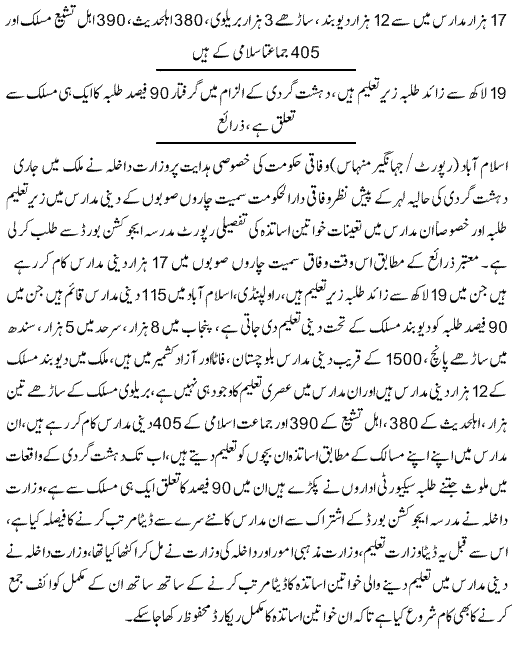
According to a report appeared in today's Daily Express more than 1.9 million students are enrolled in 17000 religious seminaries (madrassahs) of which around 70% i.e. 12000 belong to Deoband school of thought, around 20% i.e. 3500 belong to Barelvi school of thought, around 2.2 % i.e. 380 belong to Ahl-e-Hadith, 2.3% i.e. 390 belong to Shias, and 2.38% i.e. 405 belong to Jamaat-i-Islami.

This report quoting some authentic sources from federal interior ministry claims that 90% madrassahs' students arrested so far for their involvement in terrorists activities belong to a particular sect (which I believe is Deoband).


Source: Daily Express 7th April, 09
Read more...

Thursday, 26 March 2009

Mapping the Madrasa Mindset: Political Attitudes of Pakistani Seminaries

http://www.hindu.com/fline/fl2216/images/20050812001704801.jpg

Muhammad Amir Rana
24-3-2009

Pakistani madaris are perceived as a catalyst factor promoting orthodox views. Many analysts
view that their role in shaping the views of the masses and their students is a serious concern for
many. Their affiliation with political, sectarian and militant organizations is also a major cause of
concern.

Madrasa teachers are a major determinant in shaping views of the students. This study is based
on interviewers of and a survey administered to madrasa teachers. Main purpose of the survey was to determine the political attitudes of the clergy that controls madaris. Their replies vary from sect to sect, area to area and with respect to their political affiliations. Within the sects, variations are very narrow, underlining a near unanimity of responses.

Contrary to the common perception, the survey finds out that 172 out of 251 (62%) madaris
have political affiliations out of which 59 percent are affiliated with religio-political parties and 3
percent with other mainstream parties. At the same time, 18 percent are affiliated with sectarian or jihadi parties. The majority’s political affiliation indicates that madaris are eager to play a prominent political role in the country.

The survey showed that Deobandi and JI madaris are more inclined towards politics as 82% of
Deobandi and 100% of JI madaris have political affiliations. It is understandable about JI madaris that they are under the patronage of a political party but for the deobandi madaris it can be a matter of their tradition. The Barelvies do not focus much on their political tradition. The survey finds out that only 27 percent of the Barelvi madaris have political affiliations including mainstream political parties. Seventy percent of Ahle Hadith and 48 percent of Shia madaris have political affiliations but mostly to safeguard the interests of their schools of thought. Only 20 percent said that it is a religious obligation.

Field researchers found that madaris administration was reluctant to disclose their sectarian
and militant affiliations. Only 18% owned up their affiliation with sectarian outfits. As a matter of
principle, most of the responding madrasas condemned terrorism as an evil. Fifty-seven percent of the madaris, view the war on terrorism as directed exclusively against Islam and Muslims.
One hundred and three out of the 115 madaris oppose the military operation in tribal region.
Thirteen percent of the respondents agreed that Pakistan should be a part of international campaign against terrorism while 77% disagreed. At the same time, 70 percent of Shia madaris consider that Pakistan should not be a part of global campaign against terrorism. Almost half of the 69 Barelvi madaris believe that what is called terrorism is a product of America’s Cold War policies against the Soviet Union. Eleven of the fourteen JI madaris think that War on Terror is designed to target Islam and Muslims. All of the JI favor that Pakistan should not be a part of global campaign against terrorism and oppose the military operations in tribal areas against Taliban. Similar views were found among Ahle-Hadith madaris with a minor difference. Most of the Deobandi madaris suggest that Pakistan should deal with the issue on its own without taking ‘dictation’ from the West. More than 90 per cent of the respondents were clear in their opinion against the suicide attacks inside Pakistan.

The survey shows that 57% of the madaris believe that the presence of foreign troops in
Afghanistan is a main reason behind the suicide attacks in Pakistan and 22% think it is because of Pakistan’s partnership in the war against terrorism.

The survey findings show two facets of the madrasa mind. One, they consider themselves and
their profession as superior to worldly pursuits and, two, they suffer from a siege mentality and think of themselves as targets of a conspiracy by the West and its allies in Pakistan. Majority of the madaris favors democratic process in the country as 73% agreed that democracy is the solution to many issues in the country. Around 90% were in favor of a peaceful solution of the Kashmir problem. Only 9% believe that jihad is a solution to the dispute. Similarly, on Afghanistan issue, only 6% supported the solution through jihad but a majority (82%) linked it with the exclusion of foreign forces from Afghanistan.

(The complete paper is included in PIPS research journal Conflict and Peace Studies, Volume 2,Number-1 Jan-Mar 2009.)

http://san-pips.com/

...

Jaish madrassa operates in Bahawalpur despite ban

* Former Jaish member says would-be jihadis practice martial arts, archery and horse-riding skills
* Police officer says hard-line madrassas in Bahawalpur recruit teens and young men for jihad in FATA or in Afghanistan


BAHAWALPUR: The compound bore no sign. Residents referred to it simply as the school for "jihadis," speaking in awe of the expensive horses stabled within its high walls - and the extremists who rode them bareback in the dusty fields around it.

In classrooms nearby, teachers drilled boys as young as eight in an uncompromising brand of Islam that called for holy war against enemies of the faith. Sitting cross-legged on the floor of the Darul Uloom Madina school, they recited verses from the holy Quran.

Both facilities are run by an Al Qaeda-linked terror network, Jaish-e-Muhammed, in the heart of Punjab. Their existence raises questions about the government's pledge to crack down on terror groups’ accused of high-profile attacks in Pakistan and India.

Jihadis: There, would-be jihadis practice martial arts, archery and horse-riding skills and get religious instruction, according to a former member of Jaish-e-Muhammed, who spoke on condition of anonymity.

"You can say Jaish is running its business as usual," said Amir Rana, from Pakistan's Institute for Peace Studies, which tracks militant groups. "The military wants to keep alive its strategic options in Kashmir. The trouble is you cannot restrict the militants to one area. You cannot keep control of them."

Recruit: A top police officer said the madrassas in the area were used to recruit teens and young men for jihad in the NWFP or in Afghanistan. He spoke on condition of anonymity because of the sensitivity of the issue.

A guard wielding an automatic weapon stood at the gate of the Usman-o-Ali school and turned a visiting journalist team away. But the head teacher at nearby Darul uloom Madina allowed the group a tour and an interview.

Attaur Rehman said none of the students were allowed to be recruited for jihad while studying there, but added that he could not stop them joining up after they graduated.

"Pakistani citizens, and especially Punjabis, are the Taliban trainers in the area for bomb-making," said Asadullah Sherzad, police chief in Afghanistan's insurgency-wracked Helmand province, adding there are around 100 Punjabis at any one time in that area of Afghanistan.

A police officer in Bahawalpur said Jaish members were not believed to be training with weapons in the town's schools and other facilities, adding that law enforcement agencies had infiltrated the group. He spoke on condition of anonymity because sections of the government and security agencies disagreed on the need to crack down on the group.

Jaish is believed to have been formed in 2000 by hard-line cleric Masood Azhar after he was freed from an Indian prison in exchange for passengers on a hijacked Indian Airlines flight that landed in southern Afghanistan the same year.

Azhar was born in Bahawalpur, though the government says his current whereabouts are not known. A small stall outside the Usman-o-Ali school sells his speeches and writings. ap (Daily Times, 25 March 2009)

....

مدارس کی نئی سوچ

مدرسہ(فائل فوٹو)

نو فیصد اساتذہ کا خیال ہے کہ مسئلہ کشمیر جہاد کے بغیر حل نہیں ہو سکتا

پاکستان میں تہتر فیصد مذہبی مدراس کے اساتذہ جمہوریت کے حق میں ہیں اور ان کا خیال ہے کہ جمہوریت کئی قومی مسائل کا حل ہے۔

اسلام آباد کے ایک سرکردہ تحقیقی ادارے پاکستان انسٹی ٹیوٹ فار پیس سٹڈیز ( پائپس) نے ملک کے مختلف علاقوں میں مختلف مکاتبِ فکر کے دو سو اکیاون مدارس کے اساتذہ کی آراء پر مبنی سروے سے یہ نتیجہ اخذ کیا ہے کہ باسٹھ فیصد مدارس کسی نہ کسی مذہبی و سیاسی تنظیم یا گروہ سے وابستہ ہیں جبکہ اٹھارہ فیصد مدارس کا جھکاؤ کسی نہ کسی فرقہ وارانہ یا جہادی تنظیم کی طرف ہے۔

سروے کے مطابق جماعتِ اسلامی کے سو فیصد ، دیوبندی مکتبِ فکر کے بیاسی فیصد ، اہلِ حدیث کے ستر فیصد، اہلِ تشیع کے اڑتالیس فیصد اور بریلوی مکتبِ فکر کے ستائیس فیصد مدارس کا جھکاؤ کسی نہ کسی مذہبی و سیاسی جماعت یا تنظیم کی طرف ہے۔

سروے کے مطابق زیادہ تر مدارس اصولی طور پر دہشت گردی کے رجحانات کی مذمت کرتے ہیں تاہم ستاون فیصد مدارس کے اساتذہ کے خیال میں دہشت گردی کے خلاف جنگ کا نشانہ اسلام اور مسلمان ہیں۔ تقریباً اسی فیصد مدارس قبائلی علاقوں میں فوجی آپریشن کے خلاف ہیں جبکہ ستتر فیصد مدارس کے خیال میں پاکستان کو دہشت گردی کے خلاف عالمی مہم کا حصہ نہیں بننا چاہیے۔ ان میں شیعہ مدارس کا تناسب ستر فیصد ہے۔

ستاون فیصد مدارس کے خیال میں پاکستان میں خودکش حملوں کا بنیادی سبب افغانستان میں امریکہ سمیت غیرممالک کی فوجی موجودگی ہے جبکہ بائیس فیصد مدارس کے خیال میں خودکش حملوں میں اضافے کا بنیادی سبب دہشت گردی کے خلاف جنگ میں پاکستان کا کردار ہے۔

تیرہ فیصد مدارس کے خیال میں پاکستان کا عالمی مہم میں شریک ہونا درست ہے۔ پچاس فیصد بریلوی مدارس کے اساتذہ کا خیال ہے کہ دہشت گردی کی موجودہ لہر کے ڈانڈے امریکہ اور سابق سوویت یونین کی سرد جنگ کے زمانے سے ملتے ہیں۔ جماعتِ اسلامی، اہلِ حدیث اور دیوبندی مکتبِ فکر کے مدارس کی بہت بڑی اکثریت کا خیال ہے کہ پاکستان کو دہشت گردی سے نمٹنے کے لیے مغربی دنیا سے ڈکٹیشن لینے کی بجائے اپنی پالیسی آزادانہ طور پر وضع کرنی چاہییے۔

جہاں تک خودکش حملوں کے بڑھتے ہوئے رجحان کا معاملہ ہے تو ستاون فیصد مدارس کے خیال میں پاکستان میں خودکش حملوں کا بنیادی سبب افغانستان میں امریکہ سمیت غیرممالک کی فوجی موجودگی ہے جبکہ بائیس فیصد مدارس کے خیال میں خودکش حملوں میں اضافے کا بنیادی سبب دہشت گردی کے خلاف جنگ میں پاکستان کا کردار ہے۔

نوے فیصد مدارس مسئلہ کشمیر کا پرامن حل چاہتے ہیں جبکہ نو فیصد مدارس کے اساتذہ کا خیال ہے کہ مسئلہ کشمیر جہاد کے بغیر حل نہیں ہوسکتا۔ بیاسی فیصد مدارس کا خیال ہے کہ اگر غیرملکی فوج افغانستان چھوڑ دے تو مسئلہ کا پرامن حل ممکن ہے۔جبکہ چھ فیصد مدارس کے خیال میں افغان مسئلے کا علاج مسلح جہاد ہے۔

http://www.bbc.co.uk/urdu/pakistan/2009/03/090324_madarsa_wusat_zs.shtml


Read more...

Thursday, 22 January 2009

Mohmand operation and the need to close down extremist seminaries in the NWFP

Mohmand operation

Thursday, January 22, 2009 (The News)

At least 60 militants are said to have died within the last 24 hours in Mohmand Agency, as troops continue operations intended to regain control over the tribal territory. In stepped up action, jetfighters and gunship helicopters have pounded what are believed to be militant strongholds. As a result of the action, two civilians have been among those killed. Villages have also been hit and houses destroyed.

The target of the new blitz seems to have been a seminary run by alleged militants, where some key militants may have been present. Operations in Mohmand have been stepped up over the past few days. Other targets too have been hit in the same area. The military seems to have begun a new effort to regain control over the area in response to heightened militant action. We have seen similar efforts before.

The question to be asked is where all this is heading. The problem seems to be the lack of a consistent, well planned scheme of action against the extremists. Many seminaries for instance continue to run unhindered in NWFP. Some amongst them are known to be engaged in the recruitment and training of militants. A tiny handful may also be bringing in new suicide bombers to join the ranks of the teenagers who have blown themselves up for the sake of decimating others. There have been reports that some may have been hired out to those seeking to mask crime as acts of terror. If Pakistan's seven tribal agencies, all of which have been over-run by militants, are to be re-incorporated into the area of land under the control of the state of Pakistan, we need a more savvy strategy. While occasional operations involving the storming of specific areas take place every now and then, we also hear of stories of close ties between our agencies and the extremists. One account that has appeared in the US press speaks of seminary heads being warned to whisk away key figures ahead of an attack.

We need a uniform approach to the issue. There must be a united will to defeat the terrorists. This must be backed by a planned effort to shut down seminaries, backed by means to offer people alternative effort. Indeed, on a more general level development must be combined with gunfire in these areas, so that along with territory the state also regains the lost loyalties of its citizens.
Read more...

Wednesday, 14 January 2009

On the trail of Pakistan's Taliban - The vast majority [of suicide bombers] came from just one tribe, the Mehsuds of central Waziristan, aged 16-20...

On the trail of Pakistan's Taliban

The authorities in Pakistan have often seemed in cahoots with home-grown terrorists. Not any more. Adrian Levy and Cathy Scott-Clark report from Islamabad and the border badlands as a new intelligence unit gets serious about tackling the bombers.

Adrian Levy - The Guardian Saturday 10 January 2009

Special Investigation Group files

Special Investigation Group files. Photograph: Warrick Page

As the first reports of explosions at the Taj and Oberoi hotels in Mumbai reached Islamabad just after 9pm on November 26, Pakistan's counter-terrorism investigators twitched. Later that night, CCTV cameras inside Mumbai's Victoria railway station relayed footage of a blood-spattered concourse and the faces of some of the gunmen. The guests fleeing from the hotels told TV reporters that their assailants were speaking Urdu and were hunting down British and American passport holders. Almost immediately, over the border, the Pakistani investigators began pulling out files and photographs that accompanied the "Red Book" - their most-wanted list.

Pakistan's foreign minister condemned the attacks and expressed his sympathy to the families of the 173 killed. Even before India began making accusations - and despite subsequent Pakistani denials - detectives in Islamabad privately feared the outrage had Pakistani roots and might even have been rehearsed two months earlier, when the five-star Marriott Hotel in Islamabad had been obliterated. It all sounded grimly familiar: the methodology, the soft targets, the singling out of westerners.

On September 21, just after 8pm, a truck packed with explosives had detonated outside the Marriott, killing 60 and injuring 260. The toll could have been far higher if the bomber had managed to drive into the lobby. There, 700 Pakistanis had gathered to break the daily fast during Ramadan, mingling with western officials, diplomats and spooks.
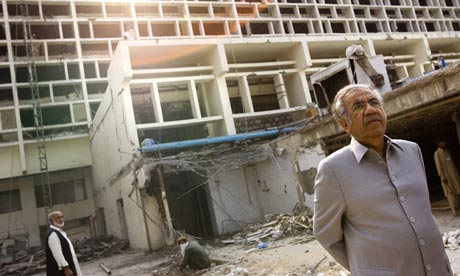
Sadruddin Hashwani standing outside the Islamabad Marriott
Sadruddin Hashwani standing outside the Islamabad Marriott. Photograph: Warrick Page

Mumbai shocked the world, just as the Islamabad attack stunned Pakistan. The terrorists had targeted one of the country's few prestigious western companies, an embodiment of luxury in an impoverished land. The conclusion most people drew was bleak: if the Marriott could be hit, in the heart of one of the most secure neighbourhoods in the Islamic Republic, then no one was safe. After Mumbai, it appeared from the outside as if the entire subcontinent might become engulfed in the kind of terror associated with Baghdad and Kabul.

The political ramifications were devastating. As evidence mounted that Pakistanis had played pivotal roles in both plots, many feared that the new civilian government in Islamabad - the first in nine years - would topple. Feeling the heat most intensely was Asif Ali Zardari, Pakistan's new president, who had had little formal political experience until his wife, Benazir Bhutto, was assassinated in December 2007 and he became leader of her Pakistan People's Party. He had a reputation in Pakistan and abroad as a grifter; from the start of his presidency in September, the US had made it clear that it had no confidence in his civilian administration, dispatching special forces into Pakistan behind his back to hunt down Islamists. He was held in such low esteem by some at home that initially a scandalous (and improbable) rumour spread that he had killed his wife to take control.

But after the Marriott blast, Zardari visibly took command, condemning terrorism as a "cancer in Pakistan". Sherry Rehman, Pakistan's health and information minister, recalled: "Unless we took ownership of this fight against extremism, Pakistan was done for." Prime minister Yousuf Gilani said: "There will be no second chances." By the time Mumbai exploded, there was a plan to change direction. While attacks on India had often, under General Pervez Musharraf, Zardari's predecessor, been greeted with private glee, the new president revived the cabinet's defence committee, a defunct forum for politicians and military chiefs, which now ordered the rounding up of key Sunni extremists and the closing down of charitable fronts used by them.

It was a dramatic volte-face. During nine years of Musharraf's military dictatorship that ended in February 2008, the Taliban had reformed in Pakistan, al-Qaida had re-grouped there, and banned home-grown militant outfits had re-emerged to join them. Musharraf was accused of speaking out against terror while at the same time encouraging extremist forces to foment insurgency in Indian-controlled Kashmir and to undermine the pro-Indian government of Hamid Karzai in Afghanistan.

Zardari, however, had no connection with the Musharraf epoch, or with the terrorist outfits. He had been in prison on corruption charges or in exile for the entire time the Islamists had been allowed to proliferate. His family was from Sindh province in the south, whereas the military leadership and vast majority of Sunni extremists were from the Punjab, in the east.

When we visited Pakistan in October, the country was in crisis but Zardari was receiving praise from most quarters for having seized it by the scruff of the neck. Somehow, too, he had seemingly co-opted the military, even though it had long been accused of having sheltered Pakistan's extremists.

Zardari was intent on pushing through an ambitious counter-terrorism strategy. It centred on the elite Special Investigation Group (Sig) - a squad that Musharraf had originally set up to investigate assassination attempts against himself and his officers. The new president intended the Sig to model itself on MI5's Joint Terrorism Analysis Centre, Britain's response to 9/11, and to acquire the forensic skills of an Islamic CSI. For that he needed cash and outside help. Since his first days in office, Zardari had been lobbying foreign secretary David Miliband to fund a joint terrorism initiative. The sweetener was an offer by the Pakistan High Commission in London to open up an intelligence cell to monitor British Pakistanis travelling back and forth, to which the British security services would have access. Downing Street was intrigued, especially as MI5 had briefed Gordon Brown in the summer that three-quarters of 30 major terror conspiracies in the UK had links back to Pakistan. However, it was only after Zardari's energetic responses to the Marriott and Mumbai attacks that Brown put his faith in the new Pakistani president.

On December 14, the British PM flew to Islamabad to announce a £6m "pact against terror", saying he wanted to "remove the chain" that led from the mountains of Pakistan to the streets of Britain. A significant part of the funding was intended for the Sig currently a tight-knit cell of 37 full-time specialists that was to be expanded into a 300-strong force with an investigation division, an armed wing, an intelligence department and a research section. In return, Britain asked for access to the Sig's raw data and captured extremists who might illuminate British plots.

The Sig headquarters are concealed behind concrete barriers, checkpoints, razor wire and electronic ramps. The need for security was rammed home on March 11 2008 when a suicide attack on its provincial office in Lahore killed 25 people, including 13 officers. We were granted privileged access to witness the workings of the Sig as they investigated the Marriott plot, found common threads that led to the Mumbai attacks, and built up a picture of a new terrorist structure in Pakistan.

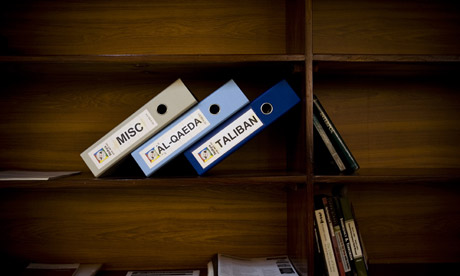
Today the Sig answers to Tariq Pervez, a veteran cop who is also head of Pakistan's Federal Investigations Agency, the national crime squad. Pervez has been on the anti-terrorism beat for most of his career. Behind his desk is a multi-shelved book rack that holds only three large box files marked Taliban, al...#8209;Qaida and Miscellaneous: Pakistan's trinity of terror. Since 9/11, these three forces have launched an all-encompassing Islamist uprising, emanating from Quetta, the chaotic capital of Balochistan province, in Pakistan's west, and spreading to mountainous eyries in the neighbouring Federally Administered Tribal Areas. Pervez tells us that by the end of 2007, suicide strikes from this region had killed 597 security force personnel and 1,523 civilians, including Benazir Bhutto on December 27.
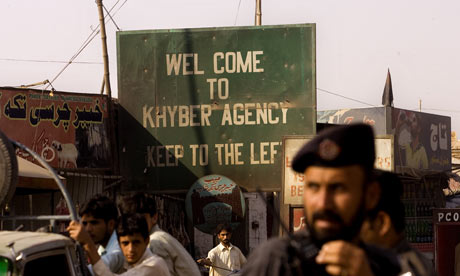
The border crossing into Khyber Agency
The border crossing into Khyber Agency. Photograph: Warrick Page

That same month, after five years of germination, the disparate forces behind most of these attacks formally merged into the Pakistan Taliban (TTP) under the leadership of an illiterate 35-year-old commander, Baitullah Mehsud, confirming western suspicions that the epicentre of global jihad had shifted. Soon militias allied to the new grouping had permeated all of Pakistan's border regions, even the northern ski slopes and trout streams of the former tourist haven of Swat.

It is the Sig's job to make sense of the maelstrom. It is an ambitious goal, as most of these tribal areas have become no-go zones and Pervez's men have only limited access to the forensic and surveillance techniques used by counter-terrorism experts in the UK and the US to backtrack from an attack - CCTV footage, vehicle licensing details, passport records, plane manifests.

Pervez grits his teeth as he describes how crime-solving Pakistan-style has, in the past, most often involved disappearances, habeas corpus writs, bent informers and a heavily-wielded bamboo cane. Even after Benazir Bhutto's death, investigators failed to cordon off the crime scene, enabling passersby, press photographers and voyeurs to trample through the blood and debris before it was washed away by high-powered hoses. In a country where the military and intelligence establishment have been accused of complicity in many such crimes, there has been little incentive to solve them. Now Zardari claims he wants the terror to end.

The Sig director takes us upstairs to a suite of offices where his men busy themselves at computers, their workstations stacked high with blue paper files. Beyond lies the Sig lab, where technicians are poring over scraps of clothing, hair and shrapnel, using tweezers, tiny brushes and miniature shovels - kit sent over by the FBI and Scotland Yard's anti-terrorist squad. Pervez's men are learning to secure a blast site for DNA evidence, scouring it for flaps of skin or shards of bone. "We are trying every new method to identify the bombers," a senior officer says, explaining that since an explosive jacket usually decapitates the wearer, heads can be recovered, or at least fragments of the skull and face. These body parts are packed in ice and flown down to plastic surgeons at a hospital near Karachi for reconstruction. Pervez says: "Since one-third of Pakistan's adult population does not have any form of identification, these remains are often the only link back to the madrasa that indoctrinated the bomber and the extremist group that dispatched him."

We flick through a morbid photograph album of heads. "From the 26 suicide attacks where we recovered a head in 2007, we made a startling discovery," says the Sig analyst. "The vast majority [of suicide bombers] came from just one tribe, the Mehsuds of central Waziristan, all boys aged 16 to 20." Until the Sig team analysed the 2007 bombings, no one realised how successful the Pakistan Taliban leader Baitullah Mehsud had been in recruiting his extended clan to the martyrdom business.

In an attempt to glean an insight into why so many young Mehsud men were willing to die, Pervez co-opted police officers from the tribal areas on to his team. One of them, now a senior investigator, pokes his head around the door. "The Mehsuds have a predisposition to fight," he says. "Young Mehsud lads used to fight for the Afghan Taliban against the US. Before that, they fought the Soviets. And before then, they fought the British Empire."

The officer found out more when a few Mehsud boys, who escaped a suicide training camp, recently contacted him. "They told me, 'We have nothing. Simple things would make a difference. We are fond of football. Give us a ball and we won't bomb.' " The officer is working to recruit informers, but tentatively. Those who resist Baitullah Mehsud have been brutally dealt with - like the 600 elders who spoke out against him in 2005 and were, according to Pakistani journalist Ahmed Rashid, each sent a needle, black thread and 1,000 rupees with which to buy some cloth to stitch their own shrouds; all of them were then killed.
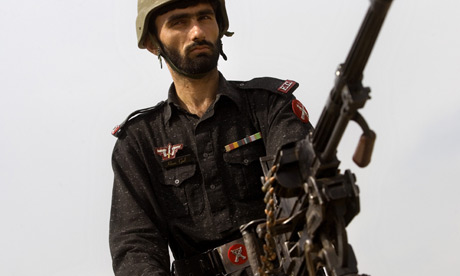
A guard on the Pakistani frontier
A guard on the Pakistani frontier. Photograph: Warrick Page

"The suicide bombers would be nothing without the bomb makers," says Pervez, describing how men in caves and cowsheds, operating with a generator, a soldering iron and a pair of pliers, have become eminently adaptable. What the Sig proved was the axiom that today's Islamic war zones inter-relate, how advice is passed down the line, in knapsacks and saddlebags, in encrypted computer files, in postcards and even in love letters. After insurgents in Iraq began to use mobile phones to detonate roadside bombs in the summer of 2003, the same technique emerged in Pakistan, deployed in one of the two assassination attempts on Musharraf in December. However, as western intelligence agencies caught up, developing high-frequency jammers to block the phone signals, the bombers changed tactics. Pervez says: "In Pakistan they returned to older techniques, using a 300-rupee [£2.50] wireless doorbell to send a low-frequency signal for which no one had thought to make a jammer."

Exploiting what was readily available was critical to the bomb makers' success. Most large towns in the Punjab have textile factories that use potassium chlorate as a colour fixative. "After only some minor adjustments, adding sawdust or petroleum jelly, it becomes a powerful explosive," Pervez says. Next they moved on to the tons of munitions left over from the Soviet war in Afghanistan or stockpiled in the border regions by the Afghan Taliban. In July 2007, the Sig captured two Toyota Corollas in Pakistan's North West Frontier Province (NWFP), each containing 109 mortar rounds intended for an illicit bomb factory where they would be packed around a potassium chlorate core to deadly effect. The location of the cars, the quantity of munitions and the presence of potassium chlorate led Sig detectives to an inevitable conclusion: there was an al-Qaida bomb factory somewhere in the tribal areas. Potassium chlorate had been a key ingredient in many successful al-Qaida attacks, such as the Bali bombings of 2002 and the Marriott Hotel blast in Jakarta in 2003.
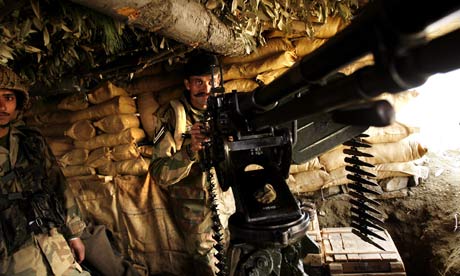
Pakistani soldiers
Pakistani soldiers. Photograph: Warrick Page

The bomb makers went on to make ever more powerful devices, and changed targets, too, after the Pakistan military belatedly began to strike at them in the summer of 2007, under pressure from the Americans. On November 24 2007, at 7.50am, a suicide bomber drove into a bus carrying intelligence agents in Rawalpindi. Thirty men were burned to death in their seats. The attack shocked the establishment because it was among the first to single out the Inter Services Intelligence agency (ISI) previously close to the Islamists. The device was found to contain RDX, a military-grade high explosive, bound together with TNT. On June 2 2008, a similar device was used to bomb the Danish embassy in Islamabad.

The bomb makers had obviously been able to source highly restricted materials. "The network was growing," Pervez says. "That brings me to my third box file, Miscellaneous, a hotchpotch of Sunni extremists I have tracked throughout my career." In the 80s, when Pervez was a young officer, the military and ISI had established hundreds of Sunni madrasas in southern Punjab that were aligned to a strict revivalist sect, the Deobandis, similar to the Wahhabis in Saudi Arabia. On graduation, most of these students were funnelled by the ISI into the secret war against the Soviets in Afghanistan, used to target Pakistan's minority Shia population or infiltrated Indian Kashmir. "All the groups we are familiar with today came out of this process, and by the late 90s these men had had more consistent exposure to war than most officers in premier league armies in Europe."

Now the Sig suspected these Punjabi groups were assisting the bomb makers, creating a network that would come together with deadly effect in the attacks in Islamabad and Mumbai in September and November 2008.

A clear sign of the dynamics of the new terror came in the spring of 2008 when a veteran from a Punjabi terror group, "Nawaz", was spotted in Miranshah, in north Waziristan. He was tracked as he collected 700,000 rupees (£5,800) from an

al-Qaida banker and moved on to the Punjabi textile town of Faisalabad, where he bought a large quantity of potassium chlorate. He returned to Miranshah to recruit an Arab explosives expert.

The Arab bomb maker prepared two unlicensed 4X4s, each carrying 1,120 pounds of potassium chlorate. Three Waziris from the Mehsud clan were hired to drive the bombs to Rawalpindi. The plot was set. The Sig analyst says: "Luckily one of Nawaz's aides got cold feet. He snitched to the intel guys." The vehicles were intercepted in June this year just hours before they were to have been driven into a convoy carrying General Ashfaq Kayani, Pakistan's army chief.

"Pakistan is now a one-stop shop," Pervez says. "Ideas, logistics, cash from the Gulf. Arab guys, mainly Egyptians and Saudis, are on hand to provide the chemistry. Veteran Punjabi extremists plot the attacks, while the Pakistan Taliban provide the martyrs. And it all came together in the Marriott case."
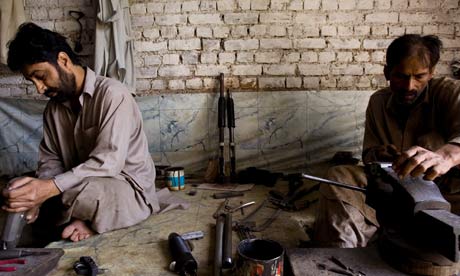
Gunsmiths make shotguns
Gunsmiths make shotguns. Photograph: Warrick Page

The truck driver who detonated the bomb is thought to have been a Mehsud. He was sitting on 600kg of RDX and TNT, bound together with mortar shells and metal to maximise shrapnel injuries. "The top guy was a Pakistan-born al-Qaida man, a qualified chemical engineer, educated in Saudi Arabia, who fought in Afghanistan in the 80s, Kashmir in the 90s," Pervez says. His group had been funded by the ISI before it melded with al-Qaida in 2002. The Mumbai assault would reveal the same blueprint, with a Punjabi group, Lashkar-e-Toiba, providing the weaponry and training for the attackers.

The clues to this assault and hundreds of others can be found in the Sig's database consisting of a bewildering mass of names, groups and aliases, charities and welfare associations, which the British are keen to access, and which has enabled the Sig to identify four bomb factories and the names of 160 key suspects, 66 of whom have prices on their head, with around 20 classified as masterminds. Number one on the list is a diminutive 32-year-old, Mati-ur-Rehman, whose career perhaps best illustrates why the British government is prepared to gamble £6m on Pakistan's counter terrorism experiment. Rehman was born in the Punjab in 1977, educated in a madrasa, graduating into the extremist group Jaish-e-Mohammed, where he became an explosives expert. When Pakistan signed up to the "war on terror" after 9/11, Rehman joined an al-Qaida cell in the tribal areas. From there he conceived of the idea of mounting suicide attacks on five-star hotels as early as 2002. He is thought to have played a role in the Marriott and the Mumbai hotel attacks.

According to the Sig database, Rehman is also the main conduit for foreigners, especially from Britain, who arrive in Pakistan looking for terrorist training, including at least one of those involved in the 2006 liquid bomber's plot.

We are about to leave the Sig offices when a call comes in. It's 1.30pm. A suicide bomber has blown himself up outside the office of the deputy inspector general of police in Mardan, NWFP. Nine people, including five policemen, are dead. The bomber's severed head has been recovered at the scene.

It is only a 90-minute drive from Islamabad to Peshawar, capital of NWFP, the last major centre en route to Afghanistan. This former transit point on the Silk Route is now choked by road-blocks, checkpoints and anti-blast barriers. Nonetheless the Pakistan Taliban has repeatedly struck in the heart of the city, most recently on December 6, killing 27 and injuring hundreds. From a friend's office, we watch a plume of smoke rising - a car bomb has exploded below us, injuring many attending a regional sports event. Javed, a normally fearless local crime reporter, tells how he now seldom works after dusk since he was kidnapped and held for more than 20 days.

How did the tribal areas and Swat so quickly transform into killing zones? Some tribal leaders from Waziristan who act as intermediaries between the Pakistan Taliban and the government are gathering for a meeting in a small village 20 miles south of Peshawar. We send a message to their head, a powerful malik, who agrees to see us. As we drive out of town, brick houses give way to mud-walled compounds. The only shops that are open sell wooden coffins.

At the agreed rendezvous point, we find the malik sitting cross-legged drinking cardamom-scented tea. All around are men clutching semi-automatics. To discuss the Pakistan Taliban with outsiders is to take a great risk. The malik explains how his homeland has been transformed. "When the Afghan Taliban retreated from Kabul in December 2001, Pakistan border security suddenly evaporated to allow them to flood in," he says. "While Musharraf in Islamabad was claiming to be fighting them back, the Taliban leadership was sheltered, and openly recruiting porters and bodyguards from the Mehsuds." With Taliban backing, Baitullah Mehsud, a veteran of the US war in Afghanistan, raised his own militia. "The Mehsuds were soon running an empire of their own and we were eaten up by it. Now we live in constant fear from Pakistan Taliban and al-Qaida raiders, while US Hellfire missiles rain down from the sky. No human should be forced to live this savage existence." The malik has said enough. He and his guards clamber into their pick-up and disappear down the track towards the icy heights of Waziristan.

The closer you get to Baitullah Mehsud, the more of his strategy you can see. He is estimated to need one billion rupees (£8.6m) a year to keep his operations going. "It's Jihadi Inc out here," one senior police officer says. Among the Pakistan Taliban's most recent recruits are a serial killer and two criminal dons, all of whom have been invited to become commanders. The officer says: "Mehsud's Talibs now act like criminals, too, mounting a protection racket, charging road tolls, stealing fuel at gunpoint, blackmailing communities."

They reach out across Pakistan. After arresting Qasim Toori, a wanted villain, in Shah Latif town, southeast Karachi, in January 2008, police learned he had been sent by Baitullah with 19 Taliban fighters to begin a crime wave. In Toori's most successful raid, on October 30 2007, he held up the Bank al-Habib and stole 5m rupees (£43,000), money that was used to buy arms from al-Qaida. Baitullah's men simultaneously began kidnapping: last March, Fahran Qasim, a veteran criminal, was caught trying to abduct a wealthy Karachi landowner and confessed that he had done it for his boss in Waziristan.

What does the Pakistan Taliban really want? Baitullah Mehsud is famously shy and we cannot get to him. But we do reach by phone Muslim Khan, a garrulous spokesman for Baitullah's partners in the Swat Valley. We notice the American twang in his voice, and he reveals that for many years he lived in the States. "I liked life there. I respected the Americans. But then Afghanistan and Iraq happened. The slaughter. Now we are at war. Give us Sharia law. Let Pakistan dump America and Britain, then we will be at peace."

We press him about recent events in Swat, where we have heard that his compatriots are mounting a campaign of beheadings and hangings. "You are trying to bring us down," he snaps. We ask about the hundreds of girls' schools they have burned down, the boys' schools without teachers, while his own son is receiving a first-class education elsewhere in Pakistan. Muslim Khan cuts the line.

We return to Islamabad to hear that an American aid worker, Steve Vance, whom we had met in Peshawar, has just been murdered along with his Afghan driver. The next day, we find a gift-wrapped rose addressed to us thrown over the wall of our heavily guarded compound. Tied to the stem is a message from the Swat Taliban. "Thinking about you," it says playfully. We had told no one where we would be staying, but they found us anyway - a demonstration of how pervasive is their grip, and how hard it is going to be for anyone who stands in their way, even with the resources the Sig has brought to the conflict.


Read more...

Wednesday, 19 November 2008

How to end the conflict in FATA by Dr. A Q Khan

How to end the conflict in FATA
Random thoughts

Wednesday, November 19, 2008
Dr A Q Khan

No matter what one is thinking or what one is reading, one's thoughts automatically focus on the ongoing "terrorism" and the law and order situation. After an attack, in which dozens die and are injured, the president and prime minister strongly condemn it, and announce compensation for the families of the deceased and the injured. And then the matter is closed and we wait for the next tragedy.

My advice to those in power is to try to find an amicable solution of mutual respect to the ongoing conflict in the tribal areas. Quite a large number of us have seen British rule. We remember how an entire area was administered by a commissioner, a deputy commissioner and two or three police officers. The older generation still enthusiastically recalls the peace of that golden period. I still remember that in Bhopal the police station was run by a head constable and the city by an inspector, known as kotwal. There was only one British police officer, the inspector-general, and he took care of the whole state and there was never any law and order problem. The secret to this was that locals were always employed and posted to their own areas.

In Pakistan the whole system is topsy-turvy. A police officer from NWFP is posted to Karachi, someone from Karachi is posted to Lahore or Quetta, and so on. How can he know the customs and mentality of the local people? He just passes time, tries to make some money and waits for his next posting. And that is perhaps why many heinous crimes are never solved in this country – such as the assassinations of Liaquat Ali Khan, Mohtarma Fatima Jinnah, Gen Ziaul Haq, Mohtarma Benazir Bhutto and various suicide bombings.

Whatever action the government has taken so far in the tribal areas has proved counter-productive. It has sown the seeds of hatred and could very well lead to the country's disintegration. Creating division between tribes by bribing some corrupt leaders is tantamount to following a foreign agenda.

How has it become possible to launch air attacks using helicopter gunships, jet fighters and heavy guns against our own people? This whole problem started after Gen Musharraf chose to join President Bush in his 'war on terror' after 9/11. By doing that he effectively stabbed the Pakhtuns in the back, eventually allowing the Americans to play havoc in the tribal areas. Fuel was added to the fire when Gen Musharraf's mercenaries attacked Lal Masjid and mercilessly burned to death hundreds of small children mostly girls – many of them from Pathan families. The result was retaliation with a vengeance never seen in Pakistan before. The Americans were forced to flee in disgrace from Vietnam, the Russians had to leave Afghanistan and the western allied forces are being humiliated in Afghanistan and will, in all probability, retreat. However, the wounds inflicted on our own people by Gen Musharraf and his stooges will not go unanswered.

Having said that, quite a few people are giving sincere advice. Some patriotic Pathans are trying their best to put some wisdom into the heads of the rulers. It is the need of the hour to immediately set up a committee of people like Rustam Shah Mohmand, Brig Mahmood Shah, Kamran Khan, Khalid Aziz, Amir Usman, Barrister Zahid Saeed, Prof Dr M Yousuf Bangash, former governors Ali Jan Orakzai and M Arif Bangash, Governor Owais Ghani, Rahimullah Yusufzai, Hamidullah Jan Afridi and others. These knowledgeable and sincere people could come up with a viable solution within two weeks and save the country from further disastrous consequences and possible disintegration, all being engineered by America and its cronies.

The reason why I mentioned my Bhopal story is that a president from Naudero, a prime minister from Multan, an interior adviser from Sialkot and an army chief from Gujjar Khan are not in a position to understand the psychology of the Pathans. A Pathan will give his life for you if you love and respect him, but he will take your life if you insult him and push him to the wall. The president, the prime minister and the army chief are all intelligent people and I hope they would appreciate my suggestion ad will talk to the knowledgeable people I have mentioned, so that our beloved country can get out of its quagmire. If those at the helm of affairs shut their eyes, naturally they won't see the writing on the wall.

That reminds me of the great and wise Nizamul Tusi, primer minister of Seljuk sultan Jalaluddin Malik Shah. He was a contemporary of the great mathematician, astronomer and poet Omar Khayyam and the notorious Hasan bin Sabbah, widely known for the fake paradise and his ruthless assassins. Nizamul Tusi told his colleagues and assistants: "Consultation with people of understanding is a sign of wisdom and maturity because some of them might know more than you do and could give you valuable advice." Our political leadership needs to follow this advice and seek counsel from the wise Pathans mentioned above. We should not put the interests of the Afghans before our own national interests, not least because they have been bitter enemies of Pakistan from day one.

Due to Gen Musharraf's blind support to the Americans, which totally ignored Pakistan's national interests, the country is facing serious problems. In this context, one cannot ignore the irony that those whom the people gave a resounding mandate have so far failed to act on it. Our heads should hang in shame at the thought that our beautiful country, despite having vast natural resources and being a nuclear and missile power, has become a banana republic with Islamabad no longer a safe city. Foreign missions have already started sending families of their staff back home or have relocated them to other countries. The International School of Islamabad has lost more than a quarter of its student body and Islamabad wears a deserted look. The Presidency, Parliament and the Prime Minister House are all under siege and it almost feels like being under occupation of a foreign power with movements restricted. We should be wary of rejoicing at the number of "terrorists" killed because we might end up counting our own dead and prisoners, as happened in East Pakistan.

If we look back in history we will find that any Muslim nation that joined hands with a western country ended up humiliating itself or disintegrating. Despite 50 years of rhetoric by western leaders, there is no Palestinian state. The problems being faced in Kashmir, Chechnya, Bosnia, East Timor and the creation of Lebanon by breaking up Syria are indicative of western intrigues and interference. And the reason for this is that Muslims have been at the receiving end of this disgrace because they ignored Allah's edict that Christians and Jews can never be their true friends.

When I became adviser to the government of Pakistan, I sent a simple, pragmatic proposal to Gen Musharraf suggesting how the tribal areas could be brought into the mainstream and how extremism could be largely eliminated. The suggestion was to establish a large number of vocational schools with hostel facilities at reasonably close locations. All those studying at such institutes would be paid a monthly stipend of about Rs500 and the coursework would also include religious and other basic education. With such incentives, people would send their children to these schools rather than allow them to come under the influence of extremist forces.


That way the madressahs would not get candidates for future suicide bombers and/or terrorists. Such a programme could have been up and running within two years. Had some action been taken, we would have reaped some of the benefits now and would not have seen such a tragic episode as Lal Masjid. I would have loved to implement such a programme with the help of friends and other well-wishers.


There is much more to say and I would like to go on talking about these painful events and situations, but will stop in accordance with the couplet by the famous Urdu poet, Sauda, who wrote:

Sauda, Khuda ke wastey ker quissa mukhtasar,

Mere to kaan pak gaey tere fasane men. (The News)
Read more...

Tuesday, 11 November 2008

It is the duty of the government to ‘find and crush’ madrassas that preach violence - Mufti Sarfaraz Naeemi

A benign role for the madrassa?

Mufti Sarfaraz Naeemi of Jamia Naeemia in Lahore has been quoted by an American newspaper as saying, “The actions of a small minority have given a bad name to Islam and to a centuries-old educational system that can interface with a modern world”. He added, “It is the duty of the government to ‘find and crush’ madrassas that preach violence”. Jamia Naeemia is a not a nursery of militants but a training centre whose students are good for every field of life, he explained, “they can become engineers or imams”.

If true, this is very good news for Pakistan where people are becoming more and more scared of the madrassas for manufacturing religious extremists. The madrassas are now reacting to the popular fear by increasingly speaking out against terrorism conducted in the name of Islam. A much larger-than-before assembly of clerics has recently denounced the killings of fellow-Muslims through suicide-bombing. In the year 2008, it is the consensus in Pakistan that suicide-bombing is not allowed under Islam, and those who do it are not good or true Muslims.

The past has been different though, thanks to the perverse patronage of the state that used madrassa students as cannon fodder in the jihad in Afghanistan and Kashmir. The past has also seen a rise in sectarianism and no one who favours madrassa education will deny that some of our great madrassa leaders were killed by other “believers” on the basis of sect rivalry and the trend of declaring each other non-Muslim. Other factors have added to the problem. Recently when the police went looking for “foreigners” in the madrassas of Gujranwala, it found, first, that the number of madrassas in the city was not 105 but 251; and, second, that most of the seminarians were Afghans who ran away before the police reached there.

There is no use in saying that Pakistan has 15,000-20,000 madrassas because some areas can’t be accessed for a census. For instance, when Maulvi Fazlullah was ruling the Valley of Swat he had opened scores of madrassas which were seen on TV but not counted officially. If Gujranwala can have more than double the number posted by the government, it must be true of all cities, including Islamabad where the figure keeps hovering around 80 to 100. As never before, the mosques are affiliated to the madrassas mostly for reasons of security in these days of intense sectarian feelings. An Islamabad doctor who has studied hundreds of jihad returnees in jails concludes that most of them were picked up from mosques.

Yet the truth is that there are numerous institutions like Jamia Naeemia of Lahore who stick to their traditional modes of imparting religious knowledge. Some of them even add modern subjects to enable their graduates to enter the job market instead of simply building another illegal mosque to give themselves something to do. The news from Islamabad is that illegal mosques are cropping up at great speed and that the government still doesn’t have a firm policy against these encroachments on public property. Even the good madrassas feel they have to be independent of state scrutiny and that introduces complications into the state obligation of maintaining normal accountability under law.

It is not exactly true that madrassas impart terrorist education. What makes the pupil vulnerable to indoctrination by some bad elements is the madrassa’s ability — through boarding and lodging — to isolate the seminarian from his parents and society at large. The confessional videos left behind by suicide-bombers give ample evidence of this sequestration from normal life and insulation from a comprehension of life in society. This is what is dangerous. There is little that is lethal in the syllabi taught at the madrassas. Researchers from Europe and America have found that out after visiting our madrassas.

Three men responsible for the Bali bombings in Indonesia in 2002 have been executed. Because the 202 people they killed in the bombing of a holiday resort also included innocent Indonesians, there is very little sympathy for the executed men, barring the cries of defiance on the part of the religious party to which they belonged. In Pakistan, too, terrorism in the name of Islam is losing public sympathy. The wave of extremism that had engulfed Pakistan, thanks to the role played by the state in jihad, may now be turning, as evidenced by the statement made by Mufti Naeemi who is no softie when it comes to upholding the true edicts of Islam. (Daily Times)
Read more...