Editor's Choice

--------------------------------------------------------------------------------------------------------------------------
Featured Post
--------------------------------------------------------------------------------------------------------------------------

"Let us build Pakistan" has moved.
30 November 2009

All archives and posts have been transferred to the new location, which is: http://criticalppp.com

We encourage you to visit our new site. Please don't leave your comments here because this site is obsolete. You may also like to update your RSS feeds or Google Friend Connect (Follow the Blog) to the new location. Thank you.


--------------------------------------------------------------------------------------------------------------------------
Showing posts with label India. Show all posts

Saturday, 28 November 2009

Above the law: Can anyone hold this child of Islamofascism accountable?

Jailed militant’s hoax calls drove India, Pakistan to brink of war
By Azaz Syed
Thursday, 26 Nov, 2009

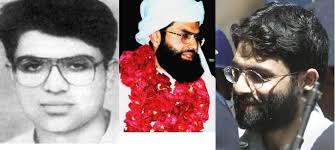
ISLAMABAD: Omar Saeed Sheikh, a detained Pakistani militant, had made hoax calls to President Asif Ali Zardari and the Chief of Army Staff, Gen Ashfaq Parvez Kayani, in a bid to heighten Pakistan-India tensions after last year’s terrorist attacks on Mumbai, investigators have told Dawn.

‘Omar Saeed Sheikh was the hoax caller. It was he who threatened the civilian and military leaderships of Pakistan over telephone. And he did so from inside Hyderabad jail,’ investigators said.

The controversy came to light after Dawn broke the story, exactly one year ago, that a hoax caller claiming to be then Indian foreign minister Pranab Mukherjee was making threatening calls to President Zardari.

It was on the night of Nov 26 last year that Saadia Omar, Omar Sheikh’s wife, informed him about the carnage in Mumbai. The sources said that the information was passed on to Omar in Hyderabad jail through his mobile phone, which he was secretly using without the knowledge of the administration.

All but one of the attackers who India alleged were Lashkar-i-Taiba terrorists were shot dead by security personnel.

Saadia kept updating Omar about the massacre through the night and small hours of the morning. On the night of Nov 28, when the authorities had regained control over the better part of the city, Omar Saeed, using a UK-registered mobile SIM, made a phone call to Indian External Affairs Minister Pranab Mukherjee.

He told an operator handling Mr Mukherjee’s calls that he was the President of Pakistan.

Indian officials started verification as part of security precautions and, after some time, the operator informed Omar Saeed (who was posing to be Pakistan’s president) that the foreign minister would get in touch with him soon. Omar now made a call to President Asif Ali Zardari and then the Chief of Army Staff.

He also made an attempt to talk to the US secretary of state, but security checks barred his way.

The presidency swung into action soon after Mr Zardari’s conversation with the adventurous militant.

President Zardari first spoke to Prime Minister Gilani and informed him about the happenings. He also took Interior Minister Rehman Malik into the loop.

In Rawalpindi, Gen Kayani immediately spoke to the chief of the Inter Services Intelligence, Lt- Gen Ahmed Shuja Pasha.

According to sources, not only President Asif Zardari was taken in by Omar’s audacity but the COAS was also baffled by his cheekiness.

Gen Kayani, sharing his thoughts with close associates, said he had been bewildered by the caller’s threatening tone.

But Maj Gen Athar Abbas, the military spokesman, finds the report unbelievable. ‘I am not his (Army chief’s) operator. I don’t know who puts calls through to him, but I think this can’t be true,’ said an incredulous Athar Abbas.

Interestingly, when Omar Saeed Sheikh was making these hoax calls, the Lashkar-i-Taiba (LET) chief was also in Karachi, but it is not known whether Omar Saeed was acting under the guidance of Zakiur Rehman Lakhvi or on his own.

INVESTIGATIONS: On the other hand, investigators got into the act without wasting time, coming up with their findings within hours.

Their conclusion was that the phone call which came from the Indian external affairs ministry was actually their (Indians’) check.

They said the calls to President Zardari and the army chief were made from a Britain-registered SIM.

Gen (retired) Pervez Musharraf, in his autobiography, had alleged that Omar Saeed was an agent of MI6, the British intelligence agency.

The very next morning, Nov 29, Hyderabad jail was raided by intelligence agencies and over a dozen SIMs were recovered along with two mobile sets. Majid Siddiqui, the jail superintendent, was suspended.

‘I don’t know much but it is true that some mobile SIMs and mobile sets were recovered from Omar Saeed Sheikh when he was in Hyderabad jail.

I got him transferred to Karachi jail because that is a far better place for such high-profile terrorists,’ Allauddin Abbasi, DIG Prisons, Hyderabad, told Dawn over phone.

The authorities had a word with Saadia Omar too. She was advised to ‘control’ herself. The matter was then placed in the files of secret agencies marked as ‘secret’.

The Federal Investigation Agency never interrogated Omar Saeed about the Mumbai attacks. Dawn’s efforts for getting the viewpoint of Tariq Khosa , the FIA chief, drew a blank.

HIGH PROFILE: Omar, currently confined in a high security cell of Karachi Jail, has a long record of militancy, from kidnapping foreigners in Mumbai in 1994 to kidnapping Daniel Pearl in Jan 2002.

Omar Saeed Sheikh was freed by India in Dec 1999 as part of a deal that saw New Delhi agreeing to release a number of militant leaders in exchange for the freedom of hostages on board an India plane hijacked to Kabul.

Soon after his release from Indian captivity, Omar Saeed developed close relations with the LET leadership, including Zakiur Rehman Lakhwi.

He was invited to a training camp in Muzaffarabad, the capital of Azad Kashmir, where he spent a couple of days delivering lectures to recruits.

Sources said Lakhwi wanted Omar to join LET and give the organisation an international face. In Feb 2002, Omar was arrested for the murder of US journalist Daniel Pearl.


Read more...

Sunday, 22 November 2009

Saudi-sponsored terrorism: Instead of standing up, Saudi ambassador bolts from the scene


Wahabism linked with terrorism; Saudi envoy stages walkout

NEW DELHI: Saudi Ambassador to India Faisal Al-Trad walked out of an international conference of jurists in protest after noted Indian jurist Ram Jethmlani’s accusation that the Wahabi sect of Islam was responsible for terrorism. The conference was attended by Indian President Pratibha Patil, Chief Justice KG Balakrishnan and Law Minister Veerapa Moily. Jethmalani said “Wahabi terrorism” indoctrinated “rubbish” in the minds of young people to carry out terrorist attacks. He lamented that India was friends with a country that supported Wahabi terrorism. The event’s organiser, Adesh Aggarwala, said the ambassador had walked out but returned after Moily’s statement that Jethmalani’s views were not supported by the government or the organisers. Moily said terrorism could not be attributed to any particular religion. iftikhar gilani Source
Read more...

Friday, 20 November 2009

Pakistan’s internal dynamics and security

POSTED BY: JARRI MIRZA

This column by Ismail Khan originally appeared in Daily Times on November 20, 2009.

In a diverse country like ours, parliamentary democracies largely settle these things. With institutions like the Senate, where there is equal representation of all the provinces, consensus and shared threats emerge. Without consensus, the state is hardly monolithic in terms of its direction.

These days, news from Pakistan is full of rumours, accusations, and counter-accusations. It is speculated that the days of Mr. Zardari, if not the PPP government, are numbered; that Mr. Zardari is thinking to play the Sindh card; that Clinton has winked at a change in Pakistan’s setup, etc. The source of this speculation is the media, which when asked, calls itself an impartial observer.

On top of it, despite the severity, this news is full of innuendoes. Worst of all, there is excessive usage of labelling. So many commentaries on the news from Pakistan have become a dirty affair insinuating that at the end of the day, you are either an agent of the ISI or of the CIA, either a covert jiyala or on the payroll of the agencies, either a flag-waving patriot or trying to divide the country.

In the midst of all of this, the debate over the content of discontent gets lost. Imagine, even if someone is a full-time employee of any agency, forget being on contract, does that bury the content? Not at all. Then why not address the content? Maybe it can offer answers to our accusations against one another.

Although bad governance has recently been quoted as a concern for the masses, which it is, the list of entries in the charge sheet against Mr. Zardari has hardly anything to do with governance. Here is the list that haunts Mr. Zardari: the PPP government tried to bring the ISI under the Ministry of Information; the president announced the no-first use of nuclear weapons in the context of India; the rulers appeased India after the Mumbai attacks; the civilian government signalled ‘yes’ to the Kerry-Lugar Bill, so on and so forth. On all these issues, the media has largely stood with the PPP’s critics in the power corridors.

The common theme in all these issues is security. Of the many fallouts of the military’s prominence in Pakistani politics, the lack of consensus on security issues arguably occupies the top post. Remember how Sharif and Beg disagreed over sending troops to Iraq or how Sharif distanced himself from Kargil, despite the level of his involvement. Benazir Bhutto also never identified herself with the Kashmir jihadist movements.

Although it can be rightly said that irrespective of factors, the threat identification of a state remains the same, but in Pakistan’s case, the threat was not the same because our internal dynamics were not addressed properly.

The civil-military imbalance is one such dynamic; due to the deep imprint of the military on the security paradigm, civilians have tried to distance themselves from it. This is because security is a dividing line between the two groups; in fact, it would not be wrong to argue that the security paradigm overrides Pakistan’s national policies. The present debate over Mr. Zardari’s fate too finds its roots in the security issue.

There are other dynamics too. In the traditional sense, security is against an enemy state, which in Pakistan’s case remained India. The Pakistani narrative owes the genesis of this threat identification to partition; however, as scholars have argued recently, the threat was more extreme with those identities that experienced the ‘threat’. In Pakistan’s case, Punjabis and Urdu-speaking people can be identified as such groups, who would still recall the suffering of their ancestors at the time of partition.

Back then both the groups were well-represented in the institutions of state, which is why the nation-building task was done more by them. However, concerns change with time. Even in Punjab and among the Urdu-speakers, the local threat may not necessarily be India’s acquisition of resources. This change is clearly seen in the concerns of MQM, for which it has been disliked by many.

The paradigm remained fixated on India. This is not to suggest that with the involvement of other groups’ concerns, the paradigm would have remained the same or not. What did not happen was the representation of the variability of security of all the identities in the state’s identification of the threat.

Examples are abundant. A person living in Waziristan has been in a state of war since 2002, but it was only recently that the state went for its help. Worst of all, his or her message is being relayed just recently, which is why they are extremely frustrated over being left alone. Similarly, while Pushtun nationalists wanted to take on the militants early on, they had to relent because some groups in Islamabad were dissatisfied, until the militants were found making headlines of being “sixty miles away from Islamabad”.

Concerns of identities in Pakistan are economic and about acquisition of resources for the self. The Baloch, for instance, dislike their rapidly-changing equation with the Pushtuns, not least after the influx of Afghans into Pakistan; in Sindh, different groups want to secure their interests amidst all the groups. Thus while Pakistan has its finger pointing against India for blocking water, Sindh has levelled the same charges against Punjab for stealing water. Worst of all, the best way to get rid of an issue is to dub the person raising an issue as being a sympathiser of India.

Recently, this has been amplified by the commentaries on the electronic media; it must be noted that popular electronic media in Pakistan is Urdu-medium in nature. For their perceptions on historical experiences, many anchorpersons believe in the Indo-centric security paradigm. The Mumbai attack is a prime example, where there was a sense of madness by the media over the government’s alleged appeasement of India. Hardly anyone knew about Swat. Now they have expressed surprise over discontent in Balochistan or in Sindh. The media’s concern over security is questionable because of its ignorance of the debates within; it would not be wrong to imagine that had the same media existed in 1999, Sharif would have gone much earlier than October 1999.

In a diverse country like ours, parliamentary democracies largely settle these things. With institutions like the Senate, where there is equal representation of all the provinces, consensus and shared threats emerge. Without consensus, the state is hardly monolithic in terms of its direction.

Like it or not, the military has to equally face embarrassment as it is left in the wilderness every time it fights. Worst of all, the state’s security policies are hardly defended by all actors; that in itself is a cause for confusion within the military.

Today when there is an elected government, it finds itself grilled whenever it takes a security decision. Even if faces get changed, the underlying factors will once again re-emerge, raising the concerns with more severity. It would be much better if we read correctly the relationship between security and the internal dynamics in Pakistan. Calling someone a covert agent and blaming the whole course of history on this is hardly what a serious academic would find time to read. Today, everyone is busy making the same mistake.

Muhammad Ismail Khan is a graduate student of International Relations at Boston University.


Read more...

Sunday, 15 November 2009

Guest blog: Sangh Privar - The Hindu Taliban of India

SANGH PARIVAR- THE FAR RIGHT FRINGE


By Qudrat Ullah

Launched by the inspired volunteers of Rashtriya Swayamsevak Sangh (RSS) with the sole purpose of attaining Gandhian Swaraj, the loose conglomerate of a total of 31 zealot organizations called Sangh Parivar has emerged as the multi headed hydra of the Hindu far right In India to frighten its minorities. It represents popular movement for the establishment of a ‘Greater India’ with total Brahminical hegemony, to be comprising of Pakistan, Afghanistan and other neighbors in the immediate periphery, with the socio-political status of non-Hindus to be limited to serfs only. These assorted organizations within Sangh Parivar particularly include Vishwa Hindu Parishad, Rashtriya Sevika Samiti, Akhil Bharatiya Vidyarthi Parishad, Vanavasi Kalian Ashram, Bharatiya Mazdoor Sangh, Vidya Bharti, Sewa Bharati and many more. Although, the different organizations within the Sangh Parivar run independently and peruse dissimilar policies and activities, but the stated mission of these activities has been attaining the 'Saravangeena Unnati' (all-round development) of India.

More preferably termed as the ‘Hindu Taliban of democratic India’ Sangh Parivar uses Hindu mythology and various hate symbols for the propagation of its political motives and to mutilate non Hindu minorities to an extent where they discontinue to grow up as an independent identity.

It was during Vajpayee’s time that relations and contacts of Sangh Parivar’s Dharam gurus and Hindutva leaders with Israel increased manifold. Hindutvadis got support and motivation from Israeli secret agency, Mossad’s operations against Arab and Muslim countries. It was during the rule of BJP’s Atal Bihari Vajpayee that a strong foundation was laid for the visits of Hindutvadis, especially the Sadhus and dharam gurus of Sangh Parivar to Israel. These visits are increasing now as Indian army chief Gen Deepak Kapoor has also recently gone to Israel. It is important to note that involvement of army officers, Bhonsla Military School of Maharashtra run by central Hindu military education society and the members of different wings of Sangh Parivar, in various terrorist activities in different states should not be a surprise as terror tactics are a forte of Sangh Parivar to achieve goals.

Among Sangh Parivar's connected organizations, active training of martial arts is given to RSS's women branch (Rashtriya Sevika Samiti), Bajrang Dal and its women's branch, Durga Vahini. Training camps and physical trainings are not new for these organizations; they have now started arming their volunteers in a military pattern as well. Volunteers’ indoctrination is carried out in such a way that they start viewing Muslims as an enemy to be fought with. Arms training camps are regularly organized by them in different parts of the country, where young men and women are trained in the use of guns as well as trishuls, sword and other martial arts. This trained cadre is then used against minorities and for other terror related activities.

Since 1947, RSS has been indoctrinating and creating more and more organizations to carry out its objective of one Hindu nation, to work for the modern version of Brahminical system and to get annexed border countries. Its trained swayamsevaks, have already made inroads in various political formations like Bharatiya Janata Party, Akhil Bhartiya Vidyarhti Parishad, Vanvasi Kalyan Ashrma, Vishwa Hindu Parishad, Hindu Munnani, Bajrang Dal, Samajik Samrasta Manch and also created subsidiary women organizations like Rashtra Seviak Samiti and Durga Vahini etc. Their second strategy is to infiltrate in the different wings of state machinery including police, bureaucracy, Judiciary, education and media and their major strength comes from infiltration in all spheres of socio-political life. RSS’s vicious grip on society cannot just be assessed by the electoral strength of BJP alone. That’s why Atal Bihari Vajpayee once declared that first he is the swayam sevak of RSS and then the prime minister of India. This is the control of Hindu right that even a prime minister could not dare to denounce his RSS identity.

In modern day India, which projects itself to be a secular democracy and claims to be politically neutral towards all religions, with no constitutional role of any religion in government affairs; the political Hindutva has been successfully manipulated by this tiny, yet most powerful, Hindu fundamentalists, as a tool to attract more and more Hindu zealots and then, exploit their clout to lynch minorities, of which Muslims and Christians are the main targets. Sangh Parivar’s political jingoism is based on selected teachings and the culture of elite Hindus, which give priority to the Brahminical values of caste and gender based inequality in the society in which all other non Hindus are required to live as apartheid creatures with no future prospects.

It is noteworthy that one of the most powerful media in India i.e. state television network has been used to spread the message of Hindu militancy. According to one political observer, ‘the forces of Hindutva see the Indian people as a vast mass which is waiting to find, or rediscover, its common culture and identity. The catalyst in the process was television. Although Ramanand Sagar's epic was screened by Doordarshan, it spawned several variants in regional languages as the state monopoly over television was withdrawn. The telecast of the Ramayan was the precursor of the Ram Janam bhoomi movement which in turn, saw the ascendancy of the BJP to the status of the single largest party.’

Sangh Parivar’s profile proves that its every action is aimed at subverting Pakistan or hurting Muslims. We should, therefore, remain vigilant as Indian sponsored Taliban terrorism has already done too much havoc with our country as Pakistan is facing the defining moment of its history when our fiend neighbor is bent upon to obliterate its most terrific neighbor Pakistan.

In the given circumstances, Pakistan’s populist Prime Minister ZA Bhutto’s epiphany that ‘all wars of our age have become total wars... It would be dangerous to plan for less, and our plans should include the nuclear deterrent’ must be our most conspicuous agenda.

qudratulla@gmail.com

Read more...

Sunday, 20 September 2009

The enigma of Sonia Gandhi


Sunday, September 20, 2009
Aakar Patel

No leader in the world is like Sonia Gandhi. She is a European leading a major Asian power. A Roman Catholic, and perhaps a practising one though she makes no display of her faith, in a nation that is dominant Hindu and Muslim.

She has the sort of power in her country that few leaders in the west have. And though they do not seem keen to own her, not since Mussolini and perhaps not even since the Caesars has an Italian individual been this powerful.

Sonia isn't properly educated, but is seen by India's middle-class as quite sophisticated. There isn't any evidence to show that she's well- read either, but her manner is refined, even reginal. She met her husband Rajiv Gandhi at Cambridge, though she wasn't at the university. She was taking English language lessons at a school, having come there from her home in Italy. Rajiv was attending Trinity, and said in a famous interview that he had 'flunked out' without a degree. Their son Rahul attended Trinity, and passed.

Sonia was 19 when she met Rajiv and 22 when they married. He was only a couple of years older, and so it must have been a partnership of equals, particularly because Rajiv was relaxed and not chauvinistic.

Within months of their meeting, Indira Gandhi became prime minister of India.

Sonia's English isn't particularly good. This was noticeable last week when she inaugurated an institute raised by the software firm Infosys, in the southern city of Mysore. She meant to tell the audience that she was happy to get away from Delhi, and all the trouble that her job in politics brought her, but what came out was gibberish. She isn't good at Hindi either, though she has improved her control over it since she began speaking it publicly a decade ago. Certainly she speaks it better than Europeans who have been in India for much longer, like Mark Tully, or people who have dug into our culture more, like the author William Dalrymple.

Most of the time she speaks precisely and unambiguously, like a European and unlike Indian politicians. When she talks as a leader, she uses the modest 'hum' referring to the collective, rather than herself. She is always deferential to the prime minister in public, and you can see that she's also quite fond of the old man (he's 77), which is unusual given that they share power.

Sonia has been around power for a long time, over 40 years, so it must be second nature to her.

Her mother-in-law was murdered in 1984, when Sonia was 38. She was the wife to India's prime minister, and it came to light that for many years after her marriage she had not taken Indian citizenship but retained her Italian passport (which she later gave up).

She was widowed at 45 when Rajiv was murdered in 1991.

She has raised her children well. They are independent and do not lean on their family identity beyond a point. And they are quite charming.

Both are handsome and that's not surprising given how attractive their father was. Rahul is unexcitable and persistent rather than charismatic, and that is a very good thing for India. Priyanka is charismatic, and will come under pressure to join politics because crowds love her.

For eight years or so after her husband died, Sonia only played the widow. She took no part in electoral politics, when the Congress under Narasimha Rao ruled between 1991 (when Rajiv died) and 1996. She also sat out the next couple of years while the party was restive under its new head, an old-style back-room leader called Sitaram Kesri. As the party began to wilt under the BJP's disciplined expansion and the rise of the peasants in Uttar Pradesh and Bihar, she accepted the pleas to come and lead the Congress. Most leaders accepted her status as dowager empress.

How did she adjust to the brutality of India's politics? How did she calibrate her strategies? It would make for a fascinating biography which is unlikely to be written. Unlikely by an Indian, in any case.

Two attempts were made to delegitimise Sonia when the Congress was weak. The first by the ambitious Sharad Pawar, leader of the Congress in Maharashtra, a state with 100 million people whose capital is Bombay. He revolted in 1999, saying a foreigner should not head the Congress. Few joined him, and he has become a minor player now. Sonia showed pragmatism by later allying with Pawar's party, an act that kept Thackeray out of power.

The second attempt was made after the Congress won in 2004. BJP leaders, led by Sushma Swaraj, said they would not allow Sonia to take office.

The first election Sonia campaigned for, in 1998, was a disaster, and the Congress registered its worst performance. The next, the following year, was even poorer, and the Congress won only 114 seats out of 545.

Sonia was now Congress president. Then, in the third one, against expectations, she triumphed and Atal Behari Vajpayee's government fell after the 'India Shining' campaign.

Sonia could have easily become prime minister, winning from two Lok Sabha seats (one against Swaraj). The constitution was on her side. But she stepped aside in a moment of drama, broadcast live, which changed the way Indians looked at her. She said that she did not seek power and would not become prime minister. She remained Congress president, but Manmohan formed the government.

For us the notion of Tyag, of self-sacrifice, is big in the Hindu faith, which reveres the one who renounces the world.

Now the Congress is again India's most powerful party and has a clutch of modern young leaders. Sonia has become its unquestioned leader. She has revived the Congress from depths that neither Nehru nor Indira saw, and it is unlikely that her easy-going husband would have done as well as she has.

Her behaviour since she anointed Manmohan has been exemplary. There has been little evidence that Manmohan has not been allowed to drive policy where he has control, such as over economics and foreign affairs. She has shielded him from the nonsense that comes to all who are in politics in the third world: the corruption, the venality and the arbitrariness. Manmohan is wise enough to let all of that pass while he tries to get on with his job. But it takes an exceptional person to absorb the nastiness voluntarily.

Sonia was pragmatic again in Gujarat after being convinced that a strong secular attack on Narendra Modi would backfire. However, her strategy of ignoring the butchering of Muslims has not worked yet. She gave charge to Shankarsinh Vaghela, a former BJP man who defected but he failed. Given the sort of liberal person she appears to be she must have been repelled by her own actions, but she put party above herself.

When the chief minister of Andhra Pradesh, a state of 75 million people whose capital is Hyderabad, died in a helicopter crash a few weeks ago, Sonia showed a bit of steel. The chief minister's son, in his late 30s, was backed to become leader even though he had no political experience.

Sonia blocked this because the son does not get good press. It will be difficult to keep the son out in future, but for now she has enforced discipline in a party which has not had it for a long time. She could do it in this case because she could point out to them that her own son could have become minister this time but chose not to.

Sonia's preference appears to be to work with people who are modern, like her. S M Krishna, India's foreign minister, is a Fulbright scholar and his deputy Shashi Tharoor worked at the UN. This promotion of such elites is good for us.

Sonia Gandhi is 63, and has led the world's biggest political party, and one of its oldest, for 11 years. At her age, her mother-in-law had just come back to power and would spend another four years in office.

India is fortunate to have someone like her: we could have got Imelda Marcos.

Today the most powerful man in Pakistan is not from the majority sect. The most powerful person in India isn't even Indian. We're bigoted in many ways and the world keeps reminding us of that. But in many ways also we are above pettiness and we should not forget that.


The writer is director with Hill Road Media in Bombay. Email: aakar@hillroadmedia.com

Read more...

Tuesday, 25 August 2009

The PPP Government audits the defence budget; Nawaz Sharif proposes reconciliation with India


Defence budget details provided to parliament

Monday, 24 Aug, 2009
Such comprehensive details about the budgets of the army, air force and navy have been provided for the first time to the parliament, said informed sources. - File photo

ISLAMABAD: Defence ministry has provided to parliament and defence committees details about operational expenses, travel and transportation expenses, assets, defence stocks and civil works expenses separately in respect of army, air force and navy.

Sources told Online Monday such comprehensive and elaborate details have been provided for the first time to the parliament and parliamentary committees.

As per details, Rs148 billion out of total defence budget allocations of Rs342 billion would go to Pakistan army. Over Rs82 billion would be spent on the salaries and other expenses of the army. More than Rs25 billion have been kept aside for operational expenses. They will include over Rs4 billion for travel and transportation, over Rs20 billion for general expenses.

Report revealed physical assets of armed forces stand at over Rs26 billion. Army would spend over Rs14 billion on civil works.

A sum of over Rs80 billion has been earmarked for air force in the defence budget. Over Rs12.33 billion will be spent on the salaries and other expenses of air force personnel and Rs16.75 billion on operational preparedness.

Physical assets of air force are stated to be over Rs47 billion while over Rs4.62 billion have been set aside for civil works.

Rs38.1 billion have been allocated for navy out of overall defence budget. A sum of Rs8.15 billion has been earmarked for the salaries and other allowances in respect of the officials of Navy. Rs4.57 billion will be spent on renovation of flats and other operational matters. The total assets of Navy are stated to be Rs22.20 billion. Physical assets have also been shown to be part of budget. Army has to recover a sum of Rs500 million from other government departments under supplies and services heads.—Online (Dawn)


Nawaz Sharif’s India strategy is right

The PMLN leader, Mr Nawaz Sharif, in his interview to an Indian newspaper, has reiterated his party’s determination to pursue a relationship of peace and cooperation with India. This was the policy he was following in 1999 when he was deposed by the military. He did not forget it and reaffirmed it in the 2006 Charter of Democracy together with the PPP.

The content of his interview will strengthen the hands of the Gilani government and provide Pakistan with an alternative strategy to face up to the threat of the Taliban. He said: “The political consensus within Pakistan is for a joint fight against terrorism and for rebuilding of relations derailed by the Mumbai terror attack”. More significantly, he stated: “I know India is hurt, I admit that. Pakistan has a duty to do and it should do that duty as quickly as possible to get the peace process going by establishing the back-channel once again”.

Mr Sharif’s policy vis-à-vis India is to have “all parties, including the BJP, on board in India, while cooperating fully with the ruling Pakistan People’s Party in its peace efforts with New Delhi”. He was appreciative of the spirit of cooperation shown by Prime Minister Manmohan Singh at Sharm el-Sheikh and thought the meeting a “positive step”. Full marks again to Mr Sharif for comparing the recent book on Jinnah by ex-foreign minister Mr Jaswant Singh to the ex-prime minister Atal Behari Vajpayee’s visit to the Minar-e-Pakistan in Lahore in 1999.

There is no denying the fundamental calculation in Mr Sharif’s policy of normalisation of relations with India. That calculation is of reducing the domination of the Pakistan Army in the determination of Pakistan foreign policy and economic direction through the device of dismantling the ideological projection of India as Pakistan’s enemy number one.

No elected government in Pakistan is safe as long as strategies are formed, not on the basis of the country’s economic interests, but on how it is going to fight the next war against India. Mr Sharif gave Pakistan its nuclear weapon, not to drop it on India, but to move confidently forward to normalise relations with it, as he demonstrated in 1999.

That is the right way forward. * (Daily Times)


Read more...

Sunday, 23 August 2009

Jinnah, Jaswant and the BJP: An analysis by Aakar Patel and Ghazi Salahuddin

Jinnah, Jaswant and the BJP
Sunday, August 23, 2009
Aakar Patel

Jaswant Singh has not been expelled from the BJP for his book on Jinnah. He could not have been, because it does not say anything untrue. Very quickly, this is what his book says:

1) In 1940, Jinnah's Muslim League proposed that Muslims should have self-government

2) Between 1940 and 1946, Jinnah gained electoral support and was open for negotiations. However, he was snubbed by Congress leaders whose actions were either illogical (Gandhi) or tactless (Nehru). They wanted to rule India as a unit; Jinnah wanted a federation

3) On March 8, 1947, as killings began in Punjab, on both sides, Vallabhbhai Patel and Nehru accepted Partition in a resolution they passed in Gandhi's and Azad's absence

4) Congress could have done more to prevent Partition

5) Jinnah was modern and secular and would have been appalled by how Pakistan turned out

None of this is wrong, or new. Much of it is taught in history books. Does Jaswant say Partition was a good thing? No. Does he blame Patel for it? No.

If there is one man Jaswant holds most responsible for Partition, it is in fact Jinnah and his "continued rigidity, his fixed stand on an ever-increasing charter of demands for the Muslims, an ever-larger share of power for them in Independent India (page 504)."

Patel is mentioned in the book in six places (pages 13, 289, 418, 459, 461 and 488). Not in one place has Jaswant said an unkind word about him, though he has been honest in reporting fact. So when BJP President Rajnath Singh is angry with Jaswant's views on Patel, he must be hallucinating.

But he is not. And that is because Jaswant's punishment is not for his book at all. It is about the elections that the BJP lost under Rajnath's presidency, Advani's candidacy and Arun Jaitley's management. It was the second general election in a row that the party had lost. The only change that came about after the first defeat was that Atal Behari Vajpayee retired from active politics.

After the defeat this year, Jaswant Singh told the BJP's Core Group at a meeting on June 10 that leaders should be held accountable if the party was to progress. They should not be rewarded for failure, he said, by hanging on to their party posts. Advani initially made a show of retiring (he is 82 and unlikely to lead another campaign). But none of the three men left. Rajnath Singh remains the BJP's president, Advani is leader of the opposition in the Lok Sabha and Jaitley leader in the Rajya Sabha.

They must deal with dissent and the Jinnah issue was handy. The book was released on the same day, August 17, as the BJP's three-day meeting to introspect the election defeat began.

And so it is Jaswant Singh who must go instead. A minor royal from Rajasthan in western India, Jaswant won the election from Darjeeling in eastern India. Why Darjeeling? Because it has a large population of martial Gurkhas. They would vote for Jaswant because he fought nine years with the Central India Horse, including the wars of 1962 and 1965. For a soldier, raised on black and white certitude, Jaswant Singh has written a remarkable book. It is free of prejudice and the BJP should have been proud that one of their own wrote it. Instead they have punished him. Truth forever on the scaffold, wrong forever on the throne. But if it is so obvious that Jaswant Singh is right and Rajnath Singh is wrong, then how will Rajnath get away with it?

He will because he is confident that nobody will actually read Jaswant's book. This includes the media which carried headlines like 'Jaswant blames Patel, Nehru for Partition'. In India we like the idea of controversy, the details bore us. But what this episode has done is made Jinnah more accessible. It has thrown up things that we did not know about the man.

Asked in an interview whether he thought Jinnah was a great man, Jaswant said: "Oh yes, because he created something out of nothing and single-handedly he stood against the might of the Congress party and against the British who didn't really like him... Gandhi himself called Jinnah a great Indian. Why don't we recognise that? Why don't we see, and try to understand, why he called him that."

Indians are not used to this sort of language about him because for us Jinnah is the man who broke up our nation.

Jaswant discovered that Jinnah has an attractive personality. He does not come across as a normal Indian. This is because, for most of his life, Jinnah does not carry the prejudice of faith that we are burdened with. Secondly, his manner of dress and conversation is European and correct. This is also unusual. Europeans themselves might not find this characteristic remarkable, and this explains why Attenborough's Jinnah is such a cardboard figure. But for us the man stands out.

The men around him in his early days, mainly South Bombay Gujaratis (Hindus and Parsis), were very fond of Jinnah and their memoirs of him, many written after 1940, have warmth and respect.

Jaswant says that Jinnah was a tough negotiator and should have been negotiated with. Instead the Congress tried to win him over because they thought his cause was futile. Gandhi, especially, made the mistake of going to him without accepting that he represented only Congress.

Indians are not taught the sequence of Partition in school. One reason is that the Congress's role in the freedom movement is inviolate. Nothing bad can be said about Gandhi in particular.

The other reason is that the two-nation theory is still applicable in India which has 150 million Muslim citizens. Pakistan, which is now almost entirely Muslim, does not have to live with religious tension. Partition made Pakistan quite pure ethnically. But to Indians, Partition is easier explained away as something one man did, rather than say 'Muslims think they are a separate nation' because that is a formula for perpetual violence.

For Jaswant Singh the original sin is not Partition; it is the Morley Minto reforms of 1909. The concession of separate electorates to Muslims once, he believes, is what has made this problem a recurring one for India. No democracy in the world has separate electorates. Muslims, writes Jaswant, were willingly Indian as long as they ruled India.

By the end of the Simla conference in 1945, Jinnah wanted as many reserved seats for Muslims as there were for all other communities put together though Muslims were a quarter of the population. Jinnah rejected one-third representation that the Wavell plan gave Muslims. He said this was because "all other minorities" had the "same goal as Congress". Jinnah's Muslim nation did not include Christians because "ethnically and culturally they are very closely knitted to Hindu society (page 346)".

The Congress was not, and is not, a religious body. It had no response to the cold logic of community that Jinnah presented to them as his argument. And then 1946 brought to Jinnah the sweeping electoral victories that settled the matter because the League campaigned on Partition. Would Partition not have happened had Nehru not been so tactless after the Cabinet Mission plan? It would have. The Congress alone struggled against the British (it is why the party still has presence on the ground politically). The League abstained, waiting for the struggle to end so that they could achieve their aim of Pakistan.

Exhausted and frustrated, having spent most of the 1940s in jail while the League gained strength on the ground, the Congress leadership gave in. But Indians are not taught that, because that would reveal weakness in figures like Gandhi, Nehru and Patel. And so one man was demonised.

Patel is a hero to the BJP, but Jaswant points out that Patel banned the RSS after Gandhi's murder.

Jaswant Singh is one of the BJP's founding members when the party was set up 30 years ago. He has served as India's finance minister and foreign minister. It is extraordinary that he should have been executed without even a hearing (he was expelled over the phone). But this has given him the opportunity to take his case to the media. In the coming weeks, we shall hear a lot more about Jinnah the man in India, and that's a good thing.


The writer is director with Hill Road Media in Bombay. Email: aakar @hillroadmedia.com


A voyage round Jinnah
Sunday, August 23, 2009
Ghazi Salahuddin

In some ways, August, like T S Eliot's April, is our cruellest month, "mixing memory and desire". It does breed, against the backdrop of ritualistic celebrations, some sombre thoughts about what we have made of our freedom and how we had envisioned this freedom in the early days of Pakistan's existence. As another poet said, "Our sweetest songs are those that tell of saddest thoughts".

One of our regrets, to be sure, is that in the past sixty-two years, some of our fundamental issues have not been resolved. Many of us have tirelessly invoked the Quaid's speech on August 11, 1947 to argue that this was an obvious prescription for a modern, democratic and almost secular dispensation. Meanwhile, the religious elements, the likes of Jamaat-i-Islami, have usurped what they claim is the ideology of Pakistan. But what was their stance before and at the time of the creation of Pakistan?

The truth of the matter is that we have not been able to come to terms, objectively, with the history of our freedom struggle and the role that Jinnah and other leaders of that time had played. We have not resolved the crisis of our identity. Hence, we must be grateful for the controversy that has been created in India over the publication, on Monday, of Jaswant Singh's laudatory biography of Jinnah. Almost immediately, the former foreign minister of India and a major leader of right-wing Bharatiya Janata Party (BJP) was expelled from his party and was highly censured for praising a leader who has generally been demonised in India.

Not only that, his book – "Jinnah: India-Partition-Independence" – was banned in the state of Gujarat, where BJP wields power. The reason given was that it had "defamatory references" to Vallabhbhai Patel, India's first home minister and a political icon in Gujarat. Now, BJP is an ideology-driven party, like our religious outfits, and these parties tend to suppress free thinking and views that challenge the official line.

While discussions that portray the urgency of breaking news have continued on the electronic media as well as in newspapers in both India and Pakistan, there is little evidence that we, in Pakistan, are willing and capable of exploring that critical phase in our history and go beyond our 'zindabad' platitudes. At the same time, we do have a reason to celebrate the vindication of our Founder in an analysis by a Hindu nationalist leader.

But what does it all mean in the context of the creation of Pakistan and its national sense of direction? It does not make much sense that our view of Jinnah should be same as that of an Indian leader who has manifestly been opposed to the partition of India and the creation of Pakistan. Jaswant looks at Jinnah as a great leader because, as he told Karan Thapar in a television interview, "he created something out of nothing and single-handedly he stood up against the might of the Congress party and against the British who didn't really like him".

Yes, Jaswant recognises the fact that Jinnah fought for the interests of Muslims of India but his view is that for most of his political career, he was a nationalist and worked for Hindu-Muslim unity. His image as a secular leader is what endears Jinnah to many Indians. If you remember, L K Advani, of the same BJP, had submitted his resignation in June 2005, at the end of his six-day visit to Pakistan where he had praised Jinnah and this had created a huge controversy in India. He had described Jinnah as one of the "very few who actually create history".

Incidentally, Advani was born in Sindh and had migrated to India. Irrespective of how we interpret the Hindu-Muslim conflict in the freedom movement, the great communal carnage that took place at the time of the partition and the unprecedented migration that resulted from it is something that we are yet not able to fully comprehend. Should that momentous dislocation, attended by heart-rending tragedies, call for some serious deliberations in the two countries in how they should evolve domestically and in their bilateral relations? After all, the leaders of the Congress and the Muslim League were not expecting and were not ready for this surge in primitive passions.

So, was this the reason that Jinnah made that speech on August 11, 1947, that actually seemed to be a repudiation of many of his earlier assertions? Indeed, many issues are raised by that speech that we need to bear in mind on the basis of historical research and intellectual honesty. That Jinnah was an exceptional leader in history is beyond question. In fact, there can be nothing more deferential than the first sentence of Stanley Wolpert's preface to that great biography: "Jinnah of Pakistan".

This is it: "Few individuals significantly alter the course of history. Fewer still modify the map of the world. Hardly anyone can be credited with creating a nation-state. Mohammad Ali Jinnah did all three". Read it again and it would lift your spirits. Yet, how do you contend with his speech as the newly elected president of the Constituent Assembly in Karachi on August 11, 1947? This must have been the most glorious moment in his career. Pakistan was now a reality. But perhaps he was looking at the unfolding developments and considering the justification for Pakistan's survival.

Be that it may, the speech makes great sense to at least the liberal elements in Pakistan and it has become more relevant now that the religious extremists have flourished and have caused so much trouble. Even before the eruption of the Jaswant controversy, August 11 this year underlined the Gojra incident in which religious fanatics had brutally attacked a Christian community.

I do not have the space to quote the salient passages from that speech. The gist of it, as I see it, was: "You may belong to any religion or caste or creed – that has nothing to do with the business of the state". Alas, the leaders who came after Jinnah, with the connivance of the ruling establishment, have subverted this basic principle of a modern state and we can see that all citizens are not equal in the eyes of the law because of so many discriminatory laws.

As I have said, we should welcome the controversy that is sparked by Jaswant Singh's book. But not just to gloat over this appreciation of the Father of our nation and the biased reactions of Hindu communalists. Here is an incentive for us to find our own Jinnah and save our country from those of his detractors who are averse to rational thinking and who do not want to understand the historic forces that have shaped our times.


The writer is a staff member. Email: ghazi_salahuddin@hotmail.com

Read more...

Tuesday, 18 August 2009

An unlikely Indian admirer of Jinnah: Jaswant Singh of BJP

An unlikely Indian admirer
By Jawed Naqvi
Monday, 17 Aug, 2009

Jaswant Singh
I have said objectively what I had to say in the book about Jinnah, now I am ready for the noose, Jaswant Singh said. –Photo by Reuters
When India’s foreign minister Jaswant Singh was reading out a list of restrictions to be placed on travel to Pakistan together with the massive troop mobilisation, the expulsion of diplomats and so on, which followed a botched attack on the parliament building in Delhi on 13 December 2001, he allowed me to ask a question at the news conference. I sought his permission to recite an Urdu verse instead, which he hesitatingly granted.

The couplet is one of my favourite about the follies of war. The pithy lines go thus:
Jang me qatl sipahi hongey
Surkh roo zille ilaahi hongey
(In war, the foot soldiers die
For the halo, for which the monarchs vie)

Jaswant Singh’s hesitation in permitting a couplet to be recited at his news conference was understandable. Any notion of peace in the charged up atmosphere would be jarring for a middle class that was being prepared to tune in to the fanfare of war drums.

The foreign minister retorted brusquely, but not insensitively. He had been a soldier too, he said, and didn’t need a lecture on valour. He was familiar with the sufferings of the fighting men in war. Saying that, he brought the landmark press meet to a closure.

I suspect I formed a lurking soft corner for Jaswant Singh then, something I do not have for his colleagues in the Bharatiya Janata Party. They mostly have their roots in the obscurantist and dangerously rightwing Rashtriya Swayamsewak Sangh (RSS). My feeling is that the RSS doesn’t care too much for Jaswant Singh either.

In July 2001, when the Agra summit between Prime Minister Atal Behari Vajpayee and President Pervez Musharraf ended without an agreement because the RSS took the view that elections in Uttar Pradesh, due in February 2002, required a continued state of hostility with Pakistan, Jaswant Singh was targeted in whisper campaigns for allegedly drafting a weak agreement from India’s point of view.

The RSS, or less accurately the BJP, anyway lost the Uttar Pradesh elections. The massacre of Muslims in Gujarat happened four days later and can be seen as a panic reaction by the RSS to similar signals of looming defeat for the BJP after several preceding contests in the state. The clinically supervised pogroms turned the tide for the party.

Not comfortable with sectarian party rivals dominating politics in his native state of Rajasthan, Jaswant Singh fought the April-May Lok Sabha polls in the communist bastion of West Bengal, which he breached to become the only BJP MP to do so in decades. I still remember his reassuring voice at the post-summit news conference in Agra, when rightwing hawks were having a field day. ‘The caravan of peace has stalled, but not overturned,’ he cautioned famously as Gen Musharraf’s plane headed for Islamabad.

Having held the portfolios of defence, foreign affairs and finance as federal minister Jaswant Singh wouldn’t want to be seen as anything but an Indian patriot. It is thus that he makes for an unlikely admirer of Mohammed Ali Jinnah, the creator of Pakistan. His book Jinnah: India – Partition – Independence is due to be released on Monday. The following excerpts from an interview he gave to a private TV channel reveal as much about the author as about his least likely muse.

Did he subscribe to the popular demonisation of Jinnah in India?
‘Of course I don’t. To that I don’t subscribe. I was attracted by the personality, which has resulted in a book. If I was not drawn to the personality I wouldn’t have written the book. It’s an intricate, complex personality, of great character, determination.’

Did he see Jinnah as a great man?
‘Oh yes, because he created something out of nothing and single-handedly he stood against the might of the Congress Party and against the British who didn’t really like him ... Gandhi himself called Jinnah a great Indian. Why don’t we recognise that? Why don’t we see (and try to understand) why he called him that?’

Did he see Jinnah as a nationalist?
‘Oh yes. He fought the British for an independent India but also fought resolutely and relentlessly for the interest of the Muslims of India … the acme of his nationalistic achievement was the 1916 Lucknow Pact of Hindu-Muslim unity.’

What did he admire about Jinnah most?
‘I admire certain aspects of his personality. His determination and the will to rise. He was a self-made man. Mahatma Gandhi was the son of a Diwan. All these (people) – Nehru and others – were born to wealth and position. Jinnah created for himself a position. He carved in Bombay, a metropolitan city, a position for himself. He was so poor he had to walk to work … he told one of his biographers there was always room at the top but there’s no lift. And he never sought a lift.’

Did he believe the common Indian lore that Jinnah hated Hindus?
‘Wrong. Totally wrong. That certainly he was not … his principal disagreement was with the Congress Party. He had no problems whatsoever with Hindus. I think we have misunderstood him because we needed to create a demon … we needed a demon because in the 20th century the most telling event in the subcontinent was the partition of the country.’

Jaswant Singh said had Congress accepted a decentralised federal country then, in that event, a united India ‘was ours to attain.’ The problem, he added, was Jawaharlal Nehru’s ‘highly centralised polity.’
He said: ‘Nehru believed in a high centralised policy. That’s what he wanted India to be. Jinnah wanted a federal polity. That even Gandhi accepted. Nehru didn’t. Consistently he stood in the way of a federal India until 1947 when it became a partitioned India.’

Was it wrong to see Jinnah as the villain of partition as Indians are taught?
‘It is. It is not borne out of the facts … we need to correct it…Muslims saw that unless they had a voice in their own economic, political and social destiny they will be obliterated. That was the beginning (of their political demands) …For example, see the 1946 election. Jinnah’s Muslim League wins all the Muslim seats and yet they don’t have sufficient numbers to be in office because the Congress Party has, without even a single Muslim, enough to form a government and they are outside of the government. So it was realised that simply contesting elections was not enough… All of this was a search for some kind of autonomy of decision making in their own social and economy destiny.’

Speaking about Jinnah’s call for Pakistan, Jaswant Singh said: ‘From what I have written, I have found it was a negotiating tactic because he (Jinnah) wanted certain provinces to be with the Muslim League, he wanted a certain per centage of (seats) in the central legislature. If he had that there would not have been partition.’

Nehru’s heirs and the Congress party could find his claims unacceptable, he was told.
Jaswant Singh said: ‘I am not blaming anybody. I am not assigning blame. I am simply recalling what I have found as the development of issues and events of that period.’

Had Mahatma Gandhi, Rajaji or Azad –rather than Nehru – taken the final decisions a united India would have been attained?
‘Yes, I believe so. We could have (attained a united India).’

On Jinnah’s relationship with Mahatma Gandhi, he said: ‘Jinnah was essentially a logician. He believed in the strength of logic. He was a parliamentarian. He believed in the efficacy of parliamentary politics. Gandhi, after testing the water, took to the trails of India and he took politics into the dusty villages of India.’

Jaswant Singh explained that Jinnah had two fears of Gandhi’s style of mass politics. First, ‘if mass movement was introduced into India than the minorities in India could be threatened and we could have Hindu-Muslim riots as a consequence.’ Second, ‘this would result in bringing religion into Indian politics and he (Jinnah) didn’t want that.’

Jaswant Singh pointed out that Jinnah’s fears were shared by Annie Besant and added that events had shown that both were correct.

At the end of their lives both Jinnah and Gandhi died failed men?
‘Yes, I am afraid I have to say that … I cannot treat this (the outcome of their lives) as a success either by Gandhi or Jinnah … the partition of India and the Hindu-Muslim divide cannot really be called Gandhiji’s great success … Jinnah got a moth-eaten Pakistan but the philosophy that Muslims are a separate nation was completely rejected within years of Pakistan coming into being.’

Not too long ago when BJP leader Lal Krishna Advani visited Jinnah’s mausoleum in Karachi and scribbled something about his secularism, the RSS tore him apart.

Jaswant Singh rang me up the other day to invite me to the book launch. ‘I have said objectively what I had to say in the book about Jinnah, now I am ready for the noose.’

The verse about the pitfalls of war seems equally apt for the seekers of just peace. I can’t wait to read the book. (Dawn)

jawednaqvi@gmail.com

.....

Editorial: Let’s agree on Jinnah’s role

In his new book, Jinnah — India, Partition, Independence, India’s former foreign minister who later also served as finance minister in the last BJP government, Mr Jaswant Singh, has given India a positive portrait of Pakistan’s founder, Quaid-e-Azam Muhammad Ali Jinnah. Given the fact of Mr Singh’s BJP affiliation, the book is being treated as an extraordinary event in India.

Because of his rightwing credentials, no one in India can doubt Mr Singh’s patriotism. That is why the book is going to be an important Indian revision of a highly demonised Muslim leader. Some other Indians too have done the job of balancing the distorted Indian view of Mr Jinnah, but this time history may be reinterpreted more permanently in favour of an Indo-Pak détente through a “reinterpretation” of Mr MA Jinnah.

Mr Singh has been blunt in his promotional interviews: “[Jinnah was a great man] because he created something out of nothing, and single-handedly he stood against the might of the Congress Party and against the British who didn’t really like him...Gandhi himself called Jinnah a great Indian. Why don’t we recognise that? Why don’t we see (and try to understand) why he called him that?”

Perhaps more significantly than anything else he has said in praise of his subject, Mr Singh’s explanation of the last-minute rupture between Nehru and Jinnah will become important in the coming days: “Nehru believed in a highly centralised polity. That’s what he wanted India to be. Jinnah wanted a federal polity. That even Gandhi accepted. Nehru didn’t. Consistently, he stood in the way of a federal India until 1947 when it became a partitioned India”.

Although pointed out earlier by Ayesha Jalal and Sugata Bose in their book Modern South Asia, Pakistani writers have ignored this real foundation of disagreement which made Pakistan possible. Both Allama Iqbal and Mr Jinnah wanted a confederal or federal arrangement in which the Muslims could attain a measure of autonomy and freedom from Hindu majoritarianism. The Cabinet Mission Plan which promised this arrangement as late as 1946 was scuttled, not by Mr Jinnah, but by Mr Nehru.

Mr Singh puts forward a point of view rejected in the past as a “communal” stance: “Muslims saw that unless they had a voice in their own economic, political and social destiny they will be obliterated. That was the beginning (of their political demands). For example, see the 1946 election. Jinnah’s Muslim League wins all the Muslim seats and yet they don’t have sufficient numbers to be in office because the Congress Party has, without even a single Muslim, enough to form a government and they are outside of the government”.

Pakistan’s myth of Indian opposition to the existence of Pakistan is based on the frequently expressed Indian view that Partition was wrong and that it was brought about entirely by Mr Jinnah and British machinations. Where the great Parsi Indian judge Mr HM Seervai had failed to remove the bilateral myths of partition with his book Partition of India (1994), Mr Singh might succeed. If that happens, both Pakistan and India will have to “rationalise” their view of Mr Jinnah.

In Pakistan, the conservative right and the liberal intellectuals are hopelessly divided on the person of Mr Jinnah. But both tend to stand together when it comes to what they think is Indian prejudice against the great man. Now that Mr Jaswant Singh has set the record straight in India, it may be easier for Pakistan to frame Mr Jinnah in a more realistic national reference. The identity of the state of Pakistan has been consciously moulded over the years in relation to India as the “enemy” state.

The Quaid can save Pakistan from its internal crisis if Pakistanis are prepared to see that the terrorists hiding behind “Islam” are opposed to what he wanted Pakistan to be. Pakistan’s statute books that contain laws against the minorities should be revisited in light of what he really stood for. He was never an enemy of India; India can reclaim him now. And in the process, India and Pakistan can change their bilateral equation, abandoning the path of an arms race, and accepting the mutual cooperation and economic interdependence dictated by history and current circumstances. (Daily Times)

جناح کی تعریف پر جسونت سنگھ بی جے پی سے باہر

جنسوت سنگھ

جسونت سنگھ نے اپنی کتاب میں جناح کی تعریف کی تھی

بھارتیہ جنتا پارٹی نے اپنے سیئنر رہنما اور سابق وزیر خارجہ جسونت سنگھ بانی پاکستان محمد علی جناح پر ایک کتاب لکھنے کی پاداش میں پارٹی سے خارج کر دیا ہے۔ جسونت سنگھ کو پارٹی سے باہر نکالنے کا فیصلہ بی جے پی کے پارلیمانی بورڈ نے کیا ہے ۔

بدھ سے پارٹی کا تین روزہ اجلاس شملہ میں شروع ہوا ہے۔ بی جے پی کے صدر راج ناتھ سنگھ نے شملہ میں صحافیوں کو بتایا ’ہم نے جسونت سنگھ سے کل ہی کہا تھا کہ وہ اس اجلاس میں شرکت کرنے کے لیے نہ آئیں لیکن اس وقت وہ شملہ کے لیے روانہ ہو گئے تھے اس لیے ہم نے آج انہیں پھر سے فون کر کے اس اجلاس میں شرکت نہ کرنے کو کہا تھا۔‘

حال ہی میں جسونت سنگھ کی شائع ہوئی کتاب کے سبب پارٹی کی جانب سے ان پر زبردست تنقید کی گئی تھی۔

جسونت سنگھ نے اپنی کتاب ’جناح - بھارت، تقسیم، آزادی‘ میں لکھا ہے کہ بھارت میں محمد علی جناح کی شخصیت کی غلط عکاسی کی گئی ہے۔ اس کتاب میں انہوں نے مزید لکھا ہے کہ ہندوستان کی تقسیم کے ذمہ دار بھارت کے سابق وزیر اعظم جواہر لعل نہرو اور کانگریس پارٹی تھی۔

اس کے بعد بی جے پی کے صدر رجناتھ سنگھ نے ایک بیان میں کہا تھا کہ اس کتاب میں جسونت سنگھ کی ذاتی رائے ہے نہ کے بی جے پی کی، اور انہوں نے پوری طرح لاتعلقی ظاہر کی تھی۔

جسونت سنگھ کی کتاب سترہ اگست کو منظر عام پر آئی ہے۔ اس کتاب کے حوالے سے جسونت سنگھ کےمقامی اور بین الاقوامی ذرائع ابلاغ میں انٹرویو بھی شائع ہوئے ہیں جس میں انہوں نے اپنا موقف مزید واضح کیا ہے


....

Jaswant Singh expelled

Dawn Editorial
Friday, 21 Aug, 2009


A tearful, bewildered Jaswant Singh has been expelled from his party of old, the BJP, and his new book, Jinnah: India–Partition–Independence, has been banned in Gujarat. The reason? ‘Ideological deviation’, according to the BJP’s party leadership, because Mr Singh has praised Mohammad Ali Jinnah and criticised India’s first home minister and hero of the independence struggle, Sardar Vallabhbhai Patel.

‘I thought this book would set Pakistan on fire. But it is troubling India,’ Mr Singh told reporters after his sacking from the party which he helped form nearly 30 years ago. The furore over the book, the ban imposed by the Gujarat state government and, not least, Mr Singh’s expulsion will be received in some quarters in Pakistan as yet more evidence that India remains congenitally allergic to the idea of Pakistan and that sections of its political establishment have, and never will be able to, come to terms with this country’s existence. The corollary: peace with India is not possible.

But that is far from the case. India does have its hawkish elements, but to tar everyone with the same brush of jingoistic nationalism is not fair. The reaction, indeed over-reaction, by the BJP is already being criticised in India itself and voices are being raised in favour of freedom of expression and the need to determine if sacrosanct ‘truths’ stand up to genuine scrutiny. Indeed, the fact that a stalwart of the BJP has once again praised Jinnah — L.K. Advani famously praised Jinnah on a visit to Pakistan in 2005 and was forced out as party chief as a result — is an indication of just how untenable a black-and-white view of history is.

Here in Pakistan, the more important question is: can we imagine a similar statement about India’s independence leaders? Mr Singh has been treated shabbily, but the whole affair demonstrates that India, or parts thereof, is at least trying to come to terms with the ghosts of partition and assess it in a frank, honest manner. Can anyone in Pakistani politics claim such boldness? (Dawn)


....

Going Jinnah’s way
By Jawed Naqvi
Thursday, 20 Aug, 2009


The expulsion of former Indian foreign minister Jaswant Singh from the Bharatiya Janata Party could not have come as a surprise to him. He had said last week that having written an adulatory account of Mohammad Ali Jinnah in his seminal book on the Quaid-i-Azam, he was ‘prepared for the noose.’

In a sense the fate that befell Jaswant Singh — his marginalisation within the rightwing BJP followed by his ideological disengagement with the party — had similarities with the denouement as it evolved for Jinnah. The difference was that while Singh may have moved from the communal politics of the BJP towards a reaffirmation of secular historiography, the insidious caste politics of the Congress behemoth had forced an agreeably liberal Jinnah to resort to patently communal agitation.

After his expulsion from the BJP ahead of the party’s brainstorming session in Simla on Wednesday, Jaswant Singh told reporters that he regretted his party’s decision to remove him from the organisation’s primary membership but he was not about to vacate the political space he has nurtured. What does that mean?

To begin with, he has created a royal mess for India’s two main parties. Who would have thought that the BJP and its ideological fountainhead, the Rashtriya Swayamsevak Sangh, would find themselves defending their main quarry Jawaharlal Nehru, over the arch quarry Jinnah? Jaswant Singh’s clever, almost impish, juxtaposition of the two stalwarts has all but achieved the hitherto unimaginable. In one stroke he has put the Congress and the BJP on the same ideological plane. It would require an extremely delicate surgery, which neither party appears equipped for, to separate the arguments that he has made for and against Jinnah and Nehru, Gandhi and the British. He has studded his book with references rare and familiar that disturbs the neat communal historiography, which the establishments in India and Pakistan had been used to.

Jaswant Singh feared that the book Jinnah: India — Partition — Independence would create problems in Pakistan more than in his own country. He believed the dichotomy that emerged between the Quaid’s vision and the evolution of a sectarian state in Pakistan would invite state-sponsored censure. But the first barbs came from within India. Early reactions from the BJP and the Congress to his research verged on intolerance of intellectual inquiry. This is not new. Books have been burnt and banned, artists and writers sent into exile even earlier in India.

But Jaswant Singh is not quitting politics, much less the country. In fact an endorsement of his quest will be palpable as early as this weekend when Ramazan, the month of fasting for Muslims, begins. In Lutyens’ Delhi, the hub of India’s power dynamic, the circus of feasts will see robed clerics from diverse Islamic clusters getting invited to the prime minister’s house to break bread. Government ministers, party leaders, MPs, power peddlers, middlemen, in a nutshell everyone who lives by the 13 per cent Muslim vote in India or those who need to flaunt their secularism will take turns to rustle up an appetising Ramazan menu. Of course, only a minority of India’s 150 million Muslims are mullahs and so a few of the less pious variety would also be given a slot in the meandering queue to rub shoulders with the high and mighty.

Had Jinnah had his way, there would be no need for the pathetic lottery of Ramazan invitations. There would be no need for the Justice Sachchar Committee, set up to investigate why Indian Muslims continue to be economically and socially backward six decades after independence from colonialism.

In other words, had there been no partition there would not be a need for communally driven dinner invitations, even though they are usually claimed to strengthen secularism. Indians would be less self-consciously tolerant and eating or not eating with each other of their free will in an India that Jinnah had dreamt of. Jaswant Singh has been penalised for implicitly asserting this.

As a matter of fact, Justice Sachchar offered remedies that reminded me of the crisis once faced by the International Committee of the Red Cross when its representatives visited prisons in the Himalayan kingdom of Bhutan. They recommended hot water baths for the inmates, which startled the jail warden who hadn’t had the luxury of one in a fortnight himself.

There are, of course, no hard and fast rules in this. Political power does not flow from the numerical superiority of a community over another. The partition of 1947 wrote this in blood. As a maverick college friend remarked, in capitalism man exploits man and in socialism it was the other way round.

In predominantly Muslim Pakistan, Muslims are exploiting, and now killing, Muslims. Hindus have fared no better in India. Seventy per cent of India — predominantly Hindu India — has been marginalised to create the illusion of a superpower for the 30 per cent, possibly less. More Hindus — if the tribespeople inhabiting Chhattisgarh and Jharkhand or those fighting pitched battles in West Bengal with paramilitary men are considered Hindu — are the next targets of the state’s neocon agenda.

Jaswant Singh may not have listed these examples to make his case, but they do underscore the unacceptable failures of the founding fathers and their heirs in both countries.

If Jaswant Singh is lucky and has got the proposed Urdu translation of his controversial book on Jinnah out before the weekend, there is a good chance that the Ramazan iftars would become the battlegrounds between status quo and refreshing new ideas for India, and also possibly for Pakistan, to explore.

A Bengali edition of the book is expected to ignite debate in a region that has revelled in questioning everyone that we easily worship, be he Jinnah, or Gandhi, Nehru or Suhrawardy.

In this sense Jinnah’s inspiration may well have come from Rabindranath Tagore’s song: Jodi tor daak shuney keoo na ashey tobey ekla chalo rey. (If none heeds your cry to march together, just walk alone, no if or whether.)

Jaswant Singh may well have embarked on a lonely journey to begin with. (Dawn)

The writer is Dawn’s correspondent in Delhi.
jawednaqvi@gmail.com

...

Here is the link to debate among Ayesha Jalal, Irshad Haqqani and "Daktar" Safdar Mehmood.


Read more...

Saturday, 8 August 2009

Who killed Niaz A. Naik?


ISLAMABAD: A former Pakistani chief diplomat was found dead in his Islamabad residence on Saturday, police said.

'We found Niaz A. Naik's decomposed body in his house, which was locked from inside,' local police official Baddar Munir told AFP.

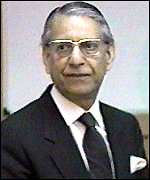
Naik, 70, who retired as foreign secretary, the top bureaucratic post in the foreign ministry, more than a decade ago, was known for his back channel diplomacy aimed at improving Pakistan's ties with India.

'We have sent the body for autopsy to ascertain the cause of death,' Munir said, adding that Naik was living alone in the house.

Naik's friends had earlier informed police that the former diplomat was missing for the last five days.

'Niaz A. Naik was a distinguished diplomat who served Pakistan with great commitment and professionalism,' an official statement quoted foreign minister Shah Mehmood Qureshi as saying.

'The foreign ministry and the nation will always remember his services,' Qureshi added. -AFP

http://www.dawn.com/wps/wcm/connect/dawn-content-library/dawn/news/pakistan/06-police-find-dead-body-of-former-pakistan-chief-diplomat-rs-06

...

Who killed Mr Naik?

The most likely suspects are the groups opposed to diplomatic and political reconciliation between Pakistan and India, namely:

Lashkar-e-Toiba / Jamatud-Dawa

Sipah-e-Sahaba / Lashkar-e-Jhangavi

Jamaat-e-Islami and its ally Pakistan Tehree-e-Insaf (Imran Khan's party)

All of the above groups are directly or indirectly part and parcel of the Taliban or pro-Taliban forces in Pakistan (representing the Deobandi-Wahhabi alliance).


SLAMABAD: Former Pakistan foreign secretary Niaz A Naik, who was involved in back-channel diplomacy with India during the 1999 Kargil conflict, has been tortured and murdered by unidentified persons at his residence here, police said on Saturday.

Naik's body was found in his home in the heart of the Pakistani capital.

Former Pakistan foreign secretary Niaz Naik murdered


The revelation that he has been murdered marked a turnaround from a police spokesman's earlier statement that there were no marks of injury on the former diplomat's body. Naik, 70, was unmarried and had been living alone in his house in a neighbourhood in central Islamabad for a long time.

A post-mortem examination of Naik's body revealed he was tortured before being killed, said police officials and doctors who performed the autopsy.

Naik was hit with a sharp and heavy object and there were signs of torture on his neck. Four ribs and the jaw were fractured and the lungs were damaged, the autopsy report said.

Naik, who also served as high commissioner to India and was involved in back-channel diplomacy during the Kargil conflict of 1999, apparently died three to four days ago, police said. Police officials said they were trying to ascertain the motive behind the murder.


’نیاز نائیک کو قتل کیا گیا‘

نیاز اے نائیک

نیاز اے نائیک سنہ انیس سو بیاسی سے انیس سو چھیاسی تک سیکرٹری خارجہ رہے

پاکستان انسٹیٹیوٹ آف میڈیکل سائنسز کے ڈاکٹروں کے مطابق پاکستان کے سابق سیکرٹری خارجہ نیاز اے نائیک کو تشدد کا نشانہ بنا کر قتل کیا گیا تھا۔

سابق سیکرٹری خارجہ کی لاش انتہائی پراسرار حالت میں ہفتہ کو اس وقت ملی جب ان کے پڑوسیوں نے پولیس کو اطلاع دی کہ ان کے گھر سے بدبو آ رہی ہے۔

جب پولیس ان کے سیکٹر ایف سکس میں واقع گھر کے دروازے توڑ کر داخل ہوئی تو نیاز اے نائیک مردہ حالت میں اپنے کمرے میں پائے گئے۔ بعد ازاں ان کی لاش کو پوسٹ مارٹم کے لیے پاکستان انسٹی ٹیوٹ آف میڈیکل سائنسز (پمز) لے جایا گیا تھا۔

ہسپتال کے ڈپٹی ایگزیکٹو ڈائریکٹر منہاج السراج نے صحافیوں کو پوسٹ مارٹم رپورٹ کی تفصیلات سے آگاہ کرتے ہوئے بتایا کہ مقتول کی دائیں جانب کی چار پسلیاں ٹوٹی ہوئی تھیں جبکہ ان کے جبڑے پر بھی تشدد کے نشانات ہیں۔ اس کے علاوہ ان کے پھیپھڑے بھی پوسٹ مارٹم کے دوران متاثرہ پائے گئے۔

ڈاکٹرز کے مطابق پوسٹ مارٹم رپورٹ سے اس بات کے واضح شواہد ملتے ہیں کہ نیاز نائیک کو تشدد کا نشانہ بنا کر ہلاک کیا گیا۔

پولیس کو ابتدائی طو رپر ان کے گھر اور کمرے سے مزاحمت یا لوٹ مار کے کوئی شواہد نہیں ملے تھے تاہم سرکاری ذرائع کے مطابق نیاز اے نائیک کی پوسٹ مارٹم رپورٹ سے ہونے والے انکشافات سے ان کی ہلاکت نے ایک نیا رخ اختیار کر لیا ہے۔

بیاسی سالہ نیاز اے نائیک غیر شادی شدہ تھے اور اپنی رہائش گاہ پر اکیلے چند ملازمین کے ساتھ رہتے تھے۔

نیاز اے نائیک کا شمار ملک کے ممتاز سفارت کاروں میں کیا جاتا تھا۔ وہ سنہ انیس سو بیاسی سے انیس سو چھیاسی تک پاکستان کے سیکرٹری خارجہ رہے اور بعد ازاں ان کا نام پاکستان اور بھارت کے درمیان بیک ڈور ڈپلومیسی کے حوالے سے خبروں میں رہا

ان کی موت پر صدر مملکت آصف علی زرداری، وزیر اعظم سید یوسف رضا گیلانی، سابق وزیر اعظم اور مسلم لیگ (ن) کے قائد نواز شریف، وزیر خارجہ شاہ محمود قریشی سمیت اعلیٰ حکومتی شخصیات اور سیاسی رہنماؤں نے گہرے رنج و غم کا اظہار کیا ہے۔


Read more...