Editor's Choice

--------------------------------------------------------------------------------------------------------------------------
Featured Post
--------------------------------------------------------------------------------------------------------------------------

"Let us build Pakistan" has moved.
30 November 2009

All archives and posts have been transferred to the new location, which is: http://criticalppp.com

We encourage you to visit our new site. Please don't leave your comments here because this site is obsolete. You may also like to update your RSS feeds or Google Friend Connect (Follow the Blog) to the new location. Thank you.


--------------------------------------------------------------------------------------------------------------------------
Showing posts with label Disinformation Cell. Show all posts

Sunday, 29 November 2009

Dr Shahid Masood: Theft, Slander, Lies and Phobia, all in one - An analysis by Qais Anwar

By Qais Anwar

I wrote the following article for LUBP (Let us build Pakistan) but , after watching the yesterday's Meray Mutabiq, I could not stop myself from posting it on [another website]. ..... now more and more right wingers are mentioning LUBP on the TV. A few days ago I saw Irfan Siddiqui mentioning it. [Here is an analysis of Dr Shahid Masood's journalism.]

شاہد مسعود ۔۔۔ سرقہ ؛ دشنام طرازی؛ دروغ گوءی؛ اور جاوے ای جاوے کا مرض

خاموش فلموں کا دور شروع ہوا تو خوبصورت چہرہ اور خوبصورت آواز دونوں ہی پردہ سکرین پر آنے کا معیار بن گءیں ۔ سریلی آواز سے محروم خوبصورت چہرے اس وقت تک انڈسٹری میں
جگہ بنانے سے محروم رہے جب تک پس منظر گانے کا رواج شروع نہ ہوا۔ ہاں مکالمہ نگار شروع سے ہی مختلف تھا۔ اداکار کا کمال یہ ہوتا تھا کہ سب یہ سمجھیں کہ گانے کی آواز بھی اس کی ہے؛ مکا لمہ بھی اس کا اور اداءیگی بھی اسکی۔ ہاں ٹا ءیٹل پر ہمیشہ اصل لوگوں کے نام لکھےجاتے۔ ٹی وی شروع ہوا تو یہ روایت برقرار رہی۔ٹاءیٹل پر مسودہ لکھنے والے ؛ ہدایت کار سمیت سب کے نام آتے رہے ۔ ہاں کبھی کبھی یہ بھی ہواکہ خبط عظمت میں مبتلا لوگ دوسروں سے لکھوا کر اپنےنام سے پیش کرلیتے ۔ ہمارے شاہد مسعود کو بھی شوق تھا کہ وہ خوبصورت لفظ استعمال کریں ۔یہ سچاءی کہ وہ کس کے لفظ بولتے ہیں اس وقت تک لوگوں سے مخفی رہی جب تک انہوں نے اپنے ایک پروگرام کے ابتداءیے میں عرفان صدیقی کا وہ کالم نہیں پڑھ دیا جو ایک دن پہلے نواءے وقت میں چھپ چکا تھا یا پھرجب تک موصوف نے خود ہی کالم نگاری پر طبع آزماءی نہ شروع کر دی۔ پہلے پہل یہ وہ کالم ہی تھے جو ان کی اصل ذہنیت کو سب کے سامنے لے آءے ۔ پاکستانی صحافت کی تاریخ میں سب سے زیادہ گھٹیا پن تک اترنے کا سابقہ اعزازروزنامہ سیاست کو حاصل تھا جو اس حد تک پہنچ جاتا تھا کہ موت کی کوٹھری میں بند ذولفقار علی بھٹو کے لیے ’پاگل ہو گیا’ جیسی شہ سرخیاں لگایا کرتاتھا ۔

لفظوں کے سرقے کے ساتھ ساتھ شاہد مسعود دروغ گوءی کو اس حد تک لے گءے کہ پیشہ صحافت سے وابستہ لوگوں نے بھی اس پر کراہت کا اظہار کرنا شروع کردیا۔ ابھی یہ پچھلے سال ہی کی بات ہے کہ انہوں نے جیو کے پروگرام جواب دہ میں یہ دعوی کیا کہ ڈاکٹر عشرت العباد ان کے ہم جماعت ہیں ۔ اس کا کامران خان نے یہ کہہ کر بھانڈا پھوڑ دیا کہ وہ ہم جماعت تو کیا ہم مکتب بھی نہیں رہے۔

جنرل پرویز مشرف کے استعفی کے ایک دن بعد شاہد مسعود نے رخصتی کے نام سے ایک کالم لکھا جس میں فرمایا’یہ انتہاءی مشکل تقریر تھی جس کا انتظام ایوان صدر میں صدارتی آفس سے ملحقہ کمیٹی روم میں کیا گیا تھا ۔ ایوان صدر میں صدر کے ذاتی عملے کے علاوہ صحافیوں میں صرف میں ہی وہاں موجود تھا ۔۔۔۔۔۔تقریر مکمل کرنے کے بعد صدر میری جانب بڑھے اور اور میں نے گزرے ہفتے میں دوسری بار تھینکس شاہد کے الفاظ سنے۔ تقریر کے بعد صدر مکمل طور پر ریلیکس ہو گءیےتھے ۔ جب یہاں مہمانوں کے لیے چاءے آءی تو ان کے دل گرفتہ سٹاف نے چاءے پینے سے معزرت چاہی تو صدر مشرف نے ان سے کہا کہ وہ چاءے پیءیں اور صدر نے خود بھی یہاں سب کے ساتھ چاءے پی۔ ’ شاہد مسعود کے اس کالم میں بیان کردہ واقعات کی مختلف ذراءع نے فوری طور پر تردید کر دی ۔ لیکن اس میں سب سے اہم تردید سماء ٹی وی کے حسن کاظمی کی تھی جو انہوں نے جنگ گروپ کو ایک ای میل کے ذریعے بھیجی۔ ان کے مطابق ڈاکٹر شاہد مسعود تو سرے سے وہاں موجود ہی نہیں تھے ۔میں (حسن کاظمی)وہاں اپنی میزبان عظمی الکریم کے ساتھ تھا ۔۔۔اور میرے پروڈیوسر عدیل احمد بھی وہاں موجود تھے ۔تقریر صدر کے دفتر سے نشر کی گءی تھی نہ کہ کمیٹی روم سے ۔۔۔۔۔ صدر نے میری ہم کار عظمی الکریم سے ہاتھ ملایا ۔ پھر میرے پروڈیوسر عدیل احمد اور معین خان کے ساتھ ۔۔۔۔اس وقت ان کے دفتر میں بالکل چاءے نہیں پیش کی گءی ۔۔۔۔

شاہد مسعود کی ذہنی ساخت کو سمجھنے کے لیے ان کے اسی کالم کے ان الفاظ کو دیکھنا بہت ضروری ہے ’ گزرے آٹھ برسوں میں میری گفتگو اور تجزہوں کا بنیادی ہدف ہی صدر مشرف کی پالیسیاں رہیں اور میں گیارہ ستمبر کے بعد ان کے لاءحہ عمل سے لے کر نومبر ۲۰۰۷ءکے ماوراءے آءین اقدامات تک ۔ تنقید کے ڈونگرے بساتا رہا اک عجب احساس یہ تھا کہ اب وہ ہدف اپنی جگہ سے ہٹ رہا ہے جو میرے مد مقابل رہا اور نءے اہداف کا تعین اب میرے مجھ جیسے تجزیہ نگاروں کے لیے فوری دشوار ہو گا ایک خلا ء کا احساس ۔۔۔۔۔۔۔۔۔’شاہد مسعود کا یہ نکتہ بہت اہم ہے کہ جنرل مشرف کے دور میں الیکٹرا نک میڈیا کی آمد کے ساتھ ہی جاوے ای جاوے کے نعروں کی گونج میں تجزیہ نگاروں کی ایک بڑی کھیپ وجود میں آءی ۔ ان میں سے بہت سوں نے آمر کے غیر اخلاقی اقدامات کا غیر اخلاقی اقدامات سے مقابلہ اپنے تجزیوں کا حصہ بنا لیا۔منافع کی تلاش میں اپنے ناظرین کی تعداد میں اضافے کا خواہش مند میڈیا اس طرح کے تجزیوں کو جگہ دینے کے لیے بالکل تیار تھا۔اس ماحول میں جہاں صالح ظافر جیسے لوگ جنرل مشرف کی ہاوس اریسٹ کی خبریں تک چلا دیتے تھے شاہد مسعود جیسے دروغ گوءی کے عادی کے لیے خاصی جگہ موجود تھی۔ نءی حکومت بننے کے بعد ان لوگوں کو اہم مناسب پر فاءز کرنے کی بجاءے زیادہ ضروری تھا کہ ہدف کے متلاشی شاہد مسعود جیسوں کی نو سازی پر توجہ دی جاءے ۔
rehabilitation = نو سازی

شیری رحمان شاید یہ کام کر لیتں لیکن شاہد مسعود کو پی ٹی وی کا چءیر پرسن بنا دیا گیا ۔ راوی بتا تا ہے کہ شاہد مسعود ذرداری صاحب کی پبلک ریلیشننگ کا کام بڑھ چڑھ کر نبھا رہے تھے لیکن شیری اور شاہد کی باہمی مسابقت شاہد مسعود کی شکست پر منتج ہوءی ۔ ذرداری نے شاہد مسعود کو نہیں بچا یا اور یوں شاہد مسعود کو وہ ہدف مل گیا جس کی اسے تلاش تھی۔

ہدف کی طرف بڑھتے بڑھتے شاہد مسعود پستی کی اس دلدل میں اتر گءے جس کی انتہا ان کے کالم جءے بھٹو کی شکل میں ظاہر ہوءی۔بہت سے لوگ اس کالم کا جواب دے چکے ہیں اس لیے میں یہاں اس کالم کا صرف ایک پہلو درج کرنے پر اکتفا کروں گا

اس کالم میں شاہد مسعود نے یہ بھی ثابت کرنے کی کوشش کی کہ محترمہ اپنے بچوں کو آصف زرداری سے بچا کر رکھتی تھیں اور ان کے طویل عرصہ تک جیل میں رہنے پر خوش تھیں ۔۔۔۔۔۔۔ دنیا کی بہترین درس گا ہوں سے فا رغ التحصیل خاتون یقینی طور پر اپنی اگلی نسل کو اس ذہنیت سے محفوظ رکھنا چاہتی تھی جو کسی سینما کے باہر ٹکٹ بلیک میلنگ کرکے یا ڈسکو کلبوں میں مار پیٹ وغیرہ میں ملوث ہو کر پیدا ہو جاتی ہے اور تبھی جب محترمہ کو اس حقیقیت کا اندازہ ہوا کہ ان کی وہ اولاد جو برس ہا برس سے۔۔۔اس کردار سے دور رہنے کے بعد خوش قسمتی سے اس کے اثرات سے محفوظ اپنے ذہنوں میں اس کے بارے میں ۔۔۔اچھے خواب بنے بیٹھی ہے……۔ خاوند اور بیوی کے تعلق اور باپ اور اولاد کے رشتے پر اس طرح کا تبصرہ صرف شاہد مسعود ہی کر سکتے ہیں۔

اور اب اٹھاءیس نومبر 2009 کا میرے مطابق ۔ جاوے ای جاوے کا مرض عروج پر ہے؛ شاہین صہباءی ؛ انصار عباسی اور اکرم شیخ دروغ گوءی اور دشنام طرازی میں مصروف ہیں ۔ ہاں اب تیا ری عدالتوں اور حکومت کے درمیان جھگڑا کرانے کی ہے۔ وہ شاہد مسعود جو پیلز پارٹی کے کا رکنوں کو گمراہ کرنے کے لیے خود کو بی بی کا ہمدرد ظاہر کرتے ہیں آصف زرداری کی دشمنی میں بی بی کے سخت ذاتی دشمن ڈاکٹر مبشر حسن کو میدان میں لے آءے ہیں


Read more...

Announcement: Pakistan Ignoble Award for Journalism (PIAJ)


Let Us Build Pakistan proudly announces the establishment of Pakistan Ignoble Award for Journalism (PIAJ). It will be awarded annually to a Pakistani journalist who has flouted all the norms of journalistic decency, objectivity, and fair play. Every December starting December 2009 a journalist whose functioning qualifies to be a journalist without a conscience will be PIAJ-ed.

We would like our readers and visitors to offer their nominations for the Pakistan Ignoble Award for Journalism (PIAJ). In your comments below, please provide the following:

1. Name of the nominee
2. Your justification for his/her nomination in no more than 4 sentences (about 100 words).
Read more...

Friday, 27 November 2009

In defense of Nawaz Sharif: Are our politicians corrupt? Is Pakistan Army a sacred cow?


Rauf Klasra reveals some interesting details of the alleged 60 million dollar corruption by Nawaz Sharif.


Read more...

Tuesday, 24 November 2009

Geo: journalism without conscience

Pakistan’s conspiracy theories stifle debate
Ahmed Rashid

Switch on any of the dozens of satellite news channels now available in Pakistan.
You will be bombarded with talk show hosts who are mostly obsessed with demonising the elected government, trying to convince viewers of global conspiracies against Pakistan led by India and the United States or insisting that the recent campaign of suicide bomb blasts around the country is being orchestrated by foreigners rather than local militants.

Viewers may well ask where is the passionate debate about the real issues that people face - the crumbling economy, joblessness, the rising cost of living, crime and the lack of investment in health and education or settling the long-running insurgency in Balochistan province.

“ The principal obsession is when and how President Asif Ali Zardari will be replaced or sacked ”

The answer is nowhere.

One notable channel which also owns newspapers has taken it upon itself to topple the elected government.

Another insists that it will never air anything that is sympathetic to India, while all of them bring on pundits - often retired hardline diplomats, bureaucrats or retired Inter-Services Intelligence (ISI) officers who sport Taliban-style beards and give viewers loud, angry crash courses in anti-Westernism and anti-Indianism, thereby reinforcing views already held by many.

Collapse of confidence

Pakistan is going through a multi-dimensional series of crises and a collapse of public confidence in the state.

Suicide bombers strike almost daily and the economic meltdown just seems to get worse.

But this is rarely apparent in the media, bar a handful of liberal commentators who try and give a more balanced and intellectual understanding by pulling all the problems together.


The explosion in TV channels in Urdu, English and regional languages has bought to the fore large numbers of largely untrained, semi-educated and unworldly TV talk show hosts and journalists who deem it necessary to win viewership at a time of an acute advertising crunch, by being more outrageous and sensational than the next channel.

On any given issue the public barely learns anything new nor is it presented with all sides of the argument.

Every talk show host seems to have his own agenda and his guests reflect that agenda rather than offer alternative policies.

Recently, one senior retired army officer claimed that Hakimullah Mehsud - the leader of the Pakistani Taliban which is fighting the army in South Waziristan and has killed hundreds in daily suicide bombings in the past five weeks - had been whisked to safety in a US helicopter to the American-run Bagram airbase in Afghanistan.

In other words the Pakistani Taliban are American stooges, even as the same pundits admit that US-fired drone missiles are targeting the Pakistani Taliban in Waziristan.

These are just the kind of blatantly contradictory and nut-case conspiracy theories that get enormous traction on TV channels and in the media - especially when voiced by such senior former officials.

The explosion in civil society and pro-democracy movements that brought the former military regime of President Pervez Musharraf to its knees over two years has become divided, dissipated and confused about its aims and intentions.

Even when such activists do appear on TV, their voices are drowned out by the conspiracy theorists who insist that every one of Pakistan's ills are there because of interference by the US, India, Israel and Afghanistan.

The army has not helped by constantly insisting that the vicious Pakistani Taliban campaign to topple the state and install an Islamic emirate is not a local campaign waged by dozens of extremist groups, some of whom were trained by the military in the 1990s, but the result of foreign conspiracies.

Economic crisis

Such statements by the military hardly do justice to the hundreds of young soldiers who are laying down their lives to fight the Taliban extremists.

Nor has the elected government of the Pakistan People's Party (PPP) tried to alter the balance, as it is mired in ineffective governance and widespread corruption while failing to tackle the economic recession, that is admittedly partly beyond its control.

Moreover the PPP has no talking pundits, sympathetic talk show hosts or a half decent media management campaign to refute the lies and innuendo that much of the media is now spewing out.

At present, the principal obsession is when and how President Asif Ali Zardari will be replaced or sacked, although there is no apparent constitutional course available to get rid of him except for a military coup, which is unlikely.

The campaign waged by some politicians and parts of the media - with underlying pressure from the army - is all about trying to build public opinion to make Mr Zardari's tenure untenable.

Nobody discusses the failure of the education system that is now turning out hundreds of suicide bombers, rather than doctors and engineers.

Or the collapsing and corrupt national health system that forces the poorest to seek expensive private medical treatment, or the explosion in crime or suicides by failed farmers and workers who have lost their jobs.

Pakistan cannot tackle its real problems unless the country's leaders - military and civilian - first admit that much of the present crisis is a result of long-standing mistakes, the lack of democracy, the failure to strengthen civic institutions and the lack of investment in public services like education, even as there continues to be a massive investment in nuclear weapons and the military.

Pakistan's crisis must first be acknowledged by officialdom and the media before solutions can be found.

The alternative is a continuation of the present paralysis where people are left confused, demoralised and angry.

Ahmed Rashid is the author of the best-selling book Taliban and, most recently, of Descent into Chaos: How the war against Islamic extremism is being lost in Pakistan, Afghanistan and Central Asia.

If you have a comment on this article, please use the form below.
Story from BBC NEWS:
http://news.bbc.co.uk/go/pr/fr/-/2/hi/south_asia/8369914.stm

Published: 2009/11/24 02:02:54 GMT

© BBC MMIX

Read more...

Accountability of Zardari and beyond

A critical analysis by Asadullah Ghalib on the NRO Tabla and the anti-Zardari campaign
.
.
.

Read more...

Monday, 23 November 2009

Sindhis responsible for 97% of corruption in Pakistan: NRO's message


By Abdul Nishapuri

Once again, it would appear that the rules are different for peoples from Sindh whereas politicians, bureaucrats and military personnel from Punjab and elsewhere are angels who do not have a spot of corruption on their careers. Or at least, that is what the establishment wants us to believe through its "NRO" tool.

NRO list out, 34 politicians among 8,000 beneficiaries
By Amir Wasim

Sunday, 22 Nov, 2009 (Dawn)

ISLAMABAD: A majority of the NRO beneficiaries have been bureaucrats and government officials as a list, released by the government on Saturday, contained names of only 34 politicians out of a total of 8,000.

According to the list, almost 97 per cent of the beneficiaries are from Sindh. The ordinance will lapse on Nov 28 in the light of the Supreme Court’s July 31 verdict in the PCO judges case.

The list shows that a total of 8,041 people — 7,793 from Sindh — have benefited from the National Reconciliation Ordinance (NRO), promulgated by former president Pervez Musharraf on Oct 5, 2007.

These people have got withdrawn 3,478 cases (3,320 in Sindh) registered against them on charges of corruption, financial bungling, misuse of authority and criminal charges.

What do ordinary Pakistanis think about NRO?
(various sources including pkpolitics, friendskorner etc)

Pakistan said:
7,793 from Sindh, this does not mean that sindhis are corrupt.
Ghulam Agmad Bloor from ANP said on a TV show that 99% corruptionwas done in Punjab through loans written off ,by a specific part in punjab, and they built from sugar to terxtile industry.
These corrupt military, civil bureaucrats and government officials should be brought to justice.

This was time when every MNA and MPA in punjab was running to get loan and get write off and then develop a factry.

Worh to see that time a loan beneficiary and calculate the amount with interest toay.
———————————–
http://www.dawn.com/wps/wcm/connect/dawn-content-library/dawn/news/pakistan/12-pms+wife+paid+rs455m+against+rs570m+liabilities–bi-07
———————————-

Wahid Doyum said:
How accurate are the cases against those on the list? NAB after all was run through Musharraf’s orders and the history of judiciary is well known.

waw said:
The above list is half of the looters. The list – which consists the gangsters from Sind- was prepared by the looters from Punjab when they (Nawaz and his team) were in government. Now the looters from Sind (Zardari and party) are in government and they are in process of preparing another list of gangsters who belong to Punjab. All these consist of one group- the looters of the nation. Now Nawaz Sharif is protecting them- Then Zardari will be protecting Nawaz. You can say two teams of looters – the lahori group and the larkana group- looting the country for the last 65 years.

agrana75 said:
This list is only for the “idiot” politicians who instead of buying judiciary and other related officials , preffered to get rid of the cases through NRO. There are many shrewd and clever politicians who foresaw long time ago that such ordinances had no long term validity and effect. They “managed” to get clear themselves through the judicary and NAB. Now, question is that no body investigating the “CRIME” even if some got acquittal from the courts, it looks some angels came down to earth and looted the money ands thats all.

i_shah said:
What about generals. they surely arent angles and have had major chunk of the national budget. I guess corruption is legal for them. afterall who needs to deal in cash when they get plots and agricultural land at dirt cheap prices:

http://www.satribune.com/archives/Aug17_23_02/P1_landgrabbing.htm#top

http://antisystemic.org/satribune/www.satribune.com/archives/200504/P1_ss3.htm

sabazbagh said:
Many of us MAY BE familiar with a fact that especially when an officer from the army reaches the rank of a ‘Brigadier’ he (& now a ’she’ also) is LITERALLY ‘OFFERED’ ON A SILVER PLATTER, a prized piece of land in any military cantonment & MAY BE, then or (sometimes earlier or later,) when he reaches the rank of a Major:/Lt:General, he is THEN AGAIN ‘OFFERED’ the best ‘PIECES’ of STUD FARMS/AGRICULTURAL LANDS; that he MAY HAVE NEVER DREAMED-OFF?

A major question is then normally asked by majority of lower rank officers, sitting within or outside GHQ that ‘WHY THEM & NOT US?

What is called a ‘rat-race’ is THUS INITIATED by senior military officers with the backing & greediness of their spouses.

Consequently, there is a lot of ‘heart-burning’ amongst the lower ranks, whether themselves officers, or other ranks (comprising of Jco’s, Nco’s & men.) Is there any JUSTIFICATION for such a dole-out or ‘charity, whatever you may call it?

In order to ‘lessen’ the so-called ‘heart-burning’ among junior officers of the rank of Lt:Colonels & Majors, it was THUS decided about 15/20 years back, to ‘DULY REWARD’ them too, by the ‘CHARITABLE ENDOWMENT’ organization called the GHQ.

This legacy of ‘buying-off’ the LOYALTIES of the officers-lot was left behind by our ‘clever & intelligent’ Britishers, who ‘devastated’ every facet of life, during their, over 200 years rule,) NOT AT THEIR OWN EXPENSE, BUT AT OURS!

Will ever any army officer voluntarily, (whether TODAY or TOMORROW,) return back to GHQ, the PRIZED land ( worth billions in Pak Rs) , house or a residential flat, ( worth millions?)
Your own answer, NOT SURPRISINGLY would be a big, NO !

murtazahasaan said:
The NRO list of Beneficiaries is not as big of an issue as the fight against terrorism. The media can help us unite to raise voice against terrorism. We are Pakistanis and we can do this.

sabazbagh said:
Whatever OTHER BENEFITS that a serving or a retired military officer obtains during his service with the civil govt, ( especially during past martial years of Ayub, Zia or any other, such era; they are usually ‘OVER & ABOVE’ what he gets from GHQ, either during his ‘pre’ or ‘post’ retirement period of service in the military.

I seriously think that the Ministry of Defense should also release a similar LIST, showing the names of beneficiaries of the three services, i.e; Pak Army Navy & Air Force, ‘who had their cake & ate it’ too & also ‘burned both ends of their candles’!

MAY BE, there will be so much of pressure by retired military officers upon the incumbent Service Chiefs,that such a list will NEVER see the light of the day.

MAYBE, (I AGAIN repeat MAYBE,) it could result in a ’swift, short & quick’ move by the military, to SAVE IT” s HOLY COWS , TOO, FROM PUBLIC EXPOSURE?

Adonis said:
Given the backdrop of all the propaganda and the virile hatred that many ignorant and gullible Pakistanis keep expressing about politicians, this list of NRO beneficiaries is an eye opener.

It is time for us to realize that our politicians are not the source of our problems, rather it is the corrupt civil and military bureaucracy.

Politicians are accountable to the people and in every elections they have to defend their deeds. If the political system is not derailed by power-hungry generals, the relatively few corrupt politicians can easily be purged by the democratic process.

hasankhan said:
cases should be reopen but if not proven relative people should be compensated and the people who filed these fake cases should be put in jails.

logical said:
In last sixty years only last PPP govt was corrupt. Other all generals, politicians are clean and most important thing is these cases registered by most honest general Mushraf.
شرم تم کو مگر نہیں اتی

• Is it not the type of NRO in past and future
* In proposed Balochistan package people will be release from jail and all the cases against them will be withdraw and many of them openly admitted that they are doing arm struggle.
*In coming years Taliban will be part of Afghan govt and thousands of Pakistani Taliban will be in political process without any sentences.
*In 1977 military operation in balochistan stopped after five years. All prisoners released. No general or political activist who was openly involved in arm struggle blame for any thing.
*Nawaz family with a deal with Mushraf went to Saudi Arab.
*In history of trade union thousand times after strikes when management and trade union sit on table for agreement first it decided all charge sheets will be withdrawn.
*Pholan davi, a proved dacoit in India got mercy and became Lock Saba member.
*Every dictator in Pakistan got approval for breaking constitution, from assessable.
*when Ayub khan went thousands political activist was in jail with true and false FIR but next day they start releasing them. Same thing happened when Bhutto gone.

All above example are proved crimes not only political but murders, treason etc. this NRO is nothing to do with proved cases even in some cases more then 11 years within two different governments.

If supreme court can say that last supreme court made mistake and their action null and void then if National assembly decide that the approval of ( Mushraf 12th October coup and first PCO ) was wrong and it is null and void then what going to be happened with Ch Iftikhar.
You can find hundreds example in our and in world history where for breaking stalemate with political understanding we have to do this. Opposition for NRO is not about eliminating corruption. This is a political agenda. Generals have no problems with politician’s corruption instead they encourage them so they can blackmail them. Why they hate Zardari? He is trying to make good relation with India and interested in supremacy of civil govt on Military. Fortunate of Pakistani people Nawaz sharif (not all Muslim league) also have same vision. Most of these people are not democrat in nature. They can not remove him democratically so remove him by NRO, by court or by military.

mir munsif said:
..the propaganda and hate compaign against PPP is very old.Mighty establishment and sponsors always tried to corner PPP,the biggest federal party of Pakistan.Inspite of all their efforts of infusing hate and fabricating new cases against PPP,they could not erase the name of PPP.Even today,if elections held,if PPP wont stand as majority party,I assure u,it would be Second largest.

Actually Military Economic Umpire and co sponsors dont want to give free space to democratic system because they fear it,If it succeeds,which will weaken their power control over state.Its war started by Military Alliance (Certain Media+Mullas+agencies+Certain class in bureacracy etc) against PPP led Govt to discredit Govt so that they can cut the roots of democracy.Wake up call for Pro-democratic forces!!

dara said:

Bravo , Bravo pakistanies from whole of Lahore only Jahangir Badar was corrupt all others are angels. Those whose names are not in NRO are the real culprits because they belong to Punjabi Establishment.

In Lahore where since 1990 we only saw Muslim League in power thus all the corruption was done by them only JB . Hamayoon Akhtar Khan, Mian Munir, Haji Maqsood Butt, Liaqat baluch, Salman butt, and numarous Muslim League MPas and MNA’s no matter they were Q or N or XYZ.

Army generals the most corrupt people along with Punjabi establishment and Muslim League are the real culprits.

Nawaz Sharief family are bunch of saints who become the most richest just with hard work and by praying five times. The state pakistan has no courege to make cases against punjabi leaders. This will take Pakistan to its logical end , disintegration.

Pakistan said:
=============================================================
Be realistic….DO NOT BE TRAPD IN THE PROPAGANDA DONE BY THESE JOKERS.
=============================================================
The following are the only clean people in the country.
1: NS
2: CHs.
3: Army Generals,Colns,Capt. etc as they all are living according to theor means.
———–
Case against Rehman A Malik: Illegal detention against complainant and gratfication.
Source: http://www.geo.tv/important_events/2009/nrolist/pages/list.asp
———-
My suggestion to AZ to resign and go to the courts to get clearance.
———
To me: 95% people in NRO will be freed.
———

mir munsif said:
More Corruption stories

Pakistan-armys-multimillionaires

http://politicalpakistan.blogspot.com/2006/01/pakistan-armys-multimillionaires.html

Army Eyes its Biggest Real Estate Catch in Hotbed Islamabad

http://www.satribune.com/archives/200503/P1_butt2.htm

One more corruption story:

High Court Presented With Massive Charge Sheet Against Pakistan Army

http://www.satribune.com/archives/aug10_16_03/P1_chargesheet.htm

mir munsif said:
Pakalert Report update to share you!

EXPOSED!!!

GEO TV, Kamran Khan and the Lies of Dr Shahid Masood

http://pakalert.wordpress.com/2009/09/05/geo-tv-kamran-khan-and-the-lies-of-dr-shahid-masood/

Bawa said:
صدر کیخلاف مقدمات ختم ہو چکے: ترجمان

لاہور /اسلام آباد/ (خبرنگار خصوصی نوائے وقت +خصوصی نامہ نگارنوائے وقت + ریڈیو نیوز) ایوان صدر کے ترجمان فرحت اللہ بابر نے کہا ہے کہ قانون کے تحت صدر زرداری کیخلاف جو کیس ثابت نہیں ہو سکے اور جن کی انوسٹی گیشن ہو رہی ہے وہ ختم ہو چکے ہیں۔ نوائے وقت سے گفتگو کرتے ہوئے انہوں نے کہا اگر عدالتیں اس حوالے سے کوئی دوسرا فیصلہ کرتی ہیں تو وہ ہمکارے لئے قابل قبول ہو گا۔ امریکہ میں پاکستانی سفیر حسین حقانی نے کہا ہے کہ میں نے کبھی این آر او سے فائدہ نہیں اٹھایا۔ میری سمجھ میں نہیں آتا میرا نام این آر او سے فائدہ اٹھانے والوں کی فہرست میں کیسے آ گیا۔ انہوں نے کہا احتساب بیورو نے جو مقدمات میرے خلاف بنائے تھے وہ میں نے عدالتوں سے کلیئر کرا لئے تھے۔ مزید براں پیپلز پارٹی کے سیکرٹری جنرل جہانگیر بدر نے فہرست کو مسترد کرتے ہوئے کہا کہ این آر او سے فائدہ اٹھانے والے کوئی اور ہونگے۔ میرے مقدمات ہائیکورٹ میں ہیں۔ انہوں نے کہا میرے فیصلے کی گھڑی آئی تو میرا نام این آر او میں شامل کر دیا گیا۔ ہم عدالتوں سے گھبرانے والے نہیں‘ مقدمات کا بھرپور دفاع کرینگے۔ پیپلز پارٹی کی سیکریٹری اطلاعات فوزیہ وہاب نے کہا ہے کہ عدالت کو ایسے فیصلے ریورس نہیں کرنے چاہئیں جس سے ملک کا مفاد اور موجودہ نظام متاثر ہو ۔ نجی ٹی وی سے گفتگو میں انہوں نے کہا کہ پیپلزپارٹی مقدمات سے گھبرانے والی نہیں پارٹی رہنماؤں نے ہمیشہ عدالتوں کا سامنا کیا ہے۔ انہوں نے کہا کہ این آر او سے فائدہ اٹھانے والوں کی فہرست پہلے ہی جاری کردینا چاہیے تھی اس میں تاخیر کی گئی۔ ان کا کہنا تھا کہ اکثر مقدمات انتقامی کارروائی کے تحت بنائے گئے

Pakistan said:
After November 28, Nobody will be able to comment on this NRO issue.

As far far as These jokers (from Mullah Media Alliance) are concerned, They will damage the country by spreading false information and propaganda.

Ansar Abasi once mntined that PM stoped AZ to fire COA which was totally wrong and there was no fact at all.Think about the consequences in sight for the vicious propganda and If COA had taken this seriously.

Same thing applied with Saleh Zafar,a biggest joker,Once spread the news that AZ offered 5 crore each MNA to cast a vote in favour of NRO,What the hek this news analyst is?
This Jang group is trying to become a new piller in the country as they think it was the Jang newsgroup brought Musharaf don hence they can do this with each and every governament.
DEFEAT IS YOUR FATE YOU ALL JOKERS…….

mir munsif said:
I am neither against healthy criticism nor I ever consider PPP as Party of angels.Having said that I am also against Biased and abusive approach against PPP and its leadership.Even as per Transparency International and many independent fact finding reports,the Biggest plunders of national assets are Military Establishment Umpire.They are looting it without any accountability and any check & balance and any time they can over throw democratic system on the basis of so called ‘Biggest national interest’..while they are also considered Pure ppl of Pakistan.

Its important to understand the bigger picture,The weakness of any party or democratic system gives stimulus or rejuvenate the role of Military Authority.Since the day one,The Military Alliance has captured the authority over state and they WONT ever allow any Federal party or leadership to earn good names or strengthen the democratic system.It is indeed War of interests between Democratic Camp Vs Military Alliance (Military+Intelligence agencies+Certain Media+Pseduo Political groups+Mullas etc).

Politicians have suffered more and earned bad name,while the Military Alliance have earned not only good name but also plundered at the extreme.Give a break please,whether good or bad,Politicians have to go through democratic process,which may be slow but sooner or later,it will reform,but the wekaness of Political parties should not be an EXECUSE for any Military QUO.Therefore,I suggest you all to be free to criticize any party or leadership but dont be blind in hate/biased mind..dont be a tool of Propaganda Industry of Agencies and Media co which have only objective to discredit Democratic system.

zahidnaqvi said:
The TIME for serious thinking has now arrived. We must admit that due to our religious thinking and attachments, certain communities and regions have blindly voted for Bhuttto Party, and believe me we all are suffering very badly now. In view of Transparency International Report we have been down-graded by 5 points and this is only due to NRO and widespread corrruption.

The corruption is to such a high level that even if you need a new gas or electricity connection you have to bribe from an ordinary office clerk, then SDO and then XEN.

Yes, this corruption has been in ALL previous Govt’s, but my God why is it ‘free for all’ situation when Bhutto Party rules. Peoples Party must change its name to Bhutto Family Corruption Party.

What really annoys me is that for the last few weeks, Zardari has now started to wear Sindhi topi. I personally saw that news item when 2 days ago at Kabul Airport he was wearing Sindhi topi. Zardari must come to his senses, he is now trying to fight Sindhi against Punjabi, and Shia against Sunni. We must now allow this to happen. I urge to all Zardari lovers that they must come to their senses. This latest list of beneficiaries has been prepared by Zardari’s own hand picked PM and this list contains 90% Sindhhi’s.

In the last 2 Govt of Benazir, Sindhi’s were particulary given jobs in PIA, Customs, Airport Immigration, huge loans in the name of Agricultural Loans, free umrah tickets etc. I am not saying that the then Punjab Govt of Pervaiz Elahi was an angel, but the level of corruption with the aid of MQM was at a very high level in Sindh.

mir munsif said:
@Zahid Naqvi

U Said “This latest list of beneficiaries has been prepared by Zardari’s own hand picked PM and this list contains 90% Sindhhi’s.”

I refute ur claims that 90 percent are Sindhis instead the right Phrase should be 90 percent are from SINDH.Dont play with fire of ethncity.

List contains names of only 34 politicians out of a total of 8,000.Only four Sindhi Political figures got benefit from NRO (AZ,Nusrat Bhutto,Agha Siraj Durani,Yusuf Talpur),14 Politicians are from Punjab.The Biggest beneficiary of NRO is MQM not Sindhis…Mind the GAP Please.

Your second claim about Sindhi topi,which creates trouble for you,seeing a President wearing Sindhi cap as if its some cap from India or Jews.Give a break man,President AZ wears this cap on many official events even on the day he took oath as President.Why A sindhi cap gives u suffocation,why you see always boiling Ethenic divide.SIndhis are equal stake holders of this state,who were the first ppl in Indo Sub continent to pass the Pakistan resolution bill in Assembly before prepartition,they always voted for Federal Parties,either PPP or PMLN etx,then why again some ppl want to corner them.Dont Push harder or play with fire,I am sure,if PPP ever lost its strength in Sindh,then if u know the dynamics of Sindh,No other party has any base nor they try to make their foundation…how many times NS or Imran khan visited Sindh…??Except PPP,other strong thriving forces are Nationalists.I personally feel that Sindh can turn another Baluchistan the day PPP loose its credibility in Sindh,coz other credible force left is Nationalists.

mir munsif said:
@Zahid Naqvi,

I respect your opinion but I appreciate if you enlighten us on healthy discussion and pointing out problems with solutions rather fueling Hate,ethnicity and launching personal attacks on PPP leadership through this platform.Grow up dude..Your Qazi sb’s vote bank is less than 5 Percent and every one knows whts their strength and even you will know in future elections where your JI stands

with all Military Mulla alliance Might and propaganda,they could not erase the name of PPP.Keep bashing and shouting as long as you can,coz this wont harm the vote bank of PPP,it will absolutly give some blood pressure to u SInce your agenda seems to find all sort of blames upon PPP and all evils are in PPP while the rest of parties and Military Mullas are angels ..

runaway said:
when is Shahid Masood going to discuss Kiyani’s role in NRO.

Shouldn’t he also resign for his role in NRO?

I dont like Zardari but he is easy punching bag. Just by getting rid of one person won’t fix problems of Pakistan

Read more...

Saturday, 21 November 2009

Myths of the Electronic Media


By Imran Kureshi

The ruling party’s sweeping victory in Gilgit should be an eye-opener to our ‘holier than the electorate’ media-men. They should realise that no party or leader is losing or gaining significant popularity despite their best efforts

Political programmes on our television channels are probably the only political institution here noisier than the Assemblies. The fiction they present is better than the soap operas, leaving the viewer on the edge of his seat waiting for the next episode; the crises they cook up have more ingredients than the cookery shows; the superheroes and villains they create are more imaginative than the cartoons and like the advertisements, they are bent on ‘selling’ their political agendas. Following are some myths that our anchormen seem to project again and again:

The NRO is a black law. Recently, both the electronic and print media went to town to denounce the NRO as shameful and universally unpopular. They should ask the people of Sindh and the thousands who suffered rampant political persecution during the period prior to1999 to tell what they honestly think of the law. This was an ordinance that undid injustice and enabled fair elections to be held. With the tyrannical proclivity that dictators and quasi-dictators have evinced to oppress political rivalry, this was the first democratic step to counteract this trend. In the alleviation of injustice to many innocent people under this ordinance, if some black sheep were also exonerated it is unfair to point fingers at them, since many other black sheep are strutting about the meadows smugly.

The lawyer’s movement was a success of the ‘long march’. Notwithstanding that undoubtedly it was morally and institutionally correct to reinstate the deposed judiciary and the worthy Chief Justice, by now it is tacit knowledge that there was a hidden hand behind the success of the ‘long march’, whether you like to believe this or not. Unfortunately the manner this movement succeeded seems to have unleashed an agenda of destabilisation (which our leading anchormen appear to welcome) and it has given a perception of a politically compromised judiciary.

Action against ‘Lal Masjid’ was bad. Please, let’s be quite clear about who are the enemies of our country and defy the writ of the law. If they are in the capital, so much the worse.

There should be price control on commodities (especially sugar). Again I will appeal for a more knowledgeable attitude. Price control is at best a short-term solution and detrimental to production in the long run. The worthy Supreme Court in its judgment on the sugar crisis consulted the Competition Commission of Pakistan (CCP) to advise it about the price of sugar and when the CCP recommended letting market forces establish the price, the CCP was criticised for exceeding its mandate. Consequently now the only way sugar comes into the market is by strong-arm tactics. Wait till you face the sugar crisis next year!

The government is doing nothing for the people. Often anchors rattle off ‘sugar crisis, atta crisis, energy crisis,’ in one breath. Let’s face it. Load shedding is currently a lot less than it has been in the last two years, though the consumption has increased. Why are we so negative? Why do we not give credit where it is due? Atta was a bumper crop because the government gave a much-needed increase in price to the farmer and this is the only crisis regarding wheat. Conversely because of low price and delay and deductions in payment for sugarcane to the farmer by mill owners, we had a shortfall in sugar production this year. Apart from forcefully trying to keep the price down and importing sugar at great cost, our government is trying earnestly to alleviate the crisis.

It will be pertinent to mention here that after the worst economic slump this country has known, when this government came to power, we are now on the verge of a turnaround. The cement sector is booming; OEMCs are showing good results; the textile sector has shown some improvement after two decades; our exports have increased; foreign investment had suddenly skyrocketed though in the first quarter of 09/10 it has declined because of increased terrorist attacks and instability; our agricultural production has increased substantially. In fact according to an international report we are on the verge of a turnaround and the only things holding us back are the power shortage (which is not this government’s fault) and the instability the electronic media is determined to promote.

Every issue that the media promotes is supported by the ‘14 crore awam’. This assertion is also repeatedly made by leaders of certain parties that did not participate in the elections and got no votes. I think the ruling party’s sweeping victory in Gilgit should be an eye-opener to our ‘holier than the electorate’ media-men. They should realise that no party or leader is losing or gaining significant popularity despite their best efforts and referring particularly to the channels in Punjab, they appeal only to a limited urban segment.

Unelected advisors are ruining the president’s image. Let’s be quite clear that advisors are not political personnel but experts in their field; they need not be elected. The above myth appeals only to those who want to think badly of some people. If we consider the facts fairly, our security is doing an admirable job in the face of a difficult and deadly situation. Who knows how many countless lives have been saved because of at least five occasions when suicide bombers have exploded themselves at check-posts and thus been unable to achieve their objectives; also because of the innumerable caches of explosives and arms that have been intercepted and terrorists apprehended. We only see the tragic devastation of these blasts; we do not see the frustration, demoralisation and setbacks in the ranks of our enemies when their efforts are foiled, operatives caught and their networks smashed. We should give credit where it is due, no matter what your personal feelings about a certain individual.

PPP is losing popularity and becoming isolated. This myth falls in the same category as an earlier myth that there is a rift between the prime minister and the president, which died because it was untenable. Of course, with the trend of logic of some anchormen (and women) it is natural they come to such conclusions to prove they are correct. However, these scripts about the opinions of supporters of a political party should be written by actual party supporters and not those wanting to find fault, don’t you agree? There is an important difference in attitude to be noted here. In totalitarian regimes it is important for the leader to be correct every time and obedience unquestioning, whereas in more democratic setups difference in opinion can prevail and wrongs corrected. However, people who only appreciate dictatorships may consider these procedures as mistakes and signs of weakness. The most important fact to note is that in a recent Gallup poll it was found that 31 percent to 46 percent people think that the media is causing instability. If you have not heard this before — because the media is not covering this — you have read it now. So whether the PPP is losing popularity or not is doubtful, but the media definitely is!

The media is free. No! In fact, the electronic media is very costly; still they manage to find a lot of sponsors for both advertisements and agendas. Of course the government is supposed to have influence and exert it in its favour but unfortunately the PPP is probably the only political party in history that even when it is in power seems to be treated like the opposition.

So let us remember that hallowed adage from the Holy Book, ‘Amr bil marroof, va nahee anil munker’ and interpret it in its true constructive sense. Let’s not spread fasaad and only criticise what needs to be criticised and praise what needs to be praised. Source

Read more...

Friday, 20 November 2009

"Goebbels Eleven", minus-one brigade and Nawaz Sharif


Here are three columns on this topic: The first one is by Ayaz Amir (a PML-N MNA) who terms the minus-one brigade (Shahid Masood, Ansar Abbasi, Shaheen Sehabi etc) as media galdiators. The second column is by Asadullah Ghalib in defence of democracy (President Asif Zardari and Opposition Leader Nawaz Sharif), and in defiance of the anti-democracy and pro-Taliban agenda of the Mullah Media Alliance also known as Pakistani Taliban Union of Journalists. Finally, the third column is by Abbas Ather who highlights the frustration of Goebbels Eleven because of Nawaz Sharif's refusal to be a part of the Establishment's game against democracy.

...

The charge of the minus-one brigade

Friday, November 20, 2009
Ayaz Amir

A week is indeed a long time in politics. Just last week the get-Zardari campaign was in full swing. Media gladiators — now very much the media’s vanguard — and assorted weather prophets were convinced (they had certainly convinced themselves) that he had to go. Indeed, that his departure was inevitable. They only differed about the timing.

Their first self-imposed deadline was September. When that passed — President Zardari, spending most of that month on a never-ending series of foreign visits — the deadline shifted to October. Then it was November, then December, some optimists being so specific as to propose Dec 7 as D-Day. But just in a few days all this feverish speculation, some of it accompanied by near-foaming at the mouth, has suddenly died down, all because of two developments:

(1) The note of defiance struck by Zardari at a meeting of the PPP Central Executive at which he declared that no matter what his enemies said, the PPP would not succumb to pressure and would continue its “forward march”; and

(2) Nawaz Sharif’s clear affirmation, leaving nothing to doubt, that if there were any threats to the democratic system he would stand in the way.

Nothing has fundamentally changed. We could do with a more effective government at the centre, and it would be in everyone’s interests if fewer skeletons rattled in Mr Zardari’s many cupboards. But the dark clouds massed on the horizon have receded, revealing an open sky.

And media gladiators have gone silent. Which doesn’t mean their gloomy prognostications will cease: that’s hoping for too much. But having received a rude shock in the form of the two aforementioned developments, it will be some time before they can work up vitriolic anger to the levels we saw in recent days.

True, they can no more abide Zardari now than they did before. But their hopes have been dashed and before the outline of things becomes clearer, perforce they have to rein in their enthusiasm.

The PPP’s defiance has played its part in this process. But the man of the hour is Nawaz Sharif, whose clear stance against any extra-constitutional move has been the decisive factor in halting the headlong charge of the minus-one brigade.

Once upon a time his detractors — of whom there was never a shortage — dubbed him as the quintessential man of confrontation. And to think that now he is the principal bulwark of the present democratic order. Which I suppose only goes to show the extent to which his political outlook has matured.

Zardari alone would be vulnerable — was vulnerable — to the array of forces ranged against him. Much as he and his camp may hate the thought, it is Nawaz Sharif who is holding him up — not, it goes without saying, for Zardari’s person but for democracy’s sake. Having gone through the mill and learning from bitter experience, Nawaz Sharif, more than most politicians, is not only aware but feels it in his bones that once extra-constitutional moves are afoot there is no knowing how and where they will end.

Minus-one, then, remains confined to not one number but acquires wider and wider dimensions. So it has been always in our history, not once but four times, each successive intervention leaving behind a richer crop of disaster than the one before. Why should it be any different this time?

But we remain slow learners. Even though the memory of Musharraf remains alive and fresh, here we were seeing a fresh army of enthusiasts hoping for some kind of miracle that, in their eyes, would cleanse the presidential stables. How precisely this was to be achieved they weren’t quite sure, but they were convinced that it would somehow happen.

Would Triple One Brigade move? No, no, that wasn’t an option. So what, then? Oh, bereft of all support, Zardari just couldn’t go on. His position was untenable. It was in his best interest if he stepped down himself; otherwise, he would be made to quit. But how? Oh, it would happen. This was mumbo-jumbo, more an articulation of belief and faith than any attempt at political analysis.

But it had Islamabad in its grip even if there was something completely surrealistic about these angry mutterings. The party was solidly behind Zardari, all too aware that even if his name was mired in controversy, as the keeper of the Bhutto flame he was the unlikely cement holding the party together. It was all calm and peaceful in the National Assembly, with not the slightest hint of discord. So, coming down to the technicalities of it, how would the get-Zardari operation proceed?

One expected scenario, of course, was that the NRO would be the bomb to explode in Zardari’s face. But sensing the mood in the National Assembly — which would have erupted in revolt if there had been an attempt to force the law down its throat — the Presidency, for once, acted sensibly, choosing discretion over valour and withdrawing the bill. This had a double effect. It rescued Zardari from the pit into which he was walking and it seriously confounded his enemies, who were hoping he would hang himself with this rope.

In a sense, therefore, if the tabling of the NRO in the National Assembly was the high watermark of Zardari’s troubles, the decision to withdraw it — under pressure, let us not forget — may be the starting point from where the pressure on him begins to ease. We shouldn’t find this mystifying. Zardari’s fortunes had hit rock bottom. From there the only way forward was up.

I think the political class as a whole and the media need to go through a refresher course in politics after the debacle of the minus-one brigade. Do we believe in democracy or not? If we do, we must abide by democracy’s rules. Zardari is elected president of the Republic and if his transgressions are so great that they are considered a threat to the country, there is a procedure under the Constitution for presidential impeachment.

That is the only choice anyone has, and if there are objections to it, then the only alternatives are: (1) the Iskander Mirza formula, whereby a group of generals, pistols in holsters, tramp up to the Presidency and demand and obtain Zardari’s resignation; or (2) the march of the Triple One Brigade. In either event we will end up with another general on horseback riding the nation’s back. Haven’t we had enough of such experiments? Have we forgotten Musharraf so soon and the disasters he brought in his train?

The Republicans hated Clinton and tried to impeach him. When the numbers in Congress did not support them they had no choice but to put aside their hatchets. If Zardari is impeachable — meaning that Parliament turns against him — that’s another matter. Barring that, time and history should take their course.

But the nation won’t survive Zardari, anguished voices proclaim. Please, let us have done with this self-serving argument used time and again to justify coups and adventurism.

When Bhutto was in power, the rightwing parties up in arms against him said the same thing. Bhutto for them was evil personified and his elimination — not just political but physical — they considered more pressing than the survival of democracy. The same argument was deployed by Ghulam Ishaq Khan, first against Benazir Bhutto in 1990, then Nawaz Sharif in 1993. Farooq Leghari invoked it against Benazir Bhutto in 1996, Musharraf against Nawaz Sharif in 1999. High time we overcame this passion for listening to the same old broken records.

Which doesn’t mean things shouldn’t change. Zardari would be doing everyone a favour — it would also be in his enlightened self-interest — if he learnt to check his horses and exercise some control over his itching fingers. If the nation is to regard him with patience — and this will test all the nation’s fortitude — he should also learn to show some consideration to the nation’s feelings.

There are enough skeletons in his cupboard. Having risen to the Presidency — a dizzying ascent not even Macbeth’s witches could have foretold — there’s no need why he should be adding to this collection.

Email: winlust@yahoo.com (The News)


Read more...

Thursday, 19 November 2009

Where are all the KLB bashers?


Ibrahim Sajid Malick

Do you wonder why have the Pakistani pundits stopped complaining about imperialist tyranny and exposing the onerous conditions of Kerry-Lugar Bill? Why all of a sudden KLB is a non-issue? I was curious and I spend last several days in Washington DC trying to understand how Obama administration managed the PR fiasco.

Conversations with several insiders and subject matter experts point to a set of meetings on October 19th in Islamabad. General David Petraeus and US Senator John Kerry reached Islamabad on Sunday (October 18th). It was reported in local media that the meetings were about Waziristan operations but in reality talks with top Pakistani General were limited to the $7.5 billion dollar aid package. “They wanted to understand how this aid package violates Pakistan’s sovereignty. And, they wanted to hear it from the horses mouth,” said a diplomatic source.

Gen. Patreause and Sen. Kerry were sent to Pakistan after US President Barack Obama signed a record 7.5 billion dollar package tripling non-military aid to the nuclear-armed Muslim nation to boost its campaign against a virulent Islamist insurgency. Although the Zaradari government defended the package, Pakistan’s powerful military sparked a domestic showdown, expressing grave reservations about conditions that hinge some of the funds on efforts to battle Islamist extremism. The bill prevents the funding from being used for nuclear proliferation, to support militants or to attack neighboring countries — namely India — and calls for a cut-off in aid if Pakistan fails to crack down on extremists.

United States Central Command chief Gen David Petraeus and Chairman Senate Foreign Affairs committee Senator John Kerry on Monday October 19th held separate meetings with the Pakistan Chief of Army Staff Gen Ashraf Kayani and the outcome of those meetings were an immediate yanking of the anti-KLB campaign from Pakistani private TV channels. When Central Command chief Gen David Petraeus went to the GHQ he categorically told Gen Kayani to halt anti-KLB campaign. “Gen. Kayani was told in absolutely clear terms that the Obama administration will not tolerate another Honduras,” said a source very close to this conversation.

It is interesting that three of my sources mentioned Honduras while talking about the possible outcome of anti-KLB campaign in Pakistan.

On June 28th Honduran soldiers roused democratically elected President Manuel Zelaya from his bed at gunpoint and flew him to Costa Rica. The coup d’etat was the first in Central America in over a quarter century. The coup, led by the Honduran Gen. Romeo Vasquez, was condemned by the United States, the European Union, the United Nations, the Organization of American States and all of Honduras’ immediate national neighbors.

The Obama administration initially did not legally classify Zelaya’s ouster as a coup, which would automatically trigger a suspension of aid. However the administration subsequently suspended military cooperation with the country. Honduran controversy has been extremely embarrassing for the Obama administration which had come to power on the rhetoric that America should seize supporting tyrants and military dictators.

In Pakistan, Zardari administration was portrayed by the media as too deferential to the United States. Pakistani journalists who unconditionally support their Army started the campaign against KLB and coalesced anti-Western politicians, and Muslim fundamentalists — implausibly claiming that Pakistan’s sovereignty was undermined and the country could end up as a U.S. neo-colony. Some of it is untrue!

To begin with, Pakistan has been an American neo-colony for last six decades and most of that time it was under a military dictorship. And, most importantly Pakistan has been an American satellite state because of it’s army. Pakistan’s military operates on the U.S. financial and technological assistance and it will receive even more support in the near future as it targets Taliban strongholds. Therefore conditions placed by the U.S. Congress on $7.5 billion in economic aid to Pakistan over the next five years should not have been of major consequence to Pakistani generals.

Sen. Kerry brought the carrot while Gen. Patreus had the stick. Gen. Kayani was assured that his military will get monies and equipment that he has asked for but if he pulled a fast one, the Obama administration would at once severe its ties with Pakistan army.

Sen. Kerry’s meeting was held earlier in the day and Gen. Patreaus arrived at the GHQ in the afternoon. General Kayani counseled his peers and advisors and by the end of October 19th and it was decided that Kerry-Lugar Bill will not be publicly condemned. Five Pakistani journalists were contacted the very same night and told not beat the dead horse.

It is undoubtedly true that Pakistani government is too deferential to the Americans. Not that I condone it but this is not new. Bone of contention here was the ‘non-military’ aid. This aid package was historic because it earmarked monies for health, education, infrastructure and civil society. Pakistan army felt left-out. Although Pakistan army has backed out of KLB but democratic government is still hanging on the balance. NRO, food security, energy crisis all loom over Zardari’s head.

Pakistani media is packed with stories of corruption – same TV anchors who had become Hugo Chavez of Pakistan on army’s behest opposing Kerry-Lugar bill have now launched vociferous campaign against Zaradri government exposing corruption of ruling politicians. Not a single anchor has ever asked what happened to corrupt Generals. Why are corrupt army officials beyond criticism?

From trafficking heroin to grabbing precious land; from taking kick-back on purchase of equipment (sub-marines included) Pakistan army has looted everything we have ever had. Why then, I wonder, Pakistanis only discuss civilian corruption? Managing PR fiasco was easy for the Obama administration. They had to remind the source of opposition of an old proverb: you can’t bite the hand that feeds you. Pakistani Generals understood and complied.


Read more...

Tuesday, 17 November 2009

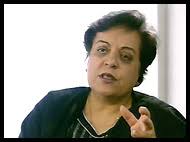
The ugly handiwork of Shirin Mazari, the media Baji of the Taliban

Editors criticise newspaper article against WSJ reporter

By Iftikhar A. Khan
Tuesday, 17 Nov, 2009

ISLAMABAD: Top executives and editors of 21 leading international media organisations have collectively voiced concern over publication of an article in a Pakistani national newspaper [The Nation, Resident Editor Shireen Mazari], accusing Mathew Rosenberg, a correspondent for the Wall Street Journal, of working for foreign intelligence services and even the US military contractor Blackwater.

In a joint letter addressed to Information Minister Qamar Zaman Kaira, they said the development had caused alarm among international media organisations working in the country and urged the government to take all possible steps to ensure the safety of all media personnel in future.

Describing Rosenberg as a respected journalist of high standing, they observed that the unsubstantiated allegation levelled in the article published in The Nation that he worked for CIA, Israeli intelligence and Blackwater had critically compromised his (Rosenberg’s) security and raised questions about whether he could return to Pakistan to work safely in future.

The article also has a broader implication, the letter said, pointing out that these were difficult times for all journalists in Pakistan. ‘Our employees already face an array of threats, including violence and kidnapping, as they strive to provide timely and accurate coverage. Now those risks have been needlessly increased.’

The top executives of international media said they strongly supported press freedom across the world, but the irresponsible article endangered the life of one journalist and could imperil others.

‘It is particularly upsetting that this threat has come from among our own colleagues,’ they regretted.

They recognised that courageous Pakistani journalists routinely faced greater danger than their international counterparts. According to the Committee to Protect Journalists, five Pakistani journalists have been killed in the past 12 months. ‘And we are heartened that several Pakistani media organisations have denounced The Nation’s story,’ they remarked.

But, they said, they were also concerned that an incident of this kind — tarring a foreign reporter as a spy — could occur again. They asked the government to take note of the story and make necessary arrangements for security of all media personnel.

Copies of the joint letter have also been sent to Foreign Minister Shah Mehmood Qureshi and Interior Minister Rehman Malik, and heads of all the newspaper organisations.

The joint letter bears signatures of Chuck Lustig, Foreign Editor, ABC News; Phillipe Massonnet, Global News Director, AFP; Kathleen Carroll, Senior Vice President and Executive Editor Associated Press (AP); Alan Rusbridger, Editor in Chief, The Guardian; Jon Williams, World News Editor, BBC; Roger Alton, Editor, The Independent; Nancy Lane, Senior Vice President, CNN; Al Anstay, Head of News, Al Jazeera; John Micklethwait, Editor in Chief, The Economist; Daniel Bogler, Managing Editor, Financial Times; Bruce Wallace, Foreign Editor, Los Angeles Times; Jean Gerard, Deputy Director, France Infor; John L Walcott, McClachy Newspapers; Ellen Weiss, Senior Vice President for News, National Public Radio (NPR); David Schlesinger, Editor in Chief, Reuters; Bill Keller, Executive Editor, The New York Times; Richard Stengel, Managing Editor, Time; Nisid Hajari, Foreign Editor, Newsweek; James Harding, Editor, The Times; Calude Cirille, Editor in Chief, Radio France International; and Robert Thomson, Managing Editor, The Wall Street Journal. Source

A likely statement by Imran Khan: This is an international Zionist conspiracy against the General Secretary of Pakistan Tehreek-e-Insaf, Dr Shireen Mazari. We condemn Amreekah and its agents hukmraan for this saazish.

For a detailed account of this news item, please consult the following post at Pakistan Media Watch:

21 International Media Organizations Write to Government About The Nation


Read more...

Monday, 16 November 2009

The collusion of commercialism and the right wing in the Pakistani media

The hypocrisy of the Pakistani Taliban Union of Journalists (PTUJ)


The media is a commercial entity and therefore can always be expected to cater, first and foremost, to its profit-making needs. In Pakistan the private TV media revolution was welcomed by ordinary people who have historically been fed a surfeit of state ideology via Pakistan Television (PTV). Only a few short years after a glittering christening, however, the private media has proven that the profit-motive can coexist quite well with the ideological agenda that we all thought had been left behind with the state’s monopoly on information.

The fire is spreading

Aasim Sajjad Akhtar

Some six months ago I wrote a critique of the media on these pages for not abiding by professional journalistic ethics in its coverage of the military action in Malakand. Among other things, I emphasised how the daily Inter-Services Public Relations (ISPR) press releases were printed almost word for word without independent source verification (or a mention that no such source existed).

It is perhaps not surprising that the same exercise is being repeated now with Operation Rah-e-Nijat. But it is a damning indictment of those who claim to be committed to freedom of information and other principles of media democracy all the same. Through the course of this year, as the state’s long-standing policy of patronising religious militancy has unravelled in the face of increasing pressure from Washington, the media has answered the call of the powers-that-be to be loyal to the “greater national interest.” It is perhaps considered by and by that protecting the “greater national interest” requires the sacrifice of basic journalistic principles.

For a few days recently some media personalities made hay about restrictions on media coverage of “terrorism” which apparently all parliamentary parties deemed necessary. The expected furore never came to pass, and it has recently been reported that most media outlets have voluntarily agreed to a code of conduct vis-a-vis what can be shown on live TV and what cannot. No democratic government should ever employ draconian measures against the media. On this occasion, however, it appears to make sense that a confrontation was avoided by the media’s own admission that showing mutilated bodies strewn around bomb sites is not beneficial to the public interest. But in general the media’s practice of self-censorship is motivated rarely by public-interest concerns.

The media is a commercial entity and therefore can always be expected to cater, first and foremost, to its profit-making needs. In Pakistan the private TV media revolution was welcomed by ordinary people who have historically been fed a surfeit of state ideology via Pakistan Television (PTV). Only a few short years after a glittering christening, however, the private media has proven that the profit-motive can coexist quite well with the ideological agenda that we all thought had been left behind with the state’s monopoly on information.

In recent times the media has clamoured about the imperative of military action in Waziristan while at the same time recovering the familiar narrative of an Indian-Israeli-American conspiracy to deprive Pakistan of its nuclear arsenal and eventually dismember it. It is amazing that these two narratives can go together, but that is exactly how the choreographers behind the scenes would have it. In short, the ideational leap that was first made immediately prior to the Swat operation – that the once loyal jihadi protégés of the state are now its most lethal enemies – is being taken to its logical conclusion; that is, through the insistence that those who claim to be undertaking jihad against the Pakistani state are actually agents of RAW, Mossad and the CIA.

The “foreign hand” theory is back in a big way, and the media is proving to be more loyal than the king in propagating it far and wide. Caches of arms captured in high-profile operations read “Made in India.” Newspaper headlines accuse the “foreign hand” of constructing special aircraft to storm our nuclear installations. In a very conspicuous parallel development, the Afghan Taliban have reportedly dissociated themselves with the Tehrik-e-Taliban Pakistan (TTP), claiming that real warriors of Islam never target Muslim innocents. This fits the media narrative that has now cast away all pretensions in making a clear distinction between genuine holy warriors and “enemy” agents masquerading as jihadis. The former are essential to the security of “Islam,” and therefore the Pakistani state, whereas the latter are out to malign Islam and wipe Pakistan off the map.

The right-wingers in the media, educational institutions and within the state are of course aided in drumming up nationalist hysteria by the increasingly conspicuous man-management that Washington insists upon. It is a fact that there has been an influx of American “security men” into Islamabad and other cities. It was widely reported that Americans completed deserted their positions on the Pakistani-Afghan border as soon as the South Waziristan operation started. Then there is the recently published story in The New Yorker by Seymour Hersh rehashing the tired theme of Pakistani nukes’ safety.

Notwithstanding the disastrous role that American imperialism has played, and continues to play, in the wider region, it is crucial to understand why anti-Americanism (and its anti-India corollary) is being cultivated by the media at the present time. The goal is not to facilitate democratisation or foster genuine anti-imperialist sensibilities; the media’s harping on about America and India directly aids the security establishment’s attempts to paper over the contradictions that have erupted in recent times to reassert its strategic vision and its control over state affairs.

American forces must leave Afghanistan and American control over policymaking in Pakistan must be resisted. But the same security establishment and right-wing media that got into bed with the Americans in the first place some 30 years ago are part of the problem, and are not the heroic defenders of the people that they claim to be.

As the operation in South Waziristan is concluded, to great media fanfare, the people of Pakistan will be no closer to lasting peace than they were before the “mother of all operations” was started. In fact, very little appears to have changed. Change will only happen if and when we undertake an exercise in collective introspection and accept that the Frankenstein that we have created cannot be understood, and therefore tamed, by engaging in unaccountable military operations in one part of the country after another.

This is not a “war” against the proverbial “foreign hand,” or even, as the liberals would have it, against the “extremists.” After all, those who blow themselves up are products of this society and the ideas that circulate freely within it. The real battle must be waged against the obsolete and poisonous ideas that litter our textbooks and the hyper-nationalist propaganda that is spewed out by those who claim to be providing us with unadulterated facts. Underlying all of this is a gory struggle for power in which all players invoke state sovereignty and willingly expend human lives in the name of this sovereignty.

If we are willing to get to the heart of the matter, there may yet be hope that we can build a self-respecting nation on the basis of a new social contract. Such a nation can resist Empire, and make friends with its neighbours. If we persist with fire-fighting, the fire will only spread further.

The writer teaches colonial history at Quaid-e-Azam University and is affiliated with People’s Rights Movement.

Email: amajid@comsats. net.pk - The News, November 16, 2009

Read more...

The ‘It-is-not-us’ syndrome - By Hajrah Mumtaz

A couple of months ago, I wrote a column in praise of certain Pakistani pop stars and bands, arguing that there are a fair number of songs that display political consciousness and a related sense of responsibility. I referred to such songs as Junoon’s ‘Talaash’, Shahzad Roy’s ‘Lagay Raho’ and ‘Kismet Apnay Haath Main’, Noori’s ‘Merey Log’ and Laal’s rendition of Habib Jalib’s ‘Main Nay Uss Say Yeh Kaha.’

I find now that that argument was all very well – as far as it went. Such is the manner in which we are bound by our long-cherished prejudices and mental chains that it took a report by the New York Times’ Adam B. Ellick to show me what I had completely failed to notice: the music acts’ total refusal to either touch upon the topic of the Taliban, or to even acknowledge them as a concern.

In a video report shot in Lahore, Ellick asks a few of Pakistan’s top musicians why they have spoken out against corruption, political wheeling-dealings, poverty and the manner in which the country has been done in by everyone from the politicians to the West to India – but never against the Taliban, who currently constitute the clearest and most present of dangers.

Here, verbatim, is what Ali Noor of Noori has to say:

‘We are not going to get up and say that we want to talk against the Taliban – simply because they are probably one of the smallest problems this country has. [...] It’s the West. It’s the West that is against the Taliban, because they are very heavily affected by it. We’re not.’

And here is what Ali Azmat – the man who once sang about ‘zehni ghulami’ – has to say: ‘We know for a fact that all this turbulence in Pakistan ... it’s not us. It’s the outside hands.’

What, really, can one say? The Taliban are one of the smallest problems this country has? When we’re having a bombing virtually every day, when parts of the south-west of the country were until very recently in serious danger of falling to the Tehrik-e-Taliban Pakistan and its associated gang of goons?

Ellick comments, dryly, that this view – it’s not us, it’s ‘foreign hands’ – persists despite a spate of bombings in the country with the targets ranging from civilians and security forces’ installations to an Islamic university for women. ‘They’re [Pakistan’s pop musicians] angry about one fact: that the United States has interfered in Pakistan’s politics for decades.’

Of course Ellick focuses in his report on the anti-American angle apparent in many Pakistani pop songs, using stills from the ‘Klashinfolk’, ‘Kismet Apnay Haath Main Lay Li Hai’ and a CoVen video to press his point home. And he ignores other work such as that by Laal. Nevertheless, his point is made well enough to make me cringe: amongst the people interviewed in his report, there seems to be an utter refusal to acknowledge that the Taliban are in any way a threat, or that this is a local, home-grown problem that affects Pakistan first and most deeply.

To be sure, other comments may have been made in the interviews that were edited out when the report was compiled. And, as Nadeem Farooq Paracha tells Ellick, a musician is not necessarily the best person to come up with insights into the situation of Pakistan, since his view would tend to reflect the dominant one. But, he asks, ‘at least address the schools’ issue. Why are you [the Taliban] destroying schools? What has that got to do with America or Zionism? Nobody’s even talked about it.’

So in the next shot, Ellick puts the question to Ali Azmat. Off-camera, he asks, ‘Would you ever sing a song about how two hundred girls’ schools were blown up?’ Azmat’s reply? ‘Well you know, you cannot blame the Taliban for that. Where do you think those fundings are coming from? It’s the agenda of the neo-cons to de-Islamise Pakistan... religion must be killed.’

One could be forgiven, at this point, to want to shoot oneself in despair. We’re all tempted to defend Pakistan in the face of criticism, sure. But in this manner and in such ill-chosen words?

But why blame Ali Azmat or Ali Noor? The sad fact is that this is a nation of delusional people, and the views these two men have expressed are shared by a great many people – I’d go as far as to say the majority. It took years of beheadings, bombings, whippings and extortion by the Taliban to turn the tide of public opinion against them. It took the infamous ‘flogging video’, the imminent fall of Swat and parts of Malakand into the militants hands, and an active threat posed to the government’s writ over Peshawar to set people saying finally that the Taliban-led militants had to be countered. Until then, if you remember, the public discourse had mainly been along the lines of ‘but all they want to do is enforce an Islamic system – and that, after all, is what we all want.’

What will it take for us to recognise that Pakistan’s problems, from the Taliban to poverty, under-development and corruption, are home-grown? Even where we reject them, we try to blame others. ‘It’s the foreign influences; a conspiracy against Pakistan and Islam; it’s India; it’s America; it’s Israel.’ Like pre-schoolers, we whine on and on: ‘It’s not us; we aren’t like this.’

Ellick also shows in his report portions from that highly popular song ‘Yeh Hum Nahin’, the collaborative effort against terrorism by some of the country’s biggest pop icons. Here are the lyrics he picks up on:

‘This is not us; not us. The story that is being spread in our names is a lie. These stamps of death on our foreheads are the signs of others.’

(To be fair, Ellick also refers to Shahzad Roy of taking on religion in his ‘Laga Raho’ song. But that doesn’t alter the fact that no one refers to the Taliban-led militants. And it is true, as Ali Hamza says, that ‘If we start talking about the Taliban, it’s very easy for them to get rid of us.’ But that doesn’t alter the fact that others, from theatre groups such as Ajoka and Tehrik-e-Niswan, to filmmakers and journalists, are speaking up.)

Pakistan is a nation in denial, unwilling to mature and accept responsibility for mistakes past and future – unwilling to shoulder the weight of responsibility for improving its own future. Certainly, other countries have meddled in our politics. But we’re the ones taking the decision to let them, and then finding ways of shooting ourselves in the foot. The Taliban are a case in point, thanks to Pakistan’s notions of strategic depth in Afghanistan. Like ostriches, we always have and perhaps always will keep our heads stuck in the sand. One can argue that it is the state and the government that ought to be tasked with steering the course of the country’s future away from its currently suicidal direction: but until individuals who constitute society change their minds, a mere government can achieve little of long-term impact.

So much for zehni ghulami!

hajrahmumtaz@gmail.com Sunday, 15 Nov, 2009 (Dawn)

Link to Documentary by ' Adam B. Ellick'

http://video.nytimes.com/video/2009/11/11/world/1247465633296/tuning-out-the-taliban.html?scp=2&sq=Adam%20B.%20Ellick%20&st=cse

Read more...

Zardari at a crossroads - An analysis by Mahmood Sham

Perhaps, the members of the central executive committee of the Pakistan People's Party (PPP) do not realise that this meeting is taking place at an extremely decisive juncture of the Zardari era. The apolitical forces have made up their mind to oust a political president.

So much moral pressure has been exerted on the presidency of Zardari through the media, judiciary and the coalition partners of the PPP that these forces believe there would no serious reaction in a few circles in Sindh in case he is removed from the office and there would be calm after a few days.

These forces claim US Secretary of State Hillary Clinton, after reviewing the situation herself, has signalled from Washington that they would issue statement saying that it is internal matter of Pakistan. These quarters do not think that Zardari has some trump card to stop any such development.

It is to be seen as to which way out is suggested by the PPP central executive committee to its leadership of this situation and as to what steps President Zardari can take, after taking the party into confidence, to save the democratic system. There is a chance that any respectable personality is made a powerless president in consultation with all political parties and all powers are vested in the prime minister. Permission may be sought from the judiciary for appointment of a cabinet comprising technocrats so that the objectives of good governance and economic stability could be achieved. On the other hand, the military can focus all its attention on elimination of terrorism. The provincial governments may not be touched in the first phase. President Asif Zardari wants to improve the situation by announcing in the first week of December the abolition of the 17th constitutional amendment.

It is being stated that Eid of many may be spoiled as the month of sacrifice demands sacrifices. Who comes up to the standard of sacrifices and besides the individual sacrifice, arrangements are also being made for collective sacrifices. In a democratic system, voters and then parliament has the authority to take decisions but the schedule is being finalised somewhere else. Nobody is suggesting a formula to make the parliament powerful and supreme. The fate of 75 million people, who have to make their destiny, is being decided in Washington, GHQ, Aiwan-e-Sadr and Raiwind. Much is being heard about the impending change and only procedure is being settled.

Before addressing the readers, I first went to the power corridors in Lahore and Karachi to have firsthand knowledge about the facts and then went to Islamabad to observe the situation. According to one scenario, it is being thought that everything should go ahead in accordance with the constitution and it does not happen. But there is no harm in assuming that the government of the majority party elected in the February 18, 2008 elections should complete its term, the prime minister should hold his office till March 24, 2013 and President Asif Zardari should stay in the presidency till September 8, 2013 after announcing fresh elections in February 2013 before completion of the term of the National Assembly. Moreover, Chief Justice Iftikhar Muhammad Chaudhry should hold his office till 2013. Chief of Army Staff General Ashfaq Parvez Kayani should retire on completion of his three-year term on November 29, 2010 and his successor should be appointed. This scenario is of the civilised and democratic societies where the government, judiciary and military do their respective jobs.

Most of the rumours circulating in the country are about President Zardari and it seems that a politician became the president against the will of many. It has been experienced several times that a prime minister commanding majority in the parliament is removed from the office but the action against a president elected by majority in the parliament will be the first of its kind.

One of the efforts to flood the national and international media with so much old scandals to increase moral and political pressure on the president to such an extent that he himself is compelled to find solace in stepping down. This advice is also being conveyed directly through friends and close circles and this impression has been deepened that the military is uneasy with his status of the supreme commander. Therefore, the comments and intentions of President Zardari and Pakistan Ambassador to the US Hussain Haqqani regarding the military in direct and telephonic conversations with the US administration are being made the major justification. The gulf between the military and the president widened after unveiling of the details of the Kerry-Lugar Bill. The military circles expressed their disliking for the bill covertly as well as overtly and it seems there is no chance of backtracking.

Some circles within the PPP are of the view that the electoral victory of the PPP and election of Asif Zardari as the president were not wholeheartedly accepted in the very beginning but the gulf started widening when President Zardari offered India to sign an accord for not using nuclear weapons in South Asia. They claim that the step was taken after taking the concerned military quarters into confidence. They said that the efforts regarding the trade across the Line of Control were also disliked and then the Mumbai terrorist attack created a lot of misunderstandings between the military and political leadership. The issue of the identification of Ajmal Kasab added fuel to the fire while objections have also been raised about the close ties with and repeated visits to China saying that the military leadership is not taken into confidence. The efforts to address the problem of political unrest and sense of deprivation in Balochistan and stance of a standing committee about non-construction of cantonments are also a source of conflict whereas the military circles describe the notification to give the control of the ISI under the Ministry of Interior as the beginning of the differences. Asif Zardari was not president at that time though he has been held responsible for that. The notification was issued when the prime minister embarking upon his maiden trip to the US, and we too were accompanying him, directed for issuing an explanation in this regard. But when a condition was attached with the Kerry-Lugar Bill to vest the power of appointments and promotions in the military in the civil administration, it was linked to the notification of July 2008. Some ministers talked about the military irresponsibly. The prominence of the pictures of Zulfikar Ali Bhutto and Mohtarma Benazir Bhutto as compared to that of Quaid-i-Azam in the Aiwan-e-Sadr has also been described as tantamount to tainting the image of this purely apolitical office. Holding of the party leadership and the party meetings in the presidency has also been disliked by the establishment. It is ironic that the president, who is head of the establishment, and establishment are pitched against each other, and at a time when the armed forces are fighting the militants in various parts of the country, this might be extremely harmful for the country.

The November 28 will be made doomsday with regard to the NRO and those who benefited from the ordinance will have to seek bails but the courts where their cases were being heard will be unable to grant them bail and high courts are being described as eligible to do so. There is an impression that the chief justice was not restored by President Asif Zardari on his own but did so under the pressure of the long march, the US and army. Some circles are describing the executive order to restore the chief justice as unconstitutional. This order could have been passed earlier and that would have benefited the president. Instead of a good opinion, the attitude of the senior judiciary is rather adverse. Therefore, it is being expected that the judiciary and legal pendulum will swing in disfavour of the PPP. The closest aides of the president including Rehman Malik and Salman Farooqi seem to be caught in the NRO snare and PPP Secretary General Jahangir Badr will also fall prey to the NRO while no action can be initiated against the president because of the constitutional protection. However, an affidavit submitted by him in a British court about his mental health has been found and a senior lawyer is drafting an application on the basis of that document. Some legal circles are highly confident that the chief justice would immediately rule him ineligible for the office of the president. The PPP circles are not giving it importance more than a joke but the ruling given by the chief justice would be accepted because he is currently stand high moral ground.

Stories about the relationship between Prime Minister Yusuf Raza Gilani and President Asif Zardari have also been making rounds and several quarters tell the prime minister that he is the chief executive so he should assert himself. It is said he is close to Mian Nawaz Sharif and in case of a no-confidence motion, the PML-N will vote for him. One impression is that the military finds itself closer to the prime minister. There is no immediate chance but if the PPP decides to elect a new prime minister, a crisis might erupt because the PML-N and media will make hue and cry.

But the issue of coalition partners, ANP, JUI and MQM directly pertains to President Zardari. He has been meeting commitments made with them and fulfilling their conditions. It will be seen as to whether or not the army will intervene in such a scenario to create internal strife in the PPP.

The US might want political crisis in Pakistan in view of the deteriorating political situation in Afghanistan but no alternative to Gilani is been searched for the time being. However, the president will emerge victorious if such an attempt is made.

The way the Pakistan Muslim League-Nawaz is opposing President Zardari on the Kerry-Lugar Bill, NRO and submarines deal, it might turn PPP's coalition in the Punjab as an unnatural alliance. Leaders and workers and even ministers of the PPP in Punjab are themselves not satisfied with the present dispensation. Besides political opposition, they say that police and government servants are not being given their due respect. Mian Sahib is often repeating that Musharraf's era is continuing.

When the PML-N is not ready to join the government at the Centre, why in the Punjab power is being shared with those dubbed as corrupt, ultra-constitutional, and bargaining their respect for American slavery? Loyalties of the bureaucracy have been divided.

Mian Shahbaz Sharif despite all his abilities and enthusiasm has not been able to show the mettle of the past chief minister and this in turn is taking its toll on the Punjab. Here any change in the government from any side before budget could be both historical and logical. How long the president and the prime minister would tolerate it? Both the army and the judiciary could play a key role in averting this crisis.

There is also a possibility of operation against the terrorists in south Punjab. Logic of the same is being found in reports from the US and contents of the Kerry-Lugar bill. The Punjab Government is not showing any seriousness in ending extremism here. Therefore if any plan to destabilise the Punjab Government is made, the operation will be its focal point.

It is being painfully thought that nothing should be said to the provincial governments and a cabinet of technocrats be set up at the Centre under the prime minister. It is also being called as 'Bangladesh formula', where the chief justice is leading the cabinet. This way an independent and courageous chief justice could be jacked up from here and brought at the top before 2013. However, technocrats have to be taken from the political parties so that political forces do not make a hue and cry against such a dispensation.

The objective is to create political and economic stability in the country. Except the PPP, others have already given the names of such persons. All these formulas are making rounds but what will be the course? Will it be ultra-constitutional or will be a legal framework order? What homework would have been done for making such a system acceptable both morally and politically? Can't the PPP stop all these scenarios through its political sagacity? The success of PPP in Gilgit-Baltistan is though a harbinger of victory for the PPP but, by making tall claims of rigging, the rival political parties want to turn it a part of the charge-sheet against the party. We wanted to know as to what damage control steps the high echelons of the PPP in the Presidency and Prime Minister House are taking in Islamabad.

Both the president and the prime minister are openly expressing their concern over spreading of these landmines. It is being heard that the president while sensing the dangers is ready to confront them and not leave the ground open under pressure. He does not believe that the army or the judiciary have decided to send the democratic system packing. We restored the chief justice and he is now deciding the fate of judges without any interference from our side. Every PPP government has always given strong institutions to the country. It established the National Finance Commission, set up the Council of Common Interests, formed the Friends of Pakistan at international level which will help Pakistan during the PPP rule but also in future. Long-term projects are being planned as a result of frequent tours to China. In the past the formula of Maxi Pak seed was obtained from the US and now the experience of China is being exploited which will provide seeds that give good yield even in little irrigated lands. He believes that in India too the small political alliances tease both the Congress and the BJP but this does not result in ending the democratic dispensation adding why then such fears persist here.

The PPP is striving to forestall events like political parties summersaults on the NRO in future. Negotiations have been taking place and some parties have been making demands that would have been difficult for any one to pay.

In so far as good governance is concerned, the first two years were consumed in clearing the dirt of the past. Loadshedding, water, dams and such other issues are being dealt with on permanent basis. The party high command believes that if it goes by the advice being given that some ministers and corrupt colleagues be removed to restore the party's image, it will lead to a division within the party. It instead wants to adopt a legal course in this regard but will not leave colleagues in the lurch during difficult times. They still believe their policy of reconciliation to be in the interest of the country. We want to come so closer that there is no foe in future and the PPP, ANP and MQM join hands as political partners. It will stabilise democracy. High echelon of the party and the government do not believe at any stage that those elected on the party ticket will change loyalty. NRO could have been got through the parliament but when it was felt that it was not in the interest of the country it was not made a matter of ego and thus not taken up in the parliament.

Counselling is being offered for using presidential pardon for corrupt elements but these pieces of advice are not being accepted. Circles believe that steps taken in urgency in face of the media campaigns and some irresponsible statements from individuals within the government have morally dented the government image to a certain extent but why then all the blame is put on the president? After all the prime minister is the head of government. It is a sort of one-sided campaign where the wrongs committed by the opposition and the prime minister are also being ignored. The president alone is being made a scapegoat. But, if the president shows steadfastness and keeps close contact with party colleagues and other institutions of the state, an atmosphere of tolerance among them will develop.

In past, collective sacrifice had inflicted damage on the country, which could also happen now. Some circles have advised that the whole mess was created by media, TV channels and ban should be imposed on them. But, the president and prime minister have categorically decided that no action would be taken against media despite the propaganda against them.

Co-Chairman of the PPP and President Asif Ali Zardari has been facing internal and external challenges which were never faced by any Pakistani leader in the history of Pakistan. Could he and his team overcome them? Have they such an ability and capability. Sympathetic circles say that if it is not evident then they should be helped, as no leader of any other party could face these threats so easily.

The concerns of the establishment are right, but its solution lies in collective leadership and mutual consultation. Packing the whole democratic set-up would not serve the purpose. The country has been weakening. Still there is need for the reconciliation ideology of Benazir Bhutto, which President Zardari had made base for democracy.

On the other hand if the non-political forces expect better results from technocrats, then why a road map for this democratic set-up could not be made by technocrats that should be implemented through Parliament, through which the ministers and parliamentarians could get training.

The US has been facing difficult situation in Afghanistan and its worst effects could engulf Pakistan. In such a situation any crisis in Pakistan would not only be dangerous for itself, but also for the whole region.

NWFP is fighting against terrorists, Balochistan has been suffering from sense of deprivation and if Sindh was inflicted with political setback, then such chaotic and violent social set-up whether political, non-political or technocrat would not bear the internal and external challenges. Those who are crossing the limits should be pressed to conduct meaningful debate in the Parliament. At last a strong Parliament could create a society of rule of law and democracy in Pakistan, like the US, Europe and India.


Monday, November 16, 2009 (The News)
....

PPP CEC meeting
Dawn Editorial
Monday, 16 Nov, 2009

THE meeting of the Central Executive Committee of the PPP in Islamabad is a chance for the party to hit the reset button and steady the ship of governance that has been rocked by political crises in recent times. As the largest party in the coalition at the centre and a member of three of the four provincial governments, the PPP is clearly the most politically powerful party in the country. However, as the recent NRO debacle vividly demonstrated, the PPP’s parliamentary advantage is not large enough for it to go it alone and therefore does not automatically translate into legislative and policy successes. Politically, therefore, the PPP remains vulnerable and under pressure and the party must use today’s meeting to chart a new course for itself. There are some obvious things the party can do to reduce the prevailing political uncertainty: speed up the passage of the 18th Amendment bill, strip away the anti-parliamentary powers of the president, lift the bar on a third-term prime minister, etc. Such measures would be proof that the party leadership can be statesmanlike and rise above the poisonous environment of cut-throat, mutually destructive politics.

But the weaknesses of the PPP-led coalition are not purely political. There is a palpable sense of drift in Islamabad in governance matters. Does anyone know if the PPP has a legislative agenda, and if so, what that agenda is? There are scores of ministries and ministers and ministers of state, but what have been the policy initiatives of the vast majority of them? The PPP has fully backed the fight against militancy and its economic team has helped at least stave off economic disaster — for which the party does deserve the appropriate credit — but the problem is that on the achievement front there is little else of any significance. With nearly a third of this parliament’s full term having already gone by, it is unfortunate that politics, and not policies, continues to occupy centre stage.

Away from the national, inter-political stage, intra-party politics may also need to be addressed by the CEC. One of the persistent uncertainties is the relationship between the president and the prime minister. As co-chairman of the PPP, President Zardari would still technically be the boss of Prime Minister Gilani in party affairs even if the powers arrogated to the presidency by Gen Musharraf (retd) were to be given up by Mr Zardari. As such, any tension or difference in opinion between the two men could impact national political stability. Messrs Zardari and Gilani, therefore, need to demonstrate that they are in fact on the same page. (Dawn)

Read more...