
Editor's Choice

--------------------------------------------------------------------------------------------------------------------------
Featured Post
--------------------------------------------------------------------------------------------------------------------------

"Let us build Pakistan" has moved.
30 November 2009

All archives and posts have been transferred to the new location, which is: http://criticalppp.com

We encourage you to visit our new site. Please don't leave your comments here because this site is obsolete. You may also like to update your RSS feeds or Google Friend Connect (Follow the Blog) to the new location. Thank you.


--------------------------------------------------------------------------------------------------------------------------
Showing posts with label Quetta. Show all posts

Sunday, 8 November 2009

Will the Talibanic journalists and politicians ever speak about it?


On the run


Target killing in Balochistan is rising, with more and more non-Baloch officials and Shia Hazaras seeking safe shelter elsewhere in the country

By Adnan Adil

Following the killing of three Baloch leaders -- Munir Baloch, Ghulam Mohammad and Sher Mohammad -- in Turbat last April, target killings in Balochistan have risen sharply. The main victims are: non-Baloch officials connected to the field of education and Shia-Hazaras of Quetta.

In October, all major incidents of target killings involved teachers or education officials. On Oct 31, 2009, Secretary Balochistan Board of Intermediate and Secondary Education was seriously injured when unknown armed men shot at him in Quetta's Satellite Town. He was on his way from his home to the office. He suffered multiple injuries on his head and other parts of the body. A day earlier, two employees of Cadet College Mastong, Amjad and Munawwer, Punjabi settlers in Balochistan, were shot dead. On Oct 25, the Provincial Education Minister Shafiq Ahmed Khan was shot dead in Quetta near his home. On Aug 7, another Provincial Minister Rustam Jamali was killed in Karachi. Last year, on Oct 19, the house of Province's Information Minister Younus Mullazai was attacked with a hand grenade. The minister was out of town thus escaped the murder attempt.

Earlier, according to reports, the principal of Quetta's Commerce College, the vice-principal of Balochistan Residential College in Khuzdar, the principal of Pilot High School in Mastung, the principal of Sariab Mills High School, a professor of Government Degree College and newly-appointed vice-chancellor of Balochistan University in Quetta, Safdar Kiyani, have been victims of target killing in the province.

Baloch Liberation Army (BLA) and other militant Baloch organisations have taken the responsibility of killing at least 238 citizens in Quetta including professors, teachers, surgeons and lawyers. The day the provincial minister, Shafiq Khan, was shot dead, Shehak Baloch, who identified himself as a member of Baloch Liberation United Front, (BLUF) telephoned a news wire agency in Quetta, claiming the responsibility of the murder. Shehak was reported to have told the news agency that Khan was killed to avenge the murder of three Baloch leaders in Turbat. He also said the slain minister was anti-Baloch.

Most professors in Balochistan University are from Punjab or Karachi, and have received letters threatening them to leave Balochistan. The letters reads: "We are from Balochistan Liberation Army. You should leave this province." Due to fear, 20 university's teachers have got themselves transferred to Sindh or Punjab; 120 university teachers have requested for the transfer out of Balochistan; 10 professors take classes with gun men guarding them. Most of the teachers have shifted their families to Punjab and other parts of the country.

In addition to a sizeable population of Hazara tribe in the Quetta city, there are a large numbers of settlers from Punjab, Sindh and Afghanistan who identify themselves with Balochistan. Many families migrated to and settled in Quetta post-1935 earthquake.

Dr Safdar Kiyani was the most senior professor in the Balochistan University and was shot dead the day he was appointed the VC. His two sons have migrated from Quetta. No Baloch political party or leader condemned his killing and none of them attended his funeral prayer. No Pushtoon or Punjabi teacher wants to conduct examinations in Baloch areas. The government has opened new campuses of the University in Turbat and Loralai so that the teachers can continue their work.

The business community is also feeling the heat of violence. Muhammad Nadeem Khan, a representative from the Chamber of Commerce and Industries, Quetta says, "the law and order situation is so bad in Quetta that businesses close early evening. "
Businessmen say all members of the business community pay extortion money (bhatta) to political groups. A large number of businessmen are migrating from the city for safety reasons.

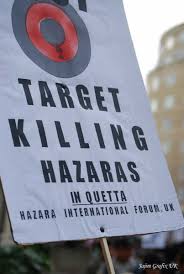
The Hazara community maintains that it is being forced to leave Quetta -- by selling their businesses and property at throw-away prices. They say pamphlets that threaten them to leave and sell their houses are being distributed. Members of the Hazara community are abducted often and the ransom money varies between one to four million rupees.

Nearly 22,000 government employees have applied for the transfer out of the province. Due to fear, a large number of educational institutions are closed all over the province and only one boys' college is open in the Quetta city. Ratan Chand of the Teachers' Association says for the last couple of years two to three cases of abduction for ransom take place in Quetta every month.

Professor Nawaz Soomro, an office-bearer of the Teachers' Association, says two teachers -- one belonging of the Government Degreee College Saryab Road, Quetta and the other to Government Commerce College Road, Quetta -- were killed but their alleged murderers were not arrested. He said no public official condemned their death.

Hazara community representatives say not one government official has condoled the target killing of Hazara people and no compensation money is offered to victims' families. Dawood Agha, the Senior Vice-President of Balochistan Shia Party, has lost six members of his family including his younger brother in sectarian violence. He says, since 2003 more than 260 Hazaras have been murdered and more than 1000 have suffered injuries in the attacks.

The community leaders are highly suspect of the role of security agencies. Dawood Agha alleges that security agencies and the government are protecting the perpetrators of the crime. As an example, he cites, the escape of two convicted sectarian criminals -- Usman Saifullah Kurd and Shafeeq Rind -- from the well-guarded jail of Anti-Terrorist Force (ATF) in Quetta. They were associated with the anti-Shia organisation, Lashkar-i-Jhangvi. Shafeeq Rind was arrested five months later but Usman is still missing.

"Another accused terrorist, Daud Badini, is in jail but is said to be enjoying the facilities of a five-star hotel," says Agha.

A number of Shia lawyers have been shot dead, including the recent murder of Advocate Wilyata Hussain in Quetta.

The victims of target killings also include five and six year old children. Aghai Akbar Hussain Zahedi, a leader of the Shia Ulema Council, says: "Terrorists have become so daring that they openly swear in the courts that after being released from jail they will target more Shias. The accused are arrested in the morning and released in the afternoon."

Haji Abdul Qayyum, Chairman of Hazara Qaumi Jirga, say that the accused dare the judges to convict them.

A banned sectarian organisation, Sipah-i-Sahaba, is said to have become active with the new name of Jamaat Ahle Sunnat in Balochistan. In Aug 2009, a Shia religious leader, Allama Maqsood Ali Donki, was killed in a grenade attack by two assailants. The police killed two assailants on the spot. Next day, Jamaat Ahle Sunnat brought out a protest demonstration against the killing of the assailants.

The distrust of the government runs deep and its inaction makes its role suspicious. Two tribunals were set up on the killing incidents of 2004 and 2008, but their findings have not been made public to date. The conspiracy theories abound involving India, the US and local security agencies responsible for spreading violence. Many Shia leaders in Quetta allege that the sectarian outfit Lashkar-i-Jhangvi and its sister organisation, Jundullah, comprise of Sunni Baloch militants who are also active in Iran. In their conspiracy theory, Jundullah enjoys the patronage of local security agencies and the CIA, as it has been created to destabilise the neighbouring Iran.

On the other hand, the Pakistan government has officially blamed India for fomenting violence in Balochistan and funding militant Baloch organisations.
For ordinary citizens in Balochistan, affected with the spate of violence since the last six years, with little protection available from the state, survival seems to be the main worry. As a result, an exodus of non-Baloch from the province continues -- for more than 50,000 people have so far left their homes.

The writer was member of the fact-finding mission of Human Rights Commission of Pakistan that visited Balochistan between Oct 3 and 10, 2009.

http://www.jang.com.pk/thenews/nov2009-weekly/nos-08-11-2009/dia.htm#4

Read more...

Monday, 2 November 2009

The USA and Britain must not support Jundullah to carry out sabotage against the Iranian government.

Beyond the Jundullah attacks
Monday, November 02, 2009
Nasim Zehra

The Pakistan-Iran border is on the boil again. On Oct 26 the Iranian state media reported that 11 Iranian Revolutionary Guards arrested by Pakistan’s security forces had accidentally strayed into Pakistan territory. They were reportedly pursuing suspected fuel smugglers. The unofficial Pakistani version is that the Revolutionary Guards, one of Iran’s most powerful and politically strong fighting force, entered Pakistan territory in two jeeps probably in hot pursuit. Its having taken place within a week of the deadly Oct 18 Jundullah attack in Iran, this hot pursuit most likely involved suspected Jundullah men. Significantly, immediately after the Oct 18 attack a senior Revolutionary Guards commander had publicly demanded that his force be given permission to confront terrorists inside Pakistan. This was a demand raised with Pakistani officials during the recent visit of the Iranian minister of interior.

Meanwhile, the significant fact is that despite numerous border incidents, including the illegal entry of the Revolutionary Guards and Iranian border guards into Pakistan, the two countries follow a policy of containing the problem. For example, within hours of this border event, the effort from Islamabad and Tehran was to play down the event. “The guards were handed over to the Iranian authorities because it’s found that they crossed into Pakistan mistakenly,” said a spokesman for Pakistan’s paramilitary Frontier Corps.

At the same time, the current problem of the depleting trust and absence of sustained and structured cooperation between South-West Asia’s two historically close neighbours resurfaced.

Within hours of the Oct 18 attack, in Iran’s Sistan-Baluchistan province, a string of well-coordinated public statements criticising Pakistan came from senior Iranian officials, both civil and military. Some, like the Revolutionary Guards, directly blamed Pakistani agencies, others blamed the United States. President Mahmoud Ahmadinejad claimed that Pakistani territory was used for the attack. Pakistan acted fast to prevent the situation from getting worse, and this effort included President Asif Ali Zardari’s call to his Iranian counterpart.

The Oct 18 was one of the deadliest attacks targeting Iran’s 120,000-strong Revolutionary Guards and underscored the growing insurgency threat that Tehran now faces. Jundullah, the Iranian Baluch insurgency led by Abdul Malek Rigi, is based in Sistan-Baluchistan, which borders Pakistan and Afghanistan.

The stated objectives of Jundullah, founded in 2002, have been to protect Baluch rights in Iran. Rigi claimed in an October 2008 interview that his organisation, also known as the People’s Resistance Movement, wanted the Iranian state to respect the human rights, culture and faith of the Sunni Baluch.

In practice, however, Jundullah has widely been held responsible for three of the deadliest terrorist attacks carried out in Sistan-Baluchistan targeting Iranian citizens, government officials and security forces. These were the bomb explosion in May at a mosque in the provincial capital, Zahedan, killing 19, the February 2007 bomb attack killing 11 Iranians, including Revolutionary Guards, and the March 2006 Zahedan bomb attack that killed 22.

However, Jundullah—according to western media as well, including leading American television channels like ABC and British newspapers like The Telegraph—is being funded by the CIA to carry out sabotage against the Iranian government. The birth of the Junduallah group was widely viewed as Washington’s direct hands-on entry into Iranian politics.

It is the American connection that is most worrisome for Tehran. According to Iranian news reports, Abdullhamid Rigi, the brother of Jundullah leader Abdulmalek Rigi, admitted during interrogation by an Iranian court in Zahedan in July that Junduallah was trained and financed by the US. There are reports of the group receiving support from drug barons


Significantly, the Junduallah threat flags also the need for greater sustained and structured security Pakistan-Iran cooperation. For Pakistan the compulsions for security cooperation are numerous.

One, in the midst of what appears to be a serious attempt at strategic course-correction, Pakistan can ill afford to directly or indirectly patronise insurgency groups targeting neighbouring governments. Equally dangerous for Pakistan is the state’s benign neglect of such groups. Two, Pakistan’s experience as a sanctuary for the Afghan resistance groups, which Islamabad was meant to have controlled, has exposed the myth of “controlling” insurgency groups. Clearly, the agendas of resistance groups remain autonomous of the host, and indeed even of the patron, as proven by India’s experience of the LTTE and ours of the various Afghan Mujahideen groups.

Three, with the growing lethal power of sub-state actors operating in cross-border areas the state increasingly wears the look of an endangered species. And to prop up the state back into a fully functioning and effective mode, inter-state cooperation is a must. With distrust among the regional states, victory for insurgency or at least chaos in the region is guaranteed.

For Iran the compulsion for cooperation is equally strong. The pressures on the states in the region, especially Iran and Pakistan, also come from out-of-the-region players like the United States. The United States’ multiple global agendas, including non-proliferation, counter-proliferation, Israel’s security and counter-terrorism have made it a major player in South, Central and South-West Asia. In addition to its troop deployment in Afghanistan, Central Asia, and to a lesser extent some presence in Pakistan, Washington has covert presence in this region. For example, the US legislature has in the past approved funds for the CIA to undermine the Iranian government. In recent history, CIA operations have been used as a policy tool by successive US administrations to strengthen pro-US groups or, indeed, to weaken governments viewed as being detrimental to US interests.

Today with Washington’s expanding threat perceptions and an equally expanding policy failure whether in Afghanistan, Pakistan, Iran and earlier in Iraq, Washington’s covert policy arm will be further activated. This US policy will undoubtedly further weaken states and governments in the region. No state can roll back this covert US influence on its own, because while the state can technically operate within its own territorial sphere the US can support insurgency groups operating across the border. Unless the states in the region do coordinate their efforts to deal with foreign-funded insurgency groups, they are unlikely to succeed.

Clearly, the compulsions override the constraints that may prevent improvement in relations between the two strategically located neighbours. Their common borders, trade routes, religion and the common ethnicity essentially translates into a compulsion which dictates that the neighbours develop shared if not common security structures. Especially in present times where two factors, the well-oiled militant and armed trans-national groups of sub-state actors are gradually beginning to overpower the traditional security structures of the state, unity between states that share borders has become imperative.

Without effective cooperation the states, especially within the region, will find it increasingly impossible to provide security to its citizens. The states in this region will have to go the Europe route. For European states the future threat of Asian economic giants prompted them to opt for greater cooperation at the cost of reduced sovereignty. However, in our region, the security compulsion will dictate greater inter-state cooperation. The future security paradigm will have to locate itself in the reality of enhanced security through shared sovereignty. Common spaces among neighbouring states will evolve only insofar as there is political will to address the chronic problem of trust deficit among neighbouring States.

Reduced trust deficit is a necessary precondition for constructing shared security structures is always reduced trust deficit. For Pakistan and Iran the latest Jundullah attack yet again flags the problem that the security compulsions of the two neighbours require greater trust-building through continuous dialogue and greater cooperation especially on security issues.

The writer is an Islamabad-based security analyst. Email: nasimzehra@hotmail.com (The News)

Ex-CIA agent confirms US ties with Jundullah
Sat, 24 Oct 2009 02:37:41 GMT (Press TV)

A former Central Intelligence Agency officer has confirmed US' relations with the terrorist group Jundullah, despite the CIA knowing that the group has close links with the al-Qaeda.

"American intelligence has also had contact with Jundullah. But that contact, as Iran almost certainly knows, was confined to intelligence-gathering on the country," Robert Baer, a former Middle East CIA field officer wrote on the Time.com, IRNA reported early on Saturday.

However, he noted that the US-Jundullah relationship "was never formalized, and contact was sporadic."

The news comes amid US denial of any involvement in a recent terrorist attack in Sistan-Baluchestan province in southeastern Iran, which Jundullah claimed responsibility for.

"I've been told that the Bush Administration at one point considered Jundullah as a piece in a covert-action campaign against Iran, but the idea was quickly dropped because Jundullah was judged uncontrollable and too close to al-Qaeda. There was no way to be certain that Jundullah would not throw the bombs we paid for back at us," said the former CIA agent who is a columnist in the weekly, and very probably an advisor in the Middle East.

Baer also noted that Pakistan's intelligence agency, the Inter-Services Intelligence (ISI), has had relations with the Jundullah leader, Abdolmalek Rigi.

"Pakistani intelligence has indeed had contact with Jundullah over the years, but there's no good evidence that Pakistan created Jundullah from scratch. And there's certainly no evidence that Pakistan ordered the attack," Baer said in reference to the terrorist attack that took place in Iran on Sunday, October 18, which killed 42 people including the Islamic Revolution Guards Corps commanders.

"In fact, Pakistani intelligence over the past few years has been arresting Jundullah members and turning them over to Iran," he claimed.

This is while earlier on Friday, Iran's Defense Minister Brigadier General Ahmad Vahidi vowed to do everything in his power to hunt down the Jundullah terrorists and bring them to justice.

"This very incident unveiled the true nature of those who call themselves the pioneer in 'war on terrorism'," he said in reference to the United States.

A number of leading newspapers in the West, such as The Sunday Telegraph, have also declared Jundullah to be a CIA brainchild engineered to achieve the longstanding US goal of "regime change in Iran."

Iran's Interior Minister, Mustafa Mohammad Najjar, is currently in Islamabad to ask Pakistani officials to hand over Abdolmalek Rigi and assist Iran on cracking down on his terrorist group.

RZS/SS/MMA

Read more...

Wednesday, 14 October 2009

Taliban kill anothe Shia leader in Quetta


JWP leader, driver killed in Quetta

QUETTA: Jamhoori Watan Party (JWP) senior vice-president Dr Aslam Mirza and his driver were shot dead by unidentified motorcyclists on Tuesday. Police are linking the killing to a series of attacks on Shia professionals in Balochistan. They said Mirza was visiting a poultry farm in Akhtarabad, and had just returned to his car when he was targeted with an AK-47 rifle. Mirza and his driver were shot in the head and died instantly. “We strongly condemn the killing of such a committed political worker,” said Shahzain Bugti, JWP provincial president. He said the JWP was the only Baloch nationalist party that accommodated the non-Baloch as well. “We will protest the killing of our party leader on every platform,” he said. malik siraj akbar


Read more...

Friday, 2 October 2009

SOS: Time to attack the Taliban / Sipah-e-Sahaba hideouts in Quetta.


Who will stop Shia killings in Quetta? Pakistan or the USA?


US demands urgent action in Quetta
By Baqir Sajjad Syed
Friday, 02 Oct, 2009
Mr Feierstein said the US believed that Al Qaeda chief Osama bin Laden was hiding in Pakistan’s tribal areas.— Photo from AP/File

ISLAMABAD: The United States stepped up pressure on Pakistan on Thursday, asking it to dismantle what a US embassy official described as Taliban’s command structure in Quetta, commonly known as the Quetta Shura, for the sake of securing peace inAfghanistan.

The diplomat did not rule out use of drones against what he called Quetta Shura.

‘In the first instance, we will like the government of Pakistan to move aggressively to prevent the use of Pakistan’s soil (by Taliban) in this way… we hope the GoP will take steps to arrest these individuals,’ US deputy chief of mission Gerald Feierstein told journalists.

He said action against the Quetta Shura was imperative for stabilising the situation inAfghanistan.

He insisted that Taliban leader Mullah Omar was in Quetta along with other senior leaders and operated freely. ‘They move around, sometimes they go to Afghanistan, sometime to elsewhere in Pakistan, but fundamentally they are in the area.’

When asked repeatedly if the US would launch drone attacks against Taliban targets in Quetta, he said predator issues were not discussed in public and that the focus was currently on getting cooperation from Islamabad for addressing the issue.

The statement is probably the harshest criticism of law-enforcement agencies to date by aUS diplomat. The issue was previously referred to by the Americans only as a passing remark, or was attributed to unnamed officials because of intelligence and diplomatic considerations.

Analysts believe that the US is gradually building up pressure. The International Security Assistance Force’s Commander in Afghanistan, Gen Stanley McChrystal, in his recent assessment report to President Barack Obama said that the Taliban leadership in Quettawas behind a surge in violence in Afghanistan where July and August were the deadliest months for US troops in the eight-year war. Earlier this week, US Ambassador Anne Patterson had said that the Quetta Shura was high on American agenda.

Mr Feierstein referred to Gen McChrystal’s assessment and said everybody understood that part of the problem was in Balochistan.

The Kerry-Lugar bill on aid passed by the Congress on Wednesday and now awaiting President Obama’s approval requires the US secretary of state to certify that Pakistan has dismantled terrorist bases in Quetta.

But no one in Pakistan expected the US to launch such a tirade against Pakistan.

Before his trip to the US, President Asif Ali Zardari had been cautioned in a policy document that an orchestrated campaign had been launched by the US to shift the focus away fromAfghanistan to Pakistan as the epicentre of terrorism.

Americans believe that the top Taliban leadership is present either in refugee camps or in the Afghan neighbourhoods of Quetta. US intelligence official believe that Mullah Omar collects funds and dispatches fresh fighters and weapons from his Quetta base.

Mr Feierstein rejected Pakistan’s position that the Quetta Shura was an outdated concept with most of its members having been killed or arrested. He said new people had replaced them and the ‘issue remains there.’

When asked if the government had accepted Washington’s demand for action against the Quetta Shura, he said: ‘It is a matter of ongoing discussion.’

The US diplomat appeared to be sympathetic towards the difficulties Pakistan could face in cracking down on Taliban’s alleged network in Quetta. ‘There is no confusion on our part that it is an easy or simple task.’

He said the American leadership was very clear that fixing the problem in Pakistan would not end the imbroglio in Afghanistan. However, he insisted that elements of the crisis could be addressed by Pakistan’s action against Taliban.

Responding to a question about allegations of Taliban sympathisers in Pakistan’s intelligence network, he said: ‘Are there individuals who have sympathies with the Taliban? That is fairly established that this has happened, certainly we have seen it.’

The issue is one of major western concerns and believed to be the cause of poor intelligence on the Quetta Shura.

However, the US official categorically stated that ISI as an institution did not support Taliban.

He revealed that some of those sympathisers had been arrested by Pakistani authorities.

Foreign Office spokesman Abdul Basit dismissed Mr Feierstein’s claim as baseless speculation and asked the US to come up with proof of Taliban’s presence in Quetta.

Defence analyst Brig (retd) Shaukat Qadir said the Americans were losing the war and were trying to find excuses. ‘Some time back I went to Quetta where both Baloch and Pakhtuns told me that Taliban did not exist in the city.’

Mr Feierstein also said the US believed that Al Qaeda chief Osama bin Laden was hiding inPakistan’s tribal areas.

He questioned President Zardari’s claim made last month that Osama was dead, saying he was very much alive.

However, he said that Al Qaeda chief’s operational capacity was severely restricted because of action against his group. He said he doubted if Osama was still in charge of Al Qaeda’s day to day affairs. (Dawn)

Mullah Omar in Quetta, Osama in FATA: US diplomat

* Quetta-based Taliban shura planning to launch attacks in Afghanistan * Some individuals in ISI supporting Taliban

ISLAMABAD: The top leadership of the Taliban, including Mullah Omar, is based in Quetta and Al Qaeda chief Osama Bin Laden is in hiding in FATA, Deputy Chief of the US Mission in Islamabad Gerald Feierstein said on Thursday.

Talking to reporters, Feierstein said the US “strongly believes” Osama was operating from Pakistan’s Tribal Areas near the Afghan border.

He told reporters that the Quetta-based Taliban shura was active and planning to launch attacks on the US and Afghan forces in Afghanistan.

The US diplomat also said US officials believed Quetta had become the control and command centre of the Taliban.

Feierstein skipped questions about potential US drone strikes in Quetta, but said Washington had conveyed its concerns to the government of Pakistan about the Quetta situation.

But Foreign Ministry spokesman Abdul Basit warned against any drone attacks in the region.

“Balochistan is not FATA, and so we are in touch with the US on this and we have conveyed our concerns. And we will continue to raise our concerns,” he said.

ISI: The US diplomat also said the top Afghan Taliban leaders moved freely across the Pak-Afghan border and attacked US and NATO forces at will.

Feierstein said the Inter-Services Intelligence (ISI) was not supporting the Taliban at the institutional level, however, he claimed, some individuals in the agency had been supporting the insurgents, but “such elements have been arrested in the past”.

He said Inter Risk security agency had been providing security to the US embassy and its personnel in Islamabad, adding that it was working in accordance with the law and regulations set by the Interior Ministry.

He rejected the presence of Blackwater officials in Pakistan, saying that the US embassy had an agreement with Inter Risk for providing security to its staff.

Feierstein said the US was building the capacity of Pakistani intelligence and law enforcement agencies, including the NWFP police, the Intelligence Bureau, the Federal Investigation Agency and the Frontier Corps in order to enhance their counterinsurgency abilities. app/daily times monitor


Read more...

Wednesday, 30 September 2009

Pakistan and NATO must attack and eliminate the Taliban new havens around Quetta


‘Taliban have new havens around Quetta’

* Washington Post says US grappling with rapidly spreading arc of Taliban influence
* US officials concerned Quetta shura planning cross-border strikes

Daily Times Monitor


ISLAMABAD: An American newspaper has reported that Taliban – headed by their fugitive leader Mullah Muhammad Omar – have new safe havens around Quetta, with US officials expressing concerns over the role of the group in the area.

“As American troops move deeper into southern Afghanistan to fight the Taliban, US officials are expressing fresh concerns over the role of fugitive Taliban leader Mullah Muhammad Omar and his council of lieutenants, who reportedly plan and launch cross-border strikes from safe havens around Quetta,” said the Washington Post. “But US officials acknowledge they know relatively little about the Pakistani border region, have no capacity to strike there and have few windows into the turbulent mix of Pashtun tribal and religious politics that has turned the area into a sanctuary for the Taliban leaders, who are known collectively as the Quetta shura.”

Pakistani and foreign analysts said Quetta has suddenly emerged as an urgent but elusive new target as Washington grapples with the Taliban’s rapidly spreading arc of influence and terror across Afghanistan.

“In the past, we focused on Al Qaeda... the Quetta shura mattered less to us because we had no troops in the region,” said US Ambassador to Pakistan Anne Patterson. “Now... the Quetta Shura is high on Washington’s list.”

Although Omer and his associates keep a low profile, Pakistani and foreign experts say Balochistan has re-emerged as a “Taliban sanctuary, recruiting ground and command post”.

“Quetta is absolutely crucial to the Taliban today,” said Ahmed Rashid, a Pakistani expert on the Taliban. “From there they get recruits... suicide bombers are trained on that side.” Michael Semple, a former UN official in Afghanistan now based in Islamabad, described the Quetta region’s refugee camps as “a great reserve army” for the Taliban. (Daily Times)


Editorial: The so-called ‘Quetta shura’

The US ambassador to Pakistan, Anne W Patterson, has told the Washington Post that “the United States has now turned its focus to Quetta”, claiming that the area has now become a major Taliban base from where “Mullah Omar and his commanders plan and launch cross-border strikes into Afghanistan”. The US-NATO commander in Afghanistan, General Stanley A McChrystal, has also raised the matter of the “Quetta shura” as a major command centre for the Taliban bombings and attacks inside Afghanistan in his initial assessment to US President Barack Obama. As if to complete the message, a newspaper in London has hinted that the US could be making ready for drone attacks in Balochistan too.

The military spokesman in Pakistan says there are no Taliban in Balochistan. DG-ISPR Major-General Athar Abbas also says that the names given to Pakistan by Afghanistan under the so-called rubric “Quetta shura” are of Taliban commanders that have mostly been taken out while some are in Afghanistan: “Six to 10 of them have been killed, two are in Afghanistan, and two are insignificant. When people call Mullah Omar the mayor of Quetta it is incorrect”.

Pakistan has always denied the presence of Mullah Umar and his council of warriors in Quetta. The allegations have mostly come from western journalists claiming eyewitness accounts. That of course raises the question of how journalists can be privy to such goings-on even as in the same WP report US officials admit the lack of any credible intelligence on their part. Of course, the area is awash with about 400,000 Afghan Taliban who have been domiciled there since the Soviets walked into that country. These people indulge in smuggling, euphemistically referred to as cross-border trade. Surely, they could not be the “Quetta shura”. The problem is that the city has been a natural “fall-back city” for the Taliban because of its proximity to Kandahar. Even the Afghan President, Hamid Karzai, lived in Quetta for many years till his father was killed by Mullah Umar here.

Western accounts regularly allege that Pakistan may not be forthcoming on the Afghan Taliban because it differentiates them from the Pakistani Taliban who make trouble inside Pakistan. This leads to the US “deduction” that since the Afghan Taliban are old clients of Pakistan and are not making trouble here, the “Quetta shura” might enjoy exemption from attack, thus indirectly committing Pakistan to backing the Afghan Taliban in their war against the US-NATO forces in Afghanistan. These accounts also flow from information contained in author Ahmed Rashid’s book Descent into Chaos: How the War against Islamic Extremism is being Lost in Pakistan, Afghanistan and Central Asia (2008) who notes that Quetta was host to the Taliban till 2006.

The fact is that Quetta is not a city that Pakistan can boast of controlling effectively, leave alone the rest of Balochistan. A VIP of the Quetta government can get killed in front of the assembly building in broad daylight. There is trouble in the province because of Baloch separatists who are supported by hostile intelligence agencies. The political consensus even among the elected members of the assembly (and there is a PPP-led government in the province) is that there should be no new cantonments built in the province, there should be no paramilitary force like the Frontier Constabulary and no police.

Balochistan was in fact the first territory in Pakistan to become like Afghanistan with hardly any writ of the state there. And that is over 40 percent of Pakistan’s total territory. But there was a time when Quetta at least was orderly, mainly because of presence there of Pakistan’s prestigious Command and Staff College. Now the army keeps strictly out of the city and the police is regularly targeted by terrorists. Also targeted are the Hazaras, a part of the old Afghan exodus, ghettoised in the city.

Pakistan cannot give the go-ahead to US drones. Even if a joint strategy is drawn up for their use, it is going to be very difficult for Pakistan to allow attacks on cities. Neither will it be easy for Pakistan to clean up Quetta. Every time Pakistan has tried to control the border, Afghanistan has objected to it. We have had to remove the biometric system at Chaman because of such objections. Similarly, Kabul has objected to Pakistan sending back the Afghans to their own country. The US must keep all of these factors into mind before embarking on a policy based on journalistic accounts with obvious slants. (Daily Times)


Read more...

Sunday, 27 September 2009

US threatens airstrikes in Pakistan


From
September 27, 2009

Christina Lamb in Washington


The United States is threatening to launch airstrikes on Mullah Omar and the Taliban leadership in the Pakistani city of Quetta as frustration mounts about the ease with which they find sanctuary across the border from Afghanistan.

The threat comes amid growing divisions in Washington about whether to deal with the deteriorating situation in Afghanistan by sending more troops or by reducing them and targeting the terrorists.

This weekend the US military was expected to send a request to Robert Gates, the defence secretary, for more troops, as urged by General Stanley McChrystal, the US commander there.

In a leaked strategic assessment of the war, McChrystal warned that he needed extra reinforcements within a year to avert the risk of failure. Although no figure was given, he is believed to be seeking up to 40,000 troops to add to the 68,000 who will be in Afghanistan by the end of this year.

Last week McChrystal denied any rift with the administration, saying “a policy debate is warranted”.However, with President Barack Obama under pressure from fellow Democrats not to intensify the war, the administration has let it be known that it is rethinking strategy. Vice-President Joe Biden has suggested reducing the number of troops in Afghanistan and focusing on the Taliban and AlQaeda in Pakistan.

According to The New York Times, he flew from Kabul to Ramstein airbase in Germany on Friday for a secret meeting with Admiral Mike Mullen, chairman of the Joint Chiefs of Staff, to discuss the request for more troops.

So sensitive is the subject that when Obama addressed the United Nations summit in New York, he barely mentioned Afghanistan. The unspoken problem is that if the priority is to destroy Al-Qaeda and reduce the global terrorist threat, western troops might be fighting on the wrong side of the border.

The Biden camp argues that attacks by unmanned drones on Pakistan’s tribal areas, where Al-Qaeda’s leaders are hiding, have been successful. Sending more troops to Afghanistan has only inflamed tensions. “Pakistan is the nuclear elephant in the room,” said a western diplomat.

It is a view echoed by Richard Barrett, head of the UN Commission on Monitoring Taliban and Al-Qaeda, who believes the presence of foreign troops has increased militant activity and made it easier for the Taliban to recruit.

“If Obama sends more troops it had better be clear what they are to do,” he said.

“A few thousand more boots on the ground may not make much difference except push the fight into areas which are currently quiet because no one is there to challenge the Taliban. I cannot see any number of troops eliminating the Taliban. Obama has a really difficult decision to make.”

The debate has been intensified by the debacle of the Afghan election, which has left many European leaders struggling to justify sending soldiers to support a government that has been fraudulently elected.

According to preliminary results, President Hamid Karzai won 54.6% of the vote, compared with 27.8% for Abdullah Abdullah, his main challenger. But there have been complaints that fraudulent ballots may account for up to 20% of the 5.5m votes cast.

The Electoral Complaints Commission, overseen by a UN watchdog, has begun to recount about 10% of the disputed votes. Final results are not expected for two weeks. If Karzai is left without the 50% needed for outright victory, there must be a second round unless he agrees to form a unity government.

In the meantime, the country is in limbo and the Taliban is taking advantage, opening up new fronts in the north and west.

Al-Qaeda is also trying to capitalise on the uncertainty. Osama Bin Laden issued a call to European nations to withdraw troops from Afghanistan, and threatened reprisals with an allusion to the bombings in Madrid and London. The recording, released on Friday, seemed to be directed at Germany in the run-up to parliamentary elections today.

The Afghan election has strengthened the position of those in Washington who advocate eliminating Taliban leaders in Pakistan.

Senior Pakistani officials in New York revealed that the US had asked to extend the drone attacks into Quetta and the province of Baluchistan.

“It wasn’t so much a threat as an understanding that if you don’t do anything, we’ll take matters into our own hands,” said one.

The problem is that while the government of President Asif Zardari is committed to wiping out terrorism, Pakistan’s powerful military does not entirely share this view.

Earlier this year there was optimism that Pakistan had turned a corner after it confronted a Taliban group that had taken over the Swat valley and moved to within 70 miles of Islamabad.

There has been tacit co-operation over the use of drones. Some are even stationed inside Pakistan, although publicly the government denounces their use.

Suspicions remain among US officials that parts of Pakistan’s military intelligence agency, the ISI, are supporting the Taliban and protecting Mullah Omar and other leaders in Quetta.

It was to shore up Zardari’s domestic standing that Obama attended a Friends of Pakistan summit in New York on Thursday. On the same day, the US Senate tripled non-military aid to Pakistan to $1.5 billion a year.

The Obama administration hopes such moves will reduce anti-American feeling in Pakistan. A survey last month by the Pew Research Centre found that almost two-thirds regarded the US as an enemy.

Drone attacks on Quetta would intensify this sentiment, causing some British officials to argue that such missions would be “unthinkable”.

The Pakistani government is reluctant to take its own action, however. “We need real-time intelligence,” said Rehman Malik, the interior minister. “The Americans have never told us any location.”

Western intelligence officers say Pakistan has been moving Taliban leaders to the volatile city of Karachi, where it would be impossible to strike. US officials have even discussed sending commandos to Quetta to capture or kill the Taliban chiefs before they are moved.


Read more...

Saturday, 26 September 2009

SOS: Who will save the anti-Taliban Salarzai tribes from the wrath of the ISI and the Taliban?

The Mullah-Military Alliance seems to be very much alive and thriving in Pakistan.

The Taliban and Salarzais
Sunday, September 27, 2009 (The News)
Farhat Taj

I was in Pakistan in August and had the opportunity to meet the leaders of the anti-Taliban lashkar (volunteer army) of Bajaur’s Salarzai tribe. I am honoured that upon my request they travelled from Bajaur to meet me in Nowshehra and shared with me information about their anti-Taliban struggle. I am not mentioning their names for reasons of their security.

The area of the Salarzai tribe is on the border with Afghanistan. The tribe have collectively decided that there won’t be any Taliban on their soil. The Taliban have been driven out of the Salarzai area. The Salarzai lashkar, mostly made up of labourers and peasants, has successfully kept the Salazai area free of the Taliban.

Tens of Salarzail lashkar leaders have been target-killed. The Salarzai leaders informed me they hold the ISI responsible for the targeted killings. “The Taliban are just a façade. The real force is the ISI punishing us for our anti-Taliban struggle,” said one of the leaders.

The leaders said that Mamond Taliban headquarters used to be in Damadola, which is a few kilometres from the FC fort in Bajaur. The Mamond Taliban used to bomb Salarzai villages. The Salarzai tribal elders requested the Political Agent, the authorities of the FC and the Pakistani army to stop the Mamond Taliban. None of these offered any help. Finally the Salarzai lashkar took positions on the mountains and for two hours heavily bombarded the surrounding villages of the Mamond Taliban. At that point the political agent and a colonel of the army asked the Salarzai lashkar to stop the bombing. They gave the same old logic: who will fight the NATO forces from across the Afghan border if you eliminate the Taliban?

Following such encounters with the state authorities, the Salarzais decided to fire at any forces entering their area: be it the Taliban, Al Qaida, the army or the US or NATO. The Salarzais have taken up positions all over the area and are always on guard. The tribesmen take turns to defend those positions. Unlike the bombed out schools in the Taliban-controlled areas, all schools in the Salarzai region are functioning. The tribesmen are performing security duties in both girls’ and boys’ schools in the area.

The leaders informed me that there is a set pattern of target-killing of anti-Taliban Salarzai leader. Before each targeted killing all telephone links with the far-flung Salarzai area are cut off. The targeted killing takes place in 24 to 48 hours later. The telephone links are restored a couple of days after the assassinated leader has been buried. A day or so later a news item of a few lines appears in the newspapers about the killing. “No one in Pakistan seems to be bothered about the state-sponsored targeted killing of anti-Taliban Salarzai leaders. Our area is too far from the rest of Pakistan and our agony means nothing to fellow-Pakistanis. The Pakistani media never ever tries to probe into the targeted killings,” said one of the Salarzai leaders.

All telephone lines to the Salarzia area were dead the day I was meeting with the leaders. They said they were deeply worried whose turn it might be to be targeted for killing. Two days later the telephone links were restored. The same day they informed me on telephone that Malik Munasib Khan, the spokesman of the Salarzai lashkar, had been killed. They held the ISI responsible for his killing.

The Salarzai leaders also informed me that last year the army deliberately fired at those villages in Bajaur that were known to be staunchly anti-Taliban. They said one of their colleagues called Maj Gen Alam Khattak to ask him to stop the bombing of his village. “Major General Sahib! I will start a vendetta with you if you did not halt the bombing of my village immediately. I will make sure to kill you and your family at the first available opportunity,” they quoted one of their colleagues as saying. The major general asked him to meet Col Sajjad who was bombing the anti-Taliban villages from his base in Timergara. That colleague saw a big Bajaur map affixed on the wall in the office of Col Sajjad. The map had several encircled villages. Col Sajjad informed him that the map had been handed over to him by his commanders with the order to bomb all the encircled villages. “Our colleague’s blood boiled with anger: none of the villages had Taliban in them,” said the Salarzai leaders. The villages included Butmali, Danqul, Attkay, Matasha, Baro, Raghjan and Nazkai.

On the other hand, those Salarzai villages that had Taliban were not marked on the map or bombed by the army. Such villages are Pashat, Banda, Malasyed, Darra and Gundai. Now the Salarzai lashkar has cleared these villages from Taliban control, without any state support.

The leaders also made the accusation that the Salarzais are discriminated against by the state in allocation of developmental funds due to their hostility to the Taliban. The FATA Rural Development Project (FRDP) is working in Bajaur Agency but entire Salarzai area of the agency has been deliberately excluded by from the project. “A wilful under-development has been imposed on us as punishment for our anti-Taliban stance. The Salazai area would be included in FRDP if we allowed the Taliban to take control of our area. Without this, we Salarzais can beg as much as we can for development, but the state will never budge,” said the Salarzai tribal leaders.

The reason I write this piece is not to defame the institution of the Pakistani army, which I hold in high esteem. I just wish to request the President of Pakistan, the Chief of Army Staff and the DG of the ISI to pay attention to the complaints of the Salarzais and resolve their problems to the satisfaction of the tribe. The Salarzai leaders categorically told me they are loyal Pakistanis, but they are not ready to let the peace of their area be destroyed for the power games of the intelligence agencies. All they want from the state is peaceful and development.

I would request fellow-Pakistanis all over the country to support the Salarzais. I wonder why the civil society of Pakistan is so silent over the heroic anti-Taliban struggle of the Salarzais. Salarzais are the natural allies of all those who are against the Taliban and civil society should forcefully support them. I would request the Pakistani media to keep a close watch on the Salarzai area to discourage targeted killings there.

The Taliban are anti-civilisation. The Salarzais are the embodiment of civilisation because they are so oppose to the Taliban. I would request all civilised people in the world to morally support the Salarzais in the name of human civilisation.

The writer is a research fellow at the Centre for Interdisciplinary Gender Research, University of Oslo, and a member of Aryana Institute for Regional Research and Advocacy.

Email: bergen34@yahoo.com

.....

Tailpiece: The Quetta Shura: Pakistan's ISI continues to harbour and support the Taliban. The New York Times Report.

Quetta shura top issue in US talks with Pakistan

* American officials blame shura for recent violence in Afghanistan
* Say they believe Taliban still get support from parts of ISI

Daily Times Monitor


LAHORE: The so-called Quetta shura issue is now at the top of the US’ agenda in its meetings with Pakistani officials, the New York Times reported on Thursday.

Citing senior American officials, the paper said Taliban leaders were using sanctuaries in Pakistan to stoke a widening campaign in Afghanistan. The expansion comes as the US government struggles to settle on a new military strategy for Kabul.

American military and intelligence officials told the paper the Quetta shura was directly responsible for the recent wave of violence in northern and western Afghanistan.

The assessment echoes a recent report by Gen Stanley McChrystal portraying the Taliban as an increasingly sophisticated shadow government that sees itself on the cusp of victory.

The report said Mullah Omar has appointed shadow governors in most provinces, levies taxes, establishes courts there and conducts a formal review of the military campaign every winter.

Support: American officials said they believed the Taliban leadership still gets support from parts of the Inter-Services Intelligence as some of its officials see Mullah Omar as a valuable asset.

The paper pointed out that the more the US government wrestles publicly with how substantial and lasting a military commitment to make to Afghanistan, the more the ISI is likely to retain and strengthen its bonds with the Taliban as Pakistan hedges its bets.

American officials have long complained that Taliban leaders operating from Quetta provide money, military supplies and strategic planning guidance to the Taliban in the south of Afghanistan, where most of the American forces were deployed. Recently, however, the Taliban have surprised American commanders by stepping up attacks against allied troops elsewhere in the country.

A senior Pakistani official said the US had asked Pakistan to round up 10 Taliban leaders in Quetta. Of those, six had been killed or captured by Pakistan, two are believed to be in Afghanistan and two have presented no threat.

In his message on Eid, Mullah Omar taunted his American adversaries for ignoring the lessons of past military failures in Afghanistan, and claimed that the Taliban had emerged as a nationalist movement that “is approaching the edge of victory”.

“The Quetta shura – you can’t knock on their clubhouse door,” a Western diplomat said. “It’s much more of an amorphous group that as best we can tell moves around. They go to Karachi, they go to Quetta, they go across the border.” (Daily Times)


Read more...

Tuesday, 24 March 2009

Quetta appears to be Taliban headquarters: Holbrooke

رچرڈ ہالبروک

Peshawar, Mar 24 (ANI): US special representative to Afghanistan and Pakistan Richard Holbrooke has said that Quetta, the capital of Pakistans Balochistan province, appears to be the Talibans headquarters.

Holbrooke made it clear that the number one problem in stabilising Afghanistan were Taliban sanctuaries in western Pakistan, including tribal areas along the Afghan border and cities like Quetta.

Quetta appears to be the headquarters for the leaders of the Taliban and some of the worst people in the world, he said adding that it includes the leader of the Pakistani Taliban, Baitullah Mehsud.

As we speak, they are planning further attacks on the West and the region itself. Its tough. You cannot send troops into Pakistan. That is a red line, Holbrooke told the BBC on Monday.

He refused to confirm or deny reports that Washington is now considering an expansion of its covert war into areas around Quetta.

Asked about persistent reports that elements in the Pakistani military may be playing a double game by supporting elements of the Taliban, Holbrooke said: We have heard these charges. We have talked to Pakistani leaders about them. Obviously, to the extent there is truth to them, we would be very, very concerned.

Washingtons much anticipated strategic review of its Afghanistan and Pakistan policies is now on President Barack Obamas desk and is expected to be made public in the coming few days. It will send the clearest signal yet of how the new administration would tackle what it views as its biggest security threat.

I can guarantee you that this administration will do everything it can to succeed in one of the most difficult situations in the world, Holbrooke emphasised.

http://www.thaindian.com/newsportal/south-asia/quetta-appears-to-be-taliban-headquarters-holbrooke_100170505.html

....

کوئٹہ طالبان کا ہیڈکوارٹر ہے: ہالبروک

ہم نے بھی پاکستان ایجنسیوں کی ڈبل ڈیل کی باتیں سنی ہیں۔ اگر ان میں ذرا بھی سچ ہے تو یہ بڑی تشویش کی بات ہے: ہالبروک

افغانستان اور پاکستان کے بارے میں امریکی صدر کے ایلچی نے کہا ہے کہ افغانستان میں امن کی راہ میں سب سے بڑی رکاوٹ پاکستان کے قبائلی علاقوں اور کوئٹہ میں طالبان کی محفوظ پناہ گاہیں ہیں۔

بی بی سی کے ساتھ ایک انٹرویو میں رچرڈ ہالبروک نے کہا کہ کوئٹہ طالبان اور دنیا کے بدترین لوگوں کا ہیڈکواٹر ہے۔ بدترین لوگوں میں بیت اللہ محسود ایک ہیں۔

انہوں نے کہا ’اس وقت بھی کوئٹہ میں مغرب اور علاقے میں حملے کرنے کی منصوبہ بندی ہو رہی ہے۔‘

پاکستان میں امن عامہ کی بگڑتی ہوئی صورتحال کے بارے میں رچرڈ ہالبروک نے کہا:’یہ انتہائی خراب ہے لیکن آپ پاکستان میں فوجیں نہیں بھیج سکتے ہیں۔ یہ سرخ لائن ہے۔‘

امریکی ایلچی نے ان اطلاعات کی تصدیق یا تردید کرنے سے انکار کیا کہ امریکہ ڈرون حملوں کا دائرہ کوئٹہ تک وسیع کرنے کے بارے میں سوچ رہا ہے۔ ابھی تک امریکی ڈرون حملے پاکستان کے قبائلی علاقوں تک محدود رہے ہیں۔

پاکستانی ایجنسیوں کی ڈبل گیم کے بارے میں ہم نے بھی سنا ہے۔ ہم نے پاکستانی حکام سے بات بھی کی ہے۔اگر اس میں کسی حد تک بھی سچائی ہے تو یہ بہت تشویش ناک بات ہو گی۔‘رچررڈ ہالبروک

رچرڈ ہالبروک نے پاکستان ایجنسیوں کی مبینہ ڈبل گیم کے بارے میں کہا ’ہم نے بھی اس بارے میں سنا ہے۔ ہم نے پاکستانی حکام سے بات بھی کی ہے۔اگر اس میں کسی حد تک بھی سچائی ہے تو یہ بہت تشویش ناک بات ہو گی۔‘

طالبان سے بات چیت کے بارے میں امریکی سفیر نے کہا کہ انہیں متضاد اطلاعات ہیں کہ ملا عمر بھی بات چیت کو زیادہ اہمیت دیتے ہیں۔ انہوں نے کہا کہ وہ اس کے بارے میں مزید معلومات حاصل کرنے کی کوشش کر رہے ہیں۔

افغانستان میں طالبان کی جیت کے حوالے سے امریکی ایلچی نے کہا کہ طالبان شہروں پر کنٹرول نہیں کرسکتے جس طرح افغان حکومت دیہاتوں میں زیادہ موثر نہیں ہے۔’نہ تو طالبان جیت رہے ہیں نہ ہی نیٹو۔‘

انہوں نے افغانستان میں نیٹو فوجیوں کی کارروائیوں کے بارے میں کہا کہ یہ ایسے ہی ہے کہ اپ پانی میں مکا ماریں اور جب مکا پانی سے باہر نکالتے ہیں تو پانی دوبارہ اکٹھا ہو جاتا ہے۔

امریکی سفیر نےافغانستان میں انتخابات کے بارے میں امریکہ کے غیر جانبدار رہنے کا عندیہ دیا ہے۔ انہوں نے کہا ’ہم افغان انتخابات میں سب کے لیے برابری کے مواقع چاہتے ہیں۔ پچھلے انتخابات میں امریکہ نے صدر حامد کرزئی کی حمایت کی تھی۔

افغانستان اور پاکستان کے بارے میں امریکہ کے خصوصی ایلچی رچرڈ ہالبروک نے کہا ہے کہ افغانستان کے بارے امریکہ کی تازہ پالیسی تیار ہو چکی ہے اور وہ صدر براک اوباما کی میز پر موجود ہے۔

امریکہ کے افغانستان آپریشن کو کم کرنے سے متعلق ایک سوال پر رچرڈ ہالبروک نے کہا کہ یہ صرف صحافتی اصطلاح ہے۔ انہوں نے کہا ’ماضی میں افغانستان سے غفلت برتی گئی جو اب نہیں ہو گی۔‘

رچرڈ ہالبروک نے زور دے کر کہا کہ افغانستان میں مزید فوجیں بھیجی جائیں گی اور مزید وسائل درکار ہوں گے

http://www.bbc.co.uk/urdu/world/2009/03/090323_holbrooke_lyse_ra.shtml

Read more...

Monday, 9 March 2009

9 March 2009: 2 more shia funerals in Quetta. The Taliban killing goes on unabated under the nose of the ISI...

Two Shia Muslims gunned down in Quetta

http://newsimg.bbc.co.uk/media/images/39243000/jpg/_39243410_quetta.b203jpg.jpg

March 09 2009 at 11:56AM


Quetta - Gunmen on a motorcycle on Monday killed two Shi'a Muslims in an apparent sectarian attack in Pakistan's south-western city of Quetta, police said.

The victims were shot in their car on Kirani road, on the outskirts of Quetta, the capital of Baluchistan province which is in the grip of a tribal insurgency and violence linked to Taliban militants.

"Two men from the Shiite community were shot dead by unknown gunmen who were on a motorbike," police official Shah Jahan told reporters.

No one immediately claimed responsibility for the killings.

The attack came a week after five Shi'as were killed in another drive-by shooting in Quetta, which has a history of sectarian attacks involving Sunni and Shi'a Muslim extremists.

http://www.iol.co.za/index.php?set_id=1&click_id=126&art_id=nw20090309114310428C479809


Updated at: 1425 PST, Monday, March 09, 2009

QUETTA: Unknown armed motorbike riders gunned down two people here on Monday at Arbab Karam Khan Road.

According to Sariab Police, the victims, who were mechanics by profession and were on their way to Hazara Town Brewery Road, when they were targeted at Killi Sheikhan Junction. As a result, they died on the spot. Their bodies were removed to the hospital for autopsy. Area police personnel have cordoned off the area and started search for the murderers.

http://www.thenews.com.pk/updates.asp?id=70957

....

کوئٹہ: فائرنگ میں دو افراد ہلاک

کوئٹہ
جمعیت علماء پاکستان کے مقامی رہنما اور عالم افتخار حبیبی کی ہلاکت پر کوئٹہ میں احتجاج
پیر کے روز کوئٹہ میں ہزارہ قبیلہ سے تعلق رکھنے والے دو نوجوانوں کو نامعلوم افراد نے فائرنگ کر کے ہلاک کر دیا ہے۔ اس سال کے سوا دو مہینوں میں ٹارگٹ کلنگ کے نتیجے میں پچاس سے زیادہ افراد کو ہلاک کیا گیا ہے۔

پولیس کے مطابق شیعہ ہزارہ قبیلے سے تعلق رکھنے والے ایک ٹیکسی ڈرائیور اور ایک الیکٹریشن کرانی روڈ سے آ رہے تھے کہ نا معلوم افراد نے ان پر فائرنگ کر دی جس سے دونوں نوجوان ہلاک ہوگئے ہیں۔ ہلاک ہونے والے دونوں افراد کی عمریں پچیس سال سے کم تھی اور دونوں کے نام محمد علی بتائے گئے ہیں۔

اس سال کے پہلے دو مہینوں اور نو دنوں میں اب تک ٹارگٹ کلنگ کے واقعات میں پچاس سے زیادہ افراد کو ہلاک کیا گیا ہے جبکہ گزشتہ تیرہ دنوں میں سولہ افراد کو ہلاک کیا گیا ہے جن میں بیشتر کا تعلق ہزارہ قبیلے سے تھا۔ ان میں جمعیت علماء پاکستان کے مقامی رہنما اور عالم افتخار حبیبی بھی شامل ہیں۔

اس بارے میں ہزارہ ڈیموکریٹک پارٹی کے سربراہ عبدالخالق ہزارہ سے رابطہ کیا تو انہوں نے کہا کہ ان واقعات کے پیچھے موثر قوتیں ہیں جو یہاں بلوچستان میں بھی صوبہ سرحد کی طرح کے حالات پیدا کرنا چاہتے ہیں۔

کوئٹہ میں ٹارگٹ کلنگ کے واقعات میں خطرناک حد تک اضافہ ہوا ہے لیکن حکومت کی جانب سے ایسے کوئی واضح اقدامات نظر نہیں آ رہے جس سے ظاہر ہو کہ حکومت نام کی کوئی چیز یہاں وجود رکھتی ہے۔ ٹارگٹ کلنگ کے ان بڑھتے ہوئے واقعات پر پہلے زبردست احتجاج کیا جاتا تھا لیکن اب یہ احتجاج برائے نام کیے جاتے ہیں جبکہ اس بارے میں پولیس نے کوئی اہم گرفتاری نہیں کی ہے۔

اس بارے میں انسپکٹر جنرل پولییس اور کوئٹہ کے ڈپٹی انسپکٹر جنرل پولیس سے رابطے کی بارہا کوشش کی لیکن ان سے رابطہ نہیں ہو سکا۔ صوبے میں حالات انتہائی تشویشناک ہیں لیکن صوبائی وزیر داخلہ اور آئی جی پولیس ذرائع ابلاغ کا سامنا کرنے سے ہمشہ کتراتے ہیں۔

دونوں حکام نے ٹارگٹ کلنگ اور قومی تنصیبات پر حملوں کے علاوہ اقوام متحدہ کے اہلکار کے اغوا کے بارے میں ایک اخباری کانفرنس تک منعقد نہیں کی ہے جس میں وہ یہ بتا سکیں کہ حکومت ان واقعات پر قابو پانے کے لیے کیا اقدامات کر رہی ہے۔ وہ ذرائع ابلاغ کے رابطہ کرنے پر بھی رابطے میں نہیں آتے

http://www.bbc.co.uk/urdu/pakistan/story/2009/03/090309_hazara_killing_aw.shtml
....

Kidnapped Shia school children still missing


...

SOS from Pakistan - Save Pakistani Shias Petition


Read more...

Threat to secular Balochistan? How real is the issue of Talibanisation in Quetta?


This post has moved to http://criticalppp.com/archives/1079, click this link if you are not redirected
Read more...

Wednesday, 4 March 2009

Rahimullah Yusufzai: And now there is Tehrik-e-Taliban Balochistan!

And now there is Tehrik-e-Taliban Balochistan!
Wednesday, March 04, 2009
By Rahimullah Yusufzai

PESHAWAR: Pakistani Taliban have now surfaced in Balochistan by organising themselves under the banner of Tehrik-e-Taliban Balochistan.

Engineer Asad, claiming to be its spokesman, said in a phone call from an undisclosed location in Balochistan that their organisation had no link with the Baitullah Mahsud-led Tehrik-e-Taliban Pakistan (TTP).

It wasn’t possible to verify the claim made by Engineer Asad or to know more about his identity. The man, who spoke Pashto in an accent peculiar to Balochistan, explained that the members of the Tehrik-e-Taliban Balochistan (TTB) were all Pakistanis. He said the struggle of the TTB was against non-Muslims and Western forces that had attacked and occupied Islamic countries. He said the TTB was opposed to fighting the Pakistani security forces and law-enforcement agencies and turning Pakistan into a battlefield. Instead, he said, the TTB was committed to fighting the enemies of Islam.

The TTB spokesman termed suicide bombings un-Islamic. He condemned the suicide attack that targeted and missed the JUI-F provincial head, Maulana Mohammad Khan Sherani, and other party leaders at a seminary in Pishin district on Monday. The blast killed six people.

Engineer Asad said the TTB wasn’t involved in the Pishin suicide bombing. He said it had no dispute with Maulana Sherani or the JUI-F. “We respect the JUI-F and consider it as our ally. This suicide bombing is the work of our enemies,” he argued.

Maulana Sherani, it may be recalled, had blamed a group of the Afghan Taliban led by Mulla Dadullah, who was later killed by US forces in Afghanistan, for a previous attack on his life some years ago. His allegation created rift between the JUI-F and Afghan Taliban. It also caused differences in the JUI-F, as one faction of the party didn’t believe that the Afghan Taliban were behind the failed attack on the life of Maulana Sherani.

If one were to believe Engineer Asad, then the group of Pakistani Taliban operating in Balochistan is different than those active in the NWFP and its tribal areas. The TTB is the latest among the Taliban groups now functioning in Pakistan and Afghanistan. The TTP members are almost all Pakhtuns but it is possible that the TTB would have some Baloch activists. The militants hailing from Punjab and operating in the NWFP and Fata are often referred to as Punjabi Taliban.


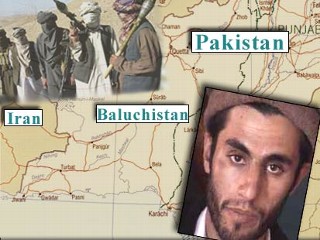
US worried about Taliban safe havens in Balochistan


Taliban

Lahore, Feb 23 (ANI): The Taliban safe havens in Balochistan are the real cause of concern among US officials, as the militant outfit is using Quetta to stir violence in Afghanistan.

There is growing concern among US officials, even as CIA drones pound targets in FATA, about alleged Taliban havens in Balochistan, The New York Times reported.

Taliban operations in Quetta are different from operations in the Tribal Areas and US is intelligence officials are worried that 30,000 more American troops will be of no use unless there is a concerted effort to kill or capture Taliban leaders in Quetta to cut the groups supply lines into Afghanistan.

Afghan and US commanders have long said Taliban leaders, including Mullah Muhammad Omar, guide commanders in southern Afghanistan from the city.

When their leadership is where you cannot get to them, it becomes difficult. You are restrained from doing what you want to do, said General Dan K McNeill, who until June was the senior American commander in Afghanistan and recently retired.

Quetta is close to the provinces in southern Afghanistan where the wars fiercest fighting has occurred, the Daily Times reported.

American intelligence officials said that the dozen or so militants who were thought to make up the Taliban leadership in the area were believed to be hiding either in Afghan refugee camps near Quetta or in some of the citys Afghan neighbourhoods.

For the past year, the top American goal in Pakistan has been to press Islamabad for help elsewhere in the Tribal Areas of Pakistan.

But NATO generals and diplomats have long complained that the command and control of Taliban fighters, distinct from Al Qaeda insurgents, may lie in southern Pakistan, and that Pakistani security services ignore the threat.

Weve made progress going into the Tribal Areas and Northwest Frontier Province against al Qaeda, but … not … against the Quetta shura, said a senior Obama administration official.

Balochistan has long been an area hostile to government control, and even Pakistani spies have difficulty building a network of sources there, they said. (ANI)

....

Looking for the Taliban: check Quetta

Friday Times: Pakistan's First Independent Weekly Paper - 06 October 2006

Malik Siraj Akbar is a SAF Group Scholarship student from Pakistan, class of 2006 at the Asian College of Journalism (ACJ), Chennai, India. He writes While it is difficult to say who is or is not a Talib, one thing is clear: Quetta and other areas are swarming with people who are rabidly anti-US.

Afghan President Hamid Karzai has repeatedly accused Pakistan of being a source of shelter and support for the revived Taliban insurgency in Afghanistan. But in an interview with Newsweek on 2nd October, Karzai took his accusations one step further by saying that Mullah Omar was in Quetta “for sure” and that President Pervez Musharraf knew this. In fact, according to Karzai, Afghanistan had given Musharraf the GPS numbers of Omar’s house as well as the telephone number.

There are constant reports coming in of Taliban operating from northern Balochistan in the areas of Chaman and Spinboldak; there is much talk also about Taliban presence in Quetta. During Musharraf’s recently concluded trip to the United States, these reports again came up and the Afghan president constantly argued that the Taliban were regrouping in Quetta, which was now the ‘Taliban headquarter’. For his part, Musharraf termed these allegations “most ridiculous”.

So what’s really going on?

When TFT contacted government officials to get an answer to this question, no one was willing to speak about the ‘sensitive issue’. Chief Minister Jam Mohammad Yousaf’s press secretary promised an appointment with the CM but later said it was not possible due to the CM’s busy schedule in the week. Balochistan Governor, Owais Ahmed Ghani’s military secretary too was reluctant to commit. The Home Minister was out of station and the inspector general of police was not willing to talk to the media.

All one has to go by are official statements, the most recent being that given by Governor Ghani and CM Jam Yousaf, at a high-level meeting in Quetta. They declared the allegations of Taliban re-grouping in Quetta as ludicrous and also announced that security on the Pak-Afghan border would be tightened by deploying more Frontier Corps (FC) personnel.

“No one, including the Taliban, will be allowed to use Balochistan’s territory for terrorist activities,” CM Jam Yousaf said at the meeting, adding that the Balochistan government had been taking “stern action” against suspect Taliban in the past and would continue to do so in the future. “Pakistan is actively engaged in the ‘war on terrorism’ and has contributed much more to this war than any other county in the world. No Taliban or Al Qaeda members are present in Quetta and the government had been hunting all suspected terrorists,” he concluded.

Ironically, despite official claims that there are no Taliban in Quetta, the government also says it has arrested a large number of Taliban operatives from the area. “Where these Taliban supporters come from and how long they’ve been here remains anybody’s guess,” said an observer. “With the [Musharraf] regime engaged on several other internal and external fronts, it has failed to effectively curb the rapidly regrouping Taliban.”

Observers also feel it is the government’s failure to implement madrassah reforms and settle the political crisis in the province that has paved the way for a Taliban comeback. “There can be no positive results until the government starts monitoring religious schools where the minds of the young are filled with ideas of hate and militancy,” says one observer.

The Taliban enjoy the overwhelming moral support of some sections of the Mutahidda Majlis-e-Amal, the second largest partner in the Balochistan government. “The MMA has been a vocal opponent of government raids against the suspected Taliban,” said an observer.

Maulana Noor Mohammad, provincial chief of Jamiat-e-Ulema-e-Islam (JUI-F), has been one of the biggest opponents of operations against suspected Taliban in Quetta. When the government arrested around 200 Taliban suspects in July this year, he organised a large public rally in Quetta to condemn these raids against those he called, “our Muslim brothers”. “The government is only pleasing its western masters,” Noor said.

In fact, critics of Musharraf’s Taliban policy say that the biggest problem with it is that Musharraf is careful not to crack down too heavily on powerful Islamist radicals – a mix of clerics, army generals and spies – who have retained their Taliban links. “There seems to be a twin-track policy, even if it sometimes moves in opposite directions,” one western official says. “This means that officials turn a blind eye to Taliban in centres such as Quetta.”

This year, law enforcement agencies in Quetta conducted what they claim to be several successful raids against the suspected Taliban at religious schools and private hospitals. Such raids take place about once a month. Earlier in July this year, Quetta police rounded up about 100 Afghan nationals who they said were all Taliban operatives. The arrested persons also included a Taliban commander, Hamdullah. Following the tip-off provided by Hamdullah, the police conducted another raid the same week and arrested a hundred Taliban suspects from a madrassah.

“Who can say with any amount of certainty that the arrested men were actually Taliban,” points one observer.

On August 15, the police rounded up around 29 Taliban suspects following a successful raid on a private hospital in Quetta. The suspected Taliban were reportedly under-treatment in Quetta when the police nabbed them. Then, on September 14, Quetta police claimed to have arrested another 14 Taliban in a similar raid on another private hospital.

While the US-led hunt for the Taliban continues relentlessly in Afghanistan, sources say finding the insurgents is a far easier task in neighbouring Pakistan: you just stroll down to the shops in Quetta where you find posters of Osama bin Laden brandishing a Kalashnikov and cassettes with recordings of speeches and poems calling young men to join the jihad or mourning martyrs. Gory covers match the themes – crossed swords dripping with infidel blood, battlewagons loaded with black-turbaned fighters, and beatific images of bearded militants now detained in Guantánamo Bay.

According to a British newspaper, the men sitting cross-legged behind the counter call themselves staunch Taliban supporters. “We will not go home until there is an Islamic government in Afghanistan,” says shop owner, Muhammad Gul. Others go much further: “I am a mujahid and I will fight to the end of my life,” says Yar Muhammad, a 22-year-old Talib who says he has just completed guerrilla operations in Afghanistan.

Later, in the car, he describes the insurgent’s life of training to fire rockets and planting roadside bombs; conducting night-time attacks against Americans and then escaping under the nose of three armies. “We change our clothes and take off the turban to disguise ourselves. Some Taliban even shave,” he says.

Sources say many like Muhammad have now come to Quetta’s religious seminaries from where they will go back to the battle. “The terrain [in Balochistan] is very favourable to the insurgents,” says Shoukat Haider Changezi, director general of the Levies, a rural police force. “The state would need a phenomenal amount of resources to be effective.”

Pak-Afghan relations have, at this point, hit an all-time low. There is now talk of holding jirgas with tribal elders to empower them and move them away from supporting the Taliban. With all else having failed, it is difficult to say how far this plan will go to stabilise the region and help cut down on insurgent raids.
Read more...