Editor's Choice

--------------------------------------------------------------------------------------------------------------------------
Featured Post
--------------------------------------------------------------------------------------------------------------------------

"Let us build Pakistan" has moved.
30 November 2009

All archives and posts have been transferred to the new location, which is: http://criticalppp.com

We encourage you to visit our new site. Please don't leave your comments here because this site is obsolete. You may also like to update your RSS feeds or Google Friend Connect (Follow the Blog) to the new location. Thank you.


--------------------------------------------------------------------------------------------------------------------------
Showing posts with label Afghanistan. Show all posts

Thursday, 12 November 2009

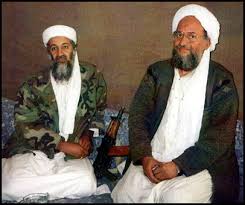
Is there an Al Qaeda - NATO connection?


The al Qaeda connection?


NWFP was hit by another terrorist attack on Tuesday afternoon when a suicide bomber blew up his car in Charsadda bazaar. More than 30 people were killed and nearly 100 others injured, including several women and children. It was the third suicide bombing since Saturday in the battle-ridden province. Suicide attacks have become a routine occurrence during the past few weeks all over Pakistan, especially in NWFP. A spate of terror attacks in recent days is obviously a backlash against the military operation in South Waziristan against the militants. According to a Tehrik-e-Taliban Pakistan (TTP) spokesman, the militants have retreated from various areas in South Waziristan as part of their war strategy and its fighters will launch a guerrilla war once the Pakistani military enters deep into all areas of South Waziristan. If the Taliban have actually managed to retreat from South Waziristan, they have either gone to North Waziristan or crossed the border into Afghanistan. When the Pakistan army was deployed for the first time since independence in FATA in 2004, the US and Pakistan agreed upon a hammer and anvil strategy whereby the US-led NATO forces were playing the role of the hammer in Afghanistan while the Pakistani forces played the role of the anvil in our tribal areas. The roles have reversed now. Successive military operations against the local Taliban have crippled their organisation, which is why they could now be crossing the border to safeguard their interests. The alarming factor is that the ‘anvil’ is nowhere to be seen as the NATO forces have vacated more than half a dozen key security checkposts on the Afghan side of the Pak-Afghan border opposite South Waziristan. In these trying times when Pakistan is in the midst of a civil war, the international community needs to come forward and help it. Instead, the NATO forces are leaving the door open for the TTP to cross over to the Afghan side without any repercussions. This would obviously undermine the military operation.

The Afghan Taliban, on the other hand, have strongly denied any association with the TTP’s campaign, strategy or tactics. Afghan Taliban commander Abdul Mannan condemned suicide bombing and termed it un-Islamic and wrong to target innocent people in blasts. He said the Afghan Taliban leaders have not crossed the border and are not hiding in Pakistan, but are targeting coalition and NATO forces from Afghan soil. With these remarks coming from the Afghan Taliban, it seems as if there is some other force helping the local Taliban and from the pattern of suicide bombings, it could well be the al Qaeda network. It is quite apparent that the TTP is getting massive funding from some source and proper training to carry out successive terror attacks all over Pakistan. The al Qaeda leadership has on a number of occasions declared war against the state of Pakistan, which makes it all the more probable that this global terror network could be supporting the TTP in its fight against the state of Pakistan.

The military is trying to eliminate the militants from the tribal region but it seems as if the country does not have enough funds for the purpose. This can be gauged from Interior Minister Rehman Malik’s statement that the government is now using development funds for the capacity building of law-enforcement agencies in a bid to improve security. If al Qaeda is actually helping the local Taliban, it is not only alarming for our country but for the whole world. Fighting the militants on this scale requires heavy-duty finances; it is time the international community, especially the US, rises to the occasion and helps Pakistan in this common cause. Peace and stability in this region, once achieved, will translate into peace all over the world. Source

Read more...

Friday, 23 October 2009

7 Months, 10 Days in Taliban's Captivity: Story of David Rohde

Here is a five-part series offering a first-person account by David Rohde of his seven months as a captive of the Taliban in Pakistan. Mr. Rohde, a New York Times reporter, was kidnapped with two Afghan colleagues on Nov. 10, 2008, as they traveled to an interview with a Taliban commander outside of Kabul, Afghanistan.

The articles are based on Mr. Rohde’s recollections and, where possible, records kept by his family and colleagues. For safety reasons, certain names and details have been withheld.


7 Months, 10 Days in Captivity

Inside the Islamic Emirate

‘You Have Atomic Bombs, but We Have Suicide Bombers.’

A Drone Strike and Dwindling Hope

A Rope and a Prayer

Epilogue


A comment:

By humayun, vancouver, Washington, October 22nd, 2009

Several hundred comments – covering the entire spectrum from appreciative to trivial – have been made on Mr. Rohde’s series. The large number of comments shows the high degree of interest in understanding and defeating the Taliban. Personally, I greatly admire this remarkable and brave first-person account of a very rare event. I am glad Mr. Rohde, that you are safe with your wife, family, and friends.

Mr. Rohde’s observations and interactions with his captors are truly enlightening. It help understand the actual workings of the terrorists’ mind. This remarkable series show that the Taliban have well established infrastructure, communication and support networks that effectively fulfill their needs and are carried out in full view of the Pakistani army. This is contrary to the media’s image portraying them as bands of thugs that can be taken out by the Pakistani army. One of the more remarkable observations in the series describes how the terrorists motivate, recruit and retain dedicated foot soldiers. This is essential for any effective strategy to defeat this highly motivated and vicious enemy.

What stands out from Mr. Rohde’s observations is the obvious brain washing and continued isolation of the Taliban from the rest of the world. The frequent exposure of his captors to the propaganda videos, outright rejection of alternate ideas in spite of access to the Internet and satellite phones, condemnation of non-Muslims who are considered unclean, concepts of apostasy, etc. – all justified as part of the Islamic faith – should serve as eye openers for us all. Sadly, the terrorists and radicals propagate convoluted and wrong concepts of jihad and sharia based on selective and misrepresented reading of Qur’an – the Islamic scripture. Unfortunately, their misrepresentations are accepted by the Muslim world who, while rejecting specific acts of terror against Muslims, sympathizes with the Taliban when their atrocities are directed towards non-Muslims. This sympathy generates support amongst the “regular folks’ who have a higher propensity towards becoming radicalized.

Any successful strategy to defeat the Taliban must aim at breaking the unholy link between the Islamic scripture and the terrorists’ flawed concepts. This must come from the Muslims themselves who have allowed the political clergy to propagate such views unchallenged. I view these as the most important lessons from Mr. Rohde’s series.

Read more...

Tuesday, 6 October 2009

Synagogue-dweller is Afghan Jewry’s last gasp


Born in the western Afghan city of Herat in 1959, Zebulon Simentov lives, eats and prays alone — the last known Jew in a country dominated by conservative Muslim culture. In the late 19th century, Afghanistan's Jews numbered about 40,000, many of them Persian Jews who had fled forced conversion in Iran. Beginning with an exodus to Israel after it became a state in 1948, the community has been in decline. Now Simentov is the caretaker and sole member of Afghanistan's only working synagogue. The last eight or nine Jewish families left after the 1979 Soviet invasion, he said. Simentov's wife and children moved to Israel years ago, but he stayed even through the Taliban regime. — AP Photos/David Goldman (Source: Dawn)

In this photo taken Saturday, August 29, 2009, Zebulon Simentov, the last known Jew living in Afghanistan, sits as his dining room table during Shabbat in his Kabul home, as Shirgul Amiri, right, a local Muslim friend, prays toward Mecca. Simentov is the caretaker and sole member of Afghanistan's only working synagogue.

In this photo taken Saturday, August 29, 2009, a shofar and Hebrew texts sit where a Torah was once kept in the synagogue overseen by Zebulon Simentov, the last known Jew living in Afghanistan.
In this photo taken Saturday, August 29, 2009, Zebulon Simentov, the last known Jew living in Afghanistan, lights the candles at the start of Shabbat in the synagogue he cares for in Kabul.

Read more...

Sunday, 27 September 2009

Taliban cannot be defeated unless their Wahhabi funders from Kuwait, Saudia Arabia and the UAE are arrested!


Taliban funding may be ‘impossible’ to dry up: officials

* US officials say foreign donations largest source of cash for Taliban * Military estimates Taliban collect $70 million from drug traffickers every year

Daily Times Monitor


WASHINGTON: The Taliban-led insurgency is now understood to generate funds from a huge and diverse array of crimes, donations and taxes, the Washington Post has reported. The paper has quoted US and Afghan officials as saying it may be impossible to dry up the funds.

US officials say the single largest source of cash for the Taliban is not drugs but foreign donations. The Central Intelligence Agency (CIA) recently estimated that Taliban leaders and their allies received $106 million last year from donors outside Afghanistan.

For a decade now, the US Treasury and the UN Security Council have maintained financial blacklists of suspected donors to the Taliban and Al Qaeda. The UN requires all members to freeze the assets of designated Taliban officials and their supporters.

Both blacklists were greatly expanded after the September 11, 2001 attacks. Since 2005, however, only a handful have been added to the lists.

Some American and Afghan officials said the US government paid less attention to Taliban donors after the 2003 invasion of Iraq.

Richard Barrett, coordinator of the United Nations’ Taliban and Al Qaeda Monitoring Team, says Taliban sympathisers are much more skilful today at ensuring that the money cannot be traced back to them.

In July, US envoy to Pakistan and Afghanistan Richard Holbrooke said the Taliban were getting the bulk of their funds from the Persian Gulf. Other US officials have noted that the Taliban received substantial financial help from Gulf countries during the 1990s.

In an August 30 report assessing the state of the war, General Stanley McChrystal – the commander of US and NATO forces in Afghanistan – said the Taliban’s range of financial resources made it difficult to weaken the movement. Annual revenue is thought to be hundreds of millions of dollars.

Drug money: Money skimmed from the narcotics business still offers crucial support to Taliban operations, particularly in the southern provinces. The US military has estimated that the Taliban collect $70 million annually from poppy farmers and narcotics traffickers.

Many insurgent leaders now collect a ‘tax’ or take a cut from gemstone, timber or antiquity smugglers. Then there are ransoms from kidnappings.

Another source of revenue are ‘protection’ payments by Afghan and Western subcontractors.

The US government has now created a special investigative unit called the Afghan Threat Finance Cell that gathers financial information about the Taliban. The cell has about two-dozen members drawn from the Drug Enforcement Administration, US Central Command, the Treasury Department and the CIA. The FBI is expected to join soon.

Most money transfers in Afghanistan are made under the ‘hawala’ system. Brokers in seven provinces are now registered with the government and are required to report all transactions to the central bank.


The Taliban also move large amounts of cash via human couriers, US officials say. In Washington, the US government has recently established a group to devise an overall strategy for restricting the flow of money to the Taliban. The Illicit Finance Task Force is directed by the US Treasury. (Daily Times)


.....

Why Arabs fund terrorism in Pakistan

We all know that the Taliban and Al Qaeda get their “terror money” from diverse sources inside the region, including drugs in Afghanistan; but that is peanuts compared to the money that comes in from the Middle East. According to a CIA estimate, the Taliban leaders and their allies received USD106 million last year from donors outside Afghanistan.

Last time the US envoy to Pakistan and Afghanistan Richard Holbrooke was here he said the money came in substantially from the Gulf countries during the 1990s. And that continues to flow and is much more than the USD70 million the terrorists make from heroin. It is even more than the money they make from kidnappings, “taxes” and selling of local natural resources.

The main culprit is “hawala” which is almost impossible to stamp out despite recent efforts to bring the known middle-men into some kind of overt system. The people who send in the money believe in the “project” of Al Qaeda and admire the Taliban as warriors of Islam. In Pakistan, many now-banned jihadi organisations were funded by the Arabs in the Middle East.

In the case of Fazlullah in Swat, not only was the warlord able to get the women of the province to donate their ornaments for his madrassas, he even got money from expat Pakistanis in the UK to build his big mosque. Why is the money coming in?

The “Al Qaeda project” has two sides, one negative and the other “positive”. The negative aspect is based on a sense of injustice emanating from the conflict in Palestine; the “positive” aspect is the realisation of an Islamic universal utopia that will fill the world with happiness and remove all its grief. (Daily Times)


Read more...

US threatens airstrikes in Pakistan


From
September 27, 2009

Christina Lamb in Washington


The United States is threatening to launch airstrikes on Mullah Omar and the Taliban leadership in the Pakistani city of Quetta as frustration mounts about the ease with which they find sanctuary across the border from Afghanistan.

The threat comes amid growing divisions in Washington about whether to deal with the deteriorating situation in Afghanistan by sending more troops or by reducing them and targeting the terrorists.

This weekend the US military was expected to send a request to Robert Gates, the defence secretary, for more troops, as urged by General Stanley McChrystal, the US commander there.

In a leaked strategic assessment of the war, McChrystal warned that he needed extra reinforcements within a year to avert the risk of failure. Although no figure was given, he is believed to be seeking up to 40,000 troops to add to the 68,000 who will be in Afghanistan by the end of this year.

Last week McChrystal denied any rift with the administration, saying “a policy debate is warranted”.However, with President Barack Obama under pressure from fellow Democrats not to intensify the war, the administration has let it be known that it is rethinking strategy. Vice-President Joe Biden has suggested reducing the number of troops in Afghanistan and focusing on the Taliban and AlQaeda in Pakistan.

According to The New York Times, he flew from Kabul to Ramstein airbase in Germany on Friday for a secret meeting with Admiral Mike Mullen, chairman of the Joint Chiefs of Staff, to discuss the request for more troops.

So sensitive is the subject that when Obama addressed the United Nations summit in New York, he barely mentioned Afghanistan. The unspoken problem is that if the priority is to destroy Al-Qaeda and reduce the global terrorist threat, western troops might be fighting on the wrong side of the border.

The Biden camp argues that attacks by unmanned drones on Pakistan’s tribal areas, where Al-Qaeda’s leaders are hiding, have been successful. Sending more troops to Afghanistan has only inflamed tensions. “Pakistan is the nuclear elephant in the room,” said a western diplomat.

It is a view echoed by Richard Barrett, head of the UN Commission on Monitoring Taliban and Al-Qaeda, who believes the presence of foreign troops has increased militant activity and made it easier for the Taliban to recruit.

“If Obama sends more troops it had better be clear what they are to do,” he said.

“A few thousand more boots on the ground may not make much difference except push the fight into areas which are currently quiet because no one is there to challenge the Taliban. I cannot see any number of troops eliminating the Taliban. Obama has a really difficult decision to make.”

The debate has been intensified by the debacle of the Afghan election, which has left many European leaders struggling to justify sending soldiers to support a government that has been fraudulently elected.

According to preliminary results, President Hamid Karzai won 54.6% of the vote, compared with 27.8% for Abdullah Abdullah, his main challenger. But there have been complaints that fraudulent ballots may account for up to 20% of the 5.5m votes cast.

The Electoral Complaints Commission, overseen by a UN watchdog, has begun to recount about 10% of the disputed votes. Final results are not expected for two weeks. If Karzai is left without the 50% needed for outright victory, there must be a second round unless he agrees to form a unity government.

In the meantime, the country is in limbo and the Taliban is taking advantage, opening up new fronts in the north and west.

Al-Qaeda is also trying to capitalise on the uncertainty. Osama Bin Laden issued a call to European nations to withdraw troops from Afghanistan, and threatened reprisals with an allusion to the bombings in Madrid and London. The recording, released on Friday, seemed to be directed at Germany in the run-up to parliamentary elections today.

The Afghan election has strengthened the position of those in Washington who advocate eliminating Taliban leaders in Pakistan.

Senior Pakistani officials in New York revealed that the US had asked to extend the drone attacks into Quetta and the province of Baluchistan.

“It wasn’t so much a threat as an understanding that if you don’t do anything, we’ll take matters into our own hands,” said one.

The problem is that while the government of President Asif Zardari is committed to wiping out terrorism, Pakistan’s powerful military does not entirely share this view.

Earlier this year there was optimism that Pakistan had turned a corner after it confronted a Taliban group that had taken over the Swat valley and moved to within 70 miles of Islamabad.

There has been tacit co-operation over the use of drones. Some are even stationed inside Pakistan, although publicly the government denounces their use.

Suspicions remain among US officials that parts of Pakistan’s military intelligence agency, the ISI, are supporting the Taliban and protecting Mullah Omar and other leaders in Quetta.

It was to shore up Zardari’s domestic standing that Obama attended a Friends of Pakistan summit in New York on Thursday. On the same day, the US Senate tripled non-military aid to Pakistan to $1.5 billion a year.

The Obama administration hopes such moves will reduce anti-American feeling in Pakistan. A survey last month by the Pew Research Centre found that almost two-thirds regarded the US as an enemy.

Drone attacks on Quetta would intensify this sentiment, causing some British officials to argue that such missions would be “unthinkable”.

The Pakistani government is reluctant to take its own action, however. “We need real-time intelligence,” said Rehman Malik, the interior minister. “The Americans have never told us any location.”

Western intelligence officers say Pakistan has been moving Taliban leaders to the volatile city of Karachi, where it would be impossible to strike. US officials have even discussed sending commandos to Quetta to capture or kill the Taliban chiefs before they are moved.


Read more...

Thursday, 2 April 2009

Whose war is it? —Salman Tarik Kureshi

http://wecite.files.wordpress.com/2008/09/marriot-blast-10.jpg

Large swathes of the sovereign territory of our country have been taken through force by bands of violent insurgents fighting the authority of the Pakistan state. As things stand, despite an apparently spirited counter-insurgency mounted by the post-Musharraf armed forces, the insurgents have held their own and, in fact, have gained considerable ground

With the restorations of Chief Justice Iftikhar Chaudhry and Chief Minister Mian Shahbaz Sharif to their respective rightful positions, the political circus calling itself a ‘soft revolution’ is over. As the jugglers, tightrope walkers and trapeze artists slouch towards their tents and the clowns begin to remove the paint from their faces, we of the public emerge, blinking into the glare of real life, into the light of bomb flashes and the noise of gunfire.

Yes, ours is a country at war. And the assertions of our Foreign Office that Pakistan is a ‘frontline ally’ are clearly inane when anyone can see that we are not a frontline anything: we are the actual battleground!

Oh, but this is not ‘our’ war, as is continually being averred by the talking heads of certain media pundits, former ambassadors, retired generals, admirals and other sundry ‘analysts’. Pakistani citizens and members of our armed forces are being blown up, shot and killed in a variety of dramatic ways and the sovereignty of Pakistan is disappearing from more and more of our national territory.

But it is not our war, according to these ‘analysts’.

Let’s be clear. As this scribe earlier pointed out in these pages, there are three linked wars going on at the moment. For one, there is a war between the Al Qaeda organisation of Osama bin Laden and the US and its allies. This is mostly an air war. Al Qaeda destroyed buildings and killed citizens in America in a series of spectacular air attacks using civilian aircraft. The US, having driven Al Qaeda from its Afghanistan base, is presently targeting this organisation with deadly accurate Hellfire missiles fired from unmanned drones.

The overarching US goal has been to prevent further attacks by al Qaeda in the United States. According to George Friedman of the on-line think tank Stratfor, “Washington has used two means toward this end. One was defensive, aimed at increasing the difficulty of Al Qaeda operatives to penetrate and operate within the United States. The second was to attack and destroy Al Qaeda prime, the group around Osama bin Laden that organised and executed 9/11 and other attacks in Europe.”

The US strategy has not been without success. Al Qaeda is boxed in to its tribal shelters, unable so far to strike back on European or American targets, while a withering (if slow and piecemeal) process of attrition decimates its peripheral and core groups.

The connection of this particular war to Pakistan lies only in that Al Qaeda is now located on Pakistani soil in the South Waziristan and Kurram agencies.

A second, simultaneous war is in process in Afghanistan, where the government of that country, with the help of ISAF, is fighting an insurgency by the Afghan Taliban. This war is a continuation of over the thirty years of conflict in this region that has assumed different forms and engaged different countries at various times.

The connection of Pakistan to this second war lies in, first, that these Afghan Taliban operate out of military bases and ‘safe havens’ in Pakistan (particularly in Bajaur and Waziristan) and, second, that their leader Mullah Umar and his ‘shura’ are said to be headquartered in or near Quetta. The lack of success of NATO and the Afghan government forces against the Taliban is attributed to this Pakistan connection.

And thus we come to yet a third war. This is the war of the Tehreek-e Taliban Pakistan (TTP) against Pakistan. Large swathes of the sovereign territory of our country have been taken through force by bands of violent insurgents fighting the authority of the Pakistan state. As things stand, despite an apparently spirited counter-insurgency mounted by the post-Musharraf armed forces, the insurgents have held their own and, in fact, have gained considerable ground.

Worse, the civilian government of the NWFP has completely lost heart and the will to resist these violent primitives. Elsewhere in the country, too, public opinion towards the insurgents is at best ambivalent. And neither has the government, locked in its Islamabad ivory tower, nor the political parties, preoccupied with their power games, sought to educate public opinion about this menace or attempted to win the hearts and minds of the people.

The point is that this third war, with its attendant campaign of terror attacks in Pakistan’s cities, is unquestionably and solely Pakistan’s war. In fact, Pakistan’s very existence on the world map is threatened by the TTP and its associates. And we are losing this war, while continuing to stupidly deny the frightful danger to our very being.

But allow me to go a stage deeper in this analysis by looking at the common origin of these three present-day conflicts. Let us wind the clock back to the early 1970s, when Pakistan began to ‘repay’ Afghanistan’s bad neighbourly policies, such as its promotion of the ‘Pakhtunistan’ idea. When Sardar Daud overthrew King Zahir Shah and took over as president, one of the beneficiaries of the amnesty he declared was Gulbadin Hekmatyar. Previously a student of engineering at Kabul University who was said to have sprayed sulphuric acid on the faces of unveiled girl students, Hekmatyar had been imprisoned for alleged involvement in the murder of a leftist student. After his release, he moved to Pakistan, where in time he was to become the most controversial of the Mujahideen leaders.

Hekmatyar was recruited as an ‘asset’ by the Pakistani intelligence services. Other Islamist figures, including Haqqani, Massoud, Rabbani and Sayyaf, were also taken up as intelligence ‘assets’ at about this time. Periodic Mujahideen raids into Afghanistan commenced in due course and became a regular occurrence.

President Daud was overthrown by the Parcham faction of the People’s Democratic Party of Afghanistan, a cover-name for the Communist Party, in 1978. The Parchamis were later overthrown by the more doctrinaire Khalq faction, whose extreme leftist policies alienated the tribals and others. These now began to support the Mujahideen. The Soviet Union invaded in 1979, ostensibly on the invitation of the PDPA government.

The Mujahideen were financed, armed and trained by the CIA and Zia-ul Haq’s military regime in Pakistan. The Pakistani ISI was the intermediating agent in the majority of these activities. The events of the subsequent ‘jihad’ against the USSR need not be recounted here.

After the nose-bloodied Soviet forces pulled out of the conflict in the late 1980s, the Mujahideen fought each other in the subsequent Afghan Civil War. As their different factions battled over the spoils, a new force, one that had played no part in the anti-Soviet ‘Jihad’, entered the fray. These were the Taliban, nurtured in Pakistani madrassas from among Afghan refugee youth. In a relatively short period of time, the Taliban — with the full backing of the Pakistani armed forces and government, in search of a bizarre ‘strategic depth’ beyond our national territory — took over Afghanistan.

What began as guerrilla incursions into Afghanistan as a riposte to Sardar Daud’s aggressive Pakhtunistan policies came into conflict with the adventurism of the Afghan Communists who overthrew Daud. This conflict stimulated the Soviet invasion, countered by the CIA/ISI authored ‘jihad’. The subsequent events have seen the ‘Made-in-Pakistan’ Taliban tsunami that carried Mullah Umar into power, establishment of the Al Qaeda headquarters under Mullah Omar’s protection, the US carpet bombings and the political and military victory of the Northern Alliance in Kabul. The consequent evolution of the three wars mentioned here has followed.

Thus, the genesis of all these events lies back in the late 1970s, when Pakistan took over the Mujahideen warriors as military ‘assets’ and struck back into Afghanistan, compounding matters still further in the 1980s with the breeding and unleashing of the Taliban. Whose war is it, anyhow? (Daily Times)

The writer is a marketing consultant based in Karachi. He is also a poet


Read more...

Thursday, 26 March 2009

NYT: Pakistan spy agency ISI supporting Afghan militants

http://img.gram.pl/upl/artykul/20080611120239.jpghttps://blogger.googleusercontent.com/img/b/R29vZ2xl/AVvXsEgkdnBxmWwY61E27RGoS486EQSjrA1n3ud9F_YXII7-01kmEhVhCoEVHNiQO8Ty_JB2JgrrdRxic4VyN5WRedDD5aRw31fIvTQTWOVe0z2Q1VhMag2CGyy-6yZlOJaohYwyeEsV3QTVnLo/s320/Ahmed+Shuja+Pasha.jpg

Afghan Strikes by Taliban Get Pakistan Help, U.S. Aides Say

By MARK MAZZETTI and ERIC SCHMITT
Published: March 25, 2009

WASHINGTON — The Taliban’s widening campaign in southern Afghanistan is made possible in part by direct support from operatives in Pakistan’s military intelligence agency, despite Pakistani government promises to sever ties to militant groups fighting in Afghanistan, according to American government officials.

The support consists of money, military supplies and strategic planning guidance to Taliban commanders who are gearing up to confront the international force in Afghanistan that will soon include some 17,000 American reinforcements.

Support for the Taliban, as well as other militant groups, is coordinated by operatives inside the shadowy S Wing of Pakistan’s spy service, the Directorate for Inter-Services Intelligence, the officials said. There is even evidence that ISI operatives meet regularly with Taliban commanders to discuss whether to intensify or scale back violence before the Afghan elections.

Details of the ISI’s continuing ties to militant groups were described by a half-dozen American, Pakistani and other security officials during recent interviews in Washington and the Pakistani capital, Islamabad. All requested anonymity because they were discussing classified and sensitive intelligence information.

The American officials said proof of the ties between the Taliban and Pakistani spies came from electronic surveillance and trusted informants. The Pakistani officials interviewed said that they had firsthand knowledge of the connections, though they denied that the ties were strengthening the insurgency.

American officials have complained for more than a year about the ISI’s support to groups like the Taliban. But the new details reveal that the spy agency is aiding a broader array of militant networks with more diverse types of support than was previously known — even months after Pakistani officials said that the days of the ISI’s playing a “double game” had ended.

Pakistan’s military and civilian leaders publicly deny any government ties to militant groups, and American officials say it is unlikely that top officials in Islamabad are directly coordinating the clandestine efforts. American officials have also said that midlevel ISI operatives occasionally cultivate relationships that are not approved by their bosses.

In a sign of just how resigned Western officials are to the ties, the British government has sent several dispatches to Islamabad in recent months asking that the ISI use its strategy meetings with the Taliban to persuade its commanders to scale back violence in Afghanistan before the August presidential election there, according to one official.

But the inability, or unwillingness, of the embattled civilian government, led by President Asif Ali Zardari, to break the ties that bind the ISI to the militants illustrates the complexities of a region of shifting alliances. Obama administration officials admit that they are struggling to understand these allegiances as they try to forge a strategy to quell violence in Afghanistan, which has intensified because of a resurgent Taliban. Fighting this insurgency is difficult enough, officials said, without having to worry about an allied spy service’s supporting the enemy.

But the Pakistanis offered a more nuanced portrait. They said the contacts were less threatening than the American officials depicted and were part of a strategy to maintain influence in Afghanistan for the day when American forces would withdraw and leave what they fear could be a power vacuum to be filled by India, Pakistan’s archenemy. A senior Pakistani military officer said, “In intelligence, you have to be in contact with your enemy or you are running blind.”

The ISI helped create and nurture the Taliban movement in the 1990s to bring stability to a nation that had been devastated by years of civil war between rival warlords, and one Pakistani official explained that Islamabad needed to use groups like the Taliban as “proxy forces to preserve our interests.”

A spokesman at the Pakistani Embassy in Washington declined to comment for this article.

Over the past year, a parade of senior American diplomats, military officers and intelligence officials has flown to Islamabad to urge Pakistan’s civilian and military leaders to cut off support for militant groups, and Washington has threatened to put conditions on more than $1 billion in annual military aid to Pakistan. On Saturday, the director of the C.I.A., Leon E. Panetta, met with top Pakistani officials in Islamabad.

Little is publicly known about the ISI’s S Wing, which officials say directs intelligence operations outside of Pakistan. American officials said that the S Wing provided direct support to three major groups carrying out attacks in Afghanistan: the Taliban based in Quetta, Pakistan, commanded by Mullah Muhammad Omar; the militant network run by Gulbuddin Hekmatyar; and a different group run by the guerrilla leader Jalaluddin Haqqani.

Dennis C. Blair, the director of national intelligence, recently told senators that the Pakistanis “draw distinctions” among different militant groups.

“There are some they believe have to be hit and that we should cooperate on hitting, and there are others they think don’t constitute as much of a threat to them and that they think are best left alone,” Mr. Blair said.

The Haqqani network, which focuses its attacks on Afghanistan, is considered a strategic asset to Pakistan, according to American and Pakistani officials, in contrast to the militant network run by Baitullah Mehsud, which has the goal of overthrowing Pakistan’s government.

Top American officials speak bluntly about how the situation has changed little since last summer, when evidence showed that ISI operatives helped plan the bombing of the Indian Embassy in Kabul, an attack that killed 54 people.

“They have been very attached to many of these extremist organizations, and it’s my belief that in the long run, they have got to completely cut ties with those in order to really move in the right direction,” Adm. Mike Mullen, chairman of the Joint Chiefs of Staff, said recently on “The Charlie Rose Show” on PBS.

The Taliban has been able to finance a military campaign inside Afghanistan largely through proceeds from the illegal drug trade and wealthy individuals from the Persian Gulf. But American officials said that when fighters needed fuel or ammunition to sustain their attacks against American troops, they would often turn to the ISI.

When the groups needed to replenish their ranks, it would be operatives from the S Wing who often slipped into radical madrasas across Pakistan to drum up recruits, the officials said.

The ISI support for militants extends beyond those operating in the tribal areas of northwest Pakistan. American officials said the spy agency had also shared intelligence with Lashkar-e-Taiba, the Pakistan-based militant group suspected in the deadly attacks in Mumbai, India, and provided protection for it.

Mr. Zardari took steps last summer to purge the ISI’s top ranks after the United States confronted Pakistan with evidence about the Indian Embassy bombing. Mr. Zardari pledged that the ISI would be “handled,” and that anyone working with militants would be dismissed.

Yet with the future of Mr. Zardari’s government uncertain in the current political turmoil and with Obama officials seeing few immediate alternatives, American officials and outside experts said that Pakistan’s military establishment appears to see little advantage in responding to the demands of civilian officials in Islamabad or Washington.

As a result, when the Haqqani fighters need to stay a step ahead of American forces stalking them on the ground and in the air, they rely on moles within the spy agency to tip them off to allied missions planned against them, American military officials said.

Mark Mazzetti reported from Washington, and Eric Schmitt from Washington and Islamabad, Pakistan.

A version of this article appeared in print on March 26, 2009, on page A1 of the New York edition.


Also read:

Targeting Taliban commander Siraj Haqqani


Read more...

Sunday, 22 February 2009

Troop surge in Afghanistan and the Great Game.

Capital suggestion
2009

Sunday, February 22, 2009
by Dr Farrukh Saleem

2009 is going to be about four things: the Af-Pak War Theater, Global Financial Crisis, a resurging Russian Bear coming out of its 20-year hibernation and NATO Supply Routes. The Obama Administration, having brewed up Af-Pak or Afghanistan-Pakistan as the single theatre of war, is no longer using the 'war on terror' cliché. Af-Pak is now about a troop surge, a bloody spring offensive, an attempt to split Al Qaeda from the Taliban followed up by a negotiated--negotiated from a position of strength--exit strategy.

Some 30,000 American soldiers are already in Afghanistan, 3,000 soldiers of 10th Mountain Division arrived just last month (and have already gone into combat) while an additional 17,000 are expected in the immediate future. To be certain, Americans are here not to win a war in this 'graveyard of empires' but to neutralize Al Qaeda as a threat to the American mainland. Al Qaeda has extra-territorial ambitions, the Taliban do not. Al Qaeda is a threat to mainland America, the Taliban are not.


The Great Game has completely enveloped Obama; Russia, China, Pakistan, Iran, India and Saudi Arabia are all players. The US, Russia, China and Iran do not want Kabul Talibanized. Saudi Arabia and Pakistan have other plans. Biden, Petraeus, Mullen and Holbrooke have all become the most frequent of visitors to both Kabul and Afghanistan.

Petraeus has stuck deals with Kazakhstan for oil and with Latvia for 100 military containers a day (on February 19, a train loaded with supply for the US military left Riga for Afghanistan). On February 3, Kyrgyzstan, in exchange for $2 billion from Russia, put the US on notice to vacate Manas Air Base. On February 17, Petraeus was in Uzbekistan for talks on new supply routes (on 29 July 2005, Uzbekistan had told the US to vacate Karshi-Khanabad Air Base within 6 months).

Obama has now brought back Henry Kissinger, the 85-year old Cold War warrior, to try and put a lid on Russian ambitions. The US-Russian dialogue revolves around 4 issues: NATO expansion, Strategic Arms Reduction Treaty (START), Ballistic Missile Defense (BMD) and, of course, Afghanistan. America wants to suck Ukraine and Georgia into NATO. Russia, on the other hand, wants America to recognize the independence of South Ossetia and Abkhazia. Next, START-I is scheduled to expire on 5 December 2009. Russia doesn't have the resources to get into an arms race with America and thus wants a renewal while America wants to use the renewal issue as a bargaining chip. Next, America wants to up a radar station in the Czech Republic and at least 10 anti-missile missiles in Poland (as part of America's Ballistic Missile Defense shield). The 'big, brutal and clumsy' Bear wants none of that. Looks like a compromise--in which America will not deploy BMDs (in Poland and Czech) and Russia will provide a supply route--is in the making.

The Af-Pak War theatre means Petraeus' combat brigade teams pushing battalions and battalions of war-hardened Taliban into Pakistan while Pakistan is already on fire. Adding fuel to fire means a firestorm, an uncontrolled conflagration that threatens Pakistan and every form of life within Pakistan. The firestorm would then attain a life of its own; heated air rising in the centre inducing strong inward winds that supply further oxygen to the fire and the firestorm creates and sustains its own combustion.


Afghanistan will never be stable. No one really wants Afghanistan to stabilize. To be sure, this 'graveyard of empires' won't let America win. But, remember, America isn't here to declare victory; it's here to bury Al Qaeda.


Pakistan has always been the next door neighbour to the 'graveyard of empires'. In 2009, would we be able to keep it that way? (The News)


The writer is the executive director of the Centre for Research and Security Studies (CRSS). Email:farrukh15@hotmail.com

.....

In the new game, Baitullah Mehsud group is now a target for the CIA drones:

Mehsud now a target for US drones

LAHORE: The US government has finally expanded its covert war in Pakistan to include Baitullah Mehsud’s Tehreek-e-Taliban Pakistan among its targets, The New York Times claimed on Friday.

The paper said two missile strikes on training camps run by Mehsud represented a broadening of the US campaign. Under President George W Bush, the United States frequently attacked militants from Al Qaeda and the Taliban involved in cross-border attacks into Afghanistan but stopped short of raids aimed at Mehsud and his followers, who have played less of a direct role in attacks on US troops.

But last year Mehsud was identified by the US as well as Pakistani officials as the man who had orchestrated the assassination of former prime minister Benazir Bhutto. Bush then included Mehsud’s name in a classified list of Taliban leaders the CIA and US commandos were authorised to capture or kill.

The paper said Pakistani military and intelligence officials have complained “for months” about the US refusal to strike at Mehsud. According to a senior Pakistani official, Pakistan’s intelligence services twice in recent months gave the United States detailed intelligence about Mehsud’s location, but, he said, the United States did not act on the information. Bush administration officials had said it was the Pakistanis who were reluctant to take on Mehsud and his network. Special US envoy to Pakistan and Afghanistan Richard Holbrooke and the White House declined comment on Mehsud or the new strikes. daily times monitor (22 Feb 2009)


....

This explains why there is an emerging alliance (forged by the ISI) of Taliban in Waziristan:

The ISI forges the Taliban alliance in Waziristan against the war on terror...


Read more...

Monday, 16 February 2009

Drone attack on a terrorist camp in Kurram agency kills at least 30


Why do not our own intelligence agencies / ISI / Army/ Air Force / Police route out such terrorist / jihadi/ sectarian camps?

Thank you Obama for cleaning the dirt of the ISI/Taliban duo in Pakistan.


FATA MAP

'US missile strike' kills 30

Three missiles thought to have been fired from a US unmanned aircraft destroyed a house used by a local Taliban commander in the Kurram tribal region of Pakistan, killing at least 30 people, witnesses said.

The US has launched a barrage of similar attacks against suspected militants in the border region by unmanned aircraft since August last year, killing top militants but angering Pakistani leaders, who say they undercut their fight against terror.

Rehman Ullah, a resident of the targeted village of Baggan, said drones were seen in the sky before the attack.

He said bodies had been dug up from the wreckage. Pakistani officials were not available or declined comment.

Meanwhile, Pakistani militants said the government had agreed to impose Islamic law as part of a proposed peace deal in a one-time tourist destination in the north-west where Taliban extremists increasingly hold sway.

The agreement would cover the Swat valley and surrounding regions.

Islamist militants there have been brutally enforcing a hardline version of Islamic law since the middle of last year when an earlier deal broke down, burning girls schools and attacking government targets and security forces

Several past deals with militants in north-west Pakistan have failed and been criticised by the US as giving insurgents time to regroup, but the country's civilian government says force alone cannot defeat the extremists wreaking havoc there and attacking US troops in neighbouring Afghanistan.

The drone fired two missiles at the hideout, where a meeting of the banned Tehrik-e-Taliban Pakistan was being held, TV channels reported.

There was no official word on the incident. Though US drones target Taliban and al-Qaeda bases in Waziristan region, this was the first such attack in Kurram Agency.

Minutes after the strike, Taliban militants surrounded the area and were not allowing locals to approach the scene of attacks.

The missile strike came two days after another US drone attack in South Waziristan tribal region killed 32 people, most of them Uzbek supporters of al-Qaeda.

Kurram Agency has also been a scene of widespread sectarian violence between Shia and Sunni [Deobandi/Wahhabi] tribesmen since last year. Hundreds of people have been killed in clashes between rival tribesmen. The situation in Kurrum Agency took a turn for the worse after Taliban fighters infiltrated the area and began backing the Deobandis/Wahhabis.

Read more...

General Musharraf, Taliban and the Strategic Depth Doctrine

General Musharraf and Taliban

After President Asif Ali Zardari said on CBS News that “Pakistani forces are fighting the Taliban for the survival of Pakistan”, General (Retd) Pervez Musharraf kind of “gilded the lily” by stating in Islamabad that “support for the Taliban and Al Qaeda is increasing in Pakistan”. President Zardari conceded that the Taliban were “present on huge amounts of land” in Pakistan because of the past “policy of denial”. As a result, he said, “Our forces weren’t increased. We have weaknesses and they are taking advantage of those weaknesses”.

It is easy to say that the support for the Taliban has increased in Pakistan and presume that people will not connect it with the policies followed by Mr Musharraf when he was the sole operator of Pakistan’s military strategy. The Taliban are difficult to fight today because of the strategic choices made by him after 9/11. Far from preparing the Pakistan army to face up to the possible new challenges arising from the volte face performed by him in the doctrine of “strategic depth”, he allowed the Taliban to roam free in the Tribal Areas and establish outreach in the rest of the country through their madrassa networks. Most writers on the conflict in Afghanistan have come to the conclusion that he allowed “deniable” sanctuaries inside Pakistan after 2001 and then let the jihadis — originally meant for Kashmir — join up with the affiliates of Al Qaeda.

Support to the Taliban increased only after they were able to establish their power in parts of Pakistan then still being ruled by General Musharraf. After the warlords had made their appearance in Waziristan, he was unable to cope with them. In fact it was on his watch that a large number of military personnel were taken prisoner by Baitullah Mehsud in South Waziristan. It is only after the new chief of the army staff (COAS) General Ashfaq Kayani adopted a new strategy after taking over from General Musharraf that the people stopped despairing about ever facing up to the challenge of terrorism. (Daily Times)
Read more...

Sunday, 8 February 2009

Reviewing Pakistan- Afghanistan policy

Sunday, February 08, 2009

Lt-Gen (r) Talat Masood

The US being a super power enjoys a unique status around the world and cannot be treated as any other country. For Pakistan US means even more, as no other country exercises as much influence, for good or for bad, over Pakistan's foreign and domestic policy as US does. Ever since Pakistan's inception it has been closely aligned with United States. First, during the Cold War as an ally in SEATO and CENTO, then during Soviet occupation as front line state in support of Afghan Jihad and since 2001 in the war on terror. The relationship has had its troughs and peaks and expectations run high but have suffered many disappointments. Pakistan presents a paradox as well for it is among the top countries where anti- Americanism is at its peak. It is also true that Pakistan is heavily dependent on the US for economic assistance, military hardware and as a countervailing power against India, notwithstanding Washington's close and expanding ties with New Delhi.

With the change in US administration the Afghan and Pakistan policy is under major review. Obama's administration and Pentagon realize that Afghanistan and Pakistan are closely interlinked and Afghanistan's stability is vital otherwise it would continue to have a destabilizing influence on its nuclear neighbor. President Obama in his recent interview with NBC News stated that Afghanistan has to be stabilized for ensuring the stability of Pakistan. This thinking indicates that Washington is fully conscious of the ramifications of a weak Pakistan. Moreover, it also confirms Pakistan's viewpoint that the primary source of the problem rests in Afghanistan and unless conditions improve there it may not be possible to stabilize the tribal belt and Pakistan itself. In a way the new administration is taking a broader and a longer view in which the solutions are to be found in a regional context. This aspect was reflected when President Obama referred to the need for the resolution of the Kashmir problem. India should have taken these remarks positively instead its nervous reaction to the proposal made US realize that best way of going about it would be quiet diplomacy and that too after the Indian national elections. The seasoned US diplomat Mr Richard Holbrooke who has been appointed as special envoy for Afghanistan and Pakistan was initially tasked to address the Kashmir issue also but had to be taken off in deference to Indian sensitivities.

Washington has come to the conclusion that extensive reliance on military force will not resolve Afghanistan's complex problems and political solution though not easy will have to be found. Washington is also lowering its sights in Afghanistan and the report prepared by Joint Chiefs of Staff recommends de-emphasizing longer term goals of promoting democracy. Forthcoming presidential elections in Afghanistan will be a major event and it is not clear if Karzai would win, or even enjoy American support. In the event that another candidate emerges than what will be the prospects of his turning Afghanistan around.

United States' plan about Pakistan seems to be work in progress. Mr. Richard Holbrooke is expected to come out with a plan for Pakistan in the regional context. On the military side, General Petraus will be finalizing his strategic direction and the two plans will have to weld together.

The relationship between the US and Pakistan military high commands is now relatively well defined and mutual confidence is gradually growing. Relations of US administration with the civilian government too are good. But long term relations will depend on how the government internally consolidates its position and manages issues of governance, economy and militancy.

Obama's administration is looking for political investment in Pakistan so that there is greater space for politics to function. Washington has been fully supportive of the PPP led government and especially of President Zardari. In assisting Pakistan build its institutions it is aiming at a long term relationship. United States has a serious interest in Pakistan's security. The proposed assistance package which is likely to be revived as Kerry- Lugar bill aims at providing Pakistan 15 billion dollar assistance spread over 10 years to build and strengthen its civilian institutions. There appears to be bi-partisan support for it in Congress. But the success of the program will depend on how the program is implemented.

In the immediate term the security of supply lines to US and NATO forces, management of the border and securing it so that Taliban and Al-Qaeda do not kill or harm US forces would remain the main focus.


President Zardari had remarked that with the change in US administration in January 2009 the missile strikes by un-manned drone aircraft in Pakistan's tribal belt will come to an end. Was it mere wishful thinking or based on some assurance given to him by members of the new power structure is a matter of conjecture. That aside, it has revived a raging controversy within Pakistan and aggravated anti-American sentiment and placed the civilian government in an embarrassing situation. It is diverting attention from the war on terror and is an impediment in mobilizing public support for counterinsurgency. Missile strikes in FATA demonstrate lack of trust between US and Pakistan as CIA is not prepared to share either the intelligence or sophisticated equipment of drones with Pakistan military. There is another major implication of US strikes. Other countries using this as a precedent can also strike at Pakistan as was being threatened by India after the Mumbai attack.

From the US perspective, the missile strikes are an extension of the Bush doctrine of preemption, enunciated in 2002, according to which US can take unilateral action if its security is threatened. CIA operatives are of the view that top leadership of Al-Qaeda is hiding in sanctuaries created in the tribal belt and pose a great threat to US and NATO forces. They also claim that several high value targets have been hit and Al- Qaeda is on the defensive. In any case from America's perspective Pakistan has lost control over its territory in FATA and by implication its sovereignty over the area and is incapable of coping with the problem. Loss of internal sovereignty has given rise to loss of external sovereignty. Perhaps, Mr. Holbrooke in his current mandate could also find ways of reconciling these diverging perceptions.
(The News)


The writer is a retired lieutenant general. Email: talat@comsats.net.pk
Read more...

The Iran-USA relations: Chabahar port can play a key role in rebuilding Afghanistan...

Shaytan-e-Bozorg
Sunday, February 08, 2009

Dr Farrukh Saleem

Grand Ayatollah Sayyid Ruhollah Musavi Khomeini, the 1st Supreme Leader of Iran, in a speech on 5 November 1979, labelled the United States "Shaytan-e-Bozorg" or the 'Great Satan'. That was more than 29 years ago.

On 7 October 2001, when the Americans launched 'Operation Enduring Freedom', Grand Ayatollah Sayyid Ali Hoseyni Khamene'i, the 2nd Supreme Leader of Iran, collaborated with the US military in bringing down the Taliban regime (India and Russia also provided intelligence along with logistical support while Tajikistan and Uzbekistan both provided military bases). Exactly four months after a joint Bush- Khamene'i operation brought down the Taliban, George Walker Bush, the 43rd President of the Untied States, in his State of the Union Address, placed Iran into his 'Axis of evil'.

Is there an Iran-US patch-up in the making? All eyes are on the 45th Munich Conference on Security Policy (Münchner Konferenz für Sicherheitspolitik), the annual event, that began February 6 at the Hotel Bayerischer Hof in Munich, Germany.

Joseph Biden, America's 47th Vice President, will be at the Hotel Bayerischer Hof (Biden is also scheduled to address the Conference). Others from America (who are scheduled to attend) include General David Petraeus, the Commander of US Central Command, James Jones, Obama's National Security Advisor, and Richard Holbrooke, Obama's Special Representative for Pakistan and Afghanistan.

Grand Ayatollah Sayyid Ali Hoseyni Khamene'i has sent Manouchehr Mottaki, Iran's 8th Minister of Foreign Affairs and Ali Ardashir Larijani, the current speaker of the Majilis, a one-time representative of the Supreme Leader Khamene'i at the Supreme National Council and also the top negotiator on Iran's nuclear program.

There's talk that Iran and America will come face to face at the Hotel Bayerischer Hof. As a matter of record, Iran and the US have been moving closer ever since direct talks between Ryan Crocker, the US Ambassador to Iraq, and Hassan Kazemi Qomi, Iran's Ambassador in Baghdad, were held on 27 May 2007. The Crocker-Qomi talks were the first official and direct talks in the past 27 years. On 17 July 2008, The Guardian reported, "The US plans to establish a diplomatic presence in Tehran for the first time in 30 years…" adding that "a US interests section--a halfway house to setting up a full embassy. The move will see US diplomats stationed in the country."

On 14 November 2008, a panel of 20 American experts, that included James Dobbins, former US special envoy to Afghanistan and Thomas Pickering, former US ambassador to the United Nations, called for "unconditional negotiations" with Iran asserting that "it was the only option to break a cycle of threats and defiance."

On 9 January 2009, General Petraeus, while addressing the US Institute of Peace, said that the United States and Iran have "common objectives" in Afghanistan (Petraeus must also be looking at the Port of Chabhar as an alternative supply-route to NATO troops in Afghanistan).

On January 11, the New York Times disclosed that "President Bush rejected several Israeli requests last year for weapons and permission for a potential air strike insider Iran."

On February 2, Mottaki told Tehran Times, "Resumption of relations with the US under the new circumstances is of prime importance and we are now studying the change of attitude and US policies….." The same evening, General Craddock, NATO's senior military commander, said, "NATO would not oppose individual member nations reaching bilateral deals with Iran for the transit of supplies to Afghanistan."

On February 4, the United States Department of Treasury added the Party for a Free Life in Kurdistan (PJAK) to its list of terrorist organizations (PJAK has been active in trying to overthrow the ruling Iranian clergy).

The United States of America once again needs Jomhuri-ye Eslami-ye Iran. And, Jomhuri-ye Eslami-ye Iran needs the United States of America. America needs Iran to fight the Taliban-Al Qaeda combo in Afghanistan and America needs Iran to supply rations to NATO troops in Afghanistan. Iran needs America to break Iran's isolation and Iran needs America so that Iran can once again attract global capital in the face of $100-a-barrel drop in the price of crude.

Iran has Chabahar, the port with direct access to the ocean, a road link to Zaranj in south-western Afghanistan and then on to the Kandhar and Bagram Air Bases. America needs Chabahar. America can open up doors for Iran to attract capital. Iran needs money--and lots of it--to finance its growing deficits.

Shaytan-e-Bozorg or a marriage made in heaven? (The News)

The writer is the executive director of the Centre for Research and Security Studies (CRSS). Email: farrukh15@hotmail.com
Read more...

Wednesday, 4 February 2009

Pakistan's eight points for Holbrooke - How to restore peace in Afghanistan and FATA

Wednesday, February 04, 2009

Nasim Zehra

The writer is an Islamabad-based security analyst

Speaking in Washington to a conference sponsored by the Reserve Officers Association on Monday, Chairman of the Joint Chief of Staff Admiral Mike Mullen said, "I never talk about Afghanistan without mentioning Pakistan."

Mullen emphasized two key issues:

One, that "establishing good governance is the lead issue for Afghanistan." Two, that policy discussions on Afghanistan policy discussions must include ample consideration of extremist forces being able to set up shop in neighbouring Pakistan. Mullen's general focus was on the possible resources crunch that may hit US military operations in these times of recession.

For Pakistan Mullen's views on Afghanistan are significant.

Mullen, like many others in the Obama administration, are emphasising both the significance and the need to defeat the insurgency. The expectation from Pakistan is that it will help in ensuring the defeat of the Taliban. How realistic this expectation is and what kind of policy is likely to at least initiate a viable political and security-enforcement process in Afghanistan are key questions for

Pakistan--which has suffered greatly because of its own policies and the policies of other countries in this country.

In addition to the deployment of 30,000 additional US troops in Afghanistan the appointment of General Eikenberry as ambassador to Afghanistan is also on the cards. Eikenberry, completed his 18-month command in Afghanistan in 2007, is familiar with that country's complex problems and knows the players in Afghanistan.

Significantly, if Eikenberry's appointment goes through, the Obama administration will have four influential voices on Afghanistan, men with military orientation. The others are General David Petraeus, head of the Central Command, General David McKiernan, the top commander in Afghanistan, and General James Jones, a retired Marine Corps officer who is Obama's national security adviser.

To signal the importance that Afghanistan holds for the Obama administration Ambassador Holbrooke will shortly be arriving in Pakistan. As Holbrooke arrives what is it that Pakistan is planning to tell him? How does Pakistan view the situation, what is Pakistan's advice to Washington? Perhaps Pakistan must present its comprehensive position to Holbrooke. As Pakistan works on improving its relations with Kabul and also communicates its concerns to Washington perhaps the bulk of its views on Afghanistan have already been shared with Kabul and Washington. But the Holbrooke visit warrants a comprehensive recall. Such a policy-based recall must include the following eight points.

One, the key trigger for Pakistan's own expanding and complex FATA problem lies in the continued war in Afghanistan. The problem is Afghanistan, not FATA. A near, not absolute, historical analogy could be FATA being for the Afghans today what Cambodia was for the Vietnamese. The Americans must not misread the situation today. Another Vietnam neither can the Americans afford nor can our already volatile region.

Two, unless a genuine political reconciliation effort is initiated in Afghanistan there will never be peace in Afghanistan. Taliban have to be the key interlocutors for whoever governs from Kabul. Many senior officials, including generals from NATO countries, have repeatedly maintained that there is no military solution to Afghanistan's problems. It is for this reason alone that Washington's NATO allies have been reluctant to send additional forces to Afghanistan and to provide transport helicopters, military trainers and other support personnel. Only recently has the US defence secretary Robert Gates openly criticised the NATO allies for not delivering on their promises.

Three, making Karzai the fall guy for a failed policy will not help, but removing the flaws in Washington's Afghan policy will. The key flaw has been Washington's objective to seek the political death of the Taliban either by military defeat or by surrender. Eight years of this policy has brought death and destruction to the Afghan people. No less has this brought about the expanding military control and political influence of the Taliban.

Four, US drone attacks on Pakistani territory causing the death of innocent Pakistanis must stop. These attacks have continued to compromise Pakistan's own effort to deal with the source of an acute internal security crisis. For example, Pakistan's own effort to deal with terrorism is weakened as US drone attacks strengthen the ranks of the lethally angry and armed militias and criminals.

Five, to aid Pakistan in tracking and fighting militants operating within Pakistani territory and from keeping its Pakistan-Afghan border secure against movement of foreign militants, Washington should provide Pakistan the military means that Pakistani forces have repeatedly requested to ensure effective intelligence gathering, night-time vision and aerial mobility.
It is evidently Washington's lack of trust in its key non-ISAF military partner that has prevented the Americans from providing this equipment to Pakistani. In some respects the distrust is reminiscent of the mid-eighties when Pakistan, as a key partner in the CIA- funded war, wanted to purchase AWACS from the US. While the US military recommended the sales the State Department opposed it on the plea that Pakistan would use them against India. Maybe an accurate assessment. However, what is absolutely true today is that greater trust among these non-NATO allies is an absolute must if the situation in Afghanistan and Pakistan is to improve.

Six, the mini-jirga process must be viewed as an integral part of resolving the Afghan crisis. The jirga process, to be led by Kabul and Islamabad, should get the full backing of all the foreign players in Afghanistan.

Seven, to deal with the continuing crisis of governance there must be a multiple increase in US expenditure on development activities in Afghanistan.
According to recent reports for every 100 million dollars being spent on military activities in Afghanistan only seven million dollars is being spent on development.

Eight, Afghan refugees must return to Afghanistan.
The unbearable pressure of almost three million refugees on Pakistan, a country already reeling under resource constraints and new challenges of security, must end. The international community has to be more supportive and appreciative of Pakistan's Afghan refugee problem.

Pakistan must present its position clearly and cogently. Unless Washington recasts its Afghan policy in a politico-military cast there will be no end to war in Afghanistan. Endless war in Afghanistan also means continued warring and destabilisation in the bordering regions within Pakistan. In the decade of the eighties the primary roots of Afghanistan lay in its neighbourhood, including Pakistan, and in distant capitals including Washington, London and Riyadh, where policies for defeating the "evil Soviets" were being prepared and bankrolled. The Soviet invasion was rolled back and the Soviet Union was broke up, but the huge costs involved included a warring Afghanistan, a security nightmare in many parts of Pakistan, including the NWFP, the rise of trans-national, militarised and violent militias using religion, the emergence of suicide bombers, the rise of political extremism, and so on.

Pakistan fully partnered, and indeed authored, the anti-Soviet war of the eighties. Its fallout on Pakistan leaves no doubt in the minds of Pakistanis that that policy was a very costly blunder committed by military dictator General Zia-ul-Haq. Agha Shahi, Pakistan's illustrious foreign minister at that time, had warned the general against an "embrace" with the Americans over Afghanistan. Shahi's famous words were, "Only a handshake with the American not an embrace." But Pakistan's ruling generals were then evidently confident that they could manage an "embrace" on their own terms. From Pakistan's blunder of the eighties onwards our policymakers should have learnt the virtue of wisdom and of realism in policymaking. Now is the time for them to invoke that virtue.

Ambassador Holbrooke should be told that unless a holistic politico-military and development approach to resolving the Afghan problem is adopted, his efforts to initiate a regional peace process in Afghanistan will not succeed.
More importantly for Pakistan, it cannot afford a scenario of continued war in Afghanistan. The positive outcome of Pakistan's participation in the US and ISAF effort in Afghanistan will depend largely on the extent to which the US will incorporate the above eight points in its Afghan strategy. (The News)

Email: nasimzehra@hotmail.com
Read more...

Saturday, 24 January 2009

OTHER VOICES - Pushto Press - Taliban kill Pakhtuns

Tolafghan, Kabul

Taliban kill Pakhtuns

TALIBAN militants have taken responsibility for most of the attacks and suicide bombings inside Afghanistan. They have especially been engaged in wiping out Pakhtuns over the last seven years; and this brings us to the conclusion that there is some involvement of hidden hands.

Hundreds of people are killed by the Taliban and the foreign troops. …If the Taliban militants show no sympathy towards helpless citizens, their counterparts (the foreign troops) are also showing sufficient signs of brutality. The American troops are loath to spare even a donkey rider.

In today’s world, the Pakhtun and the Taliban have become synonymous terms. But the reality is that the Taliban are targeting the Pakhtuns while the Parsiwans are enjoying a relatively secure life. It shows that the Taliban are anti-Pakhtun and that they are backed by anti-Pakhtun forces whose sole aim is to keep the Pakhtuns under-developed and under-privileged. That is why we are witnessing the ongoing crisis only in the Pakhtun areas on both sides of the Durand Line.

Southern Afghanistan, including the eastern wing, is faced with a crisis. But surprisingly, the north, where Parsiwans are in a majority, is peaceful and the foreigners prefer to stay there. In the south, more than 50 per cent of the schools have been destroyed while teachers have been crippled. Islam does not allow such acts … for working for the government or educating the non-educated! Acid is thrown on the faces of girl students or they are simply killed. The Taliban are killing Pakhtun leaders. The Pakhtuns are caught between the devil and the deep sea.

Who said that the Taliban are fighting for Islam? Only a fraction of them can be called jihadis. The rest are puppets in the hands of others. Some are asked why they didn’t attack Dostum who killed thousands of innocent Afghans. …It seems that the Taliban are using the name of Islam to serve some other goals. In fact they are defaming Islam. — (Jan 21)

Translated and selected by Khadim Hussain and M. Arif (Dawn)
Read more...

Monday, 22 December 2008

Pakistan' War - Al Jazeera TV Report - By Rageh Omaar

Pakistan's War

Rageh Omaar speaks to those who say Pakistan is paying the ultimate price in the
so-called 'war on terror' [GALLO/GETTY]

As the fallout from last month's bloody siege in Mumbai focuses the world's attention on Pakistan's ability to control insurgents within its own borders, Al Jazeera investigates Pakistan's role in the so-called 'war on terror'.

In this exclusive two-part series, Rageh Omaar travels from the capital, Islamabad, to the tribal heartlands to chart the spread of suicide bombings and the escalation of violence that has turned Pakistan into a war zone.

Pakistan's War: The Battle Within

In the first part of Pakistan's War, Rageh Omaar revisits the scene of the military assault on the Red Mosque, which he witnessed in July 2007.

Rageh and his team had been the last television crew inside the mosque before the siege began and filmed the last interview with mosque leader Abdul Rashid Ghazi before his death.

The showdown at the Red Mosque marked a turning point in Pakistan's war [EPA]
Rageh learns that the showdown for control of the Red Mosque marked a turning-point in Pakistan's war with the insurgents - the moment when the Taliban-backed insurgency moved from the tribal areas on the border with Afghanistan to the heart of the capital, sparking an ongoing wave of violence inside Pakistan.

Al Jazeera hears Asif Ali Zardari, the Pakistani president, claim that his democratically-elected government has opened up a 'new dialogue' with the US.

He denies that he is fighting a proxy war for the West in the so-called 'war on terror'.
Instead, Zardari argues that his determination to defeat the insurgents and bring democracy to the tribal areas of Pakistan is part of a comprehensive home-grown programme to strengthen legitimate institutions, build state capacity and create a new relationship between the government and the army.

"I will take the writ of law to the ends of the last border post of Pakistan," pledges Zardari.

A Taliban fighter in Pakistan's Swat Valley [GALLO/GETTY]
"That means there will be police stations, there will be judges, there will be civil society and civil law. We have to make people understand that they cannot challenge the writ of the state and they can not blackmail the world into listening to their point."

During his investigations Rageh Omaar learns that Pakistan's efforts to crush the insurgents in the tribal areas are compromised by US cross-border drone strikes, which violate Pakistan's fragile sovereignty.

In the three months before Al Jazeera's crew arrived, 20 US drone strikes killed more than 100 people.

Corps Commander General Masood complains: "The majority of people in this area perceive the US presence in Afghanistan as occupation forces. So when the US starts acting inside Pakistan and any innocent civilian is killed by any of these attacks, it reduces the credibility of the Pakistan army to be doing something good."

Pakistan's War: The Battle Within airs on Sunday, December 28 at 0000GMT and will be repeated on Sunday, December 28 at 1400GMT, Monday, December 29 at 1000GMT and 1900GMT and Tuesday, December 30 at 0600GMT.

Pakistan's War: On The Front Line

In the second part of Pakistan's War, Rageh Omaar joins the Pakistani army in their full-scale military offensive against insurgents on the frontier with Afghanistan.

In Bajaur province – where Ayman al-Zawahiri, al-Qaeda's second in command, is believed to be hiding – Rageh witnesses a decisive moment in the army's campaign.

In the second part of the series, Rageh Omaar follows the Pakistani army [GALLO/GETTY]
He follows infantry from house to house in their advance on the Taliban stronghold of Loe Sam and is forced to retreat when the army unit he is filming comes under fire from Taliban fighters.

Throughout his five-week journey, Rageh Omaar discovers the cost of the campaign for Pakistan.

He visits Colonel Zahid at a military hospital as he recovers from surgery to amputate his foot, which was injured in the fighting in Bajaur.

He speaks to Major General Janjua, who says: "We are suffering the maximum, we are contributing the maximum ... we are sacrificing for the sake of the world."

Al Jazeera hears from the widow of a Pakistani officer killed by Nato 'friendly fire' and the daughter of a senior officer killed by a suicide bombing, who sees her father as a martyr.

Al Jazeera also talks to the insurgents themselves, who oppose Zardari's ambition to bring democracy to the tribal areas and instead are fighting for the imposition of Islamic law inside Pakistan.

Rageh Omaar speaks to refugees displaced by the fighting [GALLO/GETTY]
A spokesperson for the insurgency in Swat, Muslim Khan, delivers a message for American viewers, saying: "The views of the new president that is coming, Barack Obama, are not good.

"I would like to send a message to the American people that their money that is being sucked out of them in the form of taxes is being used for bombs and killing innocent people ... If the jihad continues in the way at present, I also believe that America will become zero power not superpower – only God is superpower."

Rageh Omaar's timely journey raises fundamental questions about the future of Pakistan.


Video links: Rageh Omaar’s Pakistan’s war- a battle inside by Al Jazeera

viewers discretion advised

http://www.youtube.com/watch?v=_XJZnESwcgo&feature=channel

http://www.youtube.com/watch?v=30tGS-xDJg0&feature=channel


http://www.youtube.com/watch?v=Px4lhZzaRpA&feature=channel


http://www.youtube.com/watch?v=OAVv1epfbqk&feature=channel

http://www.youtube.com/watch?v=kQB-IgktVEM

http://www.youtube.com/watch?v=u43ngbDH6og&NR=1

http://www.youtube.com/watch?v=2WmQTxwXrhA&feature=channel

http://www.youtube.com/watch?v=6k3XGlO7rWI&feature=channel

Comments:

Amir Hameed Says:
January 1st, 2009 at 7:36 pm

Thanks for posting the links. My take-away after watching these videos is:

- Moshe was a SOB (a well known and established fact) and he should have been advised/stopped by the top millitary leadership from invading the Lal Mosque. There was no justification of invading the mosque and killing all the people that died there.

- Maulana Rasheed was no angel. There was no justification for him to start burning the shops in the name of implementing his brand of Shariah. He was a nut-case and was responsible for putting a lot of his followers in harms way and getting them killed in the name of some Jihad that was no more than suiside.

- I was disgusted by watching the execution of a soldier and a person from the hands of little kids. These MoFo beardos are creating killing machines in the name of fighting their brand of “Jihad”.

- As long as the occupied forces are present in Afghanistan, these events will only intensify and I see no fading away of the foreign forces from Afghanistan and hence ….
- Per the beardo fagg0t from Swat, they were NOT killing innocent people but that is exactly what they are doing.
Read more...