Editor's Choice

--------------------------------------------------------------------------------------------------------------------------
Featured Post
--------------------------------------------------------------------------------------------------------------------------

"Let us build Pakistan" has moved.
30 November 2009

All archives and posts have been transferred to the new location, which is: http://criticalppp.com

We encourage you to visit our new site. Please don't leave your comments here because this site is obsolete. You may also like to update your RSS feeds or Google Friend Connect (Follow the Blog) to the new location. Thank you.


--------------------------------------------------------------------------------------------------------------------------
Showing posts with label Nasim Zehra. Show all posts

Monday, 2 November 2009

The USA and Britain must not support Jundullah to carry out sabotage against the Iranian government.

Beyond the Jundullah attacks
Monday, November 02, 2009
Nasim Zehra

The Pakistan-Iran border is on the boil again. On Oct 26 the Iranian state media reported that 11 Iranian Revolutionary Guards arrested by Pakistan’s security forces had accidentally strayed into Pakistan territory. They were reportedly pursuing suspected fuel smugglers. The unofficial Pakistani version is that the Revolutionary Guards, one of Iran’s most powerful and politically strong fighting force, entered Pakistan territory in two jeeps probably in hot pursuit. Its having taken place within a week of the deadly Oct 18 Jundullah attack in Iran, this hot pursuit most likely involved suspected Jundullah men. Significantly, immediately after the Oct 18 attack a senior Revolutionary Guards commander had publicly demanded that his force be given permission to confront terrorists inside Pakistan. This was a demand raised with Pakistani officials during the recent visit of the Iranian minister of interior.

Meanwhile, the significant fact is that despite numerous border incidents, including the illegal entry of the Revolutionary Guards and Iranian border guards into Pakistan, the two countries follow a policy of containing the problem. For example, within hours of this border event, the effort from Islamabad and Tehran was to play down the event. “The guards were handed over to the Iranian authorities because it’s found that they crossed into Pakistan mistakenly,” said a spokesman for Pakistan’s paramilitary Frontier Corps.

At the same time, the current problem of the depleting trust and absence of sustained and structured cooperation between South-West Asia’s two historically close neighbours resurfaced.

Within hours of the Oct 18 attack, in Iran’s Sistan-Baluchistan province, a string of well-coordinated public statements criticising Pakistan came from senior Iranian officials, both civil and military. Some, like the Revolutionary Guards, directly blamed Pakistani agencies, others blamed the United States. President Mahmoud Ahmadinejad claimed that Pakistani territory was used for the attack. Pakistan acted fast to prevent the situation from getting worse, and this effort included President Asif Ali Zardari’s call to his Iranian counterpart.

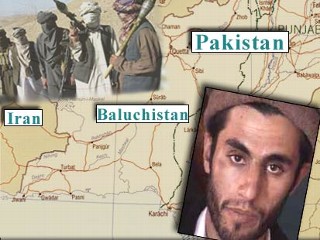
The Oct 18 was one of the deadliest attacks targeting Iran’s 120,000-strong Revolutionary Guards and underscored the growing insurgency threat that Tehran now faces. Jundullah, the Iranian Baluch insurgency led by Abdul Malek Rigi, is based in Sistan-Baluchistan, which borders Pakistan and Afghanistan.

The stated objectives of Jundullah, founded in 2002, have been to protect Baluch rights in Iran. Rigi claimed in an October 2008 interview that his organisation, also known as the People’s Resistance Movement, wanted the Iranian state to respect the human rights, culture and faith of the Sunni Baluch.

In practice, however, Jundullah has widely been held responsible for three of the deadliest terrorist attacks carried out in Sistan-Baluchistan targeting Iranian citizens, government officials and security forces. These were the bomb explosion in May at a mosque in the provincial capital, Zahedan, killing 19, the February 2007 bomb attack killing 11 Iranians, including Revolutionary Guards, and the March 2006 Zahedan bomb attack that killed 22.

However, Jundullah—according to western media as well, including leading American television channels like ABC and British newspapers like The Telegraph—is being funded by the CIA to carry out sabotage against the Iranian government. The birth of the Junduallah group was widely viewed as Washington’s direct hands-on entry into Iranian politics.

It is the American connection that is most worrisome for Tehran. According to Iranian news reports, Abdullhamid Rigi, the brother of Jundullah leader Abdulmalek Rigi, admitted during interrogation by an Iranian court in Zahedan in July that Junduallah was trained and financed by the US. There are reports of the group receiving support from drug barons


Significantly, the Junduallah threat flags also the need for greater sustained and structured security Pakistan-Iran cooperation. For Pakistan the compulsions for security cooperation are numerous.

One, in the midst of what appears to be a serious attempt at strategic course-correction, Pakistan can ill afford to directly or indirectly patronise insurgency groups targeting neighbouring governments. Equally dangerous for Pakistan is the state’s benign neglect of such groups. Two, Pakistan’s experience as a sanctuary for the Afghan resistance groups, which Islamabad was meant to have controlled, has exposed the myth of “controlling” insurgency groups. Clearly, the agendas of resistance groups remain autonomous of the host, and indeed even of the patron, as proven by India’s experience of the LTTE and ours of the various Afghan Mujahideen groups.

Three, with the growing lethal power of sub-state actors operating in cross-border areas the state increasingly wears the look of an endangered species. And to prop up the state back into a fully functioning and effective mode, inter-state cooperation is a must. With distrust among the regional states, victory for insurgency or at least chaos in the region is guaranteed.

For Iran the compulsion for cooperation is equally strong. The pressures on the states in the region, especially Iran and Pakistan, also come from out-of-the-region players like the United States. The United States’ multiple global agendas, including non-proliferation, counter-proliferation, Israel’s security and counter-terrorism have made it a major player in South, Central and South-West Asia. In addition to its troop deployment in Afghanistan, Central Asia, and to a lesser extent some presence in Pakistan, Washington has covert presence in this region. For example, the US legislature has in the past approved funds for the CIA to undermine the Iranian government. In recent history, CIA operations have been used as a policy tool by successive US administrations to strengthen pro-US groups or, indeed, to weaken governments viewed as being detrimental to US interests.

Today with Washington’s expanding threat perceptions and an equally expanding policy failure whether in Afghanistan, Pakistan, Iran and earlier in Iraq, Washington’s covert policy arm will be further activated. This US policy will undoubtedly further weaken states and governments in the region. No state can roll back this covert US influence on its own, because while the state can technically operate within its own territorial sphere the US can support insurgency groups operating across the border. Unless the states in the region do coordinate their efforts to deal with foreign-funded insurgency groups, they are unlikely to succeed.

Clearly, the compulsions override the constraints that may prevent improvement in relations between the two strategically located neighbours. Their common borders, trade routes, religion and the common ethnicity essentially translates into a compulsion which dictates that the neighbours develop shared if not common security structures. Especially in present times where two factors, the well-oiled militant and armed trans-national groups of sub-state actors are gradually beginning to overpower the traditional security structures of the state, unity between states that share borders has become imperative.

Without effective cooperation the states, especially within the region, will find it increasingly impossible to provide security to its citizens. The states in this region will have to go the Europe route. For European states the future threat of Asian economic giants prompted them to opt for greater cooperation at the cost of reduced sovereignty. However, in our region, the security compulsion will dictate greater inter-state cooperation. The future security paradigm will have to locate itself in the reality of enhanced security through shared sovereignty. Common spaces among neighbouring states will evolve only insofar as there is political will to address the chronic problem of trust deficit among neighbouring States.

Reduced trust deficit is a necessary precondition for constructing shared security structures is always reduced trust deficit. For Pakistan and Iran the latest Jundullah attack yet again flags the problem that the security compulsions of the two neighbours require greater trust-building through continuous dialogue and greater cooperation especially on security issues.

The writer is an Islamabad-based security analyst. Email: nasimzehra@hotmail.com (The News)

Ex-CIA agent confirms US ties with Jundullah
Sat, 24 Oct 2009 02:37:41 GMT (Press TV)

A former Central Intelligence Agency officer has confirmed US' relations with the terrorist group Jundullah, despite the CIA knowing that the group has close links with the al-Qaeda.

"American intelligence has also had contact with Jundullah. But that contact, as Iran almost certainly knows, was confined to intelligence-gathering on the country," Robert Baer, a former Middle East CIA field officer wrote on the Time.com, IRNA reported early on Saturday.

However, he noted that the US-Jundullah relationship "was never formalized, and contact was sporadic."

The news comes amid US denial of any involvement in a recent terrorist attack in Sistan-Baluchestan province in southeastern Iran, which Jundullah claimed responsibility for.

"I've been told that the Bush Administration at one point considered Jundullah as a piece in a covert-action campaign against Iran, but the idea was quickly dropped because Jundullah was judged uncontrollable and too close to al-Qaeda. There was no way to be certain that Jundullah would not throw the bombs we paid for back at us," said the former CIA agent who is a columnist in the weekly, and very probably an advisor in the Middle East.

Baer also noted that Pakistan's intelligence agency, the Inter-Services Intelligence (ISI), has had relations with the Jundullah leader, Abdolmalek Rigi.

"Pakistani intelligence has indeed had contact with Jundullah over the years, but there's no good evidence that Pakistan created Jundullah from scratch. And there's certainly no evidence that Pakistan ordered the attack," Baer said in reference to the terrorist attack that took place in Iran on Sunday, October 18, which killed 42 people including the Islamic Revolution Guards Corps commanders.

"In fact, Pakistani intelligence over the past few years has been arresting Jundullah members and turning them over to Iran," he claimed.

This is while earlier on Friday, Iran's Defense Minister Brigadier General Ahmad Vahidi vowed to do everything in his power to hunt down the Jundullah terrorists and bring them to justice.

"This very incident unveiled the true nature of those who call themselves the pioneer in 'war on terrorism'," he said in reference to the United States.

A number of leading newspapers in the West, such as The Sunday Telegraph, have also declared Jundullah to be a CIA brainchild engineered to achieve the longstanding US goal of "regime change in Iran."

Iran's Interior Minister, Mustafa Mohammad Najjar, is currently in Islamabad to ask Pakistani officials to hand over Abdolmalek Rigi and assist Iran on cracking down on his terrorist group.

RZS/SS/MMA

Read more...

Wednesday, 18 February 2009

Swat deal: an act of desperation? - Nasim Zehra

Swat deal: an act of desperation?
Wednesday, February 18, 2009
Nasim Zehra

The writer is an Islamabad-based security analyst

Given the circumstances that have prompted the government to enter into a peace deal with Maulvi Sufi Muhammad of the TNSM and to announce the enforcement of the Adl Regulation 2009 after peace has returned to Swat, it would be simplistic to view these developments primarily as an attempt by the NWFP government to provide speedy justice to the people of the Malakand division and the Kohistan district. Equally, the rejoicing in Swat, by people who for many months had been living in terror and facing acute hardships in their daily lives, is to be attributed more to their yearning for security than hope of speedy justice.

All the political parties have welcomed this deal. They participated in the jirga convened by the chief minister of the NWFP. Only the Jamat-e-Islami opposed the deal, arguing that an end to the army's presence should have accompanied the peace deal.

For over six months the NWFP men in khaki have talked about the Sufi Mohammad option. Through most of 2008 the military's view was that conducting military operations in the populated areas of Swat would mean high civilian casualties. Instead, it believed that Sufi Mohammad could be promised Shariah in exchange for garnering local support for peace and by extension end to the activities of Fazlullah's men. Now the ANP leadership also believes in this approach. Their hope is that Sufi Mohammad will go to Swat soon and hold a peace jirga there. "We hope he will take a white flag and walk through the streets of Swat," one of the masterminds of this Sufi Mohammad plan had said last year.

The politicians and the army have found themselves in a no-win situation, largely, of course, of their own making. Despite two peace deals, one with Sufi Mohammad in May 2006 and one in May 2008 with Fazlullah and three military operations, Operation Mountain Viper(October 2007), November 2007 Rah-e-Haq 1 and Rah-e-Haq 2 (July 2008), the security situation in Swat continued to deteriorate, the writ of the State weakened and conversely the militants were strengthened.

Beyond these deals and military operations throughout 2008 the elected representatives and the army demonstrated an inability to effectively respond to the problem of acute insecurity amidst growing violence and terror. Militant forces strengthened despite the army's presence. The ANP-Fazlullah deal proved unworkable. The army-ANP distrust grew. Especially towards the closing months of 2008, Swat's endangered public was abandoned. Increasingly, a collapsing civilian administration, a non-engaging top national leadership, the hastily departing elected leadership and the locally present but paralysed troops, had left the citizens of Swat at the mercy of the armed militants.

Facts are already well-known of how the militants ruled the public space, terrorised the people, killed and slaughtered at will, destroyed schools and hospitals. In recent weeks official and unofficial sources started acknowledging that the militants had managed the control of 80 percent of Swat's territory.

Meanwhile, the people of Swat, physically destroyed and deeply frustrated by a non-responsive administrative, political and security apparatus, began calling for what they believed would end their nightmare: the imposition of the Shariah. Their calculation was that Shariah being the militants' demand, if it were to be adhered to by Islamabad and Peshawar the blood and terror in their lives would lessen. People turned to the militants even on security matters. For example, M Shah, the head of the Private Schools Association, stated that he invited the militants who had ordered the closing down of girls' schools, to inspect schools and clear them for reopening. He had no confidence in the visibly incapacitated and nearly absent government and the inactive army's ability to provide protection to Swat's private schools.

Until 2007, unchecked by law enforcement agencies, the militants were able to expand in scale and influence under the MMA. The weakening of the State apparatus was a gradual process gathering momentum during the Establishment-supported MMA government in the NWFP.

It is against this backdrop that the people's response to the Adl Regulation must be understood. Exhausted and terrorised they believe that the Regulation will end the bloodshed and enable them to return to their normal daily routines. Within the immediate context it is linked more to seeking security than speedy justice.

The demand for speedy justice is perennial -- a national one, yet accentuated more in some areas and less in others. In the Malakand Agency the movement for Shariah courts as an apparatus able to dispense speedy justice, has been a decade-and-a-half old. The earlier elected government of Benazir Bhutto saw reason in their demand, in spite of it's having emerged from outside of the parliamentary platform and subsequently did the military president Pervez Musharraf.

The two governments responded with the 1993 and 1999 Adl Regulations. The latest Regulation, if implemented, will ensure that the Apellate Court for the Qazi Court will be in the Malakand Agency, not outside of it. This in, and of, itself may not necessarily be the crucial question that arises from the new Regulation. It is more the question of who will be nominated with what credentials and from which school of Shariah orientation to the Appellate benches. On the issue of a parallel judicial system, given that in 1993 and 1999 Qazi Courts were already functioning in the Malakand Division, the parallel system already exists.

The key areas of concern with regard to the Feb 16 developments are two that the government cannot afford to ignore. One, that if the government, under duress from the armed militants, has moved the Adl Regulation 2009 Bill, what message does it send to other armed groups using crime and terrorism as blackmail tools to get their demands met? For example, this could include the Tehreek-e-Taliban of Pakistan. Two, what if the non-TNSM militants spreading acute terror and insecurity in Swat demand that the Adl Regulation 2009 plus more of Shariah be implemented before they would stop their activities? Already, Maulvi Fazlullah's spokesman, Muslim Khan, has said that the 10-day ceasefire is there to check out the government's intentions. They seek Shariah, surely of their own version, before there can be peace. Without Shariah there can be no peace, Muslim Khan clearly stated. Three, if Fazlullah decides he and his men do not agree with the government-TNSM peace accord, what practical value will the accord have as a security-enhancer for Swat? The armed men are with Fazlullah, not with the TNSM.

These risks are there, but the NWFP government, the Army and the agencies, and the governor, all believe that this peace deal and the Regulation are the only way out of the current crisis. The president, who cleared these moves after about ten weeks of delay, has conditioned his signing of the Adl Regulation 2009 on peace in Swat. Establishing peace through negotiations depends largely on Sufi Mohammad persuading Fazlullah to "play ball." There may be a temporary halt in the fighting, but whether long-haul peace will flow from these negotiations is unclear. The odds do not heavily favour it. (The News)


Email: nasimzehra@hotmail.com

Some relevant comments:

Utmankhel1 said:

Dear all, dont think so muche, whether the deal works or not is decided in GHQ not by Fazlullah.
From the look of it, this does not sound an agreement by any standards. It seems more like Sufi Mohammad is feeling guilty for his role in starting this bloody game and now since he is dying he wants to undo some of his dirty work.

So far as ANP is concerned, well they did not have any option left.

1) They sent army to curb militancy, Army did the opposite; out of the 2700 killed in Swat, 100 are militants while 2500 are civilians. There is no point continuing the military operation.

2) Taliban’s representatives like Imran and Qazi were shouting full throttle for dialogue, and the right-wing media was out fully supporting them, so ANP had to do that.

3)ANP is trying to strip Taliban of any legitimacy in their demands. Sharia was one, though everybody knows it is strategic depth and not shariat which is the motive.
Read more...

Wednesday, 4 February 2009

Pakistan's eight points for Holbrooke - How to restore peace in Afghanistan and FATA

Wednesday, February 04, 2009

Nasim Zehra

The writer is an Islamabad-based security analyst

Speaking in Washington to a conference sponsored by the Reserve Officers Association on Monday, Chairman of the Joint Chief of Staff Admiral Mike Mullen said, "I never talk about Afghanistan without mentioning Pakistan."

Mullen emphasized two key issues:

One, that "establishing good governance is the lead issue for Afghanistan." Two, that policy discussions on Afghanistan policy discussions must include ample consideration of extremist forces being able to set up shop in neighbouring Pakistan. Mullen's general focus was on the possible resources crunch that may hit US military operations in these times of recession.

For Pakistan Mullen's views on Afghanistan are significant.

Mullen, like many others in the Obama administration, are emphasising both the significance and the need to defeat the insurgency. The expectation from Pakistan is that it will help in ensuring the defeat of the Taliban. How realistic this expectation is and what kind of policy is likely to at least initiate a viable political and security-enforcement process in Afghanistan are key questions for

Pakistan--which has suffered greatly because of its own policies and the policies of other countries in this country.

In addition to the deployment of 30,000 additional US troops in Afghanistan the appointment of General Eikenberry as ambassador to Afghanistan is also on the cards. Eikenberry, completed his 18-month command in Afghanistan in 2007, is familiar with that country's complex problems and knows the players in Afghanistan.

Significantly, if Eikenberry's appointment goes through, the Obama administration will have four influential voices on Afghanistan, men with military orientation. The others are General David Petraeus, head of the Central Command, General David McKiernan, the top commander in Afghanistan, and General James Jones, a retired Marine Corps officer who is Obama's national security adviser.

To signal the importance that Afghanistan holds for the Obama administration Ambassador Holbrooke will shortly be arriving in Pakistan. As Holbrooke arrives what is it that Pakistan is planning to tell him? How does Pakistan view the situation, what is Pakistan's advice to Washington? Perhaps Pakistan must present its comprehensive position to Holbrooke. As Pakistan works on improving its relations with Kabul and also communicates its concerns to Washington perhaps the bulk of its views on Afghanistan have already been shared with Kabul and Washington. But the Holbrooke visit warrants a comprehensive recall. Such a policy-based recall must include the following eight points.

One, the key trigger for Pakistan's own expanding and complex FATA problem lies in the continued war in Afghanistan. The problem is Afghanistan, not FATA. A near, not absolute, historical analogy could be FATA being for the Afghans today what Cambodia was for the Vietnamese. The Americans must not misread the situation today. Another Vietnam neither can the Americans afford nor can our already volatile region.

Two, unless a genuine political reconciliation effort is initiated in Afghanistan there will never be peace in Afghanistan. Taliban have to be the key interlocutors for whoever governs from Kabul. Many senior officials, including generals from NATO countries, have repeatedly maintained that there is no military solution to Afghanistan's problems. It is for this reason alone that Washington's NATO allies have been reluctant to send additional forces to Afghanistan and to provide transport helicopters, military trainers and other support personnel. Only recently has the US defence secretary Robert Gates openly criticised the NATO allies for not delivering on their promises.

Three, making Karzai the fall guy for a failed policy will not help, but removing the flaws in Washington's Afghan policy will. The key flaw has been Washington's objective to seek the political death of the Taliban either by military defeat or by surrender. Eight years of this policy has brought death and destruction to the Afghan people. No less has this brought about the expanding military control and political influence of the Taliban.

Four, US drone attacks on Pakistani territory causing the death of innocent Pakistanis must stop. These attacks have continued to compromise Pakistan's own effort to deal with the source of an acute internal security crisis. For example, Pakistan's own effort to deal with terrorism is weakened as US drone attacks strengthen the ranks of the lethally angry and armed militias and criminals.

Five, to aid Pakistan in tracking and fighting militants operating within Pakistani territory and from keeping its Pakistan-Afghan border secure against movement of foreign militants, Washington should provide Pakistan the military means that Pakistani forces have repeatedly requested to ensure effective intelligence gathering, night-time vision and aerial mobility.
It is evidently Washington's lack of trust in its key non-ISAF military partner that has prevented the Americans from providing this equipment to Pakistani. In some respects the distrust is reminiscent of the mid-eighties when Pakistan, as a key partner in the CIA- funded war, wanted to purchase AWACS from the US. While the US military recommended the sales the State Department opposed it on the plea that Pakistan would use them against India. Maybe an accurate assessment. However, what is absolutely true today is that greater trust among these non-NATO allies is an absolute must if the situation in Afghanistan and Pakistan is to improve.

Six, the mini-jirga process must be viewed as an integral part of resolving the Afghan crisis. The jirga process, to be led by Kabul and Islamabad, should get the full backing of all the foreign players in Afghanistan.

Seven, to deal with the continuing crisis of governance there must be a multiple increase in US expenditure on development activities in Afghanistan.
According to recent reports for every 100 million dollars being spent on military activities in Afghanistan only seven million dollars is being spent on development.

Eight, Afghan refugees must return to Afghanistan.
The unbearable pressure of almost three million refugees on Pakistan, a country already reeling under resource constraints and new challenges of security, must end. The international community has to be more supportive and appreciative of Pakistan's Afghan refugee problem.

Pakistan must present its position clearly and cogently. Unless Washington recasts its Afghan policy in a politico-military cast there will be no end to war in Afghanistan. Endless war in Afghanistan also means continued warring and destabilisation in the bordering regions within Pakistan. In the decade of the eighties the primary roots of Afghanistan lay in its neighbourhood, including Pakistan, and in distant capitals including Washington, London and Riyadh, where policies for defeating the "evil Soviets" were being prepared and bankrolled. The Soviet invasion was rolled back and the Soviet Union was broke up, but the huge costs involved included a warring Afghanistan, a security nightmare in many parts of Pakistan, including the NWFP, the rise of trans-national, militarised and violent militias using religion, the emergence of suicide bombers, the rise of political extremism, and so on.

Pakistan fully partnered, and indeed authored, the anti-Soviet war of the eighties. Its fallout on Pakistan leaves no doubt in the minds of Pakistanis that that policy was a very costly blunder committed by military dictator General Zia-ul-Haq. Agha Shahi, Pakistan's illustrious foreign minister at that time, had warned the general against an "embrace" with the Americans over Afghanistan. Shahi's famous words were, "Only a handshake with the American not an embrace." But Pakistan's ruling generals were then evidently confident that they could manage an "embrace" on their own terms. From Pakistan's blunder of the eighties onwards our policymakers should have learnt the virtue of wisdom and of realism in policymaking. Now is the time for them to invoke that virtue.

Ambassador Holbrooke should be told that unless a holistic politico-military and development approach to resolving the Afghan problem is adopted, his efforts to initiate a regional peace process in Afghanistan will not succeed.
More importantly for Pakistan, it cannot afford a scenario of continued war in Afghanistan. The positive outcome of Pakistan's participation in the US and ISAF effort in Afghanistan will depend largely on the extent to which the US will incorporate the above eight points in its Afghan strategy. (The News)

Email: nasimzehra@hotmail.com
Read more...

Wednesday, 14 January 2009

Swat's burning questions - By Nasim Zehra


Wednesday, January 14, 2009
Nasim Zehra

In Swat terror and fear are spreading. Government employees, including policemen, teachers and LHVs, walk around with resignations in their hands. In case they are accosted by armed militants opposed to the government and to women working they can produce these resignations to avoid being kidnapped, killed or punished. To avoid becoming targets of militants' wrath the LHVs are announcing through advertisements in local newspapers like Azadi that they have resigned.

People are terrorised. In addition to occasional high-profile political killings, in about the last three weeks targeted killings have also begun. The militants are killing people, slitting their heads and then keep their heads on their bodies and order that no one remove the bodies before midday. Policemen, social activists, ordinary citizens, political people and citizens have been killed.

Even in Mingora city people at work lock their doors.

Terrorised by the deteriorating security conditions at least 200,000 of Swat's 1.7 million population have left Swat. The local influentials who can financially and socially afford the exit option have exited. Major political families from Swat, including that of an ANP provincial minister from Matta, the Nazim of Swat's family and families of most ANP and PML-Q elected representatives. Union council ward level officeholders are giving in their resignations.

The civil administration, even in urban Swat, including Mingora, Kuzabandi, Imamdheri, Chaharbagh, Barikot and Saidu Sharif, is non-existent.

Curfew is imposed on Swat between 10 p.m. and 6 a.m. From 11 a.m. to 4 p.m., the army and whatever is left of the police, is present in the city. At sundown for fear of travelling in the dark people begin heading home. Even in the army's presence people are scared. Journalists operate in total fear. According to one: "I have fear that if I talk to anyone it may go to the militants."

Burning of schools was unheard of in Swat and over 200 have been torched. The main source of livelihood for the locals, hotel and tourism, is at a complete standstill, if not almost destroyed.

In this acutely volatile and deteriorating security situation people's mobility is greatly restricted. Main bridges and main roads are either closed down or with excessive security checking vehicles' movement takes place at snail's pace. People complain that check posts are set up merely add to people's inconvenience without ever nabbing any militants.

Movement to Mingora from Matta and Khawaza khela is impossibly tedious. Similarly, movement on the Sangota side from Shangal to Khawaza Khela and from Mingora to Kalam valley has also become very difficult, especially after the suicide bombing.

The question that most residents of Swat may well ask is what, after all, has the army's presence done for the security of the locals? Despite the army's presence the situation has deteriorated. The army maintains the ANP's post-election accord with the militants gave them time to regroup and re-strengthen themselves.

The ANP also maintains the negotiations did not succeed because the army did not let the ANP honour the agreements in the accord. For example, release of militants. The army was dead against release of "criminals." The ANP recalls release of militants by the army to secure release of its own soldiers captured by militants in Waziristan. The army leadership also cynically questioned how those who were killing civilians would help the civilian administration "uphold the writ of the State."

The ANP believes, and perhaps correctly, that as a political force it had to give dialogue a chance. However, that dialogue has not yielded peace. The Army and ANP's inability to devise a unified approach towards dialogue must have contributed to the strengthening of the militants. Meanwhile, the non-political locals, including social activists, media personnel and influentials who were mindful of their own experiences, were complaining since the beginning of 2008 that the militants have an agenda which they will not give up as part of any peace deal with the ANP. They wanted closure of schools, women being kept away from any public space including schools. Throughout 2008 many complained the militants strengthened themselves. Weapons gathering by the militants was unstoppable, as was their free movement in and around and to and from Swat. In Swat people kept complaining that weapons were flowing into the city, but no one stopped the flow.

They complain the ANP never understood the nature of the problem while the army never went after them but in a half-hearted manner. Militants kept expanding influence, beyond Matta. Many complain that with two army check posts the militants moved freely between them.

Many argue that the army's strategy has never made sense to the locals because they have never managed to weaken the militants. For example, the army had people vacate Kuzabanday and Kabal. Then they bombarded their houses. There were minimal casualties and after the operation essentially the militants walked away, intact and undiminished. The population returned to the destroyed houses.

Some cynics complain the army is standing there and mostly protecting the militants. "When the army is there and the militants there too, but no action taken against the militants. What should we understand?" complained a resident from Swat now in Islamabad.

The army, many from Swat now in Peshawar complain, did not protect those who stood up against the Taliban. For example, a Khan near Peuchaar, who was opposed to the Taliban about two weeks ago. Five hundred Taliban surrounded his house. He and his son fought them through the night and then were finally killed. The calls to the army for help went unheard. The Army was stationed a couple of miles away.

Similarly there are other stories that the locals narrate. For example, about the Gujjars fighting the militants and the army, which was only 200-300 yards away, not protecting them. The army present told the Gujjars we have no orders so we cannot fight. Hence the Gujjar community opposed the militants and they were killed because the army provided them no protection and no support. Two or three weeks ago the local Peer was killed. He opposed the militants, and they killed him. After he was buried by his own people, the militants came and pulled his body out of the grave and hung it. The army was a few hundred yards away and calls were being made for help.

Public conjectures are endless and varied: the army has no will to go after the militants, the ANP is following the American line, the army and the militants are one, the army is trapping the ANP, the Police, the FC and the local citizens are being killed while the army is safe, if the army leaves the locals can make compromises with the militants and be in peace, the army is anyway scared of the militants; is it "scared" because it fears casualties, it does not understand the nature of the threat, etc.

Clearly the Pakistanis of Swat have zero faith in the institutions of their own country. Can we blame them? (The News)


The writer is an Islamabad-based security analyst. Email: nasimzehra@hotmail.com

Read more...

Wednesday, 26 November 2008

A confusing policy on drone attacks - by Nasim Zehra

Wednesday, November 26, 2008 (The News)

The gap is too obvious between what Pakistani government representatives state and what appears to be the reality. For example, the recent statements by the president and prime minister hoping that the Obama administration will end drone attacks on Pakistan's territory are in direct contrast with reliable reports that come in from Washington. According to a report the Wall Street Journal on Nov 18, "the US Army is preparing to deploy a network of drones and other surveillance aircraft to Afghanistan in an expanding effort to defeat the resurgent Taliban and reverse a downward spiral in the country."

The report (titled "US to expand drone use, other surveillance in Afghanistan"), further states that "the effort, known as Task Force ODIN-A, is set to begin early next year and will coincide with the planned deployments of thousands of American troop reinforcements to Afghanistan."

Quoting "senior US military officials" and "official sources," the report elaborates that drones and manned surveillance aircraft "will be deployed to identify insurgent targets inside Afghanistan, including on the Afghan side of the border with Pakistan. The military will use the information to launch airstrikes and ground attacks on militants." Hence, drone attacks, for now according to US plans, are here to stay.

Similarly, on the one hand the president and prime minister both complain that drone attacks are responsible for the deteriorating security situation within Pakistan and yet there are no signs of any strain in Pakistan-US relations on any front. The official press note stated after a recent meeting the president and the prime minister that the two men agreed that the US drone attacks have been undermining Pakistan's efforts to fight terrorism within Pakistan and have also increased the number of suicide bombings within Pakistan. But US and NATO commanders claim that their relations with their Pakistani counterparts have never been better.

Clearly, all is not known to the people of Pakistan on the understanding that exists between the US administration and the Pakistani government on the drone attacks. Based on reliable information available in the public sphere, Pakistani officials issue anti-drone statements but such statements often lack any substantive and sober reference to Washington's violation of international law and Pakistan's sovereignty in these attacks. These weak statements are also never backed by either the threat of action or in fact the taking of any real action to deter Washington from launching further drone attacks.

The civilian government has raised its mildly stated objection to the drone attacks. In his pre-Sharm el Shiekh meeting with the US president the Pakistani prime minister has flagged the issue of drone attacks with the US ambassador in Pakistan. Ambassador Anne Patterson was as candid about the US policy of pursuing militants inside Pakistan as was General Mullen during his September visit to Pakistan. Both US officials were unable to guarantee that there would be no repeats of either the drone attacks or, even worse, the first-ever ground attack on Pakistani territory on Sept from Pakistan's western borders by a foreign force.

The public statements following meetings between the US president and the Pakistani president and prime minister have never once included a clear-cut articulation by Pakistani officials that US drone attacks are unacceptable because they undermine Pakistan's sovereignty.

This is anything but plausible deniability. This flimsy policy, where words and actions do not match, has created endless public cynicism vis-a-vis the government. There are few Pakistanis who believe that the government is serious about wanting the US to stop the drone attacks. Some believe the understanding of the Musharraf days, where the US would inform the Pakistanis just minutes before launching drone attacks, was a slippery slope policy. In fact while Gen Musharraf was still in power, the US conducted two attacks without pre-warning and seeking permission from the Pakistani government.

With the civilian government in power, the US has continued on the same track. Some in Pakistan believe that the civilian government, with the army's support, has given US the clearance to carry out these attacks. Others believe the army is not pleased with this policy of the US conducting drone attacks without Pakistan's permission. The divide in public opinion perhaps is based on logical inferences, conjecture and people's own political preferences. It cannot be different. Pakistan's position on the drone factor is a flimsy and confused position drained of credibility.

Military cooperation between Pakistan and the US seems to be at an all-time high. This, too, at an operational level covering Afghanistan and Pakistan's own tribal areas. The institutional cooperation on multiple fronts also continues. So, what is the cost to the US of violating the sovereignty of Pakistan and of killing its innocent citizens, even if as "collateral damage?" None at all.

It does not earn the government plausible deniability, nor does it earn people's confidence, nor even US trust. The loss of innocent Pakistani lives is a major issue for which the government of Pakistan seems unable to take an action, other than calling in the US ambassador to complain occasionally or to issue rhetorical statements. The respect and protection of the life and dignity is a primary constitutional responsibility of the state and the government.

Instead, on the drone issue the government seems to be a loser on many fronts. The government of Pakistan appears to hunt with the hound and run with the hare. It doesn't walk the talk. It protests so loudly and acts so meekly. Is it because there is a plan whereby Pakistan believes that the drone attacks are helping Pakistan to get Al Qaeda "high value" targets who are also harming Pakistan? This too is unclear. One, because the claim of the eight high-value targets from the Al Qaeda leaders having been killed is still doubtful. Secondly, because the killing of innocent Pakistanis by US drone attacks is adding to radicalism in Pakistan.

The government of Pakistan, as well as the army leadership, has to be clear on what is at stake. This incoherent and questionable policy on the drone attacks is also putting Pakistan's future security at stake. If the US has arrogated to itself the right to hit at Pakistan's territory based on its own intelligence and without any UN mandate, which other country would follow suit tomorrow?

Pakistan needs a coherent policy on the drones. But that must include the US as partners. Such a possibility will come only when the US recognises that without the trust factor between Pakistan and the US no counter-insurgency efforts is likely to succeed. For Pakistan a made-in-Pakistan policy factoring in external concerns is crucial. But the onus of that is on Pakistan, not the US. (The News)

The writer is an Islamabad-based security analyst. Email: nasimzehra@hotmail.com
Read more...

Wednesday, 22 October 2008

Pakistan's war on terror, the discussion in the parliament and the political point scoring by PML-N and PML-Q - Nasim Zehra

Parliament's role in fighting terror
Wednesday, October 22, 2008
Nasim Zehra

The writer is an Islamabad-based security analyst

Almost two weeks into the in-camera session on the security situation, and especially the tribal areas, many questions regarding its usefulness are being raised. For example, are we closer to having evolved a better policy response to Pakistan's security problem? Are we closer to having evolved a policy for the tribal areas that is any different from what the government has hitherto been pursuing? Are we headed towards greater and broader political ownership of policy? Is there a greater national consensus behind ownership of the policy?

There are no straightforward answers to these questions, simply because the in-camera session is only one of the many elements within the broader policy formulation and policy implementation context in which there are many other elements influencing policy and its implementation.

For example, the briefing has been taking place against the backdrop of significant actions. These have ranged from major military operations in Bajaur and Swat to a peace agreement between the warring groups in the Kurram agency; from high-level engagement with the United States government on operational-level cooperation, including training and equipment, to ongoing negotiations within the Tripartite Commission framework on Pakistan-Afghanistan border issues; from ongoing dialogue with Kabul to the convening of the Pakistani-Afghan mini-jirga; from the emergence in the tribal areas of the local lashkars now disenchanted by the militant leadership they had earlier supported to the Oct 14 fatwa by the Muttahida Ulema Council in Lahore declaring that suicide bombing is un-Islamic and only the State has the right to declare jihad.

All these factors underscore the important reality that under discussion in Parliament is an ongoing situation. The challenge and the policy under discussion is one that Pakistan has been confronted with for over half-a-decade. Consequently, there is also a response dynamic, however flawed and inadequate, that is already at work. This is a major limiting factor in a situation if the political demand, as in this case, of a section of politicians would be to go back to the drawing board and draw a fresh policy. Such a demand and expectation would be inherently flawed; one that fails to appreciate the dynamics of policy formulation and implementation. However, what would be more practical if the critics of the existing policy would recommend potentially more effective policy alternatives. Such an undertaking would require a coherent and logical presentation, backed by facts and experiential wisdom, of recommended policy alternatives.

The response of the politicians from the non-ruling parties, especially the PML-N and PML-Q, has combined political point-scoring with some serious engagement with the process issues related to the briefing. Meanwhile, the diminishing interest of the PPP parliamentarians prompted the Speaker to urge them to take greater interest.

On the process issue, the PML-N made a major contribution towards making the present session into a genuinely parliamentary discussion session. Originally the government had planned it to be a limited purpose session in which the Parliament would be presented the ground situation by the Director General of Military Operations to be followed by two questions each from all present political parties. The government responded positively to the PML-N's recommendations. These included that the Q&A be spread over a day and be followed by another presentation by a government representative presenting the government's present and mid-term threat perception and its broader impact on the country, the contents of the Pakistan-US cooperation agreement and recommended policy options to deal with the situation. As a consequence the briefing has extended into a two-week plus session. That the session was extended on the opposition's demand and all representatives are getting an opportunity to participate in the discussion means that a democratic exercise in underway. The process of debate and dialogue is intrinsic and crucial to genuine democracy. To that extent the session is a plus.

However, how valuable this session is for policy formulation and, indeed, for public good and overall national security will depend on its final outcome. And that depends largely on the non-ruling parties. The government has conceded to their process recommendations and these non-ruling parties must demonstrate to the public that they have practical wisdom to a policy that is already in operation. It is a policy that now seems to be showing some mixed results but criticisms too are aplenty.

Policymakers and parliamentarians, however, do not have the luxury to indulge constantly in rhetoric and points-scoring. For the positions that they acquire through public vote, the parliamentarians opt for a constitutional undertaking to be responsible for competent management of state and society through appropriate laws, structures and processes. This is what the public now expects from the parliamentarians as they debate the security problem in the Parliament.

Some of the point-scoring is almost inevitable. The PML-Q, PML-N and others from the non-ruling parties have been repeating their criticism of the tribal area policy and also of the in-camera briefings. They mostly insist that "this is not our war" and demand that Pakistan discontinue its close cooperation with the US on this war on terrorism which is now being fought on Pakistani territory. They demand dialogue with the militants and argue that because of pro-US policies Pakistani security forces have launched military operations in the tribal areas against Pakistani citizens and killing many innocent civilians.

The parliamentarians' criticism of the briefing has been that the information regarding the ground situation and policy content provided to them has already been available in the public arena. For example, they complain that they have not been provided any new facts regarding the government's commitments made to the US about Pakistan's clearance to US operations in the tribal areas and support to US operations in Afghanistan. The PML-N and PML-Q may not be entirely wrong. Yet this criticism alone will only signal poverty of serious and responsible politics. There are enough information and facts available to the non-ruling parties to make detailed, viable and concrete suggestions for improving the existing security policy especially dealing with the tribal areas. The PML-N will soon be suggesting to the prime minister to set up a smaller all-parliamentary committee which must get a more detailed briefing on the security situation and the committee should make concrete recommendations for policy improvement.

To the extent that this will keep all the parties involved in a dialogue process over the question of security this would be a positive move. However, as concrete recommendations for substantive policy improvement those have not been forthcoming from any political party. It is time that Pakistan's political parties get more serious about what it takes to run the business of state and society. It certainly takes more serious and competent mind work. Rhetoric and good intentions alone won't do it. (The News)

Email: nasimzehra@hotmail.com
Read more...
