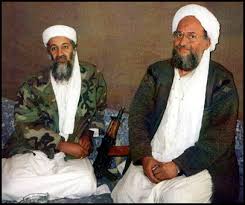
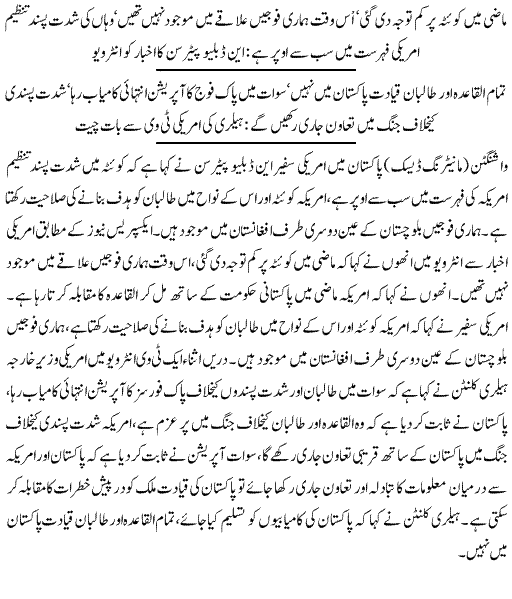
1. The majority of the USA drone attacks on Pakistan's tribal areas are quite precise in hitting their targets, i.e. Uzbek, Arab, and other foreign and local militant training / operation centers in Pakistan's tribal areas. (Read the news reports below; also General Talat Masood's op-ed).
2. The Government of Pakistan must fully explain and support the drone attack policy on the Al-Qaeda and Taliban hideouts in the FATA. (Read Ejaz Haider's op-ed below).
3. The Taliban and Al-Qaeda are using civilian houses as sanctuaries to inflict maximum damage on innocent civilians to gains sympathies of the local population. Pakistan Government must warn local tribes/ villagers to strictly monitor/kick out terrorists from their respective villages / areas.
4. Pakistan and the USA must improve the quality and precision of such attacks to avoid the unfortunate loss of innocent lives.
........
Letter to the Editor (Dawn, 27 Sep 2008, http://www.dawn.com/2008/09/27/letted.htm)
Misplaced sense of sovereigntyWHEN militants, many of them
foreigners of Uzbek, Arab and Chechen origin, undertake a suicide attack inside Pakistan, killing and maiming innocent non-combatant citizens, these acts are treated deja vu by the religio-political parties.
When American pilotless aircraft, the drones, zero in on and attack the masterminds of these suicide attacks, in the tribal area, the religio-political parties raise a storm of protest on the grounds that the sovereignty of Pakistan has been threatened.
The media too, inadvertently, follows the line of the religio-political parties and creates a hype and makes it look as if the Americans have done great harm to Pakistan while the other set of
foreigners, i.e. Arab, Chechen, Uzbek militants, have played no role in a persistent effort to destabilise Pakistan.
Probably, the media and, in turn, the general public forget that the vast majority of the militant leaders that plan suicide attacks inside Pakistan are the former students of the seminaries controlled by the leaders who are in the forefront to raise a storm of protests, when an isolated drone attack takes place by the Americans but these leaders observe absolute silence when the militants carry out suicide attacks that inflict devastating damage on Pakistan’s human and material assets.
Sovereignty of Pakistan is being threatened by the
foreigners in the form of militants for the past eight years, resulting in weakening the very foundation of the country.
Seen neutrally, it will dawn on critics of the drone attacks that the Americans are assisting Pakistan by annihilating the masterminds that sit in the tribal areas, plan, prepare and dispatch suicide attackers who play havoc with life and property in the urban Pakistan.
Let us admit that the militants are not only successful, through use of brutal force, in keeping Pakistan in a state of insecurity, they are more successful in spreading effective psychological warfare by creating the impression that their fight against Pakistan’s armed forces or its citizens is not an attack on the sovereignty of Pakistan.
M. SAYED GB SHAH BOKHARI
Peshawar
.......
A deal on drones?Tuesday, November 18, 2008 (The News, Editorial)
A report in a US paper states that the present government has struck a deal with the Washington administration, under which drone attacks will be vociferously protested but allowed to continue. In turn, under this agreement, the US will make no comment on these assaults across the frontier, but will not alter its policies. The report suggests that in exchange, no ground action will be conducted by US troops within Pakistani territory.
Certainly, even though it has been described as 'baseless' by the Foreign Office, the account seems plausible. It is also clear that the current government's aggressive offensive against militants has pleased Washington. But given the sensitivities involved and the unanimous resolution in parliament against US intervention, no strategy of deceit can work indefinitely. No government can succeed by fooling its people or attempting to keep them in the dark. The dilemmas we face regarding the war on terror needs to be addressed head on. This is not a battle Pakistan can win unsupported, but the nature of that support is a matter for debate. What is also needed is for people to be taken on board to fight the war, rather than left isolated and confused on the outskirts. At some point, Pakistan's government must consider coming clean with its people, taking them into confidence as to its aims and intentions and involving them fully in the effort. It may find more support than it anticipates for an all-out bid to oust militants as many people in our villages and in our cities seem convinced that there is a need to oust militants from our midst and retrieve the more peaceful existence we seem to have left behind somewhere in the distant past.
.......
‘US drone attacks not helping win hearts and minds’ - says Zardari 15 Nov 2008
NEW YORK: US strikes inside Pakistan are undermining efforts to win the hearts and minds of people, said President Asif Ali Zardari on Friday. “It’s undermining my (nation’s) sovereignty and it’s not helping win the war (on terror) or the hearts and minds of people,” Zardari told CBS News in an exclusive interview. He said the attacks were being carried out without his knowledge. He said the new US administration must let Pakistan deal with the Taliban on its own, as “we want to do more ... it’s our own war”. Pakistan would not allow the use of the Tribal Areas for an attack on the US, he added. agencies (Daily Times, 15 November 2008)
.....
Time for a rethink — By Talat Masood
American insensitivity to public opinion in Pakistan and Afghanistan builds up anger from which the militants immensely benefit. In combating insurgency, it has to be ensured that the pool of insurgents does not increase
The United States, blatantly ignoring public reaction in Pakistan, has intensified missile and drone strikes in Pakistan’s tribal areas. This has far-reaching implications not only for US-Pakistan relations, but also on Pakistan’s domestic stability, the military’s role in the war on terror and the concept of sovereignty.
There is no doubt that the US military and the CIA, with better intelligence and sophisticated technology, have been more accurate in their targeting. They have also been successful in hitting at least mid-level Al Qaeda and Taliban leaders, and with less collateral damage. Apparently, improved targeting has been possible by integrating the latest technology with a reliable network of human intelligence that places transmitters at the right places for the drones to respond.
The political implication of the US hitting relatively mid- to high-value targets in the tribal areas weakens Pakistan’s case that the US is violating its sovereignty. From the American perspective, if these lands are not under the effective control of the Pakistani state, and the Taliban and Al Qaeda are operating freely, launching attacks on US and NATO troops from their FATA safe havens, then there is no option but to act. The strike that took out Rashid Rauf in North Waziristan clearly demonstrated this weakness.US strikes are putting the militants on the defensive, keeping them off balance, and according to ISAF, have reduced the Taliban and Al Qaeda’s ability to launch attacks inside Afghanistan. If the pressure on these militant forces is sustained, their sanctuaries will shrink, which would have a salutary effect all around.
The other side of the picture that, for Pakistan, these strikes are a huge embarrassment. An ally is challenging its sovereignty and independence repeatedly and humiliatingly. Another serious problem is that these drone and missile strikes are gradually creeping forward to the settled areas. A government that is already under criticism and has credibility issues is being made to look helpless in the face of US attacks. The leadership, especially President Asif Zardari, is losing popularity and no one is prepared to take seriously the official condemnations that follow every incident.
The intensification of air strikes could in the long-term further fuel the insurgency by aligning several militant groups to work together and weaken the democratic government. This war has to be won through the people’s support, and the advantage that a democratically elected government has over a dictatorship is obliterated if the former is seen as helpless against US strikes. In fact, drone strikes are diverting attention from combating insurgency, and anti-Americanism is on the rise. And even if the militants seem to be losing tactically in the short-term, there will be a long-term rise in the number of militants as well as the number of alienated people. There is further negative blowback as the militants hold the government complicit in these attacks.
It is widely believed that a tacit agreement exists between the US and Pakistan, and it is for that reason that the Pakistani leadership only makes noises without reciprocating effectively. It is possible that President Musharraf may have given verbal approval for strikes against high-value targets. It was widely reported that President Bush had given permission for incursions inside Pakistani territory in July this year.
The serious flaw in this policy, however, is that it sets a bad precedent. Other countries may follow suit and start carrying out strikes inside another state on the basis of assumed potential threat.
With relatively better security for hard targets in Pakistan, militants are now aiming at soft targets, including mosques, funerals, sports events and cultural festivals. The government could have capitalised on the revulsion generated against the Taliban for these inhumane and dastardly acts if it was not perceived to be weak for not taking a firm position against the US.
No one expects, or wishes, that Pakistan should respond militarily to US incursions, for that would be most imprudent. But it could seek to renegotiate the terms of agreement in the war on terror. That most coalition supplies and logistics pass through Pakistan could give it greater leverage.
Interestingly, NATO is now claiming that all round cooperation and coordination with Pakistan Army is good, and insurgents on both sides of the border are being kept under pressure. The improved level of cooperation is due to President Zardari and COAS General Kayani’s commitment to combating insurgency. They are clear on where they stand with the militants, which is different from General Musharraf’s policy of running with the hare and hunting with the hounds.
As the level of trust with NATO and the US has improved, there is no reason why the US should not seriously review its policy on drone and missile strikes inside Pakistani territory. The fight against Al Qaeda and the Taliban on Pakistani soil has to be left solely to the Pakistani military. In the process, it may suffer casualties, but the country would be saved from instability. The US should primarily focus on economic activity and assist Pakistan in building its capacities, which includes sharing of technology and intelligence with the Pakistani military.
American insensitivity to public opinion in Pakistan and Afghanistan builds up anger from which the militants immensely benefit. In combating insurgency, it has to be ensured that the pool of insurgents does not increase while the militants are being eliminated. It is self-defeating to increase the size of the enemy and reduce one’s support base. In this context, our army’s policy of playing on internal fissures among the tribes to re-establish state control has its merits, if executed properly.
Hopefully, the incoming president will improve America’s image as a world leader, and will adhere to international law to gain support of the people, especially in countries with whom the US is allied in the war on terror.
The writer is a retired Lieutenant General of the Pakistan Army. He can be reached at talat@comsats.net.pk (Daily Times, 27 Nov 2008)
...
Let’s give Mr Mukhtar an easier ministry —Ejaz Haider (Daily Times, 10 Nov 2008)
It is more untenable to abdicate all responsibility for the drone strikes. Even if we weren’t calling for them, if the strikes do end up taking out targets, the cost of owning them would have been much less than creating an impression that there is damn-all we can do about them
Forgive my lack of politeness but sometimes it serves to get right to the point. The government should immediately relieve Chaudhry Ahmed Mukhtar of his current portfolio.
Mr Mukhtar is a senior PPP leader and has done much for the party. Given that and given our system of patronage, he should be rewarded. So that’s not the point of contention. He should be a minister; only, the ministry of defence can do without him and be none the worse for it. Here’s why.
It is a matter of consternation that despite the rhetoric about civil-military imbalance and the presumed need for civilians to develop the capacity to effectively monitor the military, the defence ministry has never really been given the importance it should have been accorded. Surprising, because one would have thought that civilian governments would attempt, through various measures, to reclaim the powers of the ministry.
That has not happened. If anything, either the MoD has not had a full-time minister or it has been treated as a peripheral ministry. Mr Mukhtar as defence minister is about as useful as Huckleberry Finn would be at the head of a fighting corps.
Mr Mukhtar is a decent man, no doubt about that. But he is inarticulate, knows nothing about his current job, says things that are either patently wrong or undiplomatic or both, and, just notice his expression the next time he talks to the press, looks visibly and completely distraught by his current calling.
The bloody Americans won’t stop drone attacks and he is in the unenviable position of having to explain the strikes to a media bristling with sovereignty. What does he say: “Hum iss qabil nahin keh Amreeki fauj say larr sakain”. Excuse me? That’s not what the parliament said. The parliament, of which Mr Mukhtar is a part, said it would defend the sovereignty of this country come what may.
Here’s the problem. Because Mr Mukhtar doesn’t know the nuances, he can say one of two things. “We will defend our sovereignty”, in which case people will ask why the drone attacks continue. Or he can say “We can’t fight the Americans”, in which case while people will “understand” why drone attacks will continue, the “reality” is not going to do much for the reputation of either the army or the civilian government.
Of course he could have, if only he had known how to, explained the drone attacks as strikes that may not be entirely unilateral. He could have talked about how targets and target areas are identified, surveilled, reconnoitred and then engaged. He could have explained the cooperative framework in which troops on both sides are trying to counter the threat and the political compulsions that continue to create tensions. He could have spoken of the difference between a unilateral ground incursion and a drone attack.
And if he wants to use the capability framework, then he could have perhaps detailed the difference between a ground incursion, which can be fought off, and aerial attacks that are more difficult to counter because that is where the technology differential comes in.
Capability is not something one either has or doesn’t. It is multilayered. Insurgencies prove that a weaker adversary can take on a stronger one by pulling the latter into a contested zone. There are multiple ways in which the advantage of a stronger adversary can be blunted on the ground. But fighting such a war has its own costs because it will generally be fought on the defender’s terrain. The attacker will always have the option of cutting his losses and getting out. His mainland, assets and infrastructure remain secure.
The question is: Are we ready to fight such a war? Even more importantly, do we consider the United States an adversary?
What Mr Mukhtar has said implies that. Except that he has basically thrown in the towel by saying that we can’t fight the Americans. His statement is not only wrong but shows a degree of pusillanimity which the nation would automatically contrast with the supposed courage of those who are not only fighting the Americans but who the Americans now want to dialogue with.
Essentially this means the following: we can’t fight the Americans so we have to accept what comes our way; worse, we are fighting those who are fighting the Americans because we have been coerced into doing so. There goes the shibboleth about this being “our war”.
So, Mr Mukhtar not only knows next to nothing about military affairs, he also needs to get a lesson or two in logic and understand the implications of what he says.
Let’s be clear: we can fight the Americans. But it will be very costly. Any armed struggle must weigh the costs with any perceived benefits. On the other hand, should we fight the Americans? Are the Chinese fighting the Americans, or the Indians rolling up their sleeves?
No. They understand that it is much more sensible to raise one’s stock within the current global architecture than opting out and bearing the costs of that decision. As Sun Tzu said: “Preserving the enemy’s army is best, destroying it second-best”. Let it be said that this statement needs to be read figuratively rather than literally.
Pakistan and the US are in a cooperative mode in Afghanistan. This is not a tension-free relationship. But neither is it one that calls for overt hostilities. The paradigm used by Islamabad so far has been flawed. Ditto for Washington.
Most drone attacks, if not all, are strikes called by us. Is it wrong if we don’t have the capability and ask an ally to help us with such a platform? No. But if there are political costs then Islamabad should have fought hard to acquire UCAV (unmanned combat aerial vehicle) capability because that would have put to rest the issue of these strikes.
Politically too, it is more untenable over the longer run to abdicate all responsibility for such strikes. Even if we weren’t calling for them, if the strikes do end up taking out targets, the cost of owning them would have been much less than creating an impression that the Americans are doing this unilaterally and there is damn-all we can do about them.
Time to rethink what we say. Meanwhile, how about giving some other ministry to Mr Mukhtar to reward him for his services to the PPP.
Ejaz Haider is Consulting Editor of The Friday Times and Op-Ed Editor of Daily Times. He can be reached at sapper@dailytimes.com.pk (Daily Times)
..........
![[1100529805-2+drone.gif]](https://blogger.googleusercontent.com/img/b/R29vZ2xl/AVvXsEi5rFGbdXNYR00nhoOdulWFrNkJqYYwmQ_mXgHmTbBG2v0ZcLO-dBIy2Z8vBhyAVdy9Y9yy2IHI6p9_HRsFJRaSZceMrRYt5Zk2wpSlFL7XExrEl7Sux4tT_QqNOkSIySAZE1hnIP96RUA/s1600/1100529805-2+drone.gif)
(Asadullah Ghalib, Express, 27 Nov 2008)
...........
Rashid Rauf, Abu Al-Asr among five killed in U.S. missile strike
Updated at: 1225 PST, Saturday, November 22, 2008 (The News)
PESHAWAR: Al-Qaeda’s operatives Rashid Rauf and Abu Al-Asr Al Misri have been reportedly killed in suspected U.S. missiles strikes in North Waziristan on Saturday.
A U.S. spy plane fired two missiles early Saturday at the house of one Khaliq Noor in Alikhel area of North Waziristan, killing five people, including three foreigners, and injuring six others.
The attack came just two days after Pakistan lodged a strong protest with the U.S. ambassador over missile attacks on its territory.
.......
UK militant 'killed in Pakistan' (BBC News, 22 Nov 2008) http://news.bbc.co.uk/1/hi/world/south_asia/7743334.stm
Rashid Rauf escaped from police custody in Pakistan in 2007A fugitive British militant linked to an alleged UK plot to use liquid bombs to blow up transatlantic airliners has been killed in Pakistan, reports say.
Pakistani media said Rashid Rauf, born in Birmingham, was killed in a US air strike in North Waziristan, a haven for militants and the Taleban.
Mr Rauf, on the run after escaping from Pakistani custody, was seen as a link between the UK plotters and Pakistan.
Three men were convicted in the UK in September of conspiracy to murder.
News of the liquid bomb plot paralysed global air travel, prompting authorities to implement stringent security measures at airports around the world.
Rashid Rauf was arrested in Pakistan on 9 August 2006, at the request of US authorities, who feared he was about to disappear into the remote north-west of the country.
ALLEGED LIQUID BOMB PLOT
Group accused of plotting to carry liquid explosives onto planes at London Heathrow Airport
Arrests in August 2006, after Rashid Rauf detained in Pakistan
Move prompted increased security at UK and US airports
At trial, three men convicted of conspiracy to murder
None found guilty of conspiring to target passenger aircraft
Profile: Rashid Rauf
One day later authorities in the UK and the US implemented strict security measures at airports, fearing possible bomb attacks.
Hundreds of flights were delayed at airports around the world with massive disruption at major UK terminals and in the US, amid security service fears that militants were planning to mix liquids into lethal explosives.
Terrorism charges against the Briton were eventually dropped but he remained under detention in Pakistan as a "preventative measure".
Mr Rauf, who is thought to have Pakistani citizenship through his family connections, then escaped custody in December 2007 while on his way to an extradition hearing under police guard.
West Midlands Police in the UK were seeking his extradition from Pakistan as a suspect in the murder of his uncle, who was killed six years ago.
'Safe haven'
Several Pakistani TV channels reported that Mr Rauf was one of five people killed on Saturday by a presumed US attack in the country's remote north-western region.
Unnamed Pakistani intelligence sources said that a wanted Egyptian militant, Abu Zubair al-Masri, was among the others killed.
map
However, the BBC has so far been unable to independently confirm the news.
A young Asian woman at the Rauf family home in the Ward End area of Birmingham said they had had no confirmation of his death, and no contact from Britain's Foreign Office.
She said the family wanted to be left alone "to deal with this".
Islamist militants use the mountainous tribal areas along the border between Pakistan and Afghanistan as a safe haven for training and resupply.
The US regularly uses pilotless drones to attack militant targets in the region, a tactic that has caused growing resentment among Pakistan's leaders.
On Thursday the government summoned the US ambassador in Islamabad to protest one day after an attack deep inside Pakistani territory killed five people - including at least one alleged militant.
Pakistan says the constant missile strikes infringe its sovereignty. The BBC's Barbara Plett, in Islamabad, says the attacks spark widespread anger in Pakistan - especially among tribal figures.
In that context, Saturday's attack will be reported in Pakistan as another violation of Pakistan's sovereignty and not for the possible killing of Rashid Rauf, our correspondent says.
The US says the insurgents use the territory to launch attacks against coalition forces in Afghanistan.
Islamabad has been pursuing a policy of ad-hoc peace deals with local Taleban commanders.
............
US adds settled area to hit list: Al Qaeda’s Arab operative killed in Bannu attackBy Abdul Salam (Dawn)
BANNU, Nov 19: A suspected US drone fired two missiles on a residential compound in Janikhel area of Bannu district on Tuesday night, killing four people and injuring four others, officials said.
This was the first time that a drone intruded 70kms deep inside Pakistani territory and hit a target in the settled area of the NWFP.
Local people reported having seen spy planes flying over the area.
Officials said that the house of a retired serviceman, Dilbar Khan, in Handikhel village, some 15kms southwest of Bannu city, had been hit.
One Arab, two Turkmen and a local militant were killed in the pre-dawn attack. Janikhel is adjacent to the volatile North Waziristan tribal region where drones often fly and hit targets.
Naib Nazim of the Handikhel union council Mir Salam confirmed the missile attack but did not give details of casualties.
Sources said that two injured people, Abdul Hakeem and Rafeeullah, were taken to the Mission Hospital in the city. But they were taken away from the hospital by some unidentified people.
Some people in Bannu said that drones had been flying over the area at low altitude for a few days.
AFP adds: A senior security official in Peshawar said that a major Arab Al Qaeda operative was among six militants killed in the overnight missile strike.
Security sources identified the militant as Abdullah Azam Al-Saudi, a senior member of Osama bin Laden’s terror network who, they said, American intelligence officials had identified as the main link between Al Qaeda’s senior command and Taliban networks in the Pakistani border region.
“He was the man coordinating between Al Qaeda and Taliban commanders on this side of the border, and also involved in recruiting and training fighters,” the official said.
Bannu police officer Alam Sheerani also confirmed the first-ever such attack in the area but did not give details of casualties.
.......
Another US drone strike kills 14 in N Waziristan 15 Nov 2008
* 14 wounded as missiles target house rented by Al Badar terrorist group in Miranshah
* Army confirms attack, says it has informed government
MIRANSHAH: A missile from a suspected United States drone killed 14 people when it hit a house in the outskirts of Miranshah in North Waziristan tribal area on Friday.
It was the fourth such strike in a week.
The pre-dawn strike destroyed the house and 14 people were killed, an official told Reuters, adding that another 14 people were wounded.
Al Badar terrorist group: The men were believed to be terrorists, locals said, adding that the house hit in the Tol Khel area had been rented by an Afghan terrorist organisation, Al Badar, and was being used as an office.
Army confirms: “We confirm a missile attack at around 5.30 in the morning (on Thursday) ... We have informed the government,” said military spokesman Major Murad Khan.
Khan gave no more details but security officials in the region said 14 people had been killed and about 12 wounded.
Residents said two missiles were fired at a former government school where terrorists and their families were living.
Gul Zaman Wazir, a local resident, told AP by phone that drone aircraft were heard before the attack.
“They kept on circling in the sky for about two hours,” Wazir said. “Then we heard a big bang.”
A large number of terrorists later sealed off the area, he said.
Al Badar, backed by former guerrilla leader Gulbuddin Hekmatyar, has previously conducted operations against Afghan and international forces based across the border in Afghanistan, residents and a security official said.
Hekmatyar was briefly prime minister of Afghanistan in the 1990s after the end of its Soviet occupation. He has backed the Taliban since the regime was removed from power following the US-led invasion of the country in 2001, after the September 11 attacks in the United States, and has demanded the withdrawal of foreign forces.
Missile strikes targeting terrorists in Pakistan in recent weeks have been blamed on US-led coalition forces or CIA drones based in Afghanistan. Pakistan does not have missile-equipped drones.
Thirty-eight people, including women and children, have been killed in the past week’s missile attacks.
Fears about Afghanistan’s future and frustration with Pakistani efforts to tackle the terrorists have led to more US missile attacks by drone aircraft in Pakistan.
About a dozen strikes this year have killed scores of terrorists and civilians. agencies (Daily Times, 15 Nov 2008)
........
Drone attacks in FATA: USA, carry on the good work. Keep killing the terrorists of Al-Qaeda and Taliban; Avoid collateral damage to innocent civiliansNine Arabs among 13 killed in drone attackBy Our Correspondent
MIRAMSHAH, Nov 14:
Nine foreigners and four local tribesmen were killed and seven people injured in a missile attack on a residential compound in Shagai village of North Waziristan on Friday.
The attack is believed to have been carried out by a US drone.
Local authorities said that the plane fired three missiles on the house of one Amir Khan. The village in Gariam area is about 40km from here.
Amir Khan’s father was killed last year in a clash with Nato forces in Afghanistan.
This was the second missile attack in a week in the area adjacent to South Waziristan.
Thirteen suspected militants were killed in the last attack on Nov 7.Intelligence sources said that
nine Arabs and the owner of the house were among the 13 people killed in Friday’s attack. However, this could not be confirmed from independent sources.
Local people said that unmanned planes had been continuously flying over Miramshah and other parts of the agency for some days. (Dawn)
.....
US drone attack kills 13 in Waziristan8 Nov 2008
*
Five foreigners also dead as four missiles destroy Al Qaeda training camp in Razmak
MIRANSHAH/PESHAWAR: Thirteen people were killed as suspected US drones fired two missiles at a house in North Waziristan Agency on Friday.
The missiles struck the house in Kamshaam in Razmak tehsil of the agency at 10:30am. Kamshaam is 60 kilometres south of agency headquarters Miranshah. The house belonged to a tribesman, Ghani Gul.
Foreigners: Reuters quoted officials as saying
the 13 ‘militants’ included
five foreigners.Latifur Rehman, a senior government official in the region, told Reuters the missiles hit a ‘militant’ compound.“It was an accurate strike and the compound has been destroyed,” Rehman said.
“It’s remote so information is coming slowly but we can confirm that four missiles killed eight Pakistani Taliban and five guests,” an intelligence official said.
There was no information about the nationality of any of those killed but North Waziristan is known as a sanctuary for Taliban and Al Qaeda.AFP said 14 ‘militants’ were killed in the strike that destroyed an Al Qaeda training camp. Security sources said the village was dominated by Wazir tribes.
It was not immediately clear if there were any high-value targets among those killed, but AFP sources said seven Al Qaeda operatives and a local Taliban commander were among the dead.
“The militants were using the facility for training,” an intelligence official told the news agency. “The strike successfully destroyed the camp,” he said.A series of recent strikes against suspected Al Qaeda and Taliban hideouts in the Tribal Areas bordering Afghanistan – all blamed on unmanned US drones – have raised tensions between Washington and Islamabad.
Last weekend, two separate strikes in North Waziristan and South Waziristan agencies killed at least 32 mainly Al Qaeda operatives.Friday’s attack was the first since Barack Obama’s election as president of the US and the installation of Gen David Petraeus as head of the US Central Command. haji mujtaba/agencies (Daily Times, 8 November 2008)
........
Pakistan first port of call for Gen Petraeus* ISI chief Gen Pasha returns home satisfied with his exchanges at CIA and Pentagon
By Khalid Hasan (1 Nov 2008)
WASHINGTON: Pakistan is going to be the first port of all for Gen David Petraeus, who took over as the new United States strategic commander in both Iraq and Afghanistan on Friday.
Gen Petreus will be accompanied by Richard Boucher, assistant secretary of state for South and Central Asia. Meanwhile, Lt Gen Ahmed Shuja Pasha, the new head of ISI, who had a round of meetings at the CIA and the Pentagon has returned home, apparently satisfied with his exchanges. A member of his delegation said that while doubts continue to linger in some American minds regarding Pakistan's all out commitment to fighting extremist forces, Gen Pasha had done his best to set such doubts to rest.
According to a report in the Vancouver Sun, Gen Pasha was in Washington to meet his CIA counterpart Michael Hayden in an attempt to bury the mutual suspicion and mistrust that has undermined
joint operations against Al Qaeda and Taliban forces holed up in Pakistan's border region with Afghanistan. The newspaper wrote, "Petraeus assumes command on Friday amid high expectations he can turn around what many see as a failing strategy among North Atlantic Treaty Organisation forces, including Canadians, to quell the Taliban insurgency in Afghanistan and impose enough security to allow accelerated economic development."
The meetings between Pasha and Hayden were expected to be buoyed by reports from Pakistan's border region that recent attacks by missiles fired from American unmanned, radio-controlled Predator aircraft had killed at least four senior Al Qaeda and Taliban leaders. The Americans have dramatically increased their use of the unmanned drones for attacks against Taliban in recent weeks after a raid from Afghanistan by US special forces on September 3 drew public outrage in Pakistan. More importantly, Washington was publicly rebuked by the head of the Pakistan army, Gen Ashfaq Parvez Kayani, whose help NATO forces in Afghanistan need to eradicate Taliban's safe havens.
On October 16, the newspaper said, a Predator drone attack in Pakistan's South Waziristan tribal area killed Khalid Habib, reputedly appointed by Osama Bin Laden in January as chief of Al Qaeda in Pakistan and listed by the CIA as fourth in the organisation's hierarchy. Khalid Habib's mandate was to cement ties between Al Qaeda, the Taliban and the domestic insurgency in Pakistan that has grown in reaction to government assaults on militant strongholds in the tribal regions. On Sunday, there appeared to have been an even more successful Predator drone attack on another compound in South Waziristan in which three local militant leaders were killed. One set of reports said Sunday's attack on a compound near Wana killed 20 people including Eida Khan and Waheedullah, both with records of leading attacks against NATO forces in Afghanistan. They were linked to Jalaluddin Haqqani, who remains alive despite several American attempts to kill him using drone-fired missiles, but several members of his family and some of his leading followers have died. The report said that army chief Gen Kayani had replaced four generals with prior knowledge of the Indian embassy bombing in Kabul. (Daily Times, 1 Nov 2008)
........
Saturday, November 01, 2008 (Daily Times)
Al Qaeda releases video of killing of five US ‘spies’* ‘Spy’ says they were paid heavily to help US locate senior Al Qaeda leader
Staff Report
PESHAWAR:
A video released by Al Qaeda’s media cell in North Waziristan has shown five alleged spies confessing their involvement in a US drone attack early this year in which a senior Qaeda leader was reported killed.A tribal source who watched the video told Daily Times on Friday by phone from North Waziristan that the video had been released on October 26 and showed Pashto-speaking ‘spies’ narrating how they helped the US kill Abu Laith al Libi in a drone attack on January 29 near Mir Ali town. “The video just contained the confession statements of the five men -- an Afghan army soldier and four alleged Pakistani troops -- and shots of a place hit by an unmanned US spy plane,” the source said requesting anonymity. In the video, the men said they were tasked to locate Abu Laith and place what they called a ‘small (electronic) chip’
at a place where the wanted Al Qaeda leader lived. Security officials said the chip helped the drone locate the target.
Paid: “We were paid heavily for executing the mission. The place was attacked 11 minutes after the chip was left there,” said one of the alleged spies who along with the other four was killed. The source said he did not know when the ‘spies’ were captured and if they were telling the truth in the video. The ‘spies’ were reported killed, the source said, adding the video was released a day after the killings.
The four Pakistani nationals said in their statements that they served the army and paramilitary forces. In the video, one of them said:
“I am surprised how they knew I helped the attack.” Security experts said the release of such a video by Al Qaeda and Taliban aimed at “spreading a wave of terror among the local people to keep them from helping the government” locate wanted terrorists in the Tribal Areas.........
‘US drone attack’ claims nine livesBy Our Correspondent
MIRAMSHAH, Oct 9: Two missiles fired by a suspected US drone hit a residential compound in Tapai area of North Waziristan on Thursday, killing at least nine people.
According to sources, three bodies had been taken out of debris.
Identity of the dead could not be ascertained, but it is learnt that
some Arab nationals are among them. Local people said they saw columns of smoke rising from the area after the plane fired the missiles.
Officials said that the targeted place belonged to a tribesman, Sultan, in Pirano village, east of Miramshah. Meanwhile, tribesmen fired at suspected spy planes in different parts of North Waziristan on Thursday.
Witnesses said the tribesmen used AK-47 rifles and heavy machineguns and forced the planes to return to Afghanistan. (Dawn)
......
Two foreigners killed in missile attackBy Our Correspondent
WANA, Oct 16: A missile attack reportedly by a drone on a car and residential compounds in Sam area of South Waziristan killed
two foreigners on Thursday.
According to local people, three missiles fired by the Predator drone at around noon struck the car and three houses in the predominantly Mehsud area. The houses of tribesmen Ghazi, Sady Khan and Bashir were damaged.
Witnesses said the unregistered car carrying Uzbek nationals appeared to be the main target of the attack.
According to sources, local militants took away the people injured in the attack.They said the area was under the control of supporters of Baitullah Mehsud, chief of the banned Tehrik-i-Taliban Pakistan.
It was the first such attack on an area of the Mehsud tribe.
AP adds: Intelligence officials said reports from informants suggested that
a foreign militant had died in the attack.
They said
Arabs had been living in one of the houses but the identities of the victims were not clear. They said
foreign and local militants had frequented the house in a remote, forested area since its owner fled the region last year.
A local man, Javed Mehsud, said he saw several unmanned planes in the sky before and after the explosions in the village of Tapargai.
......
Another US drone strike kills 14 in N Waziristan 13 Sep 2008
* 14 wounded as missiles target house rented by Al Badar terrorist group in Miranshah
* Army confirms attack, says it has informed government
MIRANSHAH: A missile from a suspected United States drone killed 14 people when it hit a house in the outskirts of Miranshah in North Waziristan tribal area on Friday.
It was the fourth such strike in a week.
The pre-dawn strike destroyed the house and 14 people were killed, an official told Reuters, adding that another 14 people were wounded.
Al Badar terrorist group: The men were believed to be terrorists, locals said, adding that the house hit in the Tol Khel area had been rented by an Afghan terrorist organisation, Al Badar, and was being used as an office.
Army confirms: “We confirm a missile attack at around 5.30 in the morning (on Thursday) ... We have informed the government,” said military spokesman Major Murad Khan.
Khan gave no more details but security officials in the region said 14 people had been killed and about 12 wounded.
Residents said two missiles were fired at a former government school where terrorists and their families were living.
Gul Zaman Wazir, a local resident, told AP by phone that drone aircraft were heard before the attack.
“They kept on circling in the sky for about two hours,” Wazir said. “Then we heard a big bang.”
A large number of terrorists later sealed off the area, he said.
Al Badar, backed by former guerrilla leader Gulbuddin Hekmatyar, has previously conducted operations against Afghan and international forces based across the border in Afghanistan, residents and a security official said.
Hekmatyar was briefly prime minister of Afghanistan in the 1990s after the end of its Soviet occupation. He has backed the Taliban since the regime was removed from power following the US-led invasion of the country in 2001, after the September 11 attacks in the United States, and has demanded the withdrawal of foreign forces.
Missile strikes targeting terrorists in Pakistan in recent weeks have been blamed on US-led coalition forces or CIA drones based in Afghanistan. Pakistan does not have missile-equipped drones.
Thirty-eight people, including women and children, have been killed in the past week’s missile attacks.
Fears about Afghanistan’s future and frustration with Pakistani efforts to tackle the terrorists have led to more US missile attacks by drone aircraft in Pakistan.
About a dozen strikes this year have killed scores of terrorists and civilians. agencies (Daily Times, 13 Sep 2008)
......
New US attack mocks talk of sovereignty: Missile kills 12 in North Waziristan
By Our Correspondent
MIRAMSHAH, Sept 12: Twelve people were killed and 14 others injured when a US drone hit the building of a non-functional school in Toolkhel area of North Waziristan on Friday.
Sources said that the primary school was owned by local tribesman Shah Adam who had rented out the premises to the Al-Bader militant outfit.A remnant of the anti-Soviet war in Afghanistan, the group had occasionally fought in Kashmir and turned the building into their liaison office.
This is the first time that the premises of a militant organisation has been attacked in the area, some three kilometres west of Miramshah.Residents said the drone fired the missile at about 6:30am.
The building was completely destroyed and the militants took the injured people to some unspecified place.
The sources said the dead and the injured people were outsiders and a majority of them belonged to Punjab.
Like other tribal elders, the sources said, Shah Adam had provided the land to the authorities for setting up a school.
Later, he took over the building and turned it into his Hujra (guesthouse).
This was the fifth air attack by the US-led allied forces in North Waziristan over the past 10 days.
The attack on the building was carried out amid reports emanating from the US with threats given by top government and military officials about extending the Afghan war into Pakistan’s tribal areas and an angry statement from Army Chief Gen Pervez Ashfaq Kayani that no foreign country would be allowed to conduct operation inside the Pakistani territory.
On Friday morning, a military truck hit a landmine on a road near the Chashma Bridge, injuring two soldiers.
The truck was part of a convoy which was going from Miramshah to Bannu. On Thursday night, militants fired five rockets on the main fort of the Touchi Scouts in Miramshah.
.....
Drone attack belies Mullen’s assurance: Six killed in S. Waziristan village
Dawn Report
WANA / ISLAMABAD, Sept 17: Hours after the American military commander had assured Pakistan’s political and military leadership that the United States would respect the country’s sovereignty, missiles were fired from US drones on a house in South Waziristan, killing six people and injuring three others.
The unmanned aircraft which entered the tribal area from Afghanistan fired four missiles on the house in a village near Angoor Adda which is close to an allied forces’ base across the border. The same area had recently experienced an attack by US commandos.
Wednesday’s missile attack was 14th by US predators in the tribal agency.
A security official in Peshawar said: “We don’t know who were killed. But there are reports that some of them were
low-profile foreigners… nobody of any significance.”
The sources said the drone fired missiles on the house in the Baghar Cheena village, about two kilometres east of Angoor Adda and 30 kilometres west of Wana.
The sources said that the house belonged to supporters of pro-government militant ‘commander’ Maulvi Nazir.The missile attack also destroyed a container of arms and ammunition.
Agencies add: A Pakistani official said the attack on a container loaded with ammunition and explosives was the result of better US-Pakistani intelligence sharing and both countries had worked together on the attack.
The missile strike came at dusk.
Three of the dead were Arabs, according to a Pakistani intelligence officer who declined to be identified.
Intelligence officials said the missiles had hit a compound used by Taliban militants and Hezb-i-Islami.They said informants in the area had reported that six people were dead and three more wounded. Their identities were not immediately clear.
...
Monday, September 15, 2008 Daily Times
US drones bring fear and firepower to Qaeda war in Tribal Areas* Residents says more drones hovering over areas round-the-clock
MIRANSHAH:
Two air-to-ground missiles smashed into a house where a Taliban leader with close links to Al Qaeda chief Osama Bin Laden was thought to be hiding.“There was a glittering flash of light and a prolonged roar,” said Hameedullah Khan, one of the first on the scene of Monday’s suspected United States drone strike in the town of Dande Darpa Khel, near the Afghan border. Two white drones circled the area for hours ahead of the attack that left 21 people dead, residents told AFP.
“We recovered 10 bodies. Some were mutilated, some charred. We could not identify whether the victims were locals or foreigners. But we could distinguish that children were among the dead,” Khan said.
Missile strikes targeting terrorists in Pakistan’s rugged Tribal Areas in recent weeks have been blamed on US-led coalition forces or the Central Intelligence Agency drones based in Afghanistan.
Five strikes have been carried out in the last 12 days, targeting suspected Taliban or Al Qaeda bases.The reputed target of Monday’s attack, veteran Taliban commander Jalaluddin Haqqani, was not among those killed, and the devastation left on the ground seems only to have strengthened the Taliban’s influence on local civilians.
“The Taliban turned up after about an hour,” said Khan, who helped in the rescue work at Dande Darpa Khel. “They ringed a building and erected a tent (to treat casualties) nearby,” the 35-year-old said. “Then they recovered more bodies and those wounded, who were sent to hospital.”
Washington says Pakistan’s mountainous tribal regions have become a safe haven for terrorists waging an insurgency against international troops based across the border. But the frequent missile attacks, for which the US has not claimed responsibility, are straining Pakistan’s relationship with its key ally. Pakistan’s army has also condemned what it sees as unilateral US action that violates the country’s sovereignty.
More surveillance: Residents in Dande Darpa Khel say that until recently, one drone would comb the region late at night or early in the morning. But now, two or three will fly together round-the-clock. “They keep on flying in our skies with full immunity and people are scared,” said Abdus Khan, a 22-year-old student, adding that the prospect of further attacks may lead people to flee the area.
“Pakistan’s army is fully-fledged in crushing Taliban and Al Qaeda terrorists,” a senior military official told AFP. “The Americans must show patience and let us succeed in our strategy. When they launch unilateral strikes, it is only counter-productive,” he added.
Riffat Hussain, head of peace and conflict studies at Islamabad’s National Defence University, said the strikes were undermining the fight to combat terrorism in the tribal belt. “This is playing into the hands of the terrorists, especially when civilian collateral damage is much higher than the actual damage the Americans think they are causing to militant outfits or sanctuaries,” Hussain said. afp
......
Six killed in N. Waziristan missile attack
By Our Correspondent
MIRAMSHAH, Aug 31: Six people were killed and eight others injured in a mysterious missile attack on a residential compound in Ghundi village of North Waziristan on Sunday.
It was not clear if the missile had been fired from a US drone, but some local people reported seeing an unmanned aircraft flying over the area.
According to AFP news agency,
most of the dead were foreign militants, including Arabs and Uzbeks.“A plane was hovering over the area when a loud explosion occurred,” said a resident of the village.
He said that spy planes were regularly flying over the region which had caused fear among tribesmen.
Local people said that the missiles struck a portion of the residence of Nasir Dawar.
The injured were immediately taken to unknown locations. This was the fourth missile attack in the tribal region during August.
On Saturday, a house came under attack in South Waziristan and four people, including
two Canadians of the Arab origin, were killed.
Meanwhile, militants killed a watchman of the local Intelligence Bureau office.
Sher Baz Khan, an Afghan national, had been kidnapped from outside the office in Miramshah on Friday and his body was found on the Razmak-Eisha road on Sunday.
......
Missile raid on S. Waziristan; six killedBureau Report
PESHAWAR, July 28: A missile apparently fired from a Predator drone killed at least six people on Monday in a compound in South Waziristan, near the Afghan border.
A security official said the strike might have killed a senior Al Qaeda trainer known for his expertise in chemicals. The official put the death toll at 12.“Our report suggests that the missile strike might have killed Abu Khabab Al Misri. But it remains unconfirmed,” the official cautioned.
The 55-year-old Midhat Mursi As-Sayid Umar alias Abu Khabab was earlier reported to have been killed in a US missile strike in Bajaur’s Damadola area in Jan 2006. However, later reports showed that he was not among those killed.
He was a trainer at an Al Qaeda facility in Darunta, near Jalalabad, in the late 1990s.A graduate in science from an Egyptian university, Abu Khabab was considered to be an expert in conventional explosives and some western media reports said he headed a project named Al Zabadi, or ‘curdled milk’, for making chemical and biological weapons.
The US had offered a $5 million reward on information leading to his capture.
A military spokesman declined to comment. “There is a problem at the local level. We have not received a detailed report. No one has been able to reach there and get details of the information. Therefore, I cannot really make a comment,” Maj-Gen Athar Abbas told Dawn.
A resident of Wana said two missiles struck a seminary and an adjoining compound in the Zyara Leetha area of Azam Warsak early in the morning, killing six people and wounding a woman and her two children.
He said tribal militants immediately encircled the scene of the attack and kept locals at bay. “We are not being allowed to go near the site.”
A local militant commander, Maulvi Nazir, said the strike had left seven people dead. Among them were the head of a seminary and students, he said.Sources said the woman and two children wounded in the missile strike were the wife and children of Abu Khabab. They said others killed in the strike included Mohammad Hudaifa, Khalid Al Misri and two Saudi citizens. The information could not be verified by independent sources.
.....
US plane attacks Wana house with precision bombs: Foreign militants among nine killedBy Our Correspondent
WANA, March 16: At least nine people were killed and nine others wounded when a US plane hit a mud-compound in South Waziristan’s regional headquarters of Wana on Sunday afternoon, a security official said.
He said that the plane had hit the compound, barely one kilometre from the main regional market, with what appeared to be three precision bombs at around 3.10pm. “The adjoining houses largely escaped the damage,” the official said.
Among those killed in the attack included a man of Middle-Eastern origin, two men from the Central Asian republic of Turkmenistan and six non-locals, an allusion to Pakistanis from the Punjab, the official said.
Local people said that the house had been rented out to ‘non-local’ people about a year ago and about 20 non-local people lived there.Among the nine wounded in the bombing were
two Arabic-speaking men and seven non-locals from Punjab.None of those killed and wounded included the so-called high-value targets, local residents and security officials said.
US and Nato forces deployed in Afghanistan have carried out attacks on targets in the tribal region in the past, killing several top militant commanders. A large number of civilians have also been killed in such attacks.
About a month ago, a senior
Al Qaeda commander Abu Laith al-Libi was killed in an air strike in Mirali area of North Waziristan. A house was hit by a mortar shell near the Afghan border in the same region last week, killing four women and two children. Allied forces in Kabul claimed responsibility for the attack.
Sunday’s attack targeted the house of Mohammad Yousuf w
ho had rented it out to Arabs about a year ago. The house was completely destroyed.
Initial reports said that three missiles fired from an aircraft had destroyed the house. These reports also said that 18 people had been killed and 14 injured.
Most of the victims were non-locals and belonged to Arab countries, an official said, adding that the
house was being used as a training camp for militants. There were no women or children in the house.
Witnesses said that militants cordoned off the area immediately after the attack. Eight charred bodies were taken out of the rubble of the house.
“Parts of bodies were stuffed into bags and buried in a nearby graveyard by local militants,” a tribesman said.One of the injured told a local doctor at the hospital that some 42 people had been in the house at the time of the attack.
Our Tank Correspondent adds: A spokesman for Baitullah Mehsud on Sunday warned of fresh attacks if the government did not stop military operation in the region.Maulvi Umar described suicide attacks in Lahore and Islamabad as a reaction to the ongoing army operation in the area and said that security forces should halt the operation.
AGENCIES ADD: Military spokesman Major General Athar Abbas said there were reports of blasts and some casualties in the area and the military was checking.
The spokesman said that Pakistani forces had not carried out any operation in the area and he did not know who had carried out the strike or what type of weapon was used.
Maj Chris Belcher, a US military spokesman in Afghanistan, said coalition forces conducted an operation on Sunday in Paktika province, which lies just across the border from South Waziristan. He said he had no information about the Pakistan strike and that he doubted the two incidents were related.
A local tribesman in the area said he saw drones overhead just before the attack.
Rahim Khan said that the home of local militant leader and Taliban sympathiser Noorullah had been destroyed.He said the house, a huge, fortress-like compound, was known as a
hub for foreign militants.Two Pakistani intelligence officials in the area, both speaking on condition of anonymity, said another house nearby was also destroyed.
Arab and Uzbek militants had been staying in the house, they said.
...
BBC Urdu dot com Reports:
http://www.bbc.co.uk/urdu/pakistan/story/2008/11/081115_waziristan_attacks_np.shtml
http://www.bbc.co.uk/urdu/pakistan/story/2008/11/081114_drone_attack.shtmlhttp://www.bbc.co.uk/urdu/pakistan/story/2008/11/081108_missile_update_fz.shtmlhttp://www.bbc.co.uk/urdu/pakistan/story/2008/10/081031_waziristan_missile.shtmlhttp://www.bbc.co.uk/urdu/pakistan/story/2008/11/081107_waziristan_drone.shtmlhttp://www.bbc.co.uk/urdu/pakistan/story/2008/10/081011_drone_attack_zs.shtmlhttp://www.bbc.co.uk/urdu/pakistan/story/2008/10/081009_drone_attack_as.shtmlhttp://www.bbc.co.uk/urdu/pakistan/story/2008/10/081004_drone_toll_rise_zs.shtmlhttp://www.bbc.co.uk/urdu/pakistan/story/2008/10/081003_missile_strike_as.shtmlhttp://www.bbc.co.uk/urdu/pakistan/story/2008/09/080912_us_attack.shtmlhttp://www.bbc.co.uk/urdu/pakistan/story/2008/09/080910_mike_mullen_as.shtmlSOME COMMENTS:makhalil Says:
November 15th, 2008
US drones attacked on Taliban Hide outs in side Pakistani area 36 time in total.
While 106 sucide attacks inside Pakistan since 2006 [almost all claimed by tehreek-e-taliban} and they killed more than 900 people in Total,all Pakistani, all innocents.
so we need to be clear who is our worst enemy.
why is it our war.
because
1-our army men/civilians are been slaughtered like animals.
2-our motherland is been captured.
3-our flag is been burnt down and replaced by theirs flag.
4-our constitution is violated.
5-our innocent civilians are indiscriminately killed just for being Pakistanis.
6-our school are blown up.
7-our country is been defamed.
8-our way of life is been challenged.
9-our most important leader is been killed.
10-our economy has been ruined.
...
Also read:
Read more...