Editor's Choice

--------------------------------------------------------------------------------------------------------------------------
Featured Post
--------------------------------------------------------------------------------------------------------------------------

"Let us build Pakistan" has moved.
30 November 2009

All archives and posts have been transferred to the new location, which is: http://criticalppp.com

We encourage you to visit our new site. Please don't leave your comments here because this site is obsolete. You may also like to update your RSS feeds or Google Friend Connect (Follow the Blog) to the new location. Thank you.


--------------------------------------------------------------------------------------------------------------------------
Showing posts with label Long March. Show all posts

Thursday, 1 October 2009

Upset 2008: A book worthreading

A book written by Mehmood Sham. Mehmood Sham, a senior journalist who is very well known for very well balanced journalism, has written a book Upset 2008 in which he has covered some positive and negative aspects of Musharraf's leadership which are usually ignored by his opponents in politics and media. The book also exposes the reality of the long march led by Nawaz Sharif to restore Ifitkhar Muhammad Chaudhry. The book also discusses the causes of Musharraf's downfall.

اپ سیٹ دو ہزار آٹھ

ایک خود کش بمبار کو دنیاگمراہ، نادان ظالم قرار دیتی ہے، اس کے لیے برین واش کی اصطلاح استعمال کی جاتی ہےلیکن وہ خود کش بمبار اپنے نظریے سے اس انتہا کی حد تک مخلص ہوتا ہے کہ اس کی خاطر خوفناک طریقے سے اپنی جان قربان کردیتا ہے۔

بالکل اسی طرح ایک ڈکٹیٹر جسے سب قابض، حقوق سلب کرنے والا،بے رحم ظالم،سفاک، لالچی،خود غرض اور نجانے کیا کیا سمجھتے ہیں لیکن ہوسکتا ہے کہ وہ آمر خود کو قوم کا مخلص،رحم دل دیانتدار اور ایک عادل حکمران سمجھتا ہو۔

ہوسکتاہے کہ ایک ڈکٹیٹر کی اس سوچ کو عوامی سطح پر قبولیت حاصل نہ ہو لیکن بہرحال یہ تصویر کا ایک دوسرا رخ ہے۔

پاکستان کے حالیہ فوجی حکمران پرویز مشرف کے بارے میں تصویر کا یہی دوسرا رخ دکھانے کی ایک کوشش محمود شام کی کتاب’ اپ سیٹ دوہزار آٹھ ؟”ہے۔ کتاب کے مصنف کہتے ہیں کہ ’جسے ہم اپنی نظروں میں شیطان کا درجہ دے دیں اس کی خوبیوں اچھائیوں، صحیح فیصلوں کو جان بوجھ کر نظرانداز کیا جاتا ہے اور جسے ہم ہیرو کہہ دیتے ہیں اس کی خامیوں،برائیوں ،غلط فیصلوں کو دیدہ ودانستہ چھپایا جاتا ہے۔ماضی میں ہم ایسی شخصیت پرستی اور کردار کشی کے نتائج بھگت چکے ہیں۔ٰ

اس کتاب میں پرویز مشرف کی آنکھ سے ان حالات کو دکھانے کی کوشش کی گئی ہے جن کے تحت انہیں وردی اتار کر صدارت کو خیر باد کہنا پڑاتھا۔

سابق فوجی حکمران سیاسی جماعتوں کے رہنماؤں کو حاسد،لالچی اور مفاد پرست سجھتے ہیں لیکن ساتھ ہی ساتھ انہوں نے انہی لیڈروں سے معاہدے کیے ،مفاہمت کی جس کے نتیجے میں بے نظیر بھٹو اور نواز شریف کی پاکستان واپسی ہوئی۔

وزیر اعظم ظفراللہ جمالی کے بعد صدر مشرف ہمایوں اختر خان کو وزیر اعظم بنانا چاہتے تھے اور مقتدر حلقوں نے بھی ان کی تعیناتی کی حمایت کردی تھی لیکن چودھری بردران کی سخت مخالفت کی وجہ سے وہ وزیر اعظم نہ بن سکے اور قرعہ فال شوکت عزیز کے نام نکل آیا۔

اپ سٹ دو ہزار آٹھ

پرویز مشرف پیپلز پارٹی اور نون کے ساتھ مفاہمت کے دفاع میں کہتے ہیں کہ’ پی پی پی گیارہ سال،پی ایم ایل (ن)آٹھ سال سے لیڈروں کے بغیر ملک میں کام کررہی تھیں لیکن ان کے کارکن کرپشن،مقدمات کےباوجود بے نظیر بھٹو اور نواز شریف کو ہی اپنا لیڈر مان رہے تھے۔ وہ کرپشن کوبرا سمجھتے ہی نہیں ہیں۔یہ ساری صورتحال دیکھتے ہوئے مفاہمت کے حق میں راہ ہموار ہوئی۔ٰ

کتاب میں درج سابق صدر سے منسوب گفتگو کے مطابق پرویز مشرف نے کہا ’ہمیں مصدقہ اطلاع ملی تھی کہ چیف جسٹس افتخار چودھری بطور صدر میری نااہلی کا فیصلہ کرنے والے ہیں۔ میں نے اس نظام کو اپ سیٹ ہونے سے روکنے کے لیے ایمرجنسی لگائی لیکن ستم ظریفی کہ اپ سیٹ پھر بھی ہوا بلکہ اس سے زیادہ شدید ہوا۔سول سوسائٹی نکل آئی۔ میڈیا ڈٹ گیا۔ سیاستدان سرگرم ہوئے۔ اس میں غیر ملکی ہاتھ بھی شامل ہوا۔مجھے نااہل قرار دینے سے شاید ملک میں اتنا اپ سیٹ نہ ہوتا۔”

پرویز مشرف نے کہا کہ ’ لوگ کہتے ہیں کہ یہ ایک بین الاقوامی سازش تھی اور اس میں انڈیا کا ہاتھ ہے۔میں یہ نہیں کہہ سکتا لیکن یہ ضرور کہوں گا کہ ملک کو انتشار میں دھکیلنے کے ذمہ دار جسٹس جاوید اقبال،بھگوان داس اور افتخار چودھری ہیں۔‘

کتاب کے مطابق پرویز مشرف اپنی اقتدار کی رخصتی کو ایک اپ سیٹ سمجھتے ہیں انہیں اعتراف ہے کہ اس کا آغاز چیف جسٹس افتخار محمد چودھری کے انکار سے ہوا تھا لیکن ان کے خیال میں دیگر عوامل بھی شامل تھے۔دوسرا بڑا اپ سیٹ وہ محترمہ بے نظیر بھٹو کی ہلاکت کو سمجھتے ہیں اور ان کا خیال ہے کہ اگر محترمہ زندہ رہتیں تو پہلے وہ سینٹ کی چئیر پرسن بنتیں اور پھر وزیر اعظم کا عہدہ سنبھالتیں جبکہ پرویز مشرف خود صدررہتے۔

مشرف اپنے خلاف تحریک کو ایک اپ سیٹ قرار دیتے ہیں

’اپ سیٹ دوہزار آٹھ‘ کے مطابق طارق عزیز، چودھری بردران کے خلاف ہوچکے تھے اور وہ پرویز مشرف کے کان بھرتےتھے کہ وہ رجعت پسند چودھریوں کی بجائے اعتدال پسند اور روشن خیال بے نظیر بھٹو سے مراسم بڑھائیں۔

چودھریوں سے ان کے سابق کلاس فیلو طارق عزیز کی دشمنی کی وجہ ہمایوں اختر خان ہیں جن کے سفارشی طارق عزیز ہیں لیکن چودھری بردران ان کی مخالفت کرتے تھے۔

اسی کتاب میں پہلی بار وضاحت کے ساتھ یہ بات منظر عام پر آئی ہے کہ وزیر اعظم ظفراللہ جمالی کے بعد صدر مشرف ہمایوں اختر خان کو وزیر اعظم بنانا چاہتے تھے اور مقتدر حلقوں نے بھی ان کی تعیناتی کی حمایت کردی تھی لیکن چودھری بردران کی سخت مخالفت کی وجہ سے وہ وزیر اعظم نہ بن سکے اور قرعہ فال شوکت عزیز کے نام نکل آیا۔

ہمایوں اختر خان نے حال میں چودھری بردران کے خلاف ایک ہم خیال گروپ تشکیل دیا ہے اس انکشاف کے بعد ہمایوں اختر خان کی چودھری بردران سے سیاسی دشمنی کی وجہ سمجھ میں آتی ہے۔

کتاب کے مصنف محمود شام پاکستان کے سب سے زیادہ شائع ہونے والے اخبار جنگ کے گروپ ایڈیٹر ہیں اور یقینا لکھے گئے اور شائع ہوئے حروف کی حرمت کو سمجتھے ہیں۔ اسی لیے اپنی کتاب میں انہوں نے سنہ دوہزار آٹھ کے ملکی سیاسی حالات کے بارے میں انکشافات تو کیے ہیں لیکن جہاں وہ معلومات کی درستگی کی تصدیق نہیں کرسکے وہاں انہوں نے اس بات کو واضح کردیا ہے۔

مثال کے طور پر جہاں انہوں نے لکھا کہ چیف آف آرمی سٹاف پرویز کیانی نے ایک کپتان کے ذریعے ٹائپ شدہ استعفی صدر پرویز مشرف کو دستخط کے لیے بھجوایا تھا وہیں بریکیٹ میں لکھ دیا کہ اس بات کی تصدیق نہیں ہوسکی ہے۔

اس کتاب میں پاکستان کے حالیہ بحران سے تعلق رکھنے والی تمام اہم دستاویزات کی نقول بطور ضمیمہ شائع کردی گئی ہیں جن سے کتاب کی دستاویزی اہمیت میں اضافہ ہوگیا ہے۔

دوسوچالیس صفحات کے متن اور ایک سو چھپن صفحوں کے دستاویزی ضمیمے پر مشتمل اس کتاب کو ویلکم بک بورڈ اردو بازار کراچی نے شائع کیا ہے۔عمدہ کاغذ،معیاری طباعت اور مضبوط جلدبندی والی اس کتاب کی قیمت صرف چار سو روپے رکھی گئی ہے جو کہ عام آدمی کی قوت خرید کے دائرے میں ہے۔


Review by Anwar Kidwai


Read more...

Sunday, 29 March 2009

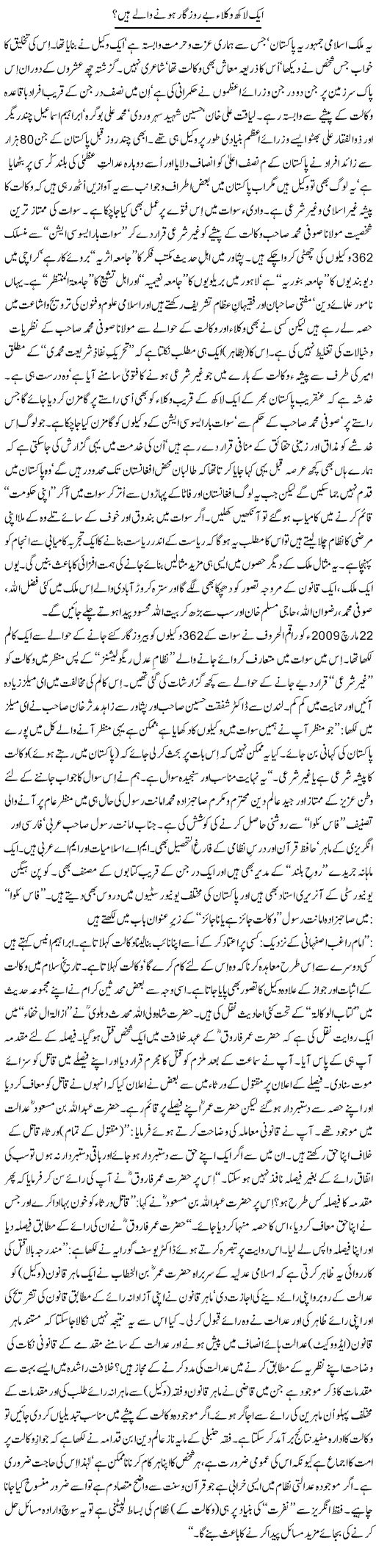
Shariat, Swat and Unemployed Lawyers: Tanvir Qaiser Shahid,


Read more...

Thursday, 26 March 2009

In the aftermath of the Long March "revolution" in Pakistan


Asadullah Ghalib, Express, 26 March 2009

....


Nazir Naji, Jang, 26 March 2009

....

Storming the Supreme Court with litigation

Hardly had Chief Justice Iftikhar Muhammad Chaudhry resumed his office at the Supreme Court than “constitutional” petitions were filed before the court charging 38 judges who had taken oath under the PCO with contempt and challenging appointments of judges done without Justice Chaudhry’s “consultation”. Yet another petition has sought action against Pervez Musharraf for his “admittedly” unconstitutional actions of November 3, 2007 in subversion of the constitution, as outlined in Article 6 on treason.

People with a strong “retroactive correction” in mind want punishment to descend on all and sundry. In non-legal language, they want to pillory all those who took the view opposite to theirs, but if the cases go the way they want them to go, the country’s judicial system will be seriously undermined. The difficulty arises in the convergence of the legal-constitutional and the political-electoral in these cases. Which PCO was more lethal, the one “indemnified” by parliament or the one not “indemnified”?

If a moderate but honest judge quietly in disagreement with Justice Chaudhry’s hair-trigger activism chose not to leave with him, should he be punished today? What should be made of an elected government treating the PCO judges as normal judges and not bringing back the old ones after the Murree Agreement? The lawyers’ stand was that the political parties should not take part in the elections of 2008. It was a legal stand because the general who had done the misdeed of November 3 was now holding them. Elections indirectly legitimised him.

The act of election has its own indemnifying aspects. The fact that the political parties did not abstain from elections, and the fact that the people did not heed the lawyers’ call and voted with an impressive turnout should count for something. If the PCO judges have sat in judgement on cases that have been accepted as jurisprudence then how can they now be forced to leave? If a de facto capacity is allowed to these judges then what stops the “reinstated” court from making them de jure automatically? What is important is to realise that excessive backward-looking litigation is not going to benefit Pakistan. (Daily Times, 26 March 2009)
Read more...

Wednesday, 25 March 2009

Long March 2009 and Sauce for the Goose: Zafar Hilaly

Sauce for the goose
Wednesday, March 25, 2009
Zafar Hilaly

The ongoing auction for votes in the Punjab Provincial Assembly, so soon after the restoration of the judges, is further proof that the federation is dysfunctional.

As the politicians squabble, officials disobey "illegal" orders and soldiers refuse to take on fellow Muslims in the borderlands (curiously, no such hesitancy was evident in East Pakistan). The refusal by some brigadiers to obey orders to fire on an opposition crowd in Lahore in 1977 was a trendsetter; earlier the police strike in Lahore continued this trend and last week's defiance of the police to arrest or confine opposition politicians, again in Lahore, suggests that what is presently an infection may become a contagion. Politicians should pause to ponder the consequences of promoting indiscipline and brazen flouting of authority.

Identical "illegal" orders for the arrest of popular Sindhi leaders, for example, were never challenged. No one balked at carrying out the edict of a soldier usurper for the arrest of Z A Bhutto. Not a leaf stirred uniformed conscience was pricked when he was murdered at the behest of the dictator. It was noticeable that none of the hundreds of police officials surrounding BB's residence in Lahore in November 2007 refused to abide by what were manifestly "illegal" orders from yet another soldier dictator. Similarly, there is no record that the soldier or airman ordered to terminate the aged, infirm, cornered and defenceless Akbar Bughti stood down because the use of excessive force is a crime.

Such memories linger and rankle. Mujibur Rahman trotted out examples of discrimination against Bengalis to fan his secessionist agenda and it worked. Nawaz Sharif's appeal to his fellow Punjabis to follow where he leads was a powerful reminder that Pakistan is less a nation state than a state of nations, three stood excluded from his call. Whipping up Punjabi chauvinism could prove lethal.

The 1973 Constitution posited a federal arrangement for Pakistan. But very quickly the spirit of that the Constitution was violated and the document itself trashed by successive military regimes. And as people lose hope that it will ever be implemented so demands for the promised autonomy have been replaced by those for outright independence.

Hence, the current insurgency in Balochistan was preceded by a declaration of independence. The recent fracas over the "desecration" of Benazir Bhutto's pictures and epithets directed against Sindh; the threat by the MQM to quit the coalition unless appropriate apologies were received; the incensed reaction of PPP workers in Sindh are vivid reminders that key segments of civil society are fretting, angry and losing hope that the promise of a truly federal structure will ever be redeemed.

Sindh, in particular, comprising 30 percent of Pakistan's population while contributing as much as 60 percent of the national wealth and 70 percent of Pakistan's oil and gas requirements, feels especially short-changed. Looking towards Islamabad for its developmental needs is galling when they can be easily met from Sindh's own revenues.

A Sindhi often asks why the sins of one province should be visited on another; why his development should be withheld to fund those of another provinces; why Sindh's courts should be manned by judges from another province; why the policeman or Ranger deployed in his province should be recruited from another province; why most bureaucrats manning the provincial secretariat be domiciled in another province, etc., etc. And whereas he will readily concede that Sindh's parochial interests cannot alone decide the nation's foreign and defence policies, he does wonder why some dictator plays truant with his rights; and why Islamabad is allowed by law to stake his prosperity, peace of mind, security and future on wholly avoidable wars.

This has been Sindh's fate thus far, but it need not be. If elusive justice can be obtained by a long march so can equally elusive self-rule, of course, within the ambit of Pakistan. Indeed, Mr Zardari can reclaim much of the respect and affection he has squandered by his antics during the judges matter by leading the next long march for the rights of the other nations which comprise Pakistan. And if, by some miracle, he decides to emerge from his bunker to do so, Mr Nawaz Sharif is best placed by his recent experience to advise him how to ensure success, beginning with a stirring call to Sindhi nationalism, followed by threats of all kinds and finally a warning to the federal authorities to lay off or face revolt. Nobody could object, after all what is sauce for the goose is sauce for the gander. (The News)


The writer is a former ambassador. Email: charles123it@hotmail.com

Read more...

Tuesday, 24 March 2009

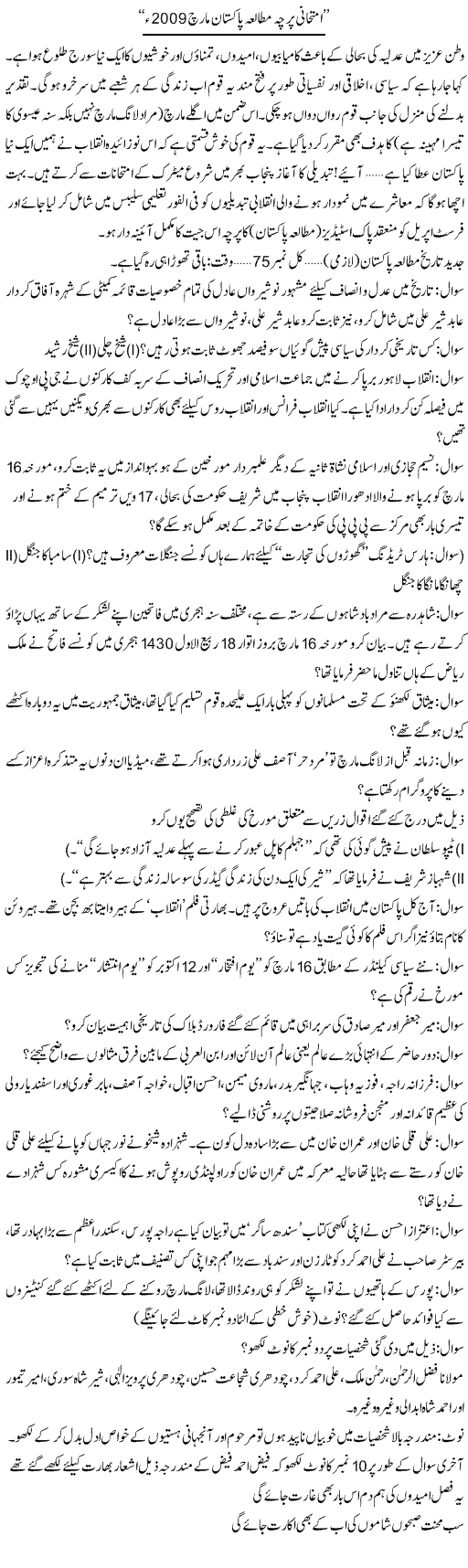
Examination paper for "Long March 2009": Tahir Sarwar Mir


Read more...

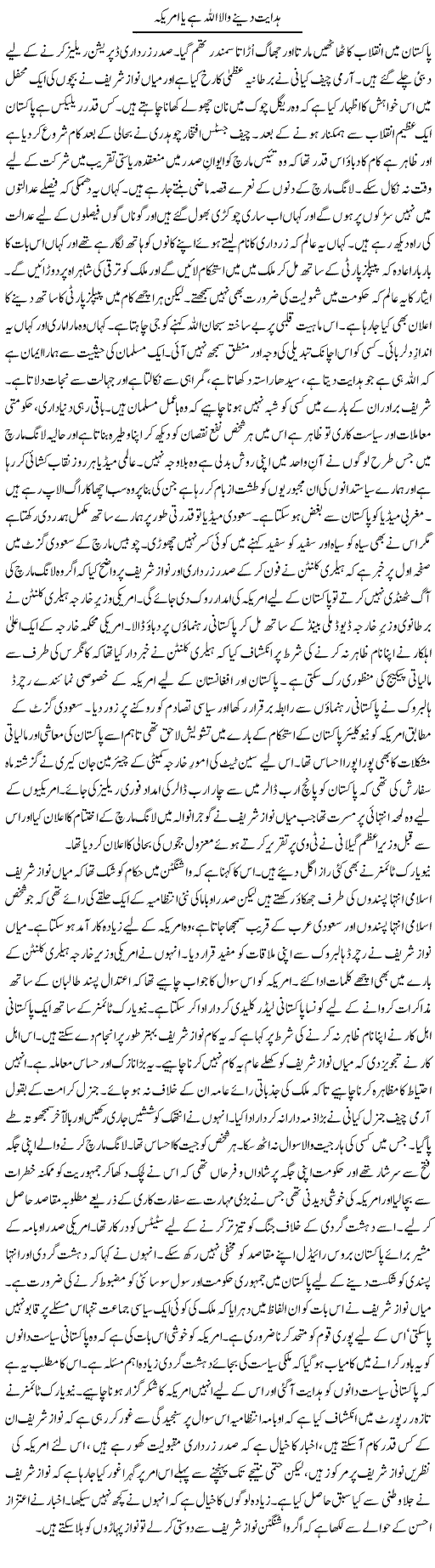
General Mullen, the real hero of the Long March in Pakistan

http://media.npr.org/news/images/2007/jun/08/mullen500.jpg


Daily Express, 24 March 2009

.....

Army Chiefs' Bond Bolsters U.S. Hopes in Pakistan


The Obama administration's hopes of stabilizing Pakistan increasingly rest on the strong bond between military chiefs Adm. Mike Mullen and Gen. Ashfaq Kayani.

The two men spoke daily during the recent political crisis, in which growing opposition protests threatened to undermine the government until Pakistani President Asif Ali Zardari -- also under pressure from Gen. Kayani and senior U.S. officials -- made significant concessions.

During the crisis. Gen. Kayani assured Adm. Mullen, the chairman of the U.S. Joint Chiefs of Staff, that he wasn't contemplating a military coup, according to U.S. officials. These officials said Adm. Mullen trusted the assurances -- but they acknowledged that some senior U.S. military officials harbor doubts about Gen. Kayani's capabilities and intentions.

Associated Press

Pakistani army chief Gen. Ashfaq Kayani, right, greets a troop. He and Adm. Mike Mullen have developed a bond that U.S. officials say aids efforts to ensure Pakistan's stability and its support in fighting militants along the border with Afghanistan.

Gen. Kayani ultimately helped resolve the crisis by mediating between Mr. Zardari and his chief rival, Nawaz Sharif, U.S. and Pakistani officials said.

The relationship offers potential dividends for both countries. American officials want Islamabad to take stronger steps against the militants working to destabilize Pakistan and Afghanistan, and need Gen. Kayani's help as an ally in the fight, which they say he supports. Pakistan wants to continue receiving American financial aid and military assistance, which requires maintaining close ties with Adm. Mullen's Pentagon.

It is a relationship born of necessity. Mr. Zardari is also seen as committed to battling militants, but his government is fragile. Many Pentagon officials believe the government will fall within the next few months, although civilian U.S. officials say the president could hold on.

Agence France-Presse/Getty Images

U.S. military chief Adm. Mike Mullen with troops.

As an ally, Gen. Kayani is "seen as the safer bet, because he'll probably be the last one standing," a senior U.S. military official said.

But the U.S. reliance on Gen. Kayani carries risks. During the Bush years, U.S. officials had a similarly warm relationship with Gen. Kayani's predecessor as army chief, Pervez Musharraf, and sent him more than $10 billion in American aid. In the end, Mr. Musharraf, who was also president, disappointed the U.S. by failing to order a broad crackdown on the Islamic extremists in his country.

"It's a complete replay of what took place with Musharraf," said C. Christine Fair, a senior political scientist with Rand Corp. and former United Nations political officer in Kabul. "We have a love affair with whichever chief of army staff is in office at any one time until they thoroughly disappoint."

In their public and private comments, U.S. and Pakistani officials say such concerns are unfounded.

"Gen. Kayani wants the system to work," Pakistani Prime Minister Yousuf Raza Gilani said in an interview, adding that the officer's outlook was "pro-democracy."

U.S. military and civilian policy makers say Gen. Kayani shares their belief that Islamic extremism poses a threat to Pakistan's survival and has taken steps that show he is serious about tackling the problem. In September, he replaced the head of Pakistan's intelligence service, which reports to him, and which U.S. officials say has long maintained ties to the Taliban. Pakistani officials say they only maintain contacts with some elements of the Taliban and no longer directly support the militants.

"He has done what he said he was going to do," Adm. Mullen told reporters earlier this year. "Gen. Kayani has not misled me at all."

In an interview, a senior Pentagon official praised Gen. Kayani for keeping tens of thousands of Pakistani troops deployed against Islamic militants in restive Bajaur province, instead of shifting them to the country's tense border with India.

Gen. Kayani is a chain smoker, while Adm. Mullen wakes up before 5 a.m. each day to work out before he arrives at the Pentagon. They also have professional differences: Gen. Kayani once ran Pakistan's main spy agency, Inter-Services Intelligence, while Adm. Mullen has spent his entire career in the regular military.

But they have forged strong ties since becoming their nations' top uniformed military officers in 2007.

"There's increasing confidence," said Talaat Masood, a Pakistani military analyst and retired general. "They trust each other in a way, even if they know are certain things that the Pakistan army will not do," he said -- specifically that Pakistan won't drastically reduce its troop strength along the border with India.

Since taking office, Gen. Kayani has cheered U.S. officials by putting experienced, nonideological officers in charge of two of Pakistan's most important security arms: the Inter-Services Intelligence and the 60,000-strong Frontier Corps, a paramilitary force that is taking the lead in battling the Taliban and al Qaeda in Pakistan's tribal areas.

More recently, Gen. Kayani played a crucial role in defusing last week's political crisis, which centered on Mr. Zardari's refusal to reinstate the former chief justice of Pakistan's Supreme Court.

Pakistani officials said that Gen. Kayani repeatedly met with Mr. Zardari and Prime Minister Gilani.

"Initially, he confined himself to polite advice, but his tenor became firmer at the end," a Pakistani official said.

"It was the Kayani model -- invisible, but around," said Jhangir Karamat, a retired chief of army staff.

—Zahid Hussain in Islamabad contributed to this article.

Write to Yochi J. Dreazen at yochi.dreazen@wsj.com and Matthew Rosenberg at matthew.rosenberg@wsj.com

Printed in The Wall Street Journal, page A7
Read more...

What about lawyers’ cause in Swat?

A new lawyers’ movement may be needed to address the crisis created for the legal profession in Swat after the Tehreek-e Nifaz-e Shariat-e Muhammadi (TNSM) banned the lawyers from the qazi courts set up under the tutelage of its leader, Sufi Muhammad. He warned the lawyers and judges on March 17 to stay away from the courts, saying they had no role under the new system of Islamic law in the region, branding the present Pakistani jurisprudence as an “infidel judicial system”. He said only the people filing cases and the accused would be eligible to appear in the new “Islamic courts”.

The Peshawar Bar Council has expressed its concern over these developments and intends to protest with the NWFP government. It is important to note that the country’s lawyers’ community did not properly register the plight of the lawyers in Swat after some of them were killed and those who did not migrate out of the valley were kidnapped and remain unaccounted for till today. But even as the lawyers protest in Peshawar, the Taliban have kicked the NGOs out of Swat and are still resolutely opposed to polio drops for children. Five hundred lawyers plan to pack up their bags and leave Swat. Meanwhile, fourteen more Taliban terrorists were freed from jail on Sunday, taking the total number released so far to 48, so that they can enforce the writ of the Taliban in Swat!

Isn’t there anything anyone can do about this? What about the lawyers who abandoned their profession for two years to get the deposed chief justice of Pakistan reinstated? Getting thrashed by the police in Lahore is one thing, being beheaded by the terrorists in Swat, as the state watches from the sidelines, is another. But the contrast is stark. And the contrast is in the mindset of those who suffer the atrocities of the terrorists in the name of Islam and the thinking of those who fight for the “independence” of the judiciary in the rest of the country. In Swat, the judiciary is going to be the handmaiden of the illegal occupants of the valley. Soon this rule will be extended through qazi courts to the entire Malakand Division and Kohistan in the Hazara Division.

One doesn’t have to strain to predict that the judicial system of the Taliban will soon threaten the rest of the country. Let us examine why this will happen. Unfortunately, no clerical organisation, apart from some individual Barelvi scholars and independent thinkers like Mr Javed Ghamidi, accepts that shariat is in force in Pakistan through the 14th Amendment that establishes the Federal Shariat Court. Even non-clerical debaters complain of “many systems” in the country, ignoring the fact that the principle established by the Federal Shariat Court — that nothing against the Islamic precepts will be allowed to stand — Islamises even the Pakistan Penal Code.

The Swati sympathisers of the overthrow of the legal system under the Federal Shariat Court have been wrong in their claim that the population of Swat wants the reintroduction of the shariat operative under the Wali of Swat because the “infidel” system of Pakistani injustice is dilatory and corrupt. A lot of hype has been created by generally acknowledging, without proof, that the Wali had a shariat system so pure it is worth taking back through the Taliban.

The truth is that the system under the Wali was not shariat at all. It was a system of qazi courts unseparated from the courts run by the Wali and his elite supporters, and there were no hudood laws as under the 14th Amendment. No punishments, like the cutting of hands and stoning to death, were given; offenders were usually punished with terms in jail. It is true that the extension of normal laws into the valley in 1970 brought in the systemic flaws of the rest of the country, but since then Swat also saw a measure of prosperity and happiness that it has lost under the shariat of Taliban. (Daily Times, 24 March 2009)
Read more...
PPP and PML-N, New lines of friendship?

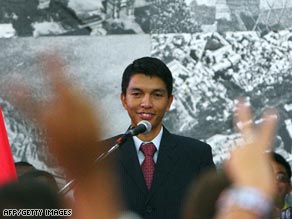
Prime Minister Yousuf Raza Gilani, left, seen with opposition leader Nawaz Sharif, during a press conference after their meeting in Raiwind. — AP


Lines of friendship


Tuesday, March 24, 2009 (The News)

The post-long march shape of the political set up is now beginning to take shape. The possibility of a new era of PPP-PML-N cooperation was laid out at the Raiwind estate of Mian Nawaz Sharif, where PM Yusuf Raza Gilani lunched in considerable style after receiving a quite obviously enthusiastic welcome from PML-N leaders. Mian Nawaz Sharif has however made it clear that any formal arrangement will be possible only after the verdict on the review petition questioning the disqualification of himself and Shahbaz Sharif. The indications are that the PML-N government in Punjab may soon be restored.

....

Nawaz Sharif offers cooperation to PPP

* PML-N chief says CoD can be basis for cooperation
* Asks political parties to unite g No grudge with Zardari after promise fulfilled
* PML-N has not decided to join federal govt

By Rana Kashif


LAHORE: Pakistan Muslim League-Nawaz (PML-N) chief Nawaz Sharif offered to cooperate with the Pakistan People’s Party (PPP) led government in a party meeting on Monday.

Addressing the party’s General Council meeting – the second in five weeks – Nawaz repeated his stance that the Charter of Democracy could form a basis for such cooperation.

He urged all political parties to unite to help steer the country out of crises.

“Let us come to sit together and ensure the implementation of the Charter of Democracy, eradicate unemployment and poverty, ensure rule of law, provision of education and health facilities to all and make Pakistan a civilised country,” Nawaz said. All decisions should now be made in parliament, he said.

The PML-N chief said he had no grudge with President Asif Ali Zardari and felt that the promise he had made – to reinstate the sacked judges – had been fulfilled. He said he had consulted leaders of the lawyers movement, the Jamaat-e-Islami and Pakistan Tehrik-e-Insaaf before calling off the long march on March 16.

His brother Shahbaz Sharif praised the media for supporting the movement.

In a TV interview later on Monday, Nawaz said his party had not decided to join the PPP-led federal government and that the restoration of trust in the PPP would take time.


PML-N changes tone on Zardari

LAHORE: The PML-N general council meeting on Monday was quite different from the previous one, with neither the leadership nor the workers using harsh words against the PPP leadership. President Asif Zardari has been severely criticised in the previous meeting. Yesterday however, Javed Hashmi told the participants the PML-N considered Zardari the president despite political differences with him. PML-N leader Sabir Shah told the meeting a joke aimed at the PPP leadership, but Saad Rafiq immediately expunged it from the record. staff report (Daily Express, 24 March 2009)

...

Abbas Ather, Express, 24 March 2009


....

Nazir Naji, Jang, 24 March 2009


...

PS:


Jang, 24 March 2009
Read more...

Monday, 23 March 2009

Salman Taseer's Long March in 1992


Read more...

Saturday, 21 March 2009

Imran Khan and Qazi: The frustrated of the Long March


Jang, 22 March 2009

.....


Jang, 24 March 2009

....

Imran urges CJP to hold Zardari to account

LAHORE: Pakistan Tehreek-e-Insaaf chief Imran Khan is urging reinstated Chief Justice Iftikhar Muhammad Chaudhry to keep up the pressure on President Asif Zardari, otherwise Iftikhar would be blamed for “the biggest letdown in history”. The chief justice took office on Sunday. Talking to The Sunday Telegraph, Imran called on the chief justice not to compromise in dispensing justice. “There can be no compromise now and if there is one, what is the point of reinstating the chief justice?” he said. “The reason the people rallied behind him is because they wanted an independent judge who should seek no orders from the government.” daily times monitor

http://dailytimes.com.pk/default.asp?page=2009\03\23\story_23-3-2009_pg7_3

...


Abbas Ather, Express


Some relevant comments:

AClarionCall said:

Fan Club of IK Zindabad; Imran Khan and his supporters should work hard on increasing number off their Fan Club members. Internet can play a big role. To win local voters Imran should spend more time with his real voters in Pakistan not with Fan Club members abroad. Political parties need grassroot support from ordinary workers. Party workers are great asset for any political party, simply look at NS and his street power. In just few hours he emerged as a winner only because of great workers his party has. Look at PPP’s street power in Sind or MQM’s street power and workers force in Karachi. How many workers are in PTI? How many people know names of PTI office bearers? I do not doubt sincerity of IK but game of politics is not game of cricket. Mr. IK politics is very dirty game. Your social work is your great asset; you better focus on your charity work and let the dirty politicians play this dirty game.


Malek said:

Indepth analysis and the actual truth behind the success of long march by Hamid Mir

http://jang.com.pk/jang/mar2009-daily/19-03-2009/col4.htm

Long live NS who led the fight from front ……resulting in 2 years of lawyers struggle to gain success


asif65 said:

good analysis of long march from Haroon Rashid

http://www.jang.com.pk/jang/mar2009-daily/21-03-2009/col5.htm


Muhammad Usman said:

Why pti and JI are so upset.
The IMC and othe rjudjes are happy on manner of restoration.
Who cares about tanga parties and sympathizer Haroon Rashid.

They wanted some blood shed , thank God sanity prevailed and both sides negotiated.
Kurd, AA, rasheed rizvi and restored judjes are happy F Off tong parties.

If lawyers have not consulted tonga parties then it is not politicians fault.
All apdm parties from balochistan and latif afridi from Pakhtunkhwa are happy.

Stop BS crap

......

Abbas Ather, Express, 25 March 2009


Read more...

Friday, 20 March 2009

Long March fails: Qazi Hussain Ahmed says


This site has moved to http://criticalppp.com, click this link if you are not redirected
Read more...

Washington Post: CJ should teach restraint to politicians

By Anwar Iqbal
Friday, 20 Mar, 2009 (Dawn)

Mr Chaudhry is seen by many middle-class Pakistanis as representing the rule of law: Washington Post.—Reuters

WASHINGTON: Chief Justice Iftikhar Mohammad Chaudhry could set an example for the political leaders by embracing restraint and compromise —qualities sorely missing from Pakistani politics, says the lead editorial in The Washington Post on Thursday.

The newspaper describes the lawyers’ movement as ‘a third secular force’ in Pakistan and notes that Mr Chaudhry is seen by many middle-class Pakistanis as representing the rule of law.

The Post says that the lawyers and judges involved in the movement now have choice of either destroying the country’s fragile democratic system by choosing to reopen old cases involving President Asif Ali Zardari, Nawaz Sharif or former president Pervez Musharraf.

Noting that Justice Chaudhry led the movement for the rule of law, the newspaper urges him to set an example and save the system by ‘embracing restraint and compromise.’

The Post says that while Pakistan's latest crisis has eased, for the Obama administration, the challenge of political dysfunction in this nuclear-armed state has hardly diminished.

‘As they showed during the past week, Pakistan's civilian and secular political leaders are more concerned with destroying each other than with fighting the extremists who are rapidly gaining strength in the country,’ the newspaper adds.

‘While saying they recognise the jihadist threat, Mr Zardari and Mr Sharif have resumed their ruthless competition parties’ that dominated national politics in the 1990s.

The newspaper blamed both leaders for using ‘undemocratic tactics.’ It notes that Mr Sharif chose to fight the government mostly in the streets rather than in Parliament, while Mr Zardari tried to block last weekend's protests with mass arrests and media censorship.

The Post pointed out that in the past; Pakistan's political feuding led to military coups, which have been tolerated if not welcomed by the United States. ‘But in the era of the Taliban and al Qaeda, which grow stronger with each new crisis in Islamabad, that pattern must be broken,’ the newspaper warns.

‘Pakistan's military leadership and the Obama administration need to play a stabilising role for the civilian leaders by arbitrating and limiting their conflicts.’

They should insist on faithfulness to the rule of law and to the democratic process, rather than picking a winner —in the case of the United States —or directly intervening, in the case of the military, the Post adds.

It also urges the Obama administration and the Pakistan Army to press for agreement on the country's main enemy —jihadism —and a comprehensive strategy for confronting it.

The Obama administration should recognise that it cannot combat the threat of terrorism in Afghanistan and western Pakistan without tackling the larger issues of governance in both countries, the newspaper notes.

‘The events of the past week showed that the United States must help to foster a stable and representative government in Islamabad. The same principle applies in Kabul,’ the Post concludes.


Read more...
Who will lead a Long March against horse trading in Punjab?

http://nimg.sulekha.com/Others/original700/nawaz-sharif-shahbaz-sharif-2009-2-25-3-33-15.jpghttp://www.shela-nye.com/shu/photos/Checkenden%20Horses%20c.jpg

An interesting op-ed by Asadullah Ghalib in which he appeals to the people of Punjab to start a Long March against the politics of horse trading in Punjab.

If Nawaz Sharif is a man of principles, he must not promote the culture of horse trading in Punjab by trying to break up as many members of the PML-Q as he neeeds to form his government in Punjab.


...

Horsetrading can cause PA dissolution

Punjab Governor has asked Pakistan Muslim League-N to lend a hand in abolition of governor's rule through forming a coalition with any other party and warned it against horse-trading.

It may be noted that no party has a majority in Punjab Assembly. The Governor has promised to end governor's rule within 24 hours when any two parties form such a coalition. However, the Governor said, the assembly could be dissolved if horse-trading continues.

If the PML-N wanted an end to governor's rule in Punjab, it must stop horse-trading as that was against the spirit of Charter of Democracy.

Salman Taseer congratulated entire nation and Nawaz Sharif for their efforts for the restoration of the judges. He appreciated Nawaz Sharif for his democratic approach and nationalist politics as he open heartedly announced that PPP government would be allowed to complete five years in rule. The governor said he considered this approach a great change in the larger national interest.

Salman Taseer said that a new era of conciliation at federal level has started as a result of restoration of deposed judges and PPP wanted to settle all issues in Punjab with mutual understanding.

He asked Nawaz Sharif to step forward and bring back the politics to assemblies instead of roads as people were sick of confrontation. He said that both parties had promised in the Charter of Democracy (CoD) to respect the mandate of other parties.

He stressed that Governor Rule could only abolish if any two political parties having strength in Punjab Assembly after a regular alliance presented a combined candidate. He said the parties which wanted to form a government just step forward and make an alliance immediately as it was the only way to end governor's rule.

He said PML-N could form alliance with any political party of its choice.

Responding to the queries of the media persons, he said making forward-blocs in opponent political parties and horse-trading was against democratic norms and the constitution.

He said no MPA has right to defy the faith of masses and could not vote against his party.

Regarding the security and imposition of Section-144 in the province during long march, Salman Taseer said that Punjab government had been advised by the Prime Minister and the President to handle the rallies for long march with a soft hand. That was the reason no rally was tortured or stopped; protesters and participants of the march were not baton charged any where and no detentions were made; and lawyers and political workers were given a free hand. He cited the example of Shahbaz Sharif's public congregation at Gujranwala despite imposition of Section-144. Regarding Lahore tear gas incident at The Mall, the governor said the protesters started pelting stones on Police and they had to fire tear gas in return. He claimed he knew about the movement of Shahbaz Sharif but under the instructions from Islamabad he did permit Shahbaz's free shifting to Islamabad. Salman Taseer asked media men to stop speculating as to his removal as there would be no change of governor in the province and if any such plan would be on cards he himself would inform them about it.

http://www.hipakistan.com/ss/2009/03/19/news/english/horsetrading-can-cause-pa-dissolution.html


...

Also read:

PML-N engaged in horse-trading in Punjab, Maneka bribed


Read more...

Thursday, 19 March 2009

From Pakistan to Madagascar: A case of military aided revolutions?

http://farm4.static.flickr.com/3099/3223344244_59a4ec3171.jpg


From Pakistan to Madagascar, it seems we are faced with a comparable case of military aided revolutions.

In Pakistan, the Punjab Police practically defied the orders of a Sindhi led Federal Government which wanted to crush an illegal Long March. The Pakistan Army, which is generally dominated by Punjabis and Pathans, refused to confront the Long March led by the opposition leader from the Punjab province, Nawaz Sharif. Nawaz Sharif is known for his sympathies towards Taliban and past links with Osama bin Laden, a historical past which he shares with the Pakistan Army.

In the following op-ed, Asadullah Ghalib compares the 16 March revolution led by Nawaz Sharif in Pakistan with the 16 March revolution in Madagascar led by Andrey Rajoelina.


....

Is General Kayani playing a 'good cop' for certain 'strategic gains'?
BBC Urdu Blog by Hasan Mujtaba


http://www.pakistani-politics.com/Images/ht_ashfaq_kiani_071002_ms.jpg

'گُڈ کاپ بیڈ کاپ'

حسن مجتییٰ 2009-03-20, 12:01

ایسا لگتا ہے کہ پاکستان کے لوگوں کے ساتھ آج کل 'گُڈ کاپ بیڈ کاپ' کھیلا جا رہا ہے۔ امریکی کامک کہانی میں مشترکہ تشویش کے لیے جو دو پولیس والے ہوتے ہیں ان میں ایک برا پولیس والا اور ایک اچھا پولیس والا بنتا ہے جب کہ دونوں کا مقصد تفتیش کے مطلوبہ مقاصد حاصل کرنا ہوتا ہے۔

ایسا لگتا ہے کہ پاکستان میں آصف علی زرداری 'بیڈ کاپ' ہیں اور وزیر اعظم یوسف رضا گیلانی 'گڈ کاپ' یا اچھے پولیس والے ہیں۔ اور سب سے بڑا اچھا پولیس والا یا 'گڈ کاپ' آرمی چیف جنرل اشفاق پرویز کیانی بتائے جاتے ہیں جنہوں نے حکومت کی طرف سے گزشتہ ہفتے جرنیلی سڑک اور شاہراہ دستور کے درمیاں جا بجا 'بارہ مئی ٹائپ' کنٹینرز کی دیوار چین کھڑی کیے جانے پر مداخلت کر کے حکومت اور نواز شریف کے درمیان بظاہر کشیدگی کم کروائی۔ جسے سابق آرمی چیف جہانگیر کرامت نے ' کیانی فارمولا' کہا۔

ایک بیڈ کاپ زرداری نے آخر وقت تک چیف جسٹس سمیت جج نہ بحال کرنے کا تہیہ کیا ہوا تھا اور گڈ کاپ یوسف رضا گیلانی نہ فقط 'ایک فرعون کیا لاکھ فرعون ہوں ڈوب ہی جائيں گے' بنے ہوئے نواز شریف کے لیے قابل قبول رہے بلکہ انہوں نے ججوں کی بحالی کا اعلان بھی کیا۔

لیکن کہنے والے کہتے ہیں کہ اصل 'گڈ کاپ' تو جنرل کیانی ہی ہیں اور وہ اس وقت سے گڈ کاپ بنے ہوئے ہیں جب مشرف ملک کا 'بیڈ کاپ' بنا ہوا تھا۔ یہی گڈ کاپ تب اٹک قلعے یا اڈیالہ جیل سے یوسف رضا گیلانی اور پمز یا ضیا الدین ہسپتال سے آصف علی زرداری کی بھی رہائی کے پیچھے اہم ترین 'ریاستی ایکٹر' تھے۔

یہی اہم ترین ریاستی ایکٹر بحیثیت ڈي جی آئی ایس آئی پاکستان کے سینکڑوں لاپتہ لوگوں کی گمشدگیوں کے ذمہ دار ہیں اور تب بھی سادہ لباس جنرلوں میں شامل تھے بشمول باوردی جنرل مشرف جن کے سامنے چیف جسٹس افتخار محمد چوہدری نے ایک بڑی 'نہ' کہہ کر پاکستان کی تاریخ کا ہی رخ موڑ دیا تھا۔ اسی گڈ کاپ نے ہی بینظیر بھٹو سے قومی مفاہمت پر بات چیت کے طویل نششتیں بھی کی تھیں۔

گزشتہ دنوں جب یہ بڑے 'گڈ کاپ' امریکہ کے دورے پر آئے تو کچھ دل جلوں نے یہ اڑایا کہ انہوں نے مشہور ڈیپارٹمینٹل سٹورز 'میسی' سے جو سوٹ خریدے ہیں وہ پہن کر ستمبر میں پھر نیویارک آئيں گے؟ لیکن ستمبر میں تو نیویارک میں جنرل اسمبلی کا سالانہ اجلاس ہوتا ہے! آدمی سوچتا ہے۔

http://www.bbc.co.uk/blogs/urdu/2009/03/post_424.html

....

Madagascar military hands power to opposition leader

(CNN) -- Madagascar's military handed over the reins of the island nation to opposition leader Andry Rajoelina on Wednesday, ending a two-month long political crisis -- but apparently creating a constitutional one.

Andry Rajoelina is six years too young to be Madagascar's president under its constitution.

Andry Rajoelina is six years too young to be Madagascar's president under its constitution.

Rajoelina, a former disc jockey turned mayor of Madagascar's capital, declared himself president of a transitional government and his supporters pledged to hold elections in two years.

But Rajoelina, at 34, is six years too young to be president, according to the country's constitution.

Also, the constitution says the head of parliament's upper house must call elections within two months if something happens to the president.

Madagascar's former president, Marc Ravalomanana, ceded power to his military Tuesday after insisting over the weekend that he would remain in control.

Analysts think Ravalomanana had little choice but to step down once he had lost much of the army's support.

The African Union had warned that any power transfer aided by the military would amount to a coup d' etat.

http://edition.cnn.com/2009/WORLD/africa/03/18/madagascar/

Read more...

Abbas Ather: The Long March and the Middle Path Resolution


Read more...

Wednesday, 18 March 2009

Zubeida Mustafa: The task before Justice Chaudhry

http://img.timeinc.net/time/daily/2007/0708/mohmand_0807.jpg

WHAT prompted the government’s change of heart at the eleventh hour that led to the announcement about the reinstatement of Chief Justice Iftikhar Chaudhry?

Whatever other factors may have been at play, we also know that America, Britain and the Pakistan Army were active behind the scenes.

But did anyone note that in the days that the media attention was riveted on the long march there was a pause in the terrorism that has become a way of life in Pakistan? The Taliban and their cohorts were, so to say, on their best behaviour. Warnings by Mr Rehman Malik, the security adviser, of terrorist strikes were not taken seriously by the protesters nor by the militants who held fire in the critical period. True, after making peace in Swat, the army had helped by facilitating deals with militants in Bajaur and Darra Adam Khel. Twelve Taliban were also released.But as Pakistan teetered on the brink for four days, it was difficult to believe that the two events — the political crisis and religious militancy — were not linked. The militants do have a method in their madness. To prove this, they struck on Monday evening in Rawalpindi where a suicide bomber blew himself up in a busy marketplace along with several hapless victims.

While we focused on the lawyers fighting for the rule of law, we forgot to read the fine print of the agreement concluded with Mullah Fazlullah in Swat via Sufi Mohammad of the Tehrik Nifaz-i-Shariat Mohammadi. True, the draft of the Nizam-i-Adl Regulation 2009 signed by the NWFP chief minister on March 9 ostensibly provides for a new system of dispensing justice that is speedy and is therefore presumed to be fair. But can we be certain? The TNSM chief has now asked the law officers to stop attending the courts in Malakand because his qazis will decide cases under his supervision. And what are the laws that will be applied? The draft gives in Schedule 1 a list of 91 laws that are already in force.

But there is a caveat. Section 3 (2) makes it clear that all laws that are not in conformity with the injunctions of the Quran and Sunnah will “cease to have effect in the said area”. What are these laws and who will decide that they do not conform with Islamic injunctions? Which fiqh will be applied? There are no answers to these questions in the draft.

But if the ‘understanding’ concluded by the representative of Sufi Mohammad and the commissioner of Malakand on March 4 is something to go by, the above queries will be answered. Read points two, four and six carefully. Under these the two sides are to “start a campaign against obscenity and vulgarity”, “close music and CD centres” and “expel prostitutes and pimps from the region”. This understanding gives a fair idea of what is in store. Recall the events in Afghanistan in the 1990s when the Taliban ruled in Kabul and you would know what to expect. The ANP government in Peshawar has now said that this system will be extended to the entire province.

One ponders the implications of the Swat agreement and other peace accords that are being concluded with the militants on the plea that too many people are being killed. You are still trying to figure out what is happening.

And then on March 13 comes the bombshell. It is the International Crisis Group’s report number 164 titled Pakistan: The Militant Jihadi Challenge. Its findings are not something new — at least not all of them — but the analysis is significant. It notes, “The radical Sunni [Deobandi] groups are simultaneously fighting internal sectarian jihads, regional jihads in Afghanistan and India, and a global jihad against the West.”

The report puts into perspective what we have known since the 1980s when Ziaul Haq with American support decided to use Islam for his geo-strategic goals. The Taliban are the products of the madressahs along the Afghan frontier but, as the ICG reminds us, the Sunni extremists, mainly the Sipah-i-Sahaba and its offshoot Lashkar-i-Jhangvi, that served as ‘jihadi proxies’ for the army in Kashmir, come from the Punjab-based network of madressahs.

They now provide weapons, recruits, finances and other resources to the Tehrik-i-Taliban Pakistan. Aligned to them are the Jaish-i-Muhammad and Lashkar-i-Taiba. The latter two enjoyed military patronage and, according to the ICG, still do.

The ICG commends the recent action of the PPP-led federal government and the PML-N government in Lahore against the Punjab-based jihadi groups for their role in the Mumbai attacks. The Pakistan government promptly offered to send an ISI representative to India to cooperate in the investigations. Then it backtracked. As dossiers were passed to and fro between New Delhi and Islamabad and investigations picked up, Chief Minister Shahbaz Sharif’s government was dismissed.

A coincidence? The ICG report observes, “The aftermath of the Mumbai attack presents an opening to reshape Pakistan’s response to terrorism, which should not rely on the application of indiscriminate force, including military action and arbitrary detentions, but on police investigations, arrests, fair trial and convictions. This must be civilian-led to be effective.”

Fair enough. But we are also told that the civilian investigat

ing agencies such as the FIA, the CID, and the IB lack the resources and the authority to perform this function. They cannot even gain access to mobile phone records and other data without the ISI’s approval. The report concludes, “The army and the powerful ISI still dominate — and hamper — counter-terrorism efforts…. Proactive enforcement will be vital to containing religious militancy.”

At the moment it is clear that Chief Justice Chaudhry will have his hands full. The relatives of the involuntarily ‘disappeared’ expect him to pursue their cases as zealously as before. Such people need to be traced, their whereabouts disclosed to their families while their innocence or guilt is established by the legal process. True, this may be a bit irksome to authorities used to acting arbitrarily but if the rule of law is to prevail this must be done. And how will the chief justice see the legal paradox created in Malakand?

Wasn’t the lawyers’ movement aimed at resolving dichotomies such as these? And by a judiciary that is independent?
zubeidam@gmail.com

18 Mar, 2009 (Dawn)

Also read:

Ejaz Haider: CJP restored; CJP sans Swat?

Life after the Long March


Read more...

Ejaz Haider: CJP restored; CJP sans Swat?

http://www.nancarrow-webdesk.com/warehouse/storage2/2007-w43/img.46921_t.jpg

In Pakistan it is difficult to determine where to begin and how far to go back to set things right. Such situations call for pragmatism rather than sheer idealism, which is why Justice Chaudhry, the PCO 1 judge, was acceptable while PCO 2 judges were not

While the rest of Pakistan was celebrating the restoration of the deposed Chief Justice of Pakistan as indicative of the rule of law, in another part of Pakistan (if it can be called that), a more regressive step was being taken.

In Swat, where state authority has been ceded to the Taliban by the provincial government, a step the Centre has tacitly agreed to, Sufi Muhammad, leader of the Tehreek-e Nifaz-e Shariat-e Mohammadi, has asked the lower judiciary and the lawyers to leave the area since the system they represent is not functional in his domain any more.

Need it be said that Sufi Muhammad’s interpretation of the deal with Peshawar — a deal quite mysterious — is very different from its marketing by the NWFP chief minister Ameer Haider Hoti?

Hoti had earlier claimed that nothing had changed except that people would be provided speedy justice and there would be an appellate court in Malakand. On the question of what kind of sharia (and whose) would be enforced, he had said that the constitution of Pakistan was already clear that no law repugnant to Islam could be on the statute books. In other words, the operation of normal laws, and by extension the writ of the state, was to remain intact.

Hoti was too slick in his marketing, which should have made all of us suspicious. But we have reached a point where all of us are constantly looking for any straws to clutch at. This one, Hoti’s assurance, was most bogus even as straws go.

So yes, while the opposition, notably the Pakistan Muslim League-Nawaz, has called off the Long March and there is jubilation all round, the question is: what next?

In that question resides the devil. Time is serial and the moment is already history. The issue must go beyond the person of the CJP to the institution of the judiciary and further on to the judiciary’s interaction with other institutions of state and society. And, to the gravest threat facing Pakistan: terrorism. The difficult part is yet to come.

What is the CJP going to do about Swat? Can he? Even should he? Important questions because Justice Iftikhar Chaudhry liked to delve in policy and this is what someone rightly called a problem from hell.

At the minimum what has happened in Swat means that if it is not revised, the title CJP would need a suffix in parenthesis, ‘sans Swat’, because the system Justice Chaudhry heads is not acceptable to Sufi Muhammad running his satrapy. The loss of territory is a problem that requires something more than threatening Long Marches.

But lest anyone misconstrue this as an attempt to undermine the moment. In which case, here’s some evidence of the specifics without reference to the problem of terrorism.

Exhibit A: The problem of the movement from principles to policy. Let’s hark back to where and how the crisis began. The Supreme Court under CJP Iftikhar Chaudhry had begun to cross the fine line between its powers to adjudicate and the executive’s need to take political and policy decisions. Courts do travel the distance from principles to policy but such movement must remain the exception. Under Justice Chaudhry, it became the norm.

It is instructive that around the same time in 2007, a division bench of the Supreme Court of India in a judgement warned against interfering too much in the workings of the executive. That decision has been controversial. But at the minimum it shows the conceptual-juridical complexities involved in determining the turf.

In a country like Pakistan where politics has generally trumped law, a debate on the issue becomes even more important because it offers a paradox: the judiciary trying for that very reason to uphold law and strike back to restore the balance and ending up instead with creating more anomalies.

This is what caused the then-government of General Pervez Musharraf (retd) to try and get rid of Justice Chaudhry. The action was widely unpopular and Musharraf tucked tail and let the SC restore Justice Chaudhry. The SC, pointing to the Presidential Reference as based on mala fide, determined that it did not warrant judicial scrutiny by the Supreme Judicial Council.

The restoration, a victory, should have cautioned the SC against too much adventurism. Instead, it instilled a heady feeling that everything was possible now that Musharraf had been licked. Pushed to the wall, he, however, struck on November 3.

The current crisis, which nearly cost Pakistan its new government, can be traced back to that period.

While Musharraf is gone, some of those issues, including determining the probity of the National Reconciliation Ordinance, remain. What would the restored CJP do now? Amir of the Jama’at-e Islami Qazi Hussain Ahmad and Imran Khan are already expecting the CJP to deliver a judicial revolution. Would he; should he? If he does, Pakistan will be thrown back into the vortex of another political crisis.

If he doesn’t, that would show both the limitation of what can be done and also his pragmatism. It would also show that if he had heeded this lesson between his restoration and second sacking on November 3, the situation would not have come to this pass and the country could have been saved much sweat.

Exhibit B: Linked with this is the issue of the politicisation of the restored CJP. Lawyers reject this argument by pointing to outgoing CJP Abdul Hameed Dogar as more tainted politically. True that, but it misses the point about Justice Chaudhry. The struggle that was waged was essentially political; neither can law be divorced from politics in any Dworkinian sense. Yet, the issue of being on the bench becomes a legitimate concern when a judge, having been in the middle of a political campaign, has to adjudicate cases where people expect, almost demand, a certain kind of verdict — rather than what can or cannot be determined by the court through accepted procedures of law.

The SC under Justice Dogar faced the same problem in cases against the Brothers Sharif. Even if, in theory, the Court had sound legal grounds to disqualify them, the issue had become political rather than remaining anchored in law. Any verdict other than one exonerating them was liable to kick off a political campaign of protest, as it did.

This can now be applied in reverse to the restored CJP. If he absents himself from all such cases, people expecting him to clean up the Augean Stables would be disappointed. Even more troublesome, the political opponents of the PPP, having drawn blood, would like Justice Chaudhry to help them finish the job.

Politics would once again spoil to influence law.

Exhibit C: Expectations that the restoration would lead to strengthening of the judiciary and, even more ambitiously, Constitutionalism, a much broader concept, may be misplaced. While this is a necessary step in that direction, it is not sufficient. The integrity of one institution is a hollow concept. State institutions work in relation to each other. To expect one to show integrity in the absence of an overall institutional culture of integrity is putting too high a premium on optimism.

Exhibit D: Analysts, including former generals, have appeared on tv and praised the army for playing a positive role. One of the tribe, without any touch of irony, said that by streamlining democracy the army had reclaimed its prestige and shown that it would not intervene in politics.

But it did! That’s what its mediation was all about. True, it took the high tide of popular sentiment, but the fact that it had had to break the logjam between the two major political forces by weighing in means that, all said, it retains its arbitration role in the power structure of Pakistan. Even at the best of times for other institutions, and the army is just emerging from a long period of direct rule, trying hard to distance itself from its former chief’s legacy, it remains primus inter pares.

Until such time that the civilians can regain complete supremacy, it is too early to raise the glass to victory.

Finally, in Pakistan it is difficult to determine where to begin and how far to go back to set things right. Such situations call for pragmatism rather than sheer idealism, which is why Justice Chaudhry, the PCO 1 judge, was acceptable while PCO 2 judges were not. Some residual matter from the past has to be accepted to move forward.

Justice Chaudhry will therefore have to tread very carefully, balancing between the passionate idealism of the street and the practical demands of the Court’s functioning in relation to other institutions of state. Not an easy job given that his restoration has not changed much as far as the power structures of the state and their expression is concerned. (Daily Times)

Ejaz Haider is Op-Ed Editor of Daily Times and Consulting Editor of The Friday Times. He can be reached at sapper@dailytimes.com.pk. Parts of this article appeared in the Indian Express

Hamid Akhtar, Daily Express, 19 March 2009

...

سوات: ریگولر عدالتوں میں کام بند

سوات میں طالبان

نئے مسودے میں تمام مقدمات شرعی عدالتوں میں لڑے جائیں گے

صوبہ سرحد کے ضلع سوات میں ’شرعی عدالتوں‘ کے فعال ہونے کے بعد ضلع بھر میں قائم تقریباً بیس عمومی عدالتوں نے کام کرنا چھوڑ دیا ہے جبکہ حکومت کی طرف سے واضح احکامات نہ ملنے کے باعث عام عدالتوں کے کئی ججوں نے بھی مبینہ طور پر ڈیوٹیوں پر جانا چھوڑ دیا ہے ۔

سوات سے ملنے والی اطلاعات کے مطابق بدھ کو دوسرے روز بھی ضلع بھر میں قائم تمام ریگولر عدالتوں میں کام نہ ہونے کے برابر تھا اور زیادہ تر مقدموں میں وکلاء اور ججوں کی عدم موجودگی کے باعث تاریخ تبدیل کیے گئے۔

سوات میں سول اور سیشن عدالتوں کا دورہ کرنے والے مقامی صحافی غلام فاروق نے بی بی سی کو بتایا کہ شرعی عدالتوں میں باقاعدہ کام شروع ہونے کے بعد ریگولر عدالتوں کے وکلا اور ججوں میں شکوک شبہات پائے جاتے ہیں اس لیے دو دنوں سے ان عدالتوں میں کوئی کام نہیں ہورہا ۔

انہوں نے کہا کہ تین دن پہلے تحریک نفاذ شریعتی محمدی کے سربراہ مولانا صوفی محمد کی طرف سے کیے گئے اعلان میں کہا گیا تھا کہ شرعی عدالتوں کے قیام کے بعد ریگولر ججوں کو سوات سے چلے جانا چاہیے کیونکہ بقول ان کے اس سے امن معاہدے کی خلاف ورزی ہو رہی۔ اس اعلان کے بعد سول اور سیشن کورٹس کے جج مخمصے کا شکار ہوگئے ہیں

http://www.bbc.co.uk/urdu/pakistan/2009/03/090318_swat_courts_uk.shtml

Also read:

Who will lead a Long March to Swat? Civil judges barred from attending courts by Sufi Muhammad

Zubeida Mustafa: The task before Justice Chaudhry

Life after the Long March


Read more...

Hasan Nisar: Justice, Chief Justice and Illusion


This site has moved to http://criticalppp.com, click this link if you are not redirected
Read more...

Tuesday, 17 March 2009

How honest and objective is Pakistan's media? A small comparison of Daily The News and The New York Times

Long March and the role of Pakistan Army. Same story (Long March), same source (General Karamat's article). Look at the twist in the version offered by Pakistan's 'The News'.

http://wondersofpakistan.files.wordpress.com/2009/02/news-jehangir.jpg

The New York Times

By JANE PERLEZ
Published: March 16, 2009

Pakistan Avoids Pitfall, but Path Ahead Is Unclear

Mr. Sharif, often held in suspicion in Washington because of his leaning toward Islamic conservatives, was more cooperative than had been thought, some United States officials suggested.

In Washington, there was an awareness that Mr. Sharif’s reputation from the Bush administration of being too close to the Islamists might be overdrawn, and that his relationships with some of the Islamic parties and with Saudi Arabia could be useful, said a foreign policy expert familiar with the thinking of the Obama administration on Pakistan.

Mr. Sharif has told people that he got along well with the Obama administration’s special envoy, Richard C. Holbrooke, during their meeting at Mr. Sharif’s farm last month.

He speaks admiringly of Secretary of State Hillary Rodham Clinton, whom he met with former President Bill Clinton while in exile in Saudi Arabia.

Pakistani analysts, too, said Mr. Sharif could prove to be a useful partner as Washington tried to talk to what it considered reconcilable elements in the Taliban.

“Who from Pakistan can talk to a faction of the Taliban? It’s Nawaz,” said a senior Pakistani politician who spoke on the condition of anonymity for fear of alienating Mr. Sharif.

But Mr. Sharif has to play a delicate game because if he is seen as doing Washington’s bidding, he will be discredited among much of his constituency, the politician said.

And Mr. Sharif could also turn out to be unwilling to back some of the tough steps that Washington wants.

One encouraging sign for Washington was the role played in the crisis by the army chief, Gen. Ashfaq Parvez Kayani, who let Mr. Zardari know that he could not rely on soldiers to confront the protesters who were threatening to descend on Islamabad to demand the return of Chief Justice Chaudhry.

“The military acted to avert, to correct and to clear the way for full democracy with the center of gravity where it should be — in Parliament and the people,” said Jehangir Karamat, a retired general and former Pakistani ambassador to Washington, in an article for Spearheadresearch.org, his Web site.

General Karamat called the new military approach the Kayani Model, after General Kayani, whom General Karamat is close to. During the crisis, the army chief had been “invisible but around, fully informed and acting through well-timed and effective influence in the right quarter,” General Karamat wrote.

http://www.nytimes.com/2009/03/17/world/asia/17pstan.html?em

The News (Pakistan)


Judges’ restoration is victory of people power: Karamat

Updated at: 1750 PST, Tuesday, March 17, 2009

ISLAMABAD: Former military chief General (retd.) Jehangir Karamat has said that restoration of deposed judges is the victory of people power on the state force.

“Had the government not taken this step, it would have been an end to the democracy, he said.

In an article, Karamat writes that the democracy has become more powerful and it is very clear that the center of power has also shifted to the people.

He said that different types of speculations and models were being discussed in media and elsewhere, including intervention of army, models of Bangladesh and Thailand to end this crisis. However, the role played by army to end the crisis should be called as “Kayani Model”.

The former army chief further said that lawyers, civil society activists and political parties had not sought any help from army against the state force. They relied on their own power and were fully prepared to meet any untoward situation.

http://www.thenews.com.pk/updates.asp?id=71831


Also read:

Deal or no deal? The real story of the Long March and the restoration of Iftikhar Chaudhry

Zahid F Ebrahim: Did Zardari get the last laugh?

Clinton’s warning on aid ended Pak crisis – officials

Read more...

Long March, Deal and Topi Drama? Asadullah Ghalib

http://im.videosearch.rediff.com/thumbImage/videoImages/videoImages1/blip/rdhash928/Power2rule-NawazSharifSpeechLongMarch549.jpghttp://www.taf.org/graphics/fraud-scam.jpg

External intervention by the US and the UK:

The officials said Clinton coordinated with British Foreign Secretary David Miliband to exert strong pressure for a deal. Clinton told reporters Monday that the decision to reinstate Chaudhry was a first step for much-needed reconciliation and political compromise in Pakistan, but she avoided answering when asked if she had linked continued US aid to a deal.

US officials said Clinton told both Zardari and Sharif that congressional lawmakers might balk at sending Pakistan more aid while the crisis persisted. “She warned them that congressional appropriations would be at risk,” said one US official, who asked not to be named. A senior State Department official said “many” in Congress had expressed concern over what was happening in Pakistan. “The secretary’s friendly advice to the Pakistani leadership is that we have got to get this situation under control,” the official said.

US special representative to Afghanistan and Pakistan, Richard Holbrooke, also spoke several times over the weekend to Pakistani politicians. “This was all done with great respect for Pakistan’s sovereignty and sensibility but with great concern for the strategic and political implications of a protracted confrontation,” a Holbrooke aide quoted him as saying.

Source

Internal Intervention by General Kayani:


ISLAMABAD: Former military chief General (retd.) Jehangir Karamat said that different types of speculations and models were being discussed in media and elsewhere, including intervention of army, models of Bangladesh and Thailand to end this crisis. However, the role played by army to end the crisis should be called as “Kayani Model”.

“The military acted to avert, to correct and to clear the way for full democracy with the center of gravity where it should be — in Parliament and the people,” said Jehangir Karamat, a retired general and former Pakistani ambassador to Washington, in an article for Spearheadresearch.org, his Web site.

General Karamat called the new military approach the Kayani Model, after General Kayani, whom General Karamat is close to. During the crisis, the army chief had been “invisible but around, fully informed and acting through well-timed and effective influence in the right quarter,” General Karamat wrote. (The New York Times, 17 March 2009)


Daily Express, 17 March 2009

...

Sharif's assurances to the USA?

Mr. Sharif, often held in suspicion in Washington because of his leaning toward Islamic conservatives, was more cooperative than had been thought, some United States officials suggested.

In Washington, there was an awareness that Mr. Sharif’s reputation from the Bush administration of being too close to the Islamists might be overdrawn, and that his relationships with some of the Islamic parties and with Saudi Arabia could be useful, said a foreign policy expert familiar with the thinking of the Obama administration on Pakistan.

Mr. Sharif has told people that he got along well with the Obama administration’s special envoy, Richard C. Holbrooke, during their meeting at Mr. Sharif’s farm last month.

He speaks admiringly of Secretary of State Hillary Rodham Clinton, whom he met with former President Bill Clinton while in exile in Saudi Arabia.

Pakistani analysts, too, said Mr. Sharif could prove to be a useful partner as Washington tried to talk to what it considered reconcilable elements in the Taliban.

“Who from Pakistan can talk to a faction of the Taliban? It’s Nawaz,” said a senior Pakistani politician who spoke on the condition of anonymity for fear of alienating Mr. Sharif.

But Mr. Sharif has to play a delicate game because if he is seen as doing Washington’s bidding, he will be discredited among much of his constituency, the politician said.

And Mr. Sharif could also turn out to be unwilling to back some of the tough steps that Washington wants.

One encouraging sign for Washington was the role played in the crisis by the army chief, Gen. Ashfaq Parvez Kayani, who let Mr. Zardari know that he could not rely on soldiers to confront the protesters who were threatening to descend on Islamabad to demand the return of Chief Justice Chaudhry.

“The military acted to avert, to correct and to clear the way for full democracy with the center of gravity where it should be — in Parliament and the people,” said Jehangir Karamat, a retired general and former Pakistani ambassador to Washington, in an article for Spearheadresearch.org, his Web site.

General Karamat called the new military approach the Kayani Model, after General Kayani, whom General Karamat is close to. During the crisis, the army chief had been “invisible but around, fully informed and acting through well-timed and effective influence in the right quarter,” General Karamat wrote.

http://www.nytimes.com/2009/03/17/world/asia/17pstan.html?em

....


Zardari says he was never against Justice Iftikhar


By Hamid Mir (The News, 17 March 2009)

ISLAMABAD: President Asif Zardari says he was only waiting for the retirement of Justice Abdul Hameed Dogar before restoring Justice Iftikhar Muhammad Chaudhry as the chief justice.

The president told this scribe on Monday evening: “I never said that I am against Justice Iftikhar. I was only waiting for the retirement of Justice Abdul Hameed Dogar, who took oath as the chief justice in the Musharraf regime. Dogar will retire on March 21 and Iftikhar Muhammad Chaudhry will become the chief justice again in his place. I had made it clear on March 9, 2008 after signing the Murree Declaration that no sitting judge would be disturbed. I said it in the presence of Nawaz Sharif to the media and that was why I never disturbed Dogar.”

He said: “It was a small thing but this small thing exposed many big people.” Zardari was more concerned about some people from his own party who resigned from their ministries last week rather than his political brother Nawaz Sharif. He recited the verse of poet Khatir Ghaznawi: “Go zara si baat par barson kay yaraney gaey, Lekin itna to hua kuch log pehchaney gaey!”

President Zardari said a political crisis was over but Pakistan was still facing an economic crisis and terrorism. He is right. The political crisis is over but some big challenges are still there before the people of Pakistan.

....

Winners and Losers?

In the words of General Jahangir Karamat:

The biggest folly would be to start identifying winners and losers. There were none. Everybody won. If the government had not acted at the outset to ensure security there may have been a tragic event as in the past. If it had not responded to the will of the people it would have led to violence. If it had not listened to the voice of reason it would have doomed democracy. In the end the government did what was best for the country and the people---that is what governments are there for.

...

Also read:

Deal or no deal? The real story of the Long March and the restoration of Iftikhar Chaudhry

Zahid F Ebrahim: Did Zardari get the last laugh?

How honest and objective is Pakistan's media? A small comparison of Daily The News and The New York Times

Clinton’s warning on aid ended Pak crisis – officials

Read more...