Editor's Choice

--------------------------------------------------------------------------------------------------------------------------
Featured Post
--------------------------------------------------------------------------------------------------------------------------

"Let us build Pakistan" has moved.
30 November 2009

All archives and posts have been transferred to the new location, which is: http://criticalppp.com

We encourage you to visit our new site. Please don't leave your comments here because this site is obsolete. You may also like to update your RSS feeds or Google Friend Connect (Follow the Blog) to the new location. Thank you.


--------------------------------------------------------------------------------------------------------------------------
Showing posts with label Najam Sethi. Show all posts

Sunday, 15 November 2009

Who is next in Ahmed Quarishi and Zaid Hamid's traitors list ?

By: Jarri Mirza
Contribution by guest blogger : Humza Ikram


First they came for the communists, and I did not speak out—because I was not a communist;Then they came for the socialists, and I did not speak out—because I was not a socialist; Then they came for the trade unionists, and I did not speak out—because I was not a trade unionist;Then they came for the Jews, and I did not speakout—because I was not a Jew; Then they came for me—and there was no one left to speak out for me.


This famous quote of German humanist is a reflection of current Pakistan society where conspiracy theorist are coming on main stream television and tabloid and calls anybody traitor and even worse an CIA agent or Jewish spy and nobody is realizing this terrible situation . its a time we should rise to the occasion before we are also called traitor in our own country.

The whole conspiracy theorist game is a very dangerous game which are society is become hostage . and slowly logic, wisdom and facts are made irrelevant.and the most disasters thing is the idea of calling everybody a "Traitor " who wants to research and present a real story .

PPP loyalists have a history of being labeled as the traitor and foreign agent right from the famous Fehmida Riaz (a gifted writer )who was culture advisor to BB and she was actually included in the charge shit against BB's first government.today the whole naming people TRAITOR ,who have opionion dfferent then your opinion is on all time high and the latest victim is Pakistan Ambassador to US Hussain Haqqani and now these conspiracy theorites have gone one step a head . Ahmed Quarishi claims people like Asma jehanghir to be an jews agent which is a cheap and tasteless statement. let us as analyze how these conspiracy theorist works !

HOW TO BE A CONSPIRACY THEORIST

Key to successes

Make as many conspiracy theories as possible as you can, don’t think when at work as they say in Hollywood keep it simple baby!
Call “Traitor” as many people as you can.(it works exponentially)
If possible make it to a music channel so you trap as many young people as possible in your ugly propaganda and nonsense (youth provide cult following).

In case of Zaid Hamid and Ahmed Quarishi both works for a music channel of jang group AAG
(Dunia main bhi aag; aakhirat main bhi aag)

Have a certain mystique appearance. And try to include religion into your debate to get additional legitimacy in your arguments.
Spread hatred, it sells like hot cakes !

The Ultimate achievers: The duo of Zaid Hamid and Ahmed Quarishi


Above is the video of Zaid Hamid and Nadeem Farooq Paracha . Here Paracha is talking about the dangers of conspiracies theories.

AHMED QUARISH HAS RECENT STARTED SERIES OF FLITHY PROPAGANDA AGAINST AMBASSADOR TO US HUSSAIN HAQQANI .JUST LIKE PARACHA SAID WITH LITTLE RESEARCH WE CAN PROVE HIS PROGANDA HAS NO WEIGHT WITH LITTLE RESEARCH.LET US EXAMINE HIS LATEST ARTICLE.

Ahmed Quarishi's recent article against Ambasador to US Hussain Haqqani is a clear case of Yellow Journalism , his article why Hussain Haqqani have only sued Pakistani Newspaper and not the American magazine in my opinion if he had taking his daily dose of sanity he would not had dare to wrote this . to write on diplomatic constraint one has to know diplomatic norms , firstly the question arises can a Ambassador of a guest country can sue a newspaper of a host country . If it can ,the second question arises is that a good precedent.

To analyze this let us examine the recent episode of Shireen Mizari and American embassy in Islamabad.in that eposide shireen Mizari could not provide the grounds on which she wrote the story and thus THENEWS had to apologies . imagine had american embassy had sued the Pakistani newss paper for a reason that they had published something which had no grounds what would happened then?
hussain haqqani is working under a very difficult situation in a US and it was the toughest time of our country's history , just year ago we were about to declared as a brankupt economy. there were hardrly any money left in our foreign reserve to buy fuel for next few months .we have to negotiate witht the west to help our dying economy you like it or not . and all the financial instituation are goes through capitol hill and you like it or not with the creative diplomacy Hussain Haqqani helped the government of Pakistan to reach an agreement with IMF bailout plan. A bailout package which is first of its kind that was presented in the parliment by the ruling party which has a historic significance in our domestic politics also since it was 6th IMF bailout package in our country's history but first to be presented in the parliment..you like or dislike someone way of working is a very subjective matter but by calling someone tratior or writing stories like Hussin Haqqani will public pakistan national secrets is tasteless staements and its shows we as nation are only willing to listen easy answer .
below is the story which was picked by the late Khalid Hasan regarding Hussain Haqqani
.

Haqqani a ‘hero of Pakistan’s struggle for democracy’

By Khalid Hasan

WASHINGTON: “Ambassador Haqqani is a hero of Pakistan’s struggle for democracy,” according to Bruce Riedel, who advises Obama on Pakistan and who is likely to be appointed deputy national security adviser. “Haqqani’s message,” he added, “is one that the senator (Barack Obama) understands very well.” A front page report in the Boston Globe on Monday featuring the Pakistani ambassador, highlights the efforts he has been making to obtain the quick cash injections Pakistan needs to avoid default on its repayments and a possible economic meltdown. Haqqani, notes the report, is charged with the almost impossible task of trying to secure more funding from the already depleted coffers of the US government. “Haqqani has been an Islamic activist, a war correspondent, a savvy politician, a beloved professor, and an aide to two rival Pakistani prime ministers.” Describing him as an optimist who believes that he will get his way against the odds, the report adds that Haqqani “must believe that the newly elected government he represents can clean up corruption, defeat a Taliban insurgency, survive a major financial crisis, and improve relations with the United States.” According to the Boston Globe, “Haqqani faces the task of rebuilding both the Pakistani image in the United States, and the US image in Pakistan, which has been tainted by the Bush administration’s association with Musharraf. ‘I’m the man in the middle,’ Haqqani said, adding that he is frequently criticised in Pakistan for being too close to the United States. ‘It will take a while before the average Pakistani starts trusting the Americans.’ But Haqqani has gone about his work with great enthusiasm, touting Pakistan’s prospects at public speeches across Washington. This summer, he gave gentle reminders to members of Congress that the alleged corruption took place under the previous government … Haqqani is trying to persuade the Americans to fast-track about $1 billion owed to Pakistan for its military operations from April to October, roughly half a percent of Pakistan’s gross domestic product. The money has been held up by new Pentagon rules designed to improve accountability, Pakistani officials say.” The newspaper quotes Haqqani as saying, “If the world is willing to put the resources into Pakistan, there is no reason why Pakistan is not willing to defeat (terrorism) and become a more predictable nation.” The ambassador is also seeking an additional $10 billion loan from the United States at a Friends of Pakistan summit in the United Arab Emirates on Nov. 17. US officials have made no commitments so far. Obama supports a plan to give Pakistan a $1.5 billion “bonus” if it remains a democratic state. But it is unclear when, or if, that money will come through. The report notes that in the US, Haqqani became “one of the most outspoken voices for democracy, arguing passionately that the United States would be safer from terrorism if it let democracy bloom, rather than back military leaders.” As a professor, the newspaper goes on to say, Haqqani cultivated political connections that now served him well. In 2007, President Bush invited him to the White House with other Muslim scholars to give advice on how to improve the US image in the Muslim world. But he also maintained ties with an aide to Obama. This summer, Haqqani attended the Democratic National Convention and joined a meeting between Obama and the new Pakistani prime minister in New York.


AHMED QUARISHI'S TRAITOR LIST

Hussain Haqqani
Asma Jehanghir (HUMAN RIGHT LAWYER)
I.A. Rehman (Head of HRCP)
Aitizaz Ahsan
Imtiaz Alam
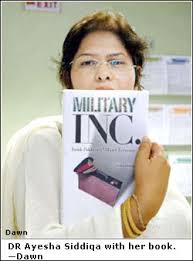
Ayesha Siddiqua
Najam Sethi
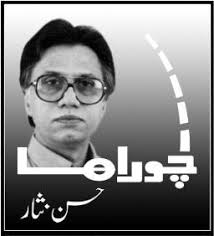
Hassan Nisar

We can see his tasteless argument in his article which was published after the tragic Srilankan cricket team attack. where he not only ridiculed almost all thebrillaint brains of our society at large but gone on labeling with Indian loyalist and being not loyal to Pakistan. And the people in the list of "india lovers" includes.

Najam sSethi
Imtiaz Alam
Asma Jahanghir
Ayesha Siddiqua

Source: http://pakalert.wordpress.com/2009/03/06/pakistan-cut-off-all-india-links-pending-lahore-investigations/

If Srilankan team tradegy was not good check this out the briliant Ahmed Quarishi went on writing the the ulimate article "the Business of Asma Jehangirism & liberal Extremsim" which absolutely tasteless and it was even worse than his previous article Safron Crusador on Asma jehhanghir.which can be read from the link below.
source:http://aq-lounge.blogspot.com/2009/04/business-of-asma-jehangirism-liberal.html

Read more...

Friday, 6 March 2009

Lahore terror attack: Lashkar-e-Jhangavi and allied sectarian/jihadi groups involved


From a state of denial to accepting ownership?

Ayesha Ijaz Khan writes in The News (6 March 2009):

While Pakistanis are not completely out of line if they have concerns about India's hegemonic designs and regional threats to their existence (in recent months, these threats have amplified. Yet, equally dangerous, if not more so, is the enemy within); regrettable as it is, it would not be unfair to say that extremism has permeated our society and over the past many decades there has been a systematic transfer of power from the secular segments of society to those claiming to pose as Islamists.

There is too much tolerance for religious posers, and precious little for dissent in secular terms. This is exhibited across the board. The biggest culprits of course have been successive governments, willing to make peace deals with those who threaten the very fabric of our legal and value structure, yet unwilling to accommodate political dissent or civil society activism based on globally-accepted human values.

But the trouble is also evident among large segments of our society at large. Those who hide behind the cloak of religiosity are rarely questioned about their motives or their actions. Even ten years ago, before the menace of Talibanization crept upon us so forcefully, a policeman, for instance, was far more likely to fine a clean-shaven driver as opposed to a bearded one.

I find it ridiculous, for example, when some analysts ask what the extremists would gain by targeting the Sri Lankans and thus further isolating Pakistan. What do they gain by burning girls' schools? What do they gain by mutilating dead bodies? What do they gain by attacking concerts? Isn't it just the spread of panic and fear that they are after? Have they been emboldened further by the deal in Swat?

Najmuddin Shaikh writes in Daily Times:

But if we want to face reality, we must accept that this was a homegrown attack. If it had foreign financing and perhaps some foreign planning, the finger should point not only towards our eastern border but also to the north of our own country. It is there that those who found shelter now find themselves under pressure, which can best be relieved if their sympathisers in Punjab — and there are plenty of those — can be motivated to create chaos and anarchy in the capital of the country’s largest province.

Najam Sethi writes in Daily Times:

No one will disagree that it was premature on the part of the media to start discussing an “Indian hand” in the terrorist attack on the Sri Lankan cricket team on March 3. Relying on a CID letter warning the government weeks in advance that the attack would be launched by India’s secret agency RAW, the media took off, bringing in commentators and analysts who were already wedded to the idea from their ideological convictions. But the campaign is coming unstuck even as it unfolds.....

The agencies have been finally forced to look for “local groups”, and that means the vast jihadi network now working for Al Qaeda and the Taliban. Because of their old linkages within the state institutions, these groups are able to plant “information” on our security personnel to confuse them and get them to ignore the real culprits. There is an unending stream of reported evidence that the jihadi organisations of Punjab are all aligned with Al Qaeda and have been involved in acts of terrorism planned by it. Yet, all TV discussions avoid naming them, preferring to focus on “foreign hands” that are never finally revealed.

...

Lahore Liberty ambush: Defunct outfit involvement revealed

Updated at: 0915 PST, Friday, March 06, 2009

Gunmen carrying their weapons

Gunmen carrying their weapons as they leave on foot after the ambush on the Sri Lankan cricket team in Lahore


ISLAMABAD: A defunct religious outfit ambushed the Sri Lankan cricket team and the assailants had come from the tribal areas.

Sources said that the law enforcing agencies have dug out evidences against the attackers, which revealed that the terrorists having links with Afghanistan give rise to this conclusion that Al Qaeda was also indirectly involved in the Libery tragedy.

Sources said that the two vehicles near the Big City Plaza, which were used for Sri lankan team’s ambush had come there early in the morning and no one checked them. Sources said that the terrorists, who has stayed in the Youth Hostel, took part in the action, while the other accomplices had stayed at Kot Lakhpat and Township Area. Secret agencies have found out from the record obtained from cellular phone that the terrorist’ four associates were present around Qaddafi Stadium, who in touch among themselves through mobile phones---one of them stationed near Punjab University new campus, other at Lahore Canal near Qaddafi Stadium, the third one at nearby Boulevard, while the fourth in the Firdaus market area.

Sources claimed that the terrorists kept using the station code for Sri Lankan team van and as soon as the van reached Liberty Chowk, the terrorists told each other that the ‘station’ was about to arrive. According to information, among the 14 terrorists a few belonged to Lahore, while others came from the tribal areas armed with explosives RDX highly inflammable.

Sources said that a breakthrough has been achieved as plausible evidences have been obtained and some crucial arrests could be made in the next one/two days.

http://www.thenews.com.pk/updates.asp?id=70601

.....


....

Investigators see LeT footprints in Lahore attack
By Mubashir Zaidi and Irfan Raza
Friday, 06 Mar, 2009 (Dawn)

ISLAMABAD: Investigators are zeroing in on the footprints of the banned Lashkar-e-Taiba (LeT), according to preliminary investigations by the Joint Investigation Team probing Tuesday’s attack on Sri Lankan cricketers at Lahore’s Liberty Chowk.

Sketchy details of the initial probe suggest that a group of headstrong Lashkar activists, who went underground and remained in hiding in Rawalpindi after the crackdown on Lashkar and Jamaatud Dawa in December, had acted on their own and carried out the attack.

Although officials would not confirm the involvement of Lashkar, they categorically ruled out the possibility of involvement of the Indian spy agency RAW (Research and Analysis Wing) or the Liberation Tigers of Tamil Eelam (LTTE) as no evidence has been found so far pointing in their direction.

At least eight people, six policemen among them, were killed after 12 gunmen attacked the bus carrying Sri Lankan cricketers to Qadhafi Stadium.

The attack has killed hopes of any international sports events in Pakistan for months, if not years, and seriously damaged Pakistan’s reputation to host any international sporting event, including the 2011 Cricket World Cup.

The prime minister’s adviser on interior, Rehman Malik, refused to comment on the investigations when asked.

‘At this moment I can only say that investigations into the Lahore attack are going in the right direction. We have also involved the National Database Registration Authority (Nadra) to determine the identity of the attackers,’ he told Dawn.

Interestingly, officials working at Nadra told Dawn that they had no facility to match the sketches with the database. ‘It is a very expensive technology and we do not have it here. So Nadra cannot do anything in this regard,’ a top official of Nadra said.

But asked specifically about the involvement of Lashkar in the Lahore attack, Mr Malik said he could not reveal anything at the moment. ‘The preliminary report will be finalised by Friday. At this moment I can only say that reports regarding the involvement of LeT are speculation,’ he added.

Later he told reporters in Parliament that al Qaeda could be involved in the attack. He also said so far investigations had not yet found any Indian connection.

He told journalists that the involvement of India’s Raw had not been proved so far. But, he added, the final answer could only be given once the investigations were completed.

Mr Malik claimed that investigators had not found any link between the attackers and Zakiur Rehman Lakhvi, a key Pakistani suspect in the Mumbai attacks and the alleged trainer/handler of the suicide squad that wreaked havoc in India’s commercial hub in November last year.

But he refused to share details with media of the arrests made by the law enforcement agencies so far.

The investigators involved in the probe believe that the attackers got their commando training in the camp of Lashkar’s operational commander Zakiur Rehman Lakhvi as their modus operandi had similarities with the Mumbai attackers.

Lakhvi was detained by authorities on suspicion of involvement in the Mumbai terror attacks. He was picked up from his camp in Muzaffarabad on Dec 10 last year.

Investigators believed that one of the attackers had assured the chief suspect in Mumbai terror attacks that his followers would take revenge against Pakistani authorities for his arrest and subsequent trial.

The authorities have also approached Jamaatud Dawa chief Hafiz Saeed, who is currently under detention at his Johar Town residence in Lahore, to help authorities in tracking down the attackers.

http://www.dawn.net/wps/wcm/connect/Dawn%20Content%20Library/dawn/news/pakistan/investigators+see+let+footprints+in+lahore+attack--sal-up

.....

Pakistan IDs cricket attackers, security concerns mount

Sketch of four of the terrorists wanted in the attack on the Sri Lankan cricket team in Lahore on March 4.


LAHORE, Pakistan (AFP) — Authorities in Pakistan said they had identified the gunmen who attacked the Sri Lankan cricket team, as international concern mounted Friday over how the security plans failed.

Prime Minister Kevin Rudd of Australia, home to two officials caught up in Tuesday's deadly attack in the city of Lahore, demanded to know how up to 12 men were able to stage the assault, killing eight and wounding seven players.

Footage of the gunmen's getaway has raised questions about Pakistan's ability to combat Taliban and Al-Qaeda linked militants, who have carried out scores of attacks here over the last two years and are the main suspects.

"We have identified the people who did the operation," provincial governor Salman Taseer told reporters in Lahore late Thursday.

Police released sketches of four suspects and have brought in around two dozen people for questioning but no leads have been announced.

Taseer said he would comment further after reviewing an interim investigation report due Friday.

The gunmen fired on the Sri Lankan team convoy with automatic weapons, grenades and a rocket launcher as the vehicles travelled to Lahore's Gaddafi Stadium but all the attackers fled without a trace.

No one has yet claimed responsibility for the attack, which left a total of 19 people injured.

In Australia, Rudd said he was unhappy about the security concerns expressed by Australian cricket officials travelling with the team.

"I am sufficiently concerned about what has been said by the Australians that we need an explanation, and we intend to get one," he told a radio interviewer on Friday.

Simon Taufel, one of the umpires travelling in the convoy with the Sri Lankan team, said his bus had been left unprotected once the assault began.

"You tell me why supposedly 20 armed commandos were in our convoy and when the team bus got going again, we were left on our own? I don't have any answers to these questions," he said.

Pakistan lawmakers have accused the government of a "serious security lapse", highlighting reports that authorities were warned of a possible attack.

The top government official for Lahore conceded Thursday there were gaps in the security provisions made for the Sri Lankan team.

"A terrorist has to succeed only once, whereas security has to be successful all the time. After every incident one gets wiser. You get to know all the gaps and how you should not repeat those gaps," Khusro Pervaiz told AFP.

More than 1,600 people have been killed in attacks over the past 22 months in Pakistan, where Al-Qaeda and Taliban militants have forged a base in the rugged, lawless northwest along the border with Afghanistan.

For decades, Pakistan's ISI military intelligence agency has fostered Islamist militant groups in Kashmir and Afghanistan, and there are suspicions that some ISI elements have links to militants inside the country.

The South Asian country's long history of unsolved political attacks includes the assassination in December 2007 of former premier Benazir Bhutto.

Tuesday's attack was also a serious blow for cricket in Pakistan, as the International Cricket Council raised doubts about whether it could still co-host the sport's 2011 World Cup.

New Zealand has indicated a tour of Pakistan set for November will likely be called off.

http://www.google.com/hostednews/afp/article/ALeqM5ik5u048DEW6VCSx2NYIvmnr6TxZQ

....

March 6, 2009

Gunmen who attacked cricketers in Lahore 'had links to al-Qaeda'

Pakistan has identified the gunmen who attacked Sri Lanka's cricket team in Lahore and arrested some key suspects, including the brother of the suspected mastermind, according to several officials.

Most of the two dozen detainees belonged to Jaish-e-Mohammed (JeM) and Lashkar-e-Jhangvi (LeJ), the outlawed militant groups with close links to al-Qaeda, security officials have told The Times.

Senior police officials said that the men behind Tuesday morning's attack might also have links to other militants fighting in Pakistan's lawless tribal region bordering Afghanistan.

However, it remained unclear last night whether those arrested included the gunmen who killed eight Pakistanis and injured six Sri Lankan players and one British assistant coach in Lahore. Salman Taseer, the Governor of the eastern province of Punjab, said only that the Government had identified the attackers but refused to give details until the investigation was completed.

“We have found a lot of evidence. We have recovered the weapons. We have identified the people who did the operation,” he told a news conference in Lahore.

Police also released sketches of four of the 12 gunmen, and Rehman Malik, the Interior Minister, said that a preliminary investigation report would be released today.

Some Pakistani officials have said that the attack bore the hallmarks of Lashkar-e-Taiba, the Pakistani militant group blamed for the attack on Mumbai in November.

But a senior Home Ministry official said that it appeared to be the work of al-Qaeda, which has masterminded previous attacks in Pakistan, including last year's suicide bombing on the Marriott hotel in Islamabad.

He said the investigation showed that Tuesday's attackers were from Punjab and North West Frontier Province, which has become the main battleground between militants and Pakistan's armed forces.

Intelligence sources said that southern Punjab had become the main centre of radical Islamic activities in the country. Despite a ban, groups such as JeM and LeJ had expanded their influence in the area, drawing recruits from among rural poor, they said.

Most of the gunmen involved in the attack on Mumbai in November came from the same region.

JeM has become a virtual extension of al-Qaeda and was blamed for most of the terrorist attacks in Pakistan after the country become an ally in the US-led War on Terror in 2001.

LeJ is an extremist Sunni sectarian group whose members overlap with JeM. It has also been involved in al-Qaeda-led attacks in Pakistan.

Pervez Musharraf, the former Pakistan President, voiced criticism of the security arrangements yesterday, saying that the special police guarding the Sri Lankan team should have responded and killed the attackers in less than three seconds.

“That should be the level of training that I expect from an elite force ... we need to improve that standard,” he said.

http://www.timesonline.co.uk/tol/news/world/asia/article5854505.ece

....

Terrorism in Pakistan

State of denial

Mar 5th 2009 | LAHORE
From The Economist

The culprits behind the latest outrage


AFP Not a cricket shot

FOR many foreigners, events in Lahore, the capital of Punjab province, on March 3rd confirmed their view of Pakistan as a hotbed of terrorism. A dozen masked gunmen ambushed a convoy carrying Sri Lanka’s national cricket team, killing six policemen and two others, and wounding seven cricketers and a British coach. But for many Pakistani pundits, quick to appear on television, events fitted another familiar pattern: Pakistan as victim of Indian conspiracy.

In January Punjab’s intelligence service had warned the police that India’s spies were planning to attack the Sri Lankan team. Now the pundits claimed the ambush was intended as retaliation for the attack on Mumbai in November in which more than 170 people were killed, to show that Pakistan was a security risk. As evidence, they pointed to the assailants’ escape: Pakistan’s Islamist terrorists, went the argument, make sure to kill themselves as well as their victims. To bolster their case, they cited India’s crowing over its decision not to send its own cricket team, for which Sri Lanka’s was standing in, and its leaders’ complaints, after the attack, about Pakistan’s intact terrorist “infrastructure”.

This far-fetched analysis, and the refusal to accept the reality of Pakistan’s terrorist problem, owes much to the religious-nationalist leanings of many young but influential television presenters. Their opinions were formed by the distorted education they received under General Zia ul-Haq, Pakistan’s dictator from 1977-88. So, despite many occasions when al-Qaeda has claimed attacks in Pakistan, many Pakistanis refuse to believe the group exists, let alone that it is dangerous for their country.

In fact, however, a former high-ranking Pakistani intelligence official has given The Economist a much more plausible explanation for the Lahore attack: that it was the handiwork of Lashkar-e-Jhangvi (LeJ). This sectarian group, which also put New Zealand’s national cricketers to flight in 2002 after it exploded a bomb outside their hotel in Karachi, now works closely with an al-Qaeda/Taliban network in Pakistan’s tribal areas.

It has been blamed for several atrocities, including the bombing last September of the Marriott hotel in Islamabad, for which al-Qaeda this week also claimed responsibility, in a message to the Saudi embassy in the capital. According to the intelligence source, the security forces last year caught an LeJ terrorist, who is still in custody. He has confessed to being trained to carry out a suicide mission during a proposed international cricket tournament last year that in fact was shifted elsewhere.

In a society beset by Islamist violence, including some 60 suicide-bomb blasts in each of the past two years, this latest attack was less bloody than many, but nonetheless remarkable. Sri Lanka’s decision to send its revered cricketers to Pakistan, despite fears for their safety, was a brave act of South Asian solidarity from a country with terrorism troubles of its own. Its foreign minister this week visited Pakistan and offered condolences for the deaths of those killed protecting his compatriots.

That Pakistan has proved unable to provide effective security for the Sri Lankans, despite extraordinary efforts by Lahore’s police in the face of a manifest threat to their lives, is dispiriting. It seems reasonable to suppose that many of Pakistan’s dwindling foreign visitors, of all stripes, will now stay away from the country. At a time of economic duress, partly related to the country’s deepening insecurity, this will have repercussions far beyond cricket.

For many Pakistanis, however, the outcome for the country’s favourite game will be bad enough. It is almost unimaginable that other national sides will want to tour Pakistan in the near future. Pakistan’s ambition to be one of the hosts of the 2011 World Cup is surely in tatters. Though not quite the source of public hysteria that it is in India, cricket is one of Pakistan’s few unifying forces. Moreover, at a time of national shame over the many atrocities committed by Pakistan-reared militants at home and abroad, their cricketers’ performances were an export of which Pakistanis could be genuinely proud.

http://www.economist.com/world/asia/displaystory.cfm?story_id=13240421

.....

Terror war comes to Lahore
Reality check

Friday, March 06, 2009
Shafqat Mahmood

They are destroying everything that made life normal. A game of cricket with a visiting foreign team, gave a message of well being. This made cricket an enemy. The resolve of the Sri Lankans to help Pakistan project an image of peace was heroic. This made them a target.

It is about time we understood that the real enemy is within. It may be comforting to blame outsiders; and nothing can be ruled out in the murky world of spy wars. But, this cannot be an excuse to deny that we have a problem.

This is not of American origin or Indian design. America began the rot by bankrolling a surrogate army to fight the soviets in Afghanistan. India raised the temperature by letting lose a reign of terror in Kashmir. But, we nurtured and nourished these non state actors as an adjunct to our normal security apparatus.

What we did not consider was the cost to the country or the blow back that this will create. The power of the gun is a heady brew. Those using it become accustomed to attention and to intimidation to get their way. They were not going to melt away just because a certain politician or General said that time has come for them to go back to their shops or ploughshares. Even expecting anything like this was fool hardiness.

Myths were also created to place these organizations in the mainstream of our national narrative. These are good people who will never fight the Pakistani state, we were told. Their enemy is only India and their theatre of operation the Indian occupied state of Jammu and Kashmir. Also, that they are within our control and will do as they are told.

Time has shown these beliefs to be total fabrications. They have never shied from committing acts of terror within the country. From the bombing of French engineers in Karachi to sectarian wars in Punjab and now the attack on the Sri Lankan team, the footprints of these organizations are everywhere.

They have reached a level of strength where they have become completely autonomous. There has been serious speculation for some time that the attack on the Indian parliament was carried out by Jaish-e-Mohammad. Pakistani intelligence operatives had no clue about it.

The Mumbai attack is now recognised to be a Lashkar-e-Taiba event. The government has half accepted this and more is to come. Again, despite some reckless accusations by Indian politicians, Pakistan intelligence agencies had no advance information of it. Even later, it was only the investigation and reportedly confessional statements by some of the accused that lay bare the details of the plan. The legendary Pakistani agencies were clueless.

Not being aware of operations by organizations that traditionally worked closely with them is not good for the intelligence agencies. While it creates plausible deniability, it also shows how autonomous these jihadi outfits have become. Spy games are not about mounting operations. Those are rare.

Good intelligence is all about information. When available, it can help prevent the bad and encourage the good. No information means being completely out of the loop and having little ability to influence events. This is paralysis and a nightmare for the agency concerned. Ultimately, it reflects a weakness of the state. That seems to be happening in this case.

There are reports on Wednesday evening, as I write this, that about five of the accused involved in Sri Lankan firing have been arrested. If these are the real people, it is possible that we may find out their true motive. But, without knowing much, I can predict that these attacks on the bus of the Sri Lankan cricket team had a fair amount to do with the arrest of LeT members and their expected trial in the near future.

Horrendous as this tragic attack is in which so many policemen have lost their lives and some Sri Lankan players injured, this should be seen as test of our resolve. If we buckle under and start making appeasing noises, the terrorists would have succeeded. This is a time to keep the pressure on and show that acts of terror will not deter us from trying criminals who use our territory to wage war outside.

We should also stop legitimising them by placing their acts in a context of anti-Americanism. This is what some people are doing when analysing events in FATA and Swat. The assumption is that if somehow the Americans would disappear from Afghanistan, all would be well.

This is balderdash. American presence in Afghanistan has indeed created a sanctuary for some Afghan Taliban and Al Qaeda in the tribal areas but extremist elements in other parts of the country have an agenda of their own. Pamphlets have begun to appear in Lahore markets and other places essentially targeting women. They should be modestly dressed and not shop alone etc. More is likely to come.

The seeds of extremism have been sown in all parts of the country. It is now almost a cliché to blame the madressah system for the spread of extremism but like most clichés it has a great deal of truth in it. Particularly in southern Punjab, the impact of the madressahs largely funded by Saudi money is huge.

These alternatives of education and nourishment are sucking in thousands among the poor. They otherwise would have no option but to depend on the state school system, which is in an abysmal state. It also does not provide meals. Mundane as this may sound it is not something to be scoffed at. Unless the state is able to compete with these alternatives, the battle for the hearts and minds of the poor is lost.

To create the possibility of winning, the state will first have to acknowledge internal terrorism as a serious problem. Despite much mouthing of right words, there is no evidence that a comprehensive holistic plan has been made to fight extremism. This involves, besides better policing, a combination of better services and a much better access to health and education for the poor.

In other words, investing serious money into the fight against extremism is essential. It would involve modernising the police force, creating greater capacity among prosecutors and court systems, and, investing in services for the poor. It is this three-pronged strategy that will possibly turn the situation around. This hand wringing and mouthing of pious slogans by the leadership would not get us anywhere.

While hopefully someone will pay attention to this, let us pause and say a silent prayer for Pakistani cricket. For many of us, it was not a sport but a passion. A cricket match would be more than a sporting contest. It was a gladiatorial fight and a social event rolled into one. Now for years to come, no one will come here. Another element of our way of life has come to an end.

This is not the passing of a torch from one generation to the other. This is a paradigm shift. We are not leaving a better world behind.


Email: shafqatmd@gmail.com

http://thenews.jang.com.pk/daily_detail.asp?id=165959

....

For further information about Lashkar-e-Jhangavi, read:

Book Review: The True Face of Jehadis - By Amir Mir

ISI supported Lashkar-i-Jhangavi and Sipah Sahaba in killing Shias in Pakistan

For a detailed account of Lashkar-e-Jhangvi reign of terror in Pakistan, read:

http://letusbuildpakistan.blogspot.com/search/label/Lashkar-e-Jhangavi


Read more...

Friday, 20 February 2009

Taliban killed Musa Khankhel. Will Sufi Muhammad provide Shar'i justice to Musa Khankhel's family?


Omens against peace in Swat...


As if in response to the Tehreek-e Nifaz-e Shariat-e Muhammadi (TNSM) leader Sufi Muhammad’s “peace march” from Mingora to Matta in Swat, a gang of Taliban kidnapped journalist Musa Khankhel on Wednesday and then rigged him with bullets and beheaded his dead corpse. The Sufi did not comment, but the act was clearly addressed to him as a message. Musa Khankhel was following the grand procession of sharia led by Sufi and exhorting all to support the accord. At the very least, Sufi should have condemned the act. But he didn’t. Now the media is outraged over the fourth journalist killed in Swat. Significantly, however, no one is ready to name the killers.

Sufi Muhammad has suddenly got more positive publicity than the Taliban ever did. Almost the whole of Swat is behind him and willing to walk in procession in the hope of finally achieving peace. The Sufi is the redeemer; and the tormentors, though unnamed, are the Taliban who control 80 percent of the region. This publicity may have been unbearable for the elements who hogged it for the last two years to the detriment of the state. Warlord Fazlullah may be the Sufi’s son-in-law but his patrons may want him to resist his growing influence.

A message from South Waziristan is ready to hand if you want to heed it. The building of the press club in Wana was blown up the same day Musa Khankhel was murdered. One can only call it a “symbolic” act meant to be a message to Swat because the press club was no longer in use after all the journalists had fled the headquarters of the Tehreek-e Taliban Pakistan (TTP) some time ago. The media, which the warlords relied on for publicity, is suddenly no longer in favour because its focus has shifted to Sufi Muhammad who is now negotiating the sharia accord (which he has signed with the NWFP government) with the Taliban.

The Taliban, who actually rule Swat, have announced a ten-day truce and have made public their reverence for the Sufi; but they could not have liked the sharia accord in which the charismatic Sufi has given away some of the fundamental positions taken by the Taliban’s central leadership. For instance, Baitullah Mehsud’s Waziristan Taliban fired another warning shot to the Taliban of Swat when they blew up two more girls’ schools in Bajaur on Wednesday. This again was ritualistic and symbolic because the girls no longer go to school in Bajaur. Given this atmosphere, it is going to be difficult for Sufi Muhammad to persuade his son-in-law to relent and let peace return to the valley.

Journalist Musa Khankhel has laid down his life for a big cause, the cause of giving the people of Swat their lives back, and the media must highlight his sacrifice in the shape of protest. And this protest should not shy away from naming the culprits now that Sufi Muhammad has polarised the region. The protest will give heart to the Swatis who now walk behind him but might later be intimidated into giving up. The battle is on and should not be abandoned because the people are now in a position to opt for someone who is not Taliban.

The world outside sees the Sufi factor as the beginning of a rift within the Taliban movement. The killers may all be savage men but a section of them is killing in the name of Allah and owes allegiance to Sufi Muhammad. This is the section that will find it hard to obey Fazlullah if he decides to reject the peace plan being pursued by his father-in-law. But the situation on the ground is still loaded against the Sufi because his sharia will have to unfold when the Taliban control the region; and the police and other bureaucracy have long fled the scene. (Daily Times)


Ataul Haq Qasmi
Read more...

Monday, 16 February 2009

Sharia "Justice" comes to Swat again? Two divergent perspectives

Here are two divergent perspectives; the first one by Najam Sethi, a progressive, secular journalist, and the second one by Ansar Abbasi, a conservative, pro-Taliban journalist.

Sharia “justice” comes to Swat again?

Shara’i Nizam-e-Adl Regulation is about to be applied to Swat once again. This time, one hopes, it will stick and not become a ruse for the Taliban behind which to gain reprieve from military attacks and regroup. The last time the ANP government wrote up an accord on the subject with the followers of Sufi Muhammad of the Tehreek Nifaz Shariat Muhammadi, (TNSM) the son-in-law of the great sufi warrior, Fazlullah, did not abide by it and the people of Swat, who are propagated to be relentlessly “demanding sharia”, suffered untold misery at the hands of his gunmen. The earlier agreement had the authority of the Sufi’s word not to destroy girls’ schools, but the schools had gone on being blown up.

This time, too, the NWFP government and the TNSM leader have agreed to the implementation of sharia justice in Malakand division. Under the agreement, Sufi Muhammad, through his public congregations in Matta, will be expected to “build consensus among his people”; His son-in-law, Fazlullah, will have to soon announce ceasefire in Swat; all the girls’ schools in the area would have to be reopened; and the great Sufi Muhammad would “help establish a strong administration in the area”, although that job is normally expected to be performed by the elected representatives of the people sitting in Peshawar.

The sharia bill will be finalised by the ANP government and subjected to a political consensus in the NWFP Assembly on Monday and the emerging document will be grandiosely called Shara’i Nizam-e-Adl Regulations. Many who will sign on the dotted line will be those who would sign anything if it remotely promised to bring a break in the cycle of Taliban violence in the region. Some will be sceptical about a blueprint of religious law that will stand only if it is not different from the law being enforced in the Tribal Areas. For instance, the blowing up of girls’ schools was a part of the jurisprudence of the Taliban government in Kabul, which was accepted as precedent in Pakistan’s Taliban-controlled Areas. The last time Sufi Muhammad promised not to destroy the schools he couldn’t enforce or abide by his pledge.

The people of Swat want quick justice, the kind enforced by the Wali of Swat, as if in a city-state utopia, but they are bound to get more than they have bargained for by rejecting the dilatory system obtaining in the rest of Pakistan. They will get the “munkir” (forbidden) part of the sharia dealing with forbidden acts plus the “maruf” (approved) part dealing with acts of piety. The “praiseworthy” acts of piety such as the saying of the nimaz five times a day in the mosque will be greatly approved, but those who don’t observe the ritual will suffer physical and financial pain. And the list of the “maruf” stretches endlessly, which means that you can be thrashed for a number of things you thought were not “penal”. It is probable that the scared people of Swat simply don’t know what they are in for.

The Sufi himself says he will help in setting up a judicial system. What if he doesn’t like the way the ANP lays down the law of the sharia? Will the ANP leaders get the Sufi to become a de facto arbiter on how the sharia has to be enforced? A chilling feeling is that the Sufi and his warlord son-in-law will preside over the establishment of the sharia law and will also interfere in the day to day implementation of it. The power of the Sufi will derive from the gun of the Taliban and he will not for long allow a sharia which is different from the one enforced by the Taliban elsewhere. This is very important because sharia is the order that will ensure longevity to the governance of the Taliban in the various territories they hold. Finally, if the Taliban win the war in Afghanistan and the Americans leave the region, it is the sharia that will ensure that the territories conquered in Pakistan stay with them.

Clearly, the problem sits at the cross-section of the internal dynamics and the politics of Sharia. While both are problematic in and of themselves, their meshing makes the issue even more troublesome. The state thinks it needs to ensure some semblance of peace in the area and this is perhaps the best way to go about it in the interim. But there are too many areas of friction here, not just because there is no exegetical consensus on sharia and its implementation but also because its politics, at this point, excludes all but the literalist ultra-orthodoxy of Taliban. There is also bad blood between Sufi Muhammad and his son-in-law and the former, so far, has proved ineffective in the face of the rising power of the latter. We fear that the terms of this agreement like the one before it may be flouted even before the ink on it dries. (Daily Times)

Well done Mr president

Monday, February 16, 2009
Comment

By Ansar Abbasi

ISLAMABAD: President Asif Zardari’s nod to the proposed peace deal in Swat is perhaps the first major political initiative of the present government to save the valley from bleeding to death.

Now when President Zardari needs to be encouraged and given a pat on his back for having agreed to this home-grown solution, overcoming his earlier hesitation to this peace deal, some confused and ill-informed political analysts and media commentators have instantly launched a campaign to derail a process which could bring back the desperately needed sanity, relief, peace and hope.

Maulana Sufi Muhammad, chief of Tehrik-e-Nifaz-e-Shariat-e-Mohammadi (TNSM), had assured the authorities two months ago that he would ensure peace in the troubled Swat only if his demand of setting up of an Islamic appellate court named Darul Qaza is met to ensure quick justice. The president, who was initially scared of the expected international pressure in case he approves the Shariah system in Swat but has now agreed to this and given a go-ahead to the Frontier regime to sign and announce the peace deal.

What is wrong with such a localised deal in a highly troubled and violence-hit area is beyond understanding, though Zardari and some of the critics feared that the US may object to what may be perceived by Washington as a concession to the extremists.

But the US cannot object if through an internal judicial restructuring, or renaming the courts, a large and potentially dangerous theatre of violence can be pacified and thousands of troops being used there can be diverted to fighting the war against terrorism in other places.

While the peace deal is said to have already been signed between Tehrik-e-Nifaz-e-Shariat-e-Mohammadi’s (TNSM) chief Maulana Sufi Muhammad and the NWFP government on the enforcement of Shariah in the Malakand division and is likely to be announced on Monday, the propaganda campaign unleashed on private television channels is depicting it as a move that would seriously disfigure the existing systems in the country and might encourage people in other areas, too, to demand enforcement of Shariah in their regions.

These critics don’t refer to the fact that what has been agreed between the TNSM chief and the present regime was originally approved during Benazir Bhutto’s second government and later endorsed during Nawaz Sharif’s regime but never implemented.

Instead an impression is being given as if something strange is going to happen to Swat. The historic fact is that in Swat the Islamic judicial system has been part of their history even during the British rule. In the days when Swat was a state run by a Wali, the judicial system was totally unique to its own needs, as it would be now, but under a different name.

The critics are also ignoring the fact that all the political forces concerned, including even the Awami National Party (ANP) and the Pakistan People’s Party, are fully supportive of this peace deal. Though, the demand for the enforcement of Shariah is generally linked to the TNSM or the followers of Maulana Fazlullah and the Taliban, the fact remains that the Swat MPs, even those belonging to the PPP, are pressing for the same as the people of Swat, irrespective of their party affiliation, demand an Islamic Justice system (Islami Nizam-e-Adal) to ensure quick justice.

Justice, and swift and speedy one, is thus the crux of the whole argument and has caused such terrible loss of lives and trauma for the thousands of citizens living in the troubled area. While these analysts cast doubts on the possible outcome of the deal, Maulana Fazlullah of the FM Radio fame who controls may minds and warriors, announced on Sunday an initial ceasefire for at least 10 days. This may be one of the biggest breakthroughs for the PPP government of Mr Zardari if pursued sincerely and seriously and taken to its logical end.

Maulana Sufi Muhammad would start addressing rallies and processions in Swat and would launch this campaign from Matta, the most troubled Tehsil of the valley. He would go there on Feb 17.

While the constitution provides for different set of rules, regulations and laws for different areas of Pakistan and this is even true in case of other countries, including the US, the naÔve TV critics cannot understand how would the special Swat arrangement work. They are creating a confusion, perhaps oblivious of the fact that laws in tribal areas of Pakistan, provincial tribal areas including Swat, cantonment areas, etc., are different from other parts of Pakistan. And different systems for such different areas can work and have been working for ages.

Maulana Sufi Muhammad, chief of Tehrik-e-Nifaz-e-Shariat-e-Mohammadi (TNSM), had assured the authorities two months ago that he would bring peace in the troubled Swat only if his demand of setting up of an Islamic appellate court named Darul Qaza is met to ensure quick justice. The News recently also published the image of the draft agreement, which was prepared and signed by Sufi Muhammad after dialogue with the government authorities.

The agreement announces that Shariah would be enforced in the Malakand division which includes Kohistan and Hazara. It added all un-Islamic laws and those in conflict with the holy Qura’an and Sunnah would be abolished as was agreed during the PPP and the PML-N governments of Aftab Sherpao and Sardar Mehtab Ahmad Khan Abbasi.

As has been agreed so many times before, the agreement also said that the system of Shariah courts would be introduced and decisions would be taken in accordance with the holy Qura’an, Sunnah, Ijmah and Qiyas. No decision would be taken outside the limits set by these sources of Islamic jurisprudence.

While the Qazi Courts are already operating there and most of what is written in the draft agreement is also part of the regulations issued earlier, the draft agreement demands the setting up of Islamic appellate court named Darul Qaza, which would be the final appellate authority, meaning thereby that the decision of Darul Qaza could not be challenged in any high court or the Supreme Court.

Then the draft agreement envisages setting up of a committee to ensure implementation of the Islamic justice system. Contrary to those creating confusion, this is very much in line with the constitutional provisions.

If such a local arrangement can be made to work and peace and tranquillity returns to Swat and other parts of the NWFP, it could also provide the fighting Islamic militants of Fata to consider similar localised arrangements within the state and writ of Pakistan and stop fighting and draining critical military and strategic resources to the detriment of the nation. What is encouraging is that all this is possible and doable but only if President Zardari and his coalition partners do not get cold feet under pressure of TV critics. (The News)


Will the Taliban be answerable to Shariat Courts? An analysis by Abdul Haye Kakar, BBC Urdu dot com:

http://www.bbc.co.uk/urdu/pakistan/story/2009/02/090215_swatpeace_analysis.shtml

Read more...

Sunday, 26 October 2008

Javed Chaudhry - the mouth piece of Taliban and Sipah-e-Sahaba compares Taliban with Hazra Imam Hussain (R.A.)


Javed Chaudhry is on the payroll of anti-Pakistan forces which are currently sponsoring Taliban and Sipah-e-Sahaba and their supporters in Pakistani media and politics.

[1100116738-2+yazid.gif]
http://express.com.pk/epaper/Article.aspx?newsID=1100116738&Date=20070130&Issue=NP_LHE

COMMENTS


YLH:


I read that article by Javed Chaudhry… and frankly I disagree with it completely.

The conflict at Karbala was essentially a power struggle between Banu Omeyya and Banu Hashimâ€Â¦ Muawiyah, being a prudent and wise man, had sought to compromise with the family of the Prophet (PBUH)â€Â¦ but his son made the huge mistake of antagonizing the masses by ordering the butchery at Karbalaâ€Â¦ we mourn the family of the prophet because it was a great tragedy.

Taliban on the other hand persecuted inter alia the shias, sunnis, hazaras, women etcâ€Â¦ how can anyone compare them to Imam Hussain's sacrifice¦ god knows. Perhaps Mongol Horde under Genghis Khan is a much better analogy But then you have people like Mullah Zaheer running amuck making a mockery of our country, our people and our religion, and people like Javed Chaudhry around to encourage this.

Ahsan:

I did go through the article of Javed Chaudhry that Adnan indicated. I have read his other Urdu essays as well and I appreciate his Urdu writing. He writes beautiful language. I have no hesitation to put Bush and Yazyd in the same bag, but I can not put the Taliban on the same pedestal as Husayn? It is not the question of the religion or belief . It is simply based on reason. The Taliban do not have the same moral standing as “Hysayn"?. If any thing, they are immoral in my view. They are not fighting for Islam or for any thing good. The war between Bush and Taliban is a war between two tyrants. The less tyrant (Taliban) is fighting against the big tyrant (Bush) to perpetuate the tyranny over their own nation and their own people. Comparing a worse with the worst does not make him better (good). He still remains bad.

Umer:

#
Umer says:
February 1st, 2007 5:37 pm

Guyz, may I propose something. We all agree that

(1) The vast vast majority of Shia an Sunni DO consider themselves as Muslims first and anything else second, and that is how it should be.
(2) There are some Sunnis who cross the line in condemning the Shia for their practices and some time (very very infrequently) even say hurtful things about people who the Shia (and most Muslims in general) hold especially dear. We all agree that this is just wrong thing to do.

(3) There are some Shia who cross the line in condemning the Sunnis and some time (very very infrequently) even say hurtful things about people who the Sunnis (and most Muslims in general) hold especially dear. We all agree that this is just wrong thing to do.

(4) Most Sunnis and most Shias do, in fact, respect each other’s practices and see themselves as Muslims first. We should all try to focus on strengthening these feelings and not falling for the minorities described in (2) and (3).


YLH:

The problem with our society is the lack of tolerance and/or giving the benefit of doubt to the other. Only god knows how he came to the conclusion that I was “denying” the Karbala massacre and the tragedy unleashed on the family of the Prophet… perhaps it is the “holier than thou” attitude that plagues Wahabis and Shias alike that is the problem here. I quote my original post here and ask if others too can draw the same conclusions…

[quote comment="32363"]I read that article by Javed Chaudhry… and frankly I disagree with it completely.

The conflict at Karbala was essentially a power struggle between Banu Omeyya and Banu Hashim¦

Muawiyah, being a prudent and wise man, had sought to compromise with the family of the Prophet (PBUH) but his son made the huge mistake of antagonizing the masses by ordering the butchery at Karbala¦ we mourn the family of the prophet because it was a great tragedy.

Taliban on the other hand persecuted inter alia the shias, sunnis, hazaras, women etc¦ how can anyone compare them to Imam Hussain's sacrifice¦ god knows. Perhaps Mongol Horde under Genghis Khan is a much better analogy

But then you have people like Mullah Zaheer running amuck¦ making a mockery of our country, our people and our religion¦ and people like Javed Chaudhry around to encourage this.[/quote]

Clearly my point that Imam Hussain’s sacrifice should not be compared to taliban has been lost.


Eidee Mian,

It is amazing that you accuse me who was brought up in shiite dominated household of being a “Wahabi”. If objectivity is being “Wahabi” then so be it. However my point - which clearly missed you- was that comparing Taliban to Imam Hussain (as Javed Chaudhry has done in the article quoted by Adnan Siddiqui) is a travesty.

I am afraid I have read history of that period too closely not to see the real power struggle that was going on and the role of Abdullah Bin Zubair in egging on Imam Hussain to make way for his own claim. This does not take away from the supreme tragedy that Karbala is nor does it take away from the character and life of Imam Hussain.

.......

The partial view of reality from Pakistan

Khaled Ahmed’s Urdu Press Review

http://www.dailytimes.com.pk/default.asp?page=story_1-7-2002_pg3_5


Daily Times, pakistan, July 1, 2002

Award-winning columnist Javed Chaudhry writing in Jang (25 June 2002) stated
that under the Taliban there was peace in Afghanistan from Amu to Torkham.
Thieves had their hands cut, fornicators were stoned to death, and shopkeepers
guilty of fiddling with the scales were lashed.
There was hunger and famine but a goldsmith could carry his bag of gold safely from Termez to Chaman. In Afghanistan of Taliban there was zero crime and hundred percent justice. There was tolerance, self-sacrifice, hospitality and modesty. But the West did not tolerate it. It killed the Taliban and said let there be murder, rape and theft, no veil, but a lot of prostitution. The Taliban were declared terrorist and replaced with liberal modern and educated bacha (children) of America and Europe. The liberals of the world celebrated. Now women are raped and men abducted and released on ransom, and there is poppy cultivation which the Taliban had got rid of. The Dostam militia in Mazar Sharif is broadcasting songs from the mosque loudspeakers. Women are without modesty. A BBC film on Mazar Sharif shown to the German parliament made the members cry. There is a club of homosexuals in Kandahar and there are obscene pictures being sold in Mazar Sharif. The West hated the beard of the Taliban but it can’t smell the stench rising from the corpse that Afghanistan has become after the Taliban.

The other side of the picture under the Taliban was always there, perhaps not recognised by the Urdu press and the ministry of religious affairs, and ignored by the establishment under the tutelage of the ISI and the army. The savagery of the Taliban in the guise of Islam was catalogued also in the Pakistani English press. The prostitution among the formerly respectable ladies of Kabul went on under the Taliban too and this column cannot repeat who all enjoyed this ‘service’. The Jaish-Harkat boys killed the Shia in Kabul. The fact of the persecution of the non-Pushtun and non-Sunni was not hidden. The pettiness of beating up the football players and kite-flyers paled before the bastinado applied to the luckless women forced to come to the streets to feed their orphaned children. The Hazaras were starved, the populace of Mazar Sharif was savaged in the brief interregnum when the Taliban made a commitment to the local commanders then went back on it, thus establishing that they were untrustworthy and had to be fought to the last. They killed a Shia leader after his surrender. They hosted the rebels from Tajikistan, Uzbekistan and Chechnya, and threatened Iran, which isolated and besieged the hapless ruin of a country they wanted to rule. It is not only the West, but the entire neighbourhood of Afghanistan – all Islamic republics – who wanted and achieved the death of the Taliban government. Pakistan colluded with this satanism and consequently suffered isolation internationally till its own survival was at stake in 2001. The UN Security Council resolutions related to Afghanistan – on which China either signed or abstained – affixed the stamp of global disapproval on what the Taliban and Pakistan were doing in Afghanistan. What is happening now in Afghanistan is the consequence of the policy the two parties pursued. No one else is to blame for it. What is happening in Pakistan today is also linked to the policy pursued by Pakistan during this period.

..........

SECOND OPINION:Subtexts of Kashmir policy —Khaled Ahmed’s Urdu Press Review

http://www.dailytimes.com.pk/default.asp?page=story_23-7-2004_pg3_3

Columnist Javed Chaudhry wrote in Jang (5 June 2004) that at a seminar in Washington Carnegie Institute speakers came to the conclusion that unless the factories of jihad were closed the problem of terrorism would become worse. Mufti Shamzai of Karachi was such a factory of jihad. He was non-sectarian and believed in the unity of all Muslims. But since he was a factory of jihad, resentful of the powers that inflicted suffering on the Muslims of the World, he had to be shut down. He was killed like the Hamas founder Sheikh Yassin. This is a message for all Muslims and it says: ‘We have to save our great religious leaders from America and its friends who think that the factories of mujahideen have to be shut down’.

Mufti Shamzai was a factory of jihad that has gone wrong for Pakistan for many reasons. His pupils are now trying to do to Pakistan what Pakistan’s innocent citizens don’t deserve. It is easy to say that the Jews or the Americans killed him just like Sheikh Yassin but hard to prove it. It certainly reflects on the state of our mind.
Read more...

Javed Chaudhry - the mouth piece of Taliban and Sipah-e-Sahaba, the champion of yellow journalism in Pakistan


This site has moved to http://criticalppp.com/archives/331, click this link if you are not redirected
Read more...