Editor's Choice

--------------------------------------------------------------------------------------------------------------------------
Featured Post
--------------------------------------------------------------------------------------------------------------------------

"Let us build Pakistan" has moved.
30 November 2009

All archives and posts have been transferred to the new location, which is: http://criticalppp.com

We encourage you to visit our new site. Please don't leave your comments here because this site is obsolete. You may also like to update your RSS feeds or Google Friend Connect (Follow the Blog) to the new location. Thank you.


--------------------------------------------------------------------------------------------------------------------------
Showing posts with label Hussain Haqqani. Show all posts

Sunday, 15 November 2009

Who is next in Ahmed Quarishi and Zaid Hamid's traitors list ?

By: Jarri Mirza
Contribution by guest blogger : Humza Ikram
First they came for the communists, and I did not speak out—because I was not a communist;Then they came for the socialists, and I did not speak out—because I was not a socialist; Then they came for the trade unionists, and I did not speak out—because I was not a trade unionist;Then they came for the Jews, and I did not speakout—because I was not a Jew; Then they came for me—and there was no one left to speak out for me.


This famous quote of German humanist is a reflection of current Pakistan society where conspiracy theorist are coming on main stream television and tabloid and calls anybody traitor and even worse an CIA agent or Jewish spy and nobody is realizing this terrible situation . its a time we should rise to the occasion before we are also called traitor in our own country.

The whole conspiracy theorist game is a very dangerous game which are society is become hostage . and slowly logic, wisdom and facts are made irrelevant.and the most disasters thing is the idea of calling everybody a "Traitor " who wants to research and present a real story .

PPP loyalists have a history of being labeled as the traitor and foreign agent right from the famous Fehmida Riaz (a gifted writer )who was culture advisor to BB and she was actually included in the charge shit against BB's first government.today the whole naming people TRAITOR ,who have opionion dfferent then your opinion is on all time high and the latest victim is Pakistan Ambassador to US Hussain Haqqani and now these conspiracy theorites have gone one step a head . Ahmed Quarishi claims people like Asma jehanghir to be an jews agent which is a cheap and tasteless statement. let us as analyze how these conspiracy theorist works !

HOW TO BE A CONSPIRACY THEORIST

Key to successes

Make as many conspiracy theories as possible as you can, don’t think when at work as they say in Hollywood keep it simple baby!
Call “Traitor” as many people as you can.(it works exponentially)
If possible make it to a music channel so you trap as many young people as possible in your ugly propaganda and nonsense (youth provide cult following).

In case of Zaid Hamid and Ahmed Quarishi both works for a music channel of jang group AAG
(Dunia main bhi aag; aakhirat main bhi aag)

Have a certain mystique appearance. And try to include religion into your debate to get additional legitimacy in your arguments.
Spread hatred, it sells like hot cakes !

The Ultimate achievers: The duo of Zaid Hamid and Ahmed Quarishi


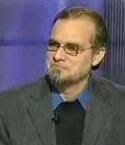
Above is the video of Zaid Hamid and Nadeem Farooq Paracha . Here Paracha is talking about the dangers of conspiracies theories.

AHMED QUARISH HAS RECENT STARTED SERIES OF FLITHY PROPAGANDA AGAINST AMBASSADOR TO US HUSSAIN HAQQANI .JUST LIKE PARACHA SAID WITH LITTLE RESEARCH WE CAN PROVE HIS PROGANDA HAS NO WEIGHT WITH LITTLE RESEARCH.LET US EXAMINE HIS LATEST ARTICLE.

Ahmed Quarishi's recent article against Ambasador to US Hussain Haqqani is a clear case of Yellow Journalism , his article why Hussain Haqqani have only sued Pakistani Newspaper and not the American magazine in my opinion if he had taking his daily dose of sanity he would not had dare to wrote this . to write on diplomatic constraint one has to know diplomatic norms , firstly the question arises can a Ambassador of a guest country can sue a newspaper of a host country . If it can ,the second question arises is that a good precedent.

To analyze this let us examine the recent episode of Shireen Mizari and American embassy in Islamabad.in that eposide shireen Mizari could not provide the grounds on which she wrote the story and thus THENEWS had to apologies . imagine had american embassy had sued the Pakistani newss paper for a reason that they had published something which had no grounds what would happened then?
hussain haqqani is working under a very difficult situation in a US and it was the toughest time of our country's history , just year ago we were about to declared as a brankupt economy. there were hardrly any money left in our foreign reserve to buy fuel for next few months .we have to negotiate witht the west to help our dying economy you like it or not . and all the financial instituation are goes through capitol hill and you like it or not with the creative diplomacy Hussain Haqqani helped the government of Pakistan to reach an agreement with IMF bailout plan. A bailout package which is first of its kind that was presented in the parliment by the ruling party which has a historic significance in our domestic politics also since it was 6th IMF bailout package in our country's history but first to be presented in the parliment..you like or dislike someone way of working is a very subjective matter but by calling someone tratior or writing stories like Hussin Haqqani will public pakistan national secrets is tasteless staements and its shows we as nation are only willing to listen easy answer .
below is the story which was picked by the late Khalid Hasan regarding Hussain Haqqani
.

Haqqani a ‘hero of Pakistan’s struggle for democracy’

By Khalid Hasan

WASHINGTON: “Ambassador Haqqani is a hero of Pakistan’s struggle for democracy,” according to Bruce Riedel, who advises Obama on Pakistan and who is likely to be appointed deputy national security adviser. “Haqqani’s message,” he added, “is one that the senator (Barack Obama) understands very well.” A front page report in the Boston Globe on Monday featuring the Pakistani ambassador, highlights the efforts he has been making to obtain the quick cash injections Pakistan needs to avoid default on its repayments and a possible economic meltdown. Haqqani, notes the report, is charged with the almost impossible task of trying to secure more funding from the already depleted coffers of the US government. “Haqqani has been an Islamic activist, a war correspondent, a savvy politician, a beloved professor, and an aide to two rival Pakistani prime ministers.” Describing him as an optimist who believes that he will get his way against the odds, the report adds that Haqqani “must believe that the newly elected government he represents can clean up corruption, defeat a Taliban insurgency, survive a major financial crisis, and improve relations with the United States.” According to the Boston Globe, “Haqqani faces the task of rebuilding both the Pakistani image in the United States, and the US image in Pakistan, which has been tainted by the Bush administration’s association with Musharraf. ‘I’m the man in the middle,’ Haqqani said, adding that he is frequently criticised in Pakistan for being too close to the United States. ‘It will take a while before the average Pakistani starts trusting the Americans.’ But Haqqani has gone about his work with great enthusiasm, touting Pakistan’s prospects at public speeches across Washington. This summer, he gave gentle reminders to members of Congress that the alleged corruption took place under the previous government … Haqqani is trying to persuade the Americans to fast-track about $1 billion owed to Pakistan for its military operations from April to October, roughly half a percent of Pakistan’s gross domestic product. The money has been held up by new Pentagon rules designed to improve accountability, Pakistani officials say.” The newspaper quotes Haqqani as saying, “If the world is willing to put the resources into Pakistan, there is no reason why Pakistan is not willing to defeat (terrorism) and become a more predictable nation.” The ambassador is also seeking an additional $10 billion loan from the United States at a Friends of Pakistan summit in the United Arab Emirates on Nov. 17. US officials have made no commitments so far. Obama supports a plan to give Pakistan a $1.5 billion “bonus” if it remains a democratic state. But it is unclear when, or if, that money will come through. The report notes that in the US, Haqqani became “one of the most outspoken voices for democracy, arguing passionately that the United States would be safer from terrorism if it let democracy bloom, rather than back military leaders.” As a professor, the newspaper goes on to say, Haqqani cultivated political connections that now served him well. In 2007, President Bush invited him to the White House with other Muslim scholars to give advice on how to improve the US image in the Muslim world. But he also maintained ties with an aide to Obama. This summer, Haqqani attended the Democratic National Convention and joined a meeting between Obama and the new Pakistani prime minister in New York.


AHMED QUARISHI'S TRAITOR LIST

Hussain Haqqani
Asma Jehanghir (HUMAN RIGHT LAWYER)
I.A. Rehman (Head of HRCP)
Aitizaz Ahsan
Imtiaz Alam
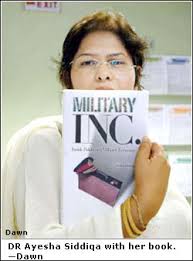
Ayesha Siddiqua
Najam Sethi
Hassan Nisar

We can see his tasteless argument in his article which was published after the tragic Srilankan cricket team attack. where he not only ridiculed almost all thebrillaint brains of our society at large but gone on labeling with Indian loyalist and being not loyal to Pakistan. And the people in the list of "india lovers" includes.

Najam sSethi
Imtiaz Alam
Asma Jahanghir
Ayesha Siddiqua

Source: http://pakalert.wordpress.com/2009/03/06/pakistan-cut-off-all-india-links-pending-lahore-investigations/

If Srilankan team tradegy was not good check this out the briliant Ahmed Quarishi went on writing the the ulimate article "the Business of Asma Jehangirism & liberal Extremsim" which absolutely tasteless and it was even worse than his previous article Safron Crusador on Asma jehhanghir.which can be read from the link below.
source:http://aq-lounge.blogspot.com/2009/04/business-of-asma-jehangirism-liberal.html

Read more...

Saturday, 3 January 2009

Ambassador Hussain Haqqani is all over the airwaves in America defending Pakistan's case. Times of India admits...

EDITORIAL COMMENT | The War of Words
30 Dec 2008,

After a week of belligerence, during which sharp words were traded, Indian and Pakistani officials are cooling it, for now. India's patience is
running thin and it is not hard to see why. A month after the devastating attack on Mumbai, despite evidence that points to the fact that the perpetrators came from across the border, Pakistan continues to deny facts and refuses to cooperate with the investigations or crack down on terrorist outfits that flourish on its soil. If that was not bad enough, Islamabad has gone on the offensive and whipped up a war hysteria that New Delhi has studiously stayed clear of despite being provoked.

As we have argued in these columns since the attack took place, talk of war or limited strikes is not the right response. The Indian government was right in being restrained and in working diplomatic channels to achieve its ends. By putting its case before the international community, and trying to mobilise a global consensus on tackling contemporary terrorism which more often than not originates in the Afghan and Pakistani badlands and knows no boundaries anymore it did what mature, confident democracies are supposed to do. However, we have failed on one important count that of communicating our position to the global public.

While our diplomats might be doing a fine job behind the scenes pressing India's case among our allies, as well as engaging with Pakistan's allies like Saudi Arabia and China they have been very tardy in working the world media. Pakistan's ambassador, Husain Haqqani, is all over the airwaves in America, defending Pakistan's actions and offering the view that Pakistan is as much a victim of terrorism as India is. President Asif Zardari too has been quick off the block when it comes to the public relations exercise, arguing an indefensible case. Where are the voices from the Indian establishment in the world media? Search, and you will draw a blank.

India has a strong case but it needs to do more to influence global opinion makers. If India hopes to get the international community to put pressure on Pakistan to act, then it is not enough for our diplomats and leaders to commiserate with their counterparts in influential countries alone. They must be seen out there, engaging with ordinary people who are now being fed a daily dose of Pakistan's rhetoric.

http://timesofindia.indiatimes.com/Opinion/Editorial/EDITORIAL_COMMENT__The_War_of_Words/articleshow/3909788.cms

...


Read more...

Sunday, 21 December 2008

Pakistan: Fauj aur Mullaon kay Darmiyan - Book Review

When prime ministers bowed to jihad —by Khaled Ahmed

Pakistan: Fauj aur Mullaon kay Darmiyan;

By Hussain Haqqani;
Translated into Urdu by Shafiqur Rehman Mian;
Vanguard Books Lahore 2008;
Pp308

Shafiqur Rehman Mian has done a good job of translating a book that is full of terms not always easy to render in Urdu. He goes for the easier version, eschewing the more precise but more heavily Arabised words in vogue these days. For instance Divide and Rule is less accurately but more readably rendered as larao aur hakumat karo.

Husain Haqqani’s English version was Pakistan: between Mosque and Military (Vanguard Books). He holds that Pakistan’s textbook nationalism is India-centric and any attempt at changing this indoctrination is robustly resisted in Islamabad. In the post-2000 period, most of the attempts made by the Musharraf government to detoxify the textbooks had failed. This move was aimed at eliminating two elements in the books: the anti-India (strategic depth) reference and its corollary, the reference to Islam (internal fusion of identities in order to face India effectively).

Anti-Indianism necessitates the dominance of the army and the army needs Islamisation to secure its back as it faces India. The opposition in Pakistan wants the army out of power but wants to retain the textbook nationalism, a policy that contains two mutually destructive passions. The only party capable of grasping the importance of altering the nature of Pakistan’s nationalism — the PPP — is humbled by the brainwash of the Punjabi vote-bank in favour of this nationalism.

Haqqani reveals that after Nawaz Sharif got the divided mujahideen to agree to an interim government after the fall of the Najibullah regime in Kabul, Pakistani army helicopters actually flew Hekmatyar and his men to a place outside Kabul so that he could take over as a member of the mujahideen cabinet. Pressured by the ISI and his IJI cohort, Qazi Hussain Ahmad, Nawaz Sharif had toed the line on Hekmatyar, but he was becoming aware that Hekmatyar had no support among even the Pushtun mujahideen.

During his first tenure he did try to ‘balance’ the Afghan policy, but the cumulative pull of the ISI and Jama’at-e Islami on his vote-bank was too strong for him to resist. In 1993, after the Nawaz Sharif government was ousted from power and Ms Bhutto once again returned to rule Pakistan, the establishment was still rolling with its old momentum. Even the intelligence agencies under her were divided. Hameed Gul ‘cells’ existed in the ISI and the ‘professional’ army chief continued to feel weak and besieged by the ghost of General Zia.

Ms Bhutto was even more vulnerable to the pressures the military put on her with regard to the Kashmir policy, which was clearly falling apart in the mid-1990s, with the US declaring the big operator in Held Kashmir — the Harkatul Ansar militia — a terrorist organisation. The new ISI chief General Javed Ashraf Qazi told the Americans he knew nothing about the banned Harkatul Ansar and therefore could not arrest any of the Harkat leaders. The banned militia resurfaced as Harkatul Mujahideen, which was to become the most dreaded military arm of Al Qaeda in the days to come. The generals thought as one on Kashmir and India.

This is one thesis on which Haqqani cannot be faulted: from Iskander Mirza and Ayub Khan to Ziaul Haq, Jehangir Karamat and Musharraf, Islamist and non-Islamist generals alike, were unwilling to help a prime minister shift away from an India-centric worldview. Nawaz Sharif and Ms Bhutto were both blackmailed into pretending to advance the Kashmir policy and actually use it as a plank during election campaigns. It is moot if the weak ‘professional’ army chiefs too were similarly blackmailed.

The second PPP tenure also saw the Hamid Gul ‘cell’ type of rogue military officers masterminding a takeover which would be politically fronted by philanthropists like Abdus Sattar Edhi and Imran Khan. (Haqqani doesn’t mention Imran and is skimpy on detail.) This was followed by an actual attempt at an overthrow in 1995 led by a major general who was ‘allegedly’ patronised by an ex-ISI chief.

A ‘weak’ army chief was also to be targeted by the coup-plotters together with Ms Bhutto and her government. Was the next ‘weak’ (professional) army chief General Jehangir Karamat able to punish the coup-plotters? Evidence is that he avoided confronting the ‘strong’ elements within the army whom a more thoroughgoing ‘correction’ would have offended.

General Javed Nasir kept snubbing the weak army chief even after he was ousted from the ISI. Haqqani reveals that he authorised the 1993 attack, through Indian underworld figure Daud Ibrahim, on the Bombay Stock Exchange, which killed 250 as a revenge for the destruction of Babri Masjid by Hindu fanatics. That was the year that Javed Nasir was prematurely retired from the ISI, only to be given a more important ‘India-related’ job in the Evacuee Property Trust in Lahore regulating the Sikh properties in Pakistan and therefore the traffic of Sikhs to their shrines.

Who gave him the job? Javed Nasir’s list of ‘enemies of Islam’ at the ISI included ‘the United States, Hindu leadership of India and the Zionists’. Musharraf fired him from his Lahore job also in 2002. His pro-Kargil Operation articles in the press, written in the low-IQ but highly spiritually uplifting style of Hamid Gul, did not save him in the end.

When Nawaz Sharif came to power for the first time (1990-1993), he was steamrollered into pushing the Kashmir policy. Despite Foreign Secretary Shaharyar Khan’s reasoned argument that Kashmir could not be won through jihadi militias, he inclined in favour of the ISI, making the clandestine Kashmir policy more clandestine in the face of rising American objections.

The covert policy swung out of control under Ms Bhutto in 1993 as Mast Gul, a Jama’at-e Islami hero of Charaar Sharif, was paraded in the streets of Pakistan by the ISI against her wishes, during which Mast Gul condemned her government! She appealed to the US to come to her help ‘against militancy and terrorism’ but the truth is that militancy and terrorism were emanating from the military and the American routine was to support whoever was powerful so as not to ‘go against the people of Pakistan’.

Haqqani narrates the story of how in 1998 Nawaz Sharif was compelled to mend fences with Muridke near Lahore when the Governor Punjab and the federal information minister called on its leader and praised him and his terrorist forays into India.

He also mentions the October 2001 attack by Jaish-e Muhammad on the Kashmir assembly in Srinagar. It first owned it, but later denied it. Then in December the same year Lashkar-e Tayba attacked the Indian parliament, bringing the Indian army eyeball-to-eyeball with the Pakistan army on the borders. Musharraf arrested Hafiz Saeed but let him go after keeping him in safe custody for some time. In Urdu, the book reads like treason. (Daily Times)
Read more...

Sunday, 26 October 2008

Hussian Haqqani gives Kashif Abbassi some good spanking.

Kashif Abbasi is a media juooni: The TV face/ mouth pieces of Taliban in Pakistan.


Regime of ‘hostile’ TV anchors

Daily Times - Saturday, June 21, 2008

Two particular encounters on two TV channels Thursday night revealed the mind of the “misplaced or hostile anchor” in Pakistan. The first was a discussion among a group of TV journalists on the accusation levelled against them that they are no longer impartial in their conduct of talk shows and tend to favour a political stance. The “consensus” was that encroachments on institutions of representative democracy by military rulers could not be viewed with impartiality, and that a show of partiality was dictated by the anchors’ loyalty to the Constitution. One opinion was that this obligatory partiality must be accompanied by “objectivity”; but it was not clear how the state of being “objective” could be reconciled with the state of being “partial”.

The other discussion was an interview with Pakistan’s ambassador Mr Hussain Haqqani by a TV journalist noted for his acerbity of approach and bias. The topic was the attack made by NATO-ISAF forces inside Mohmand Agency which resulted in the death of 13 Pakistani troops, souring Pakistan’s relations between Washington. The ambassador, while acknowledging his duty to bring the umbrage of Pakistan to the notice of the Washington Administration in the most forceful of terms, also charged the TV person with the obligation of looking objectively at the situation in which Pakistan found itself. He asked him if he took account of the ground realities in the Tribal Areas where the war against terrorism was clearly in the national interest of Pakistan. The ambassador argued for “realism” in the handling of such crises as the one resulting from the attack in the Mohmand area. But the TV anchor demanded that Pakistan approach the United Nations for a solution to the problem of the growing breach of Pakistan’s “sovereignty” and “territorial integrity”. The ambassador pointed out that the Security Council was an arena of power play, not a kind of Supreme Court where all plaintiffs were equal. The TV anchor then fell back on the argument of “national pride” and claimed to represent the people of Pakistan, arguing in favour of Pakistan opting out of the international war on terrorism. He had no answer, however, to the question about what Pakistan would do after that, after its various trouble spots are bombed by a combination of forces united inside the US Security Council.

The patriotically “partial” TV anchors began by opposing a military ruler and are now caught in a situation of political bias under democracy because of the dictates of their partiality. The 2008 elections have delivered a political battlefield where elected parties are trying to move together despite their different recipes and solutions. What should the TV anchors do now? Normally, they should have moved back and become neutral, letting the discussions be fairly judged by the viewers, but they continue to pose as arbiters and decide on their own such matters as the “mandate” of the 2008 elections, the “immorality” of the NRO, and the rough dismissal of President Musharraf from his job. But when matters are in dispute between elected parties and in parliament, it is the duty of the media to remain impartial in order to allow the people to make their own judgements.

While highlighting the “complaints” against the TV channels, one must be clear, however, about the over-all role played by our electronic journalism. Despite their early “philosophical” gropings, the TV channels are a sine qua non of our lives and their foibles of “partiality” are dwarfed by their achievement of creating awareness among the people on all other economic and social matters. For example, in Punjab, Chief Minister Shahbaz Sharif is taking action, correctly, after watching TV reports on the malfunction of government institutions.

A sense of pride and sovereignty may take nations into war and humiliate them without making them understand what went wrong. This happened to Germany in the Second World War and in recent times to Serbia whose people, proud and sovereign, hate the world today for not understanding why they were killing Bosnians and Kosovars. But states don’t only feel aroused emotionally. They can also be cold-blooded. They can be motivated only by their self-interest whose pursuit might negate the state’s pride and sovereignty. When Iran and America confront each other, both tend to fly off the handle. In contrast, in Europe, where many nationalist wars were fought in the past, few feel as aroused.

Why shouldn’t a state feel emotional? Because being emotional may be contrary to its national interests. These interests are almost always economic. This is perfectly understandable because as long as a nation is prosperous and not dependent on outside creditors, its pride and sovereignty remain intact. But if a state is neglectful of its economy and pursues other emotional goals either unrelated or hostile to its economy it is bound to impose suffering on its people through the growth of poverty. And nothing removes pride and sovereignty from a nation more cruelly and quickly than poverty. Let us not forget that the organisation which kidnapped and beheaded the American journalist Daniel Pearl in 2002 called itself National Movement for the Restoration of Pakistani Sovereignty.

http://www.youtube.com/watch?v=BtOYSEhdWMQ&feature=related

http://www.youtube.com/watch?v=I5GxmWsWmtA&feature=related

http://www.youtube.com/watch?v=_3fanwU4Blo&feature=related

http://www.youtube.com/watch?v=YSyY2ZWXsH4&feature=related

http://www.youtube.com/watch?v=zh5vOhew0aE&feature=related


http://www.youtube.com/watch?v=2WIaagFjVFA&feature=related

Some Comments:

H Khan
I have kept Hussian Haqqani in disdain for quite sometime but here he gave Kashif Abbassi some good spanking.

FarazA
LOL... kashif took some serious beating... this little patheritc chaos creater wasn't able to answer a single question asked by Haqanni. Amazing journalist


H Khan:

This Kashif Abbassi represents the height of pathetic journalism in Pakistan. As one could see he has no training in journalism and how journalist should present themselves in front of dignitaries. Journalistic protocol has not even touched these types of idiots.

Kashif was interviewing Pakistani Ambassador to the USA in his office (which is the Embassy of Pakistan in Washington D C) while he was wearing some faded jeans.

My no means this was an interview but a solid ruthless bashing by Hussian Haqqani and he made Kashif Abbassi an example out of.

abaig:

True, this Kashif Abbasi (I've stopped watching his arrogant programs) interviewed Foreign Minister of PML-Q govt Khurshid Kasuri, some one year back. He was his usual arrogant and was in no mood to listen to the 4 point agenda Khurshid Kasuri gave on Kashmir. After some time, Khurshid Kasuri asked Kashif some questions back asking for solutuions to Kashmir problems .... leaving kashif answer-less and shame-less!

In this interview also, he rightly pointed out that we are emotional nation and we do not understand that we must expect equal footing ONLY if we are equal in heights and standing to USA. Eyes to eyes can be seen with someone equal to us!

The basic thing that these guys lack is "TEHZEEB" to talk to any dignitary. They think they're over-smart. Governor Salman Taseer rightly says, "They'll come to their senses, if their salaries are reduced from 10,00,000 to 10,000"

SSAAD:
Clue less idiots like Mr. Abbasi should at least google things before they start their stupid, populist rants. The way he shamelessly got his ass handed to him by HH should be an eye opener for him. Essentially HH told him to keep his trap shut!

I see Hamid Mir, Kamran and this idiot as all in the same league of BS, populist, wanna-be hard talking journalists without having the fundamentals of journalism or even common knowledge under their belts!

dara Says:
November 19th, 2008


I don’t understand what that Kashif Abassi the brave warrior thing is?
I agree up to the fact that we need to criticize and question government people, but when answer has received then there is no need to argue and being judgemental.
Kashif Abbasi sounds like immature and partisan. Every one has opinion and Kashif has aright to have one but as anchor you put a question but never react to answer the way kKashif does.

I hope you take my critical analysis in good faith.
Read more...