Editor's Choice

--------------------------------------------------------------------------------------------------------------------------
Featured Post
--------------------------------------------------------------------------------------------------------------------------

"Let us build Pakistan" has moved.
30 November 2009

All archives and posts have been transferred to the new location, which is: http://criticalppp.com

We encourage you to visit our new site. Please don't leave your comments here because this site is obsolete. You may also like to update your RSS feeds or Google Friend Connect (Follow the Blog) to the new location. Thank you.


--------------------------------------------------------------------------------------------------------------------------
Showing posts with label Iqbal. Show all posts

Tuesday, 17 November 2009

Taliban and Allama Iqbal


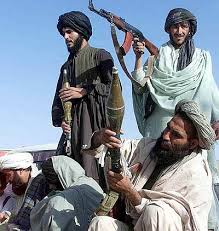
We reproduce here the denial of Pakistani Taliban of their involvement in terrorists activities in Pakistan, and its analysis by BBC Urdu's Mohammed Hanif. The Taliban video statement starts with an Urdu verse by Allama Iqbal.

It would appear that the script of this video message was written by the senior members of the Mullah Media Alliance (also known as the Pakistani Taliban Union of Journalists), i.e. Hamid Mir, Shahid Masood, Ansar Abbasi or Irfan Siddiqi. The delivery of the script was made by the Pakistani Taliban spokeperson, Azam Tariq, a name adopted in the memory of the slain sectarian leader of the terrorist organisation, Sipah-e-Sahaba.

Pakistan Taliban airs video denial

Monday, 16 November 2009 20:56

Al-Jazeera

Attacks that have continued across Pakistani towns and cities are being blamed on Tehreek e-Taliban, Pakistan’s Taliban.

However, the group has issued its first video statement denying involvement in targeting civilians and has blamed external forces for at least two recent blasts.

Azam Tariq, a spokesman of the Tehreek e-Taliban, posted the video statement on YouTube on Monday.

The message refers to a bombing at the Islamic University in Islamabad, which the spokesman said was orchestrated to prepare the ground for a military operation in South Waziristan, a stronghold for Pakistan’s Taliban fighters.

He also said his group had no role in the bomb blast in a Peshawar market that killed at least 100 people as well as an attack in Charsada, a town located in Pakistan’s North West Frontier Province.

Tariq said Taliban attacks never aimed to target civilians, but that the explosions were linked to Blackwater activities in the country.

Blackwater is a private military and security company founded in the United States.

Propaganda war

Kamal Hyder, Al Jazeera’s correspondent in Islamabad, said: “Even when those bomb blasts did happen, the Taliban denied they had anything to do it.”

He said: “It was surprising to see that it [the video message] came up on the al-Sahab video. That is the Al-Qaeda wing of media publicity.”

Blackwater has denied having any contracts in Pakistan.

Hyder added: “There is a growing anger among Pakistanis. If one looks at the type of attacks that have been taking place – indiscriminate attacks – the first thing that came out, even reported by local media, was the blaming of Blackwater and other American agencies.

“The public opinion has turned against the Americans. The video that has appeared today would be trying to capitalise on that. Al-Jazeera

موجودہ بحران کا سادہ سا حل

تحریک طالبان کے سربراہ حکیم اللہ محسود تنظیم کے ترجمان اعظم طارق کے ہمراہ

تحریک طالبان کے سربراہ حکیم اللہ محسود تنظیم کے ترجمان اعظم طارق کے ہمراہ

کل فیصل آباد یونیورسٹی میں ٹیکسٹائل انجنیئرنگ کے ایک طالب علم نے کانوکیشن میں احتجاجاً گورنر سلمان تاثیر سے یہ کہہ کر میڈل لینے سے انکار کر دیا کہ وہ قانونِ ناموس رسالت میں توہین کی بات کرتے ہیں۔

چند مہینے پہلے کراچی یونیورسٹی کے ایک طالب علم نے ایک امریکی صحافی پر جوتا دے پھینکا تھا جسے انٹرنیشنل ریلیشنز پر لیکچر دینے کے لیے مدعو کیا گیا تھا۔

کل ملک کے سب سے بڑے اخبار کے سب سے بڑے کالم نگار نے یہ کہہ کر آمریت کی مخالفت کی کہ دیکھیں جنرل ضیا نے سیاچن بھارت کے حوالے کر دیا تھا۔

گزشتہ ہفتے ایک مقبول ٹی وی چینل پر بچوں کے ایک پروگرام میں ایک خوبرو اداکارہ جہاد کے فضائل بیان کرتے ہوئے یہ بتا رہی تھیں کہ کس طرح مشرقی پاکستان میں ہمارے مٹھی بھر بہادر فوجوں نے ہندوستان کی کافر فوج کو تقریباً نیست و نابود کر دیا تھا۔

اگر آپ ان متفرق نعروں، تجزیوں اور احتجاج کے چکر میں نہیں پڑنا چاہتے تو اس ہفتے جاری ہونے والا تحریک طالبان کے ترجمان اعظم طارق کا ویڈیو بیان سن لیں۔ آپ کو نہ صرف پاکستان کے موجودہ بحران کی سمجھ آئے گی بلکہ اس کا سادہ حل بھی سمجھ آجائے گا۔ اور آپ کو یہ بھی پتہ چلے گا کہ اگرچہ وہ پاکستانی میڈیا پر تنقید کرتے ہیں لیکن ان کے اور میڈیا کے تجزیے میں کوئی زیادہ فرق نہیں۔

’ملک میں سارا فساد بلیک واٹر کا پھیلایا ہوا ہے۔‘ فرق صرف اتنا ہے کہ بقول اعظم یہ کام بلیک واٹر آئی ایس آئی کے ساتھ مل کر کر رہی ہے۔ پاکستان کے چینلوں پر بیٹھے پنڈت ہمیں یہ بتاتے ہیں کہ یہ سب فساد آئی ایس آئی کی تمام تر کوششوں کے باوجود بلیک واٹر ہی پھیلا رہی ہے۔

مسئلے کا حل حضرت اعظم طارق نے اپنے بیان کے شروع میں ہی علامہ اقبال کا یہ شعر پڑھ کر سنا دیا:

فطرت کے مقاصد کی کرتا ہے نگہبانی

یا بندۂ صحرائی یا مردِ کوہستانی

اب علامہ اقبال سے اختلاف کی جرات کون کرے۔ اسی شعر کی جدید تشریح کے مطابق بندہ صحرائی اسامہ بن لادن ہیں اور مرد کوہستانی اعظم طارق اور ان کے ساتھی۔

مسئلہ صرف یہ ہے کہ ہماری زیادہ تر آبادی صحراؤں اور کوہستانوں کے باہر رہتی ہے۔ شہروں میں، دریاؤں کے کنارے، گاؤں دیہاتوں میں، کچی آبادیوں میں، تنگ و تاریک فلیٹوں میں یا بڑے شہروں کے فٹ پاتھوں پر رہنے والوں کا کیا ہوگا۔

اعظم طارق جب یہ شعر سناتے ہیں تو ان کا ایک ہاتھ بلند ہوتا ہے جس میں ایک سگریٹ پکڑا ہوا ہے جو جلایا نہیں گیا۔ یا تو یہ کسی ایسے نگہبان کے لیے خفیہ پیغام ہے جسے ہمیں فطرت سے قریب لانے کے لیے ہمارے بیچ بھیجا گیا ہے۔ یا پھر ہوسکتا ہے کہ یہ میرے جیسے سگریٹ نوشوں کے لیے کوئی اشارہ ہو۔ لیکن مجھے یہ سمجھ نہیں آئی کہ ہمارے لیے حکم ہے کیا؟ سگریٹ چھوڑ دینے کا یا پیتے رہنے کا


Read more...

Tuesday, 10 November 2009

Authentic, readable biography of Iqbal needed


By Rauf Parekh
Monday, 09 Nov, 2009 (Dawn)

COMMENTING on the genre of biography, Oscar Wilde said: 'Formerly we used to canonise our heroes. The modern method is to vulgarise them. Cheap editions of great books may be delightful, but cheap editions of great men are absolutely detestable.'

Probably this is truer in modern days than it was in the Wilde age. And it is truer of biographies of Iqbal than of any other great man. Especially of late, there have been efforts to vandalise Iqbal legacy and many irrelevant questions raised about his life, philosophy and poetry. Sahi, a monthly published from Karachi, has in particular tried to blast Iqbal’s personality and image. Though Iqbal remains unscathed by these attempts, they have emphasised the need to write authentic commentaries on the life and thought of Iqbal.

Though Iqbal and Ghalib are the two most written about poets of Urdu, an authentic and readable biography of Iqbal’s is yet to be produced. The ones written so far lack in one way or another. Some of them have even tried to vulgarise Iqbal and some have created misconceptions about Iqbal’s life. Some unscrupulous elements still believe in some misconceptions spread about Iqbal’s early life. True, Iqbal was no angel. He was a human being. Samuel Johnson once remarked: 'If a man is to write a panegyric, he may keep vices out of sight, but if he professes to write a life, he must represent it as it really was.' But while writing on Iqbal’s life one must keep in mind that he was not only a poet or a mere philosopher, but he was also among those who laid the philosophical foundations of a new country for the Muslims of the subcontinent, and his biography must reflect it. Let us have a quick look at the biographies of Iqbal written so far. Beginning with the sporadic efforts in the shape of biographical essays to capture glimpses of Iqbal’s life, Abdul Qadir, the editor of Makhzan, is the first to have ever written such an article and it appeared in the May, 1902 issue of Khadang, Lucknow. Later, Muhammad Deen Fauq, Sir Zulfiqar Ali Khan and Moulvi Ahmed Deen wrote articles on Iqbal’s life during his lifetime, but no biographical writing described Iqbal’s life at book length while he was alive. One of the reasons was that Iqbal did not encourage such an idea and said his life did not have any event that could be of interest or learning to others. But, as mentioned by Javed Iqbal in his Zinda rood, Iqbal wanted to describe the gradual evolution of his thought and philosophy but could not do so.

In 1932, according to Prof Rafiuddin Hashmi, Nairang-i-Khayal, a magazine from Lahore, published a special issue on Iqbal. After Iqbal’s death in 1938, the first book on him appeared the same year. It was written by Chiragh Hasan Hasrat. Titled Hayat-i-Iqbal,it was published by Taj Company, Lahore. In 1939, Muhammad Hussain Khan wrote Iqbal and Muhammad Tahir Farooqi Seerat-i-Iqbal. Abdullah Anwer Baig wrote The poet of the east the same year. Schedanad Sinha’s Iqbal in English was published from Allahabad in 1947. Atiya Fayzee’s Iqbal, which first appeared in 1947 from Bombay, gave some rare glimpses of lighter and carefree moments of Iqbal’s life in Europe during his student years. It included some rare photographs and letters of Iqbal addressed to her.

It was not unfair to expect of Abdul Majeed Salik and Abdus Salam Khursheed that they would write authentic biographies of Iqbal, but books written by both proved disappointing. However, some very useful and interesting books giving relatively more in-depth biographical details on Iqbal were written by Iqbal scholars such as Faqir Syed Waheeduddin, Syed Nazeer Niazi, Khalid Nazeer Soofi, Abdullah Qureshi, Abdullah Chughtai, Hameed Ahmed Khan, Saeed Akhter Durrani, Iftikhar Ahmed Siddiqui, Hamza Farooqi, Muhammad Haneef Shahid, Sabir Kalorvi and many others.

1977 will be remembered as a watershed year as Iqbal centennial was commemorated at the government level that year, when the literary world witnessed an unprecedented flow of books and articles on Iqbal. And now no year goes by when new books and articles on Iqbal are not published. But many of the books tend to discuss either Iqbal’s art or both his life and art. And the books that were intended as Iqbal’s biography lacked in many respects. Some of these books did not cover the entire life of Iqbal, some lacked in details, some recorded only conversations with Iqbal and in other some inaccuracies had crept in. Though all these books provided the scholars with good source material, the need for a good, detailed and authentic biography, giving a complete view of Iqbal’s life was badly felt.

Javed Iqbal’s Zinda rood, first published in 1979, filled that gap. Instantly acclaimed as the most authentic, most detailed and most accurate of them all, the biography written by Iqbal’s son has run into its fourth edition. It is still unsurpassed though many say it also lacks in certain aspects. A critical study of Zinda rood is carried out by Dr Rashid Hameed in his Zinda rood ka tehqeeqi aur tanqeedi mutala. While it indulges in some hairsplitting and lays too much stress on petty matters such as inaccurate spellings, the book precisely points out some weaknesses which, if and when addressed, would definitely add to the book’s worth. Dr Rashid Hameed has rightly pointed out that, for instance, Javed Iqbal could not fully take into account some of the basic and original sources available to him, including Iqbal’s letters. Dr Hameed says Javed Iqbal was in a unique position to take advantage of all the basic and original sources necessary to carry out an authentic research on Iqbal, but he could not do so.

Secondly, Zinda rood, too, is not free from errors and inaccuracies as far as mentioning of some dates and events are concerned. Also, Javed Iqbal, he says, could not refute forcefully enough the impression that Iqbal had a leaning towards or sympathy with the Qadianis as the fact is quite contrary to it. (The wrong impression was created in his book Mazloom Iqbal by Ejaz Ahmed, Iqbal’s nephew, who had converted to Qadiani beliefs).Another impression of his is that Javed Iqbal’s style of writing is not crisp enough and at times it seems too drab. In fact, Zinda rood is by far the best biography of Iqbal and it would be unfair to give the impression that the book lacks readability in entirety. A major portion of it is quite lucid and at times it is highly interesting. As Rafiuddin Hashmi says in his Pakistan mein Iqbaliyati adab ka jaeza: 1947-2008, “Javed Iqbal has very capably fulfilled his responsibilities as a biographer, and Zinda rood is a balanced and objective biography that describes important facts and aspects of Iqbal’s life with details and necessary background. It makes you feel that Iqbal’s life was that of a great man.” Two other recent biographies of Iqbal that merit a mention are Damadam rawan hai yam-i-zindagi by Khurram Ali Sahfeeq, being written in five parts and that is still incomplete. Published by Alhamra, Lahore, once completely published, it would definitely be a very significant addition to the biographical literature on Iqbal. Another biography was published last year by the Pakistan Academy of Letters, Islamabad. Written by renowned Iqbal scholar Prof Rafiuddin Hashmi, the book, titled Iqbal: shakhsiyet aur fun is published under the series Pakistani adab kay maymar. It is intended for the common people and students, and it aims to remove some misconceptions about Iqbal. What makes this book stand out is that it gives certain details and narrates events that are usually not found in other books on Iqbal.

It is hoped that Javed Iqbal would bring out a fifth, revised edition of his valuable book.

drraufparekh@yahoo.com (Source)

Read more...

Sunday, 8 November 2009

Allama Iqbal in the eys of Jon Elia

جون نے اقبال کی شاعرانہ عظمت کے مداح شمس الرحمان فاروقی سے کہا وہ شاعر عظیم کیسے ہوسکتا ہے جس نے متضاد کرداروں کی مدح سرائی کی ہو۔

جیسے ؟؟ شمس الرحمان فاروقی نے استفسار کیا۔

جون نے اپنے بالوں کی لٹ پیچھے کرتے ہوئے کہا مثلاً ڈاکٹر اقبال کا ہیرو بیک وقت اورنگ زیب بھی ہے اور سرمد بھی۔ ایک ہی شاعر بیک وقت قاتل اور مقتول دونوں کو بلند کردار کہہ رہا ہے۔۔ مسولینی میں عظیم انسان کی کون سی خوبیاں تھیں؟ وہ ڈاکٹر اقبال کا ہیرو کیسے ہوگیا ؟ برٹش امپائر کے شہنشاہ کے سامنے اقبال نے سرِ تسلیم کیسے خم کردیا؟ کیا عظیم شاعر کا یہی کردار ہوتا ہے کہ وہ ہر طبقے کے لوگوں کو خوش کرنے کی کوشش کرے؟ اور شاہین ایک ایسا خونخوار طائر ہے جس میں رحم کا جذبہ ہرگز نہیں ہوتا۔ کیا اقبال نے شاہین کو علامت بنا کر انسان کو خونخوار بننے کی تعلیم نہیں دی ؟؟

اس گرما گرمی کے سبب محفل پر کچھ دیر کے لیے خاموشی طاری ہوگئی اور پھر ہربندر سنگھ وقت نے ماحول کو ہلکا کرنے کے لیے گفتگو فراق گور کھپوری کی شاعرانہ عظمت کی طرف موڑ دی۔

Here is the link to the complete article on BBC Urdu dot com

Read more...

Monday, 5 October 2009

"Islam khatray main hay" Islam is in danger.


A critical column by Hasan Nisar

Read more...

Wednesday, 18 March 2009

Khurshid Nadeem: Sufi and Tasawwuf, A critical perspective


This site has moved to http://criticalppp.com, click this link if you are not redirected
Read more...

Sunday, 8 March 2009

Aakar Patel: Let's sing Iqbal's Tarana-e-Hind-o-Pak to fight religous extremism in our society. Indo-Persian sufi heritage versus Taliban's sharia.

Mr Zardari, tear down this wall
Sunday, March 08, 2009
Aakar Patel

http://taheny.com/2006_12_28_sufi_concert_attendees_520x293.JPG

Allama Iqbal imagined Pakistan as a utopia in northwest India where Punjabis would do ijtihad and read Nietzsche. The Quaid-e-Azam ordered a Pakistan where religion would cease to be a matter for the state. But both men saw something magnificently dormant in the character of India’s Muslims, which would flower in isolation.

Iqbal returned from Europe in 1908 ashamed by the fall of Islam. He thought its return to glory could come through expelling the polluting influence of Indian culture. Iqbal understood our culture. In 1904, he wrote the song that still defines our culture best (Tarana-e-Hindi), and he translated Gayatri Mantra, the talismanic chant of the Upanishad, from Sanskrit. But Europe taught him that our culture was unable to compete. Muslims needed to break out. In 1910, he wrote Tarana-e-Milli.

Jinnah didn’t understand our culture much, but he thought that Muslims were a separate nation from Hindus, and could become modern once they were separated from India’s archaic culture. Both the poet and the lawyer thought that the solution to progress was to stop being Indian.

Iqbal died in 1938, Jinnah died in 1948. It would be illuminating to see their reaction as they flipped through a current issue of Nawa-i-Waqt (would have to be translated for Jinnah), the guardian of the ideology of Pakistan.

The Pakistan of Iqbal won against the Pakistan of Jinnah. Jinnah’s imaginary Pakistan was sent into the night with a pat on the head by Liaquat and the peerless Shabbir Usmani chanting their Qarardad-e-Maqasid, 60 years ago this month.

Now full-dress Sharia is upon Swat and the Punjabi’s head is cocked towards the frontier in curiosity. The world holds its breath.

The danger of Talibanisation to Punjab does not come from the Pakhtun and his gun. Pakistan is 60 per cent Punjabi. Pakhtuns are only 15 per cent of its population and 20 per cent of its army. The danger to Pakistan comes from its inability to resist the pure ideas of the Pakhtun, of whom the Punjabi especially is enamoured. Talibanisation is happening in the mind. There is no resistance to it for two reasons: one is the lyrical call of Sharia which Muslims are drawn to in their quest for utopia. This will not change.

The second is the deliberate amputation of its own culture by the Pakistani state. This can change. Those who think Pakistan can resist the Taliban intellectually should look at the sequence on culture that unfolded after 1947.

Jinnah, one could say, stifled the voice of culture by giving Urdu a monopoly in 1948. Those who followed him beheaded it by banning freedom of religion (Liaquat in 1949), Indian cinema (Ayub in 1965), alcohol (Bhutto in 1977) and immorality (Zia in 1979). Under Nawaz Sharif in 1992, Pakistan banned the economy citing Riba, but the deranged state saved itself by lying, acting on the instinct of self-preservation, which by now was in short supply. The jihad in Kashmir under Benazir and then Musharraf completed the project of India as foreign and enemy and Indian culture as ‘kufr’, in the Pakistani mind.

But what is the culture of Pakistan? Do Pakistanis own a tradition of music and dance that is separate from India’s?

Mehdi Hasan and Ghulam Ali (who told me this on a flight to Bombay from Ahmedabad) enjoy performing in India because Pakistan’s middle-class is mostly illiterate about raag and taal. But this is our inheritance from the Sam Ved and from Amir Khusro. Why should it be disowned by Pakistanis?

High culture is rooted in tradition, and that is the first thing the religious state attacks. There is no culture of north Indian classical dance, Kathak, in Pakistan. Dance in general is absent (though apparently it is quite popular with Mehsud men, presumably grooving to the rhythm of pop-popping Kalashnikovs) because physical expression tends to be sensual and therefore deemed un-Islamic.
http://blog.tilos.hu/alap/archives/nusrat.jpg

Culture is expression: the expending, the release of emotion that is drawn out through the desire for expression. Through words, through movement, through emotion, through music. Its expression is unique to cultures and in north India and Pakistan we have our unique culture: Indo-Persian (with stress on Indo).

Culture does not directly resist extremism; it only makes extremism difficult to penetrate by diverting the mind. The only way to fight extremism is through reason, but South Asians are not particularly good at reason because we don’t understand its vocabulary. Culture softens us, not in a bad way, and makes us less suicidal, which is a state where pristine religion leads us through its demand of purity.

We have no capacity to soften religion through reason because of our dependence on the great jurists of the 8th and 9th centuries. Iqbal spoke of the possibility of ijtihad, but how much ijtihad can happen in Pakistan, and for that matter in India, in defiance of Imam Azam?

The BBC carried a report last month titled ‘Can Pakistan’s Sufi tradition resist the Taliban?’ No, it can’t. Sufism can no more fight the Taliban than Mickey Mouse. Sufism is flight. It is escape. Those of us who have watched the ecstasy unfold at Nizamuddin Awliya and Baba Shah Jamal and a million heretical shrines in India, Hindu and Muslim, know that most of us can only be weekend Sufis. Sufism’s message of wahdat ul-wajood leads us away from doctrine, and that is an intellectual journey.

Sufism cannot fight because it makes no demands, and it has no daily ritual. It also respects Sharia, and can live besides it quite comfortably. The great Chishti Sufis of Delhi were namazis.

But the Talib cannot live beside Sufism. He will bomb the shrine of Rahman Baba. And now he has brought his war to Lahore’s Liberty Chowk. The message will come through to Punjab as it did in Swat: peace through Sharia.

How will Pakistanis resist the Talib’s hypnotic call? The problem in Pakistan is not that the Sri Lankan team got attacked; terrorism is truly global and affects us all. The problem is that Pakistanis are the only people in the world still unconvinced about who did it. Even intellectuals who are published in its newspapers convinced themselves through a convoluted or paranoid logic that ‘Muslims cannot do this’.

What should be said instead is: this is not us. And it really isn’t.

We have one of the world’s richest cultures of literature, music and dance. Pakistanis need to embrace it; it lies across the border. Bollywood is not just a film industry; it is the dispenser of Indo-Persian culture, and its voice; it is not in Bombay by accident. Shahrukh Khan and Kareena Kapoor would spend more time in Lahore’s courts defending themselves against fahashi, as did Manto, than on sets shooting. This difference in environment is not limited to cinema.

Pakistan can legitimately claim to have produced better classical poetry than India. But why? Independent Pakistan’s great poets, Faiz and Faraz, sang of protest, because they had much to protest about. Independent India’s great poets, Gulzar and Javed Akhtar, Shailendra and Anand Bakshi sing of love, because they operate in the natural cultural environment of South Asia. Pakistan’s poets do not. But its being across the border doesn’t mean that what’s produced in Bollywood is not Pakistani culture. It was before 1965.

Musharraf opened up Pakistan’s media, Zardari should open up India’s media to Pakistan. Not the news channels, the entertainment ones. He should leave in place the ban on India’s news channels (for that matter, being deprived of their news channels for a while would benefit Indians also). And he should open the borders more generally.

Pakistan should not wait for this to be reciprocal. After the savage attacks in Bombay, India will not immediately let Pakistanis freely onto its soil. But Pakistan should open itself up to India’s people, culture, tourists (they will come in droves) and trade. This does not mean surrender. Pakistan should remain a strong, sovereign Muslim nation.

But it must let loose its secret weapon on the Taliban. And that is our culture, our Indo-Persian heritage. We built it. We own it; we should own up to it.

Forget Tarana-e-Milli. Let’s sing Tarana-e-Hind-o-Pak. Allama Iqbal would approve, and so, I suspect, would Jinnah.


The writer is a former newspaper editor who lives in Bombay. Email: aakar. patel@ gmail.com

.....

Also read:

Taliban attack the tomb of Rahman Baba in Peshawar...

Can Sufi Islam counter the Taleban?

Attack on Rehman Baba is attack on Pashtun identity

William Dalrymple on Rahman Baba tomb's attack: Wahhabi radicals are determined to destroy a gentler, kinder Islam


Read more...

Thursday, 26 February 2009

Allama Iqbal, Bacha Khan and terrorists - Suroosh Irfani

Iqbal, Bacha Khan and terrorists —Suroosh Irfani

It might well be that the heartless war our homegrown jihadis and Afghan Taliban are waging against Pakistan exemplifies Islam’s dangerous inversion that Iqbal had warned against some three generations ago. Such inversion has virtually displaced Bacha Khan and Iqbal’s spiritual humanism by a jihadi extremism at war with humanity

“Muslims are at war with one another, in their hearts they only harbor schism. They cry out if someone else pulls a brick out of a mosque which they themselves shun” — Allama Iqbal, Armaghan e Hijaz (verse translated by Mustansir Mir)


When Muhammad Iqbal, the ‘spiritual founder of Pakistan’, wrote the above verses shortly before his death in 1938, the blowing up of mosques and beheadings of fellow Muslims had not yet become part of everyday Muslim life. Nor was the destruction of schools, or the ban on girls’ education and music part of a freedom struggle that led to the independence of India and Pakistan in 1947.

Indeed, by the 1930s when Iqbal’s Islamic rethink had earned him the appellations of ‘Poet of Islam’ and ‘Wiseman of the Ummah’, non-violence was shaping the freedom struggle against British rule in much of India. While Gandhi was emblematic of such a struggle, shades of non-violence also permeated Muslim political discourse. Such a discourse was as much in evidence in the ‘martial’ North West Frontier Province — the cradle of jihadi terror in Pakistan today — as the rest of India.

However, as Britain started discussing India’s future in a series of Round Table Conferences during the 1930s, Iqbal was apprehensive that Britain might “transfer political authority to the Hindus” for its “material benefits”, leaving Muslims marginalised in India. Such a development, he warned, could be “disastrous...You will drive the Indian Muslims to use the same weapon against the [Hindu] Government...as Gandhi did against the British Government.” (Iqbal’s Letter to Sir Francis Younghusband, The Civil and Military Gazette, July 31, 1931).

Clearly, his poetics of Muslim ascendancy notwithstanding, non-violence for Iqbal was integral to India’s democratic experiment as it “educated people...without destroying the structures of government itself”.

However, as the Round Table Conferences continued in London, the NWFP was swept by a populist upsurge for social reform and political rights never before seen in Muslim history: a non-violent movement led by Pashtun leader Khan Abdul Ghaffar Khan, just after his return from Haj in 1929. Called the Servants of God Movement (Khudai Khidmatgar Tehreek), it reflected the onset of a radical transformation in popular imagination in a tribal culture, where violence constituted mutual deterrence under the rubric of ‘badla’, or revenge.

Convinced that Pashtun would be denied their rightful place in the modern world so long as they remained mired in colonialism, poverty and violence, Ghaffar Khan struggled to undo the triple curse by invoking non-violence as “the weapon of the Prophet Muhammad [PBUH]” and the driving spirit of his movement. The Prophet’s [PBUH] non-violence, Khan argued, exemplified “patience and righteousness”, and so long as the Servants of God remained true to the Prophet’s [PBUH] example, no power on earth could subdue them.

Consequently, as social and educational reforms of the Servants of God began transforming lives, people hailed the saintly Khan as a ‘saviour king’ — Bacha Khan.

Indeed, one could say that the spiritual politics of servanthood that Bacha Khan invoked in the name of God and the Prophet [PBUH] was, at one level, the social corollary of an ideal that Iqbal espoused in his poetry. In Javid Nama, Iqbal’s magnum opus reflecting the creative imagination of a new Muslim consciousness, he expounds the mystical meanings of the concept of servanthood as a deepening of consciousness with diverse expressions, its high point being the Prophet Muhammad (PBUH) as His servant, abday’hu.

In a sense, while Bacha Khan and Iqbal stood at opposite ends of Indian politics — the former struggled for a united India, the latter for Muslim separation — they exemplified different facets of the same discourse of non-violence. This is borne out by an inner vision of Iqbal that inspired him to write Armaghan e Hijaz — his last poetic work composed in both Persian and Urdu.

In the vision late one night, a tall saintly figure appeared in Iqbal’s room, emphatically urged him to raise a grouping of 500 men, and then disappeared in the night, leaving the ‘Poet of the East’ deeply shaken. It is worth noting that Iqbal’s vision occurred in a political context, when several radical Indian Muslims were secretly crossing over to Afghanistan to organise armed struggle against the British Indian government. Given such context, did the vision imply that Iqbal, too, should raise an army of 500 holy warriors for jihad against the British?

Iqbal discussed the vision with his father, a Sufi of the Qadiriya order, who interpreted it as a call for writing a poetic work of 500 verses to educate Muslims and deepen their humanity. As Faqir Wahiddudin notes in his biography of Iqbal (Rozgar e Faqir, p.117), the truth of the father’s interpretation was borne out when Iqbal composed Armaghan e Hijaz. Comprising just over 500 verses, the work unfolds with an allusion to Iqbal’s vision: here Iqbal declares that he is “raising a new army of Love”, to counter a dangerous revolt that’s brewing against the heart of Islam from within.

It might well be that the heartless war our homegrown jihadis and Afghan Taliban are waging against Pakistan exemplifies Islam’s dangerous inversion that Iqbal had warned against some three generations ago. Such inversion has virtually displaced Bacha Khan and Iqbal’s spiritual humanism by a jihadi extremism at war with humanity.

Clearly, Pakistan’s survival as a modern democratic state is hinged on healing an inner Muslim split that has turned Iqbal’s dream state into a nightmare. Such healing entails, on the one hand, an urgent recovery of Iqbal and Bacha Khan’s spiritual politics; and on the other hand, rethinking of a flawed security outlook that sees India as mortal enemy and Taliban as strategic asset.

Indeed, the “strategic renaissance” the Pakistan Army needs for reclaiming the NWFP from Afghan and Pakistani Taliban, as Lt-Gen (retd) Talat Masood has pointed out, will remain elusive without Iqbal and Bacha Khan’s presence as a cultural force.

Suroosh Irfani is an educator and writer based in Lahore. He can be reached at suroosh@yahoo.com


Read more...

Monday, 2 February 2009

Allama Iqbal: Is he relevant?

A very interesting, critical essay by Yasser Latif Hamdani


Allama Iqbal: Is he relevant?

By Yasser Latif Hamdani

Is Allama Iqbal relevant to us?Given the current turmoil, which has made it abundantly clear that the people of Pakistan desire a truly representative democratic civilian order, the question above has become very relevant. Essentially - this begs four questions that ought to be answered to understand the relevance of Allama Iqbal to Pakistan today.

1. What were Iqbal’s views on democracy and how did they fit into the overall Iqbalian-Ijtehadi Islamic thought ?

2. How and why did Iqbal become the national poet and philosopher of Pakistan ?

3. What has been the nature of criticism of Iqbalian thought in Pakistan?

4. What is the future of Iqbalian thought in Pakistan?

Read on:

http://hotelmohenjodaro.blogspot.com/2009/02/allama-iqbal-is-he-relevant.html

Read more...

Wednesday, 21 January 2009

Kalam-e-Iqbal: Tu abhi rehGuzar main hai

Kalam-e-Iqbal

Tu abhi rehGuzar main hai


Poetry: Allma Muhammad Iqbal

Singer: Jawad Ahmed

One of the best things I heard for ages...


Read more...

Tuesday, 6 January 2009

Allama Iqbal and Ahlul-Bayt...Iqbal's poems on Hazrat Ali, Hazrat Fatima Zahra and Imam Hussain


This post has moved to http://www.criticalppp.com/archives/688, click this link if you are not redirected
Read more...

Karbala and the Imam Hussain in Persian and Indo-Muslim literature, including the poetry of Allama Iqbal - By Annemarie Schimmel

For a detailed account of Iqbal's poetry on Ahlul-Bayt (A.S.), read the following article:

http://letusbuildpakistan.blogspot.com/2009/01/allama-iqbal-on-ahlul-bayt-including.html

....

Annemarie Schimmel, Allama Muhammad Iqbal and the significance of Karbala

In this era of the qehtur-rijal, we needed to have voices such as Iqbal and Schimmel. Instead, we have "scholars" such as Dr. Israr Ahmed and Dr. Zakir Naik who try to play down the significance of Karbala as Haroon-ur-Rashid alluded to in his column in Jang today 6 Jan 2009.

The following is Annemarie Schimmel's article on Karbala and Imam Hussain, based on her analysis of the Indo-Persian literature including the poetry of Allama Iqbal.


Karbala and the Imam Husayn in Persian and Indo-Muslim literature

Annemarie Schimmel
Harvard University
Al-Serat, Vol XII (1986)

I still remember the deep impression which the first Persian poem I ever read in connection with the tragic events of Karbala' left on me. It was Qaani's elegy which begins with the words:

'What is raining? Blood.
Who? The eyes.
How? Day and night.
Why? From grief.
Grief for whom?
Grief for the king of Karbala'

This poem, in its marvellous style of question and answer, conveys much of the dramatic events and of the feelings a pious Muslim experiences when thinking of the martyrdom of the Prophet's beloved grandson at the hands of the Umayyad troops.

The theme of suffering and martyrdom occupies a central role in the history of religion from the earliest time. Already, in the myths of the ancient Near East, we hear of the hero who is slain but whose death, then, guarantees the revival of life: the names of Attis and Osiris from the Babylonian and Egyptian traditions respectively are the best examples for the insight of ancient people that without death there can be no continuation of life, and that the blood shed for a sacred cause is more precious than anything else. Sacrifices are a means for reaching higher and loftier stages of life; to give away parts of one's fortune, or to sacrifice members of one's family enhances one's religious standing; the Biblical and Qur'anic story of Abraham who so deeply trusted in God that he, without questioning, was willing to sacrifice his only son, points to the importance of such sacrifice. Iqbal was certainly right when he combined, in a well known poem in Bal-i Jibril (1936), the sacrifice of Ismail and the martyrdom of Husayn, both of which make up the beginning and the end of the story of the Ka'ba.

Taking into account the importance of sacrifice and suffering for the development of man, it is not surprising that Islamic history has given a central place to the death on the battlefield of the Prophet's beloved grandson Husayn, and has often combined with that event the death by poison of his elder brother Hasan. In popular literature we frequently find both Hasan and Husayn represented as participating in the battle of Karbala', which is historically wrong, but psychologically correct.

It is not the place here to discuss the development of the whole genre of marthiya and taziya poetry in the Persian and Indo-Persian world, or in the popular Turkish tradition. But it is interesting to cast a glance at some verses in the Eastern Islamic tradition which express predominantly the Sunni poets' concern with the fate of Husayn, and echo, at the same time, the tendency of the Sufis to see in him a model of the suffering which is so central for the growth of the soul.

The name of Husayn appears several times in the work of the first great Sufi poet of Iran, Sana'i (d. 1131). Here, the name of the martyred hero can be found now and then in connection with bravery and selflessness, and Sana'i sees him as the prototype of the shahid, higher and more important than all the other shahids who are and have been in the world:

Your religion is your Husayn, greed and wish are your pigs and dogs
You kill the one, thirsty, and nourish the other two. [Divan, p. 655]

This means that man has sunk to such a lowly state that he thinks only of his selfish purposes and wishes and does everything to fondle the material aspects of his life, while his religion, the spiritual side of his life, is left without nourishment, withering away, just like Husayn and the martyrs of Karbala' were killed after nobody had cared to give them water in the desert. This powerful idea is echoed in other verses, both in the Divan and in the Hadiqat al-Haqiqa; but one has to be careful in one's assessment of the long praise of Husayn and the description of Karbala' as found in the Hadiqa, as they are apparently absent from the oldest manuscripts of the work, and may have been inserted at some later point. This, however, does not concern us here. For the name of the hero, Husayn, is found in one of the central poems of Sana'is Divan, in which the poet describes in grand images the development of man and the long periods of suffering which are required for the growth of everything that aspires to perfection. It is here that he sees in the 'street of religion' those martyrs who were dead and are alive, those killed by the sword like Husayn, those murdered by poison like Hasan (Divan 485).

The tendency to see Husayn as the model of martyrdom and bravery continues, of course, in the poetry written after Sana'i by Persian and Turkish mystics, and of special interest is one line in the Divan of 'Attar (nr. 376) in which he calls the novice on the path to proceed and go towards the goal, addressing him:

Be either a Husayn or a Mansur.

That is, Husayn b. Mansur al-Hallaj, the arch-martyr of mystical Islam, who was cruelly executed in Baghdad in 922. He, like his namesake Husayn b. 'Ali, becomes a model for the Sufi; he is the suffering lover, and in quite a number of Sufi poems his name appears alongside that of Husayn: both were enamoured by God, both sacrificed themselves on the Path of divine love, both are therefore the ideal lovers of God whom the pious should strive to emulate. Ghalib skillfully alludes to this combination in his tawhid qasida:

God has kept the ecstatic lovers like Husayn and Mansur in the place of gallows and rope, and cast the fighters for the faith, like Husayn and 'Ali, in the place of swords and spears: in being martyrs they find eternal life and happiness and become witnesses to God's mysterious power.

This tradition is particularly strong in the Turkish world, where the names of both Husayns occur often in Sufi songs.

Turkish tradition, especially in the later Bektashi order, is deeply indebted to Shi'i Islam; but it seems that already in some of the earliest popular Sufi songs in Turkey, those composed by Yunus Emre in the late 13th or early 14th century, the Prophet's grandsons played a special role. They are described, in a lovely song by Yunus, as the 'fountain head of the martyrs', the 'tears of the saints', and the 'lambs of mother Fatima'. Both of them, as the 'kings of the eight paradises', are seen as the helpers who stand at Kawthar and distribute water to the thirsting people, a beautiful inversion of Husayn suffering in the waterless desert of Karbala'. (Yunus Emre Divani, p. 569.)

The well known legend according to which the Prophet saw Gabriel bring a red and a green garment for his two grandsons, and was informed that these garments pointed to their future deaths through the sword and poison respectively, is mentioned in early Turkish songs, as it also forms a central piece of the popular Sindhi manaqiba which are still sung in the Indus Valley. And similar in both traditions are the stories of how the boys climbed on their grandfather Prophet's back, and how he fondled them. Thus, Hasan and Husayn appear, in early Turkish songs, in various, and generally well known images, but to emphasize their very special role, Yunus Emre calls them 'the two earrings of the divine Throne'. (Divan, p. 569)

The imagery becomes even more colourful in the following centuries when the Shi'i character of the Bektashi order increased and made itself felt in ritual and poetical expression. Husayn b. 'Ali is 'the secret of God', the 'light of the eyes of Mustafa' (thus Seher Abdal, 16th cent.), and his contemporary, Hayreti, calls him, in a beautiful marthiya, 'the sacrifice of the festival of the greater jihad'. Has not his neck, which the Prophet used to kiss, become the place where the dagger fell?

The inhabitants of heaven and earth shed black tears today.
And have become confused like your hair, O Husayn.

Dawn sheds its blood out of sadness for Husayn, and the red tulips wallow in blood and carry the brandmarks of his grief on their hearts ... (Ergun, Bektasi sairleri, p. 95).

The Turkish tradition and that in the regional languages of the Indian subcontinent are very similar. Let us have a look at the development of the marthiya, not in the major literary languages, but rather in the more remote parts of the subcontinent, for the development of the Urdu marthiya from its beginnings in the late 16th century to its culmination in the works of Sauda and particularly Anis and Dabir is well known. In the province of Sind, which had a considerable percentage of Shi'i inhabitants, Persian marthiyas were composed, as far as we can see, from around 1700 onwards. A certain'Allama (1682-1782), and Muhammad Mu'in T'haro are among the first marthiya-gus mentioned by the historians, but it is particularly Muhammad Muhsin, who lived in the old, glorious capital of lower Sind, Thatta, with whose name the Persian marthiya in Sind is connected. During his short life (1709-1750), he composed a great number of tarji'band and particularly salam, in which beautiful, strong imagery can be perceived:

The boat of Mustafa's family has been drowned in blood;
The black cloud of infidelity has waylaid the sun;
The candle of the Prophet was extinguished by the breeze of the Kufans.

But much more interesting than the Persian tradition is the development of the marthiya in Sindhi and Siraiki proper. As Christopher Shackle has devoted a long and very informative article on the Multani marthiya, I will speak here only on some aspects of the marthiya in Sindhi. As in many other fields of Sindhi poetry, Shah 'Abdu'l-Latif of Bhit (1689-1752) is the first to express ideas which were later taken up by other poets. He devoted Sur Kedaro in his Hindi Risalo to the martyrdom of the grandson of the Prophet, and saw the event of Karbala' as embedded in the whole mystical tradition of Islam. As is his custom, he begins in media res, bringing his listeners to the moment when no news was heard from the heroes:

The moon of Muharram was seen, anxiety about the princes occurred.

What has happened?

Muharram has come back, but the Imams have not come.
O princes of Medina, may the Lord bring us together

He meditates about the reason for their silence and senses the tragedy:

The Mirs have gone out from Medina, they have not come back.

But then he realizes that there is basically no reason for sadness or mourning, for:

The hardship of martyrdom, listen, is the day of joy.
Yazid has not got an atom of this love.
Death is rain for the children of 'Ali.

For rain is seen by the Oriental poets in general, and by Shah 'Abdul Latif in particular, as the sign of divine mercy, of rahmat, and in a country that is so much dependant on rain, this imagery acquires its full meaning.

The hardship of martyrdom is all joyful rainy season.
Yazid has not got the traces of this love.
The decision to be killed was with the Imams from the very beginning.

This means that, already in pre-eternity, Hasan and Husayn had decided to sacrifice their lives for their ideals: when answering the divine address Am I not you Lord? (7:171), they answered 'Bala' (=Yes)', and took upon themselves all the affliction (bala) which was to come upon them. Their intention to become a model for those who gain eternal life by suffering and sacrifice was made, as Shah'Abdu'I-Latif reminds his listeners, at the very day of the primordial covenant. Then, in the following chapter, our Sindhi poet goes into more concrete details.

The perfect ones, the lion-like sayyids, have come to Karbala';
Having cut with Egyptian swords, they made heaps of carcasses;
Heroes became confused, seeing Mir Husayn's attack.

But he soon turns to the eternal meaning of this battle and continues in good Sufi spirit:

The hardship of martyrdom is all coquetry (naz).
The intoxicated understand the secret of the case of Karbala'.

In having his beloved suffer, the divine Beloved seems to show his coquetry, trying and examining their faith and love, and thus even the most cruel manifestations of the battle in which the 'youthful heroes', as Shah Latif calls them, are enmeshed, are signs of divine love.

The earth trembles, shakes; the skies are in uproar;
This is not a war, this is the manifestation of Love.

The poet knows that affliction is a special gift for the friends of God, Those who are afflicted most are the prophets, then the saints, then the others in degrees', and so he continues:

The Friend kills the darlings, the lovers are slain,
For the elect friends He prepares difficulties.
God, the Eternal, without need what He wants, He does.

Shah 'Abdu'l-Latif devotes two chapters to the actual battle, and to Hurr's joining the fighters 'like a moth joins the candle', e.g., ready to immolate himself in the battle. But towards the end of the poem the mystical aspect becomes once more prominent; those who 'fight in the way of God' reach Paradise, and the houris bind rose chains for them, as befits true bridegrooms. But even more:

Paradise is their place, overpowering they have gone to Paradise,
They have become annihilated in God, with Him they have become He ...

The heroes, who have never thought of themselves, but only of love of God which makes them face all difficulties, have finally reached the goal: the fana fi Allah, annihilation in God and remaining in Him. Shah 'Abdu'l-Latif has transformed the life of the Imams, and of the Imam Husayn in particular, into a model for all those Sufis who strive, either in the jihad-i asghar or in the jihad-i akbar, to reach the final annihilation in God, the union which the Sufis so often express in the imagery of love and loving union. And it is certainly no accident that our Sindhi poet has applied the tune Husayni, which was originally meant for the dirges for Husayn, to the story of his favourite heroine, Sassui, who annihilated herself in her constant, brave search for her beloved, and is finally transformed into him.

Shah'Abdu'l-Latif's interpretation of the fate of the Imam Husayn as a model of suffering love, and thus as a model of the mystical path, is a deeply impressive piece of literature. It was never surpassed, although in his succession a number of poets among the Shi'i of Sindh composed elegies on Karbala' . The most famous of them is Thabit 'Ali Shah (1740-1810), whose speciality was the genre of suwari, the poem addressed to the rider Husayn, who once had ridden on the Prophet's back, and then was riding bravely into the battlefield. This genre, as well as the more common forms, persists in Sindhi throughout the whole of the 18th and 19th centuries, and even into our own times (Sachal Sarmast, Bedil Rohriwaro, Mir Hasan, Shah Naser, Mirza Baddhal Beg, Mirza Qalich Beg, to mention only a few, some of whom were Sunni Sufis). The suwari theme was lovingly elaborated by Sangi, that is the Talpur prince 'Abdu'l-Husayn, to whom Sindhi owes some very fine and touching songs in honour of the prince of martyrs, and who strongly emphasizes the mystical aspects of the event of Karbala', Husayn is here put in relation with the Prophet.

The Prince has made his miraj on the ground of Karbala',
The Shah's horse has gained the rank of Buraq.

Death brings the Imam Husayn, who was riding his Dhu'l janah, into the divine presence as much as the winged Buraq brought the Prophet into the immediate divine presence during his night journey and ascent into heaven.

Sangi knows also, as ever so many Shi'i authors before him, that weeping for the sake of the Imam Husayn will be recompensed by laughing in the next world, and that the true meditation of the secret of sacrifice in love can lead the seeker to the divine presence, where, finally, as he says

Duality becomes distant, and then one reaches unity.

The theme of Husayn as the mystical model for all those who want to pursue the path of love looms large in the poetry of the Indus Valley and in the popular poetry of the Indian Muslims, whose thought was permeated by the teaching of the Suf'is, and for whom, as for the Turkish Suf'is and for 'Attar (and innumerable others), the suffering of the Imam Husayn, and that of Hasan b. Mansur, formed a paradigm of the mystic's life.

Iqbal and Imam Hussain

But there was also another way to understand the role of Husayn in the history of the Islamic people, and importantly, the way was shown by Muhammad Iqbal, who was certainly a Sunni poet and philosopher. We mentioned at the beginning that it was he who saw the history of the Ka'ba defined by the two sacrifices, that of Ismail at the beginning, and that of Husayn b. 'Ali in the end (Bal-i Jibril, p. 92). But almost two decades before he wrote those lines, he had devoted a long chapter to Husayn in his Rumuz-i bekhudi (p. 126ff). Here, Husayn is praised, again in the mystical vocabulary, as the imam of the lovers, the son of the virgin, the cypresso of freedom in the Prophet's garden. While his father, Hazrat 'Ali, was, in mystical interpretation, the b of the bismi'llah, the son became identified with the 'mighty slaughtering', a beautiful mixture of the mystical and Qur'anic interpretations. But Iqbal, like his predecessors, would also allude to the fact that Husayn, the prince of the best nation, used the back of the last prophet as his riding camel, and most beautiful is Iqbal's description of the jealous love that became honoured through his blood, which, through its imagery, again goes back to the account of the martyrdom of Husayn b. Mansur al-Hallaj, who rubbed the bleeding stumps of his hands over his blackened face in order to remain surkh ru, red-faced and honoured, in spite of his suffering.

For Iqbal, the position of Husayn in the Muslim community is as central as the position of the surat al-ikhlas in the Holy Book.

Then he turns to his favourite topic, the constant tension between the positive and negative forces, between the prophet and saint on the one hand, and the oppressor and unbeliever on the other. Husayn and Yazid stand in the same line as Moses and Pharaoh. Iqbal then goes on to show how the khilafat was separated from the Qur'anic injunctions and became a worldly kingdom with the appearance of the Umayyads, and it was here that Husayn appeared like a raincloud, again the image of the blessing rain which always contrasts so impressively with the thirst and dryness of the actual scene of Karbala'. It was Husayn's blood that rained upon the desert of Karbala' and left the red tulips there.

The connection between the tulips in their red garments and the bloodstained garments of the martyrs has been a favourite image of Persian poetry since at least the 15th century, and when one thinks of the central place which the tulip occupies in Iqbal's thought and poetry as the flower of the manifestation of the divine fire, as the symbol of the Burning Bush on Mount Sinai, and as the flower that symbolizes the independent growth of man's khudi (=self) under the most difficult circumstances, when one takes all these aspects of the tulip together, one understands why the poet has the Imam Husayn 'plant tulips in the desert of Karbala". Perhaps the similarity of the sound of la ilah and lala (=tulip), as well as the fact that lala has the same numerical value as the word Allah, e.g., 66, may have enhanced Iqbal's use of the image in connection with the Imam Husayn, whose blood 'created the meadow', and who constructed a building of 'there is no deity but God.'

But whereas earlier mystical poets used to emphasize the person of Husayn as model for the mystic who through self-sacrifice, finally reaches union with God, Iqbal, understandably, stresses another point: 'To lift the sword is the work of those who fight for the glory of religion, and to preserve the God-given order.' 'Husayn blood, as it were, wrote the commentary on these words, and thus awakened a sleeping nation.'

Again, the parallel with Husayn b. Mansur is evident (at least with Husayn b. Mansur in the way Iqbal interprets him: he too claims, in the Falak-i mushtari in the Javidnama, that he had come to bring resurrection to the spiritually dead, and had therefore to suffer). But when Husayn b. 'Ali drew the sword, the sword of Allah, he shed the blood of those who are occupied with, and interested in, things other than God; graphically, the word la, the beginning of the shahada, resembles the form of a sword (preferably a two-edged sword, like Dhu'l-fiqar), and this sword does away with everything that is an object of worship besides God. It is the prophetic 'No' to anything that might be seen beside the Lord. By using the sword of 'No', Husayn, by his martyrdom, wrote the letters 'but God' (illa Allah) in the desert, and thus wrote the title of the script by which the Muslims find salvation.

It is from Husayn, says Iqbal, that we have learned the mysteries of the Qur'an, and when the glory of Syria and Baghdad and the marvels of Granada may be forgotten, yet, the strings of the instrument of the Muslims still resound with Husayn's melody, and faith remains fresh thanks to his call to prayer.

Husayn thus incorporates all the ideals which a true Muslim should possess, as Iqbal draws his picture: bravery and manliness, and, more than anything else, the dedication to the acknowledgement of God's absolute Unity; not in the sense of becoming united with Him in fana as the Sufi poets had sung, but, rather, as the herald who by his shahada, by his martyrdom, is not only a shahid, a martyr, but at the same time a witness, a shahid, for the unity of God, and thus the model for all generations of Muslims.

It is true, as Iqbal states, that the strings of the Muslims' instruments still resound with his name, and we may close with the last verse of the chapter devoted to him in the Rumuz-i bekhudi:

O zephir, O messenger of those who are far away
Bring our tears to his pure dust.

Published by the Muhammadi Trust of Great Britain and Northern Ireland
Reproduced with permission by the Ahlul Bayt Digital Islamic Library Project
team


.....


Biography of the author:
From Wikipedia, the free encyclopedia

Annemarie Schimmel

Born April 7, 1922 Germany
Died January 26, 2003
Education Doctorate of civilization and languages, doctorate of religious history.
Occupation Iranologist, Orientalist, Islamic studies, Sufism studies, Iqbal studies

Annemarie Schimmel, SI, HI, (April 7, 1922 – January 26, 2003) was a well known and very influential German Orientalist and scholar who wrote extensively on Islam and Sufism.

She received a doctorate in Islamic languages and civilization from the University of Berlin at the age of nineteen. At twenty-three, she became a professor of Arabic and Islamic studies at the University of Marburg (Germany) in 1946, where she earned a second doctorate in the history of religions in 1954.

A turning point in her life came in 1954 when she was appointed Professor of the History of Religion at the University of Ankara (Turkey). There she spent five years teaching in Turkish and immersing herself in the culture and mystical tradition of the country. She was a faculty member at Harvard University from 1967 to 1992 and became Professor Emerita of Indo-Muslim Culture upon her retirement. She was also an honorary professor at the University of Bonn. She published more than 100 books on Islamic literature, mysticism and culture, and translated Persian, Urdu, Arabic, Sindhi and Turkish poetry and literature into English and German.

For her work on Islam, Sufism or mysticism and Muhammad Iqbal, the government of Pakistan honored her with one of its highest civil awards of known as Hilal-e-Imtiaz or 'Crescent of Excellence'. She was showered with many other awards from many countries of the world, including Leopold Lucas Prize of the Evangelisch-Theologische Faculty of the University of Tübingen and 1995 prestigious Peace Prize of the German Book Trade. This award caused a controversy in Germany, as she had defended the outrage of the Islamic world against Salman Rushdie in a TV-interview.


Works by Annemarie Schimmel


* As Through A Veil
* And Muhammad Is His Messenger: The Veneration of the Prophet in Islamic Piety
* A Dance of Sparks: Imagery of Fire in Ghalib's Poetry
* A Two-Colored Brocade: The Imagery of Persian Poetry
* Deciphering the Signs of God: A Phenomenological Approach to Islam (1991-1992 Gifford Lectures, online)
* Gabriel's Wing: Study into the Religious Ideas of Sir Muhammad Iqbal
* Mystical Dimensions of Islam
* Rumi's World : The Life and Works of the Greatest Sufi Poet
* Look! This Is Love
* The Triumphal Sun: A Study of the Works of Jalaloddinn Rumi
* Islam: An Introduction
* Islamic Calligraphy
* Make A Shield From Wisdom : Selected Verses from Nasir-i Khusraw's Divan
* Ernst Trumpp;: A brief account of his life and work
* The Mystery of Numbers
* Islam and the Wonders of Creation: The Animal Kingdom. (2003)
Read more...

Sunday, 26 October 2008

Iqbal's and Jinnah's vision of Pakistan - Dr Javid Iqbal

Shame on Dr. Israr Ahmed and Dr. Safdar Mehmood for distorting the vision of Jinnah and Iqbal.


[op1a.gif]

[op1b.gif]
Read more...

Saturday, 13 September 2008

Dr Javid Iqbal's Vision of Pakistan


Nawai-Waqt - 13 September 2008
Read more...