
Showing posts with label China. Show all posts
Showing posts with label China. Show all posts
Wednesday, 25 November 2009
JF-17 Thunder figher jet: Congratulations to Pakistan and China
This site has moved to http://criticalppp.com, click this link if you are not redirected
Read more...


Tuesday, 10 November 2009
China sets up patrol to check kissing students: Lesson for LUMS?
By M.A.N. (A LUMS Alumnus)
Given the recent uproar about the so called public display of affection (whatever that means) in LUMS, the following example of morality (or display) control at a university in East China might be of interest to the LUMS administration.
Kissing checks on China students
By Chris Hogg
BBC News, Shanghai

Students at a Chinese university face a 'kissing patrol' crackdown
Students at a university in eastern China have posted complaints on the internet about kissing patrols set up by the authorities.
The patrols at Nanjing Forestry University watch out for couples who are hugging, kissing or sitting too close to each other.
The university says the patrols will "clean up the atmosphere" on campus.
Teachers supervise the patrols, which are staffed by fellow student volunteers working two-hour shifts.
On the college's internet bulletin boards one woman describes how she and her boyfriend were sitting together when a patrol spotted them. The patrol member got behind them and kept coughing until they moved apart.
Others complain that the university authorities should spend their time managing the institution, not regulating young lovers, and speak of their shame at the publicity the crackdown has generated.
In one of the complaints, student Gui Ya, says: "The news is spreading over the internet. It's like being naked and shown to the public."
And a colleague with the user name Raymondxiao moans: "The action is a shame. The university is not going to be a real university."
Another bulletin board complaint from Yi Fu Jia Da Po Tou says: "There are no human rights on this issue."
Volunteers who turn a blind eye to an infraction are said to face penalties themselves, although calls to the university to confirm this went unanswered. Source
Read more...
Given the recent uproar about the so called public display of affection (whatever that means) in LUMS, the following example of morality (or display) control at a university in East China might be of interest to the LUMS administration.
Kissing checks on China students
By Chris Hogg
BBC News, Shanghai
Students at a Chinese university face a 'kissing patrol' crackdown
Students at a university in eastern China have posted complaints on the internet about kissing patrols set up by the authorities.
The patrols at Nanjing Forestry University watch out for couples who are hugging, kissing or sitting too close to each other.
The university says the patrols will "clean up the atmosphere" on campus.
Teachers supervise the patrols, which are staffed by fellow student volunteers working two-hour shifts.
On the college's internet bulletin boards one woman describes how she and her boyfriend were sitting together when a patrol spotted them. The patrol member got behind them and kept coughing until they moved apart.
Others complain that the university authorities should spend their time managing the institution, not regulating young lovers, and speak of their shame at the publicity the crackdown has generated.
In one of the complaints, student Gui Ya, says: "The news is spreading over the internet. It's like being naked and shown to the public."
And a colleague with the user name Raymondxiao moans: "The action is a shame. The university is not going to be a real university."
Another bulletin board complaint from Yi Fu Jia Da Po Tou says: "There are no human rights on this issue."
Volunteers who turn a blind eye to an infraction are said to face penalties themselves, although calls to the university to confirm this went unanswered. Source
Read more...
Sunday, 8 November 2009
War Stories: Taliban punish the family who helped escape an abducted Chinese engineer
Zhang Guo is back in China while Jamaluddin and Liaqat were killed by Taliban

Jamaluddin Khan - an unsung hero of Pakistan-China friendship
Here is a most recent article on this issue reported by Abdul Haye Kakar of BBC Urdu.


Read more...
Jamaluddin Khan - an unsung hero of Pakistan-China friendship
It was on October 17, 2008 that the two young Chinese engineers made their move to escape from Taliban’s custody. They reportedly sneaked out of the house where they were held during the night and ran for their life. Long Xiao We, 26-year-old and heavily-built, slipped during the escape and broke his leg. The mountainous terrain and the darkness made it difficult for them to find their way to safety. It is said Zhang Guo lost his colleague on the way after the latter’s fall and after a futile search decided to go it alone. The desperate engineer wanted to seek protection in some house in Chinglalai and the nearby Dagai village as he feared that the militants would soon learn about their escape and track them down. The Taliban managed to find Long Xiao We and made him hostage again but Zhang Guo was lucky to find a place to hide and regain freedom.
Rahimullah Yusufzai's detailed reports on this topic are available at:
http://letusbuildpakistan.blogspot.com/2009/10/jamaluddin-khan-unsung-hero-of-pakistan.html
Rahimullah Yusufzai's detailed reports on this topic are available at:
http://letusbuildpakistan.blogspot.com/2009/10/jamaluddin-khan-unsung-hero-of-pakistan.html
Video of kidnapped Chinese engineer who escaped from Taliban
Here is a most recent article on this issue reported by Abdul Haye Kakar of BBC Urdu.
چینی انجینئر کو پناہ دینے کی ’سزا‘
عبدالحئی کاکڑ
بی بی سی اردو ڈاٹ کام، پشاور
پاکستان کے قبائلی علاقوں اور صوبہ سرحد میں پچھلے کئی سالوں سے جاری تشدد کی لہر نے نہ صرف لوگوں کے ذہنوں میں ملک کی ’سلامتی‘ کے بارے میں خدشات پیدا کیے ہیں بلکہ اس کی کوکھ سے جنم لینے والے المیے متاثرہ افراد کی زندگیوں کے ساتھ ہمیشہ کے لیے نتھی ہو چکے ہیں۔ طالبان اور سکیورٹی فورسز کے مابین لڑائی سے جنم لینے والے انسانی المیوں کے مختلف پہلووں کو صحافت کے تنگ دامن میں یا تو سرے سے جگہ ہی نہیں مل سکی اور اگر ملی بھی تو اس طرح نہیں جس طرح سے یہ واقعات رونما ہوئے اور یوں حقیقی کہانیاں صحافتی مقابلے کی دوڑ کے ملبے میں کہیں دفن ہوگئیں۔
پشاور میں بی بی سی کے نامہ نگار عبدالحئی کاکڑ جنگ زدہ افراد یا خاندانوں پر بیتی ہوئی انہی کہانیوں کی کھوج میں ہیں جنہیں بی بی سی اردو ڈاٹ کام ایک سیریز کی صورت میں شائع کر رہی ہے۔ اس سلسلے کی ساتویں کہانی
اکبر خان، چنگلائی، تحصیل مٹہ، سوات
رات کا وقت تھا کہ کتوں نے مسلسل بھونکنا شروع کردیا۔ میرے دو بھائی جب باہر نکلے تو انہوں نے ایک ایسے شخص کو دیکھا جن کی شکل ازبکوں اور چینیوں سے مشابہ تھی۔وہ شخص خوفزدہ اور تھکا ماندہ دکھائی دے رہا تھا۔ اسے چونکہ زبان نہیں آتی تھی تو وہ رو دھو کر اور ہاتھ جوڑ کر اندر آنے کی درخواست کرتا رہا۔
میرے بھائی اسے اندر لے گئے اور پتہ چلا کہ یہ تو مغوی چینی انجنیئر ہے جو طالبان کی قید سے فرار ہو کر یہاں پہنچا ہے۔ اب ہم ایک ایسے امتحان میں پڑ گئے جس سے نکلنے کے لیے کوئی راستہ بھی سجھائی نہیں دے رہا تھا۔ ایک طرف طالبان کا خوف دوسری طرف ایک بے بس انسان جن کا تعلق ایک ایسے ملک سے ہے جو پاکستان کا دوست ہے۔
بھائیوں نے فیصلہ کیا کہ ہم انہیں یہیں گھر میں کہیں چھپا کر کل سکیورٹی فورسز کے حوالے کر دیں گے لیکن انہیں ڈر یہ تھا کہ کہیں طالبان گاؤں کی تلاشی لے کر اسے ڈھونڈ نہ لیں۔اگر ایسا ہوتا ہے تو پھر ہمارے خاندان کی خیر نہیں۔ ہم نے چینی انجینئر کو مال مویشیوں کے کمرے میں چارے کے ٹب میں لٹا کر اس پر ایک پرانا کمبل ڈال دیا تاکہ طالبان اگر تلاشی لیں بھی تو شاید وہ مویشیوں کے کمرے میں نہ جائیں۔ چینی انجینئر سولہ گھنٹے تک چارے کے ٹب میں خوف کی وجہ سے بے حس و حرکت پڑا رہا۔
مٹہ میں اکبر خان کے گھر کا ایک منظر
اگلی صبح طالبان آئے، انہوں نے گاؤں میں گھر گھر کی تلاشی لی، سڑک سے گزرنے والی ہرگاڑی، ٹریکٹر اور موٹر سائیکل کو چیک کرتے رہے۔ انہوں نے مساجد سے اعلان کیا کہ کسی نے بھی چینی انجینئر کو ان کے حوالے کیا اس سے تیس لاکھ روپے انعام دیا جائے گا اور کچھ دیر بعد انہوں نے یہ رقم بڑھا کر نوے لاکھ روپے کردی۔ طالبان نے ہمارے گھر کی بھی تلاشی لی اور وہ مویشیوں کے کمرے کے دروازے پر رکے اور واپس لوٹے۔ یہ مرحلہ خیریت سے گزرا۔ اب سب سے مشکل مرحلہ چینی انجینئر کو یہاں سے نکالنے کا تھا۔ ہم نے چینی انجینئر کو گھر سے تقریباً چھ سو میٹر کے فاصلے پر موجود وینئی چیک پوسٹ پر تعینات سکیورٹی فورسز کے حوالے کرنے کا فیصلہ کیا۔
اب اس فیصلے پر عملدرآمد کیسے کیا جائے۔ حکمت عملی یہ تیار کی گئی کہ ہم سکیورٹی فورسز کو صورتحال سے آگاہ کرنے کے بعد چینی انجینئر کو سڑک کے کنارے چھوڑ دیں گے اور سکیورٹی فورسز کے اہلکار آ کر انہیں اٹھالیں گے اور اس طرح طالبان کو ہمارے بارے میں پتہ نہیں چلے گا۔جب ہم نے سکیورٹی اہلکاروں سے رابطہ کرکے انہیں حوالے کرنے کا طریقہ بتایا تو انہوں نے خوف کے مارے چیک پوسٹ سے نکلنے سے انکار کیا اور ہمیں کہا کہ آپ لوگ خود انہیں چیک پوسٹ پر پہنچا دیں۔ بالاخر مجبور ہوکر ہم نے ایسا ہی کیا۔
یہاں سے ہماری مصیبتیں شروع ہوگئیں۔ طالبان کو پتہ چل گیا اور انہوں نے ہمارے دو رشتہ داروں جنہیں انہوں نے کسی اور معاملے میں اغواء کیا تھا رہا کرنے کے بعد ان کے ذریعے ہمیں دھمکی بھیجی کہ آپ لوگوں کو نہیں چھوڑا جائے گا۔ اس کے بعد ہمارے تین خاندانوں نے گاؤں چھوڑ دیا مگر دو بھائی لیاقت خان اور جمال خان نے گاؤں چھوڑنے سے انکار کردیا۔ بیس نومبر دو ہزار آٹھ کو لیاقت علی خان اپنی گاڑی میں جارہے تھے کہ کُرئی کے مقام پر طالبان نے انہیں پکڑ کر قتل کردیا اور گاڑی کو آگ لگادی۔
حکمت عملی یہ تیار کی گئی کہ ہم سکیورٹی فورسز کو صورتحال سے آگاہ کرنے کے بعد چینی انجینئر کو سڑک کے کنارے چھوڑ دیں گے اور سکیورٹی فورسز کے اہلکار آ کر انہیں اٹھالیں گے اور اس طرح طالبان کو ہمارے بارے میں پتہ نہیں چلے گا۔جب ہم نے سکیورٹی اہلکاروں سے رابطہ کرکے انہیں حوالے کرنے کا طریقہ بتایا تو انہوں نے خوف کے مارے چیک پوسٹ سے نکلنے سے انکار کیا اور ہمیں کہا کہ آپ لوگ خود انہیں چیک پوسٹ پر پہنچا دیں۔ بالاخر مجبور ہوکر ہم نے ایسا ہی کیا۔
ہماری حالت ایسی تھی کہ ہم پشاور میں تھے اور ان کی جنازے اور فاتحہ میں شرکت بھی نہیں کر سکتے تھے۔ میں مینگورہ گیا اور اپنے بال بچوں کو گاؤں بھیج دیا۔ ہم نے وہاں پر مقیم دوسرے بھائی جمال خان کو جو پیشے کے لحاظ سے وکیل تھے مجبور کر دیا کہ اب گاؤں میں مزید ٹھہرنا خطرناک ہے لہذا وہ نکل آئیں۔ ہم نے بڑی مشکلوں سے انہیں نکلنے پر راضی کیا۔ ہمارے تمام خاندانوں نے جب مکانات خالی کر دیے تو طالبان نے جا کر سب کچھ لوٹ لیا یہاں تک کہ پرانی چارپائی بھی لے گئے۔
لیاقت خان کی ہلاکت کے بعد طالبان ہمارے باغوں کی رکھوالی کرنے والے مزارعین کے پاس گئے اور ان میں سے دو کو اغواء کیا۔ اس موقع پر خواتین نے اپنے مردوں کو چھڑانے کی کوشش کی کہ ان تینوں خواتین کو گولیاں مار ہلاک کر دیا گیا۔ طالبان دو مزارعین کو اپنے ساتھ لے گئے لیکن بعد میں ان کے رشتہ داروں نے مال مویشی بیچ کر تاوان ادا کیا اور انہیں چھڑا لیا۔
جمال خان جب پشاور آئے تو انہیں طالبان کی جانب سے فون پر دھمکیاں ملتی رہیں۔ ایک دفعہ دھمکی آمیز خط بھی ملا تھا جس میں کہا گیا تھا کہ چینی انجینئر کے چھڑانے کے بدلے آپ لوگوں نے کثیر رقم لی ہے لہذا اس میں سے ہمیں بھی حصہ ادا کریں۔
جمال خان کی ایک بیٹی امریکہ میں رہتی ہیں اور انہوں نے اپنے والد کی جان کو خطرے میں دیکھ کر انہیں امیگریشن ویزا دلوایا۔ اس سال تین اکتوبر کو انہوں نے پشاور سے دبئی کے راستے نیویارک جانا تھا لیکن اٹھائیسں ستمبر کو وہ غائب ہوگئے۔ پہلے پہل تو میں نے سوچا کہ وہ شائد گاؤں گئے ہوئے ہیں کیونکہ وہ ہمیشہ اصرار کرتے تھے کہ امریکہ جانے سے پہلے وہ ایک دفعہ گاؤں ضرور جائیں گے لیکن میں انہیں ایسا کرنے سے منع کرتا رہا۔
طیاروں کی بمباری سے تباہ ہونے والا گھر
جب ہمارا ان سے فون پر کوئی رابطہ نہیں ہوا تو ہماری پریشانی بڑھ گئی۔ صبح میں اپنے چوکیدار کے ساتھ گاڑی میں جا رہا تھا کہ اس نے پوچھا آپ بہت خفا معلوم ہورہے ہیں۔ میں نے واقعہ سنایا۔اب خدا کا کرنا دیکھو رات کو اس چوکیدار کا فون آیا اور کہنے لگا کہ’سر خبر ہے تو بری لیکن آپ نے حوصلے سے کام لینا ہے‘۔ اس نے کہا کہ آپ نے جس شخص کا حلیہ بتایا ہے اس کے بارے میں میرے ایک دوست جو ہسپتال میں کام کرتے ہیں کہنا ہے کہ انہوں نے اس حلیے کے حامل ایک شخص کا پوسٹ مارٹم کیا ہے۔
اس کے بعد ہم نے اور بھی پوچھ گچھ کی تو پتہ چلا کہ اس شخص کو لاوارث سمجھ کر پشاور کے رحمان بابا قبرستان میں دفنا دیا گیا ہے۔ہم نے قبر کشائی کی تو دیکھا کہ لاش جمال خان کی ہے۔
ہماری مصیبتیں یہاں ختم نہیں ہوئیں۔ اس دوران سوات میں فوجی کارروائی بھی جاری تھی کہ ہمیں خبر موصول ہوئی کہ لڑاکا طیاروں نے ہمارے مکانات پر بمباری کر کے انہیں تباہ کردیاہے۔ اس کے علاوہ ہمارے جو باغات تھے ان پر مزارعین نے قبضہ کر لیا کیونکہ وہ طالبان کے صفوں میں شامل ہوگئے تھے۔
جمال خان کی ہلاکت سے قبل ہم نے ایک اعلی فوجی اہلکار سے ملاقات کی اور وزیراعظم کے نام ایک خط لکھا جس میں ہم نےاپنے جانوں کی حفاظت اور بچوں کے تعلیم کے بندوبست کی درخواست کی۔ خط پر مرحوم جمال خان کے دستخط بھی موجود تھے مگر چین جیسے دوست ملک کے شہری کی جان کی حفاظت اور ملک کی اتنی بڑی خدمت کرنے کے باوجود حکومت نے ہماری جان و مال کی حفاظت کرنا تو درکنار بلکہ الٹا ہمارے مکانات کو جیٹ طیاروں سے تباہ کر دیا۔ہم آج بھی سوات میں حکومتی رٹ کی بحالی میں حکومت کی حمایت کرتے ہیں لیکن اب بھی ہماری جان کو خطرہ ہے
Read more...
Tuesday, 6 October 2009
Jamaluddin Khan: An unsung hero of Pakistan-China friendship
| Another Swati pays with life for saving Chinese engineer |
 |
|
|
| Friday, October 02, 2009 By Rahimullah Yusufzai |
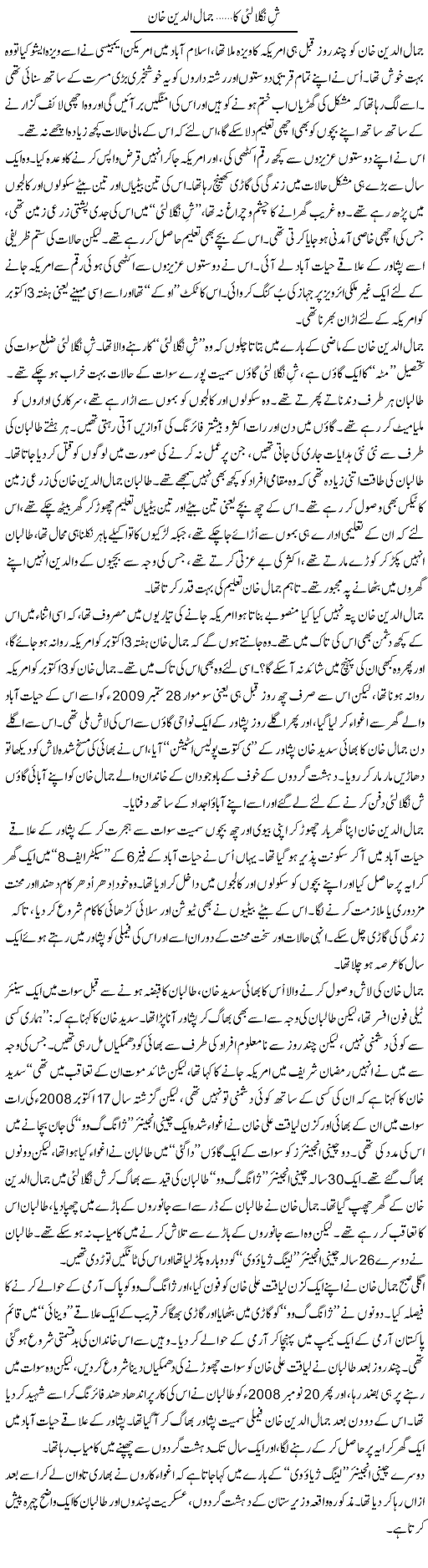
| PESHAWAR: The bullet-riddled body of a Swati in whose house the kidnapped Chinese engineer had spent a night in October 2008 after escaping from Taliban captivity was found here Wednesday. The 54-year old Jamaluddin Khan, a landlord from Chinglalai village in Swat’s Matta tehsil, had been kidnapped from outside his rented home in Sector F-8 in Hayatabad’s Phase 6 in Peshawar on September 28. His was one of the two bodies dumped in fields in Garhi Atta Muhammad village on the outskirts of Peshawar on Tuesday. As the bodies were unclaimed, both were buried by the police in the same village. On Wednesday, Jamaluddin’s brother Sadeed Khan came looking for the body and met the staff of Yakatoot police station. His kidnapped brother was untraceable and he feared that Jamaluddin might have been killed. “The body was decomposed and I had difficulty recognizing it. But we knew it was Jamaluddin,” an aggrieved Sadeed Khan told The News. The family took the body to Swat for burial. Despite risk to their life from remnants of Taliban militants, Sadeed Khan and members of the family were determined to travel to their village Chingalalai to bury Jamaluddin in their ancestral graveyard. For the past one year, Jamaluddin had been living in Peshawar after fleeing Swat. He is survived by a widow, three sons and three daughters. He had recently obtained a US visa and was booked to fly to New York on October 3. The Qatar Airways flight was to take him from Peshawar to Doha and then onward to New York. But his enemies were apparently aware of his travel plans and they struck before he could leave Pakistan. “I was urging him to leave during Ramazan. I knew he was under threat, but he delayed his departure and paid with his life,” recalled Sadeed Khan, who was a senior officer in the telephone department in Swat when life in the scenic valley was peaceful. Sadeed Khan didn’t blame anyone for his brother’s murder. “We didn’t harm anybody and had no enemies. But all of us felt threatened when Jamaluddin and his cousin Liaqat Ali Khan helped save the life of the Chinese engineer in Swat on the night of October 17, 2008. Liaqat, who belonged to Dagai village in Matta tehsil, had driven the Chinese engineer Zhang Guo in his car and delivered him to the nearby Pakistan Army camp at Vennai. Following his escape from Taliban custody in the Shawar or Peochar area, the 30-year old Zhang Guo had run for his life and sought refuge in Jamaluddin’s house in Chinglalai. He was lodged in a cattleshed due to fear of the Taliban, who were chasing the two escaped Chinese engineers. The Taliban managed to recapture Lang Xiao We, the younger, 26-year old Chinese engineer who broke his leg and fell while running in the mountainous area. Taliban searched Jamaluddin’s house but didn’t look for the Chinese engineer in the cattleshed. In the morning, Jamaluddin and his servants phoned Liaqat and it was decided that Zhang Guo should be handed over to the army troops. This was done but then misfortune of the two families began. Despite obvious threat to his life, Liaqat refused to leave Swat. On November 20, Taliban militants ambushed his car and killed him. Two days later, Jamaluddin escaped to Peshawar and managed to survive for about a year. Though his family isn’t accusing the militants of the murder at this stage, it appears that Jamaluddin, like his cousin Liaqat, paid with his life for helping the Chinese engineer and earning the ire of the Swat Taliban. The two men had defied the militants, who subsequently got several of their men freed from government custody and also received a handsome amount as ransom in exchange for the second Chinese engineer, Lang Xiao We, who too had escaped and was recaptured. (The News) .... Swati man paid with his life for saving Chinese engineer Thursday, January 15, 2009 Zhang Guo is back in China while Liaqat was killed by Taliban By Rahimullah Yusufzai PESHAWAR: The man who delivered the kidnapped Chinese engineer to the security forces after his escape from the Taliban custody in Swat was subsequently made to pay with his life. It wasn’t known until now that one Liaqat Ali Khan, son of Nadir Khan, a landlord from Dagai village in Matta Tehsil in upper Swat valley, was murdered by the local Taliban for helping Chinese telecommunication engineer, Zhang Guo, to reach the Pakistan Army’s roadside security post at Vennai. Members of his family, requesting anonymity due to a risk to their lives, told The News that Taliban fighters chased Liaqat while he was driving his car near his village on November 20 last year and shot him dead. Liaqat’s family, his cousins and other close relatives had to abandon their homes and move out of Swat after the incident. They still live in fear of the Swati Taliban and are unable to lead normal lives even in places far away from their native Swat. The 30-year-old Zhang Guo and his colleague, Long Xiao We, were kidnapped from a spot near the Khall town in Upper Dir district on August 29 while installing towers for a mobile phone company. They were taken to Swat and mostly kept in the Shawar, Peochar and Namal mountainous areas in Matta Tehsil. The Maulana Fazlullah-led Taliban in Swat demanded release of their 136 men and ransom in exchange for the two Chinese hostages. The government refused to make a deal with the Taliban. It was on October 17, 2008 that the two young Chinese engineers made their move to escape from Taliban’s custody. They reportedly sneaked out of the house where they were held during the night and ran for their life. Long Xiao We, 26-year-old and heavily-built, slipped during the escape and broke his leg. The mountainous terrain and the darkness made it difficult for them to find their way to safety. It is said Zhang Guo lost his colleague on the way after the latter’s fall and after a futile search decided to go it alone. The desperate engineer wanted to seek protection in some house in Chinglalai and the nearby Dagai village as he feared that the militants would soon learn about their escape and track them down. The Taliban managed to find Long Xiao We and made him hostage again but Zhang Guo was lucky to find a place to hide and regain freedom. According to late Liaqat’s family members, the unusual barking of dogs alarmed their security guards and prompted them to come out of the house of one of his cousins. They found the Chinese engineer shivering from cold outside the Hujra, or male guesthouse, and unable to speak a word of Pashto or Urdu, the two languages that the guards understood. Zhang Guo could barely speak English, the language the guards didn’t understand. Finding it difficult during the night to lodge him in the locked house or Hujra, the guards took him instead to a cattleshed and asked him to sleep there. They found an old blanket for him to protect himself from the cold. In the morning, the guards contacted Liaqat in Dagai village and told him about the stranger, who they believed was deaf and dumb. After seeing Zhang Guo, he knew this was one of the Chinese engineers who had been kidnapped by the Taliban. Liaqat reportedly consulted his cousins in Swat and Peshawar and sought their advice how to handle the situation. He was advised to deliver the engineer to the Army checkpost at Vennai, located about 1.5 kms from Dagai. According to one of his cousins, Liaqat was aware of the seriousness of the situation and he, therefore, tried to arrange a traditional, all enveloping Burqa for the Chinese engineer to wear while transporting him to the military checkpoint. Efforts to lay hands on the shuttlecock-type Burqa failed and Liaqat had little other choice than to seat Zhang Guo in the back seat of his car and drive him to the Vennai security forces’ post. He was able to return home safely but this was the beginning of his troubles. Somehow the word got out about the Chinese engineer’s stay in the house after his escape from the Taliban and his handing over to the security forces. The Taliban started suspecting Liaqat for helping the engineer and not long after that he became a marked man. It was just a matter of time that the militants would target him. Neither the Chinese diplomats nor most Pakistan government and military officials know that it was Liaqat Ali Khan who helped save Zhang Guo’s life but in the process paid with his own. It was a targeted killing of a man who had opted to stay in Swat unlike other Khans and resourceful people. .... |
Dr Matloob Hussain
Read more...
Thursday, 17 September 2009
President Zardari’s China diplomacy and the Pakistani media
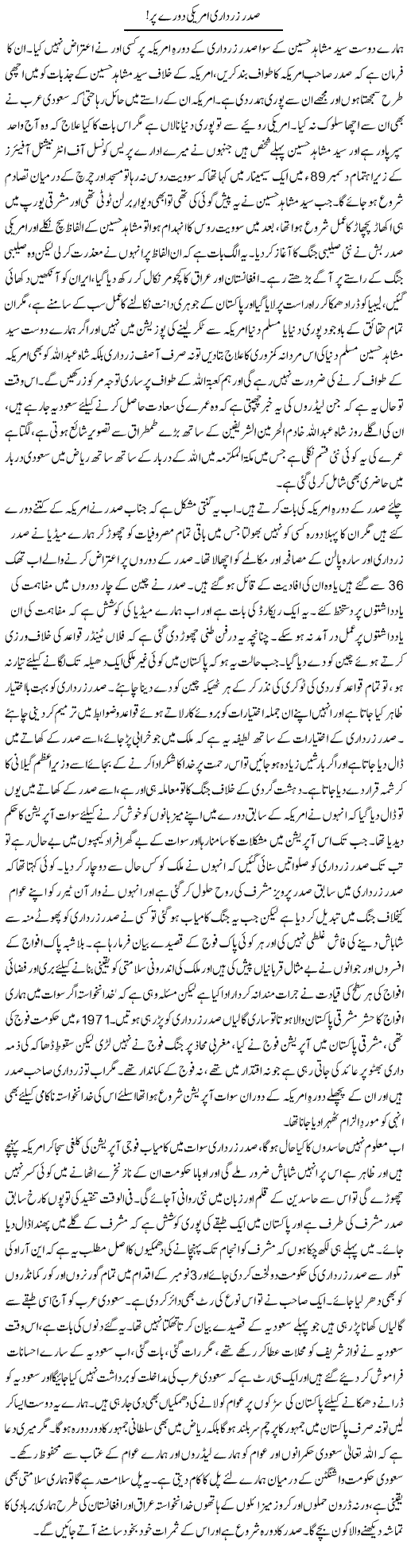
Talking to the Chinese newspaper Guangming Daily, President Asif Ali Zardari has detailed the results of his frequent working visits to China, saying he had identified more than 50 new initiatives and signed three dozen MoUs during one year of his out-of-protocol tours of China. He spoke of Chinese advances in the field of agriculture, signalling his intent of expanding cooperation in that field.
Mr Zardari’s diplomacy is careful while being focused on Pakistan’s self-interest. He mentions the founder of the PPP, Zulfikar Ali Bhutto, as the architect of Pakistan’s China policy; but the difference this time is that there is no Cold War polarity to contend with. His diplomacy with the United States and the United Kingdom is equally focused on the national interest.
Unfortunately, however, few in Pakistan are concerned with the dynamic behind President Zardari’s intensification of contacts with China. Such is the strength of the destabilising factors in Pakistan that his visits to China are either ignored or described as the pursuit of a dubious “personal” programme. In the past, visits to China by Pakistani leaders were hardly ever criticised. But now even that restraint is gone.
Apart from the problem of terrorism that destabilises Pakistan by undermining public trust in the state, there are two very strong additional factors of instability. The first is the lingering political vendetta that characterised the politics of the 1990s and isolated Pakistan internationally. The second is the trend of using this politics for media trials. The more the charges brought against the government are disproved, the more frequent and intense they become.
The media seduces the inward-looking politician into agitation with its slanted coverage and personal attacks by TV hosts. Every time the politician realises the folly of walking behind the hosts blindly, he beats a retreat from his hostile position, but this is only temporary. Anger rather than opinion is freely expressed on TV, persuading the viewing public to adopt a similar attitude towards the government.
Prior “free market” problems of a faltering economy are blamed on the government without suggesting a way out, apart from bringing back the statism that had failed to resolve Pakistan’s poverty dilemma. Somehow President Zardari is constantly referred to. His visits abroad are resented as if his presence in Pakistan was more important than that of Prime Minister Yousaf Raza Gilani. But at the same time he is also criticised for usurping the prime ministerial role!
The uproar about corruption is another such case. It may turn out to be justified but at some point, proof of the allegations levelled against the PPP government and indirectly against President Zardari must also be presented. An orchestrated campaign about the Rental Power Producers (RPPs) was mounted against the water and power minister, accusing him of kickbacks, even mentioning the house he had bought abroad. But when the showdown actually took place on a TV channel, the vilification campaign failed to convince.
The state is being taxed with acting in unfamiliar ways. It is first accused of allowing the Americans of planting their mercenary non-state actors in Islamabad in order to target and destroy Pakistan’s nuclear programme; then it is asked to take action against the United States to prove that Pakistan is sovereign. Similarly, the government is rebuked for not getting the states in the Friends of Democratic Pakistan to cough up the promised funds when the fact is that the money in question was targeted but not actually pledged.
There was a time when the critic never tired of the “perfidy” of America in walking away from Pakistan when most needed. This was made the ground for delinking Pakistan’s interests from the US, without however defining an alternative strategy that would offset the political and economic losses thus entailed. Today, as the US admits that it was wrong in abandoning Pakistan in the past and wishes to beef up its presence, the critic insists that America’s exit from Afghanistan and leaving Pakistan alone would be the right scenario.
President Zardari is pilloried if he makes a friendly overture to India; a similar overture made by Mr Nawaz Sharif is either ignored or actually praised. Retired generals and retired bureaucrats whose “stand-still” strategy with India in the past has brought Pakistan to its present crisis point, have crept out of their retirement to express their shock at how President Zardari is harming Pakistan through his diplomacy with China, the United States and the European Union.
Pakistan needs a lot of placatory diplomacy, not hostile “action”, given its past failed strategies. President Zardari is on the right path in his efforts to woo the international community, especially China and the US. Certainly, that is how the world looks at him. (Daily Times)

Read more...
Saturday, 5 September 2009
‘Pakistan saved China from embarrassment on Xinjiang violence’
* Both countries have not fully utilised political ties for economic gains
* New Chinese embassy issue different from US embassy’s expansion
By Sajjad Malik
ISLAMABAD: Pakistan played a key role in dissuading certain Muslim countries from taking the issue of violence in China’s Xinjiang region to the Organisation of the Islamic Conference and saved Beijing from embarrassment, Chinese Ambassador Lou Zhaohui said on Friday.
“Yes, Pakistan played its role in doing so,” the ambassador said in response to a question, adding that certain western countries were fanning the Muslim Uighurs’ issue to incite violence.
Addressing reporters at the Chinese embassy highlight the importance of President Asif Ali Zardari’s frequent visits to China, he said they had been instrumental in transforming the relations from political to economic.
Zhaohui said Pakistan had been helpful in dealing with the East Turkestan Islamic Movement (ETIM) militants and curbing violence in Xinjiang where nearly 20 million Muslims lived.
Political ties: On comparison between China’s relations with India and Pakistan, the ambassador said China and India were moving towards improving economic relations despite political differences and the border issue, but Pakistan and China had not fully exploited the depth of their political ties for economic gains.
Zhaohui said China had provided $1.5 billion to Pakistan since 1998, which was unprecedented in Chinese history. He said the development of the Gwadar Port was the only project undertaken by China in another country.
He said China was presently involved in 120 projects in Pakistan and over 1,000 Chinese engineers were working on these projects. He expressed satisfaction over the security arrangements of the Chinese nationals.
Zhaohui said both the countries had been already cooperating in the energy sector and President Zardari’s resent visits were also aimed at increasing cooperation in the hydropower and agriculture sectors.
Embassy: To a question, he said China was building a new embassy in Islamabad, which was different from the expansion of the US embassy. He said China would not bring in its security officials to guard the embassy as it had full confidence in Pakistan’s security system.
He said Pakistan had made considerable progress in the economic recovery and security situation since the present government assumed office. He expressed full support for the government in bringing peace and stability in the region.
The ambassador added that peace in Afghanistan was vital for peace in the region, adding China was playing its role in this regard.
Read more...
Tuesday, 9 June 2009
Amir Mir: Pakistan extradites ten Taliban terrorists to China

By Amir Mir
LAHORE: Pakistan has extradited 10 arrested terrorists belonging to the pro-independence Eastern Turkistan Islamic Movement (ETIM) to China, an Interior Ministry spokesman confirmed to The News on Friday.
The spokesman in Islamabad, confirming the extradition, said the ETIM militants had actually been arrested after they attacked Pakistani security forces in the tribal areas. Ten of the over two-dozen arrested Chinese were handed over to Beijing after it was established that they belonged to the ETIM, which Beijing describes as an armed secessionist group with bases in Xingjian-Uighur Autonomous Region (XUAR) in the northwest of China, and in Pakistan.
The extradition of the Chinese militants came as a result of three agreements signed between Pakistan and China to curb militancy and extremism. During interrogations by the Pakistani authorities, most of the ETIM militants had refuted terrorism charges, saying they were members of a Chinese separatist movement founded by Turkish speaking ethnic majority of over eight million people whose traditional homeland lies in Xingjian Uighur Autonomous Region in northwest China.
According to interior ministry sources in Islamabad, the 10 Chinese militants, who had been arrested from the country’s tribal areas, were extradited following the Chinese President Hu Jintao’s request to Islamabad for taking stern action against the fugitive Chinese militants hiding in Pakistani tribal areas and running terrorist activities in China.
While using diplomatic channels to approach President Zardari, sources said, President Hu had expressed his concerns over the presence of the ETIM in the Pakistani tribal areas, saying they might threaten the security of over 5,000 Chinese nationals working on different development projects in Pakistan.
East Turkistan had maintained a measure of independence until early 1950s when Mao’s victorious rebel armies turned to the peripheries and began securing Chinese borders, capturing Manchuria, Mongolia, Tibet and East Turkistan. The native Uighurs resisted the Chinese occupation until the 1960s, but failed to win support from neighbouring Muslim states due to their fractured tribal nature.
Since the mid-1980s, however, an active pan-Islamic movement has been trying to cement the opposing groups together against the Chinese occupation of their homeland, pressing for an independent East Turkistan state. Yet Beijing, which views Xingjian as an invaluable asset due to its crucial strategic location near Central Asia and its large oil and gas reserves, is adopting all possible measures to quell the separatist movement.
The Chinese authorities had been blaming the Uighur separatists for sporadic bombings and shootouts in the past, causing an atmosphere of insecurity and fear in China. Due to intense Chinese lobbying against the ETIM, it was listed a terrorist organisation by the United States as well as the United Nations in 2002.
But a subsequent 2003 report by the Amnesty International had observed the evidence that formed the basis for the UN decision remains unclear. The report further said China continues to make little distinction between the Uighurs involved in peaceful or violent nationalist activities, branding them as ‘separatists’ or ëterrorists’.
According to some sources in Islamabad, the Chinese militants were extradited despite opposition by the Amnesty International. In March 2009, Tim Parritt, Deputy Director of the Amnesty International’s Asia-Pacific Programme, had observed that whatever these EMIT militants were accused of, the risks posed to them were extremely grave, if forcibly returned to China.
He had maintained that under the international law, states were obliged not to expel, return or extradite any person to a country where they risk torture or other ill-treatment. However, the Pakistani authorities insist that all those who had been extradited to Beijing were involved in terrorist activities both in China and in Pakistan and had also developed links with al-Qaeda network in the tribal areas of Pakistan.
They said the fact that the ETIM militants had extended their network of terrorist activities to Pakistan was evident from a threat they had conveyed to the Chinese Embassy in Islamabad, saying they intended to kidnap Chinese diplomats and consular officers stationed in the Pakistani federal capital with a view to highlighting their cause.
The Chinese mission subsequently informed the Pakistani authorities in a letter that some members of the ETIM had already reached Islamabad and planned to kidnap their staffers from the federal capital.
The letter reportedly pointed out that terrorist groups located in Pakistan, including al-Qaeda, had been providing support to the ETIM activists for the likely kidnappings. Subsequent investigations had established that the anonymous threat was issued by none other than the East Turkistan Islamic Movement and that the would-be kidnappers had first travelled to Jalalabad in Afghanistan to finalise their plans. (The News, 6 June 2009)
Read more...
Thursday, 9 April 2009
After India, Afghanistan, & Iran it's now China which wants Pakistan to take action against militants !!! Isn't it time to wake up ???


China Leans on Pakistan to Deal With Militants
Washington is not the only ally calling on Islamabad to take action against militants based in its tribal areas along the Afghan border. Now, according to a prominent Pakistani politician, Beijing is calling on the Pakistani government to deal with militants based there and allegedly plotting attacks in China later this year.
In two separate meetings in the past two months, senior Chinese officials have warned President Asif Ali Zardari that the East Turkestan Islamic Movement (ETIM), a group with roots in Xinjiang province, has established its "military headquarters" in Pakistani territory. Xinjiang is China's largest province and the homeland of a large Muslim minority, the Uighur. Uighur separatists allegedly attacked Chinese transportation in the period leading up to the Beijing Olympics.
The details of the meetings were revealed by Chinese officials to Mushahid Hussain, a close ally of former President General Pervez Musharraf and the most visible supporter of Islamabad's alliance with Beijing, during recent meetings in central Asia. "They told me that the ETIM has its military headquarters in [Pakistan's tribal areas] and is planning to attack China on the 60th anniversary celebration of the communist revolution," says Hussain. The ETIM has been designated a terrorist organization by both the United States and China.
The issue was first raised during Zardari's recent visit to China in February. The President was making his second trip in four months to what is considered Pakistan's principal ally in the region. He was visiting Hubei and Shanghai to observe China's progress in agriculture, hydroelectric power and the financial sector. There had been no plan to meet with the Chinese leadership. But according to Hussain, Meng Jianzhu, the Chinese Minister for Public Security flew from Beijing to discuss the ETIM threat. "The minister met with him for 90 minutes," says Hussain. Before leaving Shanghai, Zardari praised his country's alliance with China and told reporters: "We are not threatened by nations, but by non-state actors."
In March, Beijing followed up by dispatching a "special envoy" to Islamabad with the sole brief of discussing ETIM, according to Hussain. A spokesperson for Zardari denied knowledge of the meetings. "We know that China is extremely concerned about terrorism in the region, but we are unaware of any such meeting having taken place," the spokesman said.
The ETIM and other Chinese separatist militants have maintained a long but murky presence in Pakistan's tribal areas for a number of years. In 2003, Hasan Mahsoum, the group's founder, was killed by the Pakistan army. The Chinese government has claimed in the past that Mahsoum established links with Osama bin Laden as early as 1999. In 2005, the State Department described the group as being "linked to al-Qaeda and the international jihadist movement", and had been provided with "training and financial assistance" from al-Qaeda.
"The security threat from these groups is one of the top priorities for the Chinese government," says Yiyu Lu, a China expert at London's Royal Institute of International Affairs. "China has accused the ETIM of being a terrorist organization. It has asked the Shanghai Cooperation Organization to help it fight separatism and fundamentalism. There is a history of militants from Xinjiang going abroad, some were picked up in Afghanistan, others went to central Asia and Pakistan." Several ethnic Uighurs were held at the U.S. base in Guantanamo, Cuba; many have since been released or relocated.
Source: TIME

Source: Daily Express: 11th April, 09
China asked Zardari to act against ETIM?
Daily Times MonitorLONDON: China has called on Islamabad to take action against the East Turkestan Islamic Movement (ETIM), which it says may be plotting attacks into China from the Tribal Areas.
In two meetings over recent months, senior Chinese officials have warned the Pakistani government about the threat. Chinese officials revealed details of the meetings to Mushahid Hussain, a former minister, during a visit to Central Asia. “They told me that the ETIM has its military headquarters in [the Tribal Areas] and is planning to attack China on the 60th anniversary celebration of the communist revolution in October,” said Mushahid. He said in February Meng Jianzhu, China’s minister for public security, flew from Beijing to Shanghai to discuss the threat with Zardari during his visit to China. “The minister met with him for 90 minutes to discuss this issue.” In March, said Mushahid, Beijing dispatched a special envoy to Islamabad to discuss the alleged threat posed by the ETIM.
Source: Daily Times--- 9th April, 09
Read more...
Monday, 16 February 2009
Militants swapped for Chinese engineer? Swapping militants for hostages is a gain in the short-term but a loss in the long-term.....
Swapping militants for hostages will not work, General Kayani. It it time to attack and eliminate the militant leadership, once and for all.
Read more...
| Militants swapped for Chinese engineer? |
 |
|
|
| Monday, February 16, 2009  By our correspondent PESHAWAR: The government has released over a dozen Taliban prisoners, several of them from Waziristan, for securing the release of the Chinese telecommunications engineer, Long Xiaowei, official and militant sources said on Sunday. Long Xiaowei was freed on Saturday after 170-day captivity and shifted to Chinese Embassy in Islamabad. Militants loyal to Maulana Fazlullah had kidnapped him along with his colleague Zhuang Guo from Khal town of Lower Dir district on August 29. Both the captives attempted to escape on October 17, 2007, in which Zhuang succeeded to get away but Long got his leg fractured in the move. The government functionaries have been tight-lipped about the deal between the militants and the government for the release of the engineer but The News has learnt that the government swapped Long Xiaowei for more than a dozen Taliban prisoners. “Yes, a number of militants were freed to secure the release of the Chinese engineer,” an official, who has full knowledge of the deal, told The News. He, however, refused to give the exact figure of the prisoners released in exchange for the engineer. “Efforts were intensified to secure his release before the president’s (Asif Ali Zardari) upcoming visit to China. It’s a gift to the people of China on the occasion of his visit and it is also expected that the president will take him (Long) along to China,” the source added. However, another official ruled out the release of any Taliban by the government in exchange for the Chinese hostage. He said the government exercised pressure and made the Taliban to free the Chinese. The government was under immense pressure for the release of the Chinese engineer after the beheading of a Polish geologist, Piotr Stanczak, by Darra Adamkhel Taliban militants. The already beleaguered government of Prime Minister Yusuf Raza Gilani was further troubled when the Polish government termed the video of his beheading authentic. Also, pressure mounted on President Zardari when UN chief Ban Ki-moon asked him the day Long was released to take measures for the early and safe release of American UN official, John Solecki, kidnapped from Quetta. His captors have also threatened to kill him within 72 hours of his recently released video, if the government did not meet their demands. The official source insisted that some prisoners were freed on Saturday, paving the way for Long’s release the same day. Earlier, militants were denying any deal for freeing the captive engineer and insisted the move was made as a “goodwill gesture”. However, when told about the release of Taliban prisoners in exchange for the foreign engineer, spokesman for Swat militants, Muslim Khan, reluctantly confirmed to had got released the Taliban prisoners for letting Long Xiaowei go. “Over the last one week, the government freed several Taliban prisoners, but most of them were ordinary fighters. Actually, majority of the prisoners released hailed from Waziristan,” he claimed, refusing to divulge their exact number and identities. “If they were key the Taliban prisoners, they would have included my own brother,” Muslim said, replying to a question. The security forces have arrested his brother and son-in-law months ago from Makanbagh area of Mingora city of Swat valley. Another source close to Maulana Fazlullah and his militants told The News that 16 important Swat Taliban commanders were released on Saturday in exchange for the kidnapped Chinese national. However, from Muslim Khan’s conversation, it seemed that the number of released Taliban was higher than that. Earlier, efforts for the release of the kidnapped Chinese ended in smoke, as the government was not willing to accept the demand of the militants to free 136 Taliban prisoners, besides other demands. The militants had been refusing to release Long without their demands met by the government. Several attempts were made to contact the spokesman for the NWFP government, Mian Iftikhar Hussain, to get the government’s version on the deal, but he did not receive the calls. A press release of the Chinese Embassy in Islamabad said that they had received Long. “He has safely arrived at the Chinese Embassy in Islamabad. He will go back to China soon to reunite with his family. This embassy along with Mr Long wishes to extend sincere thanks to the efforts by relative departments of Pakistan for his safe release,” the press release said. “He is dismayed but in good health,” deputy head of China’s mission in Islamabad, Yao Jing, said of the engineer who had a fractured leg. (The News) |
Read more...
Friday, 31 October 2008
Pakistan-Iran relations: It is time to reconcile and develop a new strategic relationship.... By Nazir Naji
![[col8.gif]](https://blogger.googleusercontent.com/img/b/R29vZ2xl/AVvXsEg_z5z4XH_J3rolmVmvyUCA8t7T4r8l38xkfG_cDSN_Qa9iHUMPkkqByRtXomo0K0HO7zXba08XpHMJf-Bh9C4WwPpKePHMvVAHDQNtEoXb8Z_kreXjilEHI_kLqjPwY6a7HDQoy-NrOEM/s1600/col8.gif)
![[col8a.gif]](https://blogger.googleusercontent.com/img/b/R29vZ2xl/AVvXsEgNqb3Lbar9hiArCnacq93I9p1b1ZD2OOB3Q0CHdQfHrzur8uWJ3qRd-GdYJpsPM3jkT_eKuqRdiLlpx6nHUmH0zec7OBUPf2H2oAjI1AMkT09YGlCHOdwj3laflR2uoP4fj-k0fIoS6Gc/s1600/col8a.gif)
Monday, 13 October 2008
Pakistan needs financial and logistic aid to sustain the war on terror
Global crisis and war on terrorism
The International Monetary Fund (IMF) warned on Saturday that “debt-ridden banks were pushing the global financial system to the brink of meltdown” and “the rich nations had so far failed to restore confidence”. According to it, “solvency concerns about a number of the largest US-based and European financial institutions” have pushed the international financial system towards meltdown.
The reference is to the $700 billion bailout package sanctioned by the US Congress that the US thinks the world will finance by buying US treasury paper, but the world is threatened with recession as economies contract and the panic-stricken banking sector chokes off lending to businesses and households. The “credit crunch” is supposed to hit the developing states more severely. And the Group of 27, which includes India and Pakistan, says its economies could come crashing down.
In Pakistan, other crises are compounding the financial crisis. Lack of water in the dams has increased load shedding and the banks are on the brink of suffering runs as big deposits flee and salaried employees, succumbing to rumours, line up to encash cheques. The war against terrorism is on in Pakistan and the determination to fight is still not gelling sufficiently because of the noise made by the opposition in and outside the parliament after a briefing by the Army.
Under the economic crunch, Pakistan has asked its friends abroad to bail it out financially, especially to shore up its foreign exchange reserves that have shrunk dangerously lower than the value of its annual oil bill and other crucial imports.
The war against terrorism is a complex phenomenon and is linked to the ongoing conflict in Afghanistan. As our Army advances in Bajaur and makes gains against the terrorists, “foreigners” come across the Durand Line from the adjoining provinces of Afghanistan to undo them. These operations are expensive and are being funded by the US as a part of the war against terrorism which Pakistan has joined in its own interest. But it can fight on only if its economy is saved from collapsing totally. The effects of the global crisis are visible, and like the rest of the world our stock market is under pressure and money is being dollarised and sent abroad by panic-stricken investors.
Above all, Pakistan needs funds to fight terrorism. And to stay alive as a state to fight this war its economy needs injections of “friendly funds” to avoid defaulting on debt repayments and on payments due on its imports. Both crises strike at the root of the existence of the state. If it tries to win reprieve from the terrorists by accepting their sharia-related demands, the system they will replace the 1973 Constitution with will mean the undoing of the state as envisaged by its founding fathers.
Therefore, not so much for the sake of the world as for its own sake, Pakistan needs to survive the current global crisis. Thankfully, too, it is not as “globalised” as some states that are under threat of meltdowns and it can weather the storm if its friends at the forthcoming Friends of Pakistan forum can finance its deficits and leave it free to fight the terrorists.
But the scene is changing every minute in the world economy. The rich states with most to lose are turning inward and appear less ready to hand out money to a friend in need. Enthusiasm for the war against terrorism is also losing some steam as nations involved in Afghanistan become distracted by stringencies at home. Military commanders are already saying the war can’t be won. Unlike Pakistan, the war for them is a distant phenomenon and can be offset by mounting less expensive measures at home. Will the friends be forthcoming?
The US is squeezed by the current crisis. Even the Iraq war was fought by it with borrowed money. As the Council on Foreign Relations report of September 2008, titled Sovereign Wealth and Sovereign Power, puts it, “China and Russia bought the debt the United States issued to finance the war in Iraq even though they voted against the United States in the UN”. Saudi Arabia, which was favourably inclined to meet our request for a “deferred payment” package, may be a little shaken by the contracting demand for oil in the world and its steeply falling price. Iran, not our normal source for oil, has still to process our request for deferment sales. Will the Friends of Pakistan forum come up with the sort of money we need to tide us over?
China will definitely be a major player behind putting together the $700 billion bailout package. Its foreign reserves, standing at around a trillion dollars today, will help it withstand the global crisis. The threat to it of the rising oil price has subsided and if it helps Pakistan ride out the current crisis the funds thus saved would suffice. But China will probably wait till the Friends of Pakistan have shown their hand. Pakistan expects its Arab friends to step up to the plate. The war against terrorism has to be fought by Pakistan for its own survival. But the world also has a serious stake in it. (Daily Times)
Read more...
The International Monetary Fund (IMF) warned on Saturday that “debt-ridden banks were pushing the global financial system to the brink of meltdown” and “the rich nations had so far failed to restore confidence”. According to it, “solvency concerns about a number of the largest US-based and European financial institutions” have pushed the international financial system towards meltdown.
The reference is to the $700 billion bailout package sanctioned by the US Congress that the US thinks the world will finance by buying US treasury paper, but the world is threatened with recession as economies contract and the panic-stricken banking sector chokes off lending to businesses and households. The “credit crunch” is supposed to hit the developing states more severely. And the Group of 27, which includes India and Pakistan, says its economies could come crashing down.
In Pakistan, other crises are compounding the financial crisis. Lack of water in the dams has increased load shedding and the banks are on the brink of suffering runs as big deposits flee and salaried employees, succumbing to rumours, line up to encash cheques. The war against terrorism is on in Pakistan and the determination to fight is still not gelling sufficiently because of the noise made by the opposition in and outside the parliament after a briefing by the Army.
Under the economic crunch, Pakistan has asked its friends abroad to bail it out financially, especially to shore up its foreign exchange reserves that have shrunk dangerously lower than the value of its annual oil bill and other crucial imports.
The war against terrorism is a complex phenomenon and is linked to the ongoing conflict in Afghanistan. As our Army advances in Bajaur and makes gains against the terrorists, “foreigners” come across the Durand Line from the adjoining provinces of Afghanistan to undo them. These operations are expensive and are being funded by the US as a part of the war against terrorism which Pakistan has joined in its own interest. But it can fight on only if its economy is saved from collapsing totally. The effects of the global crisis are visible, and like the rest of the world our stock market is under pressure and money is being dollarised and sent abroad by panic-stricken investors.
Above all, Pakistan needs funds to fight terrorism. And to stay alive as a state to fight this war its economy needs injections of “friendly funds” to avoid defaulting on debt repayments and on payments due on its imports. Both crises strike at the root of the existence of the state. If it tries to win reprieve from the terrorists by accepting their sharia-related demands, the system they will replace the 1973 Constitution with will mean the undoing of the state as envisaged by its founding fathers.
Therefore, not so much for the sake of the world as for its own sake, Pakistan needs to survive the current global crisis. Thankfully, too, it is not as “globalised” as some states that are under threat of meltdowns and it can weather the storm if its friends at the forthcoming Friends of Pakistan forum can finance its deficits and leave it free to fight the terrorists.
But the scene is changing every minute in the world economy. The rich states with most to lose are turning inward and appear less ready to hand out money to a friend in need. Enthusiasm for the war against terrorism is also losing some steam as nations involved in Afghanistan become distracted by stringencies at home. Military commanders are already saying the war can’t be won. Unlike Pakistan, the war for them is a distant phenomenon and can be offset by mounting less expensive measures at home. Will the friends be forthcoming?
The US is squeezed by the current crisis. Even the Iraq war was fought by it with borrowed money. As the Council on Foreign Relations report of September 2008, titled Sovereign Wealth and Sovereign Power, puts it, “China and Russia bought the debt the United States issued to finance the war in Iraq even though they voted against the United States in the UN”. Saudi Arabia, which was favourably inclined to meet our request for a “deferred payment” package, may be a little shaken by the contracting demand for oil in the world and its steeply falling price. Iran, not our normal source for oil, has still to process our request for deferment sales. Will the Friends of Pakistan forum come up with the sort of money we need to tide us over?
China will definitely be a major player behind putting together the $700 billion bailout package. Its foreign reserves, standing at around a trillion dollars today, will help it withstand the global crisis. The threat to it of the rising oil price has subsided and if it helps Pakistan ride out the current crisis the funds thus saved would suffice. But China will probably wait till the Friends of Pakistan have shown their hand. Pakistan expects its Arab friends to step up to the plate. The war against terrorism has to be fought by Pakistan for its own survival. But the world also has a serious stake in it. (Daily Times)
Read more...
Sunday, 28 September 2008
Friends rally around Pakistan (Buck up Zardari)
A permanent forum known as Friends of Pakistan was launched in New York on Friday with the mission to help Pakistan out of its economic crisis. It has been estimated that Pakistan would need around $15 billion to prevent its economy from collapsing. The Forum’s first substantive session, hopefully meaning actual execution of commitments, will be held in Abu Dhabi early October. The future host of the forum, UAE’s Foreign Minister Sheikh Abdullah bin Zayed, said in New York that his country fully backed the initiative to “show our commitment to Pakistan”.
Others too have shown commitment: the US Secretary of State Condoleezza Rice said, “We are engaged with Pakistan through international financial institutions. We will support the steps Pakistan must take for its economy”. British Foreign Secretary David Miliband saw “a very strong signal of political and economic support to the democratically elected government in Pakistan”. Those who attended the Friends of Pakistan forum meeting were: The United States, Britain, Italy, Germany, France, Japan, China, Australia, Turkey, Canada, Saudi Arabia and the UAE.
President Asif Ali Zardari, whose presence at the UN helped the campaign for Pakistan’s economic survival, appropriately remarked: “I don’t want them to give us the fish. I want to learn how to fish and do it myself”. Needless to say, the forum couldn’t have been launched without the help of the United States and the commitment shown by the PPP leadership in Pakistan to fighting Pakistan’s war against terrorists and extremists which cannot be sustained without a dramatic economic revival. And that is exactly why the international community is ready to offer financial help.
According to reports, “Pakistan’s foreign currency reserves are falling fast and, if forward liabilities are included, the real reserves may actually be just $3 billion”. This is money to meet the import bill of just one month. Pakistan’s credit rating has plunged and people who would normally do business with Pakistan are talking of possible default. Mr Zardari said that the world had rallied around Pakistan because of Pakistan’s return to democracy after an eight-year rule by a military dictator. That may not be accurate. The real reason is that Pakistan could go under the anarchism of Al Qaeda after an economic meltdown. An even more down-to-earth reason is that Islamabad is officially committed to the war against Al Qaeda’s terror.
It is, however, unfortunate that back home in Pakistan the perspective of many people is infected with prejudice and politics. A consensus has formed in the media about the lack of wisdom of President Zardari in deciding to go to the United States after the Marriott blast. It was tediously argued that a wounded nation needed its leadership in Islamabad for solace and that Mr Zardari had let them down by leaving the country. Worse, the visit to New York was publicised as a pleasure trip that actually made fun of the suffering of the people back home. Everybody was included in this frog chorus: the economists as well as numberless retired ambassadors and one ex-permanent representative of Pakistan at the UN.
Those who think emotion should come before economic realism also believe that the war against terrorism is not Pakistan’s war and that America is the real enemy of Pakistan because it is working in tandem with India, Pakistan’s traditional foe. They want the Pakistan army, already badly stretched against Al Qaeda, to fight the two enemies — one a global superpower and the other a regional power — with the help of the tribal people of Pakistan who need immediate humanitarian bailout rather than jihad against two such foes. They want to suspend the logistics provided by Pakistan to the NATO-ISAF forces in Afghanistan, knowing full well that Pakistan receives the running expenses of its military action in the Tribal Areas from these facilities.
There are a number of misconceptions in the “consensus” at home. It is believed that if Pakistan acted defiantly like Iran and North Korea it would become powerful and prosperous and may even get international support. But nothing could be further from the truth. Iran and Venezuela are leading the isolationist group, and the latter even spends money out of its pocket to encourage more states to act like them, but they don’t have the kind of money needed to support Pakistan. In any case Iran would be most unwilling to fund a pro-Al Qaeda Pakistan because the terrorists in Pakistan kill Shias as their side business. China too has complaints about its Sinkiang Muslims training with Al Qaeda apart from the fact that Al Qaeda doesn’t help by kidnapping Chinese engineers in Pakistan.
There is too much anger and unrealistic emotionalism over the electronic and print media. Unfortunately there are campaigns launched to malign the government through forgeries and planted lies. This is not the way to treat an elected government especially since it deserves the time and space to prove its worthiness. There will be time enough for that later if it fails to deliver the goods. (Daily Times)
Read more...
Others too have shown commitment: the US Secretary of State Condoleezza Rice said, “We are engaged with Pakistan through international financial institutions. We will support the steps Pakistan must take for its economy”. British Foreign Secretary David Miliband saw “a very strong signal of political and economic support to the democratically elected government in Pakistan”. Those who attended the Friends of Pakistan forum meeting were: The United States, Britain, Italy, Germany, France, Japan, China, Australia, Turkey, Canada, Saudi Arabia and the UAE.
President Asif Ali Zardari, whose presence at the UN helped the campaign for Pakistan’s economic survival, appropriately remarked: “I don’t want them to give us the fish. I want to learn how to fish and do it myself”. Needless to say, the forum couldn’t have been launched without the help of the United States and the commitment shown by the PPP leadership in Pakistan to fighting Pakistan’s war against terrorists and extremists which cannot be sustained without a dramatic economic revival. And that is exactly why the international community is ready to offer financial help.
According to reports, “Pakistan’s foreign currency reserves are falling fast and, if forward liabilities are included, the real reserves may actually be just $3 billion”. This is money to meet the import bill of just one month. Pakistan’s credit rating has plunged and people who would normally do business with Pakistan are talking of possible default. Mr Zardari said that the world had rallied around Pakistan because of Pakistan’s return to democracy after an eight-year rule by a military dictator. That may not be accurate. The real reason is that Pakistan could go under the anarchism of Al Qaeda after an economic meltdown. An even more down-to-earth reason is that Islamabad is officially committed to the war against Al Qaeda’s terror.
It is, however, unfortunate that back home in Pakistan the perspective of many people is infected with prejudice and politics. A consensus has formed in the media about the lack of wisdom of President Zardari in deciding to go to the United States after the Marriott blast. It was tediously argued that a wounded nation needed its leadership in Islamabad for solace and that Mr Zardari had let them down by leaving the country. Worse, the visit to New York was publicised as a pleasure trip that actually made fun of the suffering of the people back home. Everybody was included in this frog chorus: the economists as well as numberless retired ambassadors and one ex-permanent representative of Pakistan at the UN.
Those who think emotion should come before economic realism also believe that the war against terrorism is not Pakistan’s war and that America is the real enemy of Pakistan because it is working in tandem with India, Pakistan’s traditional foe. They want the Pakistan army, already badly stretched against Al Qaeda, to fight the two enemies — one a global superpower and the other a regional power — with the help of the tribal people of Pakistan who need immediate humanitarian bailout rather than jihad against two such foes. They want to suspend the logistics provided by Pakistan to the NATO-ISAF forces in Afghanistan, knowing full well that Pakistan receives the running expenses of its military action in the Tribal Areas from these facilities.
There are a number of misconceptions in the “consensus” at home. It is believed that if Pakistan acted defiantly like Iran and North Korea it would become powerful and prosperous and may even get international support. But nothing could be further from the truth. Iran and Venezuela are leading the isolationist group, and the latter even spends money out of its pocket to encourage more states to act like them, but they don’t have the kind of money needed to support Pakistan. In any case Iran would be most unwilling to fund a pro-Al Qaeda Pakistan because the terrorists in Pakistan kill Shias as their side business. China too has complaints about its Sinkiang Muslims training with Al Qaeda apart from the fact that Al Qaeda doesn’t help by kidnapping Chinese engineers in Pakistan.
There is too much anger and unrealistic emotionalism over the electronic and print media. Unfortunately there are campaigns launched to malign the government through forgeries and planted lies. This is not the way to treat an elected government especially since it deserves the time and space to prove its worthiness. There will be time enough for that later if it fails to deliver the goods. (Daily Times)
Read more...
Subscribe to:
Posts (Atom)





