Editor's Choice

--------------------------------------------------------------------------------------------------------------------------
Featured Post
--------------------------------------------------------------------------------------------------------------------------

"Let us build Pakistan" has moved.
30 November 2009

All archives and posts have been transferred to the new location, which is: http://criticalppp.com

We encourage you to visit our new site. Please don't leave your comments here because this site is obsolete. You may also like to update your RSS feeds or Google Friend Connect (Follow the Blog) to the new location. Thank you.


--------------------------------------------------------------------------------------------------------------------------
Showing posts with label Violence. Show all posts

Sunday, 20 September 2009

Pakistan (establishment) willing to tolerate a level of anti-Shia violence if it does not bother the government.

Pakistani local residents gather at the wreckage of a market and vechiles after a suicide car bomb blast near the garrison city of Kohat on September 18, 2009
Foretold death in Kohat-Hangu

Sectarian violence has been brewing in the NWFP for a long time. Now it has delivered a savage blow to the security of the province. On the holy last Friday of Ramazan, a suicide vehicle destroyed an entire market on the Kohat-Hangu Road and killed 33 people. Needless to say, the shops were mostly Shia-owned and those who died were Shia too. The Lashkar-e-Jhangvi has added “al-Alami” to its name and owned the attack.

Pakistan lost the Federally Administered Tribal Areas (FATA) to the Taliban as a result of its “strategic depth” doctrine during the 1990s. The NWFP lost its normally administered areas like Kohat, Hangu and Dera Ismail Khan to the Taliban spill-over from FATA. The sharp edge of conflict in these areas was provided by the sectarian organisation brought into existence by the state in 1985 in Jhang in Punjab: Sipah-e-Sahaba.

Despite the fact that the area contained an important cantonment and an air base, it was handed over to the sectarian terrorists on a platter. The state was willing to tolerate a level of anti-Shia violence if it didn’t bother the government. Centuries of coexistence between the Sunni and Shia communities was thus sacrificed. Onwards from Kohat-Hangu, the tribal agency of Kurram is lost to Pakistan in consequence of this policy of offering the Shia as sacrificial lambs to the Taliban.

Both Kohat and Hangu have mixed Shia-Sunni populations. Several villages that dot the Kohat-Hangu road are alternately Shia and Sunni. If a tension of power maintained the order of peace between the two in the past, it has now been broken by “outsiders”. The Hangu valley is literally watched over by the Orakzai Agency where the Shia-Sunni violence became endemic after the Taliban became strong there. The killers come from Orakzai where warlords have arisen to fame because they kill the Shia as far as Parachinar in Kurram.

Pakistan’s pride over ousting the Soviet Union from Afghanistan has to be qualified in the light of the price that was paid for it. In the 1980s, Afghan refugee camps were established on the main road from Kohat to Darra Adam Khel, close to new Kohat Town. There are two Afghan refugee camps on Darra Adam Khel Road, one on Hangu Road, and one in Sheikhan village and another on Rawalpindi Road. New madrassas were allowed to be built near these camps. Deobandi madrassas gained the upper hand; the old Barelvi madrassas languished inside in the city. The new madrassas continue to be dominated by students from FATA and Afghanistan.

Sectarian personalities like one well known lawyer arose to fame from Kohat. Known as the scourge of the Shia, the man openly declared war against them and Iran while the state watched. He was known as the “Al Qaeda lawyer” because he defended the Arab warriors in trials against them in Pakistan. He was one of the many violent patrons of the Lal Masjid in Islamabad and continues to be a strongman in the Kohat-Hangu area, reportedly guiding the administration.

The Shia festival of Nauruz of 21 March has been forcibly stopped. The Al Quds Day on the last Friday of Ramazan ordained for the Shia by Imam Khomeini — and observed as well by the Sunnis of the world — should have brought the two communities together but the extremists have not let that happen. And one big Lashkar-e-Jhangvi leader is reportedly about to be let off from a court in Multan because he is too powerful to be kept in the death cell.

If the NWFP has lost its entire territory lying on the road to Kurram, the federal government has lost the territory of Kurram to the blood-thirsty Taliban led by warlords Hakimullah Mehsud, Qari Hussain and their lower-echelon commanders. The Shias of Parachinar returning to Kurram can no longer reach their home through Pakistan. They have to land in Afghanistan and then make their way home through high passes. The new practice is that the Taliban catch them on the border in Paktia and behead them.

The battle against the Taliban is clearly laid out; the battle against sectarian terror is less coherent. Populations have already retreated into ghettos in Quetta, Dera Ismail Khan, Dera Ghazi Khan and Bhakkar (Punjab), Gilgit, Kohat-Hangu, and Parachinar, and are waiting for the state of Pakistan to rise from its “writ-less” slumber to come to their rescue. When will that happen? (Daily Times)

Kohat attack
Dawn Editorial
Sunday, 20 Sep, 2009
Pakistani villagers load the body of a victim killed in a suicide bombing in Kohat, 65 kilometers (40 milies) from Peshawar, Pakistan on Friday, Sept. 18, 2009 into a vehicle. The suicide car bomb destroyed a two-story hotel and several shops. -Photo by AP

YET more carnage has visited Kohat district where a suicide bomber killed at least 40 people in a bazaar on Friday. The victims were mostly Shia. Meanwhile in Hangu district, which borders Orakzai and Kohat, the district nazim and head of an aman committee trying to broker peace between Sunnis and Shias was also killed on Friday. Together the attacks are another grim marker in the long-running feud between militant Sunnis and Shias in the area. But there is more. A hitherto unknown faction of the Lashkar-i-Jhangvi, Al Almi, has claimed responsibility for the bombing in Kohat and, perhaps unsurprisingly to knowledgeable observers, the call was placed from a public call office in North Waziristan. The caller apparently spoke fluent Urdu, adding weight to the argument that the Waziristan agencies have become a haven for militants from south Punjab. So what we appear to have are sectarian attacks being launched inside Pakistan from a base in the tribal belt by groups that are not indigenous to those areas.

Which raises the question, is the state’s strategy — or what is known of that strategy — against militancy in Waziristan on the right course? At the moment, it appears the state is making two demands of the Waziristan tribes: root out the foreigners and Al Qaeda types living in their midst and stop their fellow tribesmen from attacking targets, particularly sec- urity targets, inside Pak- istan. But it is increasingly clear that the south Punjab militant nexus is a growing presence in the Waziristan agencies and that they may be providing the manpower to execute attacks on behalf of other networks in addition to continuing their own ‘jihad’ against Shias inside Pakistan. So whatever the successes against the Al Qaeda and tribal networks, and there have been significant ones, a third emerging monster appears to be escaping the state’s attention for now. That must change.

The state’s patchy record against militancy has certainly improved over the last year, but there is a lingering suspicion that the state only acts when a crisis has peaked and its effects become unbearable. Baitullah Mehsud, Fazlullah, the foreigners and Al Qaeda elements in Fata — each has been attacked or weakened after they had grown in strength and could project their power outside their originally small bases. We cannot afford a repeat with the south Punjab militants setting up a base in the Waziristan agencies. They must be tackled directly as well as indirectly with the help of the local tribes. And they must be tackled now, before the country is sucked into the next vortex of violence. (Dawn)


Read more...

Saturday, 1 August 2009

Christians’ homes burnt over ‘desecration’

A burnt house of a Christian family in Azafi Abadi at Chak 95-JB on Gojra-Faisalabad Road. –Photo by White Star

By Tariq Saeed Saturday, 01 Aug, 2009

TOBA TEK SINGH: A mob burnt 75 houses of Christians over the alleged desecration of the Holy Quran in Azafi Abadi at Chak 95-JB on Gojra-Faisalabad Road, 32 kilometres from here, late on Thursday, Christian leaders said.

Christian leaders Atif Jamil Pagaan and Ashfaq Fateh told a press conference that 75 houses were burnt and two churches ransacked by the residents of a neighboring village over reports that Mukhtar Maseeh, Talib Maseeh and his son Imran Maseeh had desecrated the papers inscribed with Holy Quran verses at a wedding ceremony.

Dawn learnt from sources that 50 houses were damaged when the mob in a frenzy of rage held a jury where Talib Maseeh was asked to offer apology over the incident.

Talib, however, denied the incident and refused to offer apology. In the ensuing developments, hundreds of the people attacked Azafi Basti.
Before the arrival of the mob, the residents had fled which gave a walkover to the mob which put on fire 50 houses. The ablaze also burnt a few cattle.

District Police Officer (DPO) Inkisar Khan fielded MPA Bilal Asghar Warraich and Maulana Noor Ahmad to calm down the mob. The DPO also suspended the Gojra Sadar station house officer at the demand of the mob.

The mob blocked Gojra-Faisalabad Road to block the entrance of fire brigades to the village. Federal Minister for Minorities Shahbaz Bhatti and Punjab Minorities and Human Rights Minister Kamran Michael visited the locality on Friday and urged both sides to remain peaceful.
They said the Christians would be compensated for their loss. Minority MPAs Rafiq Pervaiz and Khalil Tahir Sandhu also visited the village.
DPO Inkisar Khan said a case has been registered under section 295-B of the Pakistan Penal Code against Mukhtar Maseeh, Talib Maseeh and Imran Maseeh without any arrest.

Local ulema and traders demanded the arrest of the accused and announced a complete strike on Saturday (today). Former MNA M Hamza condemned the violence against Christians as well as the alleged desecration act. In a press statement, he demanded a judicial probe into the incident.

Labour Party leader Tariq Mahmood, National Workers’ Party Punjab Secretary Rana Azam, Labour Qaumi Movement’s Shabbir Ahmad and Kissan Committee President Chaudhry Fateh Muhammad condemned the violence.

Interfaith League

Expressing his anguish over the violence perpetrated by communal forces against Christian minorities, Interfaith League chairman Sajid Ishaq says it is condemnable to make religion a basis for committing violent acts against humanity.

He said that nation was trying to build a peaceful and stable society in Pakistan and such attacks hindered any progress in this regard.
He demanded that the thugs who carried out the attacks be strictly punished so that no one could dare again to commit such a crime.

http://www.dawn.com.pk/wps/wcm/connect/dawn-content-library/dawn/news/pakistan/provinces/14-christians-homes-burnt-over-desecration-zj-05
Read more...

Thursday, 26 March 2009

"Let us build Pakistan" supports the "Preventing Violent Extremism" program.

http://www.labourlist.org/uploads/1d52d6c7-6dc6-f224-316b-ef88178f6d80.jpg

No matter which way we turn in these troubled times it seems there is always somebody pointing an accusatory finger at us. Today it is the turn of the British, the country with which we have perhaps the closest ties. Britain is home to a large Pakistani population that contributes to its ethnic and cultural diversity and has roots that go back generations before partition. Britain also has a significant problem with some people of Pakistani origin who live there, because of their links to terrorism. This is not some half-heard tale, some over-boiled conspiracy theory, there is a real and present threat to the UK, its people and its institutions from people who have their origins here, receive training here and are operationally tasked from here.

The UK has just updated its counter-terrorism strategy and it was introduced to the wider world last Tuesday. In the press conference at which the report was launched British Home Secretary Jacqui Smith expressed serious concerns over the impact in Britain of the situation in Pakistan where Al Qaeda and groups affiliated to the Taliban are rapidly gaining influence in the Federally Administered Tribal Areas. She said the strategy had noted that in some cases terror cells in the UK had received training and direction from Pakistan-based groups, and in many of the important attempted operations (as in operations that had been detected) conspirators had travelled to and from Pakistan as part of preparations. The updated strategy says that changing technology has meant that the prospect of a chemical or biological terrorist attack on Britain was now more real. Terrorists of all nationalities move with the times, and the modern terrorist is a master of new technologies and weaponry.

An interesting aspect of the new strategy is called the Preventing Violent Extremism (PVE) programme. The government intends to challenge radical views that "reject and undermine our shared values and jeopardise community cohesion". Smith said that the government had no intention of outlawing such views or criminalising those who held them, but she added: "We will not hear these views in silence. We should all stand up for our shared values and not concede the floor to those who dismiss them." The document defined those who rejected "shared values" as scorning the institutions and values of parliamentary democracy, dismissing the rule of law, and promoting intolerance and discrimination on the basis of race, faith, ethnicity, gender or sexuality. Here, we have no shortage of people who reject democracy, live above the law and promote intolerance and discrimination. The difference between the British government and ours is that they have put their foot down, said 'enough is enough' – whereas our own government is happy to do deals with those whose bitter prejudices and iconoclasm threaten the very fabric of the state itself. 'Enough' is not something our government is going to be saying any time soon, and the British have every right to be worried. (The News, 26 March 2009)
Read more...

Sunday, 1 March 2009

Government of tyranny? A comparison of Nawaz Sharif and Asif Zardari


This site has moved to http://criticalppp.com/archives/1058, click this link if you are not redirected
Read more...

Nawaz Sharif's politics of agitation

Politics of agitation —Dr Hasan-Askari Rizvi


Moderation, tolerance and accommodation can help overcome the present crisis. Both sides need to stand-down from their rigid perspectives. The longer they confront each other in the streets, the harder it will be to find a peaceful and mutually acceptable solution


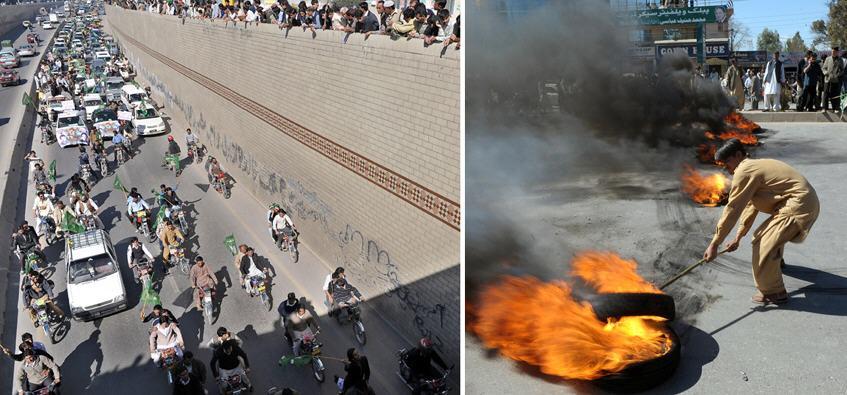
Democracy is a delicate system of governance that can be sustained only if the political class fully subscribes to and implements its basic norms in letter and spirit. The use of violence in the name of exercising the democratic right to protest shows a lack of understanding of the spirit of democracy.

It was disappointing to watch the PMLN leadership discard the democratic framework and call upon its workers to take to the streets to voice their anger against the Supreme Court judgement that disqualified the Sharif brothers from holding public office. Perhaps the PMLN leaders think that democracy is relevant only to the extent that it facilitates the achievement of their partisan political agenda.

Political agitation and violence in the last week has perturbed even those most optimistic about the future of democracy in Pakistan. The main concern is whether this is the beginning of an unrestrained power struggle between the two major political parties that would unravel the democratic process and shift the political initiative to the military.

What are the implications of street agitation for the capacity of the government to cope with religious extremism and militancy?

Pakistan’s current transition to democracy cannot succeed without active cooperation between the PPP and the PMLN within the constitutional framework. The cordiality manifested by the leaders of these parties in the immediate aftermath of the 2008 general elections engendered the hope that both have learnt from their experiences and would not engage in a free-for-all struggle against each other.

The optimism generated by their cooperation led many to challenge those who projected a doomsday scenario for Pakistan or argued that Pakistan lacked the capacity to function within a democratic framework.

In the 1990s, the PPP and the PMLN engaged in an all out confrontation. During 1988-90, the federal government was led by PPP leader Benazir Bhutto and the Punjab provincial government was led by Nawaz Sharif. These governments declared political war and adopted various measures to destabilise each other. It was a most unfortunate confrontation that weakened civilian institutions and processes. The bitter legacy of these years overshadowed their bilateral interaction until General Pervez Musharraf knocked both leaders out of the political process in October 1999.

Now, in 2009, the PPP and the PMLN have again adopted confrontational posture. The intensity of the PMLN’s anger against the judgement of the Supreme Court has surprised most political observers. Instead of building pressure gradually, the tempo of response was raised to the highest pitch in one go.

Nawaz Sharif’s press conference on February 25 and a public address in Sheikhupura on February 26 reflected his defiant mood and determination to take on the PPP-led federal government in the streets. He minced no words in accusing President Asif Ali Zardari of securing his disqualification from the Supreme Court, which Sharif refused to acknowledge as a legitimate court. He also talked about Zardari’s alleged moneymaking practices while Benazir Bhutto was prime minister. Nawaz Sharif’s second government — 1997-1999 — instituted corruption cases against Zardari. However, no charge was substantiated in court during the next ten years. However, Nawaz Sharif played up these charges in his press conference.

It was an unusual move by Nawaz Sharif to call upon the people to take to the streets to challenge the PPP-led federal government that he held responsible for hatching a conspiracy against him and Shehbaz Sharif. He also advised civil servants not to obey the orders of the government, and endeavoured to isolate Zardari by arguing that he did not blame the PPP for the disqualification. It was Zardari’s doing, he argued.

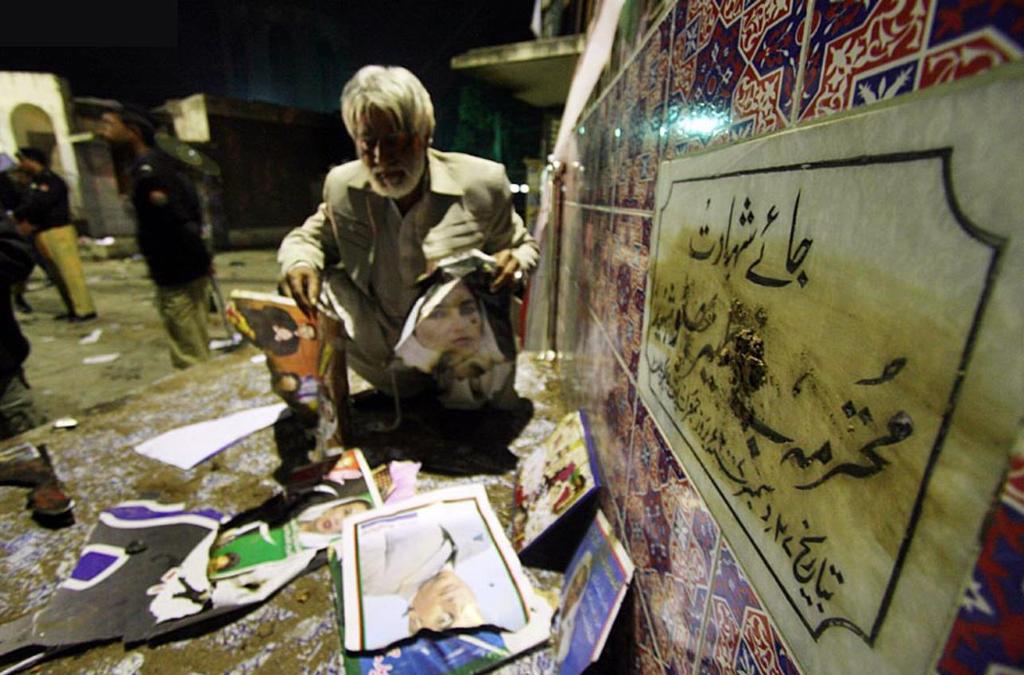
PMLN activists came out in the streets mainly in the Punjab in a defiant mood and targeted government property, PPP posters and Benazir Bhutto’s memorial in Rawalpindi, where she was assassinated on December 27, 2007. Some of the protest marches that resulted in violence were led by PMLN parliamentarians.

The agitation is limited mainly to PMLN activists and its base in Punjab, especially in the cities that elected PMLN parliamentarians in 2008. It is weak in other provinces where the PMLN has a weak political standing.

However, if the agitation persists at the current level of intensity for another week or so, it is expected to attract ordinary people. It can also spread to other provinces and become nationwide. If agitation does not establish itself in other provinces, it will turn into a confrontation between the PPP and Punjab, which may have negative ramifications for Punjab’s relations with other provinces.

The PMLN can strengthen its position by joining the lawyers’ Long March and sit-in, which will have some political parties and societal groups in its fold. This depends on the tempo of the agitation over the next twelve days.

Another dimension of the PMLN agitation relates to the imposition of Governor’s Rule in Punjab for two months after Chief Minister Shehbaz Sharif was disqualified.

The available evidence suggests that neither the PMLN nor the PPP has the required number in the provincial assembly to elect a new chief minister. The imposition of Governor’s Rule gives enough time to both parties to woo the PMLQ for support. If the PPP musters enough members it can form its government; and Governor’s Rule will come to an end quickly. If the PPP cannot muster enough support, however, Governor’s Rule may continue for a longer period. The efforts by the Speaker of the Punjab Assembly (who belongs to the PMLN) to summon the assembly session have no legal basis. However, it is advisable to bring an end to Governor’s Rule and let the Punjab Assembly elect its leader. This will ease tensions in Punjab.

The PPP-led federal government must also share the blame for the current predicament. Its performance in the socio-economic domain has been poor and has alienated the people. It also built pressure on the Punjab government though the governor who periodically threatened to remove the provincial government. This convinced Nawaz Sharif and other PMLN leaders that President Zardari wanted to remove the Punjab government and neutralise the PMLN. Therefore, when the Supreme Court disqualified the Sharif Brothers, Nawaz Sharif was quick to blame President Zardari for the present crisis.

Time is fast running out for the PPP and the PMLN. The PMLN strategy of using its political clout in the Punjab to paralyse the federal government through violent protest will cause irreparable damage to democracy. The strategy of street agitation is expected to accentuate Pakistan’s internal and external security problems and undermine economic recovery. This strategy may create a situation where democracy suffers a major setback and both the PPP and the PMLN lose.

Moderation, tolerance and accommodation can help overcome the present crisis. Both sides need to stand-down from their rigid perspectives. The longer they confront each other in the streets, the harder it will be to find a peaceful and mutually acceptable solution. (Daily Times)

Dr Hasan-Askari Rizvi is a political and defence analyst

....

145 held for rioting, torching cars

Staff Report

ISLAMABAD: The capital police on Saturday arrested 145 people for rioting and damaging and torching government and private vehicles during a demonstration on Islamabad Expressway to protest the disqualification of PML-N leaders Nawaz Sharif and Shahbaz Sharif by the Supreme Court.

Hundreds of people from Shahzad Town, Koral, Sihala and other villages bordering Islamabad Expressway blocked the road for several hours on Thursday and Friday to protest the disqualification of Sharif brothers.

A police official said that the protesters threw stones and broke the windowpanes of a number of vehicles. They also burnt tyres and torched seven vehicles and police pickets.

He said cases were registered against the rioters under Section 395, 341, 353, 188, 186, 427, 137, 148, and 7ATA of Pakistan Penal Code.

Meanwhile, Inspector General of Police (IGP) Syed Qalb-e-Abbas, Senior Superintendent of Police (SSP) Ahmad Latif and other senior officers held a meeting with the representatives of the villagers and assured them that those found innocent would be released against sureties but those found guilty would be penalized. He warned that no one would be allowed to take the law into their own hands. The IGP also ordered deployment of police along the expressway.

Five suspected rioters freed for want of evidence: Anti-Terrorism Court (ATC) No-II on Saturday discharged five suspected rioters, including two juveniles, after Shahzad Town Police, Islamabad, failed to provide incriminating evidence against them.

The police produced Muhammad Arif, Ghulam Mustafa, Muhammad Waseem, Muhammad Tufail and Badshah Rehman before the judge, Sakhi Muhammad Jan. Investigation officer (IO) Gulzar Ahmed informed the court that according to the information gleaned from 14 suspected rioters, who were already in police custody on a four-day physical remand, the police arrested those five persons for allegedly torching a fire engine on Islamabad Expressway on Feb 26 during a protest against the Supreme Court verdict in PML-N leaders Muhammad Nawaz Sharif and Shahbaz Sharif case.

He said the accused also damaged public and private property and created law and order situation by blocking the main roads and pelting stones at the police. He claimed that the suspected rioters had also snatched a pistol from Sub-Inspector (SI) Muhammad Gulfaraz and sought their 14-day judicial remand.

Raising objections, the judge said that the police neither proceed against the two juveniles under the Juvenile Justice System Ordinance nor they sought the statements of eyewitnesses against them.

He said the court could grant judicial remand only when the police thoroughly investigate a case. (Daily Times)

Also read:

Long March June 2008: A recap, some pictures and comments

Nawaz Sharif, the terrorist attack on the Sri Lankan cricket team, and the politics of confrontation

Is Nawaz Sharif paving the road to martial law in Pakistan?


Read more...

Friday, 27 February 2009

Cruelty with dog in Peshawar. A specimen of moral character of PML-N


This site has moved to http://criticalppp.com, click this link if you are not redirected
Read more...

PPP protests against burning of Benazir, Zardari portraits


...


http://www.altmuslim.com/ee_images/demo_karachi.jpg
PPP protests against burning of Benazir, Zardari portraits
Friday, February 27, 2009
By By our correspondent
HYDERABAD: Activists of the ruling Pakistan Peopleís Party (PPP) on Thursday took out rallies and staged demonstrations against the burning and disgracing of portraits of Benazir Bhutto and Asif Ali Zardari in the Punjab cities.

Activists of the Sindh Peopleís Youth took out a rally, led by divisional president Ahsan Abro and others, with activists chanting slogans against the workers of the PML-N.

Another protest rally was brought to the Hyderabad Press Club, which was led by provincial minister Zahid Bhurguri, Amanullah Siyal, Aftab Khanzada and others. The protesters were carrying placards inscribed with slogans against the PML-N workers and demanding President Zardari to take action against those involved in damaging the portraits of the slain chairperson.

The protesters also set on fire the effigy of PML-N Quaid Nawaz Sharif. They said protesting against the decision of the apex court was the right of the PML-N but damaging the portraits of Benazir Bhutto and Asif Zardari had hurt the sentiments of millions of supporters of the PPP.

Large contingents of police and Rangers were deployed to prevent violence as the PML-N workers were staging a demonstration at the press club when the PPP workers arrived.

Our Khairpur correspondent adds: The students wing of the PPP protested against the destruction of the monument of Shaheed Benazir Bhutto in Rawalpindi by the PML-N workers.

The students of the Shah Abdul Latif University staged a demonstration and alleged that the PML-N was instigating the PPP workers but said the PPP was a party of democratic personalities. They said the Supreme Court had announced the disqualification decision on merit.

However, they said, the PML-N was accusing President Asif Ali Zardari for the verdict. The tone of the Sharif brothers towards the president of Pakistan was intolerable, they said. They said if the Sharifs did not change their tone of criticism, then they will react.

The PPP women wing protested against the disfiguring of portraits of Shaheed Benazir Bhutto. The women workers said the PPPP will not tolerate such acts of the PML-N.

Our Naushahro Feroze correspondent adds: Hundreds of activists of the PPP staged a protest and a sit-in outside the local press club against the disfiguring of portraits of Shaheed Benazir Bhutto in Rawalpindi and other cities of the Punjab.

The rally started from the PPP district office and went round the entire city before terminating at the local press club. The rally was led by Sadruddin Ujan, president PPP Lawyers Forum, Ubaidullah Rajpar, Shahnaz Ansar, district president PPP Women Wing, Bakhtawar Vistro and others.

The protesters raised slogans against the PML-N and the Chaudhry brothers. Speaking to a large gathering, the local leaders said Benazir Bhutto had sacrificed her life for democracy in Pakistan and its masses. (The News)

PML-N workers attack PPP office, Benazir memorial

Staff Report

RAWALPINDI: Dozens of PML-N workers on Thursday pelted a PPP office and a memorial of Benazir Bhutto on Liaquat Road with stones during a demonstration against the disqualification of their leaders Nawaz Sharif and Shahbaz Sharif from contesting election. They also destroyed PPP hoardings and banners carrying pictures of Benazir Bhutto in the vicinity. There followed exchange of hot words and scuffle between the PML-N and the PPP workers. However, the police’s intervention led the mob’s peaceful dispersal. No damage to public life was reported. The PPP workers later turned up in front of the memorial and stayed put till night. They erected a large portrait of Benazir Bhutto at the site, lit candles and laid floral wreath there. PPP Central Executive Committee’s member Sultan Mehmood Qazi, PPP, Rawalpindi City, President Aamir Fida Paracha, Nargas Fayyaz Malik and other leaders visited the place. They announced an FIR would be lodged with police against the Benazir’s memorial and PPP office attackers.

FIR registered: According to APP, on the directive of higher authorities, the City Police Station on Thursday registered an FIR against 60 unidentified Pakistan Muslim League Nawaz (PML-N) workers allegedly involved in burning of Benazir Bhutto Shaheed’s monument at Liaquat Bagh.

PPP workers protest: A few dozen PPP workers on Thursday protested at Zero Point against the PML-N activists’ attack on a memorial of Benazir Bhutto outside Liaquat Bagh in Rawalpindi. They said the memorial attack was an attack on democracy. They said the PPP believed in peace and democratic process. (Daily Times)


Read more...

Hangu: Taliban attack a school van killing 3 Shia children, kidnapping 6 Shia children

Gunmen ambush Pakistan school minibus, 3 Shia students killed, 6 taken captive


Jang

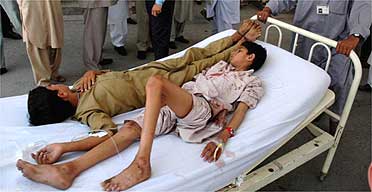
Children injured in a bombing at the Bari Imam shrine in Islamabad

Shia children injured in a previous bombing at the Bari Imam shrine in Islamabad. Photograph: AP


PESHAWAR, Pakistan (AFP) — Gunmen on Friday ambushed a minibus carrying children to school in remote northwest Pakistan, killing the driver, wounding two children and apparently kidnapping six others, police said.

The bus was ambushed outside the town of Hangu in the country's troubled North West Frontier Province, which borders Afghanistan and is plagued by sectarian violence as well as Taliban and Al-Qaeda-linked militants.

"Unknown gunmen fired at the school van carrying Shiite students. The driver was killed, two children were injured, while six appear to have been kidnapped by the attackers," local police station chief Saeed Khan told AFP.

"Police are searching for the attackers in the nearby mountains," he added, saying he had no further details about the missing students.

Hangu, which has been a flashpoint for sectarian violence in the past, is located about 175 kilometres (110 miles) west of the capital Islamabad.

Shiite and Sunni Muslim groups signed a peace accord in Hangu last month after days of sectarian clashes in which at least nine people were killed.

Shiites account for about 20 percent of Pakistan's 160-million-strong, Sunni-majority population.

The groups usually coexist peacefully but outbreaks of sectarian violence have claimed more than 4,000 lives across Pakistan since the late 1980s.


AFP 27 Feb 2009
http://blog.acumenfund.org/wp-content/uploads/2007/11/Pakistan%20-%20school%20children1.jpg

Meanwhile, gunmen opened fire on a school van near the northwestern town of Hangu on Friday, killing its driver and injuring three students before abducting six other children, police officer Arshad Khan said. Those abducted were between the ages of nine and 18, he said.

Pakistan's northwest is a violent, lawless region, where criminal gangs and Islamist militants take refuge.

Associated Press writer Hussain Afzal contributed to this report from Parachinar.

http://www.google.com/hostednews/ap/article/ALeqM5hkiMxbHNH0BqgpWA2ZG6VD6wVTmAD96JO5900

....

Driver killed in Hangu school van firing

Updated at: 0955 PST, Friday, February 27, 2009 HANGU: A driver was killed and two students sustained injuries when unknown persons opened fire at a school van in Hangu. The attackers also kidnapped six students.

Police sources said a school van travelling from Hangu to Kohat when unidentified persons opened fire at van near Merobik Banda area killing driver Asghar Ali on the spot and injuring two students Zafar and Farhan.

Eyewitnesses said the attackers also abducted six students. The body and injured were shifted to Civil Hospital. Heavy police contingents launched search operation for the recovery of the children.

http://www.thenews.com.pk/updates.asp?id=69844

...

12 men abducted in Hangu

HANGU: Unidentified armed men on Monday opened fire on a Peshawar-bound vehicle before abducting 12 of its passengers near Kurram Agency’s border with Hangu district, officials said. An official told Daily Times that the vehicle was on its way to Peshawar when the armed men intercepted it in Tootkas area and abducted 12 of its 15 passengers.Hangu District Police Officer Sajjad Khan confirmed the incident. He added that even though the Khasadar force was deployed in the area, the Taliban were openly operating there. saboor khan (Daily Times)

http://www.dailytimes.com.pk/default.asp?page=2009\02\24\story_24-2-2009_pg7_28

....

Kurram Agency Toori abducted persons couldn’t be recovered

The News, 27 Feb

PESHAWAR: Even after lapse of five days twelve abducted persons of Toori tribesmen could not be recovered.

Sources said that that some armed persons had abducted twelve persons of Toori tribesmen on way from Kuram Agency to Peshawar from Tootkas area and one trying to escape was shot dead. Despite lapse of five days, the kidnapped persons could not be recovered.

Toori tribesmen have demanded immediate release of the abductees and ensuring safe travel on the Peshawar-Kurram main highway.

....

سکول بس فائرنگ میں ڈرائیور ہلاک


ہنگو میں کشیدگی: فائل فوٹو
ضلع ہنگو سُنی شیعہ فسادت کے لحاظ سے انتہائی حساس ہے
صوبہ سرحد کے ضلع ہنگو میں پولیس کا کہنا ہے کہ نامعلوم مسلح افراد نے سکول کے بچوں کی ایک گاڑی پر فائرنگ کی ہے جس کے نتیجہ میں گاڑی کے ڈرائیور ہلاک جبکہ دو بچے زخمی ہوگئے ہیں۔زخمی بچوں کو ہنگو کے سول ہسپتال میں داخل کرا دیاگیا ہے۔

پولیس کے ایک اہلکار عمر حیات نے بی بی سی کو بتایا کہ جمعہ کو ہنگو شہر سے چار کلومیٹر دور جنوب کی جانب بہادر بانڈہ کے علاقے میروباک میں نامعلوم مسلح افراد نے سکول کے بچوں کی ایک گاڑی پر فائرنگ کی جس کے نتیجہ میں گاڑی کے ڈرئیور ہلاک جبکہ دو بچے زخمی ہوگئے ہیں۔

پولیس اہلکار کا کہنا تھا کہ اس واقعہ کے بعد ہنگو سے پولیس کی بھاری نفری علاقے میں پہنچ گئی اور مختلف راستوں میں ناکے لگا کر تلاشی شروع کر دی۔لیکن تاحال کسی قسم کی گرفتاری عمل میں نہیں آئی ہے۔انہوں نے کہا کہ فائرنگ کرنے والے مسلح لوگ پیدل تھے اور فائرنگ کے بعد فرار ہوگئے ہیں۔

علاقے میں موجود ایک مقامی صحافی نے بی بی سی کو بتایا کہ جمعہ کی صبح آٹھ بجے مسلح افراد نے سکول کے قریب ایک سپیڈ بریکر کے اوپر گاڑی پر فائرنگ کی جس کے نتیجہ میں گاڑی کے ڈرائیور اصغر خان ہلاک جبکہ دو بچے ظفر علی اور فرحان علی زخمی ہوگئے۔انہوں نے کہا کہ بچوں کا تعلق اہل تشیع سے بتایا جاتا ہے جو ایک گاؤں سے سکول جا رہے تھے۔انہوں نے کہا کہ علاقے میں سخت کشیدگی پائی جاتی ہے۔اور اس واقعہ کے بعد تمام راستے غیر اعلانیہ طور پر بند کر دیےگئے ہیں۔

http://www.bbc.co.uk/urdu/pakistan/story/2009/02/090227_schoolbus_attacked_as.shtml

SOS from Pakistan - Save Pakistani Shias Petition


Read more...

Wednesday, 25 February 2009

How then can the Taliban be defeated? by Zafar Hilaly

Taking on the Taliban
Wednesday, February 25, 2009
Zafar Hilaly

The first battle of a war is psychologically an important one. Pakistan has lost not only the first battle, that for the control of Waziristan, but also the second, for Swat. Agreements cobbled together following both battles have attempted to mask what is a patent fact: the defeat of the army at the hands of the Taliban and the passing of these areas and their inhabitants into the Taliban fold. Further setbacks are likely unless the instruments of war are forged again and a leadership emerges that has the wisdom and will to confront the challenge.

But all is not lost. As they move further east, the Taliban will meet greater resistance from the populace, especially in the cities, where they are loathed. The Wahhabi brand of Islam that the Taliban espouse has never managed to gain traction beyond the deserts of Saudi Arabia, not even among the Arab Diaspora. Had Zia-ul-Haq not embraced it Pakistan too would have been spared. In the 30-or-so million Shias of Pakistan the Taliban face a determined enemy, as they do in Punjab and Sindh and beyond where Sufi Islam predominates. Hence, the danger that the murderous and fanatical cadres of the Taliban pose is less to the creed of the masses and more to the political and economic stability of the country and the institutions of the state.

Had the Taliban been willing to participate in the political life of the country by holding public meetings and jalsas, instead of having recourse to Qurbani Chowks to convey their bloody message or to project their agenda through the media, some sort of compromise might have been possible. (Although that too is doubtful, considering that even the moderates of their ilk, like Sufi Mohammed, believe that democracy is a pernicious Western import and balloting to choose leaders un-Islamic.) Instead, the Taliban are emphatic, as their actions over the course of six years proved in Afghanistan that only their concepts of governance, law, religion, justice and politics will prevail. Happily, their determination to inflict their credo on the country is no fiercer than that of the majority of Pakistanis to resist as the Swatis proved by their brave resistance before they were sold out by the ANP, whose leader remains in hiding in Islamabad. Fortunately, the Taliban by their actions have left few people in any doubt that Pakistan will not be rid of the presence of foreign forces, be able to attract foreign investment, become a hub for regional trade, avoid isolation, ridicule and contempt, and develop, unless they are repulsed. And, likewise, their terrorist ghettos recaptured and cleansed.

The Taliban wage war much as they guard their peace through acts of terror, rape, executions and murder like some other insurgencies such as the ongoing one in Somalia and that of the erstwhile Mau Mau in Kenya. They seek to engender hate and fear amongst the populace so that the government appears helpless, unable to afford protection to the citizenry and hence undeserving of loyalty or support. Specifically targeted are those essential to the functioning of an organised political society such as the police, teachers, health workers, district officials. Having driven away or killed them they create an alternative administration to which the hapless population turn for their needs. The insurgency meanwhile continues until a weak government capitulates or sues for peace which is what happened in Swat and FATA.

How then can the Taliban be defeated?

There is no prescription for certain success. Genocide or the relocation of the entire population, a tactic used by Stalin against the Chechens eight decades ago is unthinkable, for obvious reasons. The "nation building" advocated by counterinsurgency experts is a panacea presently in vogue, but given Pakistan's dismal record of nation building in peaceful areas, to say nothing of war zones, it is a tall order. "Killing every insurgent" is also not the answer because it is normally accompanied by the excessive use of force resulting in collateral damage which generates resentment, gives rise to cries for revenge and acts as a recruiting spur for fresh Taliban inductees. What the Americans term as "legitimation"--i.e., the creation of an authority comprising persons acceptable to both sides--is a more promising idea. As the Taliban refuse to recognise any authority but their own as legitimate and regard Pakistanis as foreigners, it is a non-starter. What therefore remains is to confront the Taliban politically and militarily, and to do so with gusto, imagination and skill, in other words, to fight fiercely when necessary and negotiate purposefully when so required in the hope that eventually reason and reality will win out.

Pakistan is doing neither at present. The fighting effort thus far has at best been half-hearted; and capitulation aptly depicts the current negotiation strategy. Sentiments such as "we cannot fight our own people" are excuses and explanations rather than reasons for the lack of determination in prosecuting the war. And irresolution is responsible for the haste to sue for peace. Surrender of the Swat type will no doubt bring peace. History shows that defeat and surrender do indeed usher in peace but that of the victor not the vanquished, which Pakistan cannot afford. We would do well to remember that when the Taliban conquered Afghanistan in 1996 we too celebrated the peace that ensued. But, as Afghans will confirm, the peace that the Taliban brought was that of the grave. And it is to the grave that our dreams of a progressive, tolerant Pakistan now seem consigned with each Taliban success. The government still has the time to prove its mettle; but if it fails to do so it is more than likely that the populace will take matters into their own hands to ward off the Taliban scourge. There are signs that this dreadful prospect is already happening in at least one of our major cities. The resulting civil war could be catastrophic for Pakistan's well being. (The News)


The writer is a former ambassador. Email: charles123it@hotmail.com

.....

Scot-free in Swat?
Scot-free in Swat?
Wednesday, February 25, 2009
Sufi Muhammad Khan has announced a ten-point peace plan for Swat, under which militants would not display arms, troops would withdraw from some key positions and schools would re-open. We have been told repeatedly that the truce and the agreement on the imposition of Sharia law mark big steps forward. But the whole issue leaves open questions that demand answers. There is nothing in the peace plan about punishment for those who committed all kinds of atrocities for months in Swat. Nor is there any mention of amnesty.

The extent of the depravity of these people is almost unparalleled. Dead bodies were dug out from graves and hung in public; women accused of being prostitutes were made to dance in streets before being killed; anyone who challenged the militants, including the elderly, was ridiculed, beaten and in some cases driven out of the valley.

Is there to be no accountability in Swat? Will those who carried out these atrocities walk away scot-free? Will the rapists of women walk gaily past their families in the streets of Mingora? Will the murderers of young men scoff at the parents of victims? The message such a situation would send out could have grave repercussions. These must be considered by the authorities. Do they really wish to give confidence to criminals that they have impunity for all kinds of horrible offences?

We have been told these people demanded Sharia. Many accounts are emerging to suggest nothing could be further from the truth. After all, just over a year ago, in the election of 2008, the people of Swat had voted out religious parties in favour of the ANP. They would hardly have done so had they wished for Sharia rule. Like their counterparts everywhere in the country, the people of Swat seek order in their lives and a just, efficient judicial system. This continues to be denied to them. Those who should be punished for the most grotesque acts of inhumanity have instead reaped rewards under the peace deal. They have made it clear they intend to stay in command in Swat, dictating terms under which girls can attend school. The omens are not good. The purpose of punishment, under the law, is of course to deter further crime. This deterrence has not been put in place in Swat and in the future we can expect the adverse consequences of this to be felt across a valley stained with unwashed blood. (The News, Editorial)

............
Malakand agreement: necessary but insufficient

..... there are three objectives the government will seek to achieve to actually demonstrate that the Malakand peace agreement has actually 'delivered.' One to not allow the TTP-Swat to implement its own interpretation of Shariah, within and beyond the public space in Swat. Two, the government should debilitate organizationally and resource-wise, through establishment of check-posts, terror and public trials etc of organized and armed militias in Swat and beyond. Three, to prevent the TTP from functioning as a deadly and armed militia which pursues the objective of forcing its own version of Shariah through terror.

The only viable effort to re-establish the writ of the state requires that the government does not compromise on these three objectives. The Malakand agreement is proving to be a first positive step, but clearly an insufficient one. (Nasim Zehra, The News)


Read more...

Tuesday, 24 February 2009

Militants in Swat: Can we negotiate with them from a position of weakness?

No, a thousand times no!

Tuesday, 24 Feb, 2009


Taliban militants holds several  men prisoner in Swat in this file photo. - Reuters
Taliban militants holds several men prisoner in Swat in this file photo. - Reuters


YOU never negotiate from a position of weakness: not in business; not in banking; not while making real estate deals; and certainly not when dealing with cold-blooded killers who think nothing of slaughtering defenceless old men and women and hanging their carcasses from electric poles in the main squares of the towns and villages which that night face their wrath.

The government of the Frontier, Pakhtunkhwa, call it what you will; and the Government of Pakistan, including their agencies both covert and overt, have cravenly given in to the murderous thugs who have brought so much pain and misery to Swat; who have made its once pristine rivers run red with innocent blood. They have given the mullah the proverbial inch; as said in this same space last week, just wait until he demands a thousand miles, and more.

Those that write that the situation was so bad in Swat that there was no other way but to make a deal with Maulvi Sufi Mohammad, who would in turn make a deal with his son-in-law Mullah Fazlullah (aka Mullah Radio), and that the crowds that came onto the roads to welcome Sufi’s caravan testified to the fact that the deal was a good thing, should think again. For the deal is unravelling before our very eyes.

On the very day after the so-called deal was signed young Musa Khankhel, a journalist, was brutally shot in broad daylight; three days later the newly appointed DCO of Swat was kidnapped along with his half-a-dozen guards and some hours later exchanged for two Taliban with a third release promised impendingly. Already, the Waziristan Taliban have formed a ‘Shura Ittehadul Mujahideen’, to wage jihad “in an organised manner”.

The Taliban commanders who have united under one banner are Hafiz Gul Bahadur of North Waziristan; Maulvi Nazir of Wana, and our old friend Baitullah Mehsud of South Waziristan. According to news from Miranshah the three have declared President Barack Obama, Hamid Karzai and Asif Zardari ‘infidels’. An aside: if this is not a wake-up call, Mr President, what will be, for you to make up with the other big political party, the PML-N, and face the country’s enemies, which includes the establishment, together?

This is not all. In a clear, and alarming, sign that it is in a state of utter denial, the agency which was given the responsibility for combating the now victorious insurgents, and which failed all ends up to do its duty, is once more flexing its muscles in another worthless show of fake bravado. The ISPR has the gall to say that the “military option was still open if the Swat peace deal failed”.

Nor is this all. It has the brass to say that it needs “modern equipment” which would not only “enhance the efficiency of the armed forces [read Pakistan Army!], but also help reduce collateral damage”. What absolute poppycock is this, sirs? Just WHAT modern equipment are you asking for? More artillery pieces and helicopter gunships that were your favourite weapons while you were making feeble attempts to ‘fight’ the Taliban? No artillery gun or helicopter gunship that will reduce collateral damage has yet been invented.

The only way to limit collateral damage is when you physically ‘contact’ the enemy at close quarters. Not once has this tactic been used by the army in Swat, or anywhere else in the Frontier.

The extent of the failure of the Pakistan state and its great army is frighteningly alarming. The ineptness shown defies description and the refusal to even now accept its shortcomings and improve is extremely disquieting, nay distressing.

Swat was/is not the only ‘theatre’ in which the army has shown it is unequal to the task. Please consider the daily attacks on the main supply route we have offered to the Americans/Nato through the Khyber Pass. Think back to the photographs of the bridge most recently blown up, in place of which army engineers quickly put up a temporary structure capable of handling the supply-carrying vehicles.

Clearly seen in the background and barely a few hundred feet away is a picket post: little fort-like buildings for accommodations for up to a platoon of soldiers that dot the Khyber Pass, indeed all the passes leading into the Frontier and Balochistan. It was once said that these pickets were so located that each of them either had a water source of its own or was near enough one from where donkeys or mules could carry the water up to it — therefore the term ‘mule-tank’. It was said too that using heliograms, messages could be relayed for hundreds of miles, from picket to picket, warning of impending danger.

I digress. The question to ask is if the picket seen behind the blown-up bridge was manned; and if it was not, why not? WHY this lackadaisical approach to everything, even tried and tested standard operating procedures? It is galling in the extreme to me as an old soldier when I see that the most basic tactics of operating in an insurrectional situation are not employed.

It angers me no end when I hear people who should know nothing of our country and its people’s ways, lecture us that our troops, particularly the Frontier Corps, don’t know how to fight an insurrection. If the Tochi Scouts don’t know tribal warfare who does, for God’s sake? If the Kurram Militia doesn’t know, who does? US Navy Seals?

If only our brass-hats gave more time to training their commands than they give to running housing colonies and factories and bakeries and tikka joints and tarting up their cantonments.

This deal should never have been made. It is the thin end of the wedge. Punjab is already under attack: Mianwali has had two police posts blown up and that poor Polish geologist who was then duly beheaded, was taken from Attock. We will rue the day. And now for the harsh words spoken by an increasingly distressed Nawaz Sharif.

Asif Zardari should even now do the right thing and, in keeping with the Charter of Democracy and his own promises, immediately ask his party to move the 18th Amendment removing all the undemocratic changes to our constitution made by the Commando. Who, by the way, has some gall too, smoking his fat Cohiba on television and lecturing us angrily. The man should be held to account for his many crimes, chief among which is the near destruction of the Pakistan Army.

Asif should also know that having Nawaz and Shahbaz Sharif disqualified through the courts will only make him look worse, and make them ever more popular.

P.S. The same crowds would have come out on to Swat’s roads had the Frontier government moved itself and all its minions to Saidu Sharif to govern from there. What good now to distribute 30,000 rifles among the villagers?! Poppycock again. (Dawn)


...


Militants in Swat

Tuesday, 24 Feb, 2009


TTP is looking to carve out a place for itself in the future set-up from which it can ensure its relevance and safety.—AP

The kidnapping of the Swat district coordination officer by the Tehrik-i-Taliban Pakistan is an indication of just how rocky the road to peace in the area is. Muslim Khan, the TTP’s spokesman in Swat, initially denied the DCO had been taken hostage but later admitted to having swapped the official and his bodyguards for militants in state custody.

This was not the only transgression by the TTP in recent days: several locals belonging to the ANP have also been kidnapped from Mingora. Given that Maulana Fazlullah’s militants have declared a 10-day ceasefire and are engaged in peace talks with Sufi Mohammad, the kidnappings suggest the militants remain conflicted about peace in the region.

At the very least, it can be surmised that Maulana Fazlullah has been wrong-footed by the government’s pledge to implement Sharia in the region more effectively. The TTP commander has acknowledged that the new regulation is in line with what the militants have been demanding, but what he can’t say is that their agenda goes beyond simply introducing a better legal system, and includes territorial control.

Having camouflaged their fight against the state as a quest for justice, now that the state has acted to strip away the militants’ fig leaf they are resorting to accusing the state of artifice and deceit. ‘The government violated the (ceasefire) agreement by arresting our men in Peshawar and killing one in Dir. Therefore, we had to do this,’ Muslim Khan has said, justifying the kidnapping of the DCO.

In the days ahead, the TTP may well keep upping its demands and imposing new conditions for peace that the state will find difficult to accept. Top of that list would be the withdrawal of all troops from Swat and the release of all militants in state custody.

From the TTP’s point of view there is an additional problem: ensuring their personal safety once normality returns to Swat. After beheading and killing and maiming with frightening savagery for the past two years, the militants have made many enemies among the locals; remaining there in peace time will almost certainly invite revenge attacks.

So if this is really the endgame of militancy in Swat, the TTP is looking to carve out a place for itself in the future set-up from which it can ensure its relevance and safety. Hence the mixed signals of talking peace while reminding everyone of their capacity for violence.

However, the state must remain firm: legitimate demands for a better justice system should be met but control of the area should be taken back and the terror infrastructure dismantled. Sufi Mohammad’s call yesterday for the militants to end their violence, not interfere in the administration of Swat and accept a phased introduction of legal changes is the way ahead. It remains to be seen if the TTP will acquiesce. (Dawn)


Read more...

Saturday, 21 February 2009

Rubina Saigol: Some myths vs facts about fundamentalism in Pakistan

Myths vs facts about fundamentalism
Part I

Saturday, February 21, 2009
by Rubina Saigol

Religious fundamentalist movements of all shades and hues have gripped large parts of the world and have posed a threat to the prevalent political, economic and social systems. While "fundamentalism" is a term that is used in varying contexts to denote differing realities, its origins lie in 1920s America where it was used to refer to puritanical evangelist movements. The term is sometimes used to deny history by suggesting a return to some imagined early purity or "golden period" that supposedly existed in a bygone era. Fundamentalisms have manifested themselves in virtually all kinds of cultures and societies, Christian, Muslim, Hindu or Jewish. Like anything that is not much explored or understood, fundamentalisms have given rise to certain myths that tend to seduce public imagination. The purpose of this article is to try and dismantle eight of the most common myths about Muslim fundamentalism and extremism in our part of the world by juxtaposing such myths against observable facts.

Myth: Fundamentalism is the result of mental and moral backwardness, attitudes, religion and beliefs.

Fact: Fundamentalism is about geopolitics, involving power, money, and control over territory, people and resources. If we examine the actions and pronouncements of the Tehreek-e-Taliban Pakistan or the Swat Taliban – actions that include beheading, rape, murder, public display of dead bodies, public executions, suicide bombings killing scores of innocent people – it is not hard to discern that such actions have little to do with religion or a moral order. Through brutal means and barbaric methods, the Taliban have gained control over territory in Swat and Waziristan. They have forced the government to accept their power over people and resources through the Nizam-e-Adl agreement reached between the Tehreek-e-Nifaz-e-Shariat-e-Muhammdi's Maulana Sufi Muhammad and the provincial government of the ANP. Apart from drug trafficking, the money is raised from donations received from Saudi Arabia and other countries and goes to pay Rs15,000-20,000 per month to about ten thousand militant followers of Maulana Fazlullah.

Myth: Fundamentalism in Pakistan can be traced back to the era of General Zia.

Fact: Fundamentalism can be traced much further back to Imam Hanbal, Al-Ashari, Imam Ghazali (he influenced writers like Ashraf Thanvi who wrote Bahishti Zewar), Abdul Wahhab and the Darul Uloom, Deoband.

Contrary to the common perception that General Zia's Islamisation laid the foundation of extremist and fundamentalist strands of religion, the seeds were sown much earlier. Reactionary Islamic thought goes back centuries, to the time when rationalism first appeared in Muslim lands. The Asharite revolt against the Mu'tazila rationalist thought located in Greek philosophy, Imam Ghazali's total repudiation of Reason as a source of truth apart from Revelation, and his denunciation of the great scientists, medicine men, mathematicians and thinkers like Al-Kindi, Al-Razi, Ibn-e-Rushd and Ibn-e-Sina who introduced enlightenment within the Muslim world between the 8th and 11th centuries, are reflections of early fundamentalist reactions. In the heyday of Baghdad, the genius of these thinkers was much admired and they were highly respected during the time of Khalifa Al-Mamun. However, later Muslim rulers like Al-Mutawakkil punished them severely for injecting innovative thought in the Muslim world. It was political power that chose to ally itself with the traditionalist and conservative ulema who crushed innovative and scientific thinking in favour of obscurantism.

The 18th century Arabian thinker Abdul Wahhab, who was also protected by and aligned with the House of Saud and political power, rejected all later accretions in Islamic thought and insisted on returning to purported versions of pure Islam during its early years. The bland Wahhabi version of religion that he propounded was exported to the subcontinent through Saudi Arabian funding of religious movements in Pakistan. The much more syncretic, tolerant and non-violent versions of Sufi Islam were rejected by a highly intolerant version which came though Saudi imperialism. In the context of the subcontinent, fundamentalist thought was furthered by Maulana Maudoodi, who used his influence in the passage of the Objectives Resolution in 1949 which laid the foundation of a potentially "theocratic" state. General Zia made the Objectives Resolution a substantive part of the Constitution in 1985 through the insertion of Article 2-A. General Zia thus merely accelerated a process begun by his predecessors.

Myth: Only religious parties and sectarian outfits support or forge fundamentalism.

Fact: Fundamentalism has been supported or encouraged as much by the so-called secular elite as by religious parties to maintain class power and privilege.

The common assumption that only parties like the JUI-F, JUI-S and Jamaat-e-Islami and sectarian and Jehadi outfits like Sipah-e-Sahaba-e-Pakistan or Harkat-ul-Mujahideen support fundamentalism in Pakistan overlooks the constant capitulation to religious extremism by seemingly secular and liberal parties. Most analysts like to quote Jinnah's August 11, 1947, speech to argue that he envisioned a secular state, but in several of his other speeches he catered to the religious lobby's sentiments to justify the two-nation concept. In 1940 he declared: "It is extremely difficult to appreciate why our Hindu friends fail to understand the real nature of Islam and Hinduism. They are not religious in the strict sense of the word, but are, in fact, different and distinct social orders, and it is a dream that the Hindus and Muslims can ever evolve a common nationality, and this misconception of one Indian nation has troubles and will lead India to destruction if we fail to revise our notions in time. The Hindus and Muslims belong to two different religious philosophies, social customs, literatures. They neither intermarry nor inter-dine together and, indeed, they belong to two different civilisations which are based mainly on conflicting ideas and conceptions."

Even though Ayub Khan was considered modern and enlightened, a large number of his speeches cater to the religious lobby, in particular the ones that were designed to ensure "national integration" and emphasise Pakistani identity over ethnic and regional identities. In 1962 he declared: "Pakistan came into being on the basis of an ideology which does not believe in differences of colour, race or language. It is immaterial whether you are a Bengali or a Sindhi, a Baluchi or a Pathan or a Punjabi – we are all knit together by the bond of Islam." The Council for Islamic Ideology was established during his rule to scrutinise laws for their conformity to religion. Zulfikar Ali Bhutto, often associated with the Left and socialist thought, caved in to the demand to declare the Qadianis non-Muslims in 1974 through the Second Amendment, and later capitulated to the Nizam-e-Mustafa movement by taking certain symbolic measures towards Islamisation. The National Education Policy of 1972 declared that Islam is woven into the warp and woof of Pakistani society and would be reflected centrally in education. It was during Benazir Bhutto's second tenure that the Taliban gained ascendancy in Afghanistan in 1996 and her government was the first to recognise their rule.

Again, it was the right-of-centre PML-N which, during Nawaz Sharif's first tenure, instituted the death penalty (295c) for blasphemy, a law much abused by religious zealots against the Ahmadi and Christian communities. In his second tenure he introduced his infamous Shariat Bill (15th amendment) which would have effectively made him Amir-ul-Momineen, for it was designed to gain power by deciding virtue and vice and imposing it upon the country. Most recently, the ANP has entered into a desperate agreement with TNSM for Shariat in return for peace – an expensive peace which may or may not come about! Liberal, centrist and Left-oriented leaders and parties have contributed heavily to the rise of religious fanaticism in order to maintain their hold on power. (The News)


(To be continued)

The writer is an independent researcher specialising in social development. Email: rubinasaigol@hotmail.com

Part II

Monday, February 23, 2009
by Rubina Saigol

Myth: Fundamentalists want a genuine Shariah-based system of quick and affordable justice.

Fact: Fundamentalist and extremist outfits have little or no understanding of Shariah and have devised a highly convoluted version of Shariah that is rejected by a large number of serious religious scholars.

Recent interviews of a cross-section of religious scholars and thinkers in Punjab and the NWFP conducted by a team of researchers reveals the following: There is not a single serious scholar of Shariah and Islamic jurisprudence who believes that bombing and torching girls’ schools, digging out dead bodies and hanging them from trees, murdering with wild abandon and killing innocent people with suicide bombing are Islamic. Similarly, these scholars informed us that there is no known school of Islamic thought that forbids the education of women and disputes their right to work, or their freedom of movement to carry out their daily tasks. Rather, virtually every scholar or religious leader that we interviewed said education is the foremost duty of every Muslim, man or woman. There is no respected religious scholar who supports the beating of women for going out of their houses or starving children to death by disallowing women from earning a livelihood. Virtually, every scholar, belonging to various sects and schools of thought, strongly condemned the actions of the Tehrik-e-Taliban Pakistan of Baitullah Mehsood and Fazlullah’s actions in Swat as efforts to give religion a bad name.

Myth: Fundamentalism is the antithesis of imperialism and Jehadis/Taliban are fighting against imperial domination.

Fact: Fundamentalism and imperialism are deeply linked and invoke each other for their own aims; fundamentalism is itself a specific form of imperialism.

In his thoroughly researched book Jihad-e-Kashmir o Afghanistan, journalist Muhammad Amir Rana reveals the following: After the Soviet invasion of Afghanistan in 1979, Jimmy Carter’s administration created a secret fund of $500 million to create terror outfits to fight the Soviets. Nicknamed “Operation Cyclone,” this fund was kept secret even from Congress and the American public. Subsequently, the Reagan administration and Saudi Arabia provided $3.5 billion to General Zia’s regime for the funding of madrassahs for the Afghan Jihad. Militants were trained in the Brooklyn School in New York and in Virginia by the CIA. In Pakistan they were trained by MI6 and the Inter-Services-Intelligence. Between 1979 and 1990 there was a mushroom growth of madrassahs – Jihad-related organisations grew by 100 percent and sectarian outfits multiplied at the rate of 90 percent. By 1986 the rate of increase of deeni madaris was 136 percent annually, whereas in previous times it had been a mere 3 percent. By 2002, 7,000 religious institutions were offering degrees in higher education. Currently, it is estimated that there are between 18,000 and 22,000 madrassahs operating in Pakistan, teaching over 1.5 million children. Pakistan is in fact located at the nexus of multiple and competing imperialisms representing the US (and the so-called West), Saudi Arabian Wahhabiism and Iranian forms.

Myth: Fundamentalism and related terrorism are problems of the Frontier regions/FATA/Swat.

Fact: The Largest recruitment for Afghan and Kashmir Jehad is from the Punjab followed by the NWFP, Sindh and Balochistan.

Amir Rana’s study reveals that Punjab contributes about 50 percent of the Jihadi workforce, followed by the NWFP, Sindh and Balochistan. Punjab has the largest number of deeni madaris (5459 according to a 2002 study). The NWFP, Sindh and Balochistan have 2,483, 1,935 and 769, respectively. Karachi alone accounts for about 2,000 madrassahs. Statistics collected by the ministry of education show that FATA has 135 while Islamabad alone has 77 deeni madaris. According to Rana, the great majority of militants from the Punjab were sent to fight in Kashmir by groups such as Lashkar-e-Taiba and Jaish-e-Muhammad, while most of the Pakhtoon and Balochi youth from the NWFP and Balochistan were sent to and killed in Afghanistan. Most belonged to the JUI-F and the TNSM (which has now entered into an agreement with the ANP government of the NWFP). A large number of organisations, such as Harkat-ul-Mujahideen, Harkat-ul-Jabbar wal Islami, Hizb-ul-Mujahideen, Lashkar-e-Taiba, Al Badr and Lashkar-e-Islam have participated in the Kashmir and Afghan Jihad getting their poor foot soldiers killed while the leaders enjoy luxurious lifestyles that include Pajeros, expensive mobile phones, large houses and frequent air travel.

Myth: Only non-state actors are involved in religion-based terrorism and fundamentalism.

Fact: State policy, in line with imperial and vested interests, has fully encouraged and supported the growth and rise of fundamentalist and sectarian outfits.

The state is fully implicated in backing, supporting and fanning the growth of extremist outfits. Pakistan’s “strategic depth” theory effectively helped keep the Taliban in power in Afghanistan, even as they killed, murdered and butchered children for playing football, women for going to the bank or school, working or lifting the lower part of the burqa to cross a river. The reign of terror had Pakistan’s official support while the rest of the world remained incredulous. The policy of “bleeding India with a thousand cuts” through infiltration in Kashmir also had state sponsorship. One look at the curriculum and teachings by Jamaat-ud-Daawa, an offshoot of Lashkar-e-Taiba, reveals the main purpose of this organisation. Their alphabet revolves around killing, murdering and jihad and their hatred is focused on Hindus. The games children play are war games designed to inspire them to lay down their lives for “holy war.” Going into the Afghan jihad in return for dollars was also a state decision.

Myth: Fundamentalist outfits have the support of local populations.

Fact: People have invariably voted in secular and liberal parties in elections.

A frequent defence in favour of religious hegemony is that the people are essentially religious and want a religious order in Pakistan. An examination of all elections held since 1970 reveals that people invariably voted for secular and liberal parties, while religious parties were promoted only by dictators: the Jamaat-e-Islami by General Zia and the MMA by Musharraf! The major winners of elections in 1970, 1977, 1988, 1990, 1993, 1997, 2002 and 2008 were the Awami League, the PPP, the PML-N, the ANP and the MQM, along with smaller nationalist parties. The religious parties failed to capture people’s imagination in a significant way in any election.

The myths that one has tried to unpack above need detailed scrutiny. As a nation we need to contemplate our choices: can we afford religious extremism with its negative obsession with controlling women as well as its anti-democracy, anti-development stance and its propensity towards violence because of its love for martyrdom, death and the next world? Or, do we need a plural democracy that can ensure fundamental rights while also accommodating and balancing the concerns of the different provinces, ethnicities, religions and genders into a just system of production and distribution. (The News)

(Concluded)

The writer is an independent researcher specialising in social development. Email: rubinasaigol@hotmail.com

Also read:

Hamid Akhtar: Jinnah's ideal was Ataturk, not a Taliban style Khalifah


Deobandi fatwa declaring India "Dar al-Aman'


Read more...