Editor's Choice

--------------------------------------------------------------------------------------------------------------------------
Featured Post
--------------------------------------------------------------------------------------------------------------------------

"Let us build Pakistan" has moved.
30 November 2009

All archives and posts have been transferred to the new location, which is: http://criticalppp.com

We encourage you to visit our new site. Please don't leave your comments here because this site is obsolete. You may also like to update your RSS feeds or Google Friend Connect (Follow the Blog) to the new location. Thank you.


--------------------------------------------------------------------------------------------------------------------------
Showing posts with label Shahbaz Sharif. Show all posts

Friday, 13 November 2009

‘Sharifs used paper mill to whiten money’ - Ishaq Dar's confession


By Azaz Syed
Friday, 13 Nov, 2009
Dawn

Senator Ishaq Dar, while accusing Nawaz and Shahbaz Sharif of money laundering, also implicated himself by confessing in the court that he had opened fake foreign currency accounts in different international banks.

ISLAMABAD: The Musharraf government prepared a money laundering reference against PML-N leaders Mian Nawaz Sharif and Mian Shahbaz Sharif in 2000 on the basis of a statement recorded by one of their trusted lieutenants, Senator Ishaq Dar, according to a court document seen by Dawn here on Thursday.

Senator Dar’s handwritten statement, given before a magistrate back on April 25, 2000, had alleged that Sharif brothers used the Hudaibya Paper Mills as cover for money laundering during the late 1990s.

The reference was prepared on the orders of then president Pervez Musharraf, but it was shelved after the Sharif brothers went into exile in December of the same year.

The Musharraf government tried to reopen the reference in 2007 after Nawaz Sharif announced his return to the country.

The confessional statement of Senator Ishaq Dar was recorded before a district magistrate in Lahore. He was brought to the court from a jail by Basharat Shahzad, who was then serving as assistant director in the Federal Investigation Agency (FIA).

According to legal experts, the senator’s deposition was an `irrevocable statement’ as had been recorded under section 164 of the Criminal Procedure Code (CrPC).

Senator Ishaq Dar has always been regarded as one of the closest aides of the Sharif family, and is now also a relative as his son is married to Nawaz Sharif’s younger daughter.

However, the NAB record clearly shows that back in 2000 he had agreed to give a written statement against the Sharifs about their alleged involvement in money laundering.

The top PML-N leaders had hit a rough patch by then as some of their lieutenants were busy developing a new political system for Gen Pervez Musharraf after his Oct 1999 military coup.

In the statement, Ishaq Dar accused Nawaz and Shahbaz Sharif of money laundering in the Hudaibiya Paper Mills case.

At one point in the 43-page statement, Mr Dar said that on the instructions of Mian Nawaz Sharif and Shahbaz Sharif, ‘I opened two foreign currency accounts in the name of Sikandara Masood Qazi and Talat Masood Qazi with the foreign currency funds provided by the Sharif family in the Bank of America by signing as Sikandara Masood Qazi and Talat Masood Qazi’.

He said that all instructions to the bank in the name of these two persons were signed by him under the orders of ‘original depositors’, namely Mian Nawaz Sharif and Mian Shahbaz Sharif.

‘The foreign currency accounts of Nuzhat Gohar and Kashif Masood Qazi were opened in Bank of America by Naeem Mehmood under my instructions (based on instructions of Sharifs) by signing the same as Nuzhat Gohar and Kashif Masood Qazi.’

The document shows Dar stated that besides these foreign currency accounts, a previously opened foreign currency account of Saeed Ahmed, a former director of First Hajvari Modaraba Co and close friend of Dar, and of Mussa Ghani, the nephew of Dar’s wife, were also used to deposit huge foreign currency funds provided by ‘the Sharif family’ to offer them as collateral to obtain different direct and indirect credit lines.

Senator Dar had disclosed that the Bank of America, Citibank, Atlas Investment Bank, Al Barka Bank and Al Towfeeq Investment Bank were used under the instructions of the Sharif family.

Interestingly enough, Ishaq Dar also implicated himself by confessing in court that he — along with his friends Kamal Qureshi and Naeem Mehmood — had opened fake foreign currency accounts in different international banks.

Mr Dar said an amount of $3.725 million in Emirates Bank, $ 8.539 million in Al Faysal Bank and $2.622 million were later transferred in the accounts of the accounts Hudaibya Paper Mills.

He said that the entire amount in these banks finally landed in the accounts of the paper mills.

The Hudaibiya Paper Mills case is still pending in the National Accountability Bureau.
If it is opened again, the Sharif brothers may be in for a rude shock: a confidant is to blame for the albatross around their necks.

In this regard Dawn made repeated efforts to contact Senator Dar on telephone, but without luck as his mobile number was switched off and he did not reply to text messages.

However, a PML-N spokesman Siddiq ul Farooq alleged that the signed statement was extracted from Mr Ishaq Dar under duress.


‘NAB report dents Nawaz Sharif’s stance on NRO’

LAHORE: Rashed Rahman, renowned analyst and Editor of the Daily Times, has said that the recent money laundering scandal of Pakistan Muslim League-Nawaz (PML-N) chief Nawaz Sharif and Punjab Chief Minister Shahbaz Sharif revealed in the documents of the National Accountability Bureau (NAB) has damaged the so-called moral stance of the Sharifs on the National Reconciliation Ordinance (NRO).

Talking to a private television channel, he said that no body had the moral high grounds amongst the political class of the Pakistan, as they were all involved in scandals including the Sharifs. Rahman said that PML-N leader Ishaq Dar had confessed to the money laundering of the Sharifs viz-a-viz the Hudabia Paper Mills case, saying he could not deny the confessional statement of Sharif’s confidant and accountant-en-chief, Ishaq Dar.

Rahman said the same statement of Ishaq Dar was lying with NAB since 2000, and wondered as to why this report had been suppressed for so long. (Daily Times)

Read more...

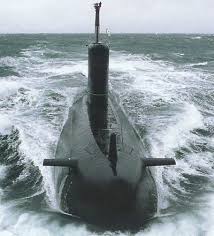
French submarine deal and President Zardari


By Abdul Nishapuri

Thanks to the right-wing media's persistence in character assassination of Bhuttos and now President Zardari, it’s a scandal and a label that refuses to go away. Allegations of kickbacks on government deals have been 'rediscovered' and 'repropagated' to haunt the beleaguered president.

However, the real motives about this international campaign against the democratic government of Pakistan are not hard to understand. Given that instead of hammering the Taliban terrorists from both sides, NATO forces have been quietly vacating their posts on the Afghanistan side of the border while Pakistan Army is courageously dismantling the Taliban - Al Qaeda network in Waziristan, one can see an international malicious campaign not only against the democratic government but also against the Pakistan Army.

It has been alleged by a French newspaper that in 1994 Mr Zardari received up to $4.3 million in kickbacks. An amount of $49.5 million is what the Pakistan military allegedly received as part of the same deal. From this standard if Mr Zardari is Mr 10%, then Pakistan military is allegedly much more than Mr 100% given that its share was more than 10 times Mr Zardari's share.

There is also another element in this malicious campaign at least in the context of Pakistani media. Pakistan's predominantly right-wing media is currently busy in character assassination of President Zardari because of his commitment and courage to fight Taliban and Al Qaeda in Pakistan. Therefore, while pro-Taliban journalists and anchors conveniently ignore issues such as the fact that right-wing opposition leaders such as Nawaz Sharif and Shahbaz Sharif are involved in money laundering (according to one of their close associates and a high-profile PML-N leader, Ishaq Dar), something which has been recorded in NAB Court documents in Pakistan, the media trial has been dedicated for President Zardari only. (read Sharif brothers accused of money laundering, Dawn, 12 November 2009).

Govt rejects Zardari kickback allegations
By Syed Irfan Raza
Thursday, 12 Nov, 2009 (Dawn)

ISLAMABAD: The government has contradicted a report published in a local and a French newspaper that accuses President Asif Ali Zardari and military authorities of having received millions of dollars in kickbacks from the 1994 sale of three French submarines to Pakistan Navy.

‘This is actually new regurgitation of an old story which was already contradicted by French President Mr Sarkozy on July 11 this year as ‘untrue’, ‘malicious’ and ‘mischievous’. It is part of a media trial of PPP leadership which we condemn and dismiss with the contempt it deserves,’ Presidential Spokesman Farhatullah Babar said.

According to the report in French daily Liberation, President Zardari is suspected of having received millions of dollars in kickbacks from the 1994 submarines deal.

In addition, investigators believe that the non-payment of the full amount of the agreed kickbacks may have led to the death of 11 French nationals in a 2002 terror attack in Karachi.

The newspaper says it has acquired documents that show that Mr Zardari allegedly received $4.3 million in kickbacks from the sale of three Agosta-90 submarines for 825 million euros (currently $1.237 billion).

The documents which were sent to the Pakistani National Accountability Bureau (NAB) by British authorities in April 2001 indicate that Mr Zardari received several large payments into his Swiss bank accounts from a Lebanese businessman, Abdulrahman Al-Assir, in 1994 and 1995.

Commenting on the report, the spokesman said the purchase of equipment by the armed forces of Pakistan was done through a proper competitive process under the supervision of the Ministry of Defence.

‘Mr Zardari was neither the president nor the prime minister nor the defence minister when the submarines referred to in the news item were purchased. The then ‘Admiral’ responsible for this purchase was investigated by the Accountability Bureau. But no allegation of misdoing could be established by the investigation authorities against Mr Zardari,’ the spokesman said.

Regarding the allegation about the killing of French nationals in Karachi, the spokesman said that President Zardari was in prison in 2002 when the unfortunate incident took place.

‘This indicates the motive behind levelling such baseless allegations. How can a person in prison arrange such high-profile killings,’ he added.

‘Allegations of kickbacks and involvement in the killing of French nationals against the person of the president are, therefore, highly unfortunate and seem to be part of a malicious campaign launched against the head of state of the Islamic Republic of Pakistan,’ the spokesman said.

The Liberation report quoted a former executive of the French naval company DCN as saying that French authorities had chosen Al-Assir to act as intermediary in the deal and he allegedly deposited a total of $1.3 million in Mr Zardari’s bank accounts between Aug 15 and Aug 30, 1994, one month before the submarine contract was signed, and then $1.2 million and $1.8 million one year later.

According to DCN employees who testified in the terror attack investigation, the kickbacks to Pakistan in the deal totalled 10 per cent of the purchase amount, with 6 per cent, or $49.5 million, going to the military and 4 per cent, or 33 million euros, being funnelled to political circles.

In 2001, Pakistani Navy’s former chief of staff Mansour-ul-Haq was arrested for his part in the deal and forced to repay $7 million, the daily says.

Legal proceedings against Mr Zardari were dropped in April 2008, several months before he was elected president. He was imprisoned from 1997 to 2004 on corruption charges unrelated to this affair.

The president, according to the report, is one of his country’s richest men, with a net worth estimated at $1.8 billion.

The ongoing investigation in Paris into the May 8, 2002, terrorist attack that killed 11 DCN employees in Karachi may shed new light on the submarine purchase.

The victims were in Karachi to complete work on the three submarines. According to French media, the magistrate looking into the bombing has rejected the theory that it was the work of Al Qaeda.

He is now considering the possibility that it was carried out by Pakistanis, either because only 85 per cent of the agreed kickbacks to politicians had been paid or because of negotiations carried out by French authorities to sell submarines to India.

In any case, some French parliamentarians are now demanding to be allowed to look into how the submarine contract with Pakistan was negotiated and executed.

Courts influenced by pro-Taliban agencies?

However, according to Amir Mir, it may be recalled that in 2003, an Anti Terrorism Court (ATC) had found two men linked to a jehadi group - Harkatul Mujahideen Al Alami - responsible for the murders, although they have since been acquitted by the Sindh High Court due to a lack of proof.

Read more...

Thursday, 12 November 2009

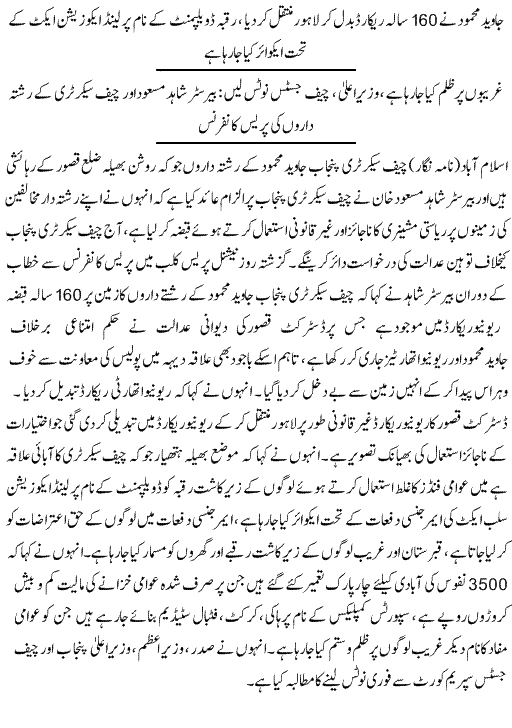
Good governance in Punjab? Chief secretary blamed for land grabbing


Punjab chief secretary blamed for land grabbing
The News, Thursday, November 12, 2009

ISLAMABAD: The Chief Secretary Punjab Javed Mahmood has blamed for land grabbing in district Qusoor.

In a media briefing in National Press Club here, Barrister Shahid Masood said chief secretary Punjab made changes in 160 years old record with the assistance of revenue department and the property case is under trial in the court.

He claimed that chief secretary did contempt of court by forcefully possessing the property with the help of police and government machinery despite stay order of the court.

Read more...

Tuesday, 10 November 2009

Sugar Fiasco

Posted by: Jarri Mirza
Guest blog by: Humza Ikram


The recent sugar fiasco shows the volatile civil administrative structure of our society. In terms of western capitalist economist point of view it’s a result of non-documented trade which exists in our trade culture and lack decision making in real time environment. But the even worse part of the story is our reaction to the problem.

A very bad trend has emerged in the society where whenever a problem occur in the country suddenly everyone becomes a Prophet and the television anchors becomes the chosen one who gets the revelation from God. And then race starts every anchors tries to prove his revelation is real and pure and other tries to prove his God is real and he doubts the others God’s actual existence. This happened in the series of event his happened in recent history.

Right from the Lal Masjid episode these TV anchors tried to outdo the others. And one anchor (Kamran Khan) did the unimaginable he tried to offer mediation between the cleric and government official. And thank to him we saw 24/7 reality television like no where in world. Same pattern can be observed in the event followed that like Lawyers movement, Brigader Imitiaz episode, High treason case against musharaf, minus one formula and even the administrative issues like Petrol development levy (PDL) issue and the recent sugar crises.

When some liberal writers and commentator used to advise them not to glorify Taliban; they termed them as a western agent like in the case of Prof. Pervez HoodBhoy and social commentator Nadeem Farooq Paracha. And I remember when BB raised her voice against lal masjid activities and showed her concern we saw round the clock television analyzes why BB is raising her voice from London on these innocent Muslim missionaries.

From these patterns you can conclude one thing and to describe that I want to Quote Colin Powell famous telephone call to Musharaf “either you are with us or against”. Same goes for these television anchors. These television anchors are authority on law, business, investment, security, defense, diplomacy you name it they know everything and trust me they do their home very well you can which can be seen in recent case of national embarrassment because of Talat Hussain’s stupid arguments with Hilary because of his incorrect stats . Thank God Zaid Hamid was not in the panel.

The even worse phenomena which is developing is the superior courts are also following the act of the media and respected judges are trying to become like chief economist of the country that can be seen with carbon surcharge case which was part of this budget and which also the only few unanimous budgets of our history like the year 2008-09. Which was later challenged by PML_N in the Supreme Court on the second thought after they voted for it the parliament days before that after they were humiliated by TV anchors of showing impotency while passing the budget? And Supreme Court judges acted like the chief economist of country.

Let us analyze the recent sugar crisis and the role of media, government and judiciary.

WEEK 1: TCP delayed the decision to import sugar to benefit some key politician.
Stance of media and which was later adopted by Punjab government: it’s the negligence of federal government what can we do.

WEEK 2: key politician are hoarding sugar. Punjab government responded quickly and started series of operation on mills and distributors .they received acclaimed from all over Pakistan and media teams even started to count the quantity of sugar collected by Punjab Government each day and one poor lady TV anchor even said in one of her program if Punjab government can confiscate four months of required sugar for Pakistan in a week whether we actually required to import sugar. Later news reports suggest PML-N MPA’s were storing sugar at the places and report of Sheikh Mumtaz Hashmi and his brother in law involved in hoarding 600 bags of sugar, story become instant hit at youtube and social networking sites like Facebook.

WEEK 3: Peshawar and Lahore High courts took suo mou moto action against hoarding.

WEEK 4: week four ended with all kinds of speculation what could be the court judgment.

WEEK 5: finally the wait was over the courts announced there decision.

Client features of court decision
• NWFP government should look into smugglings of sugar to Afghanistan. (this remarks actually negates the LHC remarks if Punjab government is failed to stop inter-provincial smuggling of sugar how could NWFP could stop smuggling of sugar to Afghanistan where price is huge as compare to Punjab TO NWFP and where NWFP does not have control over Tribal Areas since there is no provincial police.

• There was no actual shortage of sugar.
• LHC CJ khawaja sharif suggested to bring back nationalization of sugar mills if sugar mills , not actually confronting his argument but I want to remind him he was previously Attorney general of Zia in Punjab and his previous boss and mentor Zia use to say “Socialism is haram”.

• Most astonishing was the LHC out did the PHC they also calculated the price ex mill price of the sugar.


WEEK 6: Week six provide to be the contradiction of week 1 now all the brilliant TV commentators were convinced that there was no sugar shortage in the country and funny part is if they are now convinced that there is no sugar shortage why the media brigade humiliated Watoo?

WEEK 7: Sugar mill association went to Supreme Court because they felt court didn’t listen to them and announced the decision in haste.

Current situation sugar have reached from 47 to 100 at some please since the courts intervention which halted the normal market mechanism and actually give provided the environment for the opportunist for hoarding and to earn quick buck .and the million dollar question is where is all the sugar which Punjab government confiscated.


WEEK 9: from late decision of importing sugar to no sugar shortages we have reached the debate of good governance mixed with kerry lugar bill, NRO and other legislative issue to finally stage which can be described in article of Shaheen Shebai “have counted already started ?”To suggest Asif Ali Zardari’s days at presidency are over.”

In my opinion media did not bother to address the real problem they are actually running a campaign to show governments inability to run the state affairs. My suggestion we should once and for all have to decide whether we will remain hostage to their 24/7 campaign or try to understand things objectively.

Read more...

Thursday, 5 November 2009

A specimen of Shahbaz Sharif's good governance: Cheeni Naheen Hay


Read more...

Friday, 16 October 2009

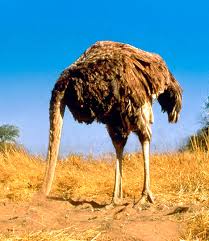
The Punjabi Taliban and the Ostrich of Punjab: Shahbaz Sharif

ریت میں سر چھپانا مسئلے کا حل نہیں

لاہور حملوں میں کئی ہلاک

لاہور اور اس کے گرد و نواح میں ہونے والی دہشتگردانہ کارروائیوں میں درجنوں ہلاک ہو چکے ہیں

لاہور میں چند ہی گھنٹوں کے دوران تین مختلف حملوں کا ہونا شدت پسندوں کی طاقت اور ان کی منظم انداز میں کی جانے والی کارروائیوں کی بھرپور صلاحیت رکھنے کا پتہ تو دیتا ہی ہے مگر صوبہ پنجاب پر روز بروز بڑھتی ہوئی دہشتگردانہ کارروائیوں پر مسلم لیگ( ن) کی صوبائی حکومت کے بظاہر ’انکاری‘ رویے سے مستقبل میں حالات کے خطرناک موڑ پر پہنچنے کے خطرے کی نشاندہی بھی کرتا ہے۔

جنوبی پنجاب میں شدت پسندوں کی نیٹ ورک پر ذرائع ابلاغ کے علاوہ خفیہ اداروں کی سرکاری رپورٹوں پر صوبائی حکومت کی پُر اسرار خاموشی کے ساتھ یہ خوف بھی جڑا ہوا ہے کہ کہیں مسلم لیگ( ن) پنجاب کی ایم ایم اے ثابت نہ ہوجائے۔

جو انکاری رویہ آج مسلم لیگ کی صوبائی حکومت کا ہے بالکل اسی طرح کا رویہ صوبہ سرحد پر دو ہزار دو سے دو ہزار سات تک حکومت کرنے والی مذہبی جماعتوں کے اتحاد متحد مجلس عمل کا بھی تھا جس کا نتیجہ یہ نکلا کہ آگے چل کر صوبہ سرحد شدت پسندی کی ایک دھکتی ہوئی بھٹی بن گیا۔

صوبہ پنجاب بالخصوص جنوبی علاقوں میں فرقہ ورانہ فسادات اور بھارت کے زیر انتظام کشمیر میں سرگرم شدت پسندوں کا ایک منظم نیٹ ورک موجود ہے اور طالبان ذرائع کے مطابق ان تنظیموں سے تعلق رکھنے والے چھ ہزار سے زائد نظریاتی اور جسمانی طور پر تربیت یافتہ جنگجو پنجابی طالبان کے نام سے جنوبی اور شمالی وزیرستان میں موجود ہیں۔

پولیس پر حملے

لاہور شہر میں پولیس اور خفیہ ایجنسیوں کے دفاتر پر حملوں میں اضافہ ہوا ہے

ان میں دو قسم کے جنگجوشامل ہیں: ایک وہ گروپ ہے جو سرحد پار افغانستان میں امریکی اور اتحادی افواج کے خلاف لڑنے کو زیادہ ترجیح دیتا ہے جبکہ دوسرا جو قدرے بڑا گروپ بھی ہے ان جنگجووں پر مشتمل ہے جو ملک کے اندر ایک خاص ایجنڈے کو پر تشدد انداز میں آگے بڑھانے میں دلچسپی رکھتے ہیں۔

سرکاری رپورٹوں اور اعلی اہلکاروں کے مطابق ایسا بھی نہیں ہے کہ صوبہ پنجاب کے وزیراعلی شہباز شریف پنجاب میں شدت سپندوں کے پھیلتے ہوئے نیٹ ورک سے انجان ہیں۔ ایک قابل اعتماد اعلیٰ سرکاری اہلکار نے بی بی سی کو بتایا کہ جب پہلی بار امریکی اخبار نیویارک ٹائمز میں جنوبی پنجاب میں شدت پسندوں کی موجودگی کی رپورٹ شائع ہوئی تھی تو اس وقت شہباز شریف نے قبائلی علاقوں کے لیے ایڈیشنل چیف سیکریٹری حبیب اللہ کو بریفنگ دینے کے لیے بلایا۔

حبیب اللہ سے کہا گیا کہ وزیراعلی کی کئی اور ملاقاتیں بھی ہیں لہذا وہ تھوڑی ہی دیر میں اپنی بریفنگ ختم کرد یں لیکن بقول اعلی اہلکار کے کہ جب ایڈیشنل چیف سیکریٹری نے بات شروع کی تو چیف جسٹس افتخار چودھری کی بحالی اور جنرل ریٹائرڈ مشرف کے مواخذے کو اپنی سیاست کا محور بنانے والے شہباز شریف چونکا دینے والی معلومات سن کر ششدر رہ گئے اور یوں یہ بریفنگ منٹوں سے گھنٹوں پر محیط ہوئی۔ اس ملاقات کے بعد ہی شہباز شریف کو شدت پسندی کی سنگینی کا انداز ہوا اور انہوں نے کچھ عرصے بعد ایڈیشنل چیف سکیریٹری فاٹاحبیب اللہ کو ایک بار پھر بریفنگ کے لیے بلایا۔

حیرت کی بات یہ بھی ہے کہ جس دن لاہور میں تین متواتر حملے ہوئے اسی روز مسلم لیگ( ن) کی مرکزی کمیٹی کے اجلاس کے بعد نواز شریف نے میڈیا کو جو بریفنگ دی اس میں انہوں نے اس حوالے سے کچھ نہیں کہا البتہ سوال اور جواب کے مرحلے میں اپوزیشن لیڈ ر چودھری نثار علی خان کو مجبوراً اس موضوع پر کچھ کہنا ہی پڑا۔

مسلم لیگ( ن) نے بظاہر پنجاب کی حکمران اور ملک کی بڑی اپوزیشن جماعت کے طور پر اپنی سیاسی ترجیحات کچھ اس طرح متعین کی ہیں جس میں بظاہر شدت پسندی پہلی ترجیح کے طور پر نظر نہیں آرہی ہے۔ مسلم لیگ ( ن) جنرل ریٹائرڈ مشرف کی باقیات پر پارلیمنٹ میں اور باہر واویلا بھی کرتی ہے اور اس حوالے سے لانگ مارچ تک کا انتہائی اقدام اٹھانے سے بھی گریز نہیں کرتی مگر اسی جنرل ریٹائرڈ مشرف کی باقیات میں شامل شدت پسندی کی عفریت سے ملک کی جان چھڑانے میں بظاہر نیم دلی دکھا رہی ہے۔

اگر پنجاب کی صوبائی حکومت اور مسلم لیگ ( ن) کا خیال یہ ہے کہ شتر مرغ کی طرح ریت میں سر چھپانے سے شدت پسندی ختم ہوجائے گی تو شدت پسندی کی دھکتی ہوئی آگ میں جلنے والے قبائلی علاقے اور صوبہ سرحد اس سوچ کا نفی میں جواب دیتے ہیں

......

’القاعدہ، سپاہِ صحابہ تعلق حملوں کی وجہ‘

لاہور میں حملہ

’شدت پسند جان بوجھ کر پنجاب میں سکیورٹی فورسز کے اداروں کو نشانہ بنا رہے ہیں‘

راولپنڈی میں فوج کے ہیڈکوارٹر کی طرح لاہور میں جمعرات کو ہونے والے بیک وقت تین حملے ظاہر کرتے ہیں کہ حملہ آور نہ صرف یہ کہ پرعزم اور اعلٰی تربیت یافتہ ہیں بلکہ وہ اہداف کے انتخاب سے لے کر اپنے عزائم کی تکمیل تک مکمل منصوبہ بندی کے ساتھ کارروائی کر رہے ہیں۔

جی ایچ کیو کی طرح لاہور میں پولیس کے دو تربیتی مراکز اور وفاقی تحقیقاتی ادارے پر حملے میں ملوث افراد ان انتہائی حد تک زیر حفاظت عمارتوں کے بیرونی حفاظتی حصار کو توڑ کر اندر داخل ہونے میں کامیاب رہے۔

ان میں سے دو عمارتیں مناواں پولیس ٹریننگ سینٹر اور ایف آئی اے کا دفتر پہلے بھی دہشت گردی کا نشانہ بن چکے ہیں جبکہ بیدیاں روڈ پر واقع ایلیٹ پولیس کے صدر دفتر پر حملے کے بارے میں پولیس اور انٹیلی جنس ذرائع کئی روز قبل ہی متنبہ کر چکے تھے کہ یہ ادارہ دہشتگردوں کی ہٹ لسٹ پر ہے۔

حملہ آوروں نے ان اہدف کے محل وقوع اور حفاظتی اقدامات کی کمزوریوں سے فائدہ اٹھانے کی کوشش کی ہے

چوہدری احمد نسیم

صوبہ پنجاب کے سابق پولیس سربراہ جہانگیر مرزا کا کہنا ہے کہ شدت پسند جان بوجھ کر پنجاب میں سکیورٹی فورسز کے اداروں کو نشانہ بنا رہے ہیں۔’ان لوگوں کا ہدف سکیورٹی اداروں میں بددلی اور خوف اور عوام میں بےچینی پیدا کرنا ہے اور میں سمجھتا ہوں کہ اس مقصد کے حصول کے لیے صوبہ پنجاب سے زیادہ مناسب ہدف کوئی نہیں ہو سکتا۔‘

سابق انسپکٹر جنرل نے کہا کہ وزیرستان اور دیگر قبائلی علاقوں میں زیرعتاب آنے کے بعد شدت پسند ملک کے سب سے بڑے صوبے میں موجود اپنے اثاثے استعمال کر رہے ہیں۔’صوبہ پنجاب میں ہونے والی ان کارروائیوں میں ہم نے دیکھا ہے کہ کالعدم سنی انتہا پسند تنظیم سپاہ صحابہ کے سابق ارکان ملوث ہیں۔ ہمیں انٹیلی جنس ذرائع اور گرفتار ملزمان سے تفتیش کے ذریعے کئی برس قبل معلوم ہو گیا تھا کہ سپاہ صحابہ کے مفرور لوگوں نے القاعدہ کے ساتھ مراسم بنا لیے تھے اور اب ان دو دہشت گرد گروپوں کے درمیان تعلقات کار ہی صوبہ پنجاب پر آفت بن کر ٹوٹ رہے ہیں۔‘

ہمیں انٹیلی جنس ذرائع اور گرفتار ملزمان سے تفتیش کے ذریعے کئی برس قبل معلوم ہو گیا تھا کہ سپاہ صحابہ کے مفرور لوگوں نے القاعدہ کے ساتھ مراسم بنا لیے تھے اور اب ان دو دہشت گرد گروپوں کے درمیان تعلقات کار ہی صوبہ پنجاب پر آفت بن کر ٹوٹ رہے ہیں‘۔

جہانگیر مرزا

جہانگیر مرزا نے کہا کہ صوبہ سرحد میں ان شدت پسندوں کے مراکز کے تباہ ہو جانے کے بعد پنجاب میں یہ اپنے پرانے ’سلیپر سیلز‘ کو دوبارہ فعال بنا رہے ہیں۔ ’لیکن ان سلیپر سیلز کے دوبارہ فعال ہونے کے بعد ان تک پہنچ کے دروازے بھی کھل گئے ہیں اور میرا خیال ہے کہ بہت جلد صوبہ پنجاب میں بھی ان لوگوں کے نیٹ ورک توڑ دیے جائیں گے۔‘

پنجاب پولیس کے ایک اور سابق سربراہ چودھری احمد نسیم نے، جو کہ صوبے میں دہشت گردی کے متعدد واقعات کی تحقیقات کر چکے ہیں، بی بی سی کو بتایا کہ یہ تینوں اہداف بہت سوچ سمجھ کی منتخب کیےگئے تھے اور لگتا یہی ہے کہ حملہ آور کئی روز تک ان اہداف کا پیشگی جائزہ لیتے رہے ہیں۔ ’جس طرح حملہ آوروں نے ان اہداف کے محل وقوع اور حفاظتی اقدامات کی کمزوریوں سے فائدہ اٹھانے کی کوشش کی ہے اس سے صاف پتہ چلتا ہے کہ حملہ آوروں کے پاس اپنے ہدف کے بارے میں بہت معلومات تھیں۔‘

ان مربوط اور منظم حملوں نے حکومت کے ان دعوؤں پر سوالیہ نشان ثبت کر دیا ہے کہ تحریک طالبان پاکستان کے سربراہ بیت اللہ محسود کی ہلاکت کے بعد شدت پسندوں کی کمر ٹوٹ چکی ہے اور وہ راہِ فرار پر مجبور ہیں

......

No operation in southern Punjab: Rana Sanaullah
Friday, October 16, 2009

LAHORE: Law Minister of Punjab Rana Sanaullah said government will not launch an operation in southern Punjab whereas several suspects have been arrested in different areas of Punjab in connection of Lahore attacks.

Talking to media on the visit of Elite Police Training Academy, Rana Sanaullah said arrests have been made throughout Punjab but exact number will be revealed later due to some reasons. He said there is no writ of any outlawed outfit in southern Punjab therefore; there is no need of launch of operation.

Rana Sanaullah said key evidences have been found about terrorists involved in Lahore attacks and sensitive agencies are working on these evidences. He said new security plan has been chalked out for Punjab including Lahore. He refused the reports about establishment of Taliban writ in any village, town and area in southern Punjab.

....
On different wavelengths
By Ayesha Siddiqa
Friday, 16 Oct, 2009
The destruction caused by the suicide truck bomber outside the Marriott hotel in Islamabad September 21, 2008. – Photo by Reuters
The recent attack on GHQ and yesterday’s attacks in Lahore and Kohat and the government’s response to these incidents reminded one of the days after the terrorist attack on Islamabad’s Marriott Hotel.

There were some in the government who referred to the incident as Pakistan’s 9/11. While that particular date in American history can be interpreted in several ways, its greatest significance lies in the fact that it brought the state and society in the US on the same page as far as fighting the war against terror was concerned. Did we manage to achieve this consensus on Sept 20 last year? Perhaps not.

But this is where the catch lies. The enemy is far more intelligent than what some of our television commentators would like us to believe. In the GHQ case, the terrorists not only understood the strategic value of attacking at the heart of the army’s power base, they also appeared to understand the chasm between the state and society and within the state at several levels. The attackers understand the civilian-military divide better than a lot of people who talk about a new era of civilian-military relations in the country and boast about the two sides being on the same page.

They probably understand that the civilian government might pretend to be powerful but that it depends on externally borrowed power and that in the case of friction between the two centres of power, it is the civilians who would back off. This was most obvious from the fact that instead of raising some critical questions after the attack on GHQ, all that the president and prime minister could do was congratulate Gen Ashfaq Kayani on the excellent handling of the crisis.

There is no doubt that the nation is saddened by the death of unarmed officers and soldiers, and supports any action to punish those who carried out the attack. But the entire event ought to be discussed threadbare without any mudslinging. Why was it that 10 men penetrated a highly guarded area and remained ensconced in GHQ for about 19 hours, especially when the army’s high command was in the premises?

There are two important issues here. First, the Pakistan Army, which is trained mainly in conventional warfare and fighting state forces, is not well trained in counter-insurgency operations. This explains why despite being armed with G3s and other types of infantry equipment the force guarding GHQ could not respond properly. Hence, this capacity must be beefed up at the earliest.

Second, the connection of the key planner Aqeel, alias Dr Usman, with the army medical stores is a reminder of the problem that could perhaps prevail in pockets inside the rest of the military. This pertains to the religio-political inclinations of individual civil and military officials and officers that directly or indirectly support the jihadis.

Aqeel’s is not a unique case. Earlier there was Major Haroon Ashiq alleged to be involved in the murder of Gen Faisal Alavi. He was linked with one of the Punjab-based militant outfits. His capture led the police and agencies to other retired officers who had split from the Lashkar-i-Taiba and were waging ‘jihad’ on their own. We must also not forget the air force officials and officers involved in the first attack on the former president Gen Pervez Musharraf. Reportedly, the agencies were forced to go deep within the PAF in search of people connected to different militant outfits or the tableeghi jamaat.

At this point, how sure are we that all older links between the jihadis and individuals

in the police or military have been snapped? Instead of eulogising the army, parliament should be carefully looking at and questioning the old linkages from the perspective of having a handle on the problem of ‘jihadism’ and what it means for the state.

ISPR director general Maj-Gen Athar Abbas stated that the attackers had planned to use the hostages to negotiate the release of about 100 terrorists. Reportedly, there are about 400 terrorists in different jails. Some of the more high-profile detainees are believed to include Malik Ishaq, head of the Lashkar-i-Jhangvi (LJ) and Qari Saifullah Akhtar, head of the Hizb-ul-Jihad Islami. The government must now look at its preparedness and the capacity to protect its high-value detainees.

Although the military and government now seem inclined to consider other reasons for the attack, such as the Tehrik-i-Taliban Pakistan trying to avenge Baitullah Mehsud’s death, the rescue of high-value terrorists seems to be the primary reason, which must not be ignored at any cost. It must not be forgotten that the attack on the Sri Lankan team in Lahore was also meant to take hostages who could then be exchanged for top jihadis. Sources even claim that the LJ’s Malik Ishaq was involved in the earlier case and had decided to use the attack to get himself freed after the elected Punjab government failed to deliver on a mutual agreement between LJ and the PML-N leadership.

What’s equally interesting is the fact that there is an effort by those in power to ignore or divert attention from areas which are as infested with extremist militants as Fata and the tribal areas. The sudden effort to get policemen from most districts of south Punjab to deny the existence of the jihadi problem in their areas is a reaction similar to when the government denied the Pakistani connections of the Mumbai attackers even before investigating the matter. The denial is strange since most of the attacks in Punjab or the federal capital are believed to be provoked or carried out by Punjabis or Punjab-based militant outfits.

Perhaps the fear is that this might divert international attention towards Punjab or make ordinary Pakistanis think about the reasons why jihadis have spread terror across Pakistan and not confined themselves to the tribal areas as the authorities would like us to believe. Interestingly, even the ISPR’s emphasis is that the attack might have involved Punjabis but that it was carried out at the behest of the Pakhtun Taliban.

It is indeed important to fight militants in Waziristan who are influenced by Al Qaeda, but why does it have to be at the cost of ignoring the Punjab-based outfits who are proving to be good hosts for the terrorist network? Sources believe that Al Qaeda has trickled into areas bordering Punjab. These outfits operate beyond the Pakhtun-inhabited tribal areas and their threat is evident from the sectarian killings in Dera Ismail Khan and other places.

There is a possibility that the civilian government might lose the initiative in an urge to appease the military and the latter might just lose the initiative to act against those that were part of the GHQ attack for unexplained strategic reasons. This raises the question of how much bloodshed would there be before strategic re-evaluation.

The writer is an independent strategic and political analyst.

ayesha.ibd@gmail.com (Dawn)

On trail of Punjabi Taliban
By Nasir Jamal
Saturday, 17 Oct, 2009
LAHORE, Oct 16: A day after the triple-strike in Lahore, officials, counter-crime experts and academics in the province grappled with the question of how to deal with the upsurge in violence and the discourse was dominated by analysis of who the Punjabi Taliban were and what background they came from.

The province’s security agencies admitted the presence of “individual” militants branded as Punjabi Taliban in southern Punjab as well as elsewhere. “The government and its security agencies are fully alive to the threat and are taking requisite action. But it would be wrong to say that militants have consolidated their position to a level where they can operate under the banner of Punjabi Taliban,” argued a senior Punjab police official who has worked with different intelligence agencies.

This was consistent with a provincial intelligence report prepared some time ago on activities of militant groups operating out of southern Punjab. Although the report dismissed what it termed the much-hyped theory that the Taliban have “set in” in the districts (of Bahawalpur, Multan and D.G. Khan divisions), it acknowledged the potential threat of Talibanisation in some areas if “timely action by law enforcement agencies, coupled with concrete development activity, was not taken”.

The report concluded: “Poverty-stricken, feudalistic, extremely religious and illiterate south Punjab could possibly provide shelter to the Taliban and other jihadi outfits. It has potential to become a nursery or a major centre of recruitment for sectarian organisations. Talibanisation appears to be in its infancy stage. Timely action by law enforcement agencies, coupled with concrete development activity, could avert this danger.”

In a talk with Dawn on Friday, a senior police official listed a number of arrests made in different parts of the province, including southern Punjab, and recovery of arms cache in the recent past and claimed that in doing so, police had averted a number of possible suicide raids and sectarian attacks.

He maintained that militant organisations like Lashkar-i-Jhangvi, Harkat-ul-Jihad-i-Islami and Jaish-i-Mohammad operating out of southern Punjab had a long history of linkages with the Taliban in Afghanistan and tribal areas of the NWFP who provide them sanctuary and support.“Nobody denies that the militants belonging to these organisations have strong links with the Tehrik-i-Taliban Pakistan and facilitate their operations in Punjab. But this is also true for the militants operating from many other parts of Punjab and the rest of the country,” he added.

Another senior police official surmised the term Punjabi Taliban was just a myth coined and being propagated to destabilise Punjab by the so-called friends and foes (read America and India) of Pakistan. “It’s a stable Punjab which is blocking their designs to harm Pakistan,” he said.

A senior police officer from Bahawalpur wondered: “If the so-called Punjabi Taliban from south Punjab are so big in number why none of the thousands of those arrested or killed during the recent military operation in Swat was found to be from this area.”

The Punjab police say that only one militant, Abid alias Hanzala, out of 11 who had blown themselves up or were killed in as many acts of terrorism during 2007 and 2008 was from a southern Punjab district, Rahimyar Khan.

The rest of them were Mehsuds from South Waziristan. Similarly, all the eight suspected suicide attackers who were either arrested or those who were able to escape arrest during 2007 and 2008 came from South and North Waziristan, Mansehra and DI Khan. Five of them belonged to the Mehsud tribe, according to police.

But there have surely been some signs of change this year. Analysts argue that the active involvement of militants operating out of southern districts of Punjab in a series of terror attacks during this year has brought the ‘Punjabi Taliban’ into sharp focus.

“Earlier, the Punjab-based sectarian and jihadi groups, which were either involved in Kashmir or in sectarian killings within the country, used to only facilitate militants coming from tribal areas of the NWFP by providing them logistical support for carrying out terrorist operations. Now they have become entwined with militants operating under the banner of Tehrik-i-Taliban Pakistan and changed their strategy.

“They are pursuing a different agenda, which is to challenge the state (of Pakistan) and pull it down, and are actively involved in the terrorist acts as indicated by their involvement in terror raids on Sri Lanka team and Manawan police training centre earlier this year (and multiple attacks on security installations this week),” Lahore-based defence and political analyst Dr Hasan Askari Rizvi said.

The official from Bahawalpur acknowledged that southern Punjab had proportionately produced greater number of militants because of the presence there of groups fighting in occupied Kashmir in the past. Also, he conceded, a number of top jihadi and sectarian leaders belonged to southern Punjab. But he insisted that there were no sanctuaries or training camps anywhere in the region.

On the basis of how much the official concede, shall we then say that the militants have an operational network in place in southern Punjab to build on?“That network is intact in spite of the arrests and killings of a number of militants in recent years. The area was never cleared and militant organisations and groups continue to recruit in southern districts of the province, which are also used as sanctuaries by militants after carrying out their operations elsewhere in the country,” an analyst said.

“How can you get rid of militancy without demolishing the ideological infrastructure that helps to create this mindset?” he wondered. But he acknowledged that it was a difficult task and required political consensus.

Amir Rana, an Islamabad-based analyst, said the term Punjabi Taliban was coined by Afghan Taliban groups to distinguish militants from Punjab and it became popular after the militant attack on the Danish embassy in Islamabad last year.

He said the Punjabi Taliban was not a homogenous group and also included Kashmiri and Urdu-speaking people. “You would also find some Burmese and Bengali immigrants living in Karachi in the ranks of the so-called Punjabi Taliban,” he elaborated.

Dr Hasan Rizvi said that linkages between the militants from Punjab and the Taliban in the NWFP had deepened (in recent years) as the militants shifted their training camps in the tribal areas to avoid action by the government.

He said religious extremism was not confined to southern Punjab alone. “You will find a similar situation in central Punjab as well. Religious extremism is very sharply visible in Gujranwala, Faisalabad, etc. But the problem with southern Punjab is that some of its areas are not under effective state control. There are areas in DG Khan where the government’s authority is weak, which helps the militants to find sanctuary there. Further, the close proximity of these areas to Balochistan and tribal areas of the NWFP also provides the militants an easy escape route.”

Dr Rizvi, however, dismissed calls for a military operation in the region. “It (operation) is not needed because these areas, in spite of weak government authority, are not out of the state’s control. The better option would be to gather credible intelligence on the activities of militants in these areas and then take action.” (Dawn)

Read more...

Saturday, 10 October 2009

The secret meeting between Shahbaz Sharif and General Kayani


Weren’t they supposed to call on generals?

Saturday, October 10, 2009

By Rauf Klasra

ISLAMABAD: The “constitutional chain of command” comprising the president, the prime minister and the defence minister was not taken into confidence by either of the participants of a recent secret meeting of the COAS General Ashfaq Parvez Kayani with Punjab Chief Minister Shahbaz Sharif and the Opposition Leader in the National Assembly Ch Nisar Ali Khan.

Sources told The News that President Asif Ali Zardari, Prime Minister Yousuf Raza Gilani and even Defence Minister Ahmed Mukhtar were caught off guard when the media reported the details of the secret meeting between the top leaders of PML-N with General Kayani. The sources even claimed that these frequent secret meetings between the top leaders of PML-N and the Chief of Army Staff as confirmed by Ch Nisar Ali Khan in his speech in the lower house the other day, might well have given the required confidence to the top guns of the GHQ to send the tersely worded press note to the media after the corps commanders meeting.

The sources said that the departure of the Army chief from his earlier tall claims of not getting himself involved in the political matters of the country after he took oath in 2007 had greatly shaken the confidence of this chain of command in the promises of top military brass, which had doled out commitments to the nation and the media of staying away from the politics.

The sources claimed that even the PML-N, which had been championing the cause of democracy from exile, had conveniently violated the CoD by secretly holding a meeting with the COAS.

DG ISPR Major General Athar Abbas, when asked to comment if the president, prime minister or defence minister were informed about the secret meeting with Shahbaz Sharif and Ch Nisar Ali Khan, was unresponsive.

Ch Nisar Ali Khan justified the meeting by saying that it was held in the national and security interests. But, the sources said, this plausible justification was not enough to convince those people who heard the PML-N making tall claims in the past—not to meet the Army generals what come may. These meetings with the army chief further led to speculations in the Islamabad circles that perhaps the history of 90s was being repeated when the military establishment used the opposition leaders to topple the sitting governments.

The immediate result of this secret meeting with General Kayani was that the very next day, to the much surprise of the PPP rulers at Islamabad, Shahbaz Sharif launched lethal attack against the Kerry-Lugar Bill.

The sources said the PML-N leaders were now fast getting frustrated with the policies of President Zardari who was not showing required interested in bringing about changes in the 17th Amendment. The sources said, by holding such secret meetings, PML-N leaders were trying to improve their bargaining position visa-a-vis 17th Amendment. On the other hand, the army establishment was happy to meet them secretly to also make the PPP rulers fall in line.

Ayaz Khan:


Read more...

Friday, 9 October 2009

A specimen of Shabaz Sharif's good governance: "The Humaira Arshad Case"


The power of song
Friday, October 09, 2009
Songstress Humaira Arshad has produced a few discordant notes. The good lady had gone along with her husband - as is the right of every citizen - to register a complaint at the chief minister's complaint cell on Club Road in Lahore. It is alleged that the pair had set up a café in the city but they later discovered that the person who sold them the property was a fraudster and did not have legal title to the property. A common-enough complaint and not something that would attract much by way of media attention or indeed much by way of action by the officials concerned. But it is not every day that you have glamorous singers appearing at the office to register a complaint, so the extremely-concerned-especially-to-be-noticed officials rushed to the assistance of the wronged chanteuse and her husband.

The singer proceeded to register her complaint with Complaints Director Irfan Yousaf and was giving him the details when Shahid Qadir, another complaints director (There are two? There are so many complaints?), entered the office of his colleague and demanded that she make her complaint to him rather than Irfan Yousaf, who probably had not had a shower that morning or pressed his shirt properly. The two then proceeded to exchange what have been described as 'harsh words' and the matter quickly came to the attention of no lesser personage than Chief Minister Shahbaz Sharif. True to form, he acted swiftly and both men were the subject of quick enquiry, found guilty and suspended, their offices sealed. The singer never got her complaint registered and left in some confusion. Perhaps to prevent future disturbances the complaints cell should create two customer windows, one marked 'Famous people' and the other 'People we are not interested in.' Problem solved. (The News)

1416.gif

Geo TV Report


Read more...

Tuesday, 6 October 2009

The Kayani-Shehbaz meeting


The news that the army chief, General Ashfaq Kayani, and the Punjab chief minister, Shehbaz Sharif, had a “secret” meeting has not so far been denied by the Inter-Services Public Relations (ISPR) department. Reports claim that the PMLN leader of the opposition in the National Assembly, Chaudhry Nisar Ali Khan, was also present in the meeting.

The PMLN says no such meeting took place. But that denial isn’t worth anything in view of the general lack of credibility of party statements. Given the endemic state of political instability in Pakistan, the news has spread across the borders and the entire world has started to speculate about the meaning and significance of the meeting.

Why should General Kayani feel the need to meet a PMLN leader at this point of time? If he wanted to comment on the political situation in the country, he could have used the channel of the media. There is the constitutional avenue too available to him through which he could have met the president and later allowed the ISPR to ensure that his point of view had been put across. It is also quite possible that General Kayani wanted to take the PMLN on board on the coming offensive in South Waziristan. He may have wanted to remove the army from the attacks that will ensue in the coming days on the PPP government’s support to it. (The Jama’at-e Islami is protesting on the roads; the JUIF from within the coalition is threatening to quit, and some FATA ministers have already resigned.) But in all these cases, he should have approached the government to convey his message.

It is public knowledge that he intervened discreetly during the Long March in favour of the reinstatement of the higher judiciary and prevented it from resulting in a severe security situation. So maybe the meeting was sought by the two PMLN leaders who wanted to convey something secret to him rather than the other way round.

But a “secret” meeting can’t be kept secret in these days of a vigilant media. Therefore any such meeting is only bound to arouse unduly rash speculation in some quarters and fill some others with apprehensions. Above all, by fuelling uncertainty, it will adversely impact the economic sector, forcing investors to postpone their projects till a “final decision about the political situation has been made”. Needless to say, the environment in which the meeting took place was most unsuitable for it. The PPP government is under attack on many fronts but above all it is being pilloried relentlessly by the media for having acquiesced in the harsh “conditionalities” included the American Kerry-Lugar legislation allowing aid to Pakistan. The speculation that General Kayani could have aired his unhappiness with the American aid “conditionalities” — some of which indirectly target the Pakistan Army — is one of the most lethal outcomes of the secret meeting. So more and more people are talking about “mid-term elections” to oust the PPP government before its tenure is over. The meeting, not firmly denied so far by the ISPR, has encouraged those who think that the PPP should be pushed into the wilderness again. The issue of the NRO, brought to the fore once again by the publication of the detailed judgement of the July 31 verdict of the Supreme Court, has also triggered hopes of getting rid of the government.

The fact that Mr Nawaz Sharif is not taking part in the Lahore by-election is also taken as a signal by some for an all-out attempt at the ouster. The official postponement of the deadline for an end to load-shedding in the country has its own destabilising fallout. The aftermath of the meeting is sure to strengthen elements that see their success in political instability. That the meeting was followed by a statement by Mr Shehbaz Sharif condemning the Kerry-Lugar conditionalities has further heated up the situation of political confrontation, amid uncanny, absurd and outrageous rumour-mongering that President Zardari might be scheming to kill Mr Nawaz Sharif!

The sad truth is that every time Gen Kayani makes an intervention like a discreet phone-call or a discreet meeting, the event no longer remains a secret and opens the floodgates of destabilising speculation.

General Kayani has won the gratitude of the nation for staying out of politics in Pakistan. That Pakistan’s politics is negative and based on prejudice rather than opinion, on revenge rather than justice, is true, without the army intervening. But whenever it has in the past it has minimised the chances of things ever getting to normal. The current phase is not ideal, despite the pledges made by politicians before the 2008 elections, but this is the very juncture where the army should let the politicians sort themselves out under the Constitution.

Whatever the reasons, given the situation all round, Gen Kayani erred in secretly meeting with Mr Shahbaz Sharif and Mr Nisar Ali Khan and fuelling unwanted speculation to destabilise the regime and country. And if he didn’t, the ISPR should come out with a robust denial and bury the unhealthy speculation. (Daily Times)

Kerry-Lugar Bill is an insult, Army tells US military

Wednesday, October 07, 2009
Kayani lodges protest with General McChrystal

By Kamran Khan

KARACHI: As anger mounts over the degrading language and observations in the Kerry-Lugar Bill on Pakistan’s military services and intelligence agencies, the Army conveyed its part of protest to the United States when Commander of International Forces in Afghanistan General Stanley McChrystal met Army chief General Ashfaq Pervez Kayani at the GHQ on Tuesday, informed officials said.

These officials said that General Kayani told General McChrystal that like the Pakistani people, the military and intelligence services were furious at the observations made on Pakistan’s security establishment in the Kerry-Lugar Bill. Kayani also protested over the controversial statements made by some US officials in recent days.

“General McChrystal returned from the GHQ with an unambiguous message that the terms set in the Kerry-Lugar Bill on the national security interests of Pakistan are insulting and are unacceptable in their present formulation,” according to an official familiar with the content of the meeting.

Informed official sources said that the Army’s strong reaction to the Kerry-Lugar Bill was shared in detail with the government when General Kayani met Prime Minister Yousuf Raza Gilani on Sunday.

In a related development, also on Tuesday, Gilani asked Foreign Minister Shah Mahmood Qureshi to convey Pakistan’s reservations in his meetings with US Secretary of State Hillary Clinton, Obama’s Special Envoy for Pakistan and Afghanistan Richard Holbrooke and key members of the US Congress.

While Tuesday’s meeting with General McChrystal provided General Kayani with an opportunity to convey the Army’s serious objection to the controversial sections of the bill in detail, he had lodged an initial protest during his meeting with General McChrystal in Kabul, where he had gone last week toattend the tripartite military conference.

The Kerry-Lugar Bill and its impact on national security interests of Pakistan will be a key subject of discussion when the corps commanders and principal staff officers of the Army meet under General Kayani on Wednesday.

While the nation’s response is currently focused at the controversial content of the Kerry-Lugar Bill, the government is also concerned about a growing unregulated arrival and stay of American citizens in Pakistan.

Concerns grew when Pakistanís security agencies recorded various cases of illegal acquisition of weapons by security firms connected with the US Embassy in Pakistan. Prime Minister Gilani, sources said, has already ordered a complete record with specific details and pre-clearance of US citizens entering Pakistan on US government business. (The News)


Read more...

Sunday, 27 September 2009

An article in appreciation of Shahbaz Sharif


SHAHBAZ SHARIF- THE COMPASSIONATE DOYEN OF PUNJAB

By Qudrat Ullah

In my opinion, Shahbaz Sharif is a man of compassionate destiny who is more known for his hard work, uncompromisingly firm about merit and transparency; while good governance is his most conspicuous hallmark. He belongs to an industrial family of Lahore, which is more known for its hard-work and Islamic identity.

When the elder scion of Ittefaq family, Nawaz Sharif entered into the political arena in the early 80s, the younger Shahbaz was toiling in the industrial business.

The political ingress of Shahbaz Sharif, however, was without any political or ideological fanfare, but he had the explicit experience of running the industrial empire. Shahbaz Sharif soon emerged as a hard task master and proved his worth in the politics of Lahore which was ideologically divided among the tangling rightists and the liberals.

From the outset, Shahbaz Sharif has been a man of vigor and energy and he provided much needed political support to Pakistan Muslim League by organizing the party in provincial metropolis. The discern abilities and supporting role of younger Shahbaz helped Nawaz Sharif in many ways- he helped organize PML in the province, worked hard to bring efficiency and improvement in working of the government machinery and induced good governance which was a new thing then.

The decision to appoint comparatively naïve Shahbaz Sharif as Chief Minister in 1997 was rather a “surprise” for aspiring politicians as well as the political pundits, while ‘Chaudhrys of Gujrat’ were utterly unnerved.

The first stint of Shahbaz Sharif proved the choice as correct and he worked very hard to introduce a coherent system of good governance in the province. His reforms, especially in the areas of education, healthcare, C&W and public-welfare sectors, were innovative and public friendly which set new benchmarks.

For the first time, he practically made the bureaucracy and the administrative machinery answerable to the people, and introduced and strengthened political culture of tolerance and vehemently discouraged corruption and inefficiency. All field postings were made on merit, keeping in view the past record and management skills of officers.

There is no doubt that October 12, 1999 is the most inauspicious date in Pakistan which not only discontinued the process of democracy but also dampened down the process of good governance. The eight years of mismanagement, corruption, inefficiency and cronyism ruined and destroyed each and every institution and the inept and underling rulers made Punjab a land where rule of jungle was law of the day.

The decision of the voters on the day of February 18, 2008 elections was in support of a political leader whose legacy was known for its immaculate track record and public service. However, the belated situation arising out of the February 18 elections was politically problematic and complicated; the unexpected assassination of Mohtarma Benazir Bhutto and subsequent commotion was a turning point which helped the two main political parties to reaffirm their future political course of action.

As a result of political dialogue between PPP and the PML (N), Shahbaz Sharif emerged as the consensus Punjab Chief Minister after both the parties decided to go along for the larger interest of the people. Because of the broadmindedness of Shahbaz Sharif, Senior Minister Raja Riaz Ahmad of PPP has always spoken high of him, expressing satisfaction and confidence over the leadership of Shahbaz Sharif. During the de-seating of Shahbaz Sharif, Prime Minister Yousaf Raza Gillani also spoke high of him and expressed his regrets.

Coalition government is a unique experience in the political history of Punjab as the earlier political foes are now united for the greater cause of democracy. However, Punjab Chief Ministership is not a smooth sailing now as there are many new hurdles and unwarranted misconceptions. In this situation, Shahbaz Sharif has to walk on the political tight rope very tactfully and he has made utmost efforts to keep the coalition intact.

Actually, eight years corruption still poses many hurdles and the new political realities are very much fiddly which needed tangible handling. Shahbaz Sharif has tried his level best to reintroduce the concept of corruption-free governance, aimed at facilitating the indigent masses, which have lost every hope.

Another characteristic of his leadership is that Shahbaz gives full freedom to the field officers to carry out their duties without any undue interference. But he has also shown the doors to the inefficient field officers who failed in managing Ramadan Bazaars.

He is very much touchy about law and order and price situation and takes wholehearted interest in improving law and order and price situation, as no civil society can progress and develop without it. Shahbaz Sharif has made it a point that the field officers must remain neutral and act apolitically, because no sustained democracy can flourish in a system of corruption and nepotism.

There is no doubt that Shahbaz Sharif is a true follower of M.A Jinnah who asked the people to work, work and work. Continuous work is unequivocal hallmark of Shahbaz Sharif’s personality and he keeps the government machinery active by his personal checking and interaction with the people. His continuous touring of different cities, to monitor price and food items’ availability during Ramadan, has helped in price stability.

Shahbaz Sharif has a penchant for the deprived and the vulnerable of other provinces as well. That’s why he has donated a cardiology hospital for the poor patients of Balochistan who cannot afford to travel to other provinces for their medical treatment. He has also given 30000 ton free wheat to Sindh to help overcome their food needs. Punjab has also provided ample material support, medical equipment, medicines, doctors and paramedics and other items of daily use including tents to the internally displaced people of Malakand Division.

Law and order cannot be improved without an efficient police force and for this purpose; the Chief Minister has increased salaries and allowances of police force to encourage them to work with more commitment.

The political future of Shahbaz Sharif is bright and keeping in view the political vision, untiring efforts and track record of Shahbaz Sharif, it is expected that he will achieve the goal of good governance and public welfare in Punjab province where people want a messiah like him to get rid of poverty, unemployment and disarray.

______________________________________________________________________________

(Mr. Qudrat Ullah is a PhD fellow with Punjab University, Lahore)


Read more...

Friday, 25 September 2009

Nawaz Sharif, Shahbaz Sharif and the Sugar Crisis in Pakistan


More than 50 percent sugar mills in Pak owned by politicians
August 23rd, 2009 - 6:22 pm ICT by ANI

Islamabad, Aug.23 (ANI): More than 50 percent of sugar mills in Pakistan are owned by political leaders, and despite this fact, sugar prices in the country have sky rocketed in the recent past, increasing problems for the people, especially in the month of Ramazan.

According to sources, there are 78 sugar mills in the country and the political leaders or their relatives or partners own more than 50 per cent of these factories.

Insiders said that there are at least six mills owned by President Asif Ali Zardari’s family members and other PPP leaders.

They also revealed that former Prime Minister Nawaz Sharif’s family members own nine sugar factories situated in different part of the country, most of them in Punjab province.

While the government has claimed that it would look that the sugar prices in the country do not exceed a limit, people believe it is difficult to bring down the prices and they would continue to suffer.

“When the government says that it will catch the culprits and provide sugar to the masses on affordable rates, it is like throwing dust in the eyes of masses”, The Nation quoted one Islamabad resident, as saying on conditions of anonymity.

“After all who were the ultimate beneficiaries of the meetings held between sugar mills owners and the government?” he asked.

The prime reason behind the sudden steep rise in the price of one of the most important daily commodity is a calculated strategy chalked out by major players of the sugar industry with help from important government personalities.

According to sources, the sugar mafia in the country has undermined orders from the Economic Coordination Committee (ECC) and has manipulated decision-making at the Trading Corporation of Pakistan (TCP) to achieve the mischievous target of increasing the sugar prices.

The command with which this mafia works can be gauged from the fact that ECC’s order to release sugar at a controlled price of 38 rupees per kilogram through ration stores and utility shops is yet to be implemented and people have no choice but to shell out 55 to 60 rupees for a kilogram of sugar.

This is not the first time that sugar prices have reached sky high in Pakistan. During former President General Pervez Musharraf’s regime sugar prices had touched the then peak of 35 rupees per kilogram.A probe was ordered against the political big wigs close to the Musharraf government at that time. However, charges were dropped later on Musharraf’s personal request.

Observers believe that the current scam would also subside with time forcing Pakistanis to spend much more on sugar this Ramzan. (ANI)

http://www.thaindian.com/newsportal/south-asia/more-than-50-percent-sugar-mills-in-pak-owned-by-politicians_100236802.html

Sugar Mills of Sharif Brothers exposed in Capital Talk -

See Hanif Abbasi (Jamaatia Munafiq) hypocritically defending his masters.

....
Sugar price

Friday, September 25, 2009

SC refuses to suspend LHC verdict ;Rejects pleas against order ; NAB report on sugar crisis presented in court; SBP gave sugar mills loans worth Rs55 billion out of which Rs21bn still outstanding, apex court told


By Sohail Khan

ISLAMABAD: The Supreme Court on Thursday rejected pleas of the sugar mills associations to suspend the order of the Lahore High Court that had fixed the price of sugar at Rs40 per kilogram.

Chief Justice Iftikhar Muhammad Chaudhry, who heads the two-member bench of the apex court hearing identical petitions of the sugar mills associations against the LHC verdict, said the sugar price would remain Rs40 a kilogram.

The Pakistan Sugar Mills’ Association (PSMA), the Punjab Sugar Dealers’ Association (PSDA) and the federal and provincial governments had moved the Supreme Court against the September 3 verdict of the Lahore High Court (LHC) that had fixed retail price of sugar at Rs40 per kilogram.

They had prayed to the apex court to suspend the LHC verdict till the decision of the petitions. The Lahore High Court (LHC) on September 3, 2009 while taking suo motu notice of the sugar crisis in Punjab had fixed the retail price of sugar at Rs40 per kilogram.

In compliance with the court’s earlier direction, the National Accountability Bureau (NAB) on Thursday presented a report prepared two years back on the sugar crisis. The report, prepared on February 17, 2006, stated that the bureau had carried out only preliminary investigation into the crisis but various quarters raised a lot of hue and cry giving the impression that NAB’s inquiry was contributing to further escalation of the sugar prices. This forced the NAB to close the inquiry, the report stated.

The report further stated the sugar industry in the country was predominantly owned by politicians, who despite being in government, acted contrary to the laws and ethics of business and held sugar stock which is tantamount to hoarding.

The report also contains a list of mills owned by politicians that hoarded thousands of metric tons of sugar during the 2006 crisis.It also states that there was a clear-cut position drawn by sugar mills owned by politicians and farmer associations while the government remained in a fix and lacked resolve to bridge the gap between the two stakeholders.

According to the NAB report of 2006, major ownership of the country’s sugar mills industry was in the hands of politicians who hoarded the commodity, which caused the sugar crisis.The report issued on February 17, 2006 also listed names of politicians who own sugar mills. They included Asif Ali Zardari (3 mills), the Sharif brothers (12 mills), Humayun Akhtar Khan, Chaudhry Shujaat Hussain, Mian Azhar, Mian Altaf Salim, Jehangir Tarin, Haroon Akhtar, Anwar Cheema and Nasrullah Dreshak.

A report submitted by the State Bank before the apex court stated that during January 2009, the banks gave sugar mills loans worth Rs55 billion of which Rs21 billion are still to be paid by the mills.

The court adjourned the hearing till October 1, as other parties in the case including the federal and provincial governments, the Trading Corporation of Pakistan (TCP), the Competition Commission of Pakistan (CCP) and the PSMA requested for more time to present reports that the Supreme Court had sought on the previous hearing of the case.

The chief justice also directed PSMA President Iskander Khan to present a copy of the letter he had written to Federal Minister for Food and Agriculture Nazar Muhammad Gondal on June 16, 2009.

Responding to an inquiry by the chief justice, Khan said he had written to the minister that they had sugar stock of two million metric tons. The chief justice reminded him that he had also written to the minister that the PSMA had sugar stock sufficient up to December 2009.

During the course of proceedings, the chief justice observed that the court had not barred anyone from crushing sugarcane.The Punjab government in its reply to the Supreme Court on fixing the sugar prices said the country is facing the crisis because the Trading Corporation of Pakistan (TCP) failed to import the commodity in time.

It further stated that the sugar dealers sold 63 per cent of their stock in the first nine months while 37 per cent stock was hoarded for profiteering prior to the beginning of the crushing season. It said no formal inquiry was conducted on a report based on NAB investigation and the Supreme Court, taking suo motu action, dismissed the case on January 24, 2008.
http://www.thenews.com.pk/top_story_detail.asp?Id=24684
.....

PML-N rejects NAB report on sugar

Friday, 25 Sep, 2009
How can the Sharifs be held responsible for the sugar crisis in 2006 when they were in exile: says Senator Pervaiz Rashid.

LAHORE: Senator Pervaiz Rashid has said the National Accountability Bureau report about involving the Sharif brothers in 2006-07 sugar crisis was to stop the return of PML-N leaders to Pakistan and a tactic to blackmail them.

Commenting on the NAB report published after three years, the senator said that it was an era of dictatorship when the PML-N had issued a schedule of the All Parties Conference, Charter of Democracy and return of Nawaz Sharif to the country.

According to a press release issued here on Thursday, he said that all these tactics were adopted to create hurdles in the return of the exiled politicians.

He said the report about the sugar crisis against the PML-N leaders was a part of the character assassination campaign launched by the dictator.

It was the period when former president Pervez Musharraf was feared of public reaction against him and was not ready to give permission to prominent opposition leaders to play their political role, he said.

‘How can the Sharifs be held responsible for the sugar crisis in 2006 when they were in exile’, he questioned and added that they were not even allowed to perform funeral rituals of their father by the dictator.

The senator said that Shahbaz Sharif was also not allowed to participate in the marriage ceremony of his daughter.

Mr Rashid said when Shahbaz Sharif came to Pakistan he was sent back to Saudi Arabia through another plane despite clear orders of the Supreme Court.

He said most of such cooked up reports, which were prepared only to please the higher authorities, were proved wrong in the court.

He said why the government at that time did not dare to publish the report about the sugar crisis if irregularities were identified in it.

The senator said the Sharif brothers had never been involved in hoarding or anti-people policies and the public support given to them in the last general election was a proof of the fact.


Read more...